Supreme Court Seeks Major NTA Reforms to Prevent Future NEET Paper Leaks
The Supreme Court on Wednesday stressed the need to strengthen and institutionalise the National Testing Agency (NTA) to prevent future examination paper leaks and improve the security of major entrance tests. Click Here To Follow Our WhatsApp Channel
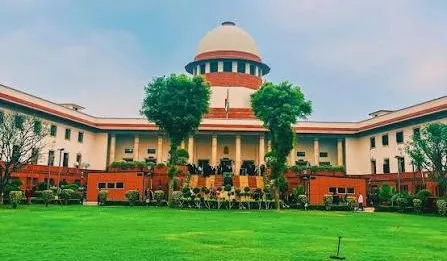
A bench of Justices PS Narasimha and Alok Aradhe made the observations while hearing pleas related to the NEET-UG 2026 paper leak.
“A vibrant system and institutionalisation is what needs to be done,” the bench said.
The Court directed the Union Secretary of the Ministry of Education to file an affidavit detailing the steps being taken to implement the recommendations of the K. Radhakrishnan Committee, along with the reforms suggested by the Nandan Nilekani Committee.
The matter will be listed again after three weeks.
Supreme Court Wants Permanent Examination System
The Court said its objective was to ensure that India has a strong examination institution capable of retaining expertise, maintaining institutional memory and adapting to rapid technological changes.
“Our duty is to ensure that there is a vibrant institution that the country can be proud of. If you don’t institutionalise, experienced people get transferred and the entire experience is lost. There are a lot of technological changes that have to be brought about,” the Court said.
The judges clarified that their concern was not limited to the safeguards currently used for preparing, printing, transporting and distributing question papers.
Instead, they said the entire functioning of the NTA needed to be institutionalised, including its infrastructure, manpower, technology, cyber security and institutional expertise.
Secure Infrastructure and Cyber Security
Justice Narasimha said the NTA needs secure office premises and confidential operational infrastructure, along with strong cyber-security systems.
“Our concern is how you institutionalise the conduct of the examination. Secure office premises, confidential operational infrastructure, cyber security,” he said.
The Court referred to recommendations for creating dedicated verticals and infrastructure, including testing centres and central network operators.
The judges also sought details about staffing, security arrangements and the structure required to maintain a permanent and professional examination system.
Radhakrishnan Committee Made 101 Recommendations
The K. Radhakrishnan Committee was constituted after the NEET-UG 2024 paper leak controversy under the chairmanship of former ISRO chairman Dr K. Radhakrishnan.
The committee submitted its report to the Ministry of Education in October 2024.
It made 101 recommendations aimed at reforming the NTA and strengthening the security and integrity of public examinations.
The recommendations cover areas including examination infrastructure, question-paper security, technology, manpower and institutional mechanisms.
The Supreme Court observed that many of the safeguards explained by the Centre were already covered by the Radhakrishnan Committee’s recommendations.
“What you have told us is something which is already in the purview of the Radhakrishnan Committee. It has correctly said it is a systemic problem which needs institutionalisation,” the Court said.
Centre Explains Current Question Paper Security
Solicitor General of India Tushar Mehta, appearing for the Centre and the NTA, explained the security measures currently used during the preparation and distribution of question papers.
He said question papers undergo several levels of moderation.
For example, for a Physics paper containing 100 questions, multiple moderators initially prepare a question bank of around 500 questions.
Different moderators then select questions and prepare four papers. Two of these are subsequently selected by the NTA Director General.
Mehta said the identity of the final question paper remains unknown until it is sent in sealed boxes to designated printing presses.
The printing facilities are monitored through CCTV cameras and CISF surveillance, he said.
The printing process is also video-recorded, while outsiders are not permitted inside after the sealed box is opened.
Papers Transported in GPS-Tracked Vehicles
The Solicitor General further explained that question papers are packed in iron boxes fitted with non-openable locks.
The boxes are transported in GPS-tracked vehicles, while two sets of papers are stored separately in bank strong rooms, generally at SBI or Canara Bank branches.
On the morning of the examination, the NTA Director General informs the city coordinator about which set of papers is to be used.
The papers are then transported in a motorcade involving district officials. The movement is also videographed before the papers are handed over to class coordinators.
Court Seeks Details of Permanent Security Committee
The Supreme Court specifically asked the Centre to provide details about the implementation of recommendations concerning a permanent committee for sealing question papers and the appointment of senior officers.
“The method by which you do sealing of the papers has to be undertaken by a permanent committee. How many DGs, etc. have been appointed? This is what we want to know by way of regular affidavits,” the Court said.
The judges stressed that the examination system needs permanent expertise rather than relying on officials who may frequently be transferred.
“What really needs to be done is institutional memory, institutional expertise. All that we need to see is, has it been set up? You’ll have to have R&D infrastructure,” the Court said.
Court Questions AI Translation of Question Papers
The bench also questioned the need to depend heavily on artificial intelligence for translating examination papers into Indian languages.
“Do you need AI translation for question papers? In our country we don’t need to blindly rely on AI for this,” the Court observed.
Mehta told the bench that the translation process was being carried out by humans.
The Court nevertheless stressed that technological reforms must be introduced carefully and that the NTA needs strong institutional systems to prevent a repeat of examination-related failures.
Nandan Nilekani Committee Working on Further Reforms
Mehta informed the Court that the Nandan Nilekani Committee was meeting on Wednesday to work on reforms aimed at improving the recommendations of the Radhakrishnan Committee.
The Court also sought information about the creation of a sovereign database and infrastructure for secure data storage.
It said a director-rank officer should be responsible for security-related matters.
“So far as security is concerned, you need to have a director-rank officer. Then you will realise what are the pitfalls,” the Court said.
Debate Over Computer-Based Examinations
Advocate Tanvi Dubey, appearing for FAIMA, pointed out that the Radhakrishnan Committee had recommended conducting examinations entirely in computer-based mode.
However, she said the recommendation was still under consideration.
Mehta responded that shifting completely to computer-based testing could itself create additional risks.
The Supreme Court made it clear that its immediate concern was the institutionalisation and strengthening of the NTA, including the infrastructure, manpower and technological systems needed to conduct examinations securely.
The Court’s intervention comes amid continuing concerns over the integrity of competitive examinations and the need to ensure that students can take major national tests in a secure, transparent and reliable system.