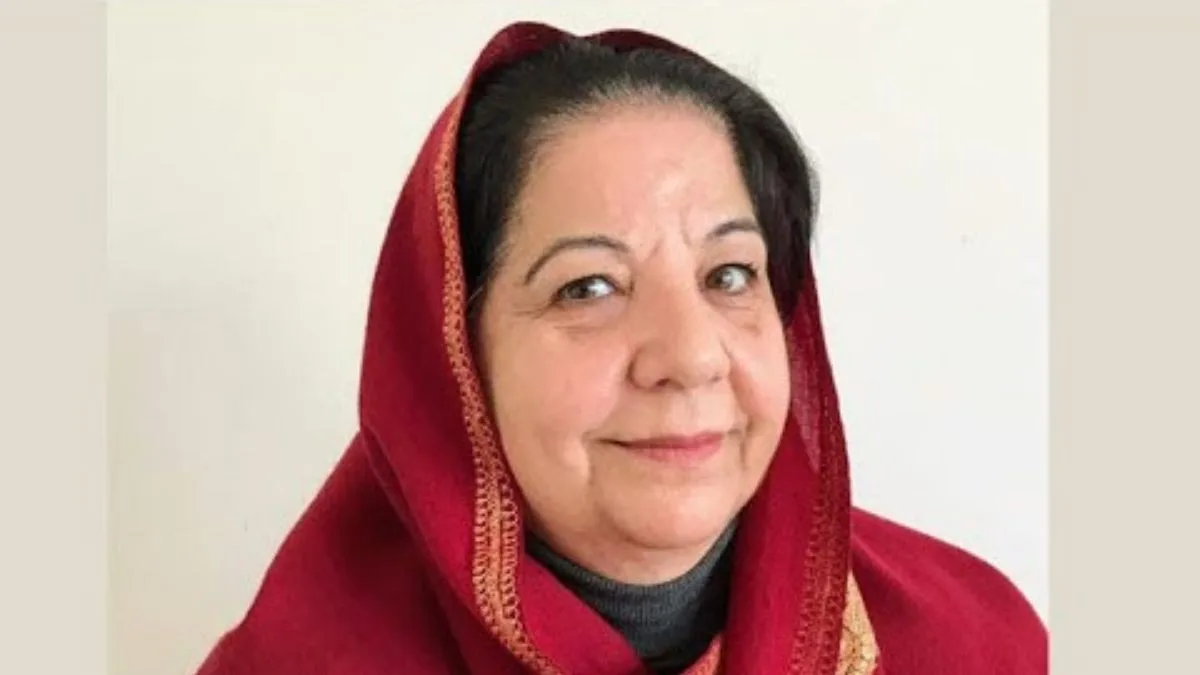
Under the University’s Academic Outreach Programme and under the aegis of the Dean of Outreach, the Habba Khatoon Centre for Kashmiri Language and Literature (HKC L&L) organised an outreach visit to Meeras Mahal, Sopore. Students from the Social Sciences and Humanities participated in the event, which aimed to familiarize them with the rich cultural heritage of Kashmir.Click Here To Follow Our WhatsApp Channel
According to a statement issued here, during the visit, Dr. Muzzafar, Assistant Professor at HKC L&L, provided detailed insights into the cultural traditions and legacy of the region. Participants expressed keen interest, noting that the programme significantly enhanced their understanding of Kashmiri traditions and material culture. The programme was coordinated by Dr. Afshana, Coordinator of the Centre, who assured that similar initiatives will be organized in the future.
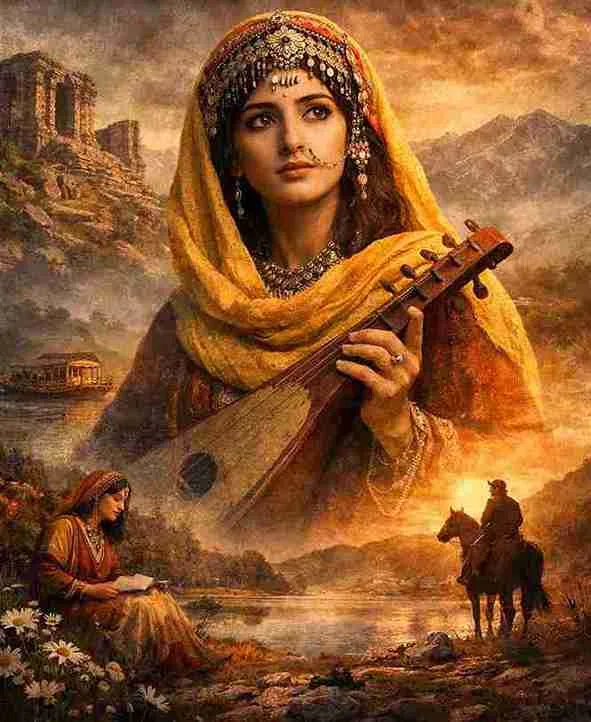
Intro Of Habba Khatoon
Habba Khatoon is one of the most celebrated and emotional figures in the cultural and literary history of Kashmir. Known as the Nightingale of Kashmir, she represents love, pain, separation, and the deep soul of Kashmiri poetry. Even centuries later, her verses continue to live in the hearts of the Kashmiri people, sung as folk songs and remembered as symbols of timeless sorrow and beauty.
Born in the 16th century, Habba Khatoon was originally named Zoon. She belonged to a humble background, yet her natural talent for poetry and singing set her apart. Her words were simple, heartfelt, and deeply connected to everyday life, which made her poetry accessible to common people. She expressed emotions in a way that felt personal, honest, and deeply human.
Habba Khatoon’s life took a dramatic turn when she married Yousuf Shah Chak, the last independent ruler of Kashmir. For a brief period, she lived as a queen, but happiness did not last long. Yousuf Shah Chak was exiled by the Mughal emperor Akbar, and this separation became the greatest tragedy of her life. Her pain, loneliness, and longing found voice in her poetry, turning personal grief into collective memory.
Her poems are mainly in Kashmiri language and revolve around themes of love, separation, fate, and resistance. What makes her special is the emotional depth of her verses—there is no exaggeration, only pure feeling. Many of her poems later became part of Kashmiri folk music and are still sung today, especially by women.
Habba Khatoon is not just a poet; she is a symbol of Kashmir’s emotional history. Her life reflects the struggles of women, the pain of separation, and the loss of freedom. Through her words, she gave Kashmir a voice that still echoes across mountains, lakes, and generations.
Today, institutions, cultural centres, and scholars continue to honour her legacy. Habba Khatoon remains a timeless reminder that poetry born from pain can become eternal beauty.
On 5 October 2025 (11 Rabi‘ al-Thani 1447 AH), the Muslim world — especially in places like Iraq, Pakistan, India and Kashmir — observes the Urs of Sheikh Abdul Qadir Gilani (R.A), widely venerated as Hazrat Ghaus-e-Azam and Dastgeer Sahib. For many, this is not simply an anniversary of a saint’s death but a festival of spiritual union: the word Urs literally means a wedding, symbolising the soul’s joyful reunion with the Divine. Across centuries, millions have found in his life and teachings a bridge between law and love, learning and compassion. Click Here To Follow Our WhatsApp Channel
Early life and background
Sheikh Abdul Qadir Gilani (R.A) was born around 470 AH (1077–1078 CE) in the region of Gilan in what is now northern Iran. He is known by the nisba al-Jilani, linking him to Gilan, and later spent most of his public life in Baghdad, the intellectual and spiritual centre of his age. Many sources describe him as thoroughly learned in the Qur’an, Hadith, fiqh and spiritual disciplines. He combined rigorous study with deep devotion, a pattern that would shape his teaching for generations.
Although details of his early family life are not always certain in historical records, he is widely said to have been descended from the Prophet’s family through Hasan ibn Ali (R.A). He studied under leading scholars of his time and was initiated into Sufism by spiritual masters who guided his inner journey. His training combined legal learning (especially within the Hanbali tradition) with a strong emphasis on the discipline of the heart.
The long retreat and spiritual formation
A defining period of his life was a long retreat he undertook in the deserts of Iraq. For many years he lived simply, dedicating himself to worship, meditation, and spiritual struggle (mujahada). These years of solitary discipline formed the inner ground from which his later teaching sprang. When he returned to Baghdad, he was already recognised as a person of deep knowledge and spiritual insight.
His style of teaching was notable for balancing strict adherence to religious law with a compassionate and practical spirituality. He did not separate outward worship and inward purification; instead, he taught that true religion requires both correct practice and sincere inner transformation.
Scholar, preacher and teacher
In Baghdad, Sheikh Abdul Qadir Gilani (R.A) became a well-known preacher and teacher. He lectured on Hadith, Tafsir (Qur’anic exegesis), jurisprudence and spiritual ethics. His sermons drew large crowds: scholars, traders, officials and ordinary people alike came to listen. He founded a school — the madrasa that later gave its name to the Qadiriyya order — where students studied both the legal sciences and the path of the heart.
He earned respect from a wide range of scholars and even political leaders of his time. His influence crossed social and religious lines; people of different backgrounds sought his guidance. He emphasised justice, moral courage and public service alongside personal piety.
Key teachings and spiritual approach
The heart of Sheikh Abdul Qadir Gilani’s (R.A) teaching can be summarised in a few clear, practical points:
Tawhid (Oneness of God): All spiritual striving must be rooted in sincere belief in God alone. Recognition of God’s unity was the foundation of every teaching.
Balance of Sharia and Tariqa: He taught that law (Sharia) and spiritual discipline (Tariqa) are complementary. Observance of the outward rules without inner reform is incomplete; likewise, inward experience without moral conduct can be misleading.
Purification of the heart: Spiritual life requires constant effort to remove pride, attachment and selfishness. Virtues such as patience, gratitude and humility were central to his message.
Service and compassion: True faith shows itself through kindness to people — feeding the poor, caring for the weak and standing for justice.
Practical holiness: He discouraged empty display and encouraged sincere, practical acts of worship and charity.
Books attributed to him — such as Futuh al-Ghaib (Revelations of the Unseen) and Ghunyat al-Talibin (Sufficiency for Seekers) — present these teachings in accessible, often direct language aimed at seekers at different levels.
Miracles and karamat
Stories of miracles (karamat) are numerous in the hagiographical tradition surrounding Hazrat Ghaus-e-Azam (R.A). These accounts include times of supernatural help in famine, healings, and instances where food or resources were miraculously provided to those in need. For followers, such stories are signs of God’s favour manifesting through a saintly person. Classical Sufi authors emphasise, however, that the inner aim of these stories is moral: they strengthen faith and inspire service, not mere wonder.
Whether taken literally or seen symbolically, these narratives have helped generations relate to the saint’s life in a personal way and have supported a living devotional practice centred on compassion.
Founding of the Qadiriyya order
The Qadiriyya is one of the oldest and most widespread Sufi orders, carrying the name of Sheikh Abdul Qadir Gilani (R.A). Its core practices focus on remembrance of God (dhikr), ethical conduct and striving for inner purity. Over time the order spread across many regions: the Middle East, South Asia, North Africa and beyond. Local branches adapted the Qadiriyya teachings to their cultures while preserving the central emphasis on spiritual sobriety, public service and devotion.
The order’s spread owed much to the charismatic force of the teacher’s reputation and the clarity of his teachings, which offered a pathway that was at once rigorous and accessible.
Writings and legacy
The works attributed to Hazrat Ghaus-e-Azam (R.A) blend legal learning with spiritual guidance. They are written in a language meant to instruct and motivate seekers: short, sharp reminders, moral counsel and deep spiritual insights. Apart from Futuh al-Ghaib and Ghunyat al-Talibin, other shorter treatises and letters circulate in manuscript and published forms, often used by students and readers wanting practical guidance.
His legacy is not limited to texts. The living tradition of Sufi practice, the institutions founded in his name, and the social projects inspired by his model of piety and service continue to influence millions.
The shrine in Baghdad and its history
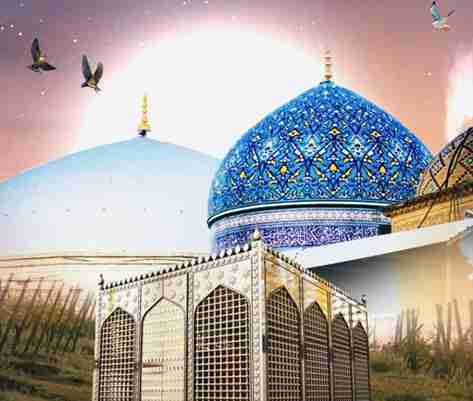
Sheikh Abdul Qadir Gilani (R.A) was buried in Baghdad, at the site of his madrasa. Over the centuries his tomb became a place of pilgrimage. The mausoleum has seen repair and rebuilding many times. It stands as a major site for pilgrims who come to offer prayers, recite the Qur’an, attend lectures and perform acts of charity. For the many who visit, the shrine represents continuity with a living spiritual tradition that reaches back nearly a thousand years.
Dastgeer Sahib shrine in Srinagar
Though Sheikh Abdul Qadir Gilani (R.A) never visited Kashmir, his influence reached the valley through teachers and disciples who brought Qadiri teaching to South Asia. In Srinagar’s Khanyar area stands the famous Dastgeer Sahib shrine, a focal point of devotion for many Kashmiris. The shrine houses relics and has its own local history of devotion and repair. It represents how spiritual figures take root in local cultures, adapting and enriching regional practice.
What is Urs and why it matters
Urs anniversaries mark the death of a saint as a commemoration of union with the Divine. Rather than mourning, the event is celebrated: devotees gather to remember the saint’s life, recite the Qur’an, engage in communal dhikr, listen to sermons and hold gatherings of spiritual music (sama or qawwali in South Asia). Charity and feeding the poor are typical features. Urs is a time for renewal: individual devotees seek spiritual blessings, while communities reinforce bonds of faith and mutual care.
For many people, Urs functions on multiple levels:
A spiritual gathering that revives devotional practice.
A social occasion that brings people together across class and background.
A cultural event that preserves local devotional arts, poetry and music.
A charitable opportunity to serve the needy.
Typical rites and rituals
Although practices vary by region, common elements of an Urs include:
Qur’anic recitation: collective reading and supplication.
Dhikr: groups reciting the names of God and short litanies.
Hamd and Naat: praise-poems in Arabic and local languages celebrating God and the Prophet (PBUH).
Sermons and lectures: teaching that explains the saint’s life and message.
Mehfil-e-sama / qawwali: devotional music sessions in many South Asian shrines.
Ziarat: visiting and paying respects at the tomb, sometimes viewing relics.
Charity and feeding: distribution of food to the poor, a central component.
Processions: in some places, processions and public displays occur, especially where the tradition is deeply rooted.
Organisers generally stress that the core purpose is spiritual: to turn hearts toward God and to renew ethical commitment.
Contemporary observances in 2025
On 5 October 2025, shrines associated with Hazrat Ghaus-e-Azam (R.A) were active with devotees. In Baghdad, the mausoleum drew local and international pilgrims for multi-day gatherings of dhikr, lectures and communal prayers. In South Asia, especially at the Dastgeer Sahib shrine in Srinagar, the day was observed with special programmes: night vigils, recitations, qawwali sessions and large-scale charity meals. Many shrines also used modern tools — live streaming and social media — to include remote devotees who could not travel.
For many devotees, the Urs is a reminder that living spiritual traditions can adapt to new times while keeping their essential message: humility, compassion and service.
The social and moral relevance today
Why does Hazrat Ghaus-e-Azam’s message endure? Several features explain this:
Practical ethics: His teachings stress compassion and justice, which are timeless concerns in any society.
Balance of law and spirit: People facing modern anxieties respond to a message that honours both outward duty and inner peace.
Community orientation: The Qadiriyya emphasis on service and charity offers a framework for organised social aid.
Accessible guidance: His short, direct counsels speak to ordinary people as well as scholars.
In an era of increasing fragmentation, his insistence on unity, tolerance and moral responsibility speaks to both personal transformation and social healing.
Debates and differing views
Like many historical religious figures, Sheikh Abdul Qadir Gilani (R.A) is seen differently across traditions. Some scholars stress hagiographical excesses in later stories; others defend these narratives as expressions of devotional memory rather than literal history. In scholarly circles, there is healthy debate about chronology, authorship of certain works, and the exact historical facts of his life. For devotees, however, the spiritual fruits of his teachings are the primary point of concern.
How to observe Urs with respect and understanding
If you plan to attend an Urs or read about it, here are a few simple suggestions to observe the occasion respectfully:
Approach with sincere intent: the celebrations are primarily devotional, not mere spectacle.
Participate in communal prayers and charity where possible.
Listen to the teachings and reflect on their moral implications.
Remember the central message of service: feeding the poor or assisting the needy is a fitting tribute.
Be mindful of local customs and the diverse ways people express devotion.
Conclusion
The Urs of Hazrat Ghaus-e-Azam (R.A) is more than an annual event; it is a living reminder of a tradition that combines deep learning with compassionate action. Whether observed in Baghdad, Srinagar, or in homes and mosques across the globe, the day calls believers to renew their commitment to inner reform, social justice, and sincere worship. On 5 October 2025, countless hearts turned to the example of this great teacher — a reminder that faith, properly lived, unites people across time and place.
May his example inspire humility, compassion and steadfastness in the service of humanity. Ameen.
Chairman of Hazrat Bulbulshah Trust Farooq Renzu Sunday said that the shrine of Hazrat Bulbul Shah (RA) continues to remain outside the ambit of any specified State or Central Waqf authority.
In a statement issued here, he said the shrine was excluded from the specified list of shrines under the Waqf Act 2004, even during its formulation in 2003.
However, Renzu said that other revered shrines of Kashmir including the Dargah Hazratbal, Khanqah-e-Moula, Makhdoom Sahab, and Charar-e-Sharief had been unfortunately brought under the specified Waqf Act.
Sheikh Noor-ud-Din Noorani (R.A.), also known as Alamdar-e-Kashmir (the Flagbearer of Kashmir), stands as one of the most influential figures in the spiritual and cultural history of Kashmir. Born in the 14th century, he emerged as a mystic, Sufi saint, poet, and social reformer whose teachings transcended religious boundaries, earning him immense respect among both Muslims and Hindus. His life is a testament to the power of faith, simplicity, and devotion to a higher spiritual purpose.
The socio-political and cultural landscape of Kashmir during Sheikh Noor-ud-Din’s time was marked by transition. Islam had already taken root in the valley, but it was often mixed with local traditions and practices. Sheikh Noor-ud-Din’s mission was to purify this synthesis, preaching the essence of Islam through his unique Sufi path, while also maintaining the spirit of local Kashmiri culture. His influence helped shape the religious identity of Kashmir, leaving a lasting impact on its art, culture, and spiritual thought.
Early Life and Spiritual Awakening
Sheikh Noor-ud-Din Noorani (R.A.), also known as Nund Rishi, was born in the village of Kaimuh, Kulgam, to a Rajput Hindu family. His father, Salar Sanz, later embraced Islam under the influence of Yasman Reshi, a prominent Sufi figure of the time. From an early age, Noor-ud-Din demonstrated a profound inclination towards spirituality, often retreating into isolation to contemplate and meditate on life’s deeper meanings.
Tradition holds that even as a child, Noor-ud-Din exhibited signs of deep spiritual insight. When he was born, it is said that he refused to suckle from his mother, an event that many saw as a sign of his future ascetic path. According to legend, the renowned mystic Lal Ded, a female Sufi saint of the time, intervened and spoke to the newborn in mystical language, urging him to accept nourishment. This event is often considered a turning point in his early life, marking the beginning of his spiritual journey.
Despite being born into a family with a blend of local Hindu and Islamic traditions, Noor-ud-Din (R.A.) was deeply drawn to the teachings of Islam, particularly its Sufi dimension. His early years were spent in deep meditation and contemplation, seeking the true essence of Islam beyond the rituals and externalities that many had adopted without understanding their spiritual significance.
Renunciation and Spiritual Transformation
At the age of thirteen, Sheikh Noor-ud-Din (R.A.) was married to Zai Ded, and the couple had two children, a daughter named Zooni and a son named Hayder. However, despite his family life, he found himself increasingly disillusioned with worldly pursuits. His heart yearned for a deeper connection with the Divine, and he became more engrossed in spiritual contemplation.
At the age of thirty, Noor-ud-Din (R.A.) decided to renounce worldly life entirely. He retired to a cave in Kaimuh, where he spent the next twelve years in seclusion, devoted to meditation and prayer. This period of intense spiritual isolation solidified his status as a Sufi mystic, and upon emerging from the cave, Noor-ud-Din (R.A.) had undergone a complete spiritual transformation.
He expressed his feelings of detachment from worldly life in his poetry:
Nasar Baba Jangal gachum gayam khaemi Doup ye chhe baed ibadat Ye aes patus baed badnaemi sarea aes Karen kuni kath
This verse reflects his realisation that true devotion cannot be found in mere physical isolation but in the balance of living a righteous life while engaging with the world.
Teachings and Philosophy
Sheikh Noor-ud-Din Noorani’s (R.A.) teachings focused on the principles of love, unity, and brotherhood. He believed that the essence of religion lies in the purity of heart and sincerity of actions, rather than in outward rituals or rigid dogmas. His philosophy, deeply rooted in the Sufi tradition, emphasised the following key themes:
Purity of Heart and Simplicity Sheikh Noor-ud-Din (R.A.) lived a life of extreme simplicity. He wore ragged clothes, abstained from luxurious food, and practised vegetarianism, which was unusual for a Muslim saint. His choice to remain vegetarian was symbolic of his desire to conquer the nafs (carnal desires) and attain a higher state of spiritual purity. He often criticised those who claimed to be religious but were caught in the trappings of material wealth and outward displays of piety.
Universal Brotherhood One of Sheikh Noor-ud-Din’s (R.A.) most enduring teachings is his call for universal brotherhood. In an era marked by religious tensions and social divides, he preached that all humans, regardless of their religion or social status, are equal in the eyes of God. He believed that Muslims and Hindus should live together in harmony and respect each other’s beliefs, as exemplified by his verse: “He shall win the world who serves others.” This message of unity resonated deeply in a society where communal strife was often a source of conflict, making him a beloved figure among both Muslims and Hindus.
Critique of Hypocrisy and False Piety Sheikh Noor-ud-Din (R.A.) was vocal in his criticism of the religious scholars and clerics of his time, whom he accused of hypocrisy and selfishness. He lamented that many religious leaders sought worldly gain rather than true spiritual enlightenment. In one of his verses, he warns: “You have acquired knowledge for selfish ends, Your endeavour is to see each other fall, You consider yourself the favourite of the Lord, But there, not one in a thousand can escape the doom.” This critique of false piety is a central theme in his teachings, urging people to focus on inner spirituality rather than outward displays of religious knowledge.
Environmental Consciousness Sheikh Noor-ud-Din (R.A.) is often remembered for his concern about the environment and the balance between nature and human life. One of his most famous sayings, which has become a popular proverb in Kashmir, is: “Ann poshi teli yeli wan poshi” (Food will last as long as forests last) This statement reflects his awareness of the importance of ecological balance and the need to preserve nature for future generations. His foresight in understanding the connection between environmental sustainability and human well-being is remarkable, especially considering that he lived over six centuries ago.
Poetry and Legacy
The poetry of Sheikh Noor-ud-Din Noorani (R.A.) is one of the most enduring aspects of his legacy. Written in the Kashmiri language, his verses reflect a deep sense of spirituality, mysticism, and moral guidance. His poetry addresses a wide range of subjects, from the inner struggles of the soul to the social and moral issues of his time.
One of the most notable features of his poetry is its accessibility. Sheikh Noor-ud-Din (R.A.) used simple language and everyday imagery to convey profound spiritual truths, making his teachings easily understandable to the common people. His verses often reflect the themes of renunciation, love for humanity, and the futility of worldly attachments.
Here is a selection from his poetry that captures his mystical thought:
“How are you still living after treating the holy Quran so lightly And reciting it without your heart in it? You may benefit in your worldly gains for a while, But be ready now for the wrath of Allah.”
Through his poetry, Sheikh Noor-ud-Din (R.A.) expressed his concerns about the religious and moral decline he observed in society, urging people to return to the true spirit of Islam, which is rooted in love, compassion, and humility.
Sheikh Noor-ud-Din’s (R.A.) Influence on Kashmiri Society
The influence of Sheikh Noor-ud-Din Noorani (R.A.) on Kashmiri society is profound and far-reaching. His teachings shaped the spiritual and moral values of Kashmiris for centuries, and his emphasis on love, unity, and simplicity continues to resonate with people today. He is often regarded as the founding father of the Rishi tradition in Kashmir, a Sufi movement that combined Islamic spirituality with the local culture and traditions of the valley.
During his lifetime, Sheikh Noor-ud-Din (R.A.) attracted a large number of followers, including notable disciples such as Baba Bam-ud-Din and Baba Zain-ud-Din. These disciples carried forward his teachings, spreading his message of love, humility, and service to others.
One of the key contributions of Sheikh Noor-ud-Din (R.A.) to Kashmiri society was his ability to bridge the gap between Muslims and Hindus. His message of universal brotherhood and his critique of social injustice appealed to people of all faiths, making him a unifying figure in a time of religious and political turbulence. Even today, his shrine at Charar-e-Sharief is visited by both Muslims and Hindus, reflecting the enduring appeal of his teachings.
Conclusion
Sheikh Noor-ud-Din Noorani (R.A.), through his life, teachings, and poetry, continues to be a beacon of spiritual wisdom and guidance in Kashmir. His emphasis on love, simplicity, and purity of heart, combined with his critique of hypocrisy and false piety, offers valuable lessons for people of all faiths. His message of universal brotherhood and environmental consciousness is as relevant today as it was during his time.
In an age marked by growing divisions and conflicts, the teachings of Sheikh Noor-ud-Din Noorani (R.A.) serve as a reminder of the power of compassion, unity, and devotion to the Divine. His legacy as the spiritual guide of Kashmir lives on, inspiring generations to seek a higher purpose in life and to live in harmony with the world around them.
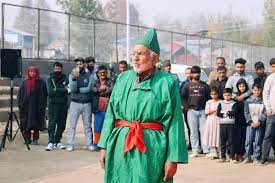
Kashmir, often called ‘Paradise on Earth,’ is known for its stunning views and rich culture. But beyond its natural beauty, Kashmir is also famous for a unique and lively form of folk theatre called Bhand Pather. This entertaining art combines music, dance, and acting to explore and comment on important social issues.
What Does Bhand Pather Mean?
To understand Bhand Pather, it helps to break down the name:
Bhand: This word means ‘actor’ or ‘performer’.
Pather: This means ‘to act’ or ‘to imitate’.
So, Bhand Pather is about actors performing and imitating real-life situations, often in a funny way. It’s a way to reflect and comment on life through acting.
A Long History
Bhand Pather has a long history in Kashmir. It is believed to have started around 1324 and has been an important part of Kashmiri culture ever since. Over the centuries, it has evolved but still keeps its traditional charm.
In the past, Bhand Pather was performed during local gatherings and festivals. It was a popular way for people to come together and enjoy a good show. Even though times have changed, Bhand Pather remains a beloved tradition in Kashmir.
What Happens in a Bhand Pather Show?
Bhand Pather shows are known for their high energy and fun style. Here’s what you can expect:
Colourful Costumes: Actors wear bright and elaborate outfits that make the performance visually exciting. These costumes often reflect traditional styles.
Humorous Acting: The acting is exaggerated and comedic. Actors use funny voices and physical comedy to entertain the audience. This humour helps to discuss serious topics in a light-hearted way.
Music and Dance: Music and dance are key parts of Bhand Pather. Performances include traditional songs and dances that add rhythm and mood. The dance moves enhance the visual appeal of the show.
Storytelling: Bhand Pather stories often focus on social issues like politics, religion, and social norms. The actors use humour and satire to highlight these issues, making people think and laugh at the same time.
Why Is Bhand Pather Important?
Bhand Pather is more than just entertainment; it serves several important roles in Kashmiri society:
Social Commentary: It provides a way to talk about and reflect on social problems. The performances often bring attention to issues and encourage people to think about solutions.
Cultural Identity: Bhand Pather is a big part of Kashmiri culture. It helps keep traditional values and customs alive. Through its stories and performances, it connects people to their heritage.
Community Building: Bhand Pather shows bring people together. They are a chance for the community to share laughter and emotions. These performances strengthen social bonds and create a sense of unity.
Challenges and Revival
Over time, Bhand Pather has faced challenges. Conflicts and social changes have made it harder to keep the tradition alive. However, many people are working hard to revive it and ensure it continues.
Efforts are being made to support and promote Bhand Pather. Performances are being organized, and there is a push to educate younger generations about this important art form. These efforts are crucial for keeping Bhand Pather alive.
The Future of Bhand Pather
Bhand Pather is an important part of Kashmir’s cultural heritage. It helps people connect with the past, understand the present, and shape the future. Supporting and preserving this tradition is key to maintaining Kashmir’s cultural identity.
Here’s how you can help:
Attend Performances: By going to Bhand Pather shows, you support the artists and help keep the tradition alive.
Learn About Its History: Knowing more about Bhand Pather’s history enhances your appreciation of the art form.
Promote the Art Form: Sharing information about Bhand Pather and encouraging others to learn about it helps raise awareness.
Support Artists: Many artists rely on Bhand Pather for their livelihood. Supporting them through attendance or donations helps sustain their work.
Notable Bhand Pather Plays and Artists
Some Bhand Pather plays and artists are especially well-known. These notable works and individuals often highlight the best of Bhand Pather:
Famous Plays: Certain plays are remembered for their impactful storytelling and performances. These often address important social issues.
Renowned Artists: Skilled Bhand Pather artists are celebrated for their creativity and contribution to the art form. Their performances are known for their talent and connection with the audience.
Conclusion
Bhand Pather is a treasured form of Kashmiri folk theatre. With its lively mix of music, dance, and acting, it provides a unique way to explore important social issues. This tradition reflects Kashmiri culture and offers valuable insights into the region’s heritage.
As Bhand Pather faces challenges, it is important to support and promote this art form. By attending performances, learning about its history, and supporting the artists, we help ensure that Bhand Pather continues to be a vibrant part of Kashmiri culture for future generations.
Whether you are a long-time fan or new to Bhand Pather, there is much to discover and appreciate about this remarkable tradition. Its blend of humour, music, and social commentary makes it a special and enduring part of Kashmiri heritage.
The Baba Nagri shrine, also known as Darbar Laar Sharief Wangat, boasts one of the largest free community kitchens, or ‘langar’, serving around 1,000 people daily. During Urs days, this number surges, with food being prepared for over 70,000 to 80,000 devotees.
Operating 24 hours a day, the langar is staffed by both management and numerous volunteers who tirelessly serve the many visitors. According to the shrine’s administration, this round-the-clock service ensures that devotees have access to free meals throughout the year.
Mian Mehar Ali, overseeing the arrangements, shared with Greater Kashmir that on Urs days, a special langar is organized, where food for thousands is prepared. Volunteers noted that special sweet rice, made with rice, ghee, and dry fruits, is served on these occasions.
Managing such a large-scale operation daily is no small feat, but the dedicated volunteers and about 100 permanent workers ensure everything runs smoothly, from cooking to timely delivery of food.
Baba Nagri shrine is one of the most revered sites for the Gujjar, Bakerwal, and Pahari communities in Jammu and Kashmir and beyond. Every year, tens of thousands of devotees gather at the shrine on June 7 and 8 to observe the annual Urs of Sufi saint Mian Nizamuddin Kiyanwi (RA), also known as Hazrat Baba Ji Sahib Larvi, who was a prominent 18th-century Sufi saint and social reformer.
Nestled at the base of a mountain in the picturesque village of Wangat, the shrine is surrounded by lush forests and becomes a focal point of religious activities year-round. On Urs days, the site transforms into a bustling hub for devotees.
The Mian family, the shrine’s custodians, are responsible for accommodating the thousands of visitors each year. The current Sajadh Nasheen, Mian Altaf Ahmad, inherited the position from his late father, Mian Bashir Ahmad Larvi, who succeeded Mian Nizamuddin Kiyanwi in overseeing the shrine.
Culture is the shared way of life of a group of people. It includes beliefs, values, traditions, behaviours, and customs that shape how people live, think, and interact with others. Culture gives identity to a society and helps people understand the world around them.
It can be seen in many forms such as language, religion, art, music, food, clothing, and social habits. These elements together create a unique lifestyle that defines a community. Click Here To Follow Our WhatsApp Channel
Language
Language is one of the most important parts of culture. It allows people to communicate and express their thoughts, emotions, and traditions. Every language carries its own unique style and meaning.
Religion and Spirituality
Religious beliefs and practices guide people’s values and daily lives. They influence traditions, rituals, and moral behaviour in society.
Art and Creativity
Art, music, and literature reflect the creativity of a society. They show how people think, feel, and express their identity.
Cuisine
Food is a strong part of culture. Traditional dishes and cooking styles tell stories about local ingredients, climate, and lifestyle.
Traditions and Rituals
Festivals, ceremonies, and customs are ways to celebrate culture and pass it from one generation to another.
Social Norms
These are the rules of behaviour in society. They guide how people interact, build relationships, and live together.
Dress and Attire
Clothing often reflects culture, history, and environment. Traditional dress shows identity and pride in heritage.
Values and Beliefs
Cultural values shape how people think and make decisions. They influence both personal and social life.
History and Heritage
A society’s past plays a major role in shaping its present culture. Traditions are often based on historical experiences.
Culture is Always Changing
Culture is not fixed. It changes over time due to social, economic, and technological developments. As the world becomes more connected, cultures interact, blend, and evolve.
While change brings progress, it also raises concerns about losing traditional values and identity.
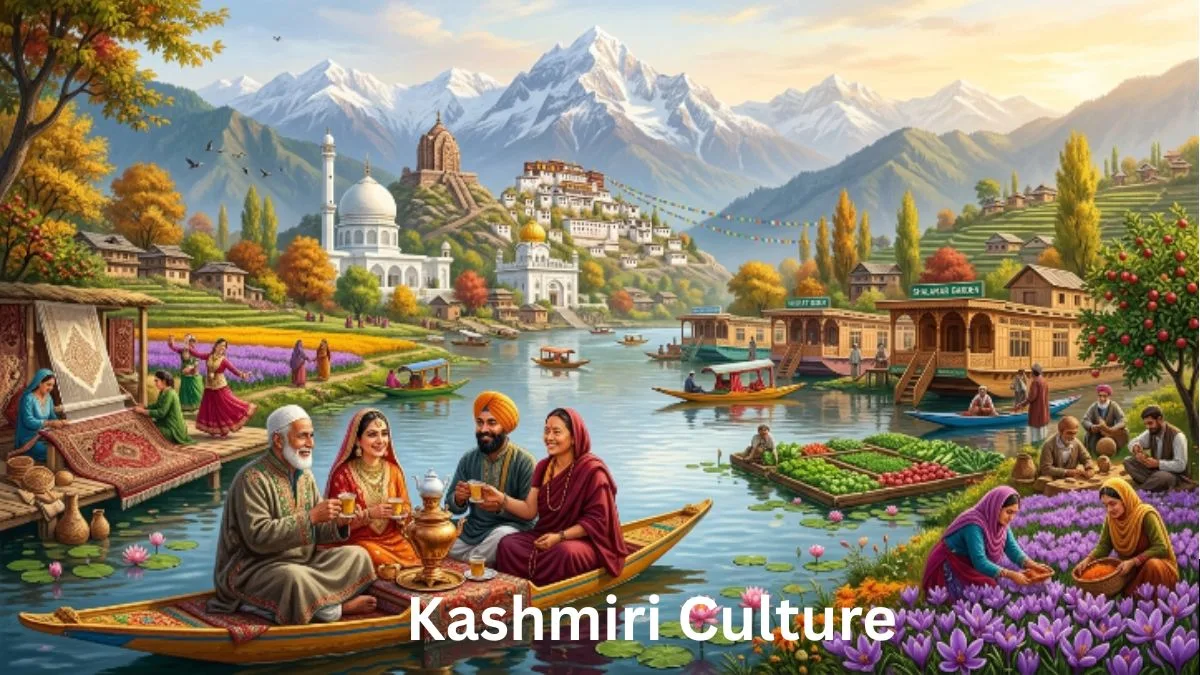
Kashmir’s Rich Cultural Heritage
Kashmir is not only known for its natural beauty but also for its deep and rich cultural heritage. The people of Kashmir are known for their warmth, kindness, and strong traditions.
From traditional clothing and cuisine to music, art, and language, Kashmir’s culture reflects a long and meaningful history. These traditions have shaped the identity of the region and continue to inspire those who experience it.
Challenges in the Modern World
Today, modernisation and western influences are rapidly changing societies. Many traditional practices are slowly fading as people adopt new lifestyles.
Kashmir is also facing this challenge. The younger generation is increasingly influenced by modern trends, which sometimes leads to a disconnect from cultural roots.
Finding the Balance
The real challenge is to balance progress with tradition. Development is important, but preserving cultural identity is equally essential.
Protecting language, traditions, and heritage helps maintain a strong sense of identity and belonging. It also promotes diversity and mutual respect in a globalised world.
Conclusion
Culture is the foundation of who we are. It connects us to our past, shapes our present, and guides our future.
For regions like Kashmir, preserving culture is not just about tradition — it is about protecting identity, unity, and heritage for future generations.
In a rapidly changing world, respecting and valuing culture remains more important than ever.