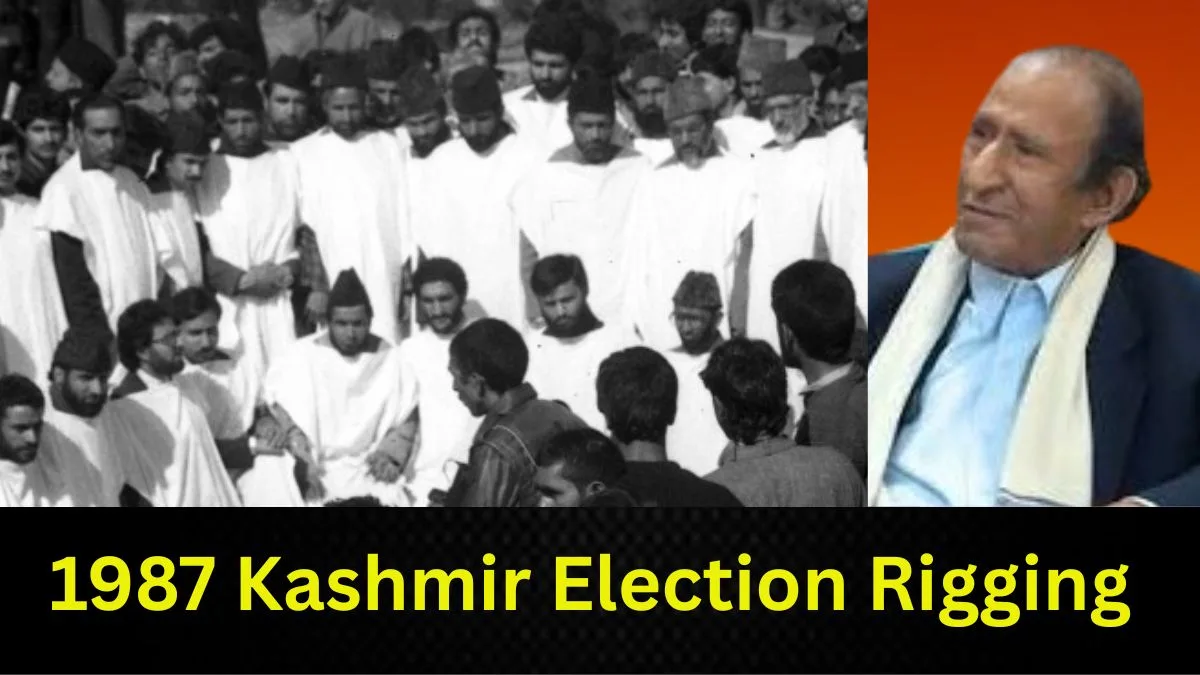
The 1987 Jammu and Kashmir Assembly election remains one of the most debated elections in the region’s modern political history.
The election, held on 23 March 1987, was contested by the ruling National Conference-Congress alliance and the newly formed Muslim United Front (MUF), which brought together several opposition groups, including Jamaat-e-Islami and other political organisations.
The election produced a decisive victory for the NC-Congress alliance. However, allegations that the electoral process had been manipulated became deeply rooted in Kashmir’s political discourse and are widely regarded by historians and political observers as an important factor in the loss of faith in electoral politics among sections of the Valley’s population.
The Election Commission’s historical records list the 1987 J&K Assembly election among the state’s previous elections. Click Here To Follow Our WhatsApp Channel
What Happened in the 1987 Election?
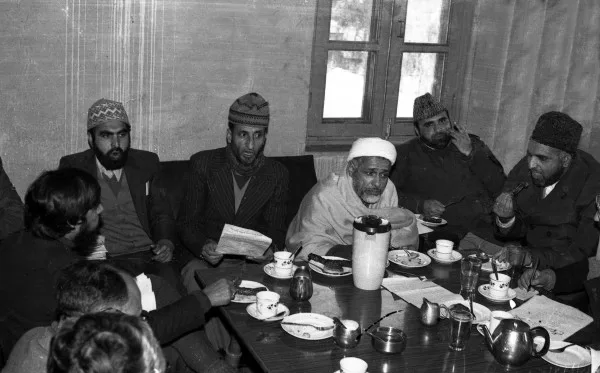
The NC-Congress alliance won the overwhelming majority of Assembly seats, while the MUF won only four constituencies.
Yet the MUF secured around 31 per cent of the popular vote, according to election analyses. The National Conference secured about 47 per cent.
The gap between the MUF’s vote share and its very small number of seats became one of the strongest reasons why the election was subsequently viewed with suspicion by many Kashmiris.
There were also reports of unusually narrow victories in several constituencies and large numbers of rejected ballots.
For example, analyses of the election noted that in Wachi, the MUF lost by only 122 votes while 1,816 votes were rejected. In Shopian, the losing margin was 336 votes against 1,122 rejected ballots.
The Amira Kadal Controversy
One of the best-known episodes involved Amira Kadal constituency in Srinagar.
MUF candidate Mohammad Yusuf Shah, who later became known as Syed Salahuddin, contested the seat against National Conference candidate Ghulam Mohiuddin Shah.
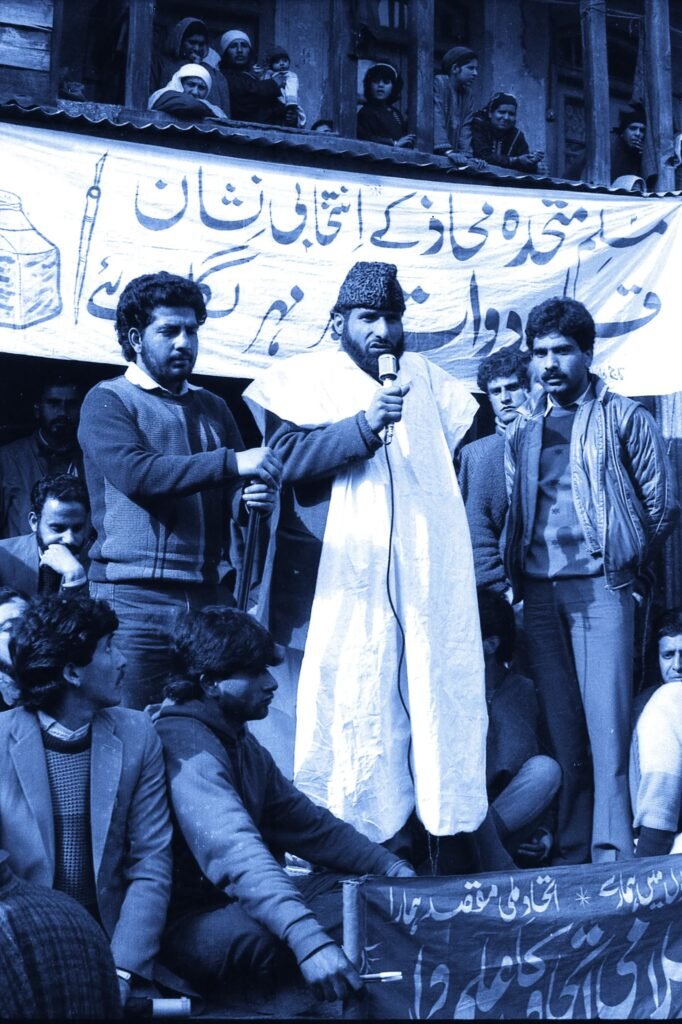
Accounts of the election say Yusuf Shah was leading during the counting process but was ultimately declared the loser, with Ghulam Mohiuddin Shah declared the winner.
The episode became one of the most frequently cited examples of alleged manipulation during the 1987 election.
Yusuf Shah was subsequently arrested, while his polling agent Yasin Malik also became involved in the confrontation surrounding the election.
Both men later became prominent figures in the armed separatist movement, although the relationship between the 1987 election and the subsequent insurgency is a subject that requires historical nuance.
Did the Election Directly Cause the Insurgency?
The 1987 election is frequently described as a turning point in the history of Kashmir’s armed conflict.
Several former political activists who had participated in the election later moved towards militancy. Some crossed the Line of Control and received training in Pakistan-administered Kashmir.
However, it would be too simplistic to say that the insurgency was caused by the election alone.
Kashmir’s conflict had deeper political, constitutional and historical roots, while developments in Pakistan, the Afghan war and the regional security environment also influenced the emergence of armed militancy.
A number of historical accounts therefore describe the 1987 election as a trigger or catalyst, rather than the sole cause of the insurgency.
Abdul Rashid Kabli’s Role
Abdul Rashid Kabli is an important figure in Kashmir’s political history, but claims about his role in the 1987 election need to be handled carefully.
Available records show that Kabli represented the Srinagar parliamentary constituency for the National Conference in 1984. He had also previously won the Idgah Assembly seat in 1977 as a Janata Party candidate.
Kabli later became a critic of the NC leadership and was described in contemporary reporting as a former NC parliamentarian. In 2013, for example, he publicly criticised the government’s handling of election politics and accused the NC of using political tactics to discourage electoral participation.
However, there is insufficient reliable evidence to state that Kabli was the NC’s official election in-charge in 1987 or that he made the specific confession quoted in the original article.
That distinction is important because attributing an unverified confession to a former insider could give readers a misleading impression about the historical evidence.
Why 1987 Still Matters
The political significance of the 1987 election extends far beyond the official result.
For many Kashmiris, the election became a symbol of the belief that the ballot box could not provide a meaningful avenue for political change.
The MUF’s relatively strong popular vote but poor seat conversion, combined with allegations of arrests, interference and manipulation, contributed to growing political disillusionment.
Later reporting and historical accounts have repeatedly linked this loss of faith in electoral politics with the radicalisation of sections of the younger generation.
From Ballot Box to Armed Conflict
The careers of several people involved in the 1987 election illustrate the dramatic political transformation that followed.
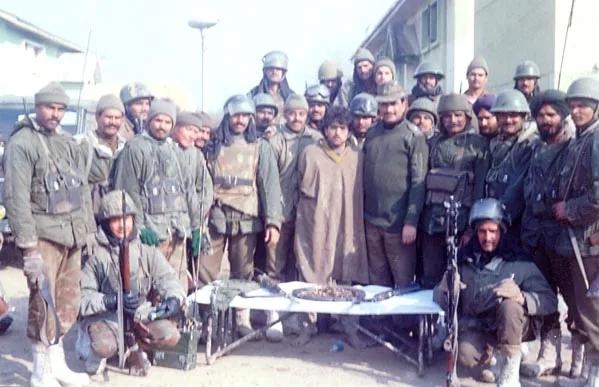
Mohammad Yusuf Shah, the MUF candidate from Amira Kadal, later became Syed Salahuddin, the head of Hizbul Mujahideen.
Yasin Malik, who had worked as Yusuf Shah’s polling agent, later became a prominent figure in the Jammu Kashmir Liberation Front (JKLF).
Their later involvement in militancy is one reason the 1987 election occupies such an important place in discussions about the origins of the Kashmir insurgency.
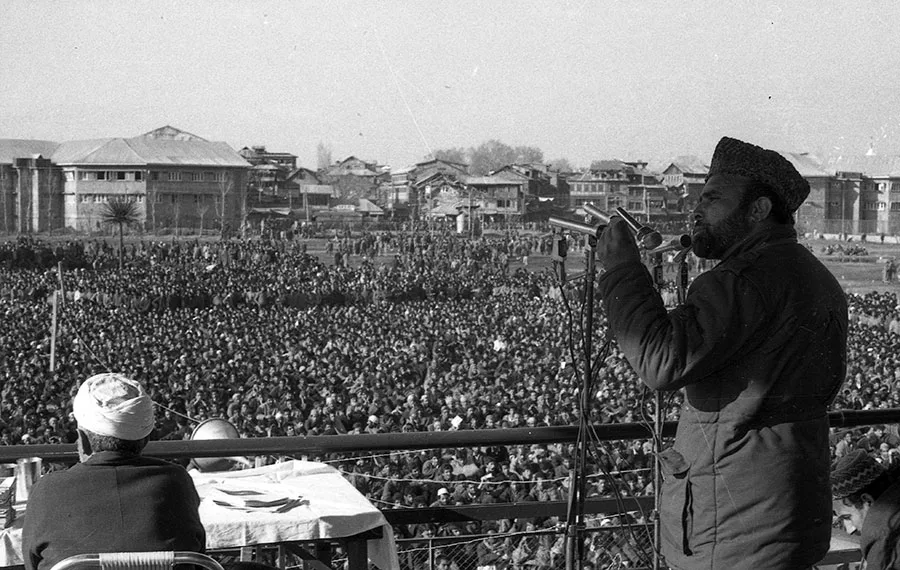
Image Credit To Kashmir Life Srinagar
But their individual journeys should not be treated as proof that every participant in the 1987 opposition movement subsequently turned to militancy.
A Lasting Political Legacy
The 1987 election left a deep mark on Kashmir’s political culture.
For decades afterwards, elections in the Valley were associated with boycotts, allegations of manipulation and political distrust.
The memory of 1987 remained particularly important among political groups that had historically rejected participation in Indian elections. Even decades later, former separatist and Jamaat-associated figures referred to the election while explaining their political positions. Reuters reported in 2024 that Jamaat-e-Islami had begun boycotting elections in 1987, citing allegations that the polls had been rigged.
1987 Election: Key Facts
| Issue | What the evidence shows |
|---|---|
| Election date | 23 March 1987 |
| Main contest | NC-Congress alliance vs MUF and other opposition groups |
| MUF vote share | About 31% |
| MUF seats | 4 |
| Major controversy | Widespread allegations of electoral manipulation |
| Amira Kadal | MUF candidate Mohammad Yusuf Shah lost despite reports of an early lead |
| Later developments | Several opposition activists subsequently entered the separatist/armed movement |
| Historical significance | Widely regarded as a major turning point in Kashmir’s political history |

Conclusion
The 1987 Jammu and Kashmir Assembly election remains a defining episode in Kashmir’s political history.
There is substantial documentation of allegations of rigging and manipulation, and the election’s aftermath contributed to a profound loss of confidence in electoral politics among many Kashmiris.
At the same time, historical accuracy requires avoiding unsupported claims. The evidence supports describing 1987 as a heavily disputed and allegedly rigged election; it does not support presenting the specific Abdul Rashid Kabli “confession” in the supplied draft as an established fact without a verifiable primary source.