Prof. Warsi Highlights Research Excellence at BGSBU Workshop on Advanced Methods and Time Series Analysis

Prof. Warsi

Rajouri – Prof. Warsi Dean of Academic Affairs at Baba Ghulam Shah Badshah University (BGSBU), emphasized the strategic importance of capacity-building initiatives in fostering a strong research culture within academic institutions. He was speaking at the valedictory session of the National Workshop on Advanced Research Methods and Time Series Analysis, organized by the Department of Economics, which concluded on April 25, 2025.

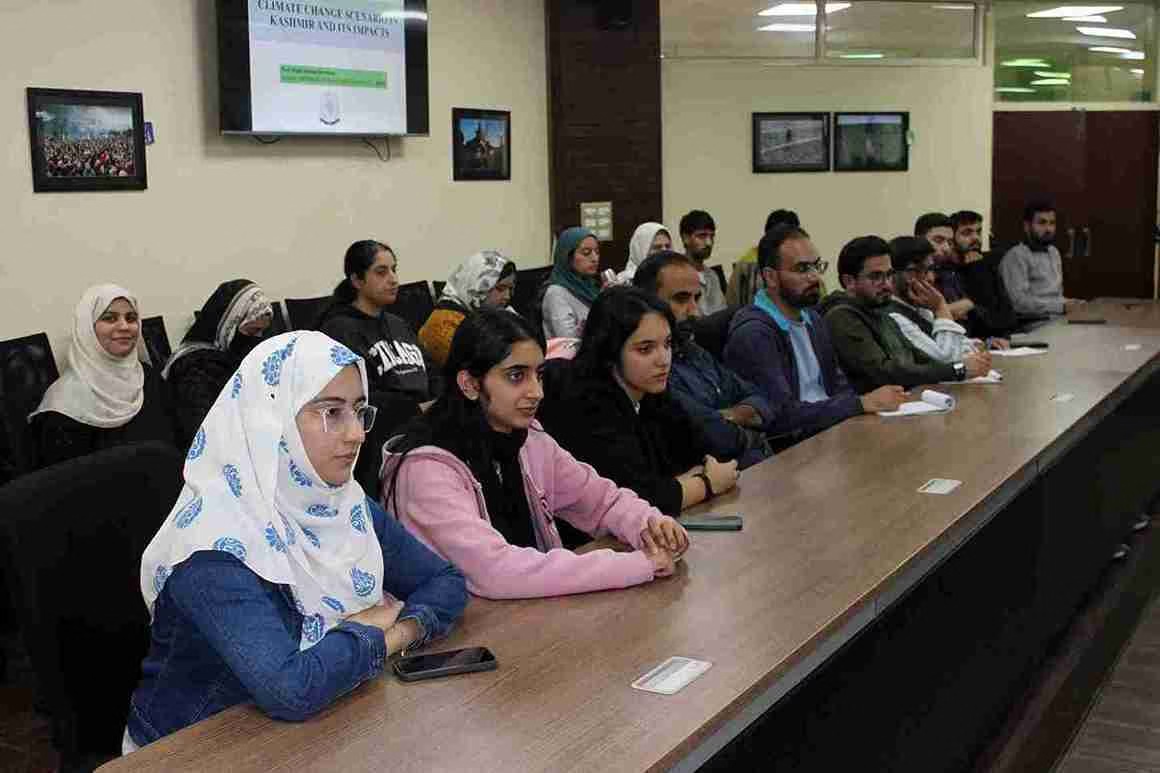
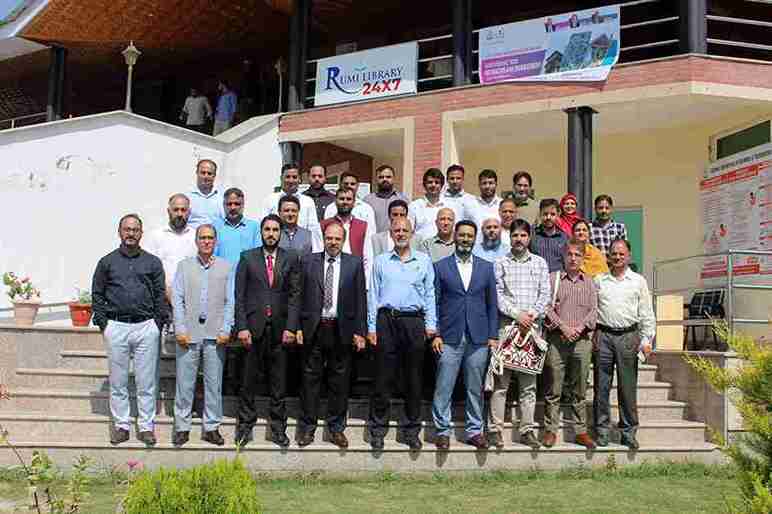
The week-long workshop, held from April 21 to 25, attracted 43 doctoral scholars and faculty members from across India. It featured an intensive schedule of lectures and practical sessions delivered by distinguished experts in the field.

Prof. M. Ramachandran opened the academic proceedings with “The Trilemma Trap,” followed by lectures on “Basics of Time-Series Analysis” and “Cointegration Analysis.” Dr. Arif Billah introduced “ARMA and Engle–Granger Cointegration,” and Dr. Gopinathan R. presented “Volatility Modelling: ARCH and GARCH.”

Sessions on “Issues in Collection of Secondary Data: Accessing Major Databases” were jointly conducted by Dr. Sajad Ahmad Rather and Ms. Tazeem Akhter. Dr. Shafkat Shafi Dar led a comprehensive session on “Generalized Method of Moments & Instrumental Variables,” while Dr. Showket Ahmad Mir addressed “Research and Publication Ethics.” Dr. Faizan Shabir and Dr. Aasim Mir guided participants through “Writing High-Impact Research Papers,” with Dr. Shabir also covering “Data Analytics with R.” Dr Md Zulquar Nain concluded the technical modules with lectures on “Spectral Analysis and Wavelet Techniques” and “Vector AutoRegression (VAR).”

The valedictory session began with a welcome address by Dr. Sajad Ahmad Rather, Head of the Department of Economics, who acknowledged the commitment of all participants and thanked the organising committee. Dr. Shamas Kamal Anjum, Associate Dean, School of Social Sciences, and Prof. Latief Hussain Shah Kazmi of Aligarh Muslim University, commended the academic depth and practical focus of the workshop.

Participants reflected positively on the workshop’s integration of theoretical learning and hands-on experience, noting its value for their ongoing research. The event concluded with a vote of thanks by Dr. Aasim Mir, who appreciated the support of the resource persons, organizing team, and university administration.

The session was compered by Ms. Tazeem Akhter, Assistant Professor, Department of Economics.

Kashmiri Students at LPU Seek Protection Amid Rising Tensions After Pahalgam Attack; SSP Assures Safety

Kashmiri Students

Amid rising tensions following the recent terror attack on tourists in Pahalgam, Kashmiri students from Lovely Professional University (LPU) Punjab met with Senior Superintendent of Police (SSP) Kapurthala, Gorav Toora, on Thursday to voice their concerns about safety and growing threats against Kashmiri youth in different parts of the country.
The students, deeply concerned by reports of harassment and intimidation targeting Kashmiris, said they felt increasingly vulnerable, especially in the aftermath of the attack which has stoked public anger and backlash. They called on local authorities to step in and ensure their protection.
Student activist Syed Abdul Mohsin Andrabi a PhD Scholar, who has been actively representing Kashmiri students in the Punjab region while speaking to the SSP, stressed the need for proactive security measures and appealed for a more sensitive handling of the situation.“We are students, not suspects,” Andrabi told SSP Toora. “Our only demand is safety and dignity. The pain of the Pahalgam attack is shared by all of us, but it should not translate into collective punishment for an entire community. We want to be able to walk freely, study peacefully, and live without fear.”
SSP Gorav Toora assured the delegation that the police are fully committed to ensuring the safety of all students, regardless of background, and that any act of communal targeting would be dealt with strictly. “No one has the right to threaten or harass anyone on the basis of identity,” he said.“You are welcome here, and we stand by you.” Significantly, the SSP also assured the students that Section 144 of the CrPC would be imposed wherever necessary to prevent any law and order situation or mob action. He urged the students to stay calm and to immediately report any incidents or threats they might face. “Punjab has always welcomed people from every background,” SSP Toora added. “We will ensure that continues, and the safety of all students, especially those feeling vulnerable right now, will be our top priority.”
Students from the Kashmir valley, currently pursuing higher education at LPU, also shared their experiences of being subjected to offline and online abuse and subtle forms of discrimination in recent days. Some expressed concern that the national mood, inflamed by recent violence, was creating a hostile atmosphere for them across campuses and cities.
Officials from LPU have also issued a statement reaffirming their commitment to student safety and inclusivity. The university is said to be in regular contact with the police and is taking internal measures to ensure a peaceful environment on campus.
The Pahalgam incident, which claimed several lives, has once again highlighted the precarious situation of Kashmiri students studying outside the region. As investigations into the attack continue, Kashmiri youth across India are appealing for empathy and protection rather than suspicion and scapegoating.(KNS)

BGSBU Launches National Workshop on Advanced Research Methods and Time Series Analysis

National Workshop

Baba Ghulam Shah Badshah University (BGSBU) commenced a One-Week National Workshop on Advanced Research Methods and Time Series Analysis, organized by the Department of Economics. The workshop was formally inaugurated by Prof. Jawaid Iqbal, Hon’ble Vice Chancellor of the University.

In his inaugural address, Prof. Jawaid Iqbal emphasized the importance of research and innovation in shaping the future of higher education. He stated, “Workshops like these play a pivotal role in enhancing the research skills of scholars and faculty members. At BGSBU, we are committed to creating an ecosystem that promotes interdisciplinary research and academic collaboration at national and international levels.” He congratulated the Department of Economics for taking this important initiative and encouraged participants to make the most of the sessions.

Prof. M. Ramachandran from Pondicherry University, who graced the occasion as the Chief Guest, highlighted the growing relevance of advanced research tools and time series analysis in economic research. He lauded BGSBU for providing a platform for scholars to engage in rigorous academic training.

Dr. Showket Ahmed Mir, Assistant Professor, Department of Economics, delivered the welcome address and provided an overview of the objectives of the workshop. The session proceedings were conducted by Ms. Tazeem Akhter, Assistant Professor, while Dr. Shams Kamal Anjum, Associate Dean, School of Social Sciences, proposed the vote of thanks.

The workshop has attracted participation from faculty members and research scholars from BGSBU and academic institutions across the country, reflecting its wide academic appeal and relevance.

Schools in Kashmir Valley to Remain Closed on April 21 Due to Bad Weathe

School Timings

Authorities on Sunday announced that classwork in all schools of the  valley shall remain suspended for one day tomorrow (21st April).

In a post on X, Sakina itoo wrote, “In light of the continuing severe weather conditions and forecasts, it has been decided that classwork in all schools of the valley shall remain suspended for one day tomorrow (21st April).”

“This decision has been taken as a precautionary step to ensure the safety and well-being of all students.” she added.

Attiya Zehra’s 99.84 Percentile in JEE Main 2025: Kashmir’s Silent Trailblazer

Attiya Zehra

In April 2025, 17-year-old Attiya Zehra from Budgam, Jammu and Kashmir, achieved an extraordinary feat by scoring a 99.84 percentile in the Joint Entrance Examination (JEE) Main, securing the highest score among female candidates in the region. Her success has been celebrated as a historic milestone, inspiring young women in Kashmir and beyond, particularly in the field of engineering, where male dominance has long been the norm. Below is an exploration of Attiya’s journey, her achievement, and its broader significance, with no direct connection to the previously discussed air taxi project or Ibtihal Aboussad unless specified.

Attiya’s Journey to 99.84 Percentile

  • Initial Attempt and Resilience: Earlier in 2025, Attiya scored an 84.10 percentile in her first JEE Main attempt, a respectable but insufficient result for her dream of attending top engineering institutes like the Indian Institutes of Technology (IITs) or National Institutes of Technology (NITs). Rather than succumbing to disappointment, she analyzed her weaknesses, refined her study strategy, and returned with a stunning 99.84 percentile in the April session. “There was no magic formula,” she said. “I just identified the gaps and committed to improving what I could.”
  • Study Approach: Attiya’s success stemmed from disciplined consistency. She maintained a tight schedule, minimized phone use, revised old material, and took regular mock tests. Without changing coaching institutes or subscribing to new test prep services, she relied on her existing resources at Alasma Educational Institute and later Spring Buds School in Budgam. Her teachers noted her focus and discipline, describing her as a quiet yet determined student.
  • Support System: Attiya drew inspiration from her family. Her father, Ghulam Hassan Khanday, a Physical Education Master, provided unwavering support. Her two elder sisters—one a journalist and the other a research scholar—served as role models of dedication and excellence. “I grew up watching them work hard,” Attiya shared. “Their journeys gave me the confidence that success comes with sustained effort, not shortcuts.”

Significance of the Achievement

  • Breaking Barriers: Attiya’s 99.84 percentile is a record for Kashmiri girls, marking a proud moment for Budgam and Jammu and Kashmir. Posts on X hailed her as a symbol of “silent strength” and “resilience,” with users like @MasroorAnsari calling her an inspiration for young women in a historically male-dominated field.
  • Context of JEE Main 2025: The JEE Main is one of India’s toughest engineering entrance exams, with percentiles reflecting relative performance among millions of candidates. A 99.84 percentile places Attiya among the top 0.16% of test-takers, likely corresponding to a rank between 1,000 and 2,000, based on 2025 trends where a 99.99 percentile aligns with ranks 12–19. This positions her well for admission to prestigious institutes like IITs (via JEE Advanced) or NITs.
  • Cultural Impact: Her achievement challenges stereotypes about academic opportunities in Kashmir, particularly for women. X posts emphasized her role in “breaking barriers” and fostering “girl power,” with @kashmir_right noting that her success proves “women are leading” in academics.

Future Plans

Attiya remains grounded despite her success, with her family opting for modest celebrations limited to a few congratulatory calls. She aims to pursue Computer Science Engineering at a top-tier institute like an IIT or NIT, focusing now on preparing for the JEE Advanced or securing her admission. Her advice to peers is simple: “If it doesn’t work out the first time, go back, figure out why, and try again. That’s all I did.”

Challenges and Broader Context

  • Competitive Landscape: Attiya’s score is exceptional but not unique, as others, like Tanu Priya from DPS Bokaro in 2021, also achieved 99.84 percentiles. However, her regional and gender-specific achievement sets her apart in Jammu and Kashmir.
  • Exam Dynamics: The JEE Main’s normalization process adjusts percentiles based on session difficulty, meaning Attiya’s 99.84 reflects consistent performance across a competitive pool. For context, 60 marks in 2025 typically yields an 82–84 percentile, underscoring the high marks (likely 250+) needed for her score.
  • Societal Pressures: Attiya’s “silent success” contrasts with the modern pressure to publicize achievements, as noted in media coverage. Her story resonates as a counter-narrative to hype-driven success, earning praise for its authenticity.

No Connection to Prior Topics

There is no evident link between Attiya Zehra’s JEE achievement and the Archer Aviation-United Airlines air taxi project or Ibtihal Aboussad’s protest at Microsoft. Attiya’s story centers on academic excellence in India, while the air taxi initiative is a U.S.-based urban mobility project, and Aboussad’s actions involve tech ethics and corporate accountability. If you’re seeking a specific connection (e.g., technological aspirations or ethical parallels), please clarify, and I can explore further.

Conclusion

Attiya Zehra’s 99.84 percentile in JEE Main 2025 is a testament to her perseverance, discipline, and quiet determination. As the top female scorer from Jammu and Kashmir, she has become a role model for Kashmiri girls and aspiring engineers. Her journey from an 84.10 to a 99.84 percentile highlights the power of resilience, making her not just a topper but, as one X user put it, “a turning point” for her community.

Ms. Rubia Gazala Earns Ph.D. for Study on E-Learning, Self-Efficacy, and Academic Achievement

Rubia Gazala

Ms. Rubia Gazala, a dedicated research scholar from the Department of Education, has successfully defended her Ph.D. Viva Voce. Her research was titled “A Study of Relation between Self-Efficacy, Attitude towards E-Learning, Internet Competency and Academic Achievement among Secondary School Students.”

The research was completed under the supervision of Dr. Nayyar Jabeen, and it explores how students’ confidence in their own abilities (self-efficacy), their attitude towards e-learning, and their skills in using the internet relate to their academic performance.

In the age of digital learning, Ms. Gazala’s study is both timely and relevant. It offers valuable insights into how digital readiness and mindset can affect learning outcomes in secondary school students. Her findings could be helpful for educators and policymakers looking to improve student achievement through better integration of technology in education.

Successfully defending her Ph.D. marks a significant academic milestone for Ms. Rubia Gazala and adds important research to the growing field of educational technology.

JKBOSE to Declare Class 12th Results by April 30, Class 10th Results to Follow Soon

Bi-Annual Results For 11th Grade

In a latest development, the Jammu and Kashmir Board of School Education (JKBOSE) is likely to declare the result of annual (regular) class 12th examination by April 30 of 2025.

A top official in the School Education Department (SED) told Greater Kashmir that the education minister has set a deadline for JKBOSE to declare the result of class 10th and 12th examination by April end.

“But as per the latest status received from the JKBOSE, the Board officials have given priority to class 12th results and there are 95 percent chances that the result will be declared by April 30. If things go well the result will be declared two days prior,” the official said.

The official said that the class 12th result has been given the priority as the outgoing students will have to join higher educational institutions.“The process for declaration of class 10th results is simultaneously going on as well. The result of class 10th exams will be declared immediately after the result of class 12th exams,” the official told Greater Kashmir.

The official said the evaluation of question papers of class 12th examination was completed on April 14 of 2025 following which the result was sent for the computing process.

“The evaluation of question papers of class 10th students is expected to be completed by Sunday. The portion of evaluation completed for class 10th students has also been sent to the computing agency. The process is going on simultaneously. Our efforts are to declare the results on time,” the official said.

The official further said that as per the reports received from JKBOSE, 75 percent evaluation of class 11th question papers has been completed as well.“But class 11th results will be declared after 12th and 10th. We are not in a hurry for class 11th,” the official said.

Earlier, the education minister Sakina Itoo convened a meeting of the JKBOSE and set a deadline for the declaration of the results.“The Board officials are working hard to declare the results of all the three classes in a time bound manner to meet the deadline fixed by the government,” the official said.

As already reported, this year, the class 10th to 12th annual Board examinations were scheduled in February month as the government restored the previous November session in schools.

As per the official figures, around 355963 students- 317136 soft zone and 38827 students were registered for the annual examination of class 10th, 11th and 12th classes in hard and soft zone areas of Jammu and Kashmir.

The exam for class 10th and 12th students in soft zone areas was scheduled from February 15 while the examination for class 11th students was scheduled February 18 of this year.

In class 10th around 132992 students– 114413 in soft zones and 18579 students in hard zones appeared in the exams in 1553 exam centres– 1313 in soft zones and 240 in hard zone areas of J&K.

Similarly in class 11th examination as many as 120673 students–109137 in soft zones and 11536 in hard zones were registered for the exams in 1134 exam centres– 1004 in soft zones and 130 centres in hard zone areas.

Also, 102298 students–93586 in soft zones and 8712 students in hard zone areas of Jammu and Kashmir had registered for the annual Board examination in 989 exam centres– 873 in soft zone areas and 116 exam centres in hard zones areas of Jammu and Kashmir.

Ms. Nighat Yousuf Successfully Defends Ph.D. on Gender Inequality and Women Labour in Post-Reform India

Nighat Yousuf

Ms. Nighat Yousuf, a dedicated research scholar from the Department of Economics, has successfully defended her Ph.D. Viva Voce. Her research focused on the topic “Gender Inequality and Women Labour Force Participation: A Study of Post-Reform Period in India.”

The study was carried out under the guidance of Dr. Showket Ahmad Mir, a respected academic in the field. Ms. Yousuf’s work explores the challenges faced by women in the Indian labour market, especially after the economic reforms. Her research highlights key issues such as unequal opportunities, wage gaps, and barriers that prevent women from fully participating in the workforce.

The post-reform period in India, which began in the early 1990s, brought many changes to the economy. However, Ms. Yousuf’s study shows that despite growth in some sectors, gender inequality in employment remains a serious concern. Her findings shed light on the need for stronger policies and support systems to improve women’s participation in the labour force.

The successful defence of her Ph.D. marks an important academic achievement for Ms. Nighat Yousuf and adds valuable insights to ongoing discussions about gender and employment in India. Her work is expected to contribute to future policy-making and academic research in the area of gender economics.

Baba Ghulam Shah Badshah University (BGSBU) Celebrates Rajouri Day

Rajouri Day

Baba Ghulam Shah Badshah University (BGSBU), Awantipore, commemorated Rajouri Day with deep respect and patriotic spirit, paying heartfelt tribute to the brave soldiers and civilians who played a pivotal role in liberating Rajouri from tribal invaders in April 1948.

Held at the university campus, the event brought together faculty members, scholars, students, and staff, all united in celebrating the region’s enduring legacy of sacrifice and resilience.

Vice Chancellor Prof. Jawaid Iqbal, in his address, highlighted the importance of remembering the sacrifices made by the Indian Army. “Rajouri Day is not merely a commemoration—it is a solemn reminder of the extraordinary bravery and indomitable spirit of those who defended this land,” he said. He also reaffirmed the university’s commitment to instilling values of courage, unity, and social responsibility among students.

The keynote address was delivered by Jb. Iqbal Shawl, a well-known scholar and social thinker. He recounted the events of April 13, 1948, when Indian troops, with the help of local residents, successfully recaptured Rajouri. Shawl paid tribute to unsung heroes and urged the youth to draw inspiration from their legacy.

To mark the occasion, cultural performances were organised by students and faculty, including patriotic songs and traditional folk music, which added emotional and cultural richness to the event. The audience was deeply moved by the performances that reflected the region’s vibrant heritage.

The celebration was attended by distinguished guests such as Prof. Qutbuddin from Jawaharlal Nehru University, Deans of various schools, the Controller of Examinations, department heads, faculty members, and students.

Dr. Tanvir Ahmed, Assistant Professor, Department of English, concluded the event with a formal vote of thanks, acknowledging everyone who contributed to the success of the programme.

BGSBU’s observance of Rajouri Day served not only as a tribute to historical bravery but also as a call to uphold the ideals of unity and patriotism in contemporary times.

U.S. Colleges Alarmed as Student Visas Are Revoked Without Warning

US Student

In recent weeks, a wave of confusion and concern has swept across U.S. college campuses as reports emerge of international students having their visas revoked without apparent reason or prior notice. Universities, students, and legal advocates are sounding the alarm, describing the situation as unprecedented and disruptive, with far-reaching implications for academic communities and the broader landscape of immigration policy. As of April 9, 2025, this phenomenon has sparked lawsuits, campus unrest, and a heated public debate over due process, free speech, and national security.

A Sudden and Unexplained Shift

The issue came into sharp focus when prestigious institutions like Harvard University and Dartmouth College began reporting that some of their international students’ visas had been abruptly canceled. According to college administrators, neither the affected students nor the schools were provided with explanations for these revocations. For instance, Xiaotian Liu, a doctoral student at Dartmouth, filed a lawsuit on April 7, 2025, claiming that his visa was revoked on April 4 without any justification. Represented by the American Civil Liberties Union of New Hampshire, Liu asserts that he has no criminal record and has not engaged in any activities—such as protests—that might typically draw scrutiny from immigration authorities.

Harvard and other universities have echoed similar concerns, noting that the lack of transparency has left them scrambling to support their students. The revocations appear to be linked to manual changes in the Student and Exchange Visitor Information System (SEVIS), a database managed by U.S. Immigration and Customs Enforcement (ICE). University officials report that these changes are being made without their knowledge or input, undermining the usual collaborative process between educational institutions and immigration authorities.

Fear and Confusion on Campus

The sudden visa cancellations have sown fear and uncertainty among international students, many of whom rely on their F-1 student visas to pursue their education in the United States. Once a visa is revoked, students are required to leave the country or face potential detention and deportation—a prospect that has caused significant distress. Colleges report that the affected students are often left in limbo, unsure of how to appeal the decisions or regain their legal status.

Administrators describe a ripple effect across campuses, with international student communities feeling particularly vulnerable. “This is creating a climate of panic,” one university official told a major news outlet. “Students are afraid to speak out or even attend classes, not knowing if they’ll be next.” The lack of communication from ICE or the Department of Homeland Security (DHS) has only deepened the sense of unease, as neither agency has provided a clear rationale for the revocations.

A Policy Shift or Targeted Enforcement?

The timing and nature of these visa revocations have fueled speculation about their underlying cause. Some observers point to recent statements from high-ranking officials, including Secretary of State Marco Rubio, who on March 27, 2025, announced that 300 student visas had been revoked. Rubio justified the move by asserting that the U.S. has the right to rescind visas of students participating in campus protests, particularly those perceived as anti-American or pro-Hamas. However, it remains unclear whether the current wave of revocations is directly tied to this policy or represents a broader enforcement effort.

Critics argue that the lack of due process raises serious legal and ethical questions. The First Amendment protects free speech, including the right to protest, and revoking visas without evidence of wrongdoing could infringe on these rights. In Liu’s case, for example, he claims he has not participated in any protests, suggesting that the revocations may not be exclusively tied to political activity. Legal experts also note that visa holders are typically entitled to some form of notice and an opportunity to respond before such actions are taken—a standard that appears to have been bypassed in these instances.

On social media platforms like X, public sentiment is divided. Some users cheer the revocations, arguing that foreign students who criticize the U.S. should not be allowed to remain. Others decry the moves as arbitrary and punitive, accusing the government of targeting “the brightest and smartest” to appease political pressures. Without official clarification, these competing narratives have only intensified the controversy.

Legal and Academic Fallout

The affected students and their advocates are not standing idly by. Lawsuits like Liu’s, which name DHS Secretary Kristi Noem and acting ICE Director Todd Lyons as defendants, seek to challenge the revocations and demand answers. The ACLU and other organizations argue that the government’s actions violate administrative law and constitutional protections, potentially setting the stage for a significant legal battle.

For colleges, the stakes are equally high. International students contribute billions of dollars to the U.S. economy each year and enrich academic environments with diverse perspectives. A sustained crackdown could deter future applicants, threatening the global competitiveness of American higher education. Universities are now grappling with how to reassure their international cohorts while navigating an opaque and seemingly unpredictable immigration landscape.

Broader Implications

The revocation of student visas without reason or warning raises broader questions about U.S. immigration policy under the current administration. Is this an isolated enforcement action, or a harbinger of tighter restrictions to come? The lack of transparency from ICE and DHS has left observers searching for clues, with some linking the moves to heightened national security concerns or political posturing ahead of upcoming elections.

For now, the situation remains fluid. As more students come forward and colleges amplify their calls for clarity, pressure is mounting on federal authorities to explain their actions. Until then, the academic year continues under a cloud of uncertainty, with international students caught in the crosshairs of a policy shift they neither anticipated nor fully understand.

Conclusion

The revocation of student visas without reason or warning, as reported by colleges across the U.S., marks a troubling chapter in the intersection of education and immigration. For the students affected, it is a personal crisis; for universities, a logistical and moral challenge; and for the nation, a test of its commitment to fairness and openness. As lawsuits unfold and public discourse intensifies, the resolution of this issue could reshape the experience of international students in America for years to come. For now, all eyes are on the government to provide the answers that students, schools, and citizens alike are demanding.

Dr. Nafiaah Naqash Wins BioCARe Fellowship 2024-25 for Groundbreaking Research on Plastic Waste and Wound Healing

Dr. Nafiaah Naqash

 Dr. Nafiaah Naqash, a researcher from SKUAST-K, has been awarded the esteemed BioCARe Fellowship 2024-25 by the Department of Biotechnology, Government of India. Mentored by Dr. Showkeen Muzamil Bashir from the Division of Veterinary Biochemistry, FVSc & AH, SKUAST-K, she is set to embark on an innovative research journey.

This exceptionally competitive fellowship empowers women scientists across India with robust academic and financial support. This year, Dr. Nafiaah joins the selective circle of scientists driving innovations in the country.

Dr. Nafiaah has made notable contributions to environmental toxicology, particularly in microplastic contamination and the effects of multiple environmental stressors. Her work, featured in high-impact journals (with an impact factor up to 15.0), has brought critical attention to key ecological concerns.

She will be awarded a research grant of ₹59.9 lakh, including ₹27 lakh fellowship support for 3 years for a research project titled “Plastic Waste to Bioactive Healing Hydrogel for Effective Management of MRSA-Infected Diabetic Wounds’’

This remarkable achievement not only highlights Dr. Nafiaah’s scientific excellence but also reflects SKUAST-K’s expanding role as a hub of interdisciplinary research and innovation. With a clear mandate for cutting-edge research, SKUAST-K, under the visionary leadership of Hon’ble Vice Chancellor Prof. Nazir Ahmad Ganai, continues to demonstrate its unwavering commitment to national progress. These accomplishments stand as a testament to the university’s dedication towards contributing efforts for the vision of Viksit Bharat @2047.

Centre Reaffirms Ban on Pakistani Medical Degrees for Indians and OCIs, With Limited Exceptions

Pakistani Medical Degrees

The Central government has ruled out any possibility of reconsidering its advisory prohibiting Indian nationals and Overseas Citizens of India (OCIs) with medical degrees from Pakistan from seeking employment or higher education in India.

In reply to a question of NC MP Aga Syed Ruhullah Mehdi in the Lok Sabha, the Ministry of Health and Family Welfare has said that the public notice issued by the National Medical Commission (NMC) on April 28, 2022, remains operational.

According to the Ministry, however, candidates enrolled in Pakistani medical colleges before December 2018 or those who obtained security clearance from the Ministry of Home Affairs (MHA) are eligible to appear in India’s Foreign Medical Graduate Examination (FMGE) or pursue employment in the country.

The government has, however, clarified that an exception has been made for migrants and their children who have acquired Indian citizenship and hold degrees from Pakistan and have been given the required security clearance.

School Timings Changed in Kashmir Division from April 1, Says DSEK

School Timings

The Director of School Education Kashmir (DSEK) Saturday ordered change in school timing for Kashmir division with effect from April-01.

DSEK in a order said that the schools within Srinagar municipal limits shall have a school time of 9:00 am to 3:00 pm in all government and private schools.

It also said that the educational institutes outside municipal limits of Srinagar and other areas of Kashmir province shall have timing of 09:30 am to 03:30 pm.

“The order and instructions shall be adhered to strictly by all the concerned institutions. Any deviation in this regard shall be viewed seriously.,” DSEK said—(KNO)

IUST Awantipora Hosts Seminar on Melting Himalayan Cryosphere Before First World Day for Glaciers

Melting Himalayan Cryosphere

Awantipora, J&K – The Islamic University of Science and Technology (IUST), Awantipora hosted a one-day seminar on “Melting Himalayan Cryosphere and its Implications” ahead of the First World Day for Glaciers. The event brought together researchers, academicians, policymakers, and environmentalists to discuss the alarming rate of glacier melt in the Himalayas and its consequences for ecosystems, water security, and regional communities.

Organizers and Participants

The seminar was organized in collaboration with:

  • Centre of Excellence for Glacial Studies, University of Kashmir (UoK)
  • Indian Society of Geomatics (ISG), Kashmir Chapter
  • Indian Meteorological Society (IMS), Srinagar Chapter

The event saw participation from leading scientists, climate researchers, and students from various institutions. Eminent speakers shed light on the causes, current trends, and future projections of glacial retreat in the Himalayas.

Key Objectives of the Seminar

The seminar aimed to:

  1. Raise Awareness – Highlight the impact of climate change on the fragile Himalayan cryosphere.
  2. Facilitate Scientific Discourse – Provide a platform for experts to share research findings on glacial retreat and its implications.
  3. Discuss Policy Measures – Explore environmental and socio-economic risks, including water shortages and biodiversity loss.
  4. Encourage Collaboration – Strengthen partnerships between researchers, policymakers, and institutions to find sustainable solutions.

Major Topics Discussed

Experts delivered insightful presentations on various aspects of climate change and glacier dynamics, including:

  • Glacial Retreat Trends – Scientific studies showing rapid ice loss in the Himalayan region.
  • Water Security Concerns – How melting glaciers affect river systems, drinking water supplies, and hydropower.
  • Ecosystem Disruptions – The impact of climate change on biodiversity, agriculture, and local communities.
  • Disaster Risks – Increased threats of glacial lake outburst floods (GLOFs), landslides, and avalanches.
  • Adaptation Strategies – Measures to mitigate the effects of glacier melt, including conservation policies and community-based solutions.

Significance of the First World Day for Glaciers

The seminar was held on the eve of the First World Day for Glaciers, a global initiative aimed at raising awareness about the importance of glaciers and the urgent need to protect them from climate change. The observance of this day underscores the role of glaciers in sustaining life and maintaining ecological balance.

Expected Outcomes and Recommendations

As a result of the seminar, participants emphasized:

  • The need for enhanced monitoring of Himalayan glaciers through satellite imagery and field studies.
  • Strengthening climate policies to curb greenhouse gas emissions.
  • Promoting sustainable water management to counteract the effects of glacier loss.
  • Increasing community engagement to ensure local populations are equipped to handle environmental changes.

Conclusion

The IUST Awantipora seminar served as a vital platform to discuss one of the most pressing environmental challenges of our time. With glaciers melting at an unprecedented rate, the need for immediate and collective action has never been more critical. Experts urged governments, institutions, and individuals to take concrete steps toward protecting the Himalayan cryosphere for future generations.

The event concluded with a call for further research, policy interventions, and community-driven solutions to safeguard the region’s water resources and biodiversity against the growing threat of climate change.

Jamia Millia Islamia Hikes Fees by Up to 41% Across Programs for 2025-26

Jamia Millia Islamia

Students at Jamia Millia Islamia (JMI) will have to shell out significantly more for their education this year, with tuition fees rising by 19 per cent to 41 per cent across undergraduate and postgraduate programs.

The sharpest hikes are seen in humanities, social sciences, and science courses, traditionally considered more affordable, while technical and professional programs have also seen significant revisions. This was revealed after comparing the 2025-26 prospectus with that of the previous year.
Jamia’s administration did not respond to calls or messages for comment.

Students enrolling in the Department of Persian will see a 41.41 per cent increase, with annual fees rising from Rs 6,700 to Rs 9,475, the comparison of the two prospectuses revealed.

The Department of Arabic follows closely with a 37.15 per cent hike, pushing fees from Rs 7,200 to Rs 9,875.

Similarly, fees for foreign language programs such as BA in Turkish, French, and Spanish have also jumped by 37.15 per cent, now costing Rs 9,875 per year.
Among social sciences programs, students pursuing M.A. and B.A. in Political Science, History, and Sociology, as well as the four-year B.A.

(Multidisciplinary) program, will now have to pay Rs 9,875 per year, reflecting a 32.99 per cent hike from Rs 7,425 last year. B Com (Hons.) fees have also risen from Rs7,425 to Rs9,875 per year (33.02% increase). The fee hikes extend to science programs as well.

B.Sc. students in Geography, Mathematics, and Physics will now pay Rs 10,475 annually, a 34.29 per cent increase from Rs 7,800 last year.
Technical and professional courses have also been affected.

The B Tech program has seen a 19.04 percent hike, with fees increasing from Rs 16,150 to Rs 19,225 per cent. M.Tech programs will now cost Rs 21,375 per year, up 16.48 per cent from the previous Rs 18,350. Law students in B.A. LL.B. and LL.M. programs will pay Rs 17,850 per year, reflecting a 19 per cent hike from Rs 15,000.

In addition to the tuition fee hikes, Jamia Millia Islamia has introduced several new courses for the academic year 2025-26, particularly in self-financed programs. Notable additions include the MSc in Artificial Intelligence and Machine Learning (Rs52,400 per year) and the MSc in Disaster Management & Climate Sustainability Studies (Rs58,775 per year).

The university has also launched postgraduate diploma programs such as the P.G.

Diploma in Air and Space Laws (Rs29,000 per year), along with new certificate courses in design, textile, photography, and calligraphy.

Additionally, JMI has introduced an installment-based payment system for self-financed courses, allowing students to pay their fees in two parts. (ANI)

Kashmir University Approves Nursing Course at Kupwara Campus, Expanding Educational Opportunities

Kupwara Campus

In a significant academic development, Kashmir University has approved the establishment of a Nursing course at its Kupwara Campus. The decision was taken on Tuesday during the Academic Council meeting, chaired by Vice-Chancellor Prof. Nilofer Khan.
According to a statement issued by the university, the council deliberated on various academic matters, including a review of program choices at the university’s satellite campuses. It considered market demand, intake capacity, and admission trends before approving new courses. Additionally, the feasibility of introducing more undergraduate programs in affiliated colleges was assessed.
The Academic Council also assessed the academic feasibility of introducing various subjects and courses at the undergraduate level in the affiliated colleges of the University. Additionally, the council approved the syllabi of various five-year integrated courses and endorsed the introduction of new programs in Cybersecurity and Digital Forensics, Artificial Intelligence and Data Science, as well as Nursing and Paramedical Sciences at the Kupwara Campus.
The announcement was met with widespread appreciation, with Advisor to the Chief Minister, Nasir Aslam Wani (Sogami), sharing the news on X (formerly Twitter).
“Great news for Kupwara! I am delighted to share that the Nursing College has been officially approved for the Kupwara University Campus!My heartfelt gratitude to VC Prof. Nilofer Khan and Dean Academic Affairs Prof. Peerzada Sharifdin for considering my request,” he wrote.
The decision was also praised by local representatives. DDC Member Nasir Lone and youth leader Tahir Syeed thanked the university authorities and acknowledged Advisor Sogami’s efforts in securing approval for the course.
Nasir Lone expressed his appreciation on social media, stating, “Great news indeed. Kudos for your efforts @nasirsogami!”
Meanwhile, Tahir Syeed also took to X, posting, “Great news indeed for Kupwara! A big appreciation to Advisor to CM @nasirsogami Sb for his dedicated efforts in making this possible.”
It is pertinent to mention that on November 12, 2024, Advisor to the Chief Minister Nasir Aslam Wani had submitted a recommendation letter to university authorities, along with a representation from Civil Society Kupwara, advocating for the introduction of a Nursing college at the Kupwara University Campus.
The approval of this course is expected to provide significant educational and career opportunities for aspiring students in the district.(KNS)

Islamic University of Science and Technology Awantipore (IUST) Hosts Plantation Drive & Environmental Awareness Campaign to Promote Sustainability

Plantation Drive

The Islamic University of Science and Technology (IUST) organized a Plantation Drive and Environmental Awareness Campaign at its campus, reinforcing its commitment to sustainability and environmental conservation. The event was conducted by the Department of Environment, Sustainability & Climate Change in collaboration with the Social Forestry Department, Pulwama; Floriculture Department, Kashmir; and the Department of Ecology, Environment & Remote Sensing (DEERS).

Inauguration and Key Attendees

The event was inaugurated by Prof. Shakil A. Romshoo, Vice Chancellor of IUST, in the presence of key officials, faculty members, and students. Notable attendees included:

  • Prof. Abdul Wahid Makdoomi, Registrar, IUST
  • Prof. A.H. Moon, Dean Academics
  • Prof. Humayun Rashid, Professor of Practice
  • Prof. Parvez A. Mir, CEO, CIED
  • Ms. Gazalla Abdullah, Divisional Forest Officer (DFO), Social Forestry, Pulwama
  • Shri Manzoor Ahmad Beig, Executive Engineer, R&B Pulwama
  • Shri S. Iqbal Qurashi, Deputy Registrar, Estates
  • Dr. Asifa Baba, Dean Students Welfare
  • Dr. Sumira Nazir Zaz, Coordinator, Department of Environment, Sustainability & Climate Change
  • Dr. Dharam Chand, Coordinator, Biodiversity & Aromatic Park
  • Shri Sajad Ahmad Khaki, Mass Media Officer (DEERS)
  • Dr. Yasir Altaf and Dr. Zubair Ahmad Dar, along with other faculty members, students, and field staff from the collaborating departments.

Speeches and Key Messages

During the event, Prof. Shakil A. Romshoo emphasized the urgent need for collective action to tackle climate change and environmental degradation. He highlighted the role of youth in environmental conservation and encouraged students to actively participate in green initiatives.

Prof. Humayun Rashid stressed the importance of academic institutions in fostering sustainability and promoting eco-friendly practices among students. He urged young minds to integrate environmental consciousness into their daily lives to ensure a sustainable future.

Plantation Drive and Environmental Awareness Campaign

As part of the environmental awareness campaign, the plantation drive at IUST aimed to promote tree plantation, biodiversity conservation, and sustainable environmental practices.

  • The Floriculture Department provided 50 Chinar saplings for the drive.
  • The Social Forestry Department contributed 250 Deodar saplings to the initiative.
  • Students, faculty, and the local community actively participated, reinforcing the shared responsibility of creating a greener future.

The campaign is part of a larger sustainability initiative by the Department of Environment, Sustainability & Climate Change, which focuses on educating students about the importance of environmental conservation and promoting sustainable practices within and beyond the university campus.

Conclusion

The Plantation Drive and Environmental Awareness Campaign at IUST marked another milestone in the university’s sustainability efforts. By involving students, faculty, and local stakeholders, the initiative not only encouraged tree plantation but also strengthened the message of collective responsibility in protecting the environment.

With such proactive measures, IUST continues to play a pivotal role in promoting environmental consciousness and encouraging young minds to be active contributors to a sustainable and green future.

J&K Implements National Education Policy (NEP-2020) in All Colleges, Focuses on Skill-Based Education

sakeena itoo

Minister for Health and Medical Education, Social Welfare and Education, Sakeena Itoo, informed the Legislative Assembly that the Higher Education department has successfully implemented the National Education Policy (NEP)-2020 in all Government Degree Colleges across Jammu and Kashmir.

The Minister was replying to a question raised by Javid Riyaz in Legislative Assembly today. The Minister informed the House that the colleges of J&K are already offering job-oriented and skill-based courses to enhance students’ employability and practical learning.

She apprised that the Business Management programs are being offered in various colleges in J&K but Artificial Intelligence as a separate program has not been introduced as yet as the subject is new and developing area of learning.

She further said that Artificial Intelligence is taught as part of curriculum of Computer Applications.

NIT Srinagar’s Dr. Majid Hussain Secures ISRO RESPOND Funding for Planetary Dust Research

Dr. Majid Hussain

In a significant achievement for the National Institute of Technology (NIT) Srinagar, Dr. Majid Hussain, Assistant Professor at the Department of Civil Engineering, has secured funding from the prestigious RESPOND Programme of the Indian Space Research Organisation (ISRO). His research project, titled “Modelling or experimental work related to interplanetary/planetary dust,” has been approved by ISRO’s Chairman and the Secretary of the Department of Space (DOS). The project is set to receive funding for a period of two years, marking a major milestone in space research at NIT Srinagar.

A Major Recognition from ISRO

The RESPOND Programme, initiated by ISRO, aims to promote advanced research in space-related fields by collaborating with academic institutions across India. Dr. Hussain’s project will focus on understanding planetary and interplanetary dust dynamics, an area of great importance for space exploration and planetary sciences. His work could potentially contribute to future lunar and Martian missions by providing insights into the interaction between rovers, landers, and planetary regolith.

In an official letter dated March 11, 2025, ISRO confirmed the approval of Dr. Hussain’s project and outlined the administrative processes required for fund disbursement. The letter was signed by M.A. Paul on behalf of ISRO’s RESPOND Programme, which is headquartered at Antariksh Bhavan, New BEL Road, Bengaluru. According to ISRO’s guidelines, the Department of Space will release the sanctioned funds annually through the Central Nodal Agency (CNA) Scheme to support the research activities.

Impact of the Research

Dr. Hussain’s research will significantly contribute to the understanding of how dust behaves on planetary surfaces, which is a critical factor in designing space missions. The study will explore the interaction of planetary dust with landers and rovers, providing crucial data that could help improve the durability and efficiency of exploration vehicles operating on the Moon, Mars, and other celestial bodies.

Expressing his gratitude, Dr. Majid Hussain stated, “I am thankful to ISRO for recognizing and supporting our work. This project will contribute to scientific advancements in planetary dust modeling, benefiting both fundamental research and space missions.” He also emphasized that the Department of Civil Engineering and the faculty community at NIT Srinagar are committed to pushing the boundaries of knowledge in planetary science and space technology.

Congratulatory Messages from NIT Srinagar Leadership

Dr. Hussain’s achievement has been widely celebrated within the academic and research community of NIT Srinagar. Prof. Roohie Naaz, Incharge-Director of NIT Srinagar, congratulated him on this remarkable accomplishment. She highlighted the institute’s commitment to cutting-edge research and its growing collaboration with national institutions like ISRO. “We take immense pride in Dr. Hussain’s achievement and look forward to further strengthening our research capabilities in space sciences,” she stated.

Similarly, Prof. Atikur Rehman, Registrar of NIT Srinagar, extended his heartfelt congratulations, calling it a proud moment for the entire institute. He remarked, “We are confident that this project will make valuable contributions to the field of space science and planetary research. It reflects our institution’s dedication to fostering research excellence.”

Advancing Space Science at NIT Srinagar

This funding marks a new chapter for NIT Srinagar in space-related research. As the institute continues to enhance its research capabilities, collaborations with prestigious organizations like ISRO open new doors for students and faculty members alike. The research led by Dr. Hussain is expected to not only advance theoretical knowledge but also have practical applications in future space missions.

As India’s space program continues to make strides on the global stage, contributions from academic institutions like NIT Srinagar play a vital role in supporting ISRO’s ambitious exploration goals. With dedicated researchers like Dr. Majid Hussain, the institute is set to become a significant player in space and planetary research in the years to come.

CUK Hosts Seminar on Women’s Role in Urdu Literature on International Women’s Day

CUK Hosts Seminar

In commemoration of International Women’s Day, the Department of Urdu, Central University of Kashmir (CUK), in collaboration with the Jammu and Kashmir Academy of Art, Culture, and Languages, (JKAACL) organised a seminar ‘Jammu Kashmir Ka Nissaie Urdu Adab’ (Women’s Role in Promoting Urdu Literature of Jammu and Kashmir) at the university’s Green Campus on Thursday.

A statement of CUK issued here said that the seminar highlighted the invaluable contributions of eminent women poets and writers, including Dr Taranum Riyaz, Prof Ayesha Mastoora, Abida Ahmad, Syeda Nasreen Naqash, Shafiqa Parveen, Wajidah Tabassum, Shabnum Ashai, and others, whose literary works have played a pivotal role in shaping and enriching Urdu literature in the region.

Delivering the keynote address, former Director of All India Radio, Srinagar, Rukhsana Jabeen lauded the immense literary contributions of women in Jammu and Kashmir.She emphasised that their works have not only enriched the region’s literary landscape but also paved the way for future generations of writers and poets.

“Their writings serve as a bridge between the past and the present, preserving the essence of Urdu literature while addressing contemporary themes like identity, feminism, and Kashmir’s unique socio-political milieu,” Jabeen said.Prominent fiction writer Nilofar Naaz Nahvi underscored the often overlooked yet significant role of Kashmiri women in Urdu literature.

“Women poets, fiction writers, literary critics, and journalists have vividly portrayed the socio-political, cultural, and personal dimensions of life in Kashmir,” she said.

In her address, Kausar Rasool highlighted how women writers have skillfully encapsulated the emotions, experiences, and cultural ethos of Kashmir through their works.Head of the Department of Urdu, Prof Irfan Aalam hailed the seminar as a landmark event in recognising the literary contributions of women.

“By bringing together scholars, writers, and poets, this seminar has taken an essential step toward bridging the gap in literary recognition and ensuring that the voices of women in Urdu literature are heard and preserved for future generations,” he said.

Editor of Shiraz and Urdu, Saleem Salik acknowledged the immense contributions of women poets and scholars, noting that their works remain underrepresented.

“This seminar, through academic discussions, paper presentations, and poetic symposiums, has offered an in-depth exploration of their literary contributions, struggles, aspirations, and achievements,” he said.

Verified by MonsterInsights