By : Sheikh Mohammad Isa
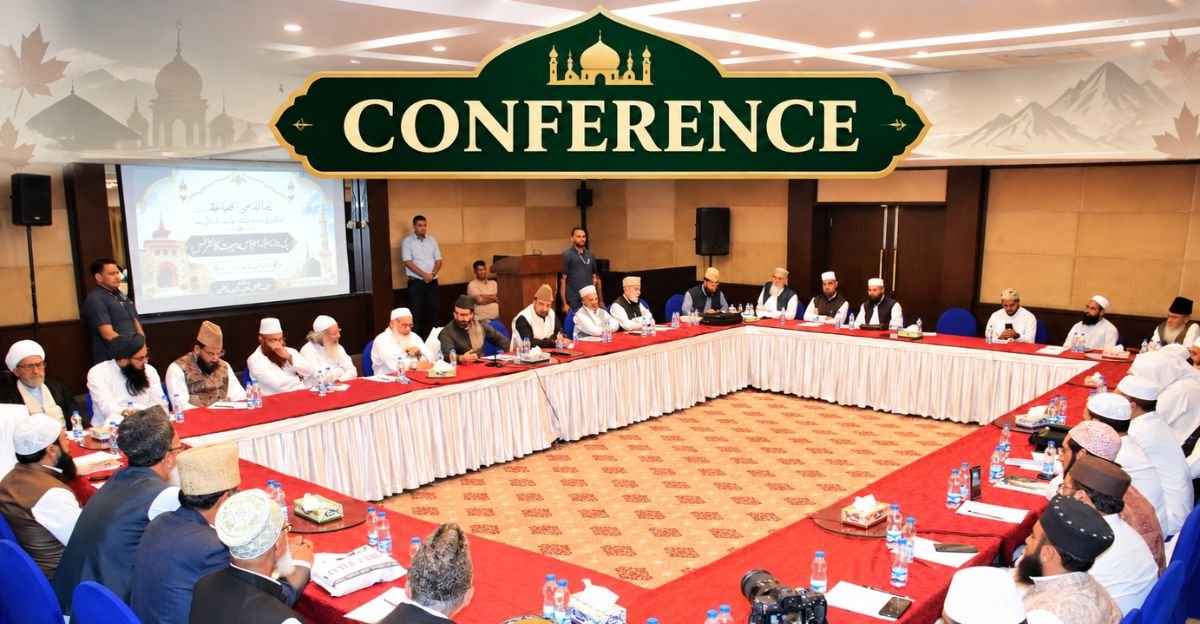
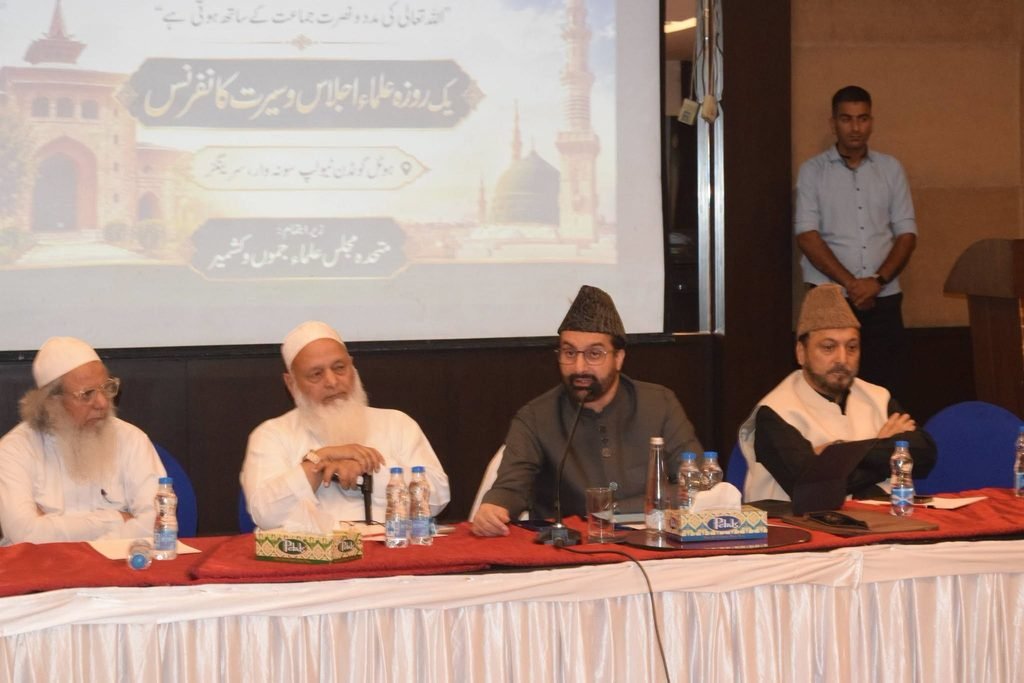
Srinagar: The United Majlis-e-Ulema (MMU) Jammu and Kashmir on Tuesday held a major Ulema and Seerat Conference in Srinagar after a gap of more than two years, with religious scholars and spiritual leaders from across Jammu and Kashmir and Ladakh calling for greater collective action on growing social challenges.
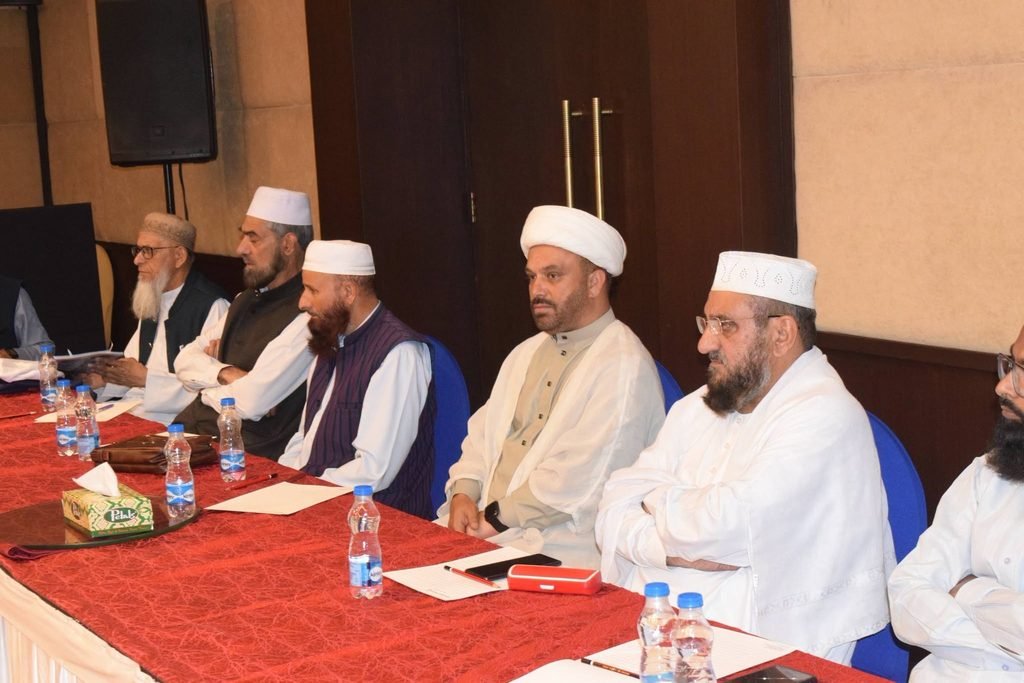
The one-day conference, chaired by Mirwaiz Umar Farooq, brought together more than 70 scholars and religious personalities from different districts and regions. Participants deliberated on the religious, moral and social issues confronting people, with particular focus on youth distress, drug abuse, environmental degradation and unity among Muslims. Click Here To Follow Our WhatsApp Channel
Scholars from across Kashmir attended the conference, while representatives from Jammu, Poonch, Rajouri, Kargil and Doda also travelled to Srinagar for the gathering.
At the conclusion, the conference adopted two major resolutions. The first addressed contemporary social challenges and the role of Ulema, mosques and madrasas, while the second focused on Muslim unity, interfaith harmony and mutual respect among different schools of thought.
Focus on rising suicide and self-harm among youth
The first resolution expressed serious concern over increasing incidents of suicide and self-harm among young people, along with what participants described as a growing disconnect between sections of society and religious and social institutions.
The scholars said that simply condemning suicide or remaining silent on the issue would not provide a solution. They stressed that Ulema, mosques and madrasas could play an important preventive and supportive role by creating safe spaces where young people and their families can discuss emotional distress, loneliness, family pressure and other difficulties without fear of stigma.
The resolution called on religious scholars and community leaders to help families recognise signs of emotional and mental distress and respond with empathy. Those requiring specialised assistance, it said, should be guided towards professional counselling and appropriate mental-health services.
At the same time, the conference acknowledged that serious mental-health concerns require trained professional care and that religious institutions should complement, rather than replace, professional services.
The participants also agreed that social concerns should not be confined to occasional seminars or speeches. They proposed that selected social issues be addressed through coordinated Friday sermons across Jammu and Kashmir and Ladakh, allowing scholars to collectively raise awareness on matters requiring urgent attention.
Mosques and madrasas urged to expand social role
The conference called for mosques and madrasas to strengthen their role as centres of guidance, counselling, youth engagement, family support and social welfare alongside their traditional religious and educational responsibilities.
According to the resolution, their close connection with local communities gives them an opportunity to identify emerging problems at an early stage and help families access appropriate support.
Concern over drugs and growing availability of liquor
The conference also called for a consistent social policy against drugs and narcotics, describing substance abuse in all its forms as harmful to society.
While appreciating efforts by Ulema and civil society to combat drug abuse, the scholars expressed concern over the increasing availability of alcohol and its growing presence in everyday life.
They questioned the effectiveness of anti-drug campaigns when new liquor licences are issued and alcohol availability is expanded or promoted in the name of tourism.
The conference urged the government to reconsider what it described as contradictory policies and called for an end to further promotion and expansion of liquor availability.
Environmental protection described as a moral responsibility
Environmental degradation also figured prominently in the first resolution.
The conference called for greater public awareness about the harmful effects of plastic and polythene bags, pollution caused by littering in rivers, lakes and other water bodies, and the encroachment and destruction of wetlands.
The scholars stressed that maintaining cleanliness, protecting the natural environment and preserving common natural resources should be regarded not only as civic duties but also as moral and religious responsibilities.
Call for unity despite differences among schools of thought
The second resolution focused on unity within the Muslim Ummah and the responsibility of religious scholars to maintain mutual respect despite differences in schools of thought and religious interpretation.
The conference acknowledged that differences of opinion and different schools of thought have historically existed within the Muslim community and are likely to continue. However, it stressed that such differences should not become a cause of hatred, hostility or division.
The scholars called on religious leaders from different schools of thought to promote Islamic etiquette, mutual respect, dialogue and brotherhood, while concentrating on the wider ethical, spiritual and social responsibilities shared by Muslims.
The conference also emphasised the need for greater interaction among scholars from different regions and schools of thought. Proposed district-level meetings are expected to strengthen cooperation, mutual understanding and coordination among Ulema, mosques and madrasas.
Conference aims for continued action
Participants said the role of religious scholars and institutions cannot be restricted to formal religious matters at a time when society is facing serious challenges.
They emphasised the need for Ulema to remain connected with the everyday concerns of people, particularly the pressures, anxieties and aspirations of young people.
The United Majlis-e-Ulema said the conference should mark the beginning of a continuing process rather than end with the adoption of resolutions.
The proposed follow-up activities include coordinated Friday sermons, district-level engagement, counselling initiatives and social-awareness programmes aimed at translating the conference’s decisions into practical action across Jammu and Kashmir.
More than 70 Ulema and spiritual leaders participated in the conference. Among the prominent participants were Maulana Rahmatullah Mir Qasmi, Mufti Azam Naseer-ul-Islam Farooqi, Mufti Nazir Ahmad Qasmi, Mufti Muhammad Yaqoob Baba Madni, Maulana Masroor Abbas Ansari, Maulana Shaukat Hussain King, Mufti Inayatullah Jummo, Sheikh Mahboob Ali Wajdani Kargil, Mufti Abdul Rashid Miftahi, Pir Rahmatullah Sahib, Maulana Syed Tayyab, Mufti Syed Sharif-ul-Haq Bukhari, Mufti Ejaz-ul-Hassan Bandey, Mufti Zia-ul-Haq Nazmi, Mufti Pirzada Riaz Ahmad, Maulana Adnan Nadvvi, Sibt Muhammad Shabir Qomi, Maulana Ghulam Rasool Nuri, Maulana Ali Akbar, Maulana Syed Shah Waris Shah Bukhari, Pir Iftikhar Ahmad Kamli, Mufti Tufail Umar Nadvvi, Maulana Sheikh Ghulam Muhammad, Maulana Muhammad Tahir Qasmi, Maulana Riaz Ahmad Qasmi, Maulana Muhammad Danesh Poonch, Maulana Pir Abdul Hamid Qazi Gand, Mufti Muhammad Sultan Qasmi, Hafiz Abdul Rahman Ashrafi, Dr Kamal Farooqi, Dr Abdul Rahman War, Dr Bashir Ahmad Magray Rajouri, Maulana Akhbar Hussain, Maulana Bashir Ahmad Usmani, Hafiz Hadith Mufti Shaukat Ahmad Qasmi, Maulana Qari Muhammad Aslam Rahimi and the council’s secretary Maulana MS Rahman Shams, among others.
You Might Also Like:
Education In Kashmir with Complete Statistics
TCS Nashik ‘Conversion’ Scandal: Accused Nida Khan Suspended as Sexual Harassment and Coercion Probe Intensifies