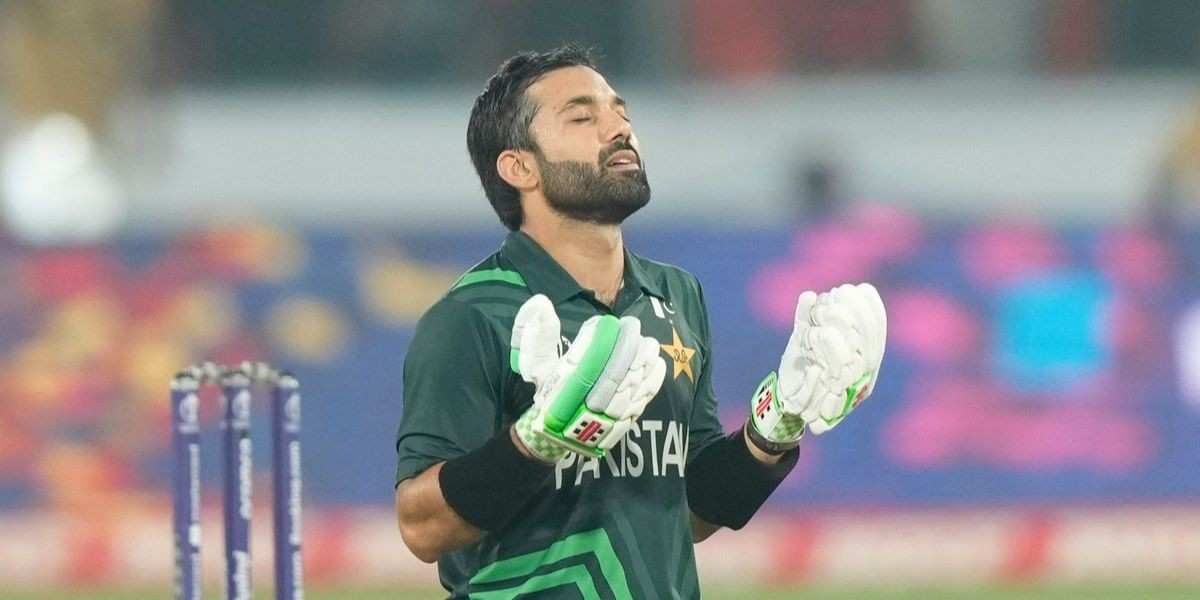
Pakistan’s star batter Babar Azam has urged fans to stop referring to him as “king,” saying that he does not consider himself one yet.
Speaking after Pakistan’s victory against South Africa in the tri-nation series, Babar said his primary focus while batting is to score well, but he has been unable to finish games.
“Unfortunately, I am not able to finish the innings, but Rizwan and Salman played well today. Performances like these boost team confidence,” he said.Babar reiterated that he does not see himself as a “king” and requested people to refrain from calling him that.
“I am not a king yet. We will see when I leave. Opening is a new role for me, and I have taken on this responsibility as per the team’s requirements,” he told reporters.
Once the innings builds, I get a better idea of the game and pitch. I always try to perform well, but I haven’t been able to play long innings after settling in,” he said.Reflecting on his mindset, Babar revealed that he often talks to himself about overcoming challenges.
“What I have done before is in the past. If I dwell on past performances, I won’t be able to perform in the future. Every new day comes with a new plan and mindset. When we successfully chase big totals, it boosts our confidence,” he added.
Kerala secured their place in the Ranji Trophy semifinals for only the second time in history after a thrilling draw against Jammu and Kashmir at the Maharashtra Cricket Association Stadium on Wednesday.
The match went down to the wire, but Kerala advanced thanks to their slender one-run lead in the first innings.
Starting the final day at 100/2 while chasing a daunting target of 299, Kerala’s approach, according to the news agency—Kashmir News Observer (KNO), was clear—survival over scoring.
The first session saw Akshay Chandran and Sachin Baby showing remarkable patience, adding just 13 runs in the first 10 overs while keeping their wickets intact.
The J&K’s pacers—Umar Nazir Mir, Yudhvir Singh, and Auqib Nabi—tried to force a breakthrough with short-pitched bowling, but Kerala’s batters refused to budge.
J&K finally got a breakthrough after 44 overs when Chandran, who had battled for 48 off 183 balls, was dismissed at short leg following a successful review. By lunch, Kerala had reached 146/3, still needing to bat out two sessions for survival.
The second session saw J&K’s bowlers turn the heat up. Sachin Baby (48) edged a rising delivery behind, and Jalaj Saxena followed soon after, lured into a drive.
At 194/6, Kerala was in deep trouble. But just when the game seemed to be slipping away, Salman Nizar, who had scored a brilliant 112 in the first innings, once again came to Kerala’s rescue.
Nizar and Mohammed Azharuddeen stood firm, soaking up the pressure. Their partnership lasted 42.4 overs, adding 70 crucial runs and frustrating J&K’s bowlers. Azharuddeen, who had struggled earlier in the tournament, delivered a timely 67, ensuring Kerala’s safe passage.
With just 30 minutes left in the game, J&K’s last desperate push fell short. Kerala finished at 295/6 in 126 overs, securing their semifinal berth on first-innings advantage and leaving J&K heartbroken—(KNO)
New Zealand delivered a dominant performance against Pakistan in the opening match of the tri-series, securing a convincing 78-run victory at Lahore’s Gaddafi Stadium. Despite a strong start from Pakistan’s bowlers, Glenn Phillips’ outstanding century turned the tide in New Zealand’s favor. Meanwhile, Pakistan’s bowling unit came under heavy criticism for their lackluster performance, raising concerns ahead of the upcoming Champions Trophy.
New Zealand’s Commanding Batting Display
Winning the toss and opting to bat first, New Zealand capitalized on a flat batting surface, posting a massive total of 331 runs in 50 overs. The innings was built on solid contributions from Kane Williamson (58 runs off 62 balls) and Daryl Mitchell (81 runs off 74 balls), but it was Glenn Phillips’ unbeaten 106 off 74 balls that made the biggest impact.
Phillips, who registered his maiden ODI century, accelerated the scoring rate in the final overs, smashing boundaries at will. His explosive hitting put immense pressure on Pakistan’s bowlers, who struggled to contain the run flow.
For Pakistan, Shaheen Shah Afridi took three wickets but had an expensive outing, conceding 88 runs in his 10 overs. Naseem Shah also proved costly, leaking 70 runs in his 10 overs without much success. Haris Rauf showed promise with two wickets for 23 runs but was forced to leave the field after just 6.2 overs due to rib pain.
Pakistan’s Struggles in the Chase
Chasing a daunting 332-run target, Pakistan needed a strong start, but their top order failed to deliver. Fakhar Zaman was the lone warrior, playing an aggressive knock of 84 off 69 balls, featuring seven fours and four sixes. However, his dismissal left Pakistan’s middle order exposed, and no other batsman could capitalize.
Agha Salman (40 off 51 balls) and Tayyab Tahir (30 off 45 balls) tried to steady the innings, but the required run rate kept climbing. With wickets falling at regular intervals, Pakistan ended their innings at 254 for 9, falling short by 78 runs. Haris Rauf, who was unable to bat, further weakened Pakistan’s chances.
For New Zealand, Matt Henry and Mitchell Santner took three wickets each, while Michael Bracewell claimed two scalps, ensuring that Pakistan never got close to the target.
Social Media Reactions: Praise for Phillips, Criticism for Pakistani Bowlers
As expected, cricket fans took to social media to share their reactions. Glenn Phillips was widely praised for his explosive innings, with even Indian cricket fans expressing concerns about his ability to change a game in the final overs.
However, Pakistani fans were deeply frustrated with their team’s bowling performance. Shaheen Shah Afridi’s final two overs, where he conceded 42 runs, became a major talking point. One user noted, “This is a worrying sign before the Champions Trophy. Our bowlers are losing their edge at the worst possible time.”
Another fan humorously remarked, “Pakistani bowlers took a beating as if it was a good deed.” This sentiment was echoed across social media, where many pointed out that Pakistan’s bowling unit, once feared, now seems inconsistent and vulnerable.
Naseem Shah also came under fire, with fans questioning his lack of impact since returning from injury. One user commented, “Naseem Shah is not the same bowler he used to be. He doesn’t look dangerous anymore.”
Haris Rauf’s injury was another worrying factor. Fans speculated about his fitness and how it might affect Pakistan’s campaign in upcoming tournaments.
What’s Next?
With this victory, New Zealand takes an early lead in the tri-series, while Pakistan will need to reassess their bowling strategies before their next match. The third team in the tournament, South Africa, will face New Zealand on Monday, while Pakistan’s next match is against South Africa on February 12.
As the tournament progresses, Pakistan must address its bowling woes and find a way to regain momentum. With the Champions Trophy on the horizon, the team cannot afford more performances like this if they want to compete with the best.
Lieutenant Governor Jammu and Kashmir, Manoj Sinha, on Saturday met Ms Nazia Bibi, an international Kho Kho player from Jammu & Kashmir who was part of India’s victorious women’s Kho Kho team at the recently concluded Kho Kho World Cup 2025 in New Delhi.
Hailing from Nagrota, Jammu, Nazia Bibi played a crucial role in the Indian team’s victory on the world stage. The Lieutenant Governor congratulated her on this remarkable achievement and lauded her contribution to the sport.
As per the government spokesperson, the Lieutenant Governor congratulated Ms Nazia for her remarkable achievement at the international event and conveyed best wishes to her for the upcoming tournaments.
The excitement for the upcoming ICC Champions Trophy 2025 is building up as tickets for the tournament go on sale starting January 28, 2025. This highly anticipated tournament will be hosted by Pakistan, marking a historic moment for the country as it prepares to welcome international cricket fans for the first global cricket event since 1996. Here’s everything you need to know about the ticket sale, tournament details, and the thrilling cricket action ahead.
1. Ticket Sales Begin on January 28
The International Cricket Council (ICC) has officially announced that tickets for the ICC Champions Trophy 2025 will be available for purchase starting at 13:00 Gulf Standard Time (GST) / 14:00 Pakistan Standard Time (PST) on January 28, 2025. Cricket enthusiasts around the world will be able to secure their seats online or through more than 100 outlets across Pakistan.
2. Tournament Dates and Venues
The ICC Champions Trophy will be played from February 19 to March 9, 2025, with matches taking place across several venues. The primary venues will include Karachi, Rawalpindi, and Lahore in Pakistan, while matches involving India will be held in Dubai, United Arab Emirates (UAE). This is a significant event for Pakistan, as it is the first time the country will host an ICC global cricket tournament in nearly three decades.
3. Group Stage and Match Details
The tournament will feature eight teams divided into two groups:
Group A: Pakistan, India, New Zealand, Bangladesh
Group B: Australia, England, South Africa, Afghanistan
The opening match will see Pakistan take on New Zealand in Karachi, setting the stage for a month-long cricketing extravaganza. Fans can expect high-octane action as some of the best teams in world cricket battle for the prestigious trophy.
4. Ticket Pricing and Categories
Ticket prices for the Champions Trophy will be affordable, starting at 1,000 Pakistani Rupees for general stand seating. For fans who wish to experience the action from a more exclusive vantage point, premium seating will be available starting at 1,500 Pakistani Rupees. These prices are set to make the tournament accessible to a wide range of fans, from casual spectators to die-hard cricket lovers.
5. Affordable and Accessible for All Fans
One of the main goals of the tournament organizers is to ensure that the Champions Trophy is accessible to fans of all backgrounds. Sumair Ahmad Syed, the tournament director, emphasized that the ticket pricing is designed to make the event inclusive, allowing fans from all walks of life to be part of this historic occasion.
Furthermore, the tickets will not only be available online but will also be distributed through over 100 outlets across Pakistan, making it convenient for fans to purchase them in person.
6. Ticket Information for UAE Matches
While the tournament’s matches in Pakistan are the focal point, there will also be matches held in Dubai, where India will be playing. Ticket details for these UAE-based matches will be shared in the coming days, with fans eagerly waiting for more information about how to secure their seats for these high-profile encounters.
7. Final Match Ticket Sales
The final match of the ICC Champions Trophy 2025 will take place on Sunday, March 9, 2025, in Dubai. Tickets for this highly anticipated match will not be available for purchase until after the first semi-final. The exact date of the final ticket release will depend on the outcome of the semi-finals, but it is sure to be one of the most-watched events of the tournament.
8. Historic Moment for Pakistan Cricket
The ICC Champions Trophy 2025 will hold special significance for Pakistan, as it will be the country’s first global cricket tournament since the 1996 Cricket World Cup. Hosting such an event is a momentous occasion for Pakistani cricket fans and players alike, and the tournament will undoubtedly serve as a major milestone in Pakistan’s cricketing history.
9. A Glimpse of the Teams and Rivalries
The tournament will feature some of the biggest names in international cricket, and fans can expect fierce rivalries between teams. The matchup between India and Pakistan is always a highlight of any tournament, and the 2025 Champions Trophy promises to deliver another thrilling chapter in this legendary rivalry. Other exciting encounters, such as Australia vs. England and South Africa vs. New Zealand, are also set to captivate cricket fans across the world.
10. How to Buy Tickets
Fans interested in purchasing tickets can do so through the official online platform, which will go live on January 28, 2025. The tickets will also be available at over 100 physical outlets across Pakistan, offering a variety of seating options for each match. Fans are advised to act quickly, as tickets are expected to sell out fast due to the overwhelming demand for such a prestigious event.
Conclusion
The ICC Champions Trophy 2025 is shaping up to be an unforgettable event in the world of cricket. With tickets going on sale on January 28, fans have the chance to be part of this historic tournament in Pakistan. From affordable ticket prices to easily accessible sales points, the organizers have ensured that the tournament will be inclusive for all. With world-class teams, intense rivalries, and a country brimming with cricket passion, the ICC Champions Trophy 2025 promises to be an event like no other. Don’t miss out—grab your tickets and get ready for an unforgettable cricketing spectacle!
Mumbai team were bundled out for 120 runs by Jammu and Kashmir in their Ranji Trophy Group A match at the Sharad Pawar Academy in BKC, Mumbai on Thursday.
Rohit Sharma had a short stay at the crease, scoring just three runs of 19 balls before being dismissed by Umar Nazir Mir.The rest of Mumbai’s batting order also struggled, leading to a quick collapse. Yashasvi Jaiswal also went out early, scoring 5 runs.
Mumbai opted to bat first but struggled against Jammu and Kashmir’s bowlers.Seamer Umar Nazir Mir bowled a tight spell, dismissing Rohit on the 13th ball he faced after 12 dot balls.Ajinkya Rahane, Hardik Tamore, Shivam Dube, and Shams Mulani followed suit, with Mumbai’s top order quickly reduced to 41/5.
Shreyas Iyer contributed 11 runs, but Mumbai continued to lose wickets. Tanush Kotian and Mohit Avasthi were dismissed shortly after, and only Shardul Thakur, who made 51, was able to offer any resistance. Mumbai were all out for 120 runs in 33.2 overs.
Umar Nazir Mir finished with 2 wickets for 43 runs, and Yudhvir Singh claimed 3 wickets for 31. The remaining bowlers, Auqib Nabi and A. Mushtaq, also contributed to the dismissals.Jammu and Kashmir will now begin their batting with a clear advantage, as Mumbai’s innings ended at 120—(KNO)
Team India skipper Rohit Sharma began practice with his domestic side, Mumbai, on Wednesday ahead of their second-round Ranji Trophy fixture against Jammu and Kashmir.
The Mumbai Cricket Association (MCA) took to their official social media handle, X and posted a picture of Rohit Sharma with the caption: “The Hitman show”.
India captain Rohit Sharma will feature in the second phase of the Ranji Trophy for Mumbai. The match against Jammu and Kashmir is scheduled to take place from January 23 to 26 at the MCA Sharad Pawar Cricket Academy, BKC, Mumbai.
Rohit’s last Ranji Trophy appearance for Mumbai was in November 2015 when he scored a blazing 113 off 140 balls against Uttar Pradesh in a match that ended in a draw.
In Test cricket, Rohit’s recent performances have raised concerns about his form. During India’s tour of Australia, the seasoned opener managed just 31 runs in five innings across three Tests.
The 2024-25 Test season, in particular, was disappointing for Rohit. He accumulated only 164 runs in eight matches and 15 innings at an average of 10.93, with his highest score being 52–a solitary half-century against Bangladesh.
As captain, Rohit faced some significant challenges. Before the Test series against Australia, India suffered their first home Test series defeat in 12 years, losing 0-3 to New Zealand. This was also India’s first-ever whitewash in a home Test series since 2000.
After India’s 295-run victory in the first Test against Australia at Perth under the leadership of Jasprit Bumrah, Rohit rejoined the team following the birth of his second child.
The Mumbai Cricket Association (MCA) announced the senior selection committee’s decision regarding Rohit’s inclusion on January 20.
A Bangladeshi court issued an arrest warrant on Sunday for cricket star Shakib Al Hasan for bounced cheques totalling more than $300,000, in the latest blow for the ousted lawmaker.
“The court has previously summoned Shakib but he did not appear at the court”, said Mohammed Shahibur Rahman from the IFIC Bank, which filed the case. “Now, the court has issued the warrant,” he said.
Shakib is a former lawmaker from the party of autocratic ex-leader Sheikh Hasina, who was and overthrown by revolution and fled by helicopter to India in August 2024.
His links to Hasina made him a target of public anger and he was among dozens facing murder investigations for a deadly police crackdown on protesters during the uprising.He has not been charged over those allegations.
Shakib was playing in a domestic Twenty20 cricket competition in Canada when Hasina’s government collapsed and has not returned to Bangladesh since.The left-arm all-rounder has played 71 Tests, 247 One-day Internationals and 129 Twenty20s for Bangladesh, taking a combined 712 wickets.
However, he was left out of the 15-man squad for the ODI tournament in the Champions Trophy in Pakistan and Dubai next month.Najmul Hossain Shanto will captain the side, with Bangladesh placed in Group ‘A’ alongside India, Pakistan and New Zealand.
Parvez Rasool, born on 13 February 1989 in Bijbehara, Anantnag district of Jammu and Kashmir, has become a significant figure in Indian cricket, particularly as the first cricketer from Jammu and Kashmir to represent the national team
Rasool’s cricketing journey began in his hometown, influenced by his father and brother, both state-level cricketers. His talent shone through during his first-class debut for Jammu and Kashmir in the 2008-09 season. However, it was the 2012-13 Ranji Trophy season that marked his breakthrough, becoming the state’s top scorer and leading wicket-taker, with 594 runs at an average of 54 and 33 wickets.
In 2013, Rasool reached a career milestone when he was selected for the Indian squad touring Zimbabwe, making him the first cricketer from Jammu and Kashmir to achieve this honour. His selection was widely celebrated, symbolising hope and inspiration for many in the region.
Throughout his career, Rasool has been recognised for his all-round abilities. He received the Lala Amarnath Award for the best all-rounder in the Ranji Trophy twice, first in the 2013-14 season and again in the 2016-17 season, scoring 629 runs and taking 38 wickets.
Beyond domestic cricket, Rasool has also played in the Indian Premier League (IPL), representing teams such as Pune Warriors India and Sunrisers Hyderabad. His journey from the cricket fields of Bijbehara to international arenas underscores his dedication and the potential of athletes from Jammu and Kashmir.
Rasool’s achievements have not only propelled his career forward but have also inspired many young cricketers in the region, demonstrating that with talent and perseverance, reaching the highest levels of the sport is possible.
Cricket has seen a steady rise in Kashmir over the years. The emergence of young talent and the increasing interest in the sport have contributed to the expansion of the cricket scene in the valley.
Despite the challenges posed by political instability over the past few decades, cricket in Kashmir has steadily gained national and international attention. The development of cricket culture in the region has been primarily supported by its domestic cricket system, which has produced some well-known cricketers.
In this article, we will highlight a few Kashmiri cricketers who have made their mark in domestic cricket.
1. Parvez Rasool
Parvez Rasool is one of Kashmir’s most prominent cricketers, having represented both domestic and international teams. The all-rounder made history as the first cricketer from Kashmir to secure an IPL (Indian Premier League) contract, signing with the Pune Warriors for the 2013 season, where he played 11 matches. Rasool became a fan favourite in subsequent IPL seasons, with many fantasy league players including him in their line-ups on various cricket apps. His all-round performances made him a top pick for cricket enthusiasts, particularly on platforms like the 10CRIC app.
However, Rasool’s true impact was felt in domestic cricket. He has played in 85 First-Class matches, scoring 4,886 runs at an average of 37, and taking 282 wickets at an average of 28.31. He also has 18 five-wicket hauls to his name.
Rasool was outstanding during the 2013–14 Ranji Trophy season, amassing 663 runs with two centuries and three half-centuries at an average of 51. He also took 27 wickets, including two five-wicket hauls, in 9 matches. His remarkable performance earned him the Lala Amarnath Award for the best all-rounder in domestic cricket.
Born in Anantnag, Rasool became the first cricketer from Kashmir to be selected for India ‘A’. Since then, he has gone on to become the first cricketer from Jammu and Kashmir to play 100 List-A matches.
His stellar domestic performances earned him his first cap for India on 15 June 2014, when he played an ODI against Bangladesh. This made him the first Kashmiri cricketer to represent India internationally. He also made his T20I debut against England in 2017.
Parvez Rasool’s Stats: Bowling
Format
Matches
Innings
Balls
Runs
Wickets
Best Bowling
Ave
Econ
SR
4-W
5-W
10-W
FC
95
155
19,980
9,578
352
8/85
27.21
2.87
56.7
18
23
5
List A
164
163
8,539
6,096
221
6/45
27.58
4.28
38.6
7
3
0
T20s
71
71
1,539
1,665
60
3/17
27.75
6.49
25.6
0
0
0
Parvez Rasool’s Stats: Batting
Format
Matches
Innings
Runs
HS
Average
Balls
SR
100s
50s
4s
6s
FC
95
161
5,648
182
38.95
8,007
70.5
16
22
696
61
List A
164
144
3,982
118*
33.46
4,719
84.3
1
32
339
85
T20s
71
54
840
59*
19.53
795
105.6
0
2
68
22
2. Ian Dev Singh
Named after cricket legends Ian Botham and Kapil Dev, Ian Dev Singh was always destined for greatness. He chose to leave behind a promising career in a multinational company in Mumbai to play for his state in domestic cricket.
Singh is the highest run-scorer for Jammu and Kashmir in First-Class cricket, with 4,725 runs. He has played the most First-Class matches for the state, featuring in 79 matches.
Singh has also made his mark internationally, playing in Sri Lanka’s domestic cricket league, and he remains Kashmir’s only international First-Class player. Over the years, he has represented various teams, including India Green, the Indian Board President’s XI, Kandy Customs Cricket Club, North Zone, and the Rest of India.
He made his Duleep Trophy debut for North Zone, scoring an impressive 145 in his first match, becoming the first cricketer from Jammu and Kashmir to score a century in the tournament.
Ian Dev Singh’s Stats: Batting
Format
Matches
Innings
NO
Runs
HS
Average
Balls
SR
100s
50s
4s
6s
FC
93
161
13
5,558
170
37.55
10,292
54.00
17
24
692
68
List A
72
70
3
1,627
112
24.28
2,364
68.82
2
9
170
15
T20s
48
48
4
876
75*
19.90
895
97.87
0
2
92
15
3. Shubham Khajuria
Shubham Khajuria made history in October 2024 by becoming the first batter from Jammu and Kashmir to score a double century in the Ranji Trophy in 22 years. He scored 255 runs off 353 balls against Maharashtra in Srinagar, setting the record for the highest score by a J&K batter in the tournament’s history.
A right-handed opener, Khajuria has consistently delivered strong performances in domestic cricket, and he was part of the India Under-19 team in 2013, becoming only the second cricketer from Kashmir to do so.
Khajuria made his First-Class debut at just 16 years old in November 2011. He was the leading run-scorer for Jammu and Kashmir in the 2018–19 Vijay Hazare Trophy, amassing 236 runs in nine matches. With his current form, it is hoped that he will soon make his IPL debut in the upcoming seasons.
Shubham Khajuria’s Stats: Batting
Format
Matches
Innings
Balls
Runs
HS
Average
Balls
SR
100s
50s
4s
6s
FC
70
122
3
3,897
255
32.74
8,332
46.77
7
23
497
74
List A
71
70
0
2,495
159
35.64
2,962
84.23
6
14
267
70
T20s
47
46
5
1,124
85*
27.41
918
122.44
0
7
109
43
These cricketers have not only put Kashmir on the map but have also set a benchmark for aspiring cricketers in the region. With their talent and determination, the future of Kashmiri cricket looks brighter than ever.
Social media has always been a space where stories can gain momentum, often without much context or clarity. Recently, an old photograph of Pakistani cricketer Muhammad Amir with Indian actress Preity Zinta resurfaced online, causing a whirlwind of rumours and discussions. The photo, initially taken two years ago, has ignited debates and speculations, despite Amir’s clear explanation.
The Picture That Started It All
The photograph in question shows Muhammad Amir alongside Bollywood star Preity Zinta. While the context of the image is simple—it was clicked during a cricket-related event—social media users began drawing their own conclusions. Some speculated about possible friendships, while others questioned Amir’s allegiance to his country, given the ongoing sensitivities between Pakistan and India.
Muhammad Amir’s Response
Amir wasted no time in addressing the rumours. Taking to his official social media accounts, he stated firmly that he is a proud patriot and will always remain loyal to Pakistan. He clarified that the picture was taken casually during a cricket event and held no deeper meaning. “It was just a photo,” Amir said, urging people not to overanalyse or politicize such harmless interactions.
The Power of Social Media
Despite Amir’s clarification, the photo has continued to circulate, with some users refusing to accept the simple explanation. This incident highlights the power—and at times, the chaos—of social media. Old content can resurface at any moment, often leading to unnecessary speculation and controversy.
A Lesson for the Online World
This situation serves as a reminder of the importance of context and critical thinking when engaging with content online. It also underscores the need for responsible sharing of information, particularly when it involves public figures from two nations with a complex relationship.
Muhammad Amir’s interaction with Preity Zinta was a moment captured in the context of cricket, a sport known for bringing people together across borders. Yet, the reactions show how quickly simple gestures can be misinterpreted in today’s digital age.
Moving Forward
As the dust begins to settle, this episode should encourage both fans and critics to focus on the positive aspects of such moments. Cricket has always been a unifying force, and events like these should be celebrated for fostering goodwill rather than sparking unnecessary controversies.
Sachin Tendulkar, often referred to as the “God of Cricket,” is a name that resonates with excellence, perseverance, and unmatched dedication in the world of sports. From his early days as a prodigy to his retirement as a cricketing legend, Tendulkar’s journey is a testament to the heights that passion and hard work can achieve. This article delves into his illustrious career, achievements, and the financial legacy he built over the years.
Early Life and Cricketing Beginnings
Born on April 24, 1973, in Mumbai, India, Sachin Ramesh Tendulkar showed an early affinity for cricket. Encouraged by his elder brother, Ajit Tendulkar, Sachin began training under the renowned coach Ramakant Achrekar. His exceptional talent was evident when he scored centuries in school cricket, setting records and gaining attention as a child prodigy.
At the age of 16, Sachin made his international debut against Pakistan in November 1989. Despite facing seasoned bowlers like Wasim Akram and Waqar Younis, he showcased resilience and determination, hinting at the greatness to come.
Career Achievements
Over his 24-year career, Tendulkar achieved milestones that remain unparalleled:
Highest Run-Scorer in International Cricket: Tendulkar scored 34,357 runs across formats, including 15,921 runs in Test matches and 18,426 in ODIs.
100 International Centuries: He is the only cricketer to achieve this remarkable feat.
First Double Century in ODIs: Tendulkar became the first player to score 200 runs in a One-Day International, achieving this against South Africa in 2010.
World Cup Glory: After five attempts, Tendulkar lifted the ICC Cricket World Cup trophy in 2011, fulfilling a lifelong dream.
Awards and Honours: Sachin has received numerous accolades, including the Bharat Ratna, India’s highest civilian award, and the Rajiv Gandhi Khel Ratna, India’s highest sporting honour.
Earnings and Financial Success
Sachin Tendulkar’s financial success is as remarkable as his cricketing career. He has been one of the highest-earning cricketers globally, with income streams ranging from match fees to endorsements and business ventures. Here’s a breakdown:
Cricketing Income:
Match fees and central contracts with the Board of Control for Cricket in India (BCCI) formed a significant part of his early earnings.
He played in the Indian Premier League (IPL) for the Mumbai Indians, further adding to his income.
Endorsements:
Tendulkar was the face of several high-profile brands, including Coca-Cola, Adidas, and MRF Tyres. He signed a historic bat sponsorship deal with MRF, reportedly worth over ₹100 crores.
Over his career, Tendulkar endorsed more than 20 brands, making him one of the most sought-after celebrities in the advertising world.
Business Ventures:
Tendulkar has invested in various businesses, including sports academies, healthcare, and restaurants. His sports academy, Tendulkar Middlesex Global Academy, focuses on nurturing young talent.
He also owns stakes in ISL football team Kerala Blasters, reflecting his interest in promoting sports beyond cricket.
Autobiography and Media Projects:
His autobiography, Playing It My Way, became a bestseller, adding to his income.
Documentaries and films about his life, such as Sachin: A Billion Dreams, have further bolstered his earnings.
Legacy and Philanthropy
Sachin Tendulkar’s contributions extend beyond the cricket field. He has been actively involved in philanthropic activities, supporting causes like child education and healthcare. As a Member of Parliament in the Rajya Sabha, he allocated funds for the development of rural areas and underprivileged communities.
Conclusion
Sachin Tendulkar’s journey from a young boy with a dream to an international cricketing icon is nothing short of inspirational. His success, both on and off the field, highlights the rewards of relentless effort and unwavering commitment. Tendulkar’s legacy is not just in records but in the millions of lives he has inspired, proving that with talent, hard work, and humility, the sky is the limit.
Virat Kohli, born on 5 November 1988 in Delhi, India, is one of the most celebrated cricketers in the world. Hailing from a Punjabi family, Kohli grew up in Uttam Nagar, Delhi. His father, Prem Kohli, worked as a criminal lawyer, and his mother, Saroj Kohli, is a homemaker. Virat has an elder brother, Vikas, and an elder sister, Bhavna.
From a young age, Virat showed an extraordinary interest in cricket. He started playing cricket at the age of three and was known for carrying a bat everywhere he went. Recognising his talent and enthusiasm, his father enrolled him in the West Delhi Cricket Academy when he was just nine years old. Kohli trained under coach Rajkumar Sharma, who played a pivotal role in shaping his cricketing career.
Domestic Career
Virat Kohli’s cricketing journey began with Delhi in domestic cricket. He first made headlines in 2006 during the Ranji Trophy when he played a crucial innings the day after his father’s death. His dedication and performance in that match showcased his mental toughness and commitment to the game.
Kohli’s consistent performances in domestic cricket earned him a place in India’s Under-19 team. In 2008, he captained the Indian team to victory in the ICC Under-19 Cricket World Cup held in Malaysia. This victory was a significant milestone in his career, bringing him into the spotlight.
International Debut and Early Years
Virat Kohli made his ODI debut for India on 18 August 2008 against Sri Lanka in Dambulla. Although he did not have an extraordinary start, his potential was evident. He made his Test debut on 20 June 2011 against the West Indies. In the early stages of his career, Kohli was known for his aggressive batting style and his ability to chase targets under pressure.
Rise to Stardom
Kohli’s breakthrough year came in 2012 when he established himself as a key player in the Indian cricket team. He scored his first ODI century against Sri Lanka in 2009, and by 2012, he had cemented his reputation as a reliable middle-order batsman. His ability to perform consistently in high-pressure situations earned him the nickname “Chase Master.”
In 2014, Kohli faced a tough period during India’s tour of England, where he struggled against the swinging conditions. However, he bounced back with a remarkable performance in Australia later that year, scoring four centuries in the Test series. This marked the beginning of his dominance in international cricket.
Captaincy
Virat Kohli was appointed the captain of the Indian Test team in 2014, following Mahendra Singh Dhoni’s retirement from Test cricket. Under his leadership, India reached new heights, including becoming the No. 1 Test team in the ICC rankings. Kohli’s aggressive captaincy style and emphasis on fitness transformed the Indian team into a formidable unit.
In 2017, Kohli took over as the captain of the ODI and T20I teams, succeeding Dhoni. As a captain, he achieved numerous milestones, including leading India to the finals of the ICC Champions Trophy in 2017 and securing a historic Test series win in Australia during the 2018-19 season.
Batting Records and Achievements
Virat Kohli is regarded as one of the greatest batsmen of all time. His impeccable technique, coupled with his aggressive approach, has helped him achieve numerous records:
Fastest to 8,000, 9,000, 10,000, 11,000, and 12,000 ODI runs.
70+ international centuries (as of 2023), placing him among the top in the list of most centuries scored.
First Indian captain to win a Test series in Australia (2018-19).
Holds the record for most double centuries by an Indian in Test cricket.
IPL Career
Virat Kohli has been associated with the Royal Challengers Bangalore (RCB) since the inception of the Indian Premier League (IPL) in 2008. He is the highest run-scorer in IPL history and has been the cornerstone of RCB’s batting lineup.
Although RCB has not won the IPL title under Kohli’s captaincy, his individual performances have been outstanding. In the 2016 season, he scored a record-breaking 973 runs, including four centuries, which remains the highest aggregate in a single IPL season.
Fitness Regime
One of the defining aspects of Virat Kohli’s career has been his focus on fitness. He is often credited with revolutionising fitness standards in Indian cricket. Kohli follows a strict diet and workout regime, which has not only improved his game but also inspired many young cricketers to prioritise fitness.
Personal Life
Virat Kohli married Bollywood actress Anushka Sharma on 11 December 2017 in a private ceremony in Italy. The couple welcomed their daughter, Vamika, in January 2021. Kohli’s relationship with Anushka has been in the limelight, with both being vocal about supporting each other’s careers.
Philanthropy
Virat Kohli is actively involved in philanthropic activities. Through the Virat Kohli Foundation, he supports underprivileged children and promotes sports. The foundation organises events like charity matches and auctions to raise funds for noble causes.
Controversies
Like any high-profile athlete, Kohli has been involved in some controversies:
Aggressive On-field Behaviour: Known for his fiery temperament, Kohli has often been criticised for his aggressive on-field conduct.
Conflict with the BCCI: Kohli’s resignation as India’s ODI captain in 2021 led to speculations about a rift with the Board of Control for Cricket in India (BCCI).
Spats with Players: His confrontations with players like Gautam Gambhir and James Anderson have made headlines.
Legacy
Virat Kohli’s impact on cricket goes beyond records and accolades. He has redefined batting in the modern era, combining traditional techniques with innovative strokes. His leadership has instilled a winning mentality in the Indian team, and his emphasis on fitness has set new benchmarks.
Off the field, Kohli is a global icon. He has a massive fan following on social media and is one of the highest-earning athletes in the world. His endorsements and brand value have made him a household name.
A-Z of Virat Kohli:
A: Aggression – Kohli’s aggressive style sets him apart.
B: Batting – A maestro with the bat, across formats.
C: Captaincy – Led India to historic victories.
D: Determination – His mental toughness is unmatched.
E: Endorsements – Among the highest-paid athletes globally.
F: Fitness – Revolutionised fitness in cricket.
G: Grit – Known for his never-give-up attitude.
H: Hundreds – Over 70 international centuries.
I: IPL – Record-holder in the Indian Premier League.
J: Journey – From a passionate boy to a global icon.
K: King Kohli – A title given by fans.
L: Leadership – Transformed Indian cricket.
M: Milestones – Achieved countless records.
N: National Hero – A source of pride for India.
O: On-field Rivalries – Known for intense battles with opponents.
P: Philanthropy – Giving back to society.
Q: Quality – A batsman of the highest calibre.
R: Records – Holder of numerous cricketing records.
S: Style – Both on and off the field.
T: Technique – Combines traditional and modern batting techniques.
U: Under-19 – The starting point of his international success.
V: Visionary – Pioneered a new era for Indian cricket.
W: Work Ethic – Known for his dedication and discipline.
X: X-Factor – A match-winner in every sense.
Y: Youth Icon – Inspires millions of young fans.
Z: Zeal – His passion for cricket is unparalleled.
Conclusion
Virat Kohli’s journey from a young boy in Delhi to one of the greatest cricketers in the world is nothing short of inspirational. His achievements, both as a player and a leader, have left an indelible mark on the game of cricket. With his unwavering determination and hunger for success, Kohli continues to be a role model for aspiring cricketers and sports enthusiasts worldwide.
Alishba Fatima Jillani, a student of grade 10th at Delhi Public School Srinagar, secured a bronze medal at the 5th Pencak Silat Junior World Championship, held recently in Abu Dhabi from December 18 to 22.
With a potent mix of attack, defence and composure beyond her years, she forced her way to the podium, making her school and country proud.
Congratulating Alishba on her success, the Principal Delhi Public School Srinagar, Shafaq Afshan said “Alishba’s win makes us all proud of her efforts and those of her coaches. At DPS Srinagar, we have always underscored the importance of nurturing talent and allowing students the freedom to excel in disciplines beyond straitjacketed academics. Her triumph is a vindication of our vision.”
The Chairman Vijay Dhar too congratulated the medalist and said, “To keep the flame of dreams lit high has always been our top most priority. At DPS Srinagar, we ardently believe in the power of dreams and their manifestation such that talent may see its ultimate fulfillment. Alishba’s win is a win of dreams over naysayers, of the path less trodden, and testament to our pledge to never let our students walk alone on the paths to success, no matter how unconventional they seem.”
Introduction: The Rise of a Football Star from Kashmir
Mehrajuddin Wadoo’s name resonates deeply within the heart of Indian football. Hailing from the beautiful yet often conflict-ridden region of Kashmir, Wadoo’s journey to becoming a celebrated footballer and national hero represents both an inspiring and motivational tale for aspiring players, particularly those from underrepresented areas in the world of sport. His journey underscores the immense power of determination, skill, and the love for the beautiful game.
Football in Kashmir has always had its roots in local communities, where young players would kick around a ball wherever they could find the space. Among these passionate youths, Wadoo’s talent shone early, marking the beginning of a remarkable career that would go on to inspire countless others from the region and beyond.
Early Life and Background: The Roots of a Footballer
Mehrajuddin Wadoo was born on February 12, 1984, in Srinagar, Kashmir, a place with a rich cultural history but also a region often affected by unrest and conflict. Growing up amidst these difficult circumstances, football became Wadoo’s escape, a source of solace in a place where the daily struggles often outshone anything else. For many youth in Kashmir, football wasn’t just a game – it was a way to channel energy, express themselves, and temporarily forget about the challenges surrounding them.
Wadoo’s introduction to football came from a family that supported him in pursuing his passion. He started playing the sport at a young age, joining local football clubs and playing in school tournaments. His exceptional ball control, speed, and ability to read the game set him apart from other young players, and by his teenage years, it was clear that he had the potential to rise through the ranks of Indian football.
Football was not just a hobby for Wadoo; it was a calling. The local fields where he played became the testing grounds for his skills. It was on these fields that he began to develop the attributes that would eventually define his career: leadership, resilience, and an unparalleled work ethic.
Discovering Talent: The Early Days of a Rising Star
As Wadoo’s reputation grew, it wasn’t long before the attention of scouts from the Jammu and Kashmir Football Association and other footballing bodies turned toward him. The local tournaments provided a stage for him to showcase his abilities, and it was during these years that he caught the eye of coaches and mentors who saw great potential in him.
Representing Jammu and Kashmir at various youth levels, Mehrajuddin Wadoo quickly garnered recognition. His performances were outstanding, earning him selection to represent the region in prestigious tournaments. His ability to perform under pressure, particularly in high-stakes situations, marked him as a player with immense potential. But it wasn’t just his footballing skills that stood out; his mental toughness and his ability to inspire those around him made him a natural leader.
It was during his teenage years that Wadoo’s journey into the professional leagues began. His breakthrough came when he was selected for various club trials, a turning point that would set the course for his illustrious career in the years to come.
The I-League Era: Wadoo’s Entry into Professional Football
Joining the Big Leagues: The Transition to the I-League
Wadoo’s move into professional football came when he joined the I-League, India’s top-tier football competition. His first major signing came with the prestigious club Mohun Bagan, one of India’s oldest and most successful football teams. This was a dream come true for Wadoo, a chance to showcase his talents at the highest level in Indian football. He spent several years playing for Mohun Bagan, making an instant impact with his performances.
His versatility as a defender soon became evident. Whether he was playing as a center-back, left-back, or defensive midfielder, Mehrajuddin Wadoo proved to be a vital asset to his teams. His ability to read the game, anticipate passes, and make crucial interceptions made him a consistent performer. Wadoo’s work ethic and tactical awareness also earned him the respect of his teammates, coaches, and fans alike.
After his stint with Mohun Bagan, Mehrajuddin Wadoo continued to make waves in the I-League with other top clubs, including East Bengal and Salgaocar. At East Bengal, his reputation soared even further, and he became one of the most sought-after defenders in the league. His leadership on the field, coupled with his ability to score crucial goals, made him a standout player in the I-League. Wadoo’s performances helped his teams win several important matches and accolades.
International Recognition: A Player on the National Stage
Call-up to the Indian National Team
Wadoo’s exceptional club performances caught the attention of the national team selectors, and he was soon called up to represent India on the international stage. This was the culmination of years of hard work and perseverance. Mehrajuddin Wadoo made his debut for the Indian national football team in 2006, marking a significant milestone in his career.
His first international appearance was a moment of immense pride, not just for him but for the football community in Kashmir. Wadoo was among the very few players from Kashmir to represent the country at the highest level, which made his achievement even more special.
Wadoo’s national team career spanned several years, and during that time, he played a crucial role in many of India’s international fixtures. His experience and leadership qualities were invaluable to the Indian team, and his contributions to the squad were significant in many of their successes. He participated in the AFC Asian Cup and other major tournaments, where his performances were pivotal.
His international career was marked by a sense of responsibility. As a senior member of the team, Wadoo often took on the role of guiding younger players and ensuring team cohesion. His leadership on and off the field helped the national team achieve several notable victories, further solidifying his status as one of the most respected players in Indian football.
A Versatile Defender: The Attributes That Defined Wadoo
Mehrajuddin Wadoo’s versatility was one of the defining characteristics of his career. While many players specialize in a single position, Wadoo’s ability to excel in multiple roles set him apart. He was as effective as a center-back, as he was playing in a defensive midfield role. His ability to read the game and adjust his style of play depending on the tactical requirements of his team made him a valuable asset.
As a defender, Mehrajuddin Wadooo was renowned for his impeccable timing when making tackles, his sharp ability to intercept passes, and his aerial prowess. He was also known for his intelligence in positioning, often finding himself in the right place at the right time to prevent opposition attacks.
Beyond defense, Wadoo had the ability to push forward and contribute to his team’s offensive play. His powerful shots from long distances and ability to join attacking moves made him an all-rounded player, capable of contributing in both defensive and attacking scenarios.
Leadership and Mentorship: A Role Model for Future Generations
In addition to his footballing talents, Mehrajuddin Wadoo is also remembered for his leadership qualities. He was a true leader, both on and off the field. His calm demeanor and ability to inspire those around him made him an excellent captain. Wadoo was known for his tactical knowledge, often guiding his teammates and providing them with valuable insights into the game.
One of Wadoo’s most significant contributions has been his work in mentoring and nurturing young talent. Even after his playing career, Mehrajuddin Wadoo remained heavily involved in coaching and player development. He played a crucial role in shaping the next generation of footballers, particularly from his home state of Kashmir. His passion for the sport and dedication to its development has led him to coach and guide aspiring footballers, ensuring that they have the necessary tools to succeed in the professional footballing world.
Wadoo’s role in fostering talent in Kashmir cannot be overstated. He has worked tirelessly to provide opportunities for young players, organizing football camps, coaching sessions, and competitions. Through his efforts, many young footballers from Kashmir have been able to pursue their dreams and follow in his footsteps.
Post-Retirement: A Continued Commitment to Football
After retiring from professional football, Wadoo could have easily chosen to step away from the game, but instead, he has remained deeply involved in the sport. He continues to mentor young players, share his knowledge, and promote football at the grassroots level. He is actively involved in the development of football academies and the promotion of football in Kashmir.
Through his work, Wadoo hopes to build a lasting football culture in the region, one where young players can have access to the training, facilities, and opportunities that will help them thrive. He is committed to creating a sustainable ecosystem for the development of football in Kashmir, helping the next generation achieve success both on and off the field.
Legacy and Impact: A Lasting Influence on Indian Football
Mehrajuddin Wadoo’s legacy extends beyond his career achievements. He has become a symbol of hope for aspiring footballers in India, particularly in regions like Kashmir where opportunities can be limited. Wadoo’s journey from the streets of Srinagar to the highest levels of Indian football is proof that talent and hard work can defy the odds, no matter where you come from.
His influence goes beyond the field. Wadoo has made a profound impact on the development of football in Kashmir, and his efforts have contributed to the growth of the sport in the region. His dedication to the sport, coupled with his efforts to provide opportunities for young
players, ensures that his legacy will continue to inspire future generations of footballers.
Conclusion: The Enduring Legacy of Mehrajuddin Wadoo
Mehrajuddin Wadoo’s career is a testament to the power of perseverance, passion, and hard work. His journey from the green fields of Kashmir to the grand stages of Indian football showcases the potential of individuals to rise above adversity and achieve greatness. As Wadoo continues to inspire and mentor young players, his legacy will endure, motivating countless others to follow in his footsteps and strive for success.
Through his leadership, mentorship, and dedication to the sport, Wadoo has left an indelible mark on Indian football. His story serves as a reminder that dreams can be realized with hard work and determination, no matter the obstacles one faces along the way.
Former Indian footballer Mehrajuddin Wadoo believes that the ongoing Reliance Foundation Youth Sports (RFYS) 2024-25 in Kashmir provides an excellent opportunity to identify players ready to compete outside the region. This marks the second year of the RFYS football tournament in the Union Territory, and Wadoo is optimistic about the impact it will have on local football talent.
Reflecting on last year’s success, Wadoo expressed his excitement for the current season. He highlighted the growing enthusiasm among young players eager to showcase their skills, noting the significant improvements in the level of competition. “The tournament last year was a huge success, and the response from players was overwhelming. It gave the youth a valuable platform to play competitive football. This season promises to be even more impactful as players are eagerly awaiting their chance,” Wadoo shared in an interview with RFYS.
Wadoo also emphasized the importance of women’s participation in the tournament, particularly in the U-19 girls’ category. He noted that several female players have the potential to make it to professional clubs and even represent the national team. However, he stressed that proper training and continued participation in such competitions are essential for their development. “It was fantastic to see girls playing last year. The finals showcased some players with immense potential who could play at higher levels with the right coaching. These players must continue to compete to improve further,” he said.
One of Wadoo’s key takeaways from his experience was the need for improved coaching standards in Kashmir. He pointed out that while the RFYS tournament provides valuable competitive exposure for both boys and girls, enhancing the quality of coaching would be crucial to fully unlock the potential of local players. “The competition is excellent, but what we need most is better quality coaching. RFYS is creating opportunities for both boys and girls, but we must focus on raising the standards of coaching to help players reach their full potential,” he explained.
In the ongoing U-15 boys’ tournament, several teams have already registered impressive victories. SRM Welkin School, Lonestar Football Academy, GHFC Ganderbal, Green Valley Educational Institute, and JK Public School have all emerged victorious in their respective matches, showcasing the high level of competition in the region.
The RFYS football tournament, now in its seventh season, is being held across 10 regions, including Mumbai, Kerala, Goa, Mizoram, Meghalaya, Delhi, Tamil Nadu, Kolkata, and Kashmir. The matches in Kashmir began on December 21, marking the second year of the competition in the region. This year, a total of 32 teams—across both boys’ and girls’ categories—are participating, with the games played in a league format.
Launched in 2016, the Reliance Foundation Youth Sports (RFYS) initiative aims to provide a structured platform for school and college students to showcase their footballing talents. Over the years, RFYS has helped numerous athletes, such as Melroy Assisi, Hira Mondal, Makan Winkle Chote, Gurnaj Singh Grewal, and Shilky Devi Hemam, progress to professional contracts with Indian Super League (ISL) and I-League clubs, and some have even represented India on the international stage.
Reliance Foundation’s sports initiatives have impacted the lives of approximately 23 million young people across India since 2013. By partnering with schools, colleges, clubs, and academies, the foundation is working to nurture talent and advance Indian football at all levels. The foundation also focuses on ensuring equal opportunities for female athletes, providing them with ample platforms to grow and succeed in sports.
Reliance Foundation’s other football-related projects include the Reliance Foundation Youth Sports, the RFYC Naupang League, and the Reliance Foundation Development League, all aimed at strengthening grassroots football in India.
J&K Additional Resident Commissioner (ARC), New Delhi, Anil Sharma, today felicitated Ankush Kohli from Department of Hospitality & Protocol and Gagan Singh Jamwal from Department of Information and Public Relations for clinching gold medal in the 62nd National Roller Skating Championship held at Coimbatore, Tamil Nadu.
Complimenting the promising players for their 6th consecutive win in the National tourney, Anil Sharma termed the victory of Ankush and Gagan and their team as phenomenal. He extended wishes to the team for their future endeavours.
Ravees Ahmad a remarkable young athlete from from Downtown Khanyar area of district Srinagar Jammu & Kashmir, has already etched his name in the sports world with an impressive list of achievements. The Ravees Ahmad is not only a talented player but also the most experienced coach of the UT & also for his respected department he has also become a coach of champions trophy winner in recent All India police event which was held at Assam.
Ravees brought pride to his region by winning a bunch of Medasl at the prestigious I Championships, where demonstrated both his skill and mental toughness. He further showcased his exceptional athletic abilities by coaching section a discipline requiring precise movements and technical expertise in Pencak Silat
But that’s not all. Ravees ,s achievements don’t stop at this event. His excellence in the sport has earned him a spot in the highly competitive All India Pencak Silat Championships national-level competition that will test the best of India’s athletes.
Ravees has his sights set on even bigger goals. With an unwavering ambition to represent India on the global stage, He aspires to compete in the Asian Games. His journey is an inspiring example of how dedication and perseverance can lead to extraordinary achievements, even at a young age.
Ravees expressed his gratitude for the support he has received from both his parents and his respected coach Mr M Iqbal “Without the constant encouragement from my family and my coach I wouldn’t have reached where I am today. They’ve always believed in me, and that has given me the confidence to pursue my dreams,” he said.
Ravees is not only a role model for aspiring athletes but also a passionate advocate for empowering young athletes through sports.He encourages every boy to take part in physical activities and push their limits to achieve their dreams. “Every boy should come forward and take part in sports. It not only helps you develop physically but also builds your mental strength. It’s about making yourself proud, making your family proud, and contributing to the pride of your country,” he added.
His message is clear: sports can shape one’s future in ways beyond the physical, teaching discipline, resilience, and confidence. Through his own success, Ravees hopes to inspire countless other young boys to chase their dreams, whether in sports or any other field.
As Ravees Ahmad continues to rise in the world of Pencak Silat his future in sports looks bright. With the full support of his family, coach, and community, he is poised to achieve great things. His dedication to excellence is not only an inspiration to his peers but also a testament to the power of sports in building character and creating opportunities for young generation in India.
With his eyes set on representing India at the highest international levels, Ravees Ahmad is a name we’ll all be watching in the coming years, and he is surely on his way to achieving Olympic and Asian Games glory.
Ravees,s success story is one of hard work, perseverance, and unwavering support from his family and coach & mentors. As he continues to make strides in Pencak Silat his, journey is a powerful reminder of the importance of pursuing one’s passions and dreams. Through his achievements, he has already begun to inspire a new generation of young generation to take up sports, push boundaries, and aim for greatness.(KNS).
A young cricketer tragically lost his life in the Nowgam area of Srinagar after being hit by a cricket ball, officials said.
An official told that the incident occurred at the Madankha Nowgam cricket ground. The deceased has been identified as Adnan Raheem Bhat, son of Abdur Raheem Bhat, a resident of Astanpora Rawalpora.
Adnan was immediately shifted to a hospital, but doctors declared him dead on arrival.Meanwhile, police have launched an investigation into the incident, and further details are awaited—(KNO)
The sight of frail hands, a shaky voice, and a visibly weakened Vinod Kambli standing beside his childhood friend, the ever-vibrant Sachin Tendulkar, has struck an emotional chord across social media. A video of the two former Indian cricketers, who once shared dreams and triumphs on the cricket field, has gone viral, stirring a mix of emotions among their fans.
This heartfelt reunion took place at an event in Mumbai, reportedly held to honour their legendary cricket coach, Ramakant Achrekar. Kambli, in his heartfelt way, was seen singing a song as a tribute to the late mentor. However, what captured the public’s attention was Kambli’s visibly fragile condition contrasted against Tendulkar’s robust appearance.
The footage, which shows the two exchanging greetings, has led fans and cricket enthusiasts to reflect on their contrasting journeys. Sachin Tendulkar is celebrated as the “God of Cricket,” while Vinod Kambli, despite his immense talent, has often been cited as a case of unfulfilled potential.
Childhood Friends, Worlds Apart
Sachin Tendulkar and Vinod Kambli’s bond dates back to their school days, where their extraordinary partnership on the cricket field first made headlines. Together, they achieved the famous 664-run stand in the Harris Shield Trophy, a record that etched their names in cricket’s history. At the time, Kambli’s flamboyant batting style and exceptional talent were considered superior even to Tendulkar’s. Their shared beginnings were a testament to a promising future.
However, while Tendulkar rose to unimaginable heights, becoming a global icon over a 24-year career, Kambli’s career faltered. Once considered among the brightest prospects of Indian cricket, Kambli played his last international match in October 2000, fading into obscurity.
The Viral Video and Social Media Reactions
The viral video of their recent meeting has sparked diverse reactions online. Many users expressed their sadness at seeing Kambli in such a frail state. One social media user, Ruchi Kokcha, remarked, “The way Vinod Kambli looked at Sachin Tendulkar with longing eyes while shaking hands was both heartbreaking and poignant.”
Another user commented on the apparent difference in their life trajectories, writing, “It’s painful to see how Kambli, once a star in his own right, now appears to be a shadow of his former self. Life took them on completely different paths.”
Some fans have drawn comparisons between their cricket careers. While Tendulkar’s journey was marked by discipline, dedication, and relentless hard work, Kambli’s downfall was often attributed to a lack of focus, off-field distractions, and alleged issues with the cricketing system.
The Rise and Fall of Vinod Kambli
Vinod Kambli’s career began with immense promise. Known for his aggressive batting style, he set numerous records early in his career. In domestic cricket, he debuted in the Ranji Trophy with a six off the very first ball he faced. He went on to score two double centuries in his first seven Test matches, a feat that placed him among the greats of Indian cricket.
Kambli was also the fastest Indian batsman to score 1,000 runs in Test cricket at the time, and his dominance against bowlers, including legendary figures like Shane Warne, further established his credentials. Yet, his career was plagued by inconsistency and controversies. By the time he played his last international match, Kambli’s promising start had become a tale of what might have been.
What Went Wrong?
Kambli has often attributed his premature exit from international cricket to politics and favouritism within the cricketing establishment. He alleged that poor support from teammates, selectors, and the cricket board were significant reasons for his downfall.
While there may be some truth to these claims, analysts and former cricketers have frequently pointed out other factors. Kambli’s temperament and lifestyle choices were often criticised. His inability to adapt his game to changing situations, coupled with a lack of discipline, further contributed to his decline.
In 2016, legendary Indian cricketer Kapil Dev weighed in on the issue, stating that Kambli’s lifestyle choices were a major factor in his career’s untimely end. Comparing Kambli and Tendulkar, Kapil said, “Both had equal talent, but Kambli lacked the discipline and focus that Tendulkar had. It’s not just about talent; it’s about how you nurture and sustain it.”
The Emotional Contrast
The video has become a stark reminder of how two individuals who started from the same point can end up leading vastly different lives. For Tendulkar, the road was paved with hard work, resilience, and an unwavering focus. For Kambli, despite his immense talent, the inability to sustain his success and navigate challenges proved costly.
One social media user summed it up aptly: “Becoming Vinod Kambli is not easy—achieving success, losing it all, and then watching others live the life you once dreamed of. Becoming Sachin Tendulkar is also not easy—achieving unimaginable success while remaining humble and focused.”
A Shared Beginning, Diverging Destinies
In their school days, Tendulkar and Kambli were inseparable both on and off the field. Their record-breaking partnership in the Harris Shield Trophy remains one of the most memorable moments in Indian cricket history. Kambli scored a staggering 349 runs in that match, while Tendulkar contributed 326. Few know that Kambli also excelled with the ball in that game, taking six wickets for just 37 runs.
Many experts at the time believed that Kambli had more natural talent than Tendulkar. Their coach, Ramakant Achrekar, once commented that Kambli had a unique ability to dominate bowlers, something even Tendulkar admired.
Yet, as their careers progressed, their paths diverged dramatically. While Tendulkar went on to become a cricketing legend, Kambli struggled to maintain his form and focus.
Lessons from Their Stories
The contrasting journeys of Sachin Tendulkar and Vinod Kambli serve as a powerful reminder that success is not just about talent. Discipline, perseverance, and the ability to adapt are equally, if not more, important. Tendulkar’s career is a testament to the power of dedication and humility, while Kambli’s story highlights the consequences of losing sight of one’s goals.
As fans, the video of their reunion is a bittersweet reminder of their shared past and the different directions life has taken them. It also serves as an opportunity to celebrate their unique contributions to Indian cricket and reflect on the importance of nurturing talent with care and responsibility.
Four players from Jammu and Kashmir were picked in the IPL 2025 auction held in Saudi Arabia, while 10 remained unsold. A total of 14 players from the region were up for auction, with two sold on the first day and two on the second.
Rasikh Salam Joins Royal Challengers Bangalore
Kulgam-born pacer Rasikh Salam was acquired by Royal Challengers Bangalore (RCB) for a staggering ₹6 crore. Entering the auction with a base price of ₹30 lakh, Rasikh is set for his fourth IPL stint, having previously played for Mumbai Indians, Kolkata Knight Riders, and Delhi Capitals. His family expressed pride and hope for his performance this season, with his brother urging youth to stay focused and avoid distractions like drugs.
Rasikh’s cricket journey began after impressing during the 2019 Vijay Hazare Trophy, earning a call for Mumbai Indians’ trials. Despite setbacks, including a two-year ban by the BCCI in 2019, he has continually proved his worth in domestic cricket.
Abdul Samad and Yudhvir Singh Bag Deals
All-rounder Abdul Samad was purchased by Lucknow Super Giants (LSG) for ₹4.2 crore. Previously with Sunrisers Hyderabad, Samad aims to find form and showcase his talent this season.
Jammu-based all-rounder Yudhvir Singh was also picked by RCB for ₹35 lakh. Yudhvir, who debuted for Lucknow Super Giants in 2023, hopes to leave a mark in the upcoming season.
Umran Malik to Represent Kolkata Knight Riders
Fast-bowling sensation Umran Malik, known for his 150 km/h pace, was bought by Kolkata Knight Riders for his base price of ₹75 lakh.
Ten Players Go Unsold
The unsold players include Atif Mushtaq, Avinash Singh, Nasir Lone, Mujtaba Yousuf, Abid Mushtaq, Vivrant Sharma, Shubham Khajuria, Musaif Ajaz, Kunal Chibb, and Aquib Nabi.
Jammu and Kashmir players continue to make waves in the IPL, inspiring young talent across the region.