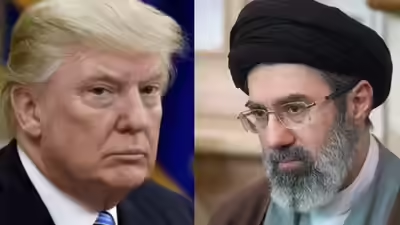
How Israel Destroyed Iran’s Largest Petrochemical Plant: The Strike on Asaluyeh’s South Pars Complex

Iran's Largest Petrochemical Plant

A recent Israeli airstrike on Iran’s key energy hub at the Asaluyeh industrial zone has delivered a serious blow to the country’s petrochemical sector, with wide-ranging economic and strategic consequences.

The strike targeted facilities linked to the massive South Pars gas field — the largest natural gas field in the world and a cornerstone of Iran’s economy. Click Here To Follow Our WhatsApp Channel


A Direct Hit on Iran’s Energy Backbone

The South Pars region is not just another industrial site — it is the heart of Iran’s energy system. It supplies gas for electricity, heating, and industrial production across the country.

According to reports, the targeted petrochemical complex in Asaluyeh is responsible for nearly 50% of Iran’s petrochemical production.

By striking this area, Israel effectively hit one of Iran’s most valuable economic assets.


Disrupting Production Without Destroying Everything

Instead of completely destroying all plants, the airstrike focused on critical support systems such as electricity, water, and oxygen supply units.

This strategy proved highly effective. Power outages forced multiple facilities to shut down, bringing production to a halt across the complex.

Even if some plants remained physically intact, they could not operate without these essential services — making the entire system temporarily unusable.


Massive Impact on Exports and Revenue

Israeli officials claimed that the strike, combined with earlier attacks, has taken around 85% of Iran’s petrochemical export capacity offline.

Petrochemicals are one of Iran’s main sources of foreign income after oil. These products are exported globally and play a key role in supporting the country’s economy.

With exports disrupted, Iran could face:

  • Loss of billions in revenue
  • Pressure on foreign currency reserves
  • Increased economic instability

Domestic Energy Risks

The impact is not limited to exports. South Pars also plays a major role in domestic energy supply.

Damage to gas processing and petrochemical systems could lead to:

  • Electricity shortages
  • Rising fuel costs
  • Industrial slowdowns

South Pars accounts for a large share of Iran’s gas production, which is heavily used for power generation and daily needs.


Global Energy Market Shock

The strike has also raised concerns beyond Iran.

Any disruption in such a major energy hub affects global markets. South Pars is linked to international supply chains, and instability in the region has already pushed oil and gas prices higher.

Experts warn that continued attacks on energy infrastructure could deepen the global energy crisis and affect countries dependent on Middle East supplies.


Strategic Message Behind the Strike

Beyond economic damage, the attack carries a clear strategic message.

Israeli leaders have argued that Iran’s petrochemical sector helps fund its military activities. By targeting these facilities, Israel aims to weaken Iran’s financial ability to sustain conflict.

This marks a shift in the war — from targeting mainly military sites to hitting economic infrastructure that supports long-term capabilities.


Risk of Escalation

However, such strikes come with serious risks. Iran has already warned of retaliation and has previously targeted energy infrastructure in the region.

Possible consequences include:

  • Attacks on Gulf oil facilities
  • Disruptions in global shipping routes
  • Wider regional conflict

What Happens Next?

The full extent of damage at the Asaluyeh complex is still being assessed. While Iran says the situation is under control, restoring operations could take time.

The strike has clearly intensified pressure on Iran at a critical moment in the conflict. Whether it leads to negotiations or further escalation remains uncertain.


This article is based on verified international reports and latest developments as of April 2026. The situation may evolve rapidly.

Trump Warns Iran ‘Country Can Be Taken Out in One Night’ as Hormuz Deadline Nears

trump

In a dramatic escalation of tensions, US President Donald Trump has warned that Iran could face devastating military action if it fails to reopen the vital Strait of Hormuz before a strict deadline.

Speaking at the White House on April 6, 2026, Trump said the United States has the power to “take out the entire country in one night”, adding that such action could begin as early as Tuesday evening.

The warning comes as part of a growing crisis involving the US, Israel, and Iran, now entering its sixth week. Click Here To Follow Our WhatsApp Channel


Deadline Pressure on Iran

Trump has set a clear deadline of April 7, 2026 (8:00 p.m. Eastern Time) for Iran to fully reopen the Strait of Hormuz — a key route through which a large portion of the world’s oil and gas supplies pass.

He said Iran had already been given extra time but stressed that no further delays would be accepted.

The US president warned that failure to comply could lead to large-scale strikes targeting Iran’s infrastructure, including power plants and bridges.


Strong and Direct Threats

During the briefing, Donald Trump outlined how quickly such an operation could unfold, suggesting that key infrastructure across Iran could be destroyed within hours.

Although his statement about “taking out the entire country” is widely seen as rhetorical, it reflects the scale of potential military action being considered.

US officials present at the briefing, including senior defence and intelligence leaders, indicated that preparations are already in place for rapid escalation if required.


Wider Conflict and Rising Stakes

The current crisis began in late February 2026, when US and Israeli forces launched strikes targeting Iranian military and nuclear facilities. Iran responded with missile attacks and by tightening control over the Strait of Hormuz.

Shipping through the route has dropped sharply, causing major disruptions in global energy markets and pushing oil prices higher.

The strait is one of the world’s most important energy routes, and any disruption has immediate global impact, especially in Europe and Asia.


Iran’s Response and Global Concerns

So far, Iran has shown little sign of backing down. Officials in Tehran have rejected ceasefire proposals and continue to use control over the strait as a strategic tool.

Experts warn that any large-scale US strikes could lead to serious consequences, including:

  • Sharp increases in oil prices
  • Attacks on shipping routes
  • Wider regional conflict

Iran also has the ability to respond through indirect or asymmetric means, which could further complicate the situation.


What Happens Next?

With the deadline fast approaching, the situation remains extremely tense.

While there are reports of indirect talks, Donald Trump has made it clear that reopening the Strait of Hormuz is non-negotiable.

The coming hours are likely to be critical. The world is watching closely to see whether diplomacy will prevail — or whether the conflict will escalate into a much larger crisis.


This article is based on verified international reports as of April 7, 2026. Developments may change as the situation evolves.

Israeli-US Airstrikes Kill Over 25 in Iran as Trump Deadline on Strait of Hormuz Nears

Deadline on Strait of Hormuz

Fresh joint airstrikes by Israel and the United States have hit multiple locations across Iran, killing more than 25 people, including civilians and children, according to reports. The escalation comes as US President Donald Trump’s deadline for Iran to reopen the vital Strait of Hormuz approaches.

The strikes targeted areas in and around Tehran, including locations near Sharif University of Technology, which is believed to have links to Iran’s missile programme. A nearby gas distribution site was also hit. Click Here To Follow Our WhatsApp Channel

In Tehran’s Baharestan district, at least 15 people were reportedly killed after a strike hit a residential area. Other cities such as Qom and Eslamshahr also reported casualties, pushing the total death toll beyond 25. Iranian officials strongly condemned the attacks, calling them indiscriminate and aggressive.


Iran Launches Counterattacks

Iran quickly responded with missiles and drones targeting Israel and US-allied Gulf countries.

In the Israeli port city of Haifa, a missile struck a residential building, killing at least two to four people, with others feared trapped under debris. While Israel’s air defence systems intercepted many incoming threats, some missiles still caused damage in central and northern regions.

Meanwhile, countries like Kuwait and the United Arab Emirates activated their defence systems. Some interceptions led to minor damage and injuries, especially in industrial areas.


Trump’s Deadline Raises Stakes

The current crisis is centred on the Strait of Hormuz, a key route through which nearly 20% of the world’s oil supply passes.

Since the conflict began on February 28, 2026, Iran has restricted shipping in the strait, reportedly blocking vessels linked to the US and its allies. As a result, global oil transport through the route has dropped sharply, and prices have surged, with Brent crude nearing $109 per barrel.

President Donald Trump has issued a strict warning, giving Iran until April 7, 2026 (Washington time) to fully reopen the strait or face severe consequences. He warned of potential strikes on Iran’s key infrastructure if the demand is not met.

Iranian leaders, including parliamentary speaker Mohammad Bagher Qalibaf, have rejected these threats, calling them reckless and warning that targeting civilian infrastructure would be a serious violation of international law.


Wider War and Rising Casualties

The ongoing 2026 Iran war has now entered its sixth week. The conflict began with large-scale US and Israeli strikes on Iranian military and nuclear facilities, followed by strong retaliation from Iran.

So far, the war has caused heavy losses:

  • More than 1,900 deaths reported in Iran
  • Dozens killed in Israel
  • Additional casualties across the region, including Lebanon

Diplomatic efforts are ongoing, with mediators from Oman, Egypt, and Turkey proposing a 45-day ceasefire. However, both sides remain firm in their positions, making a breakthrough difficult.


Global Economic Impact

The crisis has triggered serious concerns worldwide, especially in energy markets. Disruptions in the Strait of Hormuz have pushed oil prices higher, raising fears of inflation and economic instability in many countries.

Experts warn that if the situation escalates further, it could draw in more regional powers and deepen the global energy crisis.


What Happens Next?

With the deadline set by Donald Trump fast approaching, tensions remain extremely high.

Iran has warned of a strong response to any further attacks, while the US and Israel appear ready to continue military operations if their demands are not met.

The coming hours and days are likely to be critical, with the possibility of further escalation or last-minute diplomatic efforts.


This analysis is based on verified international reports as of April 6, 2026. Developments may change as the situation evolves.

Five Killed in US-Israel Strikes During Daring Rescue of Downed American F-15E Crew Member in Iran

Five Killed in US-Israel Strikes

At least five people were killed during US-Israel strikes in Iran, according to Iranian media reports, including Tasnim News Agency.

The incident happened during a high-risk US rescue mission to save a crew member from a downed F-15E Strike Eagle fighter jet. Click Here To Follow Our WhatsApp Channel

Background of the Incident

The jet was shot down by Iran around April 3–4, 2026, during the ongoing conflict between United States, Israel, and Iran.

Two crew members ejected safely. The pilot was quickly rescued by US forces using helicopters. However, the second crew member, a weapons systems officer, went missing for nearly two days.

He reportedly hid in the mountains of southwestern Iran, including areas like Kohgiluyeh and Boyer-Ahmad province, while both US and Iranian forces searched for him.

The Rescue Operation

US President Donald Trump called the mission one of the “most daring” rescue operations in US history.

The operation involved dozens of aircraft, special forces, and support from intelligence agencies. Reports also suggest a deception strategy was used to track and protect the missing airman.

The rescue was completed successfully, and the injured crew member is expected to recover. US officials said no American troops were killed or injured during the mission.

Five People Killed

Iranian sources claimed that at least five people were killed in US-Israeli strikes during the rescue mission. These strikes reportedly targeted areas where Iranian forces were operating in the mountainous region.

Iran also claimed it damaged or destroyed several US aircraft, including a C-130 transport plane and Black Hawk helicopters. However, these claims have not been confirmed by US officials.

Conflicting Reports

The US described the mission as a complete success with no losses and strong air control.

On the other hand, Iran said the operation faced resistance and caused casualties, including possible damage to US and Israeli equipment.

Due to the ongoing conflict, many details remain unclear, and independent verification is difficult.

Dr.Fatemeh Ardeshir-Larijani Ousted from Emory, Visa Revoked After Protests Over Iran Links

Dr.Fatemeh Ardeshir-Larijani

A major controversy has unfolded in the United States after Dr. Fatemeh Ardeshir-Larijani, a former professor at Emory University, had her visa cancelled and was barred from re-entering the country.

She is the daughter of Ali Larijani, a senior Iranian official and adviser to Supreme Leader Ali Khamenei. U.S. authorities say the decision is linked to her family connections and wider national security concerns. Click Here To Follow Our WhatsApp Channel


Removed from Emory After Public Pressure

Dr. Ardeshir-Larijani worked at Emory University’s Winship Cancer Institute in Atlanta. She was removed from her position in January 2026 after protests by Iranian-American activists.

Demonstrators argued that employing the daughter of a senior Iranian official raised concerns about trust and security, especially in a healthcare setting.

An online petition demanding her removal gathered nearly 100,000 signatures, increasing pressure on the university.


Political Pressure Intensified the Case

The issue gained political attention when U.S. Congressman Buddy Carter called for her dismissal and the cancellation of her medical licence.

He argued that individuals linked to governments seen as hostile to the United States should not hold sensitive positions.

Soon after, Emory confirmed she was no longer employed but did not share detailed reasons, calling it a personnel matter.


Green Card Cancelled by US Government

In early April 2026, U.S. Secretary of State Marco Rubio revoked her green card and that of her husband.

Officials said the move is part of a wider policy targeting individuals connected to countries considered a security concern, including Iran.

Both have now left the United States and are permanently barred from returning.


Background and Career in the US

Dr. Ardeshir-Larijani had built her career in the U.S.:

  • Medical training in Ohio (2017–2022)
  • Joined Emory as an assistant professor in oncology
  • Focused on lung cancer research
  • Received a Georgia medical licence in 2023

Despite her professional work, her family ties became the centre of the controversy.


Mixed Reactions Across Society

The case has sparked strong debate:

  • Supporters say the decision protects national security and prevents influence from rival governments
  • Critics argue it is unfair to punish individuals based on family background rather than personal actions

Some academic groups have raised concerns about freedom and due process, warning against political pressure on universities.


Part of Broader US Policy Shift

This action is seen as part of a larger U.S. effort to review immigration benefits granted to individuals linked to foreign governments, especially amid rising tensions with Iran.

Similar cases involving relatives of Iranian figures have also been reported recently.


Bigger Questions Raised

The situation has raised important questions:

  • Should family ties affect someone’s career or immigration status?
  • How should countries balance national security with individual rights?

As tensions between the U.S. and Iran continue, cases like this highlight the growing overlap between politics, immigration, and academia.

US Rescues Downed Pilot from Iran in High-Risk Operation, Trump Declares “We Got Him”

US Rescues Downed Pilot from Iran in High-Risk Operation, Trump Declares “We Got Him”

US Successfully Rescues Downed Pilot from Iran

The United States has successfully rescued a missing airman whose aircraft was shot down over Iran, in what officials are calling one of the most daring rescue missions in recent history.

President Donald Trump confirmed the operation early Sunday, announcing on social media:
“WE GOT HIM!” and stating that the officer is now “safe and sound.” Click Here To Follow Our WhatsApp Channel


High-Risk Mission Deep Inside Iran

The rescued officer was part of a crew aboard an F-15E Strike Eagle that went down in southwestern Iran. Both crew members had ejected, triggering a large-scale search-and-rescue mission.

According to reports, the operation involved:

  • Hundreds of special operations forces
  • Multiple warplanes and helicopters
  • Advanced intelligence support, including cyber and space systems

Officials described the mission as one of the most complex ever carried out by U.S. forces.


Pilot Survived Alone Behind Enemy Lines

The airman, a weapons specialist, managed to avoid capture for nearly a day in difficult mountainous terrain.

Using survival training, he moved away from the crash site and hid in elevated areas while signalling for rescue. He reportedly had only a pistol for protection as Iranian forces searched the area.


Heavy Fighting During Rescue Operation

The rescue mission took place during intense clashes involving U.S. forces and Iranian fighters, including members of the Islamic Revolutionary Guard Corps.

Reports suggest:

  • U.S. aircraft carried out strikes on Iranian units approaching the pilot
  • Special forces engaged in direct firefights
  • Two rescue helicopters were hit, with crew members injured
  • An A-10 aircraft providing cover was also struck, though its pilot ejected safely

Dramatic Extraction and Equipment Destruction

In a dramatic moment, two U.S. transport aircraft sent for extraction became stranded at a remote location inside Iran.

To prevent sensitive equipment from falling into enemy hands, commanders ordered the planes to be destroyed. Replacement aircraft were then used to complete the evacuation.

The rescued pilot and the team were flown to Kuwait for medical care.


Iran’s Search and Conflicting Claims

Iranian forces had been actively searching for the pilot and at one point claimed he had been captured, though this was never confirmed.

Reports also suggested that local fighters and civilians were mobilised to locate him before U.S. forces reached the area.


A Major Moment in the Ongoing Conflict

The successful rescue marks a significant moment in the ongoing conflict, highlighting both the risks faced by U.S. personnel and the scale of military operations involved.

While the mission ended in success, it also underlines the growing intensity of the war, with both sides continuing to engage in high-risk operations across the region.

US Arrests Alleged Relatives of Qassem Soleimani in Los Angeles, Green Cards Revoked

US Arrests Alleged Relatives of Qassem Soleimani

U.S. authorities have detained two women in Los Angeles who are reported to be relatives of Qassem Soleimani, as tensions between Washington and Tehran continue to rise.

According to officials, Hamideh Soleimani Afshar (47) and her daughter Sarinasadat Hosseiny (25) were arrested by U.S. Immigration and Customs Enforcement (ICE) on April 3, 2026.

Both are now in custody and face possible deportation after their legal residency status was revoked. Click Here To Follow Our WhatsApp Channel


Green Cards Revoked Over Alleged Iran Links

U.S. Secretary of State Marco Rubio reportedly cancelled their green cards earlier in the week. Officials said the decision was based on alleged connections to the Iranian government and support for its activities.

Authorities claim Afshar used social media to promote Iranian government messaging, support the Islamic Revolutionary Guard Corps (IRGC), and praise attacks on U.S. forces.

Her daughter has also come under scrutiny for online posts, though details about her activities are less clear.


Background of the Case

  • Afshar entered the United States in 2015 on a tourist visa
  • She received asylum in 2019 and a green card in 2021
  • Hosseiny arrived on a student visa in 2015
  • She was granted asylum in 2019 and permanent residency in 2023

Reports also suggest Afshar’s husband has been barred from entering the United States.


Lifestyle and Social Media Under Focus

Officials have pointed to social media posts showing a comfortable lifestyle in cities like Los Angeles and travel to places such as Miami. These posts are being used to question their activities while living in the U.S.

Authorities argue that supporting a government considered hostile to the United States while holding residency status raises serious concerns.


Dispute Over Family Links

While U.S. officials and several media reports describe the women as relatives of Qassem Soleimani, some Iranian sources have denied this connection.

There have been statements from figures linked to Soleimani’s family rejecting claims that Afshar and Hosseiny are closely related.


Part of Broader US Policy

This case is seen as part of a wider U.S. effort to take stricter action against individuals suspected of having ties to rival governments.

The move comes during a period of heightened conflict between the United States and Iran, adding further tension to an already serious situation.

So far, no criminal charges have been publicly announced. The case remains focused on immigration violations and possible deportation proceedings.

Iran Tells US Woman Her Pilot Son Safer in Custody

araqchi

The war between the United States–Israeli coalition and Iran took a serious turn on Friday, April 3, 2026, when Iran reportedly shot down two American aircraft inside its territory. This marks the first time since the conflict began in late February that U.S. piloted planes have been destroyed over Iran.

The incidents have raised fresh concerns about the intensity of the conflict and challenged recent claims by President Donald Trump that Iran’s air defences had been completely destroyed. Click Here To Follow Our WhatsApp Channel


Two Aircraft Shot Down Within Hours

The two separate incidents happened within a short time, dealing a significant blow to U.S. operations.

  • F-15E Strike Eagle:
    A fighter jet crashed in the mountainous area of Khuzestan in southwestern Iran. One crew member was rescued by U.S. Special Forces, but the second — a weapons systems officer — is still missing.
  • A-10 Warthog:
    This attack aircraft was hit near the important Strait of Hormuz. The pilot managed to fly into Kuwaiti airspace before ejecting and was later safely recovered.

Search Operation Underway for Missing Crew Member

A large rescue mission is ongoing to find the missing F-15E crew member. U.S. helicopters, drones, and support aircraft are searching the crash area, but reports say they have faced fire from Iranian forces.

Iranian state media has also entered the situation, calling on local people to help find the pilot. A reward of 10 billion toman (around $60,000) has reportedly been offered for his capture. Officials have said the pilot should be handed over safely if found.


Online War of Words Intensifies

The conflict has also spread to social media. The mother of a U.S. pilot shared an emotional message online asking for prayers for her son.

In response, the Iranian Embassy in Pakistan posted a controversial message suggesting that American soldiers may be safer in Iranian custody than under Trump’s leadership. The statement quickly gained attention online and added to tensions between both sides.


Trump Stands Firm with Strong Warning

Despite the losses, President Trump has remained firm. When asked about the impact of the incidents, he replied briefly: “No, it’s war.”

He has repeated his 48-hour ultimatum, warning Iran to reopen the Strait of Hormuz or face severe military action. Earlier, he had also warned of extreme consequences if Iran does not meet U.S. demands.


War Continues to Escalate

As of April 4, 2026, the situation remains tense with no signs of easing:

  • Casualties: Reports suggest total deaths have crossed 6,000
  • Strikes: U.S.-Israeli forces have hit sites including Shahid Beheshti University and areas near the Bushehr nuclear facility
  • Retaliation: Iran continues missile attacks on Israel and has struck oil facilities in Kuwait

Uncertain Hours Ahead

With less than 48 hours left on the U.S. deadline, the situation is highly unpredictable. The fate of the missing pilot remains unknown, and fears are growing about a possible wider war, including a ground invasion.

The coming hours could prove critical in deciding whether tensions reduce or the conflict moves into an even more dangerous phase.

Pentagon Reports 365 U.S. Service Members Wounded, 13 Killed in Ongoing Iran War as Operation Epic Fury Enters Sixth Week

Pentagon Reports 365 U.S. Service Members Wounded

Washington, D.C. The U.S. Department of Defense has released updated casualty figures showing that 365 American service members have been wounded in action since the launch of Operation Epic Fury, the U.S.-led military campaign against Iran that began on February 28, 2026, in coordination with Israel. The death toll stands at 13 service members killed. Click Here To Follow Our WhatsApp Channel

The figures, posted on the Pentagon’s Defense Casualty Analysis System and reported across major outlets including the Associated Press, Wall Street Journal, and international wires, reflect casualties accumulated over nearly five weeks of sustained operations involving airstrikes, naval actions, and defensive responses to Iranian retaliatory attacks.

Breakdown of Wounded Personnel

According to the Pentagon data:

  • U.S. Army: 247 wounded
  • U.S. Navy: 63 wounded
  • U.S. Marine Corps: 19 wounded
  • U.S. Air Force: 36 wounded

Among the wounded:

  • Approximately 200 were mid-to-senior enlisted personnel (E5–E9).
  • 85 were officers.
  • 80 were junior enlisted (E1–E4).

The majority of injuries are described as minor, with many service members having already returned to duty. A significant portion involves traumatic brain injuries (TBIs) caused by blasts from Iranian drone and missile attacks.

Fatalities and Key Incidents

The 13 deaths include both hostile actions and a non-combat incident:

  • Seven hostile deaths: Six service members were killed in an Iranian drone strike on a U.S. command center at Port Shuaiba, Kuwait, on March 1, 2026. One additional service member died from wounds sustained in an attack on Prince Sultan Air Base in Saudi Arabia.
  • Six deaths resulted from the crash of a U.S. Air Force KC-135 refueling aircraft in western Iraq on March 12, which was not attributed to enemy fire.

Some earlier reports and Wikipedia entries citing U.S. and Israeli data mention up to 15 killed and over 520 wounded, possibly incorporating additional incidents or revised counts as of early April. However, the official Pentagon update as of Friday lists 13 killed and 365 wounded specifically tied to Operation Epic Fury.

Context of Operation Epic Fury

Operation Epic Fury was initiated under President Donald Trump’s direction to dismantle Iran’s ballistic missile capabilities, destroy its navy, disrupt support for terrorist proxies, and prevent the regime from acquiring nuclear weapons. U.S. Central Command (CENTCOM) has conducted thousands of strikes on Iranian targets, while Iranian forces have launched retaliatory drone and missile attacks on U.S. bases in the region, including in Kuwait, Saudi Arabia, and Iraq.

Casualty numbers have risen steadily:

  • Mid-March: ~140 wounded and 7–8 killed.
  • Later March: ~200 wounded.
  • Early April: 365 wounded.

Critics, including outlets like The Intercept, have questioned whether official tallies fully capture all casualties across the broader Middle East theater since late 2023, suggesting possible undercounting in public statements. The Pentagon maintains that the figures are accurate and transparent via its casualty database.

Human Cost and Military Impact

The wounded include personnel from active duty (201), National Guard (54), and Reserve (110) components. Many injuries stem from Iranian drone swarms and missile barrages targeting U.S. facilities supporting the operation.

U.S. officials, including Joint Chiefs Chairman Gen. Dan Keene, have emphasized that most injuries were non-life-threatening and that the operation continues to achieve its objectives with “wartime speed.” However, the rising toll underscores the risks faced by American forces deployed in the region.

The conflict remains active, with ongoing U.S. and Israeli strikes and Iranian responses. Casualty figures may be updated as new incidents occur or medical statuses change.

This report is based on official Pentagon data released as of April 3–4, 2026, and cross-verified across multiple news sources. Families of the fallen have been notified, and the Department of Defense continues to provide support to the wounded and bereaved.

Worst Day for US Forces: Iran Shot Down 3 Warplanes, Pilot Missing Amid Conflicting Capture Reports

Iran Shot Down 3 Warplanes

April 3, 2026, turned out to be one of the toughest days for US forces in the ongoing Operation Epic Fury against Iran. In a single day, American aircraft suffered major losses, and rescue missions came under heavy fire.

Iran claimed it had shot down multiple US planes, while US officials confirmed incidents but gave more careful and less dramatic explanations. So far, no US deaths have been reported, but one crew member is still missing.Click Here To Follow Our WhatsApp Channel


F-15E Strike Eagle Shot Down

Early on April 3, Iranian air defence systems brought down a US F-15E Strike Eagle over southwestern Iran. The jet had two crew members on board — a pilot and a weapons systems officer.

US officials confirmed that one crew member was safely rescued and taken out of the area for medical care. However, search efforts are still ongoing for the second crew member, who remains missing.

Iranian state media shared images said to show wreckage from the crash, including what appeared to be an ejection seat. Reports also claimed that Iranian forces were searching the area and even offered rewards for capturing any US personnel.

This is the first confirmed time during the current conflict that a US manned fighter jet has been shot down inside Iranian territory.


A-10 Warthog Crash Near Strait of Hormuz

At nearly the same time, a US A-10 Thunderbolt II, known as the “Warthog,” crashed in the Persian Gulf near the Strait of Hormuz, a key global oil route.

  • Iran’s version: Iranian media said their air defence systems hit the aircraft, calling it another major success and claiming it was the second US jet downed that day.
  • US version: American officials confirmed the crash but said the aircraft was supporting a rescue mission. According to them, the jet may have taken fire or suffered damage during the operation. The pilot managed to eject safely and was quickly rescued, possibly after reaching friendly airspace.

The A-10 has been widely used in recent weeks for low-level attacks on Iranian boats and vessels threatening shipping in the Strait.


Rescue Helicopters Also Attacked

The situation became even more dangerous when US rescue helicopters, believed to include UH-60 Black Hawks, came under fire while trying to recover the F-15E crew.

At least two helicopters were reportedly damaged, and some crew members may have been injured. Despite this, the rescue teams managed to save at least one airman and escape the area.


Conflicting Claims and Unclear Details

There are major differences between what Iran and the US are saying. Iran has claimed it shot down up to three US aircraft and even suggested a pilot may have been captured.

However, US officials have not confirmed any pilot being held by Iran. They maintain that the rescued crew member is safe, and the A-10 pilot was also recovered without issue.

Independent confirmation is still limited, which is common in active conflict zones where both sides share their own versions of events.


Wider Impact and Rising Risks

These incidents show how risky US air operations have become near Iranian territory, especially rescue missions. Even though the US has carried out many strikes on Iranian targets, Iran’s air defence systems are still active and dangerous.

The situation is also affecting the global economy. The Strait of Hormuz, a vital route for oil shipments, is seeing rising tensions. Oil prices and shipping insurance costs have already increased due to the conflict.

US leaders, including President Donald Trump, have acknowledged the losses but said military operations will continue.


What Happens Next

As of April 4, there is still no full official statement from US Central Command about the overall impact of these incidents.The focus now remains on finding the missing crew member and understanding exactly what happened during these attacks. With tensions still high, further escalation cannot be ruled out.This is a developing story, and more updates are expected soon.

US A-10 Warthog Crashes Near Strait of Hormuz as Iran Claims Shootdown in Rising Gulf Tensions

US A-10 Warthog Crashes

Iranian military officials said on Friday that their air defence systems shot down a US A-10 Thunderbolt II, also known as the “Warthog,” near the Strait of Hormuz. According to their claim, the aircraft crashed into the Persian Gulf after being hit.

Iranian state media outlets, including IRIB and Tasnim, reported that the aircraft was targeted in southern waters near the vital shipping route. They described the incident as a major success, saying it was the second US warplane brought down that same day. Click Here To Follow Our WhatsApp Channel

However, US officials gave a more cautious version of events. Speaking anonymously, they confirmed that an A-10 crashed near the Strait of Hormuz around the same time another US jet, an F-15E Strike Eagle, was shot down over Iran. But they did not clearly confirm that the A-10 was destroyed by enemy fire.

US sources said the A-10 pilot safely ejected from the aircraft and was rescued. No deaths were reported in this incident.

What Happened in Detail

A-10 Warthog:
The single-seat attack aircraft went down in the Persian Gulf region. Some US reports, including CBS, said the jet may have taken damage while supporting a rescue mission for the F-15E crew. One report suggested the pilot managed to reach friendly airspace, possibly near Kuwait, before ejecting safely.

F-15E Strike Eagle:
This two-person fighter jet was confirmed to have been shot down over southwestern Iran. One crew member has been rescued, while search operations are still ongoing for the second. This is seen as a serious loss for US forces involved in Operation Epic Fury.

Different Versions of the Story

There are clear differences between Iranian and US accounts. Iran has highlighted the incident as a strong defence success, while US officials have avoided directly blaming enemy fire for the A-10 crash.

So far, there is limited independent evidence to confirm whether the aircraft was hit by a missile or crashed due to other reasons. Reports also suggest that rescue helicopters in the area came under fire and may have been damaged.

Rising Tensions in the Region

These incidents come at a time of growing conflict between the US and Iran. American aircraft have been carrying out strikes on Iranian targets, while naval forces are active in the Gulf.

The A-10 Warthog has been used in recent days for low-level attacks on Iranian fast boats and vessels accused of threatening shipping in the Strait of Hormuz.

As the situation worsens, concerns are increasing over the safety of US air operations, especially during rescue missions close to Iranian territory.

Global Impact

Following these reports, oil prices have risen, and maritime insurance costs have also increased. The Strait of Hormuz is one of the world’s most important routes for oil transport, so any conflict there affects global markets.

The Pentagon and US Central Command have not yet released a full official statement about the A-10 incident as of early Saturday, April 4.

This remains a developing story, and more updates are expected as new information becomes available.

US Rescues One Airman After F-15E Shot Down Over Iran, Search Ongoing for Second Crew Member

US F-35 Fighter Jet Explained

US Rescues One Crew Member After F-15E Shot Down Over Iran

Washington / Dubai, April 3, 2026 — US forces have successfully rescued one crew member from an American F-15E Strike Eagle fighter jet that was shot down over southwestern Iran, while a major search operation continues for the second airman.

The incident marks the first confirmed loss of a US manned combat aircraft inside Iran since the conflict began nearly five weeks ago. Click Here To Follow Our WhatsApp Channel


Aircraft Downed in Mountainous Region

The F-15E, a two-seat strike fighter, went down in the remote and mountainous Kohgiluyeh and Boyer-Ahmad province.

  • Both crew members reportedly ejected safely from the aircraft
  • The jet is typically operated by a pilot and a weapons systems officer
  • US officials confirmed the aircraft type as F-15E, ending earlier confusion

Rescue Operation Underway

US military sources confirmed that:

  • One crew member has been rescued alive and is receiving medical care
  • The condition of the rescued airman has not been officially disclosed
  • Efforts are ongoing to locate and recover the second crew member

The rescue mission involves:

  • UH-60 Black Hawk helicopters
  • A C-130 Hercules aircraft
  • Additional support assets operating in the region

Reports suggest that the operation is being carried out deep inside Iranian territory under high risk conditions.

US President Donald Trump has been briefed on the situation.


Iranian Claims and Media Response

Iranian state media, including IRIB, reported that the aircraft was shot down by air defence systems, likely linked to the Islamic Revolutionary Guard Corps (IRGC).

They released:

  • Footage of alleged aircraft debris
  • Images of an ejection seat transported from the crash site

In a controversial move, Iranian television initially urged civilians to locate and capture the pilot, even offering a “reward”. Later messages clarified that any captured personnel should not be harmed.

Iran has presented the incident as a major success against US military operations.


Escalation in the Ongoing Conflict

This development comes as the US-Iran war enters its fifth week, with continued airstrikes and retaliatory attacks.

The downing of the F-15E highlights:

  • The increasing risks for US aircraft operating in Iranian airspace
  • The growing intensity of aerial combat
  • The strategic importance of air defence systems in the conflict

However, US officials have not disclosed the exact cause of the aircraft’s loss, citing operational security.


Implications and Reactions

  • The rescue of one crew member has brought relief to US officials and military circles
  • Concerns remain high for the missing airman
  • The incident is expected to intensify the information war between both sides

Military analysts note that combat search-and-rescue missions inside hostile territory are among the most dangerous operations.


Situation Still Developing

The situation remains fluid, with further updates expected from:

  • US Central Command (CENTCOM)
  • The Pentagon
  • Iranian authorities

Multiple US officials have confirmed key details to major international media outlets, but a full official statement is still awaited.


Conclusion

The downing of a US F-15E and the ongoing rescue mission mark a serious escalation in the conflict.

While one crew member is safe, the search for the second airman continues, keeping tensions high as the war unfolds.

More details are expected as the operation progresses.

( News Published At CNN )

US Fighter Pilot Ejects Over Iran, Rescue Operation Underway Amid Escalating Conflict Claims

Pilot Ejects Over Iran

US Fighter Pilot Ejects Over Southwest Iran, Rescue Efforts Underway

A US fighter pilot has reportedly ejected over southwestern Iran amid the ongoing conflict, according to Iranian state-linked media. The claim, however, remains unverified as the war between the United States and Iran enters its fifth week.

The report was first broadcast by a regional channel affiliated with Islamic Republic of Iran Broadcasting (IRIB), citing an incident in the mountainous Kohgiluyeh and Boyer-Ahmad province. Click Here To Follow Our WhatsApp Channel


Conflicting Reports Over Aircraft Type

Iranian media outlets have given mixed accounts of the aircraft involved:

  • Some reports describe it as an F-15E Strike Eagle, a two-seat US Air Force jet
  • Others claim it was an F-35 stealth fighter

There has been no official confirmation from US authorities regarding the type of aircraft or the cause of the incident.

Iranian sources have suggested the jet was shot down by air defence systems, though this claim has not been independently verified.


Iranian Media Urges Public to Capture Pilot

In a controversial move, Iranian state television reportedly called on civilians to locate and capture the pilot.

According to broadcasts:

  • A “valuable reward” was promised for handing over the pilot
  • Some on-screen messages urged people to act if they spotted the pilot
  • Later statements from Iranian authorities advised against harming any captured personnel

Reports also claimed that civilians travelled toward the crash site in private vehicles, while images circulating online allegedly showed aircraft debris and an ejection seat.


US Launches Search-and-Rescue Operation

US officials have not confirmed the loss of an aircraft but have indicated that a search-and-rescue (SAR) mission is underway.

According to reports:

  • A C-130 aircraft is involved in the operation
  • At least two UH-60 Black Hawk helicopters are deployed
  • Efforts are focused on locating and recovering the pilot or crew

Unverified claims suggest that one crew member may have been rescued, but this has not been confirmed.


Uncertainty Over Pilot Status

The condition and status of the pilot remain unclear.

Iranian sources have made varying claims, including:

  • The pilot may have been captured
  • The pilot may have died in the crash
  • Debris suggests a severe impact

However, analysts caution that such claims should be treated carefully due to the lack of independent verification.


First Possible Aircraft Loss Over Iran

If confirmed, this would be the first known loss of a US manned combat aircraft over Iranian territory in the current conflict, which began in late February 2026.

The incident highlights:

  • The increasing risks of operating in contested airspace
  • The growing intensity of aerial engagements
  • The strategic importance of air superiority in the war

Wider War Context

The conflict has already led to:

  • Heavy casualties across Iran, Israel, and parts of the Gulf
  • Rising tensions around the Strait of Hormuz
  • Increased global concern over oil supply disruptions

Both sides continue to exchange strikes, while diplomatic efforts remain limited.


Information War and Confusion

The situation is further complicated by:

  • Conflicting narratives from Iran and the US
  • Unverified videos and images on social media
  • Limited access to independent sources on the ground

In previous cases, US officials have rejected similar Iranian claims as exaggerated or false.


Conclusion

The reported ejection of a US fighter pilot over Iran adds another layer of uncertainty to an already volatile conflict.

While rescue operations are reportedly underway, key details — including the pilot’s fate and the aircraft involved — remain unclear.

As the situation develops, confirmation from official sources will be crucial in understanding the true scale and impact of this incident.

Why US Army Chief Gen. Randy George Was Removed Amid US-Iran War ?

US Army Chief Gen. Randy George

US Defense Secretary Pete Hegseth has ordered Army Chief General Randy A. George to step down immediately, ending his role earlier than expected during the ongoing US-Iran war.

The Pentagon confirmed that General George, who became the Army’s 41st Chief of Staff in 2023, has now retired with more than a year still left in his term. The sudden move has raised serious questions, especially as the United States is actively engaged in military operations against Iran. Click Here To Follow Our WhatsApp Channel


Pentagon Confirms Sudden Exit

Pentagon spokesperson Sean Parnell said the department appreciates General George’s long service but gave no clear reason for his early removal. Officials simply described it as a “leadership change.”

Lieutenant General Christopher C. LaNeve has taken over as acting Army Chief. He is seen as a trusted figure who closely aligns with the current administration’s military plans.

On the same day, two other senior officers were also removed, signalling a wider shake-up within the Army’s leadership.


Main Reasons Behind the Decision

Although no official explanation was given, several defence sources have pointed to key reasons behind this major decision:

1. Need for Strong Political Alignment

Hegseth reportedly wanted a leader who would fully support President Donald Trump’s military vision. This includes building a stronger combat-focused Army, cutting bureaucracy, and preparing for large-scale conflicts.

General George, who was appointed during the previous administration, was seen as not fully aligned with these goals.


2. Dispute Over Officer Promotions

One major issue was a disagreement over Army promotions. Hegseth blocked the promotion of four officers, while General George supported them based on merit.

This led to serious tension, with concerns about political interference in military decisions.


3. Ongoing Pentagon Power Struggles

General George’s removal is part of a broader trend. Several senior military leaders have been removed or replaced in recent months.

His past links with former Defence Secretary Lloyd Austin may have also played a role in how he was viewed by the current leadership.


Timing Raises Concerns During Iran War

The decision comes at a critical moment. The US is currently involved in intense military operations against Iran, including airstrikes, naval actions near the Strait of Hormuz, and troop deployments.

Replacing the Army’s top officer during an active conflict is highly unusual. Experts warn this could affect military planning, coordination, and morale.

However, supporters argue that wartime leadership must fully follow civilian direction, especially if major strategic changes are planned.


Who Was General Randy A. George?

General George has served in the US Army for over 40 years. He began his career in 1982 and later graduated from West Point.

He has extensive combat experience, including:

  • Gulf War (Desert Storm)
  • Multiple deployments in Iraq
  • Service in Afghanistan

He also held key leadership roles, including Vice Chief of Staff of the Army.

During his time as Army Chief, he focused on modern warfare, improving recruitment, and adapting to new battlefield technologies.


New Acting Chief Takes Charge

Lieutenant General Christopher LaNeve is now leading the Army as acting Chief. He is a combat veteran and former commander of the 82nd Airborne Division.

Officials believe he will push forward reforms quickly and ensure strong alignment with the administration’s military strategy.

A permanent replacement will need approval from the US Senate.


Reactions and Concerns

Supporters Say

  • Leadership change was necessary
  • Army needs stronger direction
  • Reforms must happen quickly during wartime

Critics Warn

  • Military could become politicised
  • Morale may be affected
  • Sudden changes during war can be risky

Some lawmakers have already asked for detailed briefings on how this decision could impact operations against Iran.


Bigger Picture: US-Iran Conflict

The US-Iran conflict has escalated rapidly in recent weeks. Thousands of targets have reportedly been struck, and both sides have exchanged missile and drone attacks.

The situation remains tense, especially around key areas like the Strait of Hormuz. Any decision affecting military leadership at this stage carries serious weight.


Final Thoughts

The removal of General Randy George is not just a leadership change — it reflects deeper tensions within the Pentagon and a shift in military direction.

With the US still engaged in a major conflict, the coming weeks will be crucial in understanding how this decision impacts both the war and the future of the Army.

Iran Claims Second US F-35 Shot Down Over Markazi Province Amid Escalating War Tensions

US F-35 Shot Down

Iran Claims Second US F-35 Shot Down Over Central Iran

Tehran, April 3, 2026 — Iran’s Islamic Revolutionary Guard Corps (IRGC) has claimed that its air defence systems have shot down a second US F-35 Lightning II stealth fighter jet over central Iran, marking a major development in the ongoing conflict.

According to Iranian military officials, the aircraft was intercepted and destroyed over Markazi Province using what they described as an advanced indigenous air defence system. Click Here To Follow Our WhatsApp Channel


IRGC Says Jet “Completely Destroyed”

Image

Statements from the IRGC’s Khatam al-Anbiya Air Defense Headquarters, reported by state-linked outlets such as Mehr News Agency, Fars News, and Press TV, said the jet was “completely destroyed” in the strike.

Officials claimed:

  • The aircraft exploded on impact
  • Debris was scattered across the crash site
  • Pilot survival is “unlikely”

Iranian media released images of alleged wreckage showing markings, including “LN” tail codes linked to the US Air Force’s 48th Fighter Wing based at RAF Lakenheath in the UK.

Authorities described the incident as a major success for Iran’s domestically developed radar and missile systems against advanced stealth technology.

Image
Image
Image

Previous Incident in March

This claim follows an earlier incident on March 19, 2026, when Iran also reported hitting a US F-35.

In that case:

  • US Central Command (CENTCOM) confirmed the aircraft was damaged
  • The jet made an emergency landing at a US base
  • The pilot survived with injuries

US officials rejected Iran’s claim of a full shoot-down, calling it a case of limited damage instead.


No Immediate US Confirmation

As of now, there has been no official confirmation or denial from the Pentagon or CENTCOM regarding the latest claim.

In previous cases, US authorities have:

  • Denied losing aircraft
  • Stated all jets were accounted for
  • Described incidents as exaggerated

Independent verification is currently not available due to restricted access and ongoing conflict conditions.


Doubts and Verification Challenges

Military analysts remain cautious about the claim.

Some experts have pointed out:

  • Wreckage images can sometimes resemble parts from other aircraft like F-15s
  • Lack of satellite confirmation raises questions
  • No independent or third-party verification yet

However, Iranian officials insist the markings clearly identify the aircraft as an F-35.


How Iran Built Hypersonic Missile

Impact on Ongoing Conflict

The reported incident comes as the US-Iran conflict, which began in late February 2026, continues to intensify.

If confirmed, the downing of an F-35 — one of the most advanced and expensive fighter jets in the world — would be a significant moment.

It could:

  • Challenge perceptions of US air superiority
  • Boost Iran’s military and political messaging
  • Influence future air operations in the region

At the same time, the situation highlights the growing role of information warfare, where both sides present competing narratives.


Conclusion

Iran’s claim of shooting down a second US F-35 marks another dramatic moment in the ongoing conflict, but the lack of independent confirmation leaves many questions unanswered.

As tensions rise and both sides continue military operations, clarity may emerge in the coming days through official statements or verified international reports.

For now, the incident reflects both the intensity of the conflict and the uncertainty surrounding events on the ground and in the air.

Iran Warns US of ‘Severe Consequences’ After Trump Claims Military Victory in Ongoing Conflict

tensions Rise Over Strait of Hormuz

Iran’s military on Thursday strongly responded to recent remarks by Donald Trump, warning that the conflict with the United States will continue until Washington faces what it called “humiliation, regret, and surrender.”

According to Iranian state media Press TV, the statement was issued by a spokesperson of the Khatam al-Anbiya Central Headquarters, which is Iran’s top military command responsible for coordinating operations between the army and the Islamic Revolutionary Guard Corps (IRGC). Click Here To Follow Our WhatsApp Channel

The spokesperson rejected US claims that Iran’s military strength has been weakened. He said American intelligence about Iran’s capabilities is “incomplete” and does not reflect the country’s real power.

He further stated that the United States is unaware of Iran’s “vast strategic capabilities,” dismissing Trump’s claim that Tehran’s ability to launch missiles and drones has been significantly reduced.

The spokesperson warned that US assumptions about destroying Iran’s military sites are incorrect. He said key production facilities for missiles, drones, and defence systems are located in undisclosed areas that cannot be easily targeted.

He also accused the United States of starting the conflict and vowed continued retaliation.

“This war will continue until you face permanent humiliation, regret, and surrender,” the spokesperson said, warning of more “crushing and devastating strikes” in response to US actions.

This reaction comes after President Trump, in his recent national address, claimed that US forces have delivered a decisive blow to Iran. He said the main objectives of the military campaign are close to completion.

Trump also claimed that Iran’s navy has been destroyed, its air force severely damaged, and its leadership weakened. He added that Iran’s ability to launch missiles and drones has been “dramatically curtailed,” and many weapons factories and launch systems have been destroyed.

The situation highlights rising tensions between the United States and Iran, with both sides making strong claims and warnings as the conflict continues.

Sunni Naval Chief Shahram Irani Emerges as Symbol of Unity in Iran During War

Naval Chief Shahram Irani

As Iran faces one of its most intense military confrontations in recent history, Naval Chief Shahram Irani has emerged not only as a key military commander but also as a powerful symbol of national unity.

A Sunni Muslim of Kurdish origin, Irani currently serves as the Commander of the Iranian Navy, a position he has held since August 2021 after being appointed by Supreme Leader Ayatollah Ali Khamenei. Click Here To Follow Our WhatsApp Channel


A Historic Appointment Breaking Barriers

Admiral Shahram Irani’s rise to the top of Iran’s naval command is considered historic.

  • He is the first Sunni Muslim to lead a major branch of Iran’s armed forces
  • He belongs to the Kurdish minority, born in Sanandaj in western Iran

His appointment was welcomed by Sunni representatives in Iran, who saw it as a step towards greater inclusion of minorities in high-level positions.


Leading Iran’s Navy During Wartime

As the conflict with the United States and Israel continues in 2026, Admiral Irani has taken a visible leadership role.

He has:

  • Warned US naval forces, including aircraft carriers, against entering sensitive zones
  • Emphasised Iran’s control over key waterways like the Strait of Hormuz
  • Highlighted the Navy’s readiness to defend national interests

Reports also indicate that Iran’s navy has been actively deploying flotillas to escort ships and secure maritime routes amid rising tensions.


A Symbol of Unity Beyond Sectarian Lines

In a country where sectarian and ethnic divisions have historically existed, Irani’s leadership is being presented as a sign of unity.

Despite being a Sunni Kurd in a Shia-majority nation, he holds one of the highest military positions. This has led many observers to view his role as:

  • A symbol of national integration
  • A message that unity is prioritised during external threats
  • An example of merit-based advancement in critical times

During the ongoing war, public discourse in Iran has increasingly focused on defending sovereignty rather than internal differences.


Iran’s Dual Naval Structure

Admiral Irani leads the Artesh Navy, which is different from the Islamic Revolutionary Guard Corps (IRGC) Navy.

  • Artesh Navy (under Irani):
    • Focuses on long-range missions and international waters
    • Conducts escort operations and naval diplomacy
  • IRGC Navy:
    • Operates mainly in the Persian Gulf
    • Handles fast-attack and asymmetric warfare

This dual system allows Iran to manage both conventional naval operations and high-risk regional engagements.


Career and Experience

Admiral Irani has built his career through decades of service:

  • Joined naval training in 1985 at Imam Khomeini Naval Sciences University
  • Commanded multiple warships and naval missions
  • Held senior operational and training roles before becoming commander

His experience includes international deployments and strategic naval operations, strengthening Iran’s maritime presence.


War Strengthening National Identity

The ongoing conflict has shifted focus inside Iran towards national unity.

Even though challenges remain for minority communities, the war has:

  • Increased support for the military across different groups
  • Reduced focus on sectarian divisions
  • Strengthened a shared sense of national purpose

Admiral Irani’s leadership is being highlighted as part of this broader narrative.


Conclusion

Rear Admiral Shahram Irani’s role goes beyond military command. As a Sunni Kurdish leader heading Iran’s Navy during a time of war, he represents a rare blend of strategic authority and symbolic importance.

While debates about inclusion and equality continue, his position reflects how external conflict can bring diverse communities together under a shared national cause.

As tensions in the region evolve, figures like Shahram Irani remain central to both Iran’s defence strategy and its message of unity.

Trump Says US Will Exit Iran “Quickly”, Hints at Possible NATO Withdrawal

trumpp

US President Donald Trump has said that American forces could exit Iran “pretty quickly” while keeping the option open for future targeted strikes if necessary.

Speaking to Reuters, Trump indicated that the timeline for ending the war remains uncertain but suggested a rapid withdrawal is likely.Click Here To Follow Our WhatsApp Channel

“I can’t tell you exactly… we’re going to be out pretty quickly,” he said.


“Spot Hits” Possible After Withdrawal

Trump claimed that recent US military actions have significantly weakened Iran’s capabilities, particularly its nuclear ambitions.

He stated that Iran is now “incapable” of developing a nuclear weapon due to US operations.

“They won’t have a nuclear weapon… I’ll leave, and I’ll take everybody with me, and if we have to, we’ll come back to do spot hits,” Trump added.

His remarks came just hours before a scheduled national address on the state of the war.


Trump Considers NATO Exit

In a major geopolitical signal, Trump also said he is “absolutely” considering withdrawing the United States from NATO, a move that could reshape global alliances.

This statement is likely to raise concerns among Western allies already watching the Middle East conflict closely.


Ceasefire Linked to Strait of Hormuz

Earlier in the day, Trump suggested that a ceasefire with Iran could happen — but only under certain conditions.

He said the Strait of Hormuz must be:

  • Open
  • Free
  • Secure for global shipping

Trump also described Iran’s current president as “less radicalised” and more “intelligent” than previous leaders, suggesting a possible opening for negotiations.


Iran Responds: Strait Control Is Strategic

Iran’s Foreign Minister Abbas Araghchi responded strongly, defending Tehran’s position on the Strait of Hormuz.

He stated that the key waterway lies within the territorial reach of Iran and Oman and can be used strategically during wartime.

“Only for ships of those who are at war with us, this strait is closed… we cannot let enemies use our waters for commerce,” he said in an interview with Press TV.

He also noted that:

  • Some countries are negotiating access with Iran
  • Others are avoiding the route due to rising insurance costs and security fears

Iran Signals Continued Resistance

In a separate interview with Al Jazeera, Araghchi made it clear that Iran is prepared to continue the conflict if needed.

“You cannot speak to the people of Iran in the language of threats… we do not set any deadline for defending ourselves.”

His comments highlight Tehran’s firm stance despite ongoing military pressure.


War Continues Amid Uncertainty

The conflict, which began on February 28, 2026, has seen shifting signals from Washington.

While Trump repeatedly suggests the war could end soon, he has also warned of expanding military action if necessary.

At the same time:

  • Thousands of additional US troops are being deployed to the Middle East
  • Questions remain over the long-term strategy
  • Global tensions continue to rise

Conclusion

Trump’s latest statements reflect a mix of withdrawal plans and continued military readiness, leaving the situation highly uncertain.

With Iran maintaining a strong stance and tensions around the Strait of Hormuz escalating, the coming days could be critical for both regional stability and global politics.

Arab Gulf Leaders Wary of Iran’s Rising Influence Amid Ongoing US-Israel Conflict and Regional Escalation

arab leaders

Arab Rulers Wary of Rising Iran Influence Amid Escalating Regional Conflict

April 1, 2026 — As the US-Israeli military campaign against Iran under Operation Roaring Lion enters its second month, Arab Gulf leaders are facing growing pressure and uncertainty. While Iran’s resilience has drawn global attention, Gulf states are more concerned about the direct impact of Iranian retaliation on their security, economies, and stability. Click Here To Follow Our WhatsApp Channel

Rather than fearing Iran’s rise in ideological terms, Arab rulers are focused on real and immediate threats unfolding across the region.


Iranian Retaliation Hits Gulf States Directly

Since the conflict began on 28 February 2026, Iran has launched hundreds of missiles and drones not only towards Israel but also targeting US-linked bases and infrastructure across Gulf countries.

Several nations have already felt the impact:

  • United Arab Emirates: Strikes hit Abu Dhabi and Dubai International Airport, causing disruption to flights and tourism, along with reported casualties.
  • Saudi Arabia: Missiles targeted Riyadh and key oil-producing regions, though many were intercepted.
  • Bahrain, Kuwait, Qatar, and Jordan: Reported attacks on military bases, ports, residential areas, and energy facilities.

These attacks have turned long-standing tensions into real security threats for Gulf nations.

The Gulf Cooperation Council (GCC) and Arab League strongly condemned Iran’s actions, calling them violations of sovereignty and threats to civilian safety. They also reaffirmed their right to self-defence under international law.

Saudi Foreign Minister Prince Faisal bin Farhan warned that trust with Iran has been “shattered” and signalled that Gulf countries have the capability to respond if necessary.


Key Concerns: Economy, Security, and Stability

1. Strait of Hormuz and Economic Risks

One of the biggest concerns is the Strait of Hormuz, a vital route through which nearly 20% of global oil passes.

Iran’s threats and disruptions in this area have:

  • Increased global oil prices
  • Forced shipping companies to reroute
  • Put Gulf exports at risk

This directly affects economic plans like Saudi Arabia’s Vision 2030 and the UAE’s global business ambitions.


2. Civilian Safety and Infrastructure

Missile and drone attacks have raised serious concerns about:

  • Safety of major cities
  • Airports, hotels, and tourism sectors
  • Energy facilities and desalination plants

Gulf leaders fear that prolonged conflict could damage their image as safe and stable global hubs.


3. Strategic Pressure Between US and Iran

Before the war, some Gulf countries had tried to ease tensions with Iran, including the 2023 Saudi-Iran agreement brokered by China.

Now, they face a difficult situation:

  • Pressure from the US to support security efforts
  • Risk of further Iranian retaliation
  • Desire to avoid full involvement in the conflict

Countries like the UAE and Saudi Arabia are now calling for long-term solutions to limit Iran’s missile, drone, and nuclear capabilities.


Sectarian Factor Exists but Is Not the Main Issue

While Sunni-Shia tensions remain part of the background, Gulf leaders are not focusing primarily on sectarian rivalry.

Although Iran supports allied groups across the region, official Arab responses are centred on:

  • Protecting sovereignty
  • Ensuring economic stability
  • Maintaining regional peace

This shows a more practical approach rather than ideological confrontation.


Global and Regional Response

Gulf states have taken several steps:

  • Strengthening air defence systems with US support
  • Coordinating through GCC and Arab League platforms
  • Maintaining diplomatic unity while avoiding full escalation

Meanwhile, the UK has taken a cautious stance. Prime Minister Keir Starmer has stated that Britain will not join the war directly, though limited defensive support continues.


Uncertain Future for the Region

The situation remains highly unpredictable. While Iran has shown its ability to respond strongly, Gulf countries have managed to limit damage through defence systems and alliances.

However, the risks remain high:

  • Continued attacks could disrupt global energy markets
  • Regional stability could weaken further
  • Economic losses may increase for all sides

For now, Arab leaders are focused on protecting their nations from further harm while pushing for a long-term solution to reduce tensions.


Conclusion

Arab Gulf rulers are not simply worried about Iran becoming more powerful — they are dealing with immediate and real threats to their countries.

From missile strikes to economic disruption, the ongoing conflict has forced them into a careful balancing act between security, diplomacy, and survival.

As the crisis continues, the region stands at a critical moment that could shape the future of the Middle East for years to come.

This is not our war — Britain will not join Conflict with Iran, says Keir Starmer

This is not our war

London— UK Prime Minister Keir Starmer has made it clear that Britain will not take part in direct military action against Iran, stressing that the country will not be drawn into an escalating regional conflict.

Speaking in Wolverhampton during the Labour Party’s local election campaign launch, Starmer firmly stated that the situation does not warrant UK involvement in offensive operations. Click Here To Follow Our WhatsApp Channel

Starmer’s Firm Position

Starmer repeated his stance strongly, saying:

  • “This is not our war, and we are not going to be dragged into it.”
  • He emphasised that the UK would continue to focus on defensive measures to protect British citizens, allies, and national interests.
  • He also highlighted the importance of reopening the Strait of Hormuz, a key global shipping route disrupted by the conflict.

The Prime Minister ruled out sending British troops for any ground invasion of Iran, adding that any action taken by the UK must have a clear legal basis and serve national interests.

UK’s Role in the Conflict

Since the start of the Israel-US military campaign against Iran, the UK has maintained a cautious and limited role:

  • Britain did not join initial strikes carried out by Israel and the United States
  • UK forces have been deployed in a defensive capacity, including RAF jets stationed in Gulf regions
  • British bases, such as RAF Fairford and Diego Garcia, have been made available for limited US use, mainly for defensive operations
  • The government insists its actions are aimed at protecting shipping routes and regional stability

Starmer has pointed to past conflicts, including the Iraq war, as a reason for taking a cautious and measured approach.

Criticism and Debate

Despite the government’s stance, critics argue that allowing US forces to operate from UK bases could make Britain indirectly involved. Some political voices and commentators have questioned whether the line between defensive support and active participation is truly clear.

However, Starmer has rejected these claims, maintaining that the UK’s role remains strictly defensive.

Wider Impact and Concerns

The conflict has already had global consequences:

  • Disruptions in oil shipments through the Strait of Hormuz have increased energy prices
  • Economic concerns are growing within the UK and across Europe
  • Starmer has called for closer cooperation with European partners to manage long-term impacts

Public opinion in Britain appears to support the Prime Minister’s cautious approach, with many wary of entering another prolonged conflict.

Outlook

As tensions between Israel, the United States, and Iran continue to rise, the UK government is trying to balance its alliance commitments with domestic priorities.

While Starmer has firmly ruled out offensive military action, the situation remains unpredictable. Any further escalation in the region could challenge Britain’s current “defensive-only” policy.

For now, the message from Downing Street is clear: the UK will protect its interests but will not enter a full-scale war with Iran.

Verified by MonsterInsights