By : Sagar Reshi
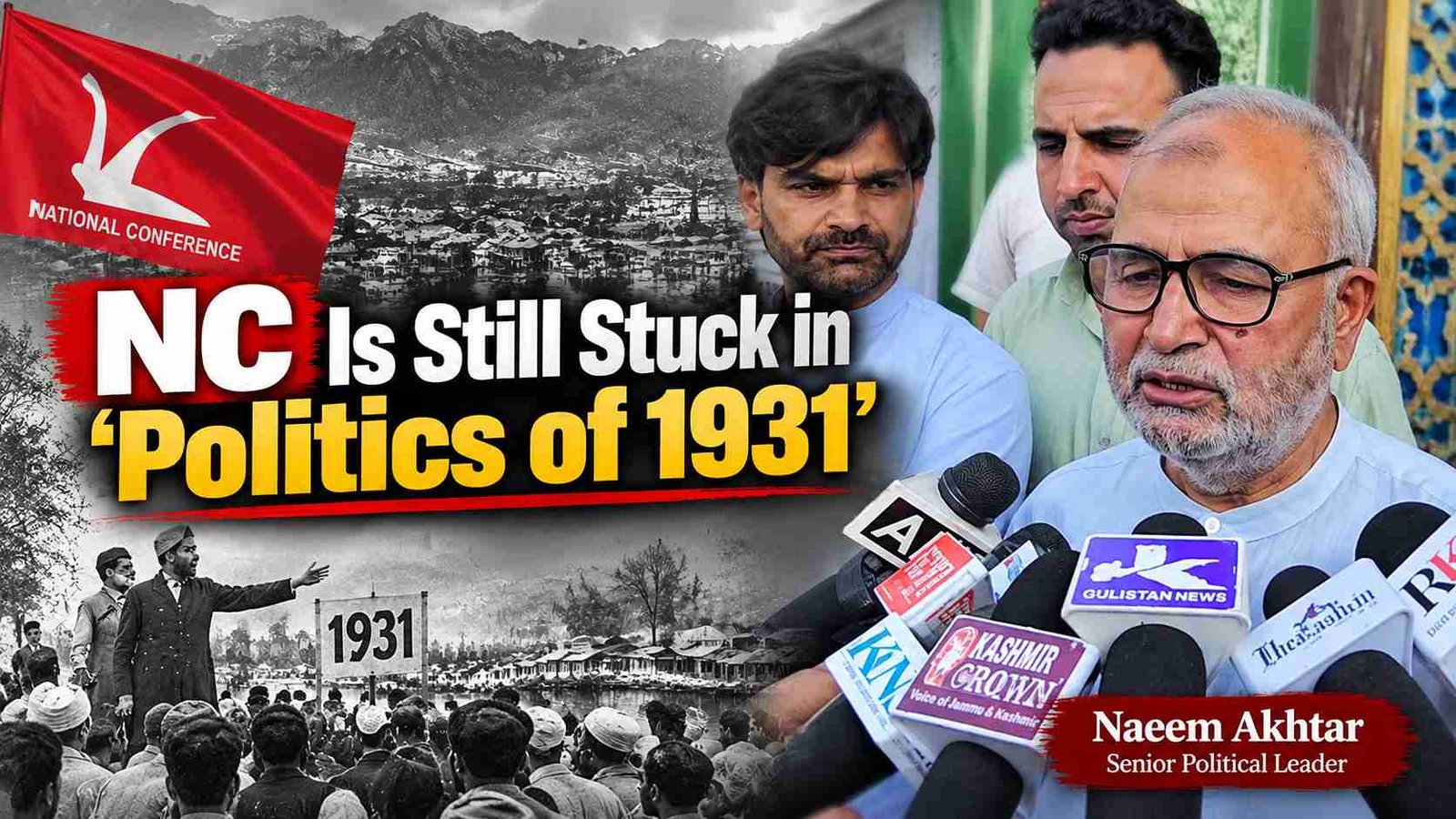
Senior political leader Naeem Akhtar has criticised the National Conference (NC), saying the party has failed to keep pace with the changing aspirations of people in Jammu and Kashmir.
Akhtar said the NC remains largely rooted in what he described as the “politics of 1931”, arguing that its political approach has not evolved enough to address present-day concerns.
Speaking recently at a gathering, Akhtar said the region’s political landscape had changed significantly, while the issues and expectations of its people had also evolved. Click Here To Follow Our WhatsApp Channel
According to Akhtar, the NC’s continued focus on historical narratives and political approaches from the past has made it less responsive to the current needs of the people.
‘Politics has changed’
Akhtar suggested that ideas and political messages that appealed to voters in earlier periods may not have the same relevance today.
He said political parties need to adopt a more forward-looking approach and pay greater attention to the socio-economic realities facing people across Jammu and Kashmir.
His remarks also point to a wider debate over whether political parties in the region are adapting their policies and strategies to meet the expectations of a new generation of voters.
Akhtar’s criticism suggests that the NC needs to reassess its political priorities and focus more strongly on issues such as development, employment and other concerns affecting people’s daily lives.
Debate over NC’s political relevance
The National Conference has played a major role in the political history of Jammu and Kashmir, with 1931 holding particular significance in the region’s political narrative.
Akhtar’s reference to the year appears aimed at criticising what he sees as the party’s continued reliance on its historical legacy rather than developing a political agenda focused primarily on contemporary challenges.
His comments come amid an ongoing political debate in Jammu and Kashmir, where different parties are seeking to connect with voters and present themselves as better equipped to address the region’s current needs.
Such criticism is also part of the wider political contest, with rival parties frequently questioning each other’s policies, relevance and ability to understand changing public sentiment.
Akhtar’s remarks have therefore added to the discussion over whether established political parties can adapt their messaging and programmes to the expectations of today’s electorate.
For now, his comments underline a familiar political question in Jammu and Kashmir: can parties with deep historical roots successfully adapt to a rapidly changing political and social landscape?
You Might Also Like:
Education In Kashmir with Complete Statistics
TCS Nashik ‘Conversion’ Scandal: Accused Nida Khan Suspended as Sexual Harassment and Coercion Probe Intensifies