CPCB Report Flags Serious Pollution in Manasbal Lake, Raises Concerns Over Drinking Water Safety
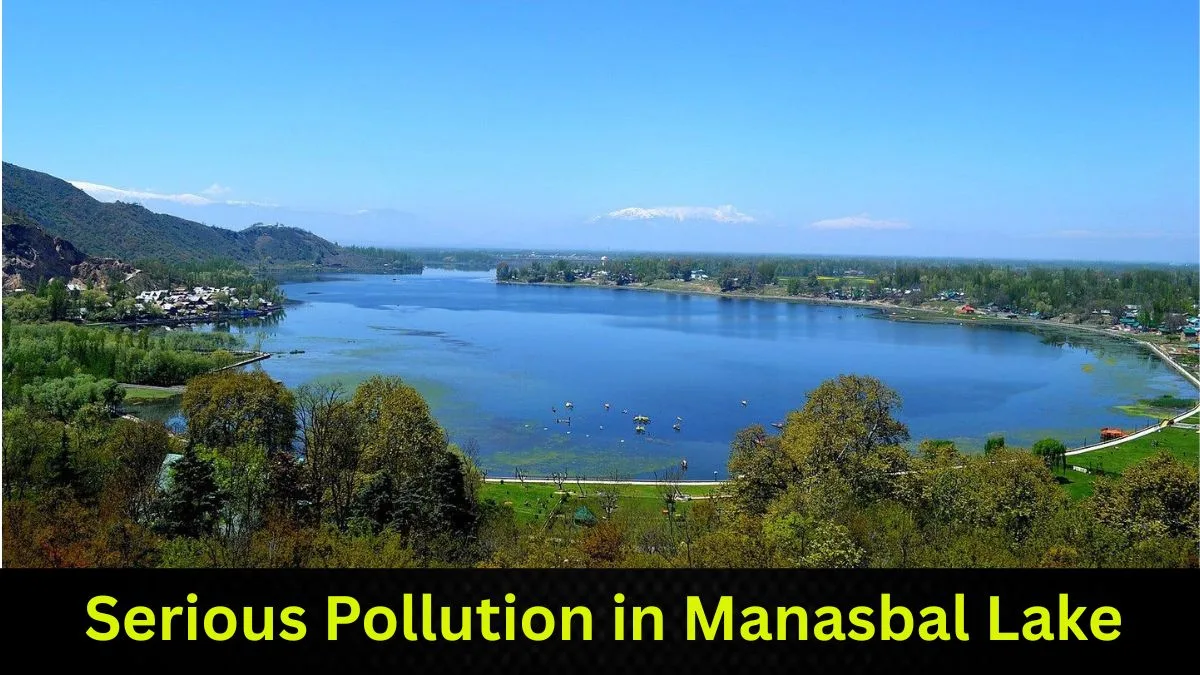
Srinagar: A report by the Central Pollution Control Board (CPCB) has raised serious concerns over the condition of Manasbal Lake, revealing widespread pollution and potential risks to the drinking water supply for thousands of people in Ganderbal and Bandipora districts.
The findings were submitted to the National Green Tribunal (NGT) following water quality tests conducted in April 2026 on the Tribunal’s directions in response to a petition filed by environmental activist Dr Raja Muzaffar Bhat. Click Here To Follow Our WhatsApp Channel
CPCB Finds Water Quality Deteriorating
According to the report, scientists from the CPCB collected seven water samples during an inspection carried out on 4 April 2026 with officials from the J&K Pollution Control Committee (JKPCC) and the Wullar Manasbal Development Authority (WMDA).
The samples included:
- Four from Manasbal Lake.
- Two from natural springs.
- One from the Lar Canal.
The report concluded that none of the seven samples met Class B water quality standards, which are considered suitable for outdoor bathing.
Key findings include:
- Five of the seven sampling locations met only Class D standards, making them suitable mainly for wildlife and fisheries.
- Only one spring met Class C standards, meaning the water would require treatment before it is safe for drinking.
- Another spring failed to qualify under any of the Class A to D categories.
Sources of Pollution Identified
The CPCB identified several factors contributing to the lake’s pollution, including:
- Untreated household wastewater (grey water) flowing directly into the lake.
- Mixed municipal waste such as plastic bags, bottles and other litter dumped along the shoreline.
- Open dumping of garbage near residential areas.
- Solid waste scattered around Kondabal.
- Wastewater from villages entering the lake without treatment.
- Water from the Lar Canal flowing directly into Manasbal Lake.
The report also noted that the JKPCC had previously observed untreated sewage entering the lake through small drains.
High Levels of Bacterial Contamination
The report found elevated levels of faecal coliform and total coliform bacteria, indicating contamination from human or animal waste.
According to the CPCB, this level of microbial contamination makes the water unsafe for direct human use without proper treatment.
While most heavy metals were found to be below detectable limits, the report stated that pollution is mainly caused by biological contamination and untreated wastewater, rather than toxic metal pollution.
Petition Before the National Green Tribunal
The case was brought before the National Green Tribunal by environmental activist Dr Raja Muzaffar Bhat, who alleged that untreated sewage and agricultural runoff from 14 villages were entering the lake through the Lar Canal, damaging its ecosystem.
Represented by advocates Rahul Chowdhary and Shreepuna Dasgupta, the petitioner argued that Manasbal Lake is a major source of drinking water for residents of Safapora, Sumbal, Sonawari and nearby areas in Ganderbal and Bandipora districts.
Petitioner’s Reaction
Reacting to the report, Dr Raja Muzaffar Bhat alleged that local communities had repeatedly raised concerns about pollution in the lake but that adequate preventive measures had not been taken.
He also claimed that a proposed Sewage Treatment Plant (STP) meant to protect the lake had not been established.
Dr Bhat said the findings would be placed before the National Green Tribunal and expressed hope that the Tribunal would issue appropriate directions during the next hearing.
Why the Findings Matter
Manasbal Lake is one of Kashmir’s most important freshwater lakes and supports:
- Drinking water supply.
- Fisheries.
- Tourism.
- Biodiversity.
- Local livelihoods.
Environmental experts have long warned that untreated sewage, solid waste and encroachments pose a serious threat to the lake’s ecological health, making conservation efforts increasingly important.
Suggested Graphics
Graphic 1: CPCB Findings
| Parameter | Observation |
|---|---|
| Water Samples Tested | 7 |
| Class B Standard | None met |
| Class D Standard | 5 locations |
| Main Concern | Faecal contamination & untreated sewage |