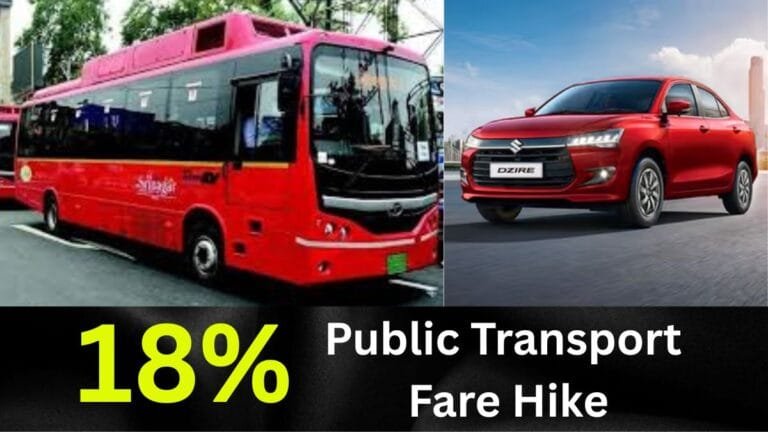
The Government of Jammu and Kashmir has approved an 18% fare hike for most public transport services across the Union Territory. The revised fares came into effect on 30 April 2026.
The increase applies to buses, mini buses, shared taxis, contract vehicles and tourist transport. Passengers will now pay 18% more than the fares fixed in March 2021. Click Here To Follow Our WhatsApp Channel
Which Vehicles Are Covered?
The new fare hike applies to the following vehicle categories:
| Vehicle Type | Examples |
|---|---|
| Big buses | Ordinary, semi-deluxe and deluxe buses |
| Mini buses | Smaller route buses |
| Contract taxis | Sumo, Bolero, Tempo Traveller |
| Tourist vehicles | Scorpio, Xylo |
| Premium tourist vehicles | Innova, Fortuner |
The government said the new rates are added over the fare structure notified earlier under SRO-97 dated 19 March 2021.
Why Have Fares Increased?
Officials said the fare rise was necessary because transport costs have gone up sharply since 2021.
Main reasons include:
- Higher diesel and petrol prices
- Rising maintenance costs
- Costlier tyres and spare parts
- Increased wages for drivers and staff
- General inflation
Officials said many operators were finding it difficult to continue without a fare revision.
How Much More Will Passengers Pay?
Here are some sample changes for a 10-km journey:
| Vehicle | Old Fare | New Fare (+18%) |
|---|---|---|
| Big bus | ₹15 | ₹18 |
| Mini bus | ₹18 | ₹21 |
| Shared Sumo/Bolero | ₹30 | ₹35 |
| Innova | ₹50 | ₹59 |
For longer journeys such as Jammu to Srinagar, the increase may add around ₹500 to ₹700 depending on vehicle type.
What About Auto-Rickshaws?
The current order does not include auto-rickshaws or e-rickshaws. Their fares remain unchanged for now.
However, officials have indicated that a separate review may happen later.
Mixed Public Reaction
People across Jammu and Srinagar have reacted differently.
Many daily commuters are worried about higher travel costs, especially those who use buses or shared taxis every day.
Others believe the increase was needed to help drivers and transport owners continue services.
Transport unions have welcomed the decision and described it as long overdue.
What Operators Must Do
The Transport Department Jammu and Kashmir has directed operators to:
- Display updated fare charts inside vehicles
- Show fare lists at booking counters
- Follow approved government rates only
No extra charges beyond the approved fares are allowed.
What If You Are Overcharged?
Passengers can report overcharging to:
- Regional Transport Office (RTO) of their district
- Official helpline when announced
- JK Parivahan mobile app
Violations may lead to fines or suspension of permits.
Key Facts at a Glance
| Aspect | Detail |
|---|---|
| Fare Increase | 18% |
| Effective Date | 30 April 2026 |
| Applies To | Buses, taxis, tourist vehicles |
| Based On | 2021 fare schedule |
| Not Included Yet | Auto-rickshaws, e-rickshaws |
| Reason | Fuel, maintenance and wage rise |
Final Word
This is the first major fare revision in Jammu & Kashmir in five years. While it may help transport operators manage rising costs, passengers will feel the impact, especially on regular and long-distance travel.
If you travel daily, it is wise to check the new fare chart before starting your journey.
You Might Also Like:
Iranian Journalist in Chador Goes Viral at US–Iran Talks in Islamabad, Sparks Global Debate
Iran Executes Former Nuclear Official Mehdi Farid Over Alleged Mossad Espionage Case