The Importance of Education in Human Life

Education is often seen as the key to a brighter future. It plays a crucial role in shaping individuals, communities, and entire nations. While it may seem like a simple process of going to school, learning involves much more than just reading books and passing exams. It’s about personal growth, understanding the world, and finding our place in it. Let’s explore why education is so important in human life.

Building Knowledge and Skills

At its core, education equips us with the knowledge and skills needed to navigate the world. From basic literacy and numeracy to advanced sciences and arts, learning opens our minds to a wealth of information. This foundation is essential for everyday tasks, such as reading a newspaper, calculating expenses, or understanding health information. Without education, even these simple tasks would be challenging.

Promoting Personal Growth

Education is not just about acquiring facts; it’s also about personal development. It helps us develop critical thinking, problem-solving skills, and the ability to communicate effectively. These skills are vital in making informed decisions and solving the problems we encounter in life. Moreover, education encourages curiosity and a love for learning, which can lead to a lifetime of exploration and discovery.

Enhancing Career Opportunities

One of the most tangible benefits of education is improved career prospects. Higher levels of education often lead to better job opportunities and higher salaries. In today’s competitive job market, having a good education can set you apart from others. It provides the credentials and knowledge needed to pursue a wide range of careers and adapt to the ever-changing job landscape.

Fostering Social Development

Education also plays a significant role in social development. It teaches us about different cultures, traditions, and perspectives, promoting empathy and understanding. Schools are often the first place where we learn to interact with others outside our family, making it a critical environment for developing social skills. Through education, we learn the importance of cooperation, respect, and working together towards common goals.

Empowering Individuals and Communities

An educated individual is often more empowered to make choices that positively impact their life and the lives of those around them. Education can break the cycle of poverty by providing people with the tools they need to improve their circumstances. When people are educated, they are more likely to participate in civic activities, understand their rights, and contribute to the community’s development.

Supporting Health and Well-being

Education also has a direct impact on health and well-being. Educated individuals are more likely to make informed health choices, understand medical instructions, and seek timely medical help. Education, especially for women, has been shown to reduce infant mortality rates and improve the overall health of families. Knowledge about hygiene, nutrition, and disease prevention can lead to healthier lifestyles and longer lives.

Driving Economic Growth

On a larger scale, education is a cornerstone of economic development. Countries with higher education levels tend to have stronger economies. Educated citizens are more productive, innovative, and capable of driving technological advancements. This, in turn, creates jobs, boosts economic growth, and improves the quality of life for everyone in the country.

Encouraging Equality

Education promotes equality by providing everyone with the opportunity to succeed, regardless of their background. It is a powerful tool for leveling the playing field and giving disadvantaged individuals the chance to improve their lives. Education helps to reduce social and economic inequalities by opening doors to better opportunities and fostering a more inclusive society.

Conclusion

In conclusion, education is essential for the growth and development of individuals and societies. It provides the knowledge and skills needed to face life’s challenges, promotes personal and social development, and opens doors to better career opportunities. It empowers people to make informed decisions, supports health and well-being, drives economic growth, and encourages equality. Investing in education is investing in a brighter future for all. So, let’s value and prioritize education, for it truly is the foundation of a better world.

Education In Kashmir with Complete Statistics

Colleges In Kashmir From Anantnag To Kupwara

Heatwave Forecasted for Jammu Plains While Night Temperatures Remain Below Normal Across J&K

In shadows deep, where dreams may hide,
Education’s light, a steady guide.
It opens doors, it clears the way,
And turns the night to brightest day.

With every word, a world is born,
Each lesson learned, a new dawn’s morn.
The mind, once bound by ignorance’ chain,
Finds freedom, and begins to reign.

It shapes the heart, it molds the soul,
It makes us strong, it makes us whole.
Through books and wisdom, we shall grow,
And learn the things we did not know.

A path to hope, a bridge to peace,
In education, all dreams increase.
It teaches us to seek, to strive,
To understand, to seek, to thrive.

Not just in facts, but in the grace,
Of empathy and the human race.
Through knowledge, we begin to see,
A world that’s filled with harmony.

So cherish learning, seek the truth,
No matter age, no matter youth.
For in its hands, the world is bright,
And education grants us sight.

Education stands as a cornerstone of human progress, shaping lives and communities alike. It is far more than a formal process confined to classrooms; education fuels personal growth, societal harmony, and collective advancement. Its role in human life is both profound and multifaceted, touching every corner of existence and creating endless possibilities.

Through education, individuals gain the knowledge and skills necessary to navigate an increasingly complex world. From basic literacy to advanced disciplines, education provides a foundation for critical thinking, problem-solving, and innovation. It allows people to understand their surroundings, question the unknown, and explore opportunities that would otherwise remain hidden.

Beyond the acquisition of knowledge, education is a tool for self-discovery and empowerment. It helps individuals develop confidence, discipline, and moral integrity. Education inspires curiosity and encourages a lifelong pursuit of learning, offering tools to adapt to challenges and seize new chances as they arise.

On a societal level, education is a powerful equaliser. It bridges gaps across socio-economic divides and brings opportunities to those who might otherwise face barriers. When communities are educated, they flourish. People become more engaged in civic duties, fostering cooperation, reducing inequality, and building a fairer society. Education promotes understanding and empathy, teaching individuals to value diversity and embrace the richness of different perspectives.

Economically, education serves as a driving force for growth and stability. Skilled and knowledgeable workforces stimulate innovation and productivity, lifting industries and strengthening national economies. The ripple effects of education extend to better job prospects, improved health outcomes, and increased social cohesion, ensuring a brighter future for all.

Education also plays a critical role in addressing global challenges. From climate change to public health, informed citizens are better equipped to devise and implement sustainable solutions. It instils the values of responsibility and awareness, which are essential for preserving our shared world.

For individuals, education is not just a means to an end but a journey of transformation. It provides the tools to dream and achieve, to question and learn, and to understand the essence of what it means to be human. As society invests in education, it lays the groundwork for a more just, compassionate, and prosperous world.

The importance of education cannot be overstated. It is the key to unlocking potential, breaking down barriers, and building a brighter future for all. Every step taken to improve access to education is a step toward a more enlightened and empowered global community. Let us recognise its value and work collectively to ensure that its light reaches every corner of the world.

Indian Universities to Offer Biannual Admissions Starting 2024-25: UGC Chairman

Universities and higher education institutions in India will now have the flexibility to admit students twice a year, similar to the admission process followed by universities abroad, according to University Grants Commission (UGC) Chairman Jagadeesh Kumar. This new policy will commence from the 2024-25 academic session, with two admission cycles in July-August and January-February.

“If Indian universities can offer admission twice a year, it will benefit many students,” said UGC Chairman Kumar on Tuesday. “For instance, those who missed admission in the July-August session due to delayed board results, health issues, or personal reasons can now apply in January-February. This biannual admission process will help maintain student motivation as they won’t have to wait a full year if they miss a cycle.”

Currently, UGC regulations allow higher education institutions (HEIs) to admit students only once per academic year, beginning in July-August. An academic session spans twelve months, from July-August to May-June.

The UGC had previously decided during its 571st commission meeting on July 25, 2023, to permit biannual admissions for Open and Distance Learning (ODL) and online modes starting January and July each year. In July 2022, 19,73,056 students enrolled, with an additional 4,28,854 joining in January 2023 through ODL and online programs.

Given the positive response and interest in ODL and online biannual admissions, the UGC, in its meeting on May 15 this year, made a policy decision to extend this option to regular mode programs. HEIs can now admit students twice a year, either in January-February or July-August, from the upcoming academic year.

Institutions that have the required infrastructure and teaching faculty can take advantage of this opportunity to increase student intake and offer new programs in emerging areas. Offering biannual admissions is not mandatory; it is a flexible option provided by the UGC for institutions seeking to expand their enrollment and program offerings. To implement this, HEIs must amend their institutional regulations accordingly.

“With biannual admissions in place, industries can also conduct campus recruitment twice a year, improving employment opportunities for graduates,” added Kumar. Biannual admissions will also help HEIs plan their resources, such as faculty, labs, classrooms, and support services, more efficiently, leading to better functional flow within the university.

Kumar noted that universities worldwide already follow a biannual admission system. If Indian institutions adopt this cycle, it could enhance their international collaborations and student exchanges, improving global competitiveness and aligning with global educational standards.

Biannual admissions can significantly increase the Gross Enrolment Ratio and help India become a ‘Global Study Destination,’ as envisioned in the National Education Policy (NEP) 2020. Kumar emphasized that HEIs adopting biannual admissions need to address administrative intricacies, plan for the efficient use of resources, and provide seamless support systems for students admitted at different times of the year.

“HEIs can maximize the benefits of biannual admissions only if they adequately prepare faculty members, staff, and students for the transition,” Kumar concluded.

21-Year-Old Self-Studying Student from Yadipora Excels in NEET Exams for Second Consecutive Year

In an interview with Rising Kashmir, Asmat Riyaz shared her achievements. In 2023, she scored 534 points in NEET-2023, securing a seat in the BDS program at Government Dental College Srinagar. However, her primary goal was to secure a seat in the MBBS program, for which she achieved 603 points.

Asmat detailed her educational journey, stating, “I completed my primary education at New Era Islamia Public School in my native village, Yadipora, from Nursery to 8th grade. Subsequently, I attended MET Sopore and Government Higher School Palhallan Pattan for my 9th to 12th grade.”

She highlighted that she prepared for the NEET exams through self-study, which she found beneficial as it allowed her to tailor her study schedule to her preferences. Asmat also used YouTube channels to clarify her concepts.

“My brother has been an invaluable source of support and guidance. He passed the CET exams in 2016, and with his help, I was able to succeed in the NEET exams in both 2023 and 2024,” she said.

Asmat also expressed gratitude for the unwavering support from her parents during her preparation. She noted that students who cannot afford coaching centers can still prepare for NEET using study materials available on the internet and YouTube, which are accessible resources for self-study globally.

“Students should never lose hope. With hard work, they too can succeed in qualifying for the NEET exams,” Asmat encouraged.

You May Like :

Er. Rashid Thanks Voters After Historic Win, AIP Focuses on Securing His Release

2 former CMs lose NC Dominate Kashmir in Parliamentary Elections

EPG Celebrates World Environment Day 2024 with Grand Event at Greenland Paramedical & Nursing College

JKBOSE Expected to Release Class 12th Exam Results in Early June

The Jammu and Kashmir Board of School Education (JKBOSE) is set to release Class 12th exam results in early June.

According to a top official speaking to Kashmir News Service (KNS), the annual regular exam results for Class 12th are expected to be announced by the end of the first week of June. The official mentioned that the results are almost prepared, with final formalities underway. They aim to declare the results in the final days of the first week of June.

These annual regular exams for Class 12th were conducted in March 2024. Students are eagerly awaiting their results, which will significantly impact their academic and career paths.

You May Like :

Education In Kashmir with Complete Statistics

Colleges In Kashmir From Anantnag To Kupwara

J&K Education Department Urges Schools: Avoid Afternoon Assemblies to Safeguard Against Heat-Related Illnesses

University of Kashmir Innovators Awarded Patents for Revolutionary Designs

Colleges In Kashmir From Anantnag To Kupwara

Anantnag Degree College

There are about 42 Government,13 Private Grant-in-Aid degree colleges and 7 Professional Institutions(Govt. Managed) in Kashmir Division. In kashmir there 8 Oriental Colleges and 75 Non Government affiliated Colleges also in Kashmir as per the data available by Jammu and Kashmir Higher Education Department. The colleges in Kashmir province are located in 10 districts. These districts include, Srinagar, Baramulla, Anantnag, Budgam, Kupwara, Pulwama, Ganderbal, Kulgam, Shopian and Bandipora. All the degree colleges of Kashmir Division are affiliated to the University of Kashmir.

District Anantnag

  • 1.Govt. Degree College, Dooru
  • 2.Govt. Degree College, Bijbehara
  • 3.Govt. Womens College Anantnag
  • 4.Govt. Boys College, Anantnag
  • 5.Govt. Degree College, Kokernag
  • 6.Govt. Degree College, Uttersoo, Anantnag
  • 7.Govt Degree College, Vailoo, Lamoo Anantnag

District Bandipora

  • 8.Hassan Shah Khoi-e-Hami Memorial Govt. Degree College, Bandipora
  • 9.Govt. Degree College, Gurez
  • 10.Govt Degree College, Sumbal

District Baramulla

  • 11.Govt. Degree College Women, Baramulla
  • 12.Govt. Degree College Women, Sopore
  • 13.Govt. Degree College, Uri
  • 14.Govt. Degree College, Pattan
  • 15.Govt. Degree College, Sopore
  • 16.Govt. Degree College Boys, Baramulla
  • 17.Govt Degree College, Hadipora, Rafiabad, Baramulla
  • 18.Govt Degree College, Tangmarg, Baramulla
  • 19.Govt Degree College, Magam, Tangmarg

District Budgam

  • 20.Govt. Degree College, Budgam
  • 21.Govt. Degree College, Beerwah
  • 22.Govt. Degree College, Khansahib, Budgam
  • 23.Govt Degree College, Chariesharief, Budgam

District Gaderbal

  • 24.Govt. Degree College, Ganderbal
  • 25.Govt Degree College, Kangan, Ganderbal

District Kulgam

  • 26.Govt. Degree College, Kulgam
  • 27.Govt. Degree College, Kilam, Kulgam
  • 28.Govt Degree College, Dhamal Hanjipora, Kulgam

District Kupwara

  • 29.Govt. Degree College of Handwara
  • 30.Govt. Degree College, Kupwara
  • 31.Govt. Degree College, Tangdhar
  • 32.Govt. Degree College, Sogam, Kupwara
  • 33.Govt Degree College Women, Kupwara

District Pulwama

  • 34.Govt. Degree College, Pulwama
  • 35.Govt. Degree College, Tral
  • 36.Govt. Degree College, Women , Pulwama
  • 37.Govt Degree College, Pampore, Pulwama

District Shopian

38.Govt. Degree College, Shopain

District Srinagar

  • 39.Vishwa Bharti Womens College, Rainawari Srinagar
  • 40.Gandhi Memorial College, Srinagar
  • 41.Govt. Women College, Nawakadal, Srinagar
  • 42.Govt Degree College, Bagi Dilawar Khan, Srinagar

Professional Colleges (Privately Managed)

  • 1.S.S.M. College of Engineering, Baramulla (B.E,MCA,MBA)
  • 2.Sopore Law College, Sopore, Kashmir (LLB, BA LLB)
  • 3.Kashmir Law College, Nowshera, Srinagar (LLB, BA LLB)
  • 4.Institute of Asian Medical Science Unani, Zakura, (BUMS)
  • 5.Bibi Haleema Nursing College, Srinagar (B.Sc Nursing)
  • 6.Kashmir Tibbiya College, Saida Kada, Srinagarl (BUMS)
  • 7.Kausar College of Computer Science, Nowshera, Srinagar (MCA)
  • 8.Sem College of Computer Science, Humhama (BCA)
  • 9.Max-Well College of Computer Science, Pulwama (BCA)
  • 10.Iqbal Institute of Technology and Management, Budgam (BCA)
  • 11.CASET Institute of Computer Science, Srinagar (BCA)
  • 12.Vitasta School of Law & Humanities (LLB, BA LLB)
  • 13.Master Institute of Information Technology, Pulwama (BCA)

Professional Institutions(Govt. Managed)

  • 1.Govt. Dental College, Srinagar (BDS)
  • 2.Govt. College of Education, Srinagar (B Ed; M.Ed)
  • 3.Institute of Music & Fine Arts, Srinagar (B. Muse, BFA)
  • 4.Govt. College of Physical Education, Ganderbal (B P Ed; M P Ed)
  • 5.Govt. Medical College, Srinagar (MBBS, Diploma in Anesthesiology, Gynecology; Ophthalmology, MD & MS)
  • 6.DOEACC, Rangreth Srinagar (MCA)
  • 7.Composite Regional Centre (BRT,PGDRP,B.Ed,Bachelor in Physiotherapy)

Oriental College District Budgam

1.Jamia Babul Ilm Oriental College, Mirgund, Budgam

District Srinagar

  • 2.Madinatul-Aloom, Hazratbal, Srinagar
  • 3.Darul-Aloom Hanfia Arabia College, Noor Bagh
  • 4.Govt. Oriental College, Baghi-Dilawaw Khan
  • 5.Islamic Oriental College, Tral, Kashmir
  • 6.Kamla Nehru Memorial, Maqhavidyala, Srinagar
  • 7.Jamiya-Tul-Banat, Umaer Colony Lal Bazar, Srinagar
  • 8.Anjuman Nusrat-Ul-Isla, Rajouri Kadal, Srinagar

Non Government affiliated Colleges

District Anantnag

  • 1.Al-Ahad College of Education -Anantnag (ACC)
  • 2.Jamia College of Education, (JCE) Brakpora, Anantn
  • 3.Rehmate Aalam College of Education(RAC)-Anantnag
  • 4.Shah-i-Hamdan College of Education (SHCE)-Siligam
  • 5.WEETA College of Education, Sangam, Anantnag

District Bandipora

  • 6.Al-Noor College of Education (ANC)-Bandipora
  • 7.Harmukh College of Education (HCE)-Bandipora
  • 8.Mehboob-ul-Aalam College of Education (MAC)
  • 9.Shaheen College of Education (SCE)-Bandipora
  • 10.Sheikh Hamza College of Education (SHC)-Bandipora
  • 11.Wular valley College of Education (WVC)-Bandipora

District Baramulla

  • 12.Alamdar College of Education (ACE)-Sopora
  • 13.Al-Huda College of Education (AHC)-Pattan
  • 14.Apex College of Education, (APCE)-Mazbug, Sopore
  • 15.Baba Payam-ud-din College of Education-(BPC)
  • 16.Franklin College of Education, Sopore-(FCE)
  • 17.Green Valley College of Education (GVC)-Dhobivan
  • 18.Gulzar Memorial College of Education (GME)-Sopore
  • 19.Jan Baz wali College of Education (JBW)-Baramulla
  • 20.Jehlum Educational Trust (JET)-Baramulla
  • 21.Kashmir College of Education Model Town(MTS)
  • 22.Kashmir Women’s College of Education (KWS)-Sopore
  • 23.Mother Terissa Memorial College of Education
  • 24.Muslim Educational Trust (MET) -Sopore
  • 25.Quality College of Education (QET) -Shreen
  • 26.Ramzan Memorial College of Education (RMCE)
  • 27.Sanctorium College of Education (StCE) ,Lalad,
  • 28.Subhan Institute of Educational Technology (SIET)
  • 29.Unique College of Education (UCE) Mirgund Pattan
  • 30.Welkin College of Education (WCE)- Sopore
  • 31.Kashmir Paradise College of Education (KPC)
  • 32.Affarwat College of Education,Janbazpora,Baramulla
  • 33.Pioneer College of Education,National Highway Hanjiwera Pattan,Baramulla

District Budgam

  • 34.C.E.D. (Culture and Education for Development) College of Education,Narbal
  • 35.S.K.T.T College of Education-B.K.Pora,Budgam
  • 36.Chinab Valley College of Education-Wagar, Budgam
  • 37.Kashmir Valley College of Education (KVC)-Nowgam
  • 38.KSERT College of Education-Humhama Budgam
  • 39.Sarfraz College of Education(SCE)-Hyderpora
  • 40.SEM College of Education-humhama Budgam
  • 41.Syed Ali Memorial Educational Trust-(SAMC)-Beerwah
  • 42.Sir Syed College of Education (SSM)-Soiteng, Lasjan
  • 43.S.M. Iqbal College of Education (SMI)-Rangreth

District Kulgam

  • 44.Islamic Discovery of Education,Pambai,Kulgam
  • 45.South Valley College of Education,Devsar Kulgam

District Kupwara

  • 46.Shiekh-ul-Aalam College of Education (SAC)-Kupwara
  • 47.ARR-RASHID College of Education Unisoo Handwara

District Pulwama

  • 48.Green Valley College of Education (GVC)-Lethpora
  • 49.Guru Nanak College of Education(GNCE)-Awantipora
  • 50.Kashmir Creative Education Foundation College of Education
  • 51.Soch Kral Memorial College of Education-(SKM)-
  • 52.Zakir College of Education -(ZMC)-Pulwama
  • 53.Insight Institute College of Education (IIET)
  • 54.G.A.Memorial college of Education,National Highway Barsu,Pampora,Pulwama
  • 55.Paramount College of Education,Pruchoo,Pulwama
  • 56.Maxwell Collegge of Education, Rajpora Road,Pulwama

District Shopian

  • 57.Srinagar College of Education (SgrCE)-Zainapora,Shopian
  • 58.Guardian College of Education, Shopian

District Srinagar

  • 59.Adnan College of Education, Batapora, Hazratbal
  • 60.Dr. Iqbal Teacher Traning College of Education
  • 61.Green Land College of Education (GLC)-Hawal
  • 62.Kausar College of Education (KCE)-Nowshera
  • 63.Lake City College of Education (LCE)-Shalimar
  • 64.Nund Reshi College of Education(NRC)-Natipora
  • 65.Popular College of Education (PCE)-Zainakoot, HMT
  • 66.Qumariya College of Education (QCE)
  • 67.Ramzan College of Education-Gulshan Nagar
  • 68.Raihan Educational Trust (RET)-Alasteng, Nagbal
  • 69.RESET College of Education-Baghnder-Lasjan,
  • 70.Rizwan Memorial College of Education (RMC),Srinagar Sumbal Road Asham
  • 71.Sadiq Memorial College of Education (SMC)-Soura
  • 72.Shanti Niketan College of Education (SNCE)-HMT
  • 73.Shadab College of Education (ShCE)-HMT Srinagar
  • 74.Tahira Khanams College of Education (TKC)
  • 75.Success College of Education,Padshahi Bagh,Srinagar

Education In Kashmir with Complete Statistics

Education In Kashmir

Education in the region of Jammu and Kashmir operates within a comprehensive 5-tier framework, encompassing primary schools, middle schools, higher secondary schools, colleges, and universities. The literacy landscape in Jammu and Kashmir has witnessed notable developments, with the 2011 census reporting a literacy rate of 68%. However, recent years have seen a noteworthy increase in these figures.Click Here To Follow Our WhatsApp Channel

Education In KasHmir

While the literacy rate in Jammu and Kashmir has shown an encouraging upward trajectory, reaching 77.30%, it’s worth noting that the female literacy rate stands at 68%. This is marginally lower than the nationwide female literacy rate of 70.30%. On a broader national scale, male literacy rates also outpace their female counterparts, with 84.70% for men compared to 70.30% for women. In Jammu and Kashmir, efforts to promote gender equality in education are evident, yet disparities in access to education persist, particularly along rural-urban lines.

A recent survey conducted by the National Statistical Office (NSO) reveals that the male literacy rate in Jammu and Kashmir has reached an impressive 85.70%, far surpassing the female literacy rate of 68%. Notably, the survey highlights variations in literacy rates between rural and urban areas. Urban female literacy stands at 75.70%, while their rural counterparts lag slightly at 66%. Within rural areas, only 8.4% of males and 2.8% of females in Jammu and Kashmir hold graduate-level qualifications or higher.

Islamic University of Science and Technology

Further insights from the survey show that in rural areas of the state, 86.5% of schools offering primary-level classes are conveniently located within one kilometer of households. In comparison, 76.2% of primary/middle-level schools and 29.5% of secondary-level schools are similarly accessible. It’s important to note that during the 2011 census, the literacy rate in Jammu and Kashmir was recorded at 67.16%. Male literacy at that time was 76.75%, while female literacy was at 56.43%. Literacy, in this context, is defined as the percentage of individuals aged seven years and above who can read and write a simple message in any language with understanding, as per NSS surveys.

Universities in Kashmir in the Year 2023-24. Name, website, phone number, email ID and contact address of top new Government Universities and Private Universities. Central, State Universities and Deemed Universities.

Islamic University

1.University of Kashmir:

+91 (194) 227 2096,

POSTAL ADDRESS:Hazratbal, Srinagar,
Jammu & Kashmir,
India,
190006

www.kashmiruniversity.net

Phone No: +91 (194) 227 2096, +91 (194) 227 2097

E-mail: info@kashmiruniversity.net

Address: Hazratbal, Srinagar, Jammu & Kashmir 190006

2.Central University of Kashmir:

www.cukashmir.ac.in

Phone No: 0194-2416077, 9149580738, 9797774834

E-mail: registrar@cukashmir.ac.in

Address: Green Campus, Duderhama,

Ganderbal 191201

3.Cluster University of Srinagar

www.cusrinagar.edu.in

Phone No: 2560459

E-mail: jatinderkhajuria68@gmail.com

Address: Gogji-Bagh,

Srinagar, Kashmir 190008

4.Islamic University of Science & Technology

www.iust.ac.in

Phone No: +91 (01933) 247954 / 247955

E-mail: info@islamicuniversity.edu.in

Address: 1-University Avenue,

Awantipora, Pulwama 192122

Sher-e-Kashmir University of Agricultural Science & Technology

www.skuastkashmir.ac.in

Phone No: 194-2461257

E-mail: provc@skuastkashmir.ac.in

Address: SKUAST, Srinagar, Kashmir 190025

Central University of Kashmir
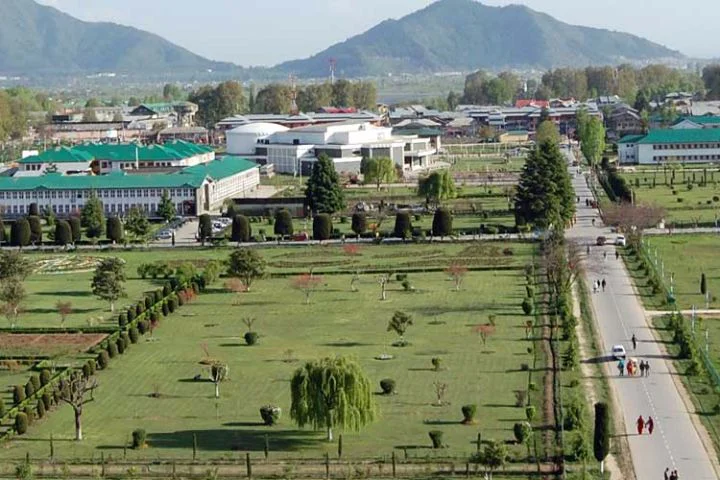
Central University of Kashmir / Image Source Facebook of CUK

Kashmiri Youth: Education-Loving People

Kashmir, a region known for its breathtaking beauty and rich cultural heritage, has also been a hub of intellectual growth and academic excellence. The Kashmiri youth, often portrayed in the media as being caught in the crossfire of political unrest, have demonstrated a remarkable resilience and a deep-rooted passion for education.

One of the most striking features of Kashmiri youth is their unwavering dedication to education. Despite facing numerous challenges, including limited access to educational resources and the threat of violence, they continue to pursue their academic goals with unwavering determination. This commitment to education is evident in the high enrollment rates in schools and universities across the region.

University of Kashmir

Kashmiri youth have excelled in various academic disciplines, from science and technology to humanities and social sciences. They have achieved remarkable success in national and international competitions, showcasing their intellectual prowess and potential. Many Kashmiri students have gone on to study at prestigious universities around the world, contributing to the global intellectual landscape.

The pursuit of education has not only provided Kashmiri youth with opportunities for personal and professional growth but has also empowered them to become agents of positive change. They have used their knowledge and skills to address the challenges facing their community, from promoting peace and reconciliation to advocating for social justice.

However, the challenges faced by Kashmiri youth in accessing quality education remain significant. The region’s political instability and economic hardships have limited the availability of educational infrastructure and resources. Many schools and universities have been damaged or destroyed due to violence, disrupting the educational process.

Despite these challenges, the Kashmiri youth’s love for education remains undiminished. They continue to strive for academic excellence, defying the odds and proving that their intellectual potential is boundless. By investing in their education and providing them with the necessary support, we can help to unleash the full potential of these young people and build a brighter future for Kashmir.

Government Educational Institutions in Kashmir Valley

Institution NameType of InstitutionLocation (Kashmir Valley)Main Area of Education
University of KashmirState UniversitySrinagarArts, Science, Commerce, Law, Research
National Institute of Technology SrinagarCentral InstituteSrinagarEngineering & Technology
National Institute of Fashion Technology SrinagarCentral InstituteSrinagarFashion & Design
Sher-i-Kashmir Institute of Medical SciencesGovernment Medical InstituteSrinagarMedicine, Super-Speciality & Research
Government Medical College SrinagarGovernment Medical CollegeSrinagarMBBS & Postgraduate Medicine
Government Medical College AnantnagGovernment Medical CollegeAnantnagMBBS & Clinical Training
Government Medical College BaramullaGovernment Medical CollegeBaramullaMBBS & Healthcare Education
Government Dental College SrinagarGovernment Dental CollegeSrinagarDental Education & Practice
Government College of Engineering and Technology SafaporaGovernment Engineering CollegeGanderbal (Safapora)Engineering
Government Polytechnic College Srinagar

Kashmir Valley is not only known for its natural beauty but also for its strong tradition of learning and education. Over the years, the region has developed a solid network of government educational institutions that provide quality education in engineering, medicine, science, arts, fashion, and technical fields. These institutions play a key role in shaping the future of Kashmiri youth by offering affordable, reliable, and recognised education close to home.

Below is a clear and updated introduction to only those government institutions located in Kashmir Valley. No institutions from Jammu or Ladakh are included.


National Institute of Technology Srinagar (NIT Srinagar)

NIT Srinagar is one of the most respected engineering institutes in Kashmir Valley. It offers undergraduate, postgraduate, and doctoral programmes in engineering and technology. The institute is known for its academic standards, experienced faculty, and scenic campus located near Dal Lake.


National Institute of Fashion Technology Srinagar (NIFT Srinagar)

NIFT Srinagar is a premier government institute for fashion and design education in Kashmir. It provides professional courses in fashion design, textile design, and related fields, helping students enter creative and industry-focused careers.


Sher-i-Kashmir Institute of Medical Sciences (SKIMS)

SKIMS is the leading government medical and research institute in Kashmir Valley. It offers medical education, specialised training, and advanced healthcare services. The institute is also a major referral hospital for the region.


Government Medical College Srinagar

Government Medical College Srinagar is one of the oldest medical institutions in Kashmir. It provides undergraduate and postgraduate medical education and is attached to major hospitals, giving students strong clinical exposure.


Government Medical College Anantnag

GMC Anantnag is an important government medical college serving South Kashmir. It focuses on producing skilled doctors while improving healthcare access in the region.

MRI Services at SMHS

Government Medical College Baramulla

Located in North Kashmir, GMC Baramulla plays a vital role in medical education and public health services. It supports both academic learning and hospital-based training.


Government Dental College Srinagar

This institution provides quality dental education and training. It prepares students for professional dental practice while also offering dental care services to the public.


Government College of Engineering and Technology Safapora

GCET Safapora is a key government engineering college in Kashmir Valley. It offers engineering courses aimed at meeting regional and national technical needs.


Government Polytechnic College Srinagar

This polytechnic college provides diploma-level technical education in various engineering and vocational fields, helping students gain practical skills for employment.


University of Kashmir

The University of Kashmir is the main public university of the Valley. It offers a wide range of undergraduate, postgraduate, and research programmes and acts as the academic backbone for many government degree colleges across Kashmir.

Kashmir University

Closing Note

These government institutions form the core of higher and professional education in Kashmir Valley. They ensure that students have access to recognised education without leaving the region. Together, they reflect Kashmir’s deep respect for learning and its continued investment in the future of its youth.

Verified by MonsterInsights