General Asim Munir Named Field Marshal, Backed by Nawaz Sharif and Asif Ali Zardari, Raising Fears of Democratic Backsliding

General Asim Munir

On May 20, 2025, Pakistan’s federal cabinet, under the leadership of Prime Minister Shehbaz Sharif, approved the promotion of Chief of Army Staff General Syed Asim Munir to the rank of Field Marshal, a ceremonial five-star position not awarded since General Ayub Khan in 1965. This decision, reportedly backed by influential political figures Nawaz Sharif and Asif Ali Zardari, has sparked widespread debate, with critics arguing it consolidates military dominance and undermines Pakistan’s fragile democratic framework. The move comes amid heightened tensions with India following Operation Sindoor and a controversial ceasefire, as well as ongoing domestic political turmoil, including the prolonged imprisonment of former Prime Minister Imran Khan. This article explores the implications of Munir’s promotion, its political backing, and its impact on Pakistan’s democratic values.

Background of the Promotion

The rank of Field Marshal, a rare and prestigious honor in Pakistan’s military hierarchy, was conferred on General Asim Munir for his “exemplary role” in managing a recent military escalation with India, particularly during the U.S.-brokered ceasefire following Operation Sindoor. The promotion was unanimously approved by the cabinet, chaired by Shehbaz Sharif, and announced by the Prime Minister’s Office. However, the decision has drawn scrutiny due to the timing and context, with some sources suggesting it was a strategic move to bolster Munir’s authority amid internal and external challenges.

General Munir, appointed as Chief of Army Staff in November 2022 by Shehbaz Sharif, has been a polarizing figure. His tenure has been marked by allegations of orchestrating the ouster of Imran Khan and suppressing the Pakistan Tehreek-e-Insaf (PTI) party. Prior to his current role, Munir served as the director general of the Inter-Services Intelligence (ISI) until his removal by Khan in 2019, which reportedly created tensions between the two. His promotion to Field Marshal is seen by some as a reward for his loyalty to the Sharif and Zardari political camps, raising concerns about the military’s growing influence over civilian governance.

Political Backing by Nawaz Sharif and Asif Ali Zardari

Nawaz Sharif, the leader of the Pakistan Muslim League-Nawaz (PML-N), and Asif Ali Zardari, co-chairman of the Pakistan Peoples Party (PPP), have been vocal supporters of the military’s role in recent national security efforts. On May 18, 2025, both leaders publicly commended the armed forces for their “professional excellence” and “unshakable courage” during tensions with India. Zardari, accompanied by Munir, visited Gujranwala Cantonment, while Nawaz praised the military’s professionalism at a meeting in Jati Umra. These endorsements suggest a close alignment between the military and the PML-N-PPP coalition, which critics argue has facilitated Munir’s rapid rise and the marginalization of democratic institutions.

Posts on X reflect public skepticism about this alliance, with some users claiming that Nawaz and Zardari have effectively turned the Pakistan Army into a tool for political control, likening it to a “Punjab police force.” This perception is fueled by the military’s alleged role in rigging elections and installing Shehbaz Sharif as a “puppet” prime minister after Khan’s ouster. The promotion of Munir, seen as a loyalist to both leaders, is viewed as a strategic move to solidify this military-political nexus, further sidelining opposition voices like those of the PTI.

Undermining Democratic Values

The promotion of General Munir to Field Marshal has raised significant concerns about the erosion of democratic values in Pakistan. The country’s history is replete with instances of military dominance, with army chiefs like Zia-ul-Haq and Pervez Musharraf staging coups to overthrow civilian governments. Munir’s elevation, coupled with recent judicial and legislative developments, is seen as a continuation of this trend. The Pakistan Supreme Court’s May 7, 2025, ruling, which overturned a previous decision and allowed civilians to be tried in military courts, has further strengthened Munir’s hand. This decision, passed in a 5-2 ruling led by Justice Aminuddin Khan, enables the prosecution of PTI supporters involved in the May 2023 anti-army protests following Khan’s arrest, which many believe was orchestrated by Munir.

The 26th Constitutional Amendment, which facilitates military trials for civilians, has been criticized as a blow to judicial independence and democratic norms. By empowering the military to suppress dissent, this ruling aligns with Munir’s broader strategy to control political opposition, particularly the PTI, which continues to demand Khan’s release. The prolonged imprisonment of Imran Khan, who has been detained since 2023 on corruption charges he claims are politically motivated, is seen as a direct consequence of this military-political collusion. Khan’s supporters argue that Munir, backed by Nawaz and Zardari, has orchestrated a crackdown to weaken the PTI, with the Field Marshal promotion serving as a reward for these efforts.

Moreover, Munir’s leadership has been accused of pushing Pakistan toward economic collapse and internal unrest. Retired Lieutenant General Rakesh Sharma has noted that Munir’s policies have undermined civilian governance and exacerbated tensions in regions like Balochistan and Khyber Pakhtunkhwa. The military’s heavy-handed approach, including the handling of the China-Pakistan Economic Corridor (CPEC) security, has strained relations with key allies like China, further destabilizing the country.

Public and International Reactions

Public sentiment, as reflected on X, is divided. Some view Munir’s promotion as a deserved honor for his role in navigating the recent India-Pakistan conflict, citing the success of the ceasefire as a testament to his leadership. Others, however, see it as a dangerous consolidation of military power, with one user describing it as a move that “escalates friction with PTI and Imran Khan loyalists.” The international community, particularly India, has expressed skepticism about Pakistan’s intentions. Indian media outlets have portrayed Munir’s promotion as a face-saving measure following military setbacks during Operation Sindoor, where India targeted Pakistani airbases and terrorist camps.

The U.S., which played a key role in brokering the ceasefire, has urged de-escalation but has not publicly commented on Munir’s promotion. However, the timing of the promotion, shortly after U.S. Secretary of State Marco Rubio’s call with Munir, suggests a complex interplay of international pressures and domestic politics.

Implications for Pakistan’s Future

The promotion of General Asim Munir to Field Marshal, backed by Nawaz Sharif and Asif Ali Zardari, signals a troubling shift toward greater military control in Pakistan. By aligning with the PML-N-PPP coalition, Munir has solidified his position as the de-facto ruler, overshadowing civilian leadership. This move not only undermines democratic institutions but also risks further alienating opposition groups, particularly the PTI, which continues to rally for Khan’s release. The military’s expanded powers, bolstered by the Supreme Court’s ruling and the 26th Constitutional Amendment, create a dangerous precedent for the suppression of dissent and the erosion of judicial independence.

As Pakistan grapples with economic challenges, regional insurgencies, and strained international relations, the elevation of Munir to Field Marshal may deepen internal divisions and hinder the country’s path to democratic stability. The international community, including allies like China and the U.S., will likely watch closely as Pakistan navigates this precarious balance between military dominance and democratic aspirations.

Conclusion

The promotion of General Syed Asim Munir to Field Marshal, supported by Nawaz Sharif and Asif Ali Zardari, is a pivotal moment in Pakistan’s political landscape. While framed as a recognition of his leadership during a tense military standoff with India, the decision has far-reaching implications for the country’s democratic framework. By strengthening the military’s grip on power and prolonging the political marginalization of figures like Imran Khan, this move risks further destabilizing Pakistan’s already fragile democracy. As the nation faces internal and external challenges, the need for transparent, civilian-led governance has never been more critical.

Hashim Ali, Dal Lake Shikara Fruit Seller, Offers Free Fruit Chaat to Tourists After Pahalgam Attack

Dal Lake Shikara Fruit Seller

Srinagar, Jammu and Kashmir – In the heart of Srinagar’s famous Dal Lake, where the soft splash of oars and the quiet hum of shikaras set a peaceful rhythm, a humble fruit seller named Hashim Ali has turned his small boat into a symbol of solidarity and compassion. In a heartfelt gesture that has touched many, Hashim has begun offering free fruit chaat to tourists, hoping to spread kindness in the wake of the tragic Pahalgam terror attack that claimed 26 innocent lives, including several tourists.

A Response of Kindness Amid Tragedy

The April 22 terror attack in Pahalgam, one of the deadliest on civilians in Kashmir in two decades, has left a deep scar across the Valley. The tragedy prompted security concerns, travel anxieties, and emotional distress—particularly among those visiting or planning to visit Kashmir.

But Hashim Ali, a shikara-based fruit vendor who has spent years catering to visitors on the shimmering waters of Dal Lake, decided to respond differently—not with fear or silence, but with generosity and empathy.

“I don’t have much,” Hashim told local media, “but I have fruits, and I have love for those who come to visit my Kashmir. Offering a bowl of fruit chaat is the least I can do to show that this land still cares, that we are not defined by terror.”

Creating Safe, Welcoming Spaces

Hashim’s initiative began the day after news of the Pahalgam attack spread. Tourists visiting Dal Lake noticed something unusual: Hashim waving them over and refusing to take money for his signature fruit chaat. “This is for peace,” he would say with a gentle smile, ladling fresh fruit into paper bowls aboard his vibrantly decorated shikara.

His act has since gained attention on social media, with posts praising his “humanity in times of heartbreak” and calling him “the real face of Kashmir.” Many visitors have been moved to tears by his gesture, some even returning later with small gifts or words of appreciation.

Tourist Rehana Qureshi from Mumbai shared her experience: “When we came to Kashmir, our families were worried. But meeting people like Hashim restored our faith. His fruit chaat was delicious, but his kindness was unforgettable.”

More Than Just a Gesture

While Hashim’s offering may seem simple, it carries a powerful message: terror cannot silence compassion. In a region long affected by conflict, his shikara has become a floating sanctuary of hope. His story reminds both locals and outsiders that Kashmiris, especially those whose livelihoods depend on tourism, are deeply invested in peace.

Hashim also hopes that his gesture will encourage more acts of kindness, saying, “We don’t need to be rich to help. A small effort can change someone’s heart.”

A Call for Unity

Hashim’s story arrives at a time when unity is needed most. As authorities tighten security and investigations into the Pahalgam attack continue, the people of Kashmir are doing their part to ensure that love and hospitality rise above fear and violence.

In the words of one passerby: “Terrorists tried to scare the world away from Kashmir. But Hashim, with just a bowl of fruit, reminded everyone what Kashmir truly is—a place of warmth, culture, and unmatched beauty.”

Conclusion

As the sun sets behind the Zabarwan mountains and shikaras glide across Dal Lake, Hashim Ali continues to serve fruit chaat with a smile, turning grief into grace, and fear into friendliness. In doing so, he has not only honored the memory of those lost in the Pahalgam attack but has also rekindled the spirit of Kashmiriyat—a legacy of harmony, hospitality, and resilience.

What Technology Proved: The Value of What We Already Had

The Value

In our constant race towards progress, we often forget the treasures we already own. Over time, human beings have replaced natural ways with modern inventions, believing them to be better. But as we move forward, we begin to realise something important: what we thought was outdated often turns out to be more valuable than we imagined. Technology, in many surprising ways, has proved this very truth — that many of the things we left behind were actually wiser, healthier, and closer to nature.


From Clay to Steel and Back Again

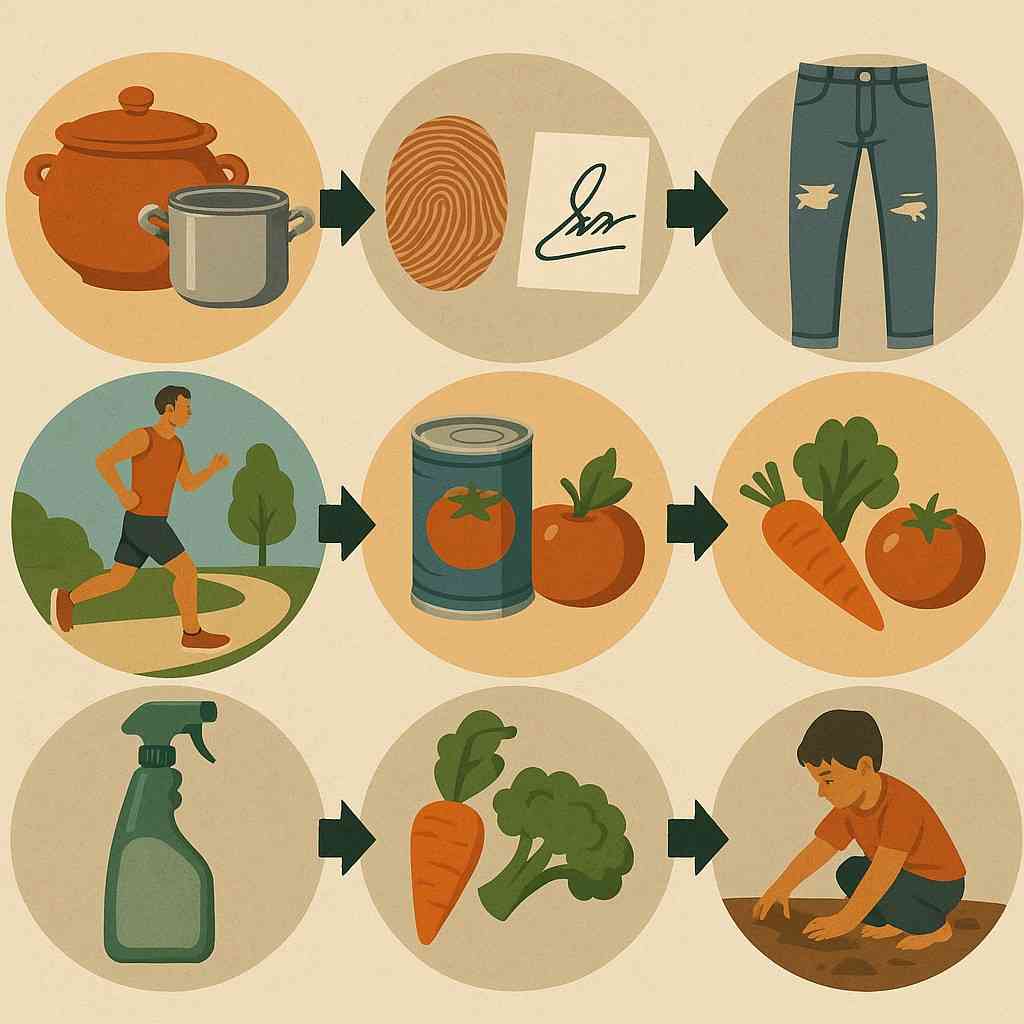
Years ago, our ancestors used clay pots to cook and store food. These earthen pots kept the water cool and added natural minerals to our meals. But with time, we moved to steel, plastic, and non-stick utensils. It was all about convenience and modern style. Later, health experts warned us about harmful chemicals in plastics and non-stick surfaces. People began returning to clay pots, realising they were not only safe but also added a natural taste to the food. In the end, technology helped us circle back to what was always good for us.


Thumbprint to Signature and Back Again

In the early days, most people couldn’t read or write, so they used thumb impressions as a form of identity. As education spread, we started using signatures to show literacy and personal identity. Now, in the digital age, we’re scanning our thumbs again — for smartphones, ID checks, and bank logins. Ironically, we’re back to the thumb, not because we are uneducated, but because it is now seen as the most secure and personal form of identity. What was once seen as basic has now become advanced.


Simple Clothes to Fashion and Back to Simplicity

There was a time when people wore simple, clean clothes. With modern fashion, we began wearing expensive branded clothes, following the latest trends. Soon enough, fashion trends brought back torn jeans and “rugged” looks — something that was once linked with poverty or hard labour. Today, we pay extra for clothes that look old or worn out, forgetting that they were once seen as a sign of hardship. Again, fashion took us full circle.


Hard Work to Fitness Centres

Our ancestors lived tough lives, full of physical work. Then came machines, offices, and comfort. We stopped walking and lifting, and diseases like obesity and diabetes became common. To fight this, we now pay money to join gyms, jog on walking tracks, and lift weights — all to stay healthy. We are doing the same physical work, but in a modern setting. The message is clear: the hard work we avoided was actually keeping us fit.


Natural Foods to Packaged Products and Back to Organic

There was a time when food came fresh from the farm. As technology improved, we began eating processed and packaged foods for the sake of ease. But with these came preservatives, chemicals, and health risks. Today, “organic food” is a growing market — a return to natural farming, chemical-free vegetables, and fresh dairy. We are going back to the way our elders ate, understanding that it was far better for our bodies.


Old and Simple to Branded and Back to Vintage

Old furniture, handmade tools, and traditional items were once considered outdated. We threw them out and filled our homes with branded, factory-made goods. But slowly, we began to admire “antiques” — old clocks, wooden chests, and traditional crafts. People now collect them proudly and pay large amounts to own a piece of the past. Once again, the charm of the old has returned.


From Dusty Playgrounds to Clean Homes and Back to Nature

Earlier, children played outside, got dirty in mud, and built strong immune systems. With fear of germs, we brought them indoors, gave them screens, and sterilised their toys. But now, doctors advise outdoor play and exposure to natural elements to build immunity. We are learning, once more, that a little dirt is not the enemy — it is part of growing up healthy.


The Hidden Message

All these examples show one thing clearly: modern technology often proves the value of what we already had. Our religion, culture, and natural lifestyles gave us simple solutions that worked. They were not backed by data or marketing, but by deep understanding of life and health.

Technology is not the enemy, but it helps us realise that not everything new is better — and not everything old is useless. Sometimes, progress means going back to where we started, with better understanding and appreciation.

In the end, what we left behind in search of something new, might just be the very thing we need the most today.

We walked away from earthen clay,
To shiny pots and steel so grey,
But now we stir the meals once more,
In mud that kept our health in store.

We signed our names with fancy pride,
Left thumbprints quietly aside,
Yet now we scan that print again,
A circle drawn, not made in vain.

From torn old clothes we ran so fast,
To fashion’s shine that couldn’t last,
And now we wear, with pride and grin,
What once was poor is now “a trend” within.

We left the fields, the sweat, the strain,
To chase our dreams on comfort’s train,
But now we jog, and lift with might,
To bring back strength we left in flight.

Fresh food gave way to cans and packs,
With sugar, salt, and plastic wraps,
But now we seek the farmer’s land,
With “organic” labels, clean and grand.

Old things we once threw far away,
Are now antiques we proudly display,
The wooden chest, the rusted bell,
All hold the tales we wish to tell.

We stopped the kids from dirt and play,
Afraid of germs along the way,
But now we know the mud was wise,
It builds the strength that truly lies.

So here we stand, not lost but wise,
With open hearts and clearer eyes,
What once we thought was old and plain,
Is gold we seek, again… again.

Afghan Refugees Face New Crackdown in Pakistan: ‘In Pakistan We’re Afghans, in Afghanistan We’re Treated as Pakistanis

Afghan Refugees

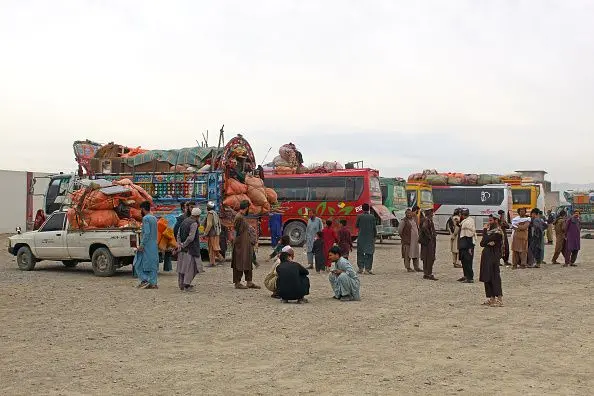
The Pakistani government has started sending Afghan refugees back to Afghanistan again. This time, most of the action is happening in Punjab and Islamabad, where police are arresting Afghan citizens who are living without legal documents.

Some Afghan people told BBC that they feel scared all the time. One person said, “We don’t have a home anymore. In Pakistan, we are called Afghans, and in Afghanistan, we are treated like Pakistanis.”

Arrests and Raids

The government is running a big operation against Afghans who don’t have legal papers or only have Afghan Citizen Cards. Since April 1, over 8,115 Afghan refugees have been sent back to Afghanistan through the Torkham border. The operation is still going on.

However, in Khyber Pakhtunkhwa (KP), no arrests have been made yet. Instead, local police are making a list of Afghan residents in areas like Peshawar, Board, Tajabad, and Tehkal. Police have asked many families to return to Afghanistan on their own.

Life in Punjab

In Punjab, the crackdown is the strongest. Every day, hundreds of Afghan refugees are being arrested and taken to holding centres. After checking their documents, they are sent to the Torkham border to go back to Afghanistan.

One Afghan woman teacher in Peshawar told a doctor that if she’s forced to return, she’ll fall into depression. She is scared and has started taking medicines for mental stress. She said that in Taliban-ruled Afghanistan, women are not allowed to work, while in Pakistan she had a job.

In Rawalpindi, another Afghan man said police have told bus stations not to sell tickets to Afghan people. Even those who have Afghan Citizen Cards are afraid.

Past and Present

Afghan refugees started coming to Pakistan many years ago, especially after the Soviet invasion of Afghanistan. Now, the third generation of Afghan refugees is growing up in Pakistan. But many still live in fear that they could be sent back at any time.

Even though no arrests have happened in KP, Afghan people there are still scared. Some have already packed their things, not knowing what will happen next.

Role of KP Government

KP’s Chief Minister Ali Amin Gandapur said that the federal government is following a wrong policy and that his government will not force anyone to leave. He said that camps will be made for those who want to go back voluntarily and they will be sent back with respect.

His brother, MPA Faisal Amin Gandapur, said that if the UK and US can give nationality to children born there, then Pakistan should also make a policy to give nationality to Afghan refugees. He said that many Afghans have invested in Pakistan and that sending them back will hurt the economy of Khyber Pakhtunkhwa.

What’s Happening in KP?

Since September 2023, around 488,187 Afghan refugees have already been sent back through the Torkham border.

Some people believe that Afghan refugees might move to Khyber Pakhtunkhwa from Punjab and Islamabad, but no proof of this has been found yet. Property dealers in Peshawar said they haven’t seen a big increase in Afghan customers looking for homes.

Artists and Women are Most Worried

The refugees who are most afraid are women, students, and musicians. In Peshawar and Quetta, over 500 Afghan artists are living in fear. They came to Pakistan when the Taliban came to power in Afghanistan.A music artist named Rashid Khan said, “If we are sent back, it will be like death for us. In Afghanistan, the Taliban don’t allow music or art.”

Sulaiman Al Rajhi: The Billionaire Who Donated Over ₹1.3 Lakh Crore to Charity

Sulaiman Al Rajhi

In the world of billionaires, where wealth is often accumulated and expanded, Sulaiman Al Rajhi stands out as a remarkable exception. The Saudi businessman, who once ranked among the richest men in the world, made headlines not for his fortune but for his extraordinary act of generosity. He donated over $16 billion (₹1.3 lakh crore) of his wealth to charity, making him one of the greatest philanthropists in history. His inspiring journey from extreme poverty to immense wealth, and then to giving it all away, is a testament to his faith, humility, and commitment to the well-being of others.

From Rags to Riches: The Early Life of Sulaiman Al Rajhi

Born in 1929 in Saudi Arabia, Sulaiman bin Abdul Aziz Al Rajhi grew up in a modest family with little financial security. His early years were marked by hardships, and he had to work from a young age to support himself. At just nine years old, he worked as a porter in a local market, carrying shopping bags for customers. By the age of 12, he was collecting dates for meager wages, often sleeping on gravel with only the clothes on his back.

Despite these challenges, Al Rajhi had an entrepreneurial spirit and an unwavering belief in hard work. He took on various jobs and gradually saved money, always looking for opportunities to improve his financial situation. His journey was filled with struggles, but his perseverance paid off when he and his brothers ventured into the financial sector.

Building an Empire: The Rise of Al Rajhi Bank

In 1957, Sulaiman Al Rajhi co-founded Al Rajhi Bank with his three brothers. What started as a small financial venture soon grew into one of the largest Islamic banks in the world. Al Rajhi Bank became a leader in Sharia-compliant banking, offering interest-free financial services that aligned with Islamic principles.

Over the decades, the bank expanded rapidly, amassing billions in assets and making the Al Rajhi family one of the wealthiest non-royal families in Saudi Arabia. With his business success, Sulaiman Al Rajhi accumulated a fortune worth billions of dollars. However, he never lost sight of his humble beginnings and remained committed to giving back to society.

A Legacy of Generosity: The Unprecedented Donation

Unlike many billionaires who focus on growing their wealth, Sulaiman Al Rajhi believed in redistributing his fortune for the greater good. He made a historic decision to donate the majority of his wealth—over $16 billion (₹1.3 lakh crore)—to charitable causes. This massive donation was structured as a waqf, an Islamic endowment that ensures the funds are used for public welfare indefinitely.

He split his wealth into three parts:

  • Two-thirds went to charity in the form of waqf, supporting education, healthcare, and social welfare projects.
  • One-third was given to his family.
  • He personally chose to live a simple and humble life despite his vast wealth.

Philanthropic Contributions: Transforming Lives

Sulaiman Al Rajhi’s generosity has had a far-reaching impact across Saudi Arabia and beyond. Some of his major contributions include:

1. Sulaiman Al Rajhi University

He established a non-profit university that focuses on health sciences, business, and Islamic banking. The institution provides high-quality education to students, ensuring that knowledge and skills are accessible to all.

2. Healthcare and Social Welfare

Al Rajhi’s donations have funded hospitals, medical research, and healthcare initiatives, improving access to medical services for underprivileged communities.

3. Hunger Relief and Poverty Alleviation

Through his charitable foundation, he has funded numerous projects aimed at eradicating hunger and poverty, ensuring that basic necessities are available to those in need.

4. Islamic Banking and Financial Support

His contributions to Islamic banking continue to support ethical financial practices and provide interest-free financial services that align with Islamic principles.

A Simple Life Despite Immense Wealth

Despite being a billionaire, Sulaiman Al Rajhi lived a remarkably modest life. He believed that wealth was a test from God and that it should be used for the betterment of society. He avoided extravagance and focused on meaningful philanthropy. In interviews, he often emphasized that money was a means to serve humanity, not a tool for personal luxury.

Recognition and Awards

In recognition of his unparalleled generosity, Sulaiman Al Rajhi received numerous awards, including the King Faisal International Prize in 2012 for his outstanding contributions to philanthropy. His impact on society continues to be celebrated as an example of selflessness and devotion to the welfare of others.

The Enduring Legacy of Sulaiman Al Rajhi

At 95 years old, Sulaiman Al Rajhi’s story serves as an inspiration to millions. His decision to donate his fortune rather than keep it for himself or his heirs is a rare and commendable act. He has set an example for other wealthy individuals, showing that true success is measured not by the wealth one accumulates, but by the impact one has on others.

Through his charitable foundation, educational institutions, and humanitarian projects, Sulaiman Al Rajhi’s legacy of kindness and generosity will live on for generations to come. His life is proof that even in a world driven by wealth and power, there are still those who choose to give rather than take.

Sisi’s Secret Plan for Gaza Evacuation Sparks Outrage,Reports Claim Egypt Planned to Move 500,000 Palestinians

Sisi's Secret Plan

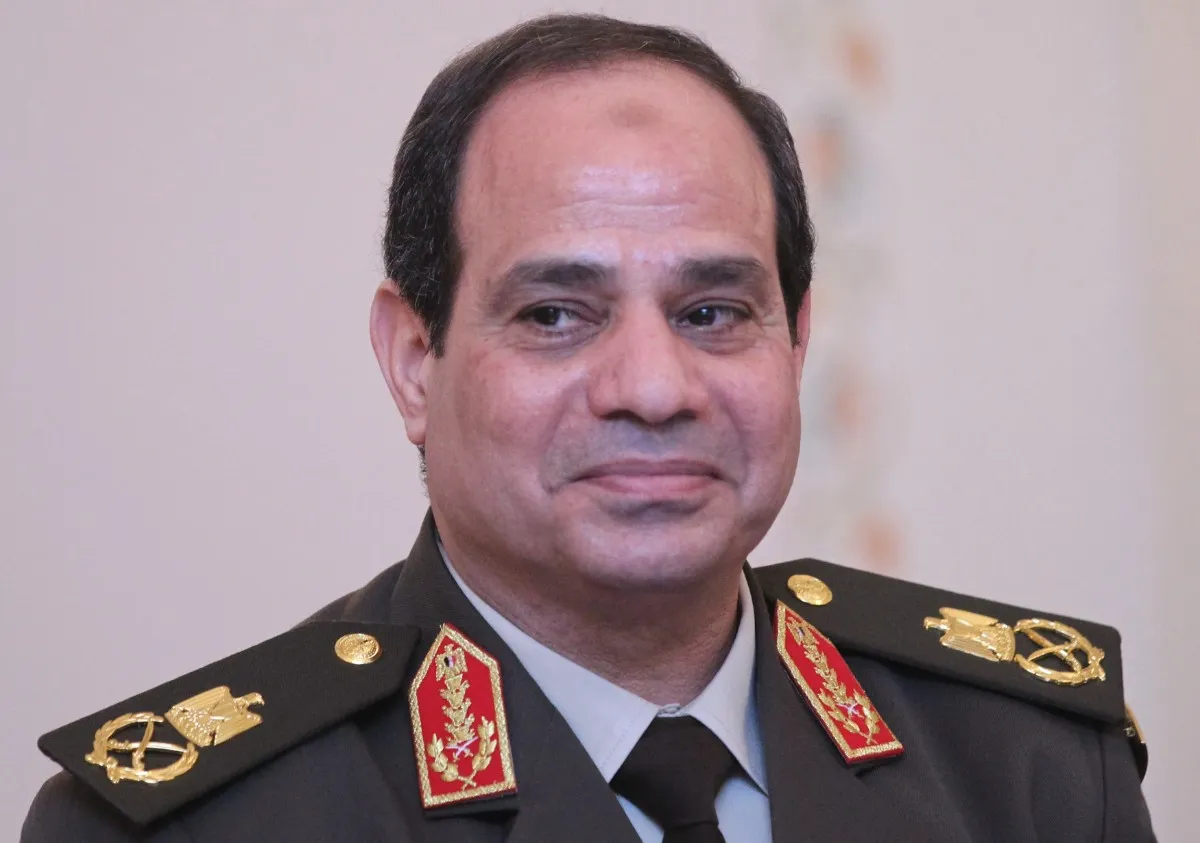
Egyptian President Abdel Fattah el-Sisi is facing massive backlash after reports surfaced about a secret plan to move 500,000 Palestinians from Gaza to Egypt’s Sinai region. The Lebanese newspaper Al-Akhbar first reported the claim, and several social media users on X backed it up. While Sisi has denied approving any such plan, the controversy has sparked anger and raised big questions about Egypt’s role in the ongoing Israel-Gaza war.

What’s the Alleged Plan?

According to reports, Sisi was open to temporarily relocating half a million Palestinians to a special city in North Sinai. The proposal was reportedly discussed with Arab leaders and linked to conditions set by the U.S. for rebuilding Gaza. Some sources even claim Jordan was involved in the talks.

Though described as a “temporary” move, there were no clear details about how long people would stay or whether they could return home. Many feared this could become a permanent displacement, reminding Palestinians of past forced removals, like the 1948 Nakba.

Sisi has repeatedly rejected any plan to push Palestinians into Sinai. In 2023, he warned that such a move could turn the area into a battleground for attacks against Israel. In January 2025, he also refused a similar suggestion from former U.S. President Donald Trump, calling it “unfair and dangerous for Egypt.”

Furious Reactions from Palestinians

News of the alleged plan triggered strong reactions, especially from Palestinian groups. Hamas reportedly called it a “dark morning,” fearing that it would lead to permanent exile. Many Palestinians believe that once they leave their land, they may never be allowed to return.

Sisi’s own words have added to the controversy. In a speech from November 2024, he warned that moving Palestinians to Sinai could “bring the fight from Gaza into Egypt.” This has worried many Egyptians, who fear it could invite attacks and instability.

Egypt’s Tough Position

Egypt plays a key role in mediating between Israel and Hamas. It has helped negotiate ceasefires and aid deliveries, making it a crucial player in the conflict. But if Egypt is seen as supporting Palestinian displacement, it could damage its reputation in the Arab world and spark protests at home.

Some reports claim Egypt is under pressure from the U.S. to take in refugees in exchange for financial aid. However, allowing mass relocation could create security risks, especially in Sinai, where Egyptian forces already battle extremist groups.

What Happens Next?

If Egypt were to approve such a plan, it could change the region’s balance. Sinai might become a new conflict zone, Israel-Egypt relations could suffer, and other Arab countries—like Jordan—might also feel pressured to take in refugees. The U.S. and other global powers could also face criticism for allegedly pushing for displacement under the cover of humanitarian aid.

For now, Sisi continues to deny any involvement, but the reports have already caused global outrage. Whether this was a real plan or just speculation, one thing is clear—any talk of Palestinian displacement will always be a highly sensitive and explosive issue.

References:

  1. The New Arab: Reports on Egypt’s alleged plan for Gaza evacuation.
  2. Egyptian Foreign Ministry: Official statement denying the relocation plan.
  3. Hamas spokesperson Hazem Qassem: Comments on the proposed plan.
  4. Arab League: Statement reaffirming support for Palestinian rights.
  5. President El-Sisi’s public address: Denial of the relocation proposal.

The Battle of Badr Islam’s Historic Victory

Battle of Badr

The Battle of Badr, fought on March 13, 624 CE (17th Ramadan, 2 AH in the Islamic calendar), was a defining moment in early Islamic history. It was the first major military confrontation between the newly established Muslim community in Medina, led by Prophet Muhammad (peace be upon him), and the powerful Quraysh tribe of Mecca. Despite being vastly outnumbered, the Muslim forces secured a decisive victory, reinforcing their faith and solidifying their presence in the Arabian Peninsula. This battle is remembered not just as a military triumph but as a pivotal event that shaped the course of Islam.

Background and Causes of the Battle

The tensions leading to the Battle of Badr stemmed from years of persecution faced by Muslims in Mecca, which ultimately forced them to migrate to Medina in 622 CE (the Hijra). Although the Muslims had settled in their new home, hostilities with the Quraysh persisted. The immediate cause of the battle was economic: the Muslims planned to intercept a lucrative Meccan trade caravan led by Abu Sufyan, which was returning from Syria with goods essential to the Quraysh’s wealth.

Realizing the danger, Abu Sufyan changed his route and sent word to Mecca, seeking reinforcements. In response, the Quraysh assembled a formidable army of around 1,000 warriors, including many of their strongest fighters, to confront the Muslims. Prophet Muhammad (PBUH) gathered a small force of 313 men, with limited resources: only two horses and 70 camels. Despite the overwhelming odds, the Muslims were prepared to fight for their survival and faith.

The Course of the Battle

The two armies met at Badr, near a series of wells southwest of Medina, a strategically important location. Prophet Muhammad (PBUH) displayed remarkable military acumen by securing control of the water sources, limiting the Quraysh’s access.

The battle commenced with the traditional Arabian practice of single combat. Three warriors from each side engaged in duels, with the Muslim champions – Ali ibn Abi Talib, Hamza ibn Abdul Muttalib, and Ubayda ibn al-Harith – emerging victorious. This initial success boosted the morale of the Muslim army.

As the full battle erupted, the Muslims, despite their numerical disadvantage, displayed exceptional discipline and resilience. According to Islamic tradition, divine intervention played a role in their victory, as described in the Quran (Surah Al-Anfal 8:17): “You did not kill them, but it was Allah who killed them.” By the end of the battle, around 70 Quraysh fighters, including their leader Abu Jahl, had been killed, and another 70 were taken as prisoners. In contrast, the Muslims lost only 14 men, who are revered as martyrs in Islamic history.

The Impact and Significance of the Victory

The Battle of Badr had far-reaching consequences for the young Muslim community and the broader Islamic movement:

  1. Strengthened the Muslim Community: The victory at Badr significantly boosted the morale of Muslims and solidified Prophet Muhammad’s (PBUH) leadership. It reassured his followers that their faith in Islam and their sacrifices were not in vain.
  2. Weakened the Quraysh’s Influence: The loss at Badr severely damaged the reputation of the Quraysh, who had previously been regarded as invincible. Their political and economic power in Arabia began to wane.
  3. Established Islam as a Political Force: Until Badr, Islam was primarily seen as a spiritual movement. The battle demonstrated that the Muslims were a formidable political and military entity, capable of defending themselves and influencing regional affairs.
  4. Set the Stage for Future Battles: The Quraysh sought revenge, leading to further conflicts such as the Battle of Uhud (625 CE) and the Battle of the Trench (627 CE). However, the eventual conquest of Mecca in 630 CE can be traced back to the momentum generated by the victory at Badr.
  5. Religious and Cultural Significance: Badr is commemorated annually by Muslims as a moment of divine support and unwavering faith. The 14 fallen Muslims are honored as martyrs, and the battle remains a symbol of perseverance against adversity.

Badr’s Legacy in the Modern Era

Even today, the Battle of Badr is remembered as a powerful lesson in faith, resilience, and strategic thinking. It continues to inspire Muslims worldwide, serving as a reminder that belief, unity, and determination can overcome even the most daunting challenges. Events commemorating the battle, such as the gathering at Aali Masjid Eidgah in Srinagar on March 18, 2025, where Mirwaiz Umar Farooq honored its martyrs, highlight its enduring significance.

The Battle of Badr was more than just a military victory; it was a turning point that paved the way for Islam’s expansion and the eventual establishment of a unified Muslim state. Its lessons remain relevant, reminding believers of the power of faith, justice, and perseverance in the face of adversity.

Why Indian Muslim Leaders Are Finally Taking to the Streets ?

Indian Muslim Leaders

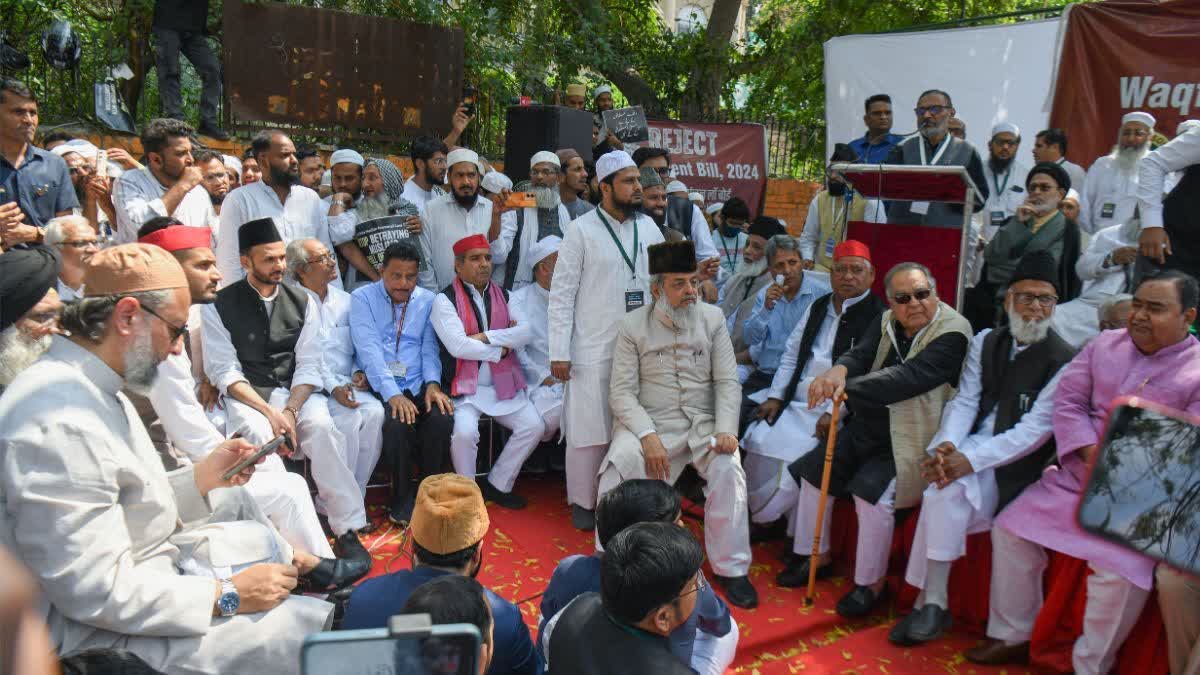
On March 17, 2025, the iconic Jantar Mantar in New Delhi transformed into a sea of voices, banners, and determination as Indian Muslim leaders spearheaded what many are calling a groundbreaking protest movement. For the first time, the All India Muslim Personal Law Board (AIMPLB), joined by a coalition of community figures, political allies, and everyday citizens, took to the streets in a unified stand. The air was thick with emotion, and the timing—right in the middle of Ramadan—only amplified the stakes. So, what pushed these leaders to this unprecedented step? The answer lies in a single piece of legislation that’s ignited a firestorm of debate: the Waqf (Amendment) Bill 2024.

The Spark That Lit the Flame

At the heart of this historic demonstration is a proposed law that has sent shockwaves through India’s Muslim community. The Waqf (Amendment) Bill 2024 aims to overhaul how Waqf properties—think mosques, madrasas, graveyards, and other community assets—are managed. For the AIMPLB and its supporters, this isn’t just a policy tweak; it’s a direct challenge to their rights and heritage. They argue that the bill threatens the autonomy of these properties, potentially opening the door to government overreach and disrupting a system that’s been in place for generations.

The protest kicked off with a clear demand: scrap the bill entirely. Leaders from the AIMPLB took to the stage at Jantar Mantar, their voices echoing through the crowd as they explained why this moment felt like a breaking point. For them, it’s not just about the Waqf properties themselves—it’s about a deeper frustration with a system they believe has ignored their concerns for far too long. The bill, in their eyes, was the final straw, a symbol of years of grievances piling up without resolution.

A Historic Gathering in Unlikely Times

What makes this protest stand out isn’t just its scale—it’s the timing. Ramadan, a month of fasting, reflection, and prayer, isn’t typically when you’d expect a mass demonstration. Yet, here were thousands of people, braving the day’s heat and their own physical limits, to make their voices heard. The sight of community leaders rallying during such a sacred time sent a powerful message: this isn’t business as usual. This is a community saying, “Enough is enough.”

The crowd wasn’t just AIMPLB members, either. Opposition politicians, religious scholars, and activists from across the spectrum joined in, turning the event into a rare show of unity. Heavy police presence lined the area, but the demonstration stayed peaceful, with participants channeling their energy into speeches and chants rather than confrontation. It was a striking scene: a diverse group coming together under one banner, driven by a shared sense of urgency.

What’s Really at Stake?

So, why all the fuss over a bill about property management? For the protesters, it’s more than just land—it’s identity. Waqf properties aren’t just assets; they’re tied to the cultural and religious fabric of India’s Muslim community. The fear is that the amendments could weaken their control over these spaces, handing more power to the government and potentially disrupting their purpose. Some even worry it’s a step toward erasing a vital part of their legacy.

On the flip side, supporters of the bill see it differently. Government voices and some political leaders argue that the changes are long overdue. They point to issues like mismanagement and disputes over Waqf properties, suggesting that reforms—like digitizing records and tightening oversight—could bring clarity and benefit the community, especially its poorest members. It’s a classic clash of perspectives: one side sees a threat, the other sees progress.

A Debate That’s Bigger Than One Bill

This protest isn’t happening in a vacuum. It’s the culmination of years of tension, where many in the Muslim community feel their voices haven’t been heard on issues ranging from legal rights to social policies. The Waqf bill became the lightning rod, but the emotions on display at Jantar Mantar hint at something broader—a demand for recognition and respect within India’s complex democratic framework.

Critics of the protest, including some within the community, question whether this is the right fight. They wonder if the AIMPLB’s focus on the bill is more about politics than people, pointing to internal debates about how best to address the community’s needs. Meanwhile, the government and its allies are digging in, framing the amendments as a practical fix rather than a power grab. With both sides entrenched, the stage is set for a showdown that could ripple through India’s political landscape.

What Happens Next?

As the sun set on March 17, the protesters dispersed, but the energy lingered. The AIMPLB vowed to keep pushing, hinting at more actions if their demands aren’t met. With the bill still under review and parliamentary discussions looming, all eyes are on how the government—and its coalition partners—will respond. Will this historic protest force a rethink, or will it deepen the divide?

One thing’s clear: this isn’t just about a law anymore. It’s about a community stepping into the spotlight, demanding to be heard. Whether you see it as a bold stand or a risky gamble, the events at Jantar Mantar have changed the conversation. And as India watches, the question remains: what will it take to bridge this gap?


Former TTP Spokesman Ehsanullah Ahsan Warns of Pakistan Reactivating Jihadi Groups in Kashmir

Ehsanullah Ahsan

In a significant and alarming revelation, former Tehrik-e-Taliban Pakistan (TTP) spokesman Ehsanullah Ahsan has warned that Pakistan is once again resorting to its old strategy of using jihadist groups as proxies to advance its geopolitical interests. In an article published in The Sunday Guardian, Ahsan claimed that Pakistan’s security establishment is facilitating the reactivation of militant groups like Lashkar-e-Taiba (LeT) and Jaish-e-Mohammed (JeM) in Kashmir, with the aim of escalating instability in the region.

Ahsan stated that Pakistan’s foreign policy has long been interventionist and shaped by a military mindset, prioritizing regional influence over internal stability. However, recent developments, particularly the strengthening diplomatic and economic ties between India and the Taliban-led Afghanistan, have reportedly left Pakistan frustrated. Islamabad had long sought to maintain its influence over Afghanistan, but the Taliban’s independent foreign policy, which includes fostering better relations with India, has put Pakistan’s establishment in a difficult position.

This growing India-Taliban closeness has compelled Pakistan to return to its traditional reliance on jihadi factions to maintain its influence in Kashmir and counter India’s regional ascendancy. Ahsan noted that the reactivation of these groups is not only a desperate attempt to revive the armed insurgency in Kashmir but also serves as a distraction from Pakistan’s mounting internal crises and diplomatic setbacks.

According to Ahsan, Pakistan’s Inter-Services Intelligence (ISI) has directed groups like Lashkar-e-Taiba and Jaish-e-Mohammed to resume operations in Kashmir. He warned that the renewed activities of these groups could lead to increased violence, cross-border terrorism, and heightened tensions between India and Pakistan.

This revelation is particularly concerning as these organizations have long been accused of carrying out deadly attacks in India. LeT was responsible for the 2008 Mumbai attacks, while JeM has been linked to multiple suicide bombings, including the 2019 Pulwama attack that killed 40 Indian paramilitary personnel.

Ahsan also alleged that Pakistan has been using jihadist groups as a proxy arm of ISIS in Afghanistan, further fueling instability in the region. By backing these militant outfits, Pakistan is not only endangering Kashmir but also risking a broader conflict that could impact South Asia as a whole.

Ahsan argued that Pakistan’s reliance on jihadist groups stems from its worsening internal situation. The country is facing a deep economic crisis, international pressure over its alleged links to terrorism, and increasing diplomatic isolation. These challenges have reportedly forced the Pakistani establishment to revert to old strategies of state-sponsored terrorism to deflect attention from its failing governance.

Pakistan has long faced accusations from India and the global community for harboring terrorist networks and providing them with logistical and financial support. In recent years, international watchdogs like the Financial Action Task Force (FATF) have repeatedly placed Pakistan on its grey list for failing to curb terror financing. Reactivating jihadist groups in Kashmir could push Islamabad further into international scrutiny and invite stringent sanctions.

India has consistently maintained that Pakistan is the primary sponsor of terrorism in Kashmir and has called for global action against Islamabad’s terror infrastructure. If Ahsan’s claims are accurate, this development could lead to increased cross-border attacks, security concerns, and a potential escalation in Indo-Pakistan hostilities.

New Delhi has strengthened counter-terrorism measures, enhanced border security, and intensified diplomatic efforts to expose Pakistan’s terror links on the global stage. The Indian government may also push for further economic and diplomatic sanctions against Pakistan if credible evidence emerges regarding the reactivation of jihadist groups in Kashmir.

Ehsanullah Ahsan’s warnings about Pakistan’s renewed efforts to reactivate jihadist groups in Kashmir are deeply troubling. If his claims hold true, South Asia could be on the verge of another cycle of violence and instability. The international community must closely monitor Pakistan’s activities and hold it accountable for any actions that threaten peace and security in the region. India, on its part, will need to stay vigilant and continue its diplomatic and strategic efforts to counteract these emerging threats.

Locals Angry as 90% of Pahalgam Construction Notices Target Small Homeowners, Not Hoteliers

Omar Abdullah

The Jammu and Kashmir government has issued 256 new notices for construction deviations in Pahalgam, adding to the growing concerns among locals over alleged bias in enforcement actions. Residents claim that while small homeowners are being penalized for minor extensions like bathrooms and storage spaces, large hotel owners who have constructed multi-story buildings with hundreds of rooms continue to operate without any action.

Government Issues Fresh Notices

On Thursday, the Jammu and Kashmir government confirmed that a total of 256 notices had been issued under the Pahalgam Development Authority (PDA) for violations in construction regulations. This follows an earlier announcement of 269 notices, making it a total of 525 notices in recent weeks. The notices were issued as part of an official effort to curb unauthorized constructions in the region.

However, the move has sparked outrage among the local population, who argue that nearly 90% of these notices target small homeowners, particularly those who have built minor structures such as bathrooms or storage areas outside their homes. Many believe this enforcement is unfair, as it does not seem to apply equally to wealthy hoteliers who have built massive structures in the area.

Locals Raise Questions Over Selective Action

Residents have questioned why large hotels, some of which have constructed eight-story buildings with hundreds of rooms, have not received a single notice. They allege that authorities are focusing on small homeowners while ignoring big business interests in the region.

“Why are only locals being targeted? We have a right to build small extensions like bathrooms and stores. Meanwhile, luxury hotels are expanding without any restrictions,” said a local resident.

Another protester stated, “If the government is serious about maintaining Pahalgam’s natural beauty and preventing unauthorized construction, they should take action against everyone equally, not just the weaker sections of society.”

Waheed-ur-Rehman Para’s Role in Raising the Issue

MLA Pulwama, Waheed-ur-Rehman Para, had earlier raised a question in the Assembly about the total number of illegal and unauthorized constructions in Pahalgam. However, locals feel that he should have specifically asked how many of the notices were issued to small homeowners and how many were given to hoteliers.

They argue that the real issue is not just the number of notices but who is receiving them. “Waheed Para should have asked how many notices were given to local residents versus hotel owners. The government must answer this question,” said a resident.

Authorities Defend Their Actions

In response to these concerns, the Jammu and Kashmir government has maintained that the notices are issued based on clear violations of the law. The Chief Minister, who also serves as the Minister of Tourism, stated that the Pahalgam Development Authority is responsible for ensuring that all constructions adhere to legal permissions.

“The PDA is the nodal agency for checking deviations and unauthorized constructions in the notified areas. Demolition drives are carried out whenever required,” the minister said.

However, critics argue that enforcement should be fair and transparent. They demand that the government release a detailed breakdown of the notices, specifying how many were issued to local homeowners and how many to hotel businesses.

Growing Public Outrage

The issue has sparked protests in Pahalgam, with many locals calling for a review of the notices. They are demanding an independent investigation into the enforcement process to ensure that it is not biased against small property owners.

“We are not against laws, but they should apply to everyone. The government must take strict action against illegal hotel constructions as well,” said another resident.

The ongoing controversy has put pressure on the government to address public concerns and ensure fairness in its actions. As the debate continues, locals are determined to fight for their rights and seek justice in what they see as a deeply unfair situation.