The Golden Essence: Saffron’s Journey from Field to Spice

saffron

Introduction to Saffron: The World’s Costliest Spice

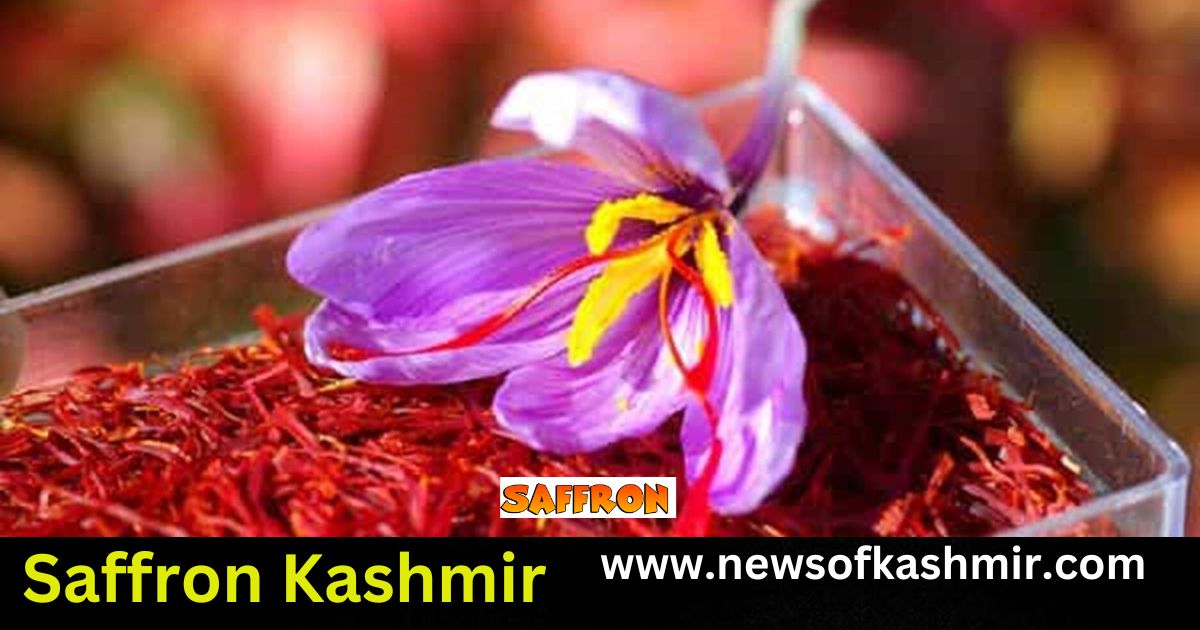
Saffron, often called “red gold,” is renowned for its vibrant colour, rich aroma, and flavourful essence. Derived from the flower Crocus sativus, known as the saffron crocus, this spice holds a unique position in culinary and cultural histories. The saffron crocus blooms with deep crimson stigmas, which are carefully hand-harvested, dried, and eventually transformed into the delicate threads that season and colour dishes around the world. From its early cultivation across Eurasia to becoming a staple in various world cuisines, saffron has long been admired for its rarity and value. Today, it is largely produced in Iran, followed by Afghanistan and Kashmir, and it continues to command an extraordinary price due to its labor-intensive harvesting process.

Saffron’s Origin and Cultivation History

Saffron’s journey through history is as rich as its colour. Ancient texts reveal that it was highly valued and cultivated as early as the 7th century BC, and it played a role in the cultures of Persia, Greece, and the Mediterranean. Origin theories suggest that saffron likely descended from Crocus cartwrightianus, a wild crocus native to the eastern Mediterranean, especially Greece and Crete. The spice eventually spread across continents through trade routes, taking root in North Africa, India, and beyond.

As a sterile plant, Crocus sativus relies on human intervention to propagate, a process that involves carefully dividing and replanting corms, small underground storage organs resembling bulbs. These corms only survive for one season but can produce several smaller “cormlets,” which can be replanted in the next growing season.

The Saffron Crocus and Its Growing Conditions

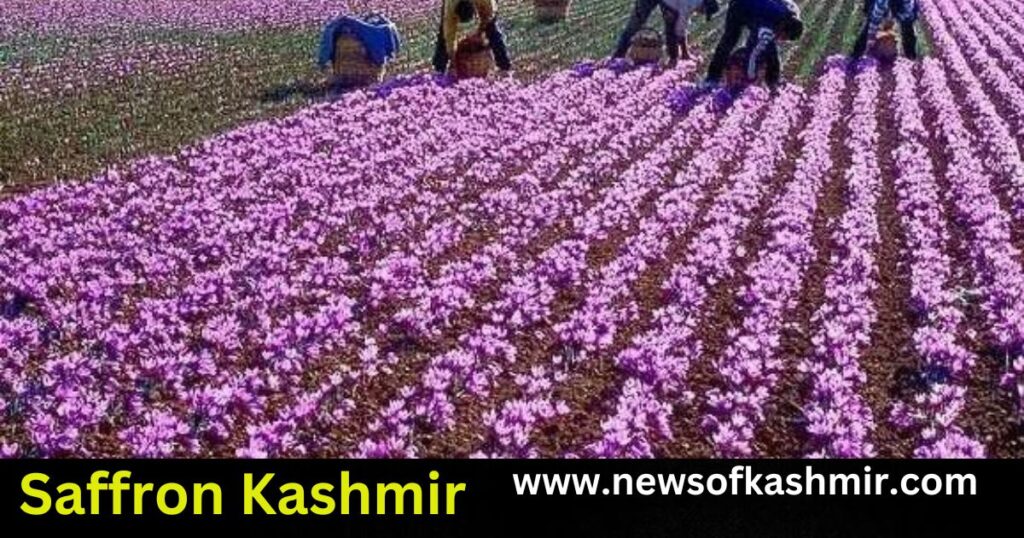
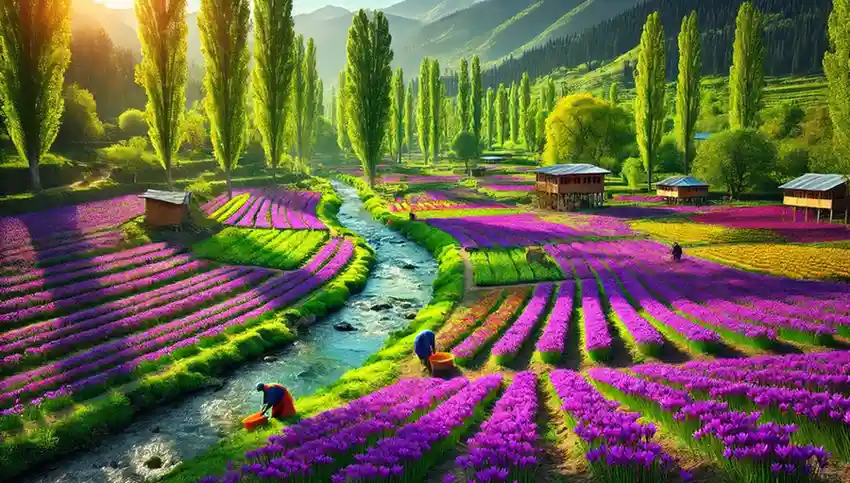
The saffron crocus requires a specific climate to thrive. Typically grown in Mediterranean-like regions, the plant prefers hot, dry summers and cooler, moist winters. Although it can survive mild frost, it’s sensitive to overly damp conditions and shade. For optimal growth, saffron crocus fields are usually located on sunny slopes and are planted in loose, well-draining soil with high organic content. Traditionally, saffron is grown on raised beds to prevent water accumulation around the corms.

Regions with the right balance of rainfall and temperature, such as Kashmir, Iran, and Greece, produce high-quality saffron. While Iranian saffron, the most prevalent variety, has a softer colour and flavour, Kashmiri saffron is distinguished by its deep purple hue and intense aroma, making it particularly sought after.

The Harvesting Process: From Flowers to Threads

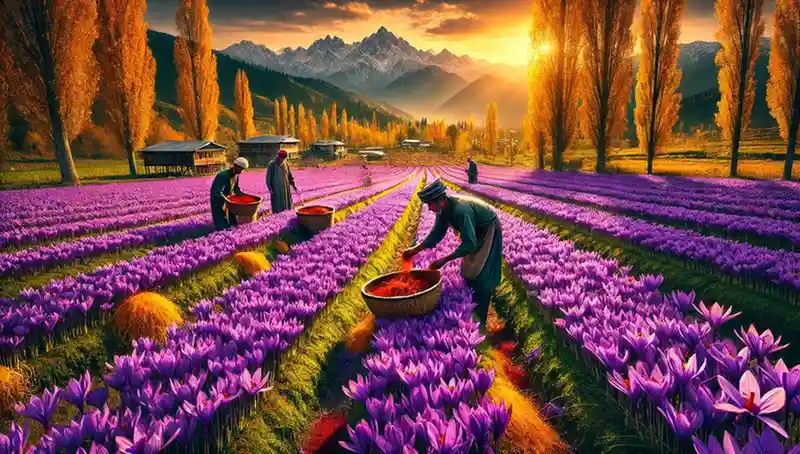
Harvesting saffron is one of the most labour-intensive processes in spice production. Each saffron flower yields only three delicate stigmas, or threads, which are handpicked at dawn to preserve their aroma and flavour. Because each stigma weighs so little, approximately 150,000 flowers are required to produce a single kilogram of saffron. Harvesters work quickly to prevent the flowers from wilting in the sun, with the entire flowering window lasting only one to two weeks.

Once collected, the saffron stigmas are dried, a step that intensifies their flavour and aroma. Dried saffron threads are stored in airtight containers to protect them from light and air exposure, which can degrade their potency.

Chemical Composition and Unique Properties of Saffron

Saffron’s distinct aroma and vibrant colour are thanks to unique chemical compounds. Key components include:

  • Picrocrocin: This compound is responsible for saffron’s slightly bitter taste.
  • Safranal: The main component behind saffron’s aroma, it develops as picrocrocin breaks down during drying.
  • Crocin: This carotenoid pigment gives saffron its brilliant yellow-orange hue and is easily absorbed in water, making it ideal for culinary applications.

These compounds also give saffron antioxidant and anti-inflammatory properties, contributing to its historical use in traditional medicine.

Modern-Day Cultivation Techniques

Today, saffron farmers use advanced techniques to improve yield and quality. Depth of planting and spacing of corms are carefully managed, as these affect both the quality and quantity of flowers. In Mediterranean and subtropical climates, such as those found in Greece and Spain, corms are planted between 7 to 15 centimetres deep, with closer spacing to maximise flower yield.

Soil quality is also critical. Growers enhance soil richness by applying organic fertilisers, though excessive fertilisation is avoided to prevent compromising the delicate saffron flavour. Where rainfall is minimal, such as in Iran and Spain, irrigation systems ensure that the plants receive adequate moisture without waterlogging.

Economic and Cultural Importance of Saffron

Saffron’s high market value, often reaching thousands of pounds per kilogram, reflects its labour-intensive harvesting and processing. In some regions, saffron cultivation is a significant economic driver, providing jobs and sustaining local communities. For instance, Iran produces almost 90% of the world’s saffron, with production primarily in the Khorasan region.

Beyond its economic significance, saffron holds cultural and culinary importance across many societies. It is revered in Indian cuisine, for example, where it adds colour and fragrance to dishes like biryanis and sweets. Similarly, Persian dishes often feature saffron for its unique aroma and vivid hue. In Europe, particularly in Spain and Italy, saffron enhances traditional dishes like paella and risotto.

Challenges in Saffron Production

The delicate nature of saffron cultivation makes it vulnerable to climate and environmental factors. Excessive rainfall, frost, or long periods of dampness can damage crops, while pests such as rodents and nematodes pose additional threats. Crop diseases like corm rot, especially prevalent in humid climates, can destroy an entire yield if not managed carefully.

In recent years, researchers have explored natural methods to mitigate these risks, including using beneficial bacteria to enhance corm growth and yield. This practice has shown promise in promoting healthy corm development and increasing saffron output.

saffron

Saffron Varieties and Quality Differences

There are several regional varieties of saffron, each with its distinct characteristics. Spanish saffron, known for its subtle aroma and colour, is generally milder compared to Italian and Greek varieties. In contrast, Kashmiri saffron, or Crocus sativus ‘Cashmirianus,’ has a deep maroon colour and strong flavour, making it highly valued but also rare due to export restrictions.

Specialty saffron varieties, like Italy’s “Aquila” saffron, are recognised for their high safranal and crocin content, which enhances both aroma and colour. Such varieties are often certified with geographical indications, protecting their status and origin.

Conclusion: Saffron’s Enduring Legacy

Saffron’s rarity, rich history, and distinct sensory qualities make it one of the most treasured spices in the world. From the meticulous cultivation of the crocus to the labour-intensive harvesting process, saffron embodies the delicate balance between nature and human effort. Although largely produced in a few key regions, saffron’s influence extends globally, enriching culinary, medicinal, and cultural practices across societies.

Its enduring appeal lies not only in its unique flavour and aroma but also in the intricate journey each thread takes from field to table. As global demand grows, efforts to cultivate and protect this precious spice will ensure that saffron remains a cherished part of our cultural and culinary heritage.

Mudasir Ahmad Bhat Pioneers Saffron Cultivation in North Kashmir: A New Agricultural Era

20th University Council Meeting of SKUAST Jammu Chaired by LG Manoj Sinha at Raj Bhawan

Ajaz Ahmad Bhat, IAS Director Sericulture J&K Reviews Progress of Ongoing Works in Jammu Division

Chowdhury Mohammad Iqbal Director Agriculture Kashmir today visited saffron areas of Pampore to take stock of the crop scenario

Reviving Kashmir’s Saffron Heritage: Why Operationalising Bore Wells is Key to Sustaining Pampore’s Saffron Cultivation

saffron

The Essence of Kashmir’s Saffron Heritage

In South Kashmir’s Pulwama district, the historic town of Pampore is celebrated as the “Saffron Town” of India. Known for producing one of the world’s finest varieties of saffron, Pampore has been home to this heritage crop for centuries. The vibrant purple flowers and the precious red threads harvested from them are central to Kashmir’s economy and cultural identity. However, this legacy faces significant challenges due to shifting weather patterns and limited irrigation facilities, putting the future of saffron farming in Pampore at risk.

In recent years, local saffron farmers have experienced an unpredictable climate, with prolonged dry spells affecting saffron yields. Despite the government’s initiatives under the National Saffron Mission (NSM), bore wells dug nearly 14 years ago to ensure irrigation remain non-functional. Farmers are now calling on the government to make these bore wells operational, arguing that sustainable irrigation could not only stabilise production but also help attract younger generations back to saffron farming.

The Decline of Saffron Yield in Pampore

Saffron cultivation in Pampore heavily depends on timely rains during the flowering period, particularly in August and September. In recent years, rainfall patterns have become unpredictable, leading to prolonged dry spells that directly impact saffron yields. This season, farmers reported a notable reduction in saffron flower production, with many citing inadequate and delayed rainfall as a key reason.

Ghulam Ahmad Ganie, a saffron farmer from Pampore, shared his disappointment, comparing this year’s yield to the previous year’s production. According to Ganie, the lack of rainfall and the absence of functional irrigation systems have severely impacted his crop. “The government set up bore wells years ago, but without activation, they are of no use. We cannot irrigate our fields, leaving us vulnerable to climate variations,” he explained. His concerns echo across Pampore, as farmers watch their once-thriving saffron fields struggle under the weight of changing weather patterns.

National Saffron Mission and the Bore Wells Initiative

Under the National Saffron Mission, launched in the early 2010s, bore wells were established across Pampore and nearby villages to provide reliable irrigation to saffron fields. The initiative aimed to make Pampore’s saffron cultivation more resilient by introducing modern irrigation techniques to help offset climate challenges. The government invested in these bore wells as part of a larger plan to revitalise the saffron industry and increase productivity.

However, despite the efforts and resources allocated to the project, these bore wells have not been made operational. According to Mohammad Iqbal Khan, Chief Agriculture Officer of Pulwama, the bore wells were completed in line with the Detailed Project Report (DPR) of the NSM. Khan mentioned that around 77 bore wells are currently functional, yet many farmers have not taken ownership of these wells, which is required to start using them. Without a reliable water source, farmers are left reliant on natural rainfall, which has become increasingly unpredictable in recent years.

Farmers’ Struggles and Their Plea for Support

For Pampore’s saffron farmers, the inoperable bore wells represent more than just a missed opportunity—they are a symbol of ongoing struggles and unfulfilled promises. The lack of irrigation is not only reducing yields but is also affecting the economic viability of saffron farming. Mohammad Arfat Ganie, another local farmer, shared his frustration over this situation. His family has been cultivating saffron for generations, yet he fears that without assured irrigation, the tradition may not continue.

“Many youths are moving away from saffron cultivation due to low returns,” Arfat explained. The uncertainty surrounding saffron farming income has discouraged younger generations from taking up the trade, threatening the continuity of Pampore’s saffron heritage. Arfat and other farmers are calling on the government to operationalise the bore wells as soon as possible. For them, this step could help reverse the trend of declining interest in saffron farming by making it a more secure and profitable livelihood option.

The Impact of Climate Change on Saffron Cultivation

Saffron is a crop that is sensitive to weather conditions, and any fluctuation in temperature, rainfall, or humidity can drastically impact its growth. In Kashmir, changing weather patterns have created new challenges for saffron farmers, making traditional farming methods less effective. The prolonged dry spells that Pampore experienced this season are becoming more frequent, raising concerns about the long-term future of saffron cultivation in the region.

Irrigation plays a crucial role in maintaining saffron fields, especially when natural rainfall fails to provide the necessary moisture. Without functional irrigation systems, farmers have little control over water availability, making their crops vulnerable to unpredictable weather. As a result, the once-flourishing saffron industry in Pampore is now grappling with lower productivity and economic challenges.

The Labour-Intensive Nature of Saffron Farming

Saffron farming is not only sensitive to weather but is also labour-intensive, requiring meticulous care from planting to harvesting. Farmers work tirelessly under often harsh conditions, such as intense sunlight, to maintain their saffron fields. The process of extracting saffron threads is delicate and requires precision, adding to the time and effort required to produce even a small quantity of saffron.

Mohammad Ashraf Ganie, another local farmer, highlighted the physical demands of saffron farming, which are compounded by the low yields this year. “The yield this year is below expectations, and this makes the labour-intensive process even more difficult,” Ashraf shared, underscoring how the lack of irrigation adds an extra burden to an already challenging task. For these farmers, activating the bore wells or providing support to establish private wells would be a lifeline, helping them to improve productivity and make their efforts worthwhile.

Addressing the Ownership Issue of Bore Wells

One of the main reasons the bore wells remain unused is a lack of clear ownership. While the NSM installed the bore wells, the project anticipated that farmers would take ownership and assume responsibility for their maintenance. However, this transfer of ownership has not happened in many cases, leaving the bore wells inactive.

Chief Agriculture Officer Mohammad Iqbal Khan pointed out that the bore wells are functional and available for use, provided that farmers take ownership. However, the farmers argue that they lack the resources to maintain and operationalise these wells independently. Some have suggested that the government should offer additional support to help them manage the bore wells or provide alternative funding to encourage shared ownership among farming communities.

The Broader Implications for Pampore’s Saffron Heritage

The challenges facing Pampore’s saffron farmers extend beyond individual livelihoods, impacting the entire region’s cultural and economic identity. Saffron farming has deep roots in Kashmir, and the crop is cherished both locally and globally for its unique flavour, aroma, and health benefits. However, without a sustainable irrigation solution, Pampore risks losing its reputation as India’s saffron capital.

The departure of younger generations from saffron farming highlights a broader issue of rural-to-urban migration driven by economic hardships. As more youths seek alternative careers, Pampore’s saffron heritage faces the threat of decline. Farmers like Arfat are concerned that, if left unchecked, this trend could irreversibly alter the cultural fabric of their community.

Proposed Solutions and Future Steps

To address the irrigation challenges in Pampore, several steps could be considered. First, the government could prioritise the operationalisation of existing bore wells, either by providing subsidies or technical support to help farmers activate them. Alternatively, farmers could be offered assistance in building private wells or other irrigation systems suited to their specific needs.

Another possible solution is the formation of farmer cooperatives, where farmers collectively assume responsibility for bore well management. This approach could foster a sense of shared ownership and make it easier for farmers to access the necessary resources. By collaborating, farmers could also advocate more effectively for government support, ensuring their voices are heard.

Finally, creating awareness programs about the importance of irrigation and sustainable saffron farming could help attract younger generations back to the trade. By highlighting saffron farming as a viable and respected profession, these programs could counter the trend of youth migration and preserve Pampore’s saffron heritage for future generations.

Conclusion: A Call to Preserve Kashmir’s Saffron Legacy

Saffron farming in Pampore is not just an occupation; it is a centuries-old tradition that holds cultural, economic, and symbolic value. However, the challenges posed by climate change and inadequate irrigation infrastructure threaten the continuity of this heritage. As farmers struggle with declining yields and limited resources, they are urging the government to step in and activate the bore wells, offering them a reliable means of irrigation.

Addressing the concerns of Pampore’s saffron farmers is essential not only for safeguarding their livelihoods but also for preserving the rich heritage of Kashmir’s saffron. By providing the necessary support and ensuring sustainable farming practices, the government can help revive Pampore’s saffron industry and ensure that this legacy continues to thrive. For the farmers of Pampore, a functional irrigation system could be the key to revitalising saffron farming, securing their future, and passing down a cherished tradition to generations to come.

Mudasir Ahmad Bhat Pioneers Saffron Cultivation in North Kashmir: A New Agricultural Era

20th University Council Meeting of SKUAST Jammu Chaired by LG Manoj Sinha at Raj Bhawan

Ajaz Ahmad Bhat, IAS Director Sericulture J&K Reviews Progress of Ongoing Works in Jammu Division

Chowdhury Mohammad Iqbal Director Agriculture Kashmir today visited saffron areas of Pampore to take stock of the crop scenario

Himalayan Glacial Lakes Expand by 10.81%, Raising Risks of Floods and Urgency for Monitoring, Says CWC Report

Himalayan Glacial

A recent report from India’s Central Water Commission (CWC) has shed light on the rapid expansion of glacial lakes in the Himalayan region, attributing this trend to climate change. Between 2011 and 2024, these glacial lakes and other water bodies saw a 10.81% increase in surface area, significantly elevating the risk of glacial lake outburst floods (GLOFs). With this expansion impacting communities, infrastructure, and biodiversity, the report calls for heightened monitoring, urgent disaster preparedness, and international collaboration. As temperatures rise, glaciers melt faster, feeding glacial lakes that continue to grow, which in turn heightens the likelihood of catastrophic floods downstream.

This article explores the findings of the CWC report, detailing the drivers of glacial lake expansion, the methods used to track these changes, the implications of these transformations, and the urgent measures needed to address the risks.

The Growth of Glacial Lakes in the Himalayas

The CWC report reveals that the total area of glacial lakes in the Himalayan region increased from 5,33,401 hectares in 2011 to 5,91,108 hectares by September 2024. Within India, the expansion was even more striking, with a 33.7% increase in surface area for these lakes, growing from 1,962 hectares in 2011 to 2,623 hectares in 2024. Such rapid changes indicate significant shifts in the region’s hydrology, largely driven by accelerated glacial melt due to climate change.

Specific states in India, including Ladakh, Himachal Pradesh, Uttarakhand, Sikkim, and Arunachal Pradesh, have seen the most substantial growth in lake surface areas. The report identifies 67 lakes in India with over 40% expansion, marking them as high-risk zones for GLOFs. As these lakes grow, so does the possibility of natural moraine dams breaking and releasing massive volumes of water downstream, posing severe risks to both local populations and the environment.

The Role of Climate Change

Rising temperatures in the Himalayas are a primary driver of glacier melting, which increases water levels in glacial lakes. Studies show that temperatures in this region are rising faster than the global average, exacerbating the effects of climate change on fragile mountain ecosystems.

Glacial retreat and the subsequent formation and expansion of glacial lakes are among the most visible signs of these environmental shifts. As glaciers shrink, meltwater accumulates, forming lakes dammed by moraines – deposits of rock and debris that act as natural barriers. However, these moraine dams are often structurally weak and vulnerable to breaches, especially as lake levels rise. Events like earthquakes, landslides, or heavy rainfall can destabilise the dams, triggering GLOFs.

Risks Posed by Glacial Lake Outburst Floods (GLOFs)

GLOFs are sudden, often catastrophic events that release large volumes of water from glacial lakes. When a moraine dam fails, the water rushes downstream with destructive force, threatening communities, infrastructure, and ecosystems. In the Himalayas, where villages, roads, and hydroelectric projects are often situated along rivers, the risks associated with GLOFs are substantial.

The 2013 Kedarnath tragedy in Uttarakhand is a stark reminder of the dangers posed by such events. Though this disaster was not solely due to a GLOF, it demonstrated the potentially devastating impact of water-driven disasters in mountainous regions. The CWC report highlights that as the Himalayan glacial lakes expand, the risks of GLOFs rise, necessitating proactive measures to monitor and manage these lakes.

Monitoring Technologies and Satellite-Based Tracking

Given the remote and rugged terrain of the Himalayas, traditional methods of monitoring glacial lakes are challenging. In response, the CWC has adopted advanced satellite technology to track changes in lake sizes and assess potential risks. The Sentinel-1 Synthetic Aperture Radar (SAR) and Sentinel-2 multispectral imagery are two key tools employed by the CWC for this purpose.

The high-resolution capabilities of these satellites enable accurate detection of lake size changes, even under challenging conditions such as cloud cover. SAR, in particular, is effective for monitoring water bodies due to its all-weather imaging capability. It allows the CWC to monitor changes with 10-metre accuracy, providing timely updates and facilitating early interventions when necessary.

This satellite-based approach not only helps in detecting growth patterns in glacial lakes but also supports the identification of high-risk areas that may require additional ground-based monitoring or preventive measures.

Transboundary Challenges and the Need for Collaboration

The Himalayan watershed spans multiple countries, including Bhutan, Nepal, China, and Pakistan. Given the interconnected nature of river systems across this region, the expansion of glacial lakes presents transboundary risks. For instance, a GLOF in one country could easily affect downstream areas in neighbouring countries, making international cooperation essential.

The CWC report stresses the importance of data sharing and collaborative monitoring efforts with neighbouring nations. By working together, countries can develop a comprehensive risk assessment and mitigation strategy for the entire Himalayan region. Joint efforts to establish early warning systems, exchange data on lake expansion, and enhance disaster preparedness could significantly reduce the potential impacts of GLOFs.

Impact on Water Availability and Major River Systems

The consequences of expanding glacial lakes extend beyond flood risks. The gradual increase in water volume in these lakes influences the flow patterns of major rivers, including the Ganga, Brahmaputra, and Indus, which are vital for millions of people across South Asia.

As glaciers continue to melt, there could be an initial increase in river flow, potentially leading to short-term water surpluses. However, as glaciers shrink, the flow may eventually decline, potentially leading to water scarcity. This shift could have far-reaching effects on agriculture, drinking water supplies, and hydroelectric power generation. The expansion of glacial lakes, therefore, not only signals a flood risk but also suggests potential challenges in water availability for downstream communities.

Early Warning Systems and Disaster Preparedness

To mitigate the risks associated with glacial lake expansion, the CWC report calls for enhanced early warning systems and disaster preparedness plans. Early warning systems are particularly crucial in mountainous regions, where rapid response times are essential. In recent years, technology has made it possible to predict potential GLOF events by continuously monitoring lake levels and identifying warning signs of dam instability.

For example, sensors placed near high-risk lakes can detect water level changes and alert local authorities to potential breaches. Paired with satellite data, these on-the-ground monitoring systems form a comprehensive early warning network, providing communities with the information needed to evacuate or take other protective measures in the event of an imminent GLOF.

Community Awareness and Capacity Building

Another critical aspect of GLOF risk management is community awareness. Local communities living in high-risk areas must be educated about the potential dangers of GLOFs and trained in response strategies. Regular drills, emergency response training, and public awareness campaigns can equip residents with the knowledge to react quickly during an emergency.

The CWC report emphasises the need for government agencies to work closely with local communities, particularly in remote Himalayan areas where emergency response resources may be limited. By involving residents in preparedness efforts, authorities can strengthen the resilience of these communities and minimise potential loss of life and property in the event of a flood.

The CWC report outlines several policy recommendations to address the growing risk of GLOFs in the Himalayan region. These include:

1. **Enhanced Monitoring and Data Collection:** Continuous monitoring of glacial lakes using satellite technology, coupled with ground-based measurements, can provide a detailed understanding of lake dynamics and potential risks.

2. **Development of Early Warning Systems:** Investing in technology and infrastructure for early warning systems will improve response times and help protect vulnerable communities.

3. **International Collaboration:** Given the transboundary nature of river systems in the Himalayas, regional cooperation is essential. Collaborative monitoring, data sharing, and joint disaster preparedness efforts can help manage risks more effectively.

4. **Community-Based Preparedness:** Educating and involving local communities in disaster preparedness plans will enhance resilience and ensure that people in high-risk areas are equipped to respond to emergencies.

5. **Strengthening Infrastructure:** Developing resilient infrastructure, such as reinforced dams and flood-resistant buildings, can reduce the impact of GLOFs on communities and critical infrastructure.

The expansion of glacial lakes in the Himalayan region is a clear indicator of the ongoing impacts of climate change. As these lakes continue to grow, so too does the risk of GLOFs, which can have devastating consequences for communities, infrastructure, and the environment. The findings of the CWC report underscore the urgency of implementing comprehensive monitoring, preparedness, and risk management strategies.

Through satellite-based tracking, early warning systems, and international collaboration, it is possible to mitigate the dangers posed by glacial lake expansion. However, this requires a coordinated effort from government agencies, local communities, and neighbouring countries. Only through proactive measures can the region hope to protect its people and environment from the potentially catastrophic effects of GLOFs, preserving the Himalayas as a vital resource for generations to come.

Road Accident in Veervan area Baramulla 8 injured

Sajad Lone Urges Immediate Restoration of water supply at Handwara hospital

2 Militants killed in Ongoing Gunfight in Shangus Larnoo forest Anantnag

“Farooq Abdullah Demand investigation in Budgam terror attack”: NC Chief Farooq Abdullah

Celebrating Kashmir’s Rich Cultural Heritage: An Exhibition of Yousuf Naqshbandi’s Art

V K Birdi IGP kashmir visits injured Jawans of Khanyar Encounter, Assures Full Support

Former Finance Minister and Seven-Time MLA Rahim Rather likely to Become J-K Assembly Speaker

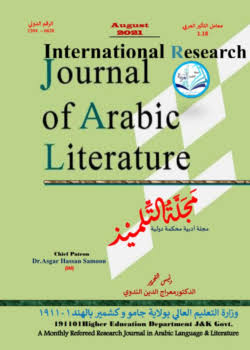
Al-Tilmeez: A Pioneering Arabic Literary Journal from Jammu and Kashmir

meraj u din

Al-Tilmeez is a monthly Arabic literary journal from Jammu and Kashmir, dedicated to promoting Arabic scholarship and cultural exchange. Launched with the support of the Ministry of Higher Education, it serves as a platform for scholars and students to engage with Arabic language and literature, fostering a community passionate about the richness of Arabic culture.

The Vision and Mission of Al-Tilmeez

The journal aims to unite Arabic scholars and students, fostering critical engagement with Arabic language and literature. Its vision is to create a vibrant community of Arabic speakers who can appreciate the depth of their language and culture while contributing to contemporary discourse. Through well-researched articles and creative pieces, *Al-Tilmeez* encourages a critical exploration of Arabic literary heritage, bridging the gap between tradition and modernity.

Role of the Ministry of Higher Education in Al-Tilmeez

The Ministry of Higher Education plays a crucial role in the success of *Al-Tilmeez*. It provides financial and structural support, ensuring the journal remains relevant and maintains high academic standards. This backing enables *Al-Tilmeez* to navigate the challenges of publishing in today’s competitive environment while promoting Arabic scholarship across various disciplines.

Leadership Under Dr Meraj-ud-Din -Nadwi

Under the leadership of Dr Meraj-ud-Din -Nadwi, *Al-Tilmeez* has flourished as a respected publication within Arabic studies. His expertise and vision have guided the journal to become a reliable source of quality content. Dr -Nadwi’s commitment to fostering Arabic literature and scholarship is reflected in the journal’s diverse range of articles, ensuring that both emerging and established voices are heard.

The Founding Team and Contributors

The founding team of *Al-Tilmeez* consists of dedicated scholars and contributors who enrich its content. Their collective expertise spans various fields, including literature, linguistics, and cultural studies. This diversity of thought ensures that *Al-Tilmeez* addresses a wide array of topics, from classical Arabic literature to contemporary cultural issues. The collaborative spirit of the team is essential in maintaining the journal’s high academic standards.

Significance of Al-Tilmeez for Arabic Scholars

For Arabic scholars in Jammu and Kashmir, *Al-Tilmeez* represents a credible platform to publish their work and gain recognition. By providing a peer-reviewed format, the journal ensures that contributions are held to rigorous academic standards, making it a valuable resource for researchers and students alike. It encourages scholars to engage with their field critically and creatively, fostering a sense of community among Arabic academics in the region.

The Inspiration Behind Al-Tilmeez

The inspiration for *Al-Tilmeez* arose from a collective desire to celebrate and promote Arabic culture in Jammu and Kashmir. The founders aimed to create a publication that would serve as a voice for Arabic speakers and students, providing them with a platform to express their thoughts and ideas. This cultural pride fuels the journal’s mission, encouraging contributions that reflect the richness and diversity of Arabic literature and culture.

Al-Tilmeez: A Beacon for Arabic Literature in Jammu and Kashmir

As a monthly publication, *Al-Tilmeez* serves as a cultural touchstone, highlighting the richness of Arabic literature. It acts as a beacon for those interested in Arabic studies, showcasing not only scholarly articles but also creative works, poetry, and essays that reflect the vibrant cultural landscape of Jammu and Kashmir. This diversity ensures that *Al-Tilmeez* appeals to a wide audience, from academics to casual readers.

Evolution of Arabic Journalism in the Region

*Al-Tilmeez* has significantly contributed to the evolution of Arabic journalism in Jammu and Kashmir. By adhering to modern standards of publication and peer review, it has set a precedent for quality and integrity in Arabic journalism. The journal’s influence encourages local writers to engage with Arabic language journalism, recognising it as a valuable and impactful field.

Monthly Publication and Consistent Quality

One of the strengths of *Al-Tilmeez* is its ability to publish monthly without compromising quality. Each issue features carefully selected articles and contributions, reflecting a balance between academic rigor and accessibility. This commitment to consistent quality ensures that *Al-Tilmeez* remains a reliable source of information and insights for its readership.

Content Structure and Sections of Al-Tilmeez

The structure of *Al-Tilmeez* is designed to appeal to a broad audience. The journal is divided into several sections, each focusing on different aspects of Arabic language, culture, and literature. Readers can find in-depth research articles, literary critiques, creative writing, and commentaries that engage with contemporary issues. This varied structure ensures that *Al-Tilmeez* is accessible to both casual readers and dedicated scholars.

A Platform for Arabic Literary and Academic Research

In addition to its literary contributions, *Al-Tilmeez* plays an important role in promoting academic research within the Arabic framework. This focus on research is essential for bridging the gap between traditional Arabic studies and modern academic disciplines, showing readers that Arabic scholarship can encompass a wide range of topics. By including academic research in its content, *Al-Tilmeez* appeals to a broader audience, providing an interdisciplinary approach that enhances its educational value.

Promoting Islamic Culture and Intellectual Awareness

By integrating topics related to Islamic culture with broader academic themes, *Al-Tilmeez* presents a balanced approach to education. This alignment allows the journal to explore topics that respect Islamic heritage while engaging with contemporary ideas. This unique combination helps *Al-Tilmeez* appeal to both traditional readers interested in Islamic studies and modern thinkers who value critical inquiry.

The Editorial Team: Visionaries of Al-Tilmeez

The editorial team of *Al-Tilmeez* is composed of dedicated professionals who share a common goal of promoting Arabic language and culture. Each member brings unique skills and perspectives, allowing the journal to tackle complex topics with insight and clarity. This team of visionaries is responsible for maintaining the journal’s high standards while continuously innovating to ensure that *Al-Tilmeez* remains relevant in an evolving academic landscape.

The Journal’s Contribution to Arabic Language and Literature

Through its carefully curated content, *Al-Tilmeez* has made a lasting contribution to Arabic language and literature in Jammu and Kashmir. The journal encourages original writing and thought, supporting authors who wish to explore complex literary themes and cultural topics. Its presence has helped to reignite interest in Arabic studies, proving that there is both a demand and a need for Arabic scholarship in the region.

Support for Arabic Language Development in Jammu and Kashmir

*Al-Tilmeez* actively supports Arabic language education and development through partnerships with local educational institutions. These collaborations provide resources and guidance for students interested in Arabic studies. This outreach helps to inspire a new generation of Arabic speakers and readers, ensuring that the language continues to thrive in Jammu and Kashmir.

The Call for Academic, Literary, and Financial Support

To sustain and expand its efforts, *Al-Tilmeez* relies on ongoing support from the academic and literary community. This support is essential not only for the journal’s immediate success but also for its long-term sustainability. By rallying financial and institutional backing, *Al-Tilmeez* can continue to reach new audiences, enhance its content, and reinforce its mission to promote Arabic language and culture.

Testimonials: Al-Tilmeez’s Rising Legacy

Testimonials from readers and contributors underscore *Al-Tilmeez*’s impact on the Arabic-speaking community. For many, the journal represents a unique blend of tradition and modernity, offering a platform where Arabic culture and contemporary scholarship intersect. Contributors often express gratitude for the opportunity to share their work, highlighting the sense of community and intellectual exchange that *Al-Tilmeez* fosters.

Future Aspirations for Al-Tilmeez in Arabic Journalism

Looking ahead, *Al-Tilmeez* has ambitious plans to expand its reach, increase its content offerings, and continue setting new standards in Arabic journalism. Its goal is to foster a legacy of Arabic scholarship that will inspire generations to come, making it a respected and enduring publication. The journal aims to explore new topics, engage with international scholarship, and establish connections with other Arabic-speaking communities around the world.

Conclusion

*Al-Tilmeez* embodies a commitment to Arabic language and cultural heritage. Through its dedication to quality and relevance, it stands as a hopeful vision for the future of Arabic journalism, both in Jammu and Kashmir and beyond. The journal’s ongoing success demonstrates the potential for Arabic scholarship to thrive, fostering a deeper understanding of language, literature, and culture among its readers.

The remarkable leadership of Al-Tilmeez is epitomised by its esteemed figures: General President Dr. Asghar Hasan Samoon (IAS), whose visionary guidance lays the foundation for the journal’s success; Vice President Professor Muhammad Thanaullah Al-Nadwi, whose profound knowledge and commitment to Arabic scholarship inspire both contributors and readers; and Editor-in-Chief Professor Muhammad Muzaffar Hussain Al-Nadwi, who tirelessly curates exceptional content that reflects the richness of Arabic literature. Chief Editor Dr. Miraj-ud-Din Al-Nadwi brings a meticulous approach to editing, ensuring that each publication meets the highest standards of academic excellence, while Responsible Director Dr. Noor Afshan skillfully oversees operations, fostering an environment that encourages creativity and innovation. Together, they form a dedicated team that propels Al-Tilmeez forward, making it a beacon of Arabic culture and literature in Jammu and Kashmir.

Kashmir Politics From Mahraja Hari Singh To Syed Ali Geelani

Annual Conference Held at Darul Uloom Noor-ul-Islam Tral Pulwama

Mirwaiz-e-Kashmir: Deepen Commitment to Prophet Muhammad’s (PBUH) Teachings to Respond to Hurtful Actions

To Express Profound Love and Devotion to the Holy Prophet (SAW) Al-Hilal Educational Institute Kishtwar Hosts Mehfil-e-Naat-e-Rasool-e-Maqbool

Dar-ul-Uloom Baba Nazuk Celebrates Annual Day,Moulana Syed Ahmad Khazir Shah Masoodi Attend Event in Kupwara

Bandipora’s Alfalah Institute Awards Umrah Ticket to Student Raqib ul Hassan for Quran Memorization

The Beautiful Sleeping Woman of Lolan: Unveiling a 3800-Year-Old Mystery from China’s Silk Road

Beautiful Sleeping Woman


In the heart of the vast, unforgiving deserts of China’s Xinjiang Province, archaeologists uncovered a captivating mystery: the beautifully preserved mummy of a woman from 3800 years ago. Known as the “Beautiful Sleeping Woman of Lolan,” this mysterious figure, with her fair complexion, high cheekbones, and intricately braided blonde hair, has astonished the world. Her presence on the ancient Silk Road defies historical expectations, challenging traditional beliefs about the area’s early inhabitants and adding a new layer to the story of ancient trade and cultural connections. Draped in a red garment that remains intact to this day, this woman’s life, identity, and burial have led to fascinating revelations about cultural exchange, identity, and preservation.


1. Uncovering the Mystery of the Beautiful Sleeping Woman of Lolan

The story of the Beautiful Sleeping Woman begins with her accidental discovery in the desert of Xinjiang. Archaeologists were stunned to find a mummy so well-preserved that her facial features and clothing remained almost untouched by time. This unexpected find became a source of fascination and curiosity, raising questions about who she was, how she lived, and why her remains were preserved so uniquely.

2. 3800 Years Preserved: The Astonishing Tale of Xinjiang’s Desert Mummy

Dating back nearly four millennia, the Lolan Woman is a remarkable example of natural preservation. The dry climate of Xinjiang’s desert created conditions that slowed down decomposition, keeping her body, clothing, and hair intact. Despite the harshness of the environment, the preservation of this mummy is considered one of the most astounding archaeological discoveries of our time.

3. Secrets of the Silk Road: The Caucasian Beauty Found in China’s Xinjiang

One of the most intriguing aspects of the Lolan Woman is her physical appearance, which aligns more with Caucasian features than the indigenous Asian populations typically associated with ancient China. This discovery suggests that people of diverse origins travelled along the Silk Road far earlier than previously believed, contributing to a more complex history of interaction between East and West.

4. A Red Garment Through Time: The Preservation of the Lolan Woman

Clothed in a vibrant red garment, the Lolan Woman’s attire stands as a symbol of cultural significance. The preservation of this dress is an archaeological marvel, allowing experts to study the textiles and styles of ancient times. Her red outfit also symbolises wealth and status, raising questions about her social standing and role within her community.

5. History and Mystery: The Beautiful Sleeping Woman’s Life and Death Revealed

The circumstances surrounding the Lolan Woman’s death remain a mystery. Her burial on the Silk Road hints at the possibility of her being a traveller or a trader who met her fate during a journey. However, her remains reveal no signs of trauma, leading experts to speculate that she may have passed away peacefully, succumbing to the challenges of the harsh desert environment.

6. Freckles and Fair Skin: Challenging Ancient Beliefs with the Lolan Mummy

The Lolan Woman’s appearance challenges previous beliefs about the region’s ancient population. Her light skin and freckles, as well as her high nose and cheekbones, indicate Caucasian features, which were not traditionally associated with ancient Xinjiang. This discovery is pivotal in rethinking the early history of the region and the movements of various ethnic groups along the Silk Road.

7. Cultural Crossroads: What the Lolan Woman Reveals About the Ancient Silk Road

The discovery of the Lolan Woman sheds light on the Silk Road’s role as a cultural and commercial bridge between East and West. Her presence along this ancient trade route suggests a significant exchange of ideas, goods, and people, making the Silk Road a far more multicultural and interconnected highway than previously understood.

8. Beauty Frozen in Time: Inside the Discovery of the Lolan Mummy

For archaeologists and historians, the discovery of the Lolan Woman was akin to unearthing a time capsule. Her intricate braids, well-defined facial features, and remarkably preserved clothing offer an authentic glimpse into the past. This beauty from the sands of time opens a window to a world that was thought to be lost forever.

9. Tracing Ancient Trade Routes: Insights from the Beautiful Sleeping Woman of Lolan

The Lolan Woman’s burial site suggests that the Silk Road’s influence extended far deeper than trade alone. Her grave provides evidence that travellers from distant lands frequently passed through this region, exchanging not only goods but also cultural practices, beliefs, and traditions, enriching the social landscape of the ancient world.

10. The Desert Mummy of Xinjiang: A Story of Life, Death, and Preservation

This mummy is more than a preserved figure from the past; she represents an ancient life frozen in time. The discovery of the Lolan Woman raises significant questions about ancient desert survival, methods of burial, and the unique conditions that led to her remarkable preservation for nearly 4000 years.


Conclusion

The Beautiful Sleeping Woman of Lolan is an extraordinary glimpse into a distant, mysterious world. Her preserved features, attire, and resting place on the Silk Road offer insights into early interactions between cultures, challenging previously held beliefs about the movements and identities of ancient populations. This ancient mummy tells a story of resilience, beauty, and cultural exchange, reshaping our understanding of early societies and the diverse exchanges that took place along the legendary Silk Road. The Lolan Woman stands as a silent yet powerful testament to an interconnected world that existed long before modern times.

(Writer: A.Hussain Sheikh Kashmiri a Famous writer and Analyst)

The information provided about the Beautiful Sleeping Woman of Lolan has been gathered from various social media platforms and other informal sources. As such, the accuracy of these details may vary. While we strive to present a reliable and engaging narrative, this publishing institution cannot assume full responsibility for the historical accuracy or completeness of the data presented in this article. Readers are encouraged to consult verified archaeological sources for further research.

Delegation of All J&K Transport Welfare Association calls on LG Manoj Sinha

Always Ready to Engage with New Delhi: Mirwaiz Umar Farooq APHC Chairman

Unidentified Female Floating Body in Veshow Nallah near Aharbal Kulgam Recovered

DC Baramulla Minga Sherpa Visits Families of Slain Porters, Extends Condolences and Financial Support

Mohammad Hanee 40-year-old man injured in mine blast at Bandi Chechian sector of Poonch Jammu