In a historic and escalatory move, Pakistan has officially suspended the 1972 Simla Agreement — a foundational peace treaty between India and Pakistan. The decision comes amid heightened tensions following a deadly attack in Pahalgam, Indian Illegally Occupied Jammu and Kashmir (IIOJK), which claimed at least 26 lives.
The announcement was made by Pakistan’s National Security Committee (NSC), which also unveiled a series of sweeping countermeasures in response to what it termed India’s “aggressive and unlawful” actions. These include:
Closure of the Wagah Border: A key trade and transit route between the two nations is now shut indefinitely.
Suspension of SAARC Visa Exemptions: Indian citizens will no longer benefit from regional visa waivers under the SAARC agreement.
Expulsion of Indian Military Diplomats: Defence officials posted in Islamabad have been declared persona non grata and ordered to leave.
Reduction of Indian Diplomatic Presence: The Indian High Commission in Islamabad is to be downsized to 30 members by April 30.
The Simla Agreement, signed after the 1971 war, laid the foundation for peaceful resolution of disputes, particularly concerning the Line of Control (LoC) in Kashmir. Its suspension raises concerns about future military stability in the region.
Pakistan has strongly denied involvement in the Pahalgam attack, despite claims of responsibility by the banned Lashkar-e-Taiba group. Islamabad has dismissed the incident as a “false flag operation” designed to malign it internationally.
Additionally, the NSC condemned India’s move to suspend the Indus Waters Treaty, warning that any disruption of Pakistan’s water share would be considered an “act of war”.
The diplomatic standoff marks one of the most serious deteriorations in India-Pakistan relations in recent years.
The Ministry of External Affairs (MEA) on Wednesday strongly condemned the terrorist attack in Pahalgam, asserting that Pakistan must sever its links with terrorism or face severe consequences.
Addressing a press conference at New Delhi, Foreign Secretary Vikram Misry said the attack had clear cross-border linkages and came at a time when Jammu and Kashmir was witnessing peaceful elections and economic progress.
The press conference was held after a detailed review by the Cabinet Committee on Security (CCS), chaired by Prime Minister Narendra Modi.
Misry said the CCS condemned the incident in the strongest terms and expressed deep condolences to the victims’ families. He added that global leaders had extended support and strongly condemned the attack, showing a united stand against terrorism.
India has decided to take a series of strong measures in response. One of the major decisions is to suspend the Indus Waters Treaty of 1960 until Pakistan takes credible and irreversible action to end its support for cross-border terrorism, he said.
He also said that government has also announced that the Integrated Checkpost at Attari will be closed immediately. However, Pakistani nationals who had already crossed with valid endorsements will be allowed to return via the same route until May 1, 2025.
In another major move, India has cancelled the SAARC Visa Exemption Scheme for Pakistani nationals. All such visas issued earlier stand cancelled. Those already in India under the scheme have been given 48 hours to leave the country.
India has also declared the Defence, Military, Naval, and Air Advisors at the Pakistani High Commission in New Delhi as persona non grata. They have been given one week to leave. In a reciprocal measure, India will also withdraw its own Defence and Military Advisors from Islamabad, and these posts will no longer exist.
Support staff working with these advisors will also be pulled back from both sides. The overall diplomatic strength at both the Indian and Pakistani High Commissions will be reduced from 55 to 30 by May 1.
The Foreign Secretary said that all security agencies in India have been asked to stay on high alert. He added that the perpetrators of the Pahalgam attack will be brought to justice, and their sponsors will be held accountable.
Misry also mentioned that, just like in the recent extradition of Tahawur Rana, India will not rest until those behind such acts are punished.
Arab Nations united in their stance against the heinous terror attack which took place in Pahalgam on Tuesday and have strongly condemned the terrorist act.
The Crown Prince of Kuwait, Sabah Khaled Al-Hamad Al-Sabah on Wednesday offered condolences to President Droupadi Murmu “on the tragic loss of life caused by a terror attack targeting tourists in Pahalgam”.
The statement further noted that the Crown Prince expressed his condolences over the victims and wished speedy recovery for the injured.
On the Pahalgam terror attack, the statement issued by the Kingdom of Saudi Arabia’s Foreign Ministry said, “The Kingdom affirms its firm stance in rejecting all forms of violence, extremism, and targeting of civilians. The Kingdom also extends its sincere condolences and sympathy to the families of the victims, and the government and people of the Republic of India.”
Prime Minister Narendra Modi’s visit to Saudi Arabia saw the India and Saudi sides condemning the terror attack in Pahalgam, a statement by the Ministry of External Affairs said.
Both sides agreed that there can be no justification for terrorism.
“Both sides strongly condemned the gruesome terror attack in Pahalgam, Jammu and Kashmir on 22 April 2025, which claimed the lives of innocent civilians. In this context, the two sides condemned terrorism and violent extremism in all its forms and manifestations, and emphasised that this remains one of the gravest threats to humanity,” the statement read.
“They agreed that there cannot be any justification for any act of terror for any reason whatsoever. They rejected any attempt to link terrorism to any particular race, religion or culture,” the statement added.
The United Arab Emirates (UAE)’s Ministry of Foreign Affairs also “strongly condemned” the attack in a statement on Tuesday.
In a statement, the Ministry of Foreign Affairs (MoFA) affirmed, “The UAE expresses its strong condemnation of these criminal acts and its permanent rejection of all forms of violence and terrorism aimed at undermining security and stability in contravention of international law.”
The UAE expressed its sincere condolences and sympathy to the government and people of India, and to the families of the victims of the heinous attack, and wished for the speedy recovery of all the injured.
Condolences have poured in from across the world on the horrific Pahalgam terror attack.
The Pahalgam terror attack has been one of the biggest terror attacks after the abrogation of Article 370 in 2019. Following the terror attack, security forces have launched search operations on Wednesday to track down the terrorists responsible. (ANI)
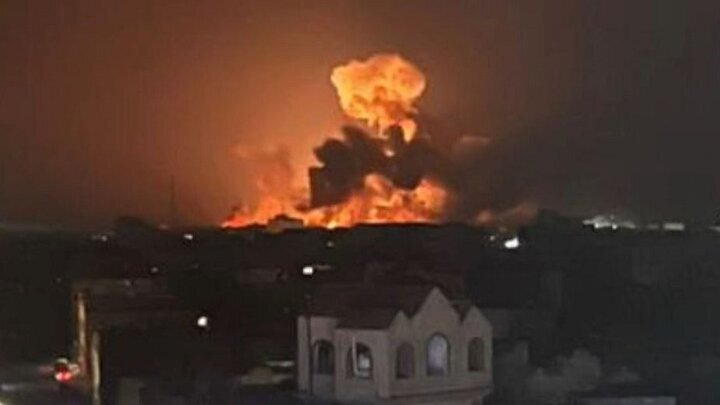
The United States has intensified its military campaign against Houthi militants in Yemen, reportedly killing more than 500 fighters—including high-ranking operatives—since launching a series of daily air and naval strikes over the past month. According to officials and sources familiar with recent intelligence assessments, the operation has severely weakened Houthi military capabilities and disrupted their command structure.
The campaign, which remains largely unpublicized by the US government, has focused on targeting Houthi weapons infrastructure, drone and missile launch sites, training camps, and command centres. Multiple senior Houthi figures—including missile system operators and drone experts—are believed to be among the dead. Officials estimate the death toll could rise to 600 as the strikes extend into new parts of the country.
Houthi Silence and Disinformation
Despite the high casualty count, Houthi leadership has remained largely silent, only acknowledging the deaths of lower-ranking members to avoid panic within their ranks. Families of deceased fighters are reportedly being pressured to stay quiet. In some cases, when locals share information about the deaths online, the group responds with coordinated disinformation campaigns to suppress the narrative.
Sheikh Jamal al-Maamari, a Yemeni national and former Houthi captive, recently published a list of over 650 names of fighters he claims were killed in the strikes. Although Al Arabiya English could not independently verify the list, it supports wider reports of significant Houthi losses.
Targets and Tactical Gains
Sources say that US airstrikes have completely destroyed several Houthi training camps, leaving no survivors. These camps were essential to training militants in drone operations, maritime attacks, and the management of Iranian-supplied weapons systems.
A US official noted that the strikes are part of a broader, multi-phase strategy. The plan is believed to be designed to weaken Houthi defences enough to allow Yemeni government forces to advance, potentially including a ground operation in the future. While US officials have downplayed the idea of direct American involvement on the ground, the strikes appear to be laying the groundwork for such an offensive.
The campaign has also succeeded in damaging key fuel depots and revenue-generating infrastructure. Just last week, the United States Central Command (CENTCOM) announced the destruction of a fuel port in western Yemen.
Civilian Casualties and Criticism
While the US military claims its strikes are targeted and precise, reports of civilian casualties have surfaced. The exact number remains unclear. Officials admit that there have been unintended civilian deaths but have not provided further details.
The campaign has drawn criticism from some US lawmakers, who question the high financial cost and the lack of transparency. The US has already lost at least five MQ-9 Reaper drones—each valued at roughly $30 million. The Houthis claim to have shot them down, including both Air Force-operated and other government drones.
Strategic Objectives and Regional Implications
Yemen’s Information Minister Moammar Al-Eryani praised the US strikes, calling them a strategic shift in response to escalating Houthi aggression. He said the campaign has significantly disrupted Houthi missile and drone launch capabilities, especially in the Red Sea and Bab al-Mandab region.
Al-Eryani revealed that many of the killed fighters were senior figures responsible for orchestrating maritime attacks and arms smuggling operations from Iran. “This is a clear indicator of the campaign’s effectiveness,” he said, while also stressing the need for continued military and political support for Yemen’s internationally recognised government.
He framed the ongoing war as a broader international issue, stating, “This is not just Yemen’s war. It is a battle for the international order, for freedom of navigation, and to protect the region from the expansion of the Iranian regime and its terrorist militias.”
Looking Ahead
US operations in Yemen appear set to continue and potentially expand. Officials warn that the campaign may be long-term, with strategic goals that include not only military weakening of the Houthis but also curbing Iran’s influence in the region.
As the situation evolves, the international community remains divided. Some see the campaign as necessary to restore regional stability and secure international trade routes, while others worry about the humanitarian consequences and escalating violence.
For now, the US military’s silent yet forceful approach has delivered a major blow to Houthi forces—but it has also raised new questions about the future of Yemen, the role of American intervention, and the broader dynamics of Middle Eastern conflict.
A tragic road accident in Saudi Arabia claimed the lives of five Pakistani Umrah pilgrims, including three women, as their bus crashed while returning from a visit to the historic site of Badr en route to Madina.
According to initial reports, the deceased — as well as most of the pilgrims in the bus — were all from Bahawalnagar district. Among the victims were Rukhsana Bibi and Amina Bibi from 228/9-R, Fort Abbas, two women from Dahran Wala, and an elderly man, Manzoor Hussain, from 39/3-R.
The accident left multiple others injured, who have been shifted to various hospitals in Madina for treatment.
Play Video “[My] sister and two cousins died in a bus accident while on their way to Madina from Badr,” said Muhammad Khalid — a relative of the accident victims.
Hospital sources have said that four of the injured, including two women, were being treated at the Saudi-German Hospital, while three others, of which two are women, were receiving care at the King Fahd Hospital.
Additionally, one woman is being treated at King Salman Hospital. Authorities also said that two bodies had been shifted to each of the Saudi-German and King Fahd hospitals.
Pakistan’s Consul General Khalid Majeed, speaking to Geo News, said that the Pakistan Consulate’s team was actively assisting the injured and was also in contact with the Umrah sponsoring company concerned.
He also confirmed that NOCs have been issued for the burial of three deceased individuals in Saudi Arabia,Meanwhile, the victims’ relatives have also said that the deceased pilgrims will be buried in Saudi Arabia.
The ongoing clash between the Trump administration and Harvard University has taken a sharp turn, with reports confirming that the government is planning to strip the university of an additional $1 billion in federal funding. This follows a previous decision to revoke $2.2 billion in research grants and educational contracts, bringing the total potential financial hit to over $3 billion. The move is part of a broader and intensifying pressure campaign launched by the administration, triggered by Harvard’s refusal to comply with a set of controversial government demands.
Tensions began when the Trump administration sent Harvard University a letter listing several sweeping reforms it wanted the university to implement. These demands included:
Restructuring leadership roles within the university
Revising its admissions policies
Auditing and reviewing diversity-related programmes and initiatives
Deregistering or ceasing recognition of certain student clubs and organisations
According to The Wall Street Journal, the White House intended for the letter to serve as a confidential opening for negotiations. However, when Harvard President Alan Garber publicly disclosed the demands and firmly rejected them, it sparked an angry response from Washington.
Harvard’s refusal to engage in private negotiations and its choice to expose the demands publicly were seen by Trump officials as a betrayal. The administration reportedly viewed the letter as a good-faith offer that was never meant to be aired in public, and felt blindsided by Garber’s actions.
Harvard’s Defiant Response
In a strongly worded message to the Harvard community, President Alan Garber made it clear that the university would not yield to political pressure.
“The University will not surrender its independence or relinquish its constitutional rights,” Garber wrote. “No government — regardless of which party is in power — should dictate what private universities can teach, whom they can admit and hire, and which areas of study and inquiry they can pursue.”
His statement was not just a defence of Harvard, but a broader declaration of academic freedom and institutional autonomy — principles that many in academia fear are being threatened.
Funding Freeze: A Political Weapon?
The Trump administration’s response to Harvard’s rejection was swift and significant. Within days of Garber’s public letter, the government announced a freeze on billions of dollars in federal research funding tied to the university. The new plan to cut an additional $1 billion in health research grants and contracts adds to the growing financial strain.
Federal funding is a major pillar of support for U.S. universities, especially for advanced research in fields like medicine, science, and technology. While Harvard receives substantial private donations and has a world-leading endowment worth over $50 billion, federal grants still play a vital role in sustaining many of its ongoing research projects and partnerships.
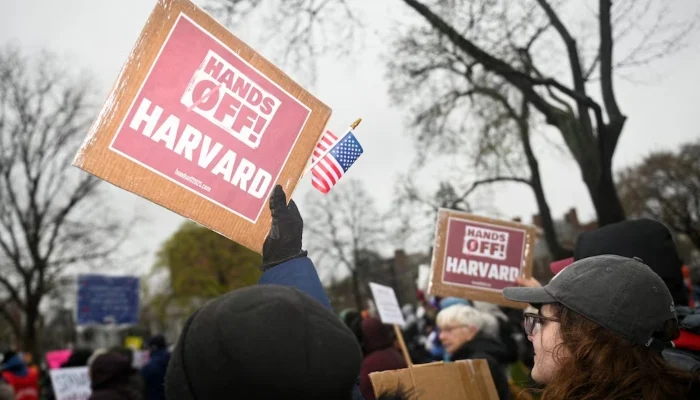
Demonstrators rally on Cambridge Common in a protest organised by the City of Cambridge calling on Harvard leadership to resist interference at the university by the federal government in Cambridge, Massachusetts, US, on April 12, 2025. —Reuters
The administration’s actions have sparked concern among educators and policymakers, with many viewing the funding threats as a dangerous precedent that politicises educational funding and undermines academic independence.
A Threat to Non-Profit Status?
The conflict doesn’t stop at funding. The Trump administration has also floated the idea of revoking Harvard’s non-profit status — a move that could have broader implications for its tax benefits and financial structure. Additionally, the administration has hinted at limiting or revoking the university’s ability to admit international students, who form a significant portion of the student body and contribute immensely to Harvard’s cultural and academic environment.
These aggressive tactics have raised eyebrows even among some conservatives, who warn that using federal power to punish dissenting institutions is a slippery slope that could harm U.S. education in the long term.
Harvard’s Financial Fortitude
Despite the threats, Harvard is in a uniquely strong financial position. With its massive endowment, the university is arguably more capable than any other in the country to withstand short- or even long-term funding cuts. Experts suggest that Harvard may use this moment to stand as a symbol of resistance against political intrusion into education.
That said, a loss of billions in federal funds would not be without consequences. Research projects might be delayed or discontinued, partnerships with federal agencies could be disrupted, and other universities may be discouraged from speaking out if they fear similar backlash.
Confusion and Controversy Over the Demands
In a surprising twist, The New York Times reported that the original list of demands sent to Harvard may have been sent in error — drafted without full internal approval. Despite this, the White House has stood by the contents of the letter, treating it as a legitimate policy position and refusing to withdraw or amend its stance.
This confusion has added another layer to the controversy, leaving many to question the process and motives behind the administration’s aggressive stance toward one of the world’s leading academic institutions.
What Comes Next?
The future of this standoff remains uncertain. Harvard appears unlikely to yield, and the Trump administration does not seem interested in backing down either. The situation could escalate further, or it might eventually shift to the courts, especially if the government attempts to revoke Harvard’s non-profit status or impose restrictions on foreign admissions.
What is clear is that this clash goes beyond dollars — it touches on foundational issues such as academic freedom, political influence in education, and the limits of government authority over private institutions.
As the situation unfolds, Harvard’s resistance may become a defining moment in the broader debate over the autonomy of educational institutions in the United States. With billions at stake and principles on the line, this is more than just a funding fight — it’s a battle for the soul of American higher education.
On April 4, 2025, during what was meant to be a celebratory event for Microsoft’s 50th anniversary in Redmond, Washington, Moroccan software engineer and Harvard graduate Ibtihal Aboussad took a bold stand that has since captured global attention. Her public protest during a keynote address sparked an international conversation on the ethical responsibilities of tech companies and their ties to military operations, specifically in the context of the ongoing conflict in Gaza.
As Mustafa Suleyman, CEO of Microsoft AI, was presenting on the future of AI through the company’s Copilot assistant, Aboussad disrupted the event by storming the stage and shouting: “Mustafa, shame on you! You claim to care about using AI for good, but Microsoft sells AI weapons to the Israeli military. Fifty thousand people have died, and Microsoft powers this genocide.” She then threw a keffiyeh scarf—a symbol of Palestinian resistance—onto the stage before being swiftly escorted out.
The moment, captured on video and widely shared across social media, immediately went viral. Supporters praised Aboussad’s courage for confronting the leadership of one of the world’s most powerful companies, while others debated the appropriateness and impact of her method.
A Moral Stand: Her Open Letter to Microsoft Executives
Following the protest, Aboussad sent an email to senior Microsoft leadership, including CEO Satya Nadella and Mustafa Suleyman, explaining her actions. “I spoke up today because after learning that my org was powering the genocide of my people in Palestine, I saw no other moral choice. I did not sign up to write code that violates human rights,” she wrote.
She also condemned what she described as a culture of silence at Microsoft, especially toward Arab, Muslim, and pro-Palestinian employees. She cited prior instances of suppression and retaliation against staff who raised ethical concerns about the company’s defence-related contracts.
Termination and Fallout
Just three days later, on April 7, 2025, Microsoft officially terminated Aboussad’s employment, citing “willful misconduct” and “intentional disruption.” The company accused her of seeking notoriety and causing a planned disturbance at a high-profile event. Her internal accounts were deactivated immediately following the protest, signalling her dismissal even before the formal announcement.
Microsoft maintained that it provides structured channels for employees to raise ethical concerns, and that Aboussad’s actions breached workplace protocols and disrupted operations.
LinkedIn Suspension and Global Backlash
Soon after her dismissal, Aboussad’s LinkedIn profile was also suspended, prompting accusations of coordinated silencing. A wave of public support followed, with the hashtag #ReinstateIbtihal trending on X (formerly Twitter). A Change.org petition demanding the reinstatement of her LinkedIn account gathered thousands of signatures, with supporters arguing that tech workers should not be punished for speaking out against human rights abuses.
A Boycott and a Call for Tech Accountability
On April 9, Aboussad released a video via Instagram calling for a global boycott of Microsoft products, including Xbox, Microsoft 365, Copilot, and even mobile games like Candy Crush. “We will not financially support this company until it adopts humane principles,” she declared in the video, which gained over 240,000 likes.
She also encouraged other tech workers to speak out, despite the personal and professional risks. Her call has echoed across activist circles, drawing comparisons to the Boycott, Divestment, Sanctions (BDS) movement.
Support and Job Offers
In a show of solidarity, Kuwaiti businessman Abdallah al-Dabbous offered Aboussad a job at his fintech company, MyFatoorah. “We stand with those who defend justice,” he said. Public figures, human rights organisations, and fellow engineers voiced support, framing her protest as a turning point in conversations about ethics in artificial intelligence.
Background: Who is Ibtihal Aboussad?
Aboussad is a Harvard-educated engineer specialising in programming languages such as Python, C, HTML, and CSS. Before her protest, she spent three and a half years at Microsoft’s AI division in Toronto. Her Devpost portfolio and past participation in international tech programmes like TechGirls illustrate a long-standing commitment to technology and innovation.
Her early recognition came in 2016 when she was featured in a YouTube video during International Education Week. In it, she shared her aspirations as a young Moroccan girl eager to impact the tech world.
Industry and Public Response
While many applauded her bravery, some critics questioned the effectiveness of such protests. Concerns were also raised about setting a precedent for disruptive behaviour at corporate events. However, others argue that Aboussad’s protest was not merely disruptive—it was principled and necessary to expose corporate complicity in global violence.
Online sentiments continue to vary. Some praised her as a “tech whistleblower with integrity,” while others debated whether Microsoft’s military contracts are justifiable under international norms.
Broader Implications
Aboussad’s protest is part of a growing wave of tech worker activism aimed at holding companies accountable for how their technologies are used. Her actions raise larger questions about the ethical boundaries of artificial intelligence, corporate influence in geopolitical conflicts, and the rights of employees to dissent.
This event also follows reports by major outlets like the Associated Press indicating that Microsoft and OpenAI’s technologies have been used by the Israeli military in targeting operations in Gaza and Lebanon, intensifying the scrutiny.
Looking Ahead
As of April 20, 2025, Aboussad has not announced any new job commitments beyond the offers she’s received. Her boycott campaign continues to gain momentum online, and she remains a central figure in the tech ethics debate.
Whether her protest marks the beginning of a broader movement or remains a singular act of courage, Ibtihal Aboussad has undeniably altered the discourse around ethics in technology and the power of individual action inside corporate walls.
New York City’s chaotic traffic may soon be a thing of the past—at least for those heading to the airport. By 2026, Archer Aviation, in partnership with United Airlines, plans to launch an innovative air taxi service that will transport passengers from Manhattan to major airports like JFK, LaGuardia, and Newark in just 5 to 15 minutes.
At the core of this futuristic transport system is Archer’s electric aircraft, called Midnight. This electric vertical takeoff and landing (eVTOL) vehicle is designed for short, quick, and quiet trips—ideal for busy cities like New York. The Midnight aircraft can carry four passengers and a pilot, travel up to 150 mph, and is remarkably quiet—about as loud as a casual conversation.
Unlike helicopters, Midnight produces zero direct emissions and is equipped with 12 redundant propellers, making it both environmentally friendly and extremely safe. Archer’s goal is to offer a sustainable and efficient solution to one of New York’s biggest frustrations: getting to the airport.
Certification and Launch Timeline
Although Midnight is not yet certified for commercial use, Archer has already made big strides. In June 2024, the company received its FAA Part 135 Air Carrier Certificate, which allows it to operate commercial flights. Full certification for Midnight is expected by 2026, with piloted test flights planned for 2025.
How It Will Work
The air taxi network will connect Manhattan with JFK, LaGuardia, Newark, and other nearby airports like Westchester County, Teterboro, and Republic. Existing heliports in Manhattan—such as East 34th Street, West 30th Street, and Downtown—will serve as launch points, with vertiports at airports handling landings.
Passengers will be able to book air taxi rides as add-ons to their United Airlines tickets, offering a smooth and seamless travel experience. A journey that currently takes 1 to 2 hours by car could soon be completed in less than 15 minutes by air.
Making Air Travel Seamless
Archer’s partner, United Airlines, is playing a major role in bringing this idea to life. United has invested $1 billion in the project and has placed an order for up to 200 Midnight aircraft, including a $10 million deposit for the first 100. The airline will also help manage vertiport operations, storage, and maintenance.
Infrastructure partners like Atlantic Aviation, Signature Aviation, Skyports, Modern Aviation, and Air Pegasus are working alongside Archer to convert and electrify existing heliports and airport facilities. The project is also backed by NYC’s Economic Development Corporation and the Port Authority, who see it as a step towards reducing road congestion and boosting sustainable travel.
Why NYC?
With three major airports handling over 150 million passengers annually, New York is the perfect launchpad. Traffic congestion between Manhattan and its airports often causes hours of delay. Archer CEO Adam Goldstein summed it up best: “We want to give residents and visitors the option to complete trips in mere minutes.”
Challenges and Public Concerns
While the plan is exciting, it’s not without obstacles. Archer still needs full FAA certification, and it faces competition from other air taxi developers like Joby Aviation and Beta Technologies.
Initial fares may be high—possibly around $265 per seat, comparable to current helicopter services. Archer’s long-term goal is to match Uber-like prices, making the service accessible to more people.
There are also public concerns around safety, noise, and what happens if things go wrong mid-air. While Midnight is designed to be quiet and safe, it will take time for the public to fully trust this new way of flying.
Looking Beyond New York
New York is just the beginning. Archer has already revealed plans to expand this service to Los Angeles, Chicago, San Francisco, and even Abu Dhabi. By 2030, the company aims to produce 650 Midnight aircraft annually with the help of global carmaker Stellantis.
A New Era of Urban Travel
If everything goes according to plan, catching a flight from New York will soon involve a scenic, electric, and silent 10-minute ride in the sky. Archer and United Airlines are betting big on this air taxi revolution—and it could very well redefine how we move around cities in the future.
In a world where promises are often forgotten, one young man from Saudi Arabia proved that some vows are etched deep in the heart—and meant to be fulfilled no matter what. First Sergeant Al-Baraa bin Omar Al-Otaibi turned a simple dream into an unforgettable reality, winning the prestigious Honour Sword during the passing-out ceremony at King Abdullah Air Force College in Taif, and dedicating it to the one person who believed in him the most: his mother.
Three years ago, when Al-Otaibi was selected to join the renowned military college, his mother had one wish—a heartfelt plea that echoed in his soul every single day: “Son, you’re joining the military. I’ll wait for the day when you hand me the Honour Sword with your own hands.”
At that time, Al-Otaibi was just a civilian, stepping into an intense world of military discipline and training. He had no guarantees, no special advantage—only a mother’s hope and his own determination to make her proud.
The Journey of Transformation
Over the course of three demanding years, Al-Otaibi dedicated himself completely to his training. He poured every ounce of energy, discipline, and focus into becoming the best. And that hard work paid off—he didn’t just graduate; he graduated with distinction, earning the Honour Sword, an award given only to the top-performing cadet who exemplifies excellence in leadership, academics, and physical training.
Al-Otaibi reflected on his journey, saying: “Three years ago, I came here as a civilian, but now I stand as a soldier. These three years have transformed my life.”
He credited his mother for being his greatest source of strength, saying: “The greatest share in this honour goes to my mother. Her words stayed with me every day for the past three years. I lived every moment working to fulfil that promise.”
The Moment That Moved Everyone
As the Honour Sword was placed in his hands during the passing-out ceremony, Al-Otaibi did something that melted hearts across the nation—he walked straight to his mother and handed her the sword. It was a moment captured by the Ministry of Defence, and soon went viral on social media, with thousands applauding the young officer’s devotion, discipline, and deep respect for his mother.
“This is not just a sword,” he said emotionally. “It’s the symbol of my mother’s dream and her heartfelt desire. Today, I’m proud to have lived up to her hopes.”
The images and video of a uniformed Al-Otaibi kneeling before his mother, presenting the sword with teary eyes, have been shared widely across the Kingdom and beyond. The moment was not just a personal victory—it was a reminder of the powerful bond between a parent and child, of what it means to truly honour one’s family, and of the value of perseverance in pursuit of a dream.
A Story That Inspired a Nation
Al-Otaibi’s story is more than just a military success—it’s a tribute to motherhood, determination, and promises kept. It has sparked emotional responses online, with many users sharing how the story reminded them of their own parents’ sacrifices and hopes.
As one commenter wrote: “In a time when people chase fame and forget their roots, this young man reminded us what truly matters. Respect, love, and gratitude.”
Indeed, Al-Otaibi may have won the Honour Sword, but in doing so, he also won the hearts of millions—proving that real strength lies not only in physical endurance but also in honouring those who helped us rise.
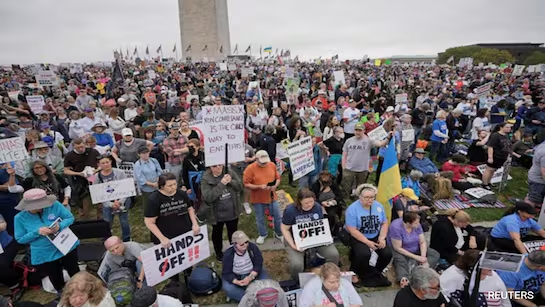
Thousands of protestors across the United States rallied once again on Saturday (local time), voicing strong opposition to President Donald Trump’s policies.
Nearly a fortnight after the first wave of demonstrations, protesters returned to the streets to express frustration over Trump’s policies, including the imposition and threats of tariffs, The New York Times reported.
However, turnout in cities like New York, Washington, and Chicago appeared smaller than the protests held on April 5.
According to an organiser quoted by The New York Times, More than 700 events were planned nationwide, from Jacksonville, Fla., to Los Angeles. Participants accused the president of trampling on civil liberties and the rule of law, citing concerns over immigration, federal job cuts, economic policies, and other issues.
The protestors gathered outside the White House, repeatedly chanting “shame!” to voice their dissatisfaction with the Trump administration. Thousands more marched from the Washington Monument, many demanding that the administration bring back Kilmar Armando Abrego Garcia — a Maryland man wrongfully deported to El Salvador, The New York Times reported.
“I am worried that the administration would not stop at deporting undocumented immigrants without due process and would imprison and deport U.S. citizens,” said Aaron Burk, who joined the rally in Washington. He added, “Where does it stop?” he said. Burk also said that his daughter is transgender and that he was most concerned about the dehumanisation of minorities, The New York Times reported.
In Jacksonville, Fla., hundreds took to the streets to protest a number of causes, including the president’s attacks on the LGBTQ community and the government’s desire to alter the Endangered Species Act.
“We are losing our country,” said one demonstrator, Sara Harvey. In the last few months, she said she had protested the federal job cuts led by Elon Musk and joined the nationwide protests on April 5. (ANI)