Pahalgam Railway Line Is About Future, Not Fear—Connectivity Is Development and Kashmir Deserves Progress

Pahalgam Railway Line

A small group of so-called climate activists from Srinagar and other posh areas are calling for the cancellation of the proposed Pahalgam railway project, claiming that “Pahalgam does not need a train.” This raises a simple but serious question: who gets to decide Kashmir’s future? Click Here To Follow Our WhatsApp Channel

The answer is clear. Local stakeholders—the people whose lives, land, and livelihoods are directly linked—must have the strongest voice. Connectivity is not a luxury; it is the backbone of real development. A railway line is not just steel and tracks, it is access to education, healthcare, jobs, tourism, and opportunity for generations to come.

The proposed railway line connecting Pahalgam is vital for long-term growth. True development demands strong infrastructure, and rail connectivity is one of the most powerful tools any region can have. Denying this to Kashmir is denying its youth a fair future.

Yes, there are genuine concerns, and they must be addressed honestly. Fair compensation, proper rehabilitation, and jobs for families who lose land entirely, especially affected farmers, are non-negotiable. Development should never come at the cost of dignity. These demands are legitimate and must be fulfilled transparently.

However, opposing the project altogether is not the solution.

It is also important to acknowledge a reality many prefer to ignore. Several loud critics enjoy opportunities outside Kashmir or even outside India, where green pastures offer careers and comfort. Would they choose remote districts like Kupwara to build their own futures without proper connectivity? The honest answer is obvious.

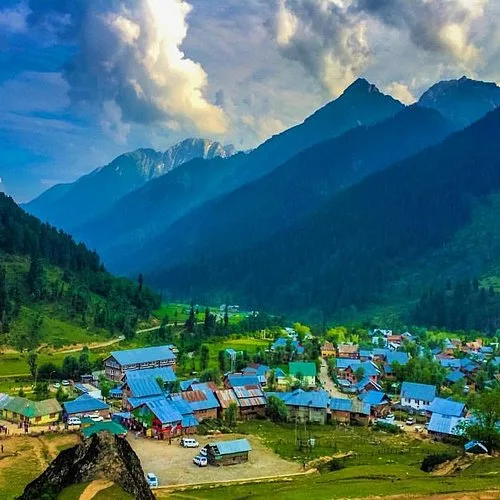
Since 2019, Pahalgam has witnessed visible progress. Tourism infrastructure has improved, roads have expanded, and economic activity has increased. Areas like Yanner rafting point and its adjoining villages are developing at a rapid pace, comparable to modern growth corridors seen elsewhere in the country. This progress should be recognised, not dismissed.

Targeting railway surveys by spreading fear only harms local aspirations. Activists sitting in well-connected Srinagar should not dictate what remote or semi-remote regions need. Voices like Raja Muzaffar may raise environmental points, but sweeping statements that entire regions “do not need railways” ignore ground realities. Spending time in less-connected districts before passing such judgments would offer better perspective.

For many locals, including landowners whose property falls under the proposed track alignment in areas like Charigam Karewa, Kullar Nagipora, and Veersern Grad, the feeling is not fear but hope. These are sacrifices made willingly for a better tomorrow.

Development is every Kashmiri’s right. Connectivity brings inclusion, not destruction. With fair policies, environmental care, and honest compensation, the Pahalgam railway line can become a lifeline for future generations.

Let us unite for progress, not panic.
The sacrifices of today will shape the prosperity of tomorrow.

Writer: Dr. Zewar Hussain Bhat

(Senior scientist Entomology at Sher-e-Kashmir University of Agricultural Sciences and Technology of Kashmir)

BJP Leader Sofi Yousuf Warns of Quitting Party if Any Move Separates Jammu from Kashmir

Manufactured Revolutions: How Empires Scripted Regime Change and Global Power

Regime Change

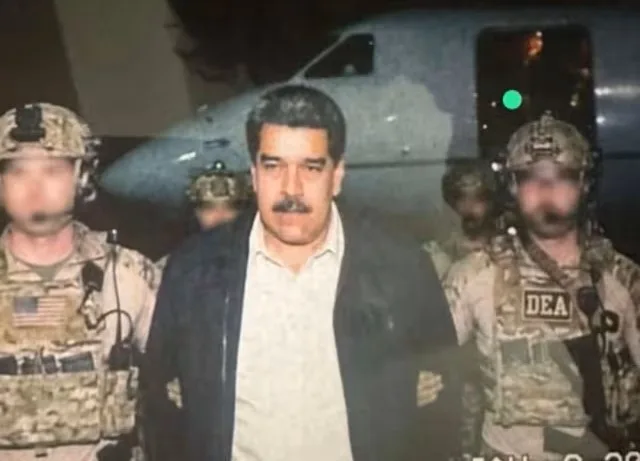
Many of the world’s revolutions and freedom movements are nothing more than fabricated narratives and made-up tales. Imperial Britain, and later America, have used their power and resources to topple regimes and install countless leaders of their own choosing. Those so-called history books you read—full of stories about this or that nation’s independence, revolution, or “Islamisation”—and the endless philosophers and scholars praised for shaping minds, are often just half-truths, one-sided tales, and pure fiction. Behind almost all of them lies a “regime change” operation run by powers like America, Britain, and France. Then, to support that operation, they deploy literature, media, religion, mullahs, pandits, priests, mujahideen, ghazis, and others—sometimes even creating these figures from scratch when needed. Before handing the baton of global “caliphate” to America, the British also passed on the blueprint of this regime change operation that they mastered all through their imperialistic rule and hegemony. From Venezuela to Iran the story narrates similar old dialogues with technological aggression.

Tailoring and Crafting of States :

Many of the world’s celebrated revolutions and freedom movements are, upon closer examination, little more than constructed narratives and invented stories designed to serve broader geopolitical interests. Imperial powers such as Britain and, subsequently, the United States have repeatedly leveraged their influence and resources to engineer coups d’état and install compliant leaders. A prime example lies in the decline and partition of the Ottoman Empire after World War I. The secret Sykes-Picot Agreement of 1916 divided Ottoman Arab lands into British and French spheres of influence, carving up regions like Syria, Iraq, Lebanon, and Palestine without regard for ethnic or religious realities. This was compounded by the Balfour Declaration of 1917, in which Britain pledged support for a “national home for the Jewish people” in Palestine, facilitating Zionist settlement and laying groundwork for future conflicts, including the establishment of Israel in 1948.

To weaken the Ottomans, Britain actively supported the Arab Revolt (1916–1918) against Ottoman rule, promising Arab independence through the McMahon-Hussein Correspondence while secretly planning colonial mandates. Figures like T.E. Lawrence (“Lawrence of Arabia”) coordinated with Arab leaders such as Sharif Hussein and his son Faisal, providing arms and strategy to disrupt Ottoman supply lines. Yet these promises were betrayed post-war, with Arab lands bifurcated under the League of Nations mandate system—Britain controlling Iraq, Palestine, and Transjordan; France taking Syria and Lebanon—sowing seeds of enduring instability.

Changes are Dictated and Designed

The history textbooks that recount tales of national independence, revolutions, or religious transformations—often amplified by philosophers and scholars portrayed as intellectual architects—are frequently partial truths, selective accounts, or outright fabrications. Behind most such events lies a deliberate “regime change” operation orchestrated by Western powers like the United States, Britain, and France. Britain also promoted and allied with Wahhabism to advance Anglo-American interests. By backing Ibn Saud and his Wahhabi forces—through treaties like the 1915 Anglo-Saudi agreement and subsequent support—Britain helped Ibn Saud conquer rivals, including the Hashemites, leading to the establishment of Saudi Arabia in 1932. This alliance countered Ottoman influence and secured oil-rich territories, with Wahhabi ideology harnessed to fragment Muslim unity while serving imperial goals.

Similar orchestration is evident in the 1947 Partition of India, where Britain’s hasty withdrawal and arbitrary border-drawing by Sir Cyril Radcliffe displaced 15 million people and killed over a million in communal violence, creating India and Pakistan amid engineered religious divisions.

To sustain these operations, they deploy supportive literature, media campaigns, religious rhetoric, and figures—mullahs, pandits, priests, mujahideen, or ghazis—sometimes fabricating these actors entirely when necessary.

American Hegemony Following British Footprints

When Britain recognized its impending decline, it strategically architected the emerging world order. Through over more than a century of meticulous planning, it redrew political geographies in advance. Regions requiring specific leaders or governance systems were preemptively seeded with tailored individuals and institutions. Before transferring global hegemony to the United States, Britain provided a comprehensive blueprint encompassing capitalism, communism, the Islamic world, and religious ideologies. This included guidelines on sustaining controlled levels of unrest, conflicts of varying intensities under designated names, and political divisions across regions and continents. Accordingly, regimes were altered, circumstances manipulated, events staged, and rulers positioned as required.

Our generations have borne witness to these patterns. The promotion of Wahhabism and the Afghan conflict were orchestrated from external centers, as declassified documents later revealed U.S. support for mujahideen groups in the 1980s to counter Soviet influence. Territorial disputes between nations were perpetuated, and political systems overturned via coups—many backed by Western intelligence. We observed the U.S.-Soviet Cold War proxy battles, interventions in Palestine, Kashmir, Vietnam, the 1979 Iranian Revolution (initially tolerated by the West before shifting to containment), Iraq, Syria, Africa, Latin America, Eastern Europe, the fall of the Berlin Wall, and Central Asia—spectacles of violence that inspired historians to craft heroic narratives sold globally. Yet the underlying reality was that dominant powers and blocs meticulously planned and executed these from inception to conclusion.

Declassified records substantiate this: the 1953 CIA-MI6 coup in Iran (Operation Ajax) overthrew Prime Minister Mohammad Mossadegh to protect oil interests; the 1954 Guatemala operation ousted Jacobo Árbenz; and numerous Cold War-era interventions in Latin America and beyond followed similar patterns.

Regime Change Operations in M.E

Today, as of early January 2026, the 1979 Islamic Revolution in Iran appears increasingly besieged by the very forces that once indirectly facilitated its rise—now through sustained sanctions, proxy pressures, and exploitation of internal discontent. Protests that began in late December 2025 over economic collapse have spread to over 110 cities, with at least 36 deaths reported by human rights groups, thousands arrested (including minors), and security forces using live ammunition. Demonstrations feature calls for regime change, including pro-Pahlavi slogans, amid internet disruptions and reports of Iraqi militias assisting suppression.

Clouds of devastation loom over the Middle East, with fragile ceasefires in Gaza holding tenuously post-2023–2025 war, ongoing strife in Yemen (Houthi resilience despite strikes), and Syria’s post-Assad transition marked by sectarian tensions and foreign interventions. From Asia to Europe, a pervasive fog of hesitation and unpredictability prevails, fueled by economic stagnation, energy crises, and geopolitical realignments. Remarkably, at subtle signals from the U.S. or West, mass mobilizations emerge—and subside—in various nations. Media frames events around local leaders or parties, yet the true orchestrators remain anonymous, operating from the shadows.

(writer N.A.Moomin)

Is Keeping a Beard in Islam Obligatory or Recommended? Scholars Explain the Difference

Beard in Islam

The legal ruling concerning the beard in Islam has long been a subject of juristic discussion and recognised scholarly disagreement. This divergence arises from differing interpretations of the Prophetic instructions concerning the beard and the extent to which such instructions convey binding legal force. While it is universally acknowledged that the Prophet ﷺ maintained a beard and encouraged its preservation, Muslim jurists have differed as to whether this encouragement constitutes a legal obligation or a recommended practice within the broader framework of personal grooming and customary conduct.Click Here To Follow Our WhatsApp Channel

Islamic sources consistently affirm that the Prophet ﷺ did not shave his beard. Authentic narrations describe his careful attention to its appearance, as he would trim from its sides and upper portions in a manner that enhanced its neatness and ensured harmony with his facial features and overall demeanour. He also maintained its cleanliness by washing, combing, and running his fingers through it. The Companions, may Allah be pleased with them, followed the Prophet ﷺ in these practices, emulating both his outward conduct and his personal choices. This continuity of practice underscores the beard’s recognised place within the Prophetic way of life, while also demonstrating that its maintenance was accompanied by care, moderation, and attention to appearance.

The principal textual evidences informing the juristic discourse on this matter are found in well-established Prophetic traditions. Among the most frequently cited is the narration reported by al-Bukhārī and Muslim from Ibn ʿUmar, in which the Prophet ﷺ stated: “Act contrary to the polytheists: trim the moustaches closely and let the beards grow.” Another narration recorded by Muslim from ʿĀʾishah includes the beard among the practices of the fiṭrah, alongside other acts related to cleanliness and personal hygiene, such as trimming the nails, using the tooth-stick, and cleansing the body. These narrations clearly demonstrate the Prophet’s encouragement of maintaining the beard; however, they do not, in themselves, decisively establish its precise legal classification in terms of obligation or recommendation.

On the basis of these texts, classical jurists articulated two principal legal positions. The Ḥanafī and Mālikī schools, together with a view adopted by later Ḥanbalī scholars, held that the Prophetic command indicates obligation and therefore ruled that shaving the beard is unlawful. This position rests upon the established principle of Islamic legal theory that a command fundamentally denotes obligation unless a contextual indicator diverts it from this meaning. Moreover, the command is explicitly linked to opposing the polytheists, and imitation of non-Muslims in distinctive practices is generally regarded as impermissible. On this basis, authoritative jurists from these schools explicitly stated that shaving the beard is prohibited.

In contrast, the Shāfiʿī school, in its relied-upon position, along with a considerable number of scholars across the legal schools, maintained that letting the beard grow is a recommended Sunnah rather than a binding obligation. According to this view, shaving the beard is disliked but does not rise to the level of prohibition. Scholars who held this position argued that the beard belongs primarily to the realm of customary practices and personal appearance rather than acts of ritual worship. Consequently, the Prophetic command is understood as guidance and moral instruction aimed at promoting dignified appearance and conformity with sound social norms, rather than as a legally binding injunction.

This interpretation is supported by well-established juristic principles concerning commands related to etiquette, hygiene, and refinement of conduct. Scholars such as Ibn Ḥajar al-ʿAsqalānī explained that when commands pertain to manners and commendable behaviour, they are often interpreted as recommendation rather than obligation, particularly when contextual indicators are present. The rationale of opposing the polytheists, while meaningful, does not by itself necessitate legal obligation, as opposition to non-Muslims is binding only in matters of belief and distinctive religious identity, not in all outward customs and social practices.

Further support for this view is found in the inclusion of the beard among the practices of the fiṭrah. These practices are widely understood by scholars to be recommended acts that promote cleanliness, beauty, and physical well-being. Since such matters are already encouraged by natural human disposition, the Sharīʿah did not impose them as strict legal obligations. Jurists have also observed that legal prohibition and obligation are generally reserved for matters involving clear moral harm or public interest, whereas issues of personal grooming typically remain within the sphere of recommendation unless accompanied by explicit and unequivocal evidence.

Closely related to this discussion is the question of the size or length of the beard. The overwhelming majority of scholars did not stipulate a legally defined minimum length for what constitutes a beard. Rather, the beard is understood according to customary recognition (ʿurf), meaning that whatever is commonly regarded by people as a beard is considered as such in legal terms. Islamic law does not prescribe a specific measurement or fixed standard in this regard. This understanding is consistent with the broader treatment of customary matters in jurisprudence, wherein definitions are left to social convention rather than rigid legal quantification. The Prophet’s own practice of trimming and grooming further supports the view that the Sharīʿah did not intend to impose a particular length, but rather to encourage a dignified and recognisable appearance.

Modern scholars have reinforced this understanding by situating the issue of the beard within the context of social custom and cultural norms. Prominent contemporary jurists have argued that matters of dress and personal appearance, including the beard, fall within the domain of social convention and should reflect what is considered appropriate and dignified within a given society, so long as no fundamental religious principle is compromised. This approach has been widely adopted by many contemporary scholars, particularly among the scholars of al-Azhar, both in their legal reasoning and lived practice.

In conclusion, the ruling on the beard represents a well-established area of juristic disagreement within Islamic law. While some scholars consider letting the beard grow to be obligatory and regard shaving it as prohibited, others view it as a recommended Sunnah and deem shaving merely disliked. Likewise, no definitive legal standard exists regarding its length, as the matter is governed by customary recognition rather than textual specification. As such, this issue belongs to the category of subsidiary legal matters in which valid scholarly disagreement exists. In accordance with the principles of Islamic jurisprudence, there is no basis for condemnation or censure in such matters, as reproach is reserved only for issues upon which there is clear and uncontested scholarly consensus.

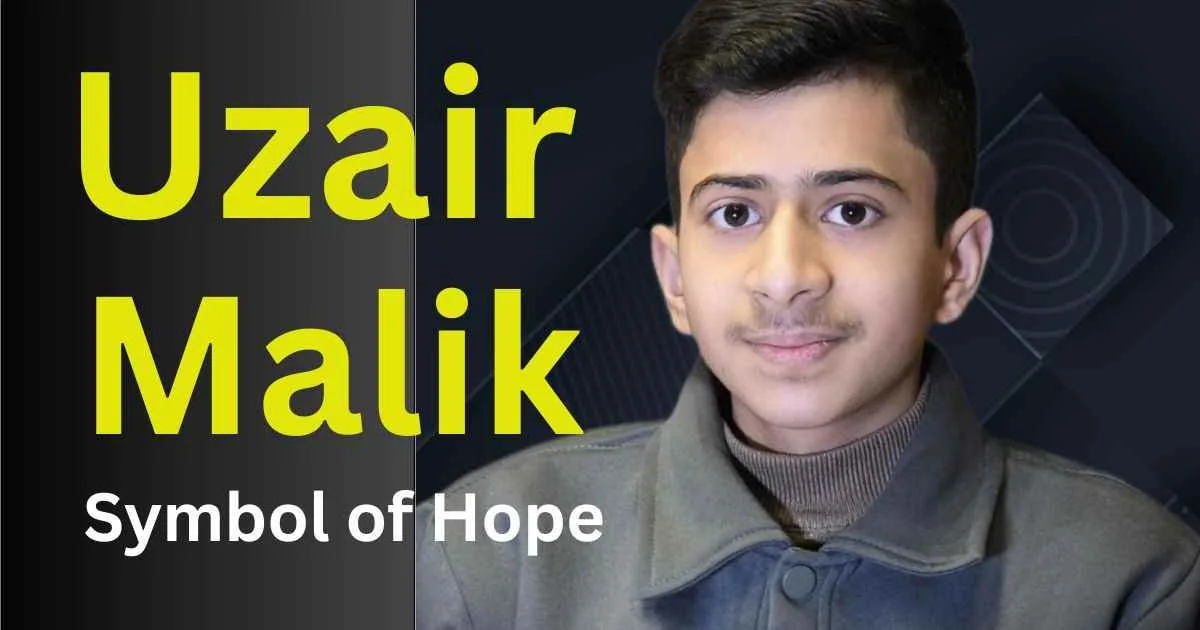
At 13, This Kashmiri Boy Built 31 Apps and AI Tools — Uzair Malik’s Story Is Pure Inspiration

Uzair Malik

In the beautiful yet challenging valley of Kashmir, where natural calm often exists alongside social and political difficulties, inspiring stories of talent continue to emerge. One such story is that of Uzair Malik, a 13-year-old boy from Srinagar, who has already made a strong mark in the world of technology.

At an age when most children are focused on schoolwork and games, Uzair has developed 31 digital applications, created several AI-powered chatbots, and even launched his own commission-free freelancing platform. What makes his journey even more remarkable is that he achieved all this through self-learning, without any formal coaching or training.Click Here To Follow Our WhatsApp Channel

Uzair lives in Syedpora Eidgah, a residential area of Srinagar, and studies in Class 9. He carefully balances his school studies with his deep interest in programming and technology. His journey into coding began in 2021, during the COVID-19 pandemic, when online learning became more accessible. Inspired by a family friend working in app development, Uzair became curious about how websites and mobile apps actually work. That curiosity soon turned into a serious passion.

With limited access to coaching centres in Kashmir, Uzair relied on free online resources. He learned coding through YouTube tutorials, online courses, and technical documents. “I learned everything from YouTube and online resources,” he has said. His progress clearly shows how discipline and curiosity can open doors, even without expensive tools or institutions.


From Useful Apps to AI Chatbots

Uzair’s work is not just impressive in numbers, but also in purpose. His 31 apps include practical tools designed to solve everyday problems. Some of them focus on hotel and vehicle booking systems, which can be especially helpful in a tourism-based region like Kashmir.

Alongside apps, he has also built many websites, showing strong skills in web development and design. Most notably, Uzair has stepped into artificial intelligence by creating at least seven AI-powered chatbots. Inspired by global tools like ChatGPT, these chatbots range from simple conversation tools to more functional assistants. “AI is the future,” Uzair says, reflecting a mindset far beyond his age.

His projects focus on accessibility and usefulness, especially important in a region where internet access and job opportunities can be limited. Through his work, Uzair is contributing to the digital growth of his community.


A Freelancing Platform for Kashmir’s Youth

One of Uzair’s biggest achievements is the launch of a commission-free freelancing website. Unlike popular platforms that take a large percentage of earnings, Uzair’s platform allows freelancers to keep 100 per cent of what they earn.

His goal is to support young people, freelancers, and small businesses in Kashmir. “The platform should help ordinary people, not burden them,” Uzair explains. The website connects clients directly with service providers such as writers, designers, and developers, helping build a local digital economy.

In a region where youth unemployment is a serious concern, such an initiative could become a valuable opportunity for many aspiring professionals.


Learning Against the Odds

Kashmir’s difficult environment adds deeper meaning to Uzair’s success. Internet shutdowns, curfews, and limited resources often disrupt education. Still, Uzair continued learning whenever possible and used technology in a positive way.

He believes young people should use technology constructively. Instead of wasting time online, he chose to create, learn, and build. His story challenges negative stereotypes and shows how focus and creativity can overcome limitations.

Local media outlets have praised him as a “tech prodigy” and a “pride of Kashmir”, while interviews on social media have inspired many young students across the valley.


Dreams for the Future

Despite his achievements, Uzair remains humble and focused. He hopes to study at one of India’s top engineering institutions, such as the Indian Institutes of Technology. In the future, he wants to build advanced tools, including professional editing software.

For Uzair, coding is not just about writing code. “It is about creating opportunities and proving that age is no barrier,” he says.


A Symbol of Hope

Uzair Malik’s journey reflects the hidden potential of Kashmir’s youth. In a region often known for struggle, his success tells a different story — one of talent, resilience, and hope.

Through self-belief, free resources, and hard work, Uzair has shown that innovation can rise from anywhere. At just 13, his apps, AI tools, and freelancing platform are only the beginning of what promises to be an extraordinary journey.

Led Zeppelin Kashmir: Meaning, History & Why It’s a Rock Masterpiece

Led Zeppelin Kashmir

When people search for Led Zeppelin Kashmir, they are usually looking for more than just a song. They want the story, the meaning, the power, and the legacy behind one of the most iconic rock tracks ever created. Released in 1975, Kashmir is not just music – it is an experience.Click Here To Follow Our WhatsApp Channel

This detailed guide covers everything you need to know about Kashmir by Led Zeppelin, from its creation to its global impact.


What Is “Kashmir” by Led Zeppelin?

Kashmir is a legendary rock track by the British band Led Zeppelin. It appeared on their double album Physical Graffiti and quickly became one of the band’s most famous and respected works.

Unlike many hit songs, Kashmir was never released as a single. Still, it became one of the most played, discussed, and admired rock songs in history.


Basic Song Details

  • Band: Led Zeppelin
  • Album: Physical Graffiti
  • Release Year: 1975
  • Song Length: About 8 minutes 30 seconds
  • Writers: Jimmy Page, Robert Plant, John Bonham
  • Genre: Hard rock with orchestral elements

Why Is the Song Called “Kashmir”?

Many people think Kashmir is directly about the Kashmir region in South Asia. However, Robert Plant explained that the song is not literally about Kashmir.

The name “Kashmir” represents:

  • Distance
  • Mystery
  • Grandeur
  • A powerful, unreachable place

The lyrics were inspired mainly by travels through Morocco and desert landscapes, not Kashmir itself. The word was chosen because it sounded grand and matched the epic feeling of the music.


Meaning of Led Zeppelin Kashmir Lyrics

The lyrics of Kashmir focus on:

  • Long journeys
  • Inner discovery
  • Freedom
  • Strength and endurance

Lines like “Oh let the sun beat down upon my face” describe travel, struggle, and spiritual movement rather than a physical place. The song feels like a march toward something greater, unknown, and powerful.

There is no love story, no simple message. Instead, Kashmir is about feeling, power, and exploration.


Music Style and Sound

What truly sets Kashmir apart is its sound.

Key Musical Features:

  • Heavy and slow guitar riff
  • Strong, marching drum pattern
  • Orchestral strings and brass
  • Middle Eastern and Eastern-style rhythm

The guitar riff is simple but massive. The drums never change speed, giving the song a strong, unstoppable feeling. The orchestra adds depth and drama, making the song feel royal and timeless.


Why Kashmir Is Considered a Masterpiece

Kashmir is often called Led Zeppelin’s greatest achievement. Even band members have said it represents their sound perfectly.

Reasons for Its Legendary Status:

  • Unique structure (not verse-chorus like pop songs)
  • Powerful rhythm that never rushes
  • Lyrics that feel poetic and vast
  • A sound that still feels modern today

Many music experts rank Kashmir among the top rock songs of all time.


Live Performances and Legacy

Led Zeppelin performed Kashmir live during major tours, often as a highlight of their shows. Later, Jimmy Page and Robert Plant performed it again with orchestras, proving the song’s lasting power.

The track has been:

  • Used in films and TV shows
  • Played at sports events
  • Covered by many artists
  • Praised across generations

Cultural Impact of Led Zeppelin Kashmir

Kashmir helped change how people viewed rock music. It showed that rock could be:

  • Long and complex
  • Influenced by world music
  • Deep and serious

It inspired many bands to experiment with sound, structure, and global influences.


Interesting Facts About Kashmir

  • It took several years to complete the song
  • The drum pattern stays almost the same throughout
  • The song does not speed up or slow down
  • Robert Plant called it one of Led Zeppelin’s finest works

Why People Still Search “Led Zeppelin Kashmir” Today

Decades later, people continue searching for Led Zeppelin Kashmir because:

  • The song never feels old
  • New listeners discover it every year
  • It represents the peak of classic rock creativity

Whether you listen on headphones or full speakers, Kashmir delivers the same powerful effect every time.


Final Thoughts

Led Zeppelin Kashmir is more than a song. It is a journey, a mood, and a statement of musical greatness. Its powerful sound, deep meaning, and timeless quality make it one of the most important rock tracks ever recorded.

If you want to understand Led Zeppelin at their best, Kashmir is the perfect place to start.


Al-Tilmeez: A Pioneering Arabic Literary Journal from Jammu and Kashmir

Professor Mufti Abdul Ghani Azhari: Scholar, Sufi, Historian, and Social Reformer of Kashmir

Mirwaiz Mohammad Ahmad son of Mufasir-e-Quran Moulana Mohammad Yousuf Shah Dies in Islamabad

Why Kashmir Is a Dream Destination for American Tourists ?

kashmir valley

Kashmir is one of the most beautiful regions in South Asia. It is often called Paradise on Earth, and once you visit, you will understand why. Surrounded by the Himalayas, Kashmir offers snow-covered mountains, green valleys, clear rivers, peaceful lakes, and warm-hearted people.

For American tourists looking for natural beauty, culture, adventure, and calm, Kashmir is a perfect choice. It is not crowded like many global tourist spots and gives a real, authentic travel experience.Click Here To Follow Our WhatsApp Channel


Natural Beauty You Will Never Forget

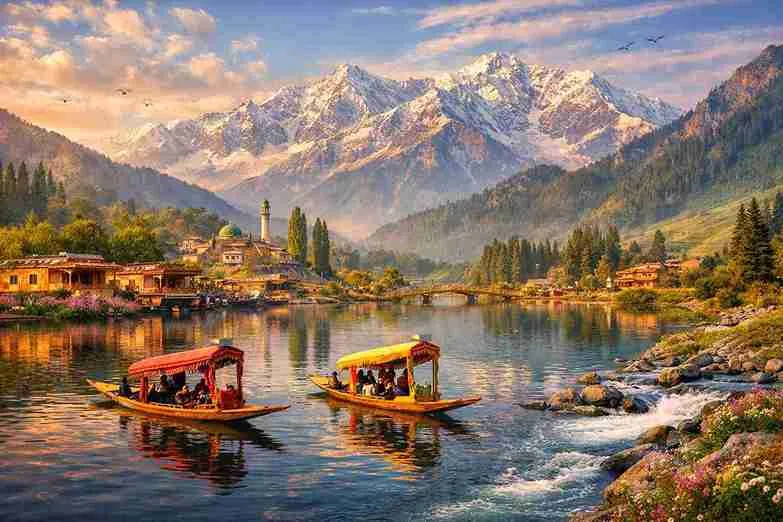
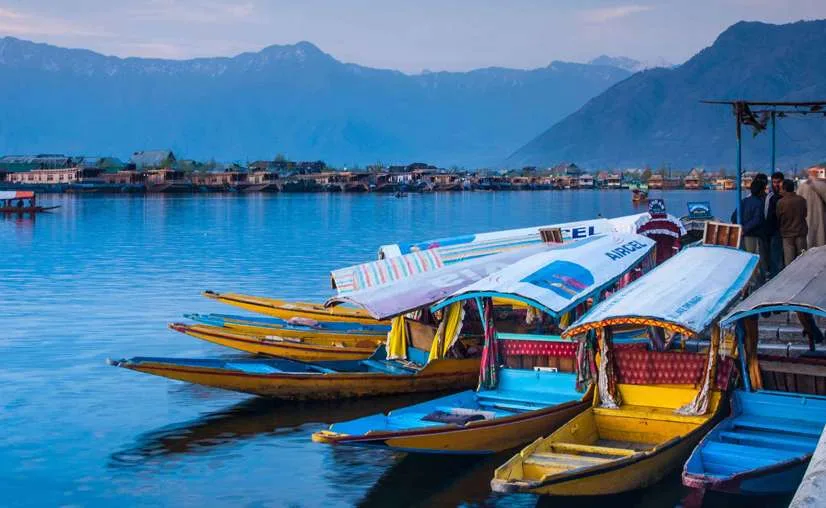
Kashmir’s landscapes feel like a painting. The famous Dal Lake with its wooden houseboats and shikara rides is a peaceful escape from busy city life. Morning views, quiet water, and the sound of birds create a feeling of pure relaxation.

The Mughal Gardens, built centuries ago, show the region’s rich history and love for nature. Every season has its own charm:

  • Spring: Flowers bloom everywhere
  • Summer: Green valleys and pleasant weather
  • Autumn: Golden leaves and apple orchards
  • Winter: Snow, skiing, and magical views
pahalgam
Pahalgam Mini Market/Image Source kashmirhills.com

Adventure and Outdoor Activities

If you love adventure, Kashmir will not disappoint. Gulmarg is one of Asia’s top skiing destinations and has the world’s highest cable car rides.

Pahalgam and Sonamarg are perfect for trekking, river walks, camping, and photography. These places are calm, safe, and ideal for travellers who enjoy nature.


Culture, Food, and Warm Hospitality

Image

Kashmiris are known for their hospitality. Guests are treated with respect and kindness. Many locals speak basic English and are always ready to help tourists.

Food is a big attraction. Traditional Wazwan dishes are rich and flavourful. Kahwa (local tea with saffron and almonds) is perfect for cold evenings. Handicrafts like pashmina shawls, carpets, and papier-mâché items are world-famous and make great souvenirs.


Important Travel Information for American Tourists

Visa and Entry

  • American citizens need an Indian tourist visa
  • E-visa is available and easy to apply online
  • Passport should be valid for at least 6 months

Best Time to Visit

  • April to October for sightseeing and nature
  • December to February for snow and winter sports

Safety and Security

  • Tourist areas are well-protected
  • Follow local travel advisories
  • Avoid restricted zones and always carry ID

Currency and Payments

  • Indian Rupee (INR) is used
  • Cash is useful in remote areas
  • Credit/debit cards work in hotels and major shops

Health and Clothing

  • Carry basic medicines
  • Dress modestly and comfortably
  • Warm clothes are essential, even in summer evenings

Connectivity and Accommodation

Srinagar has an airport with regular flights from major Indian cities. Internet and mobile services are available, though speeds may vary.

Accommodation options include:

  • Luxury hotels
  • Traditional houseboats
  • Budget guesthouses
  • Family-run homestays

All offer comfort, cleanliness, and a personal touch.


Why Americans Will Love Kashmir

Kashmir offers something rare today: peace, beauty, authenticity, and deep human connection. It is not just a holiday destination; it is an experience that stays in your heart.

If you are an American traveller looking for a unique journey, away from crowded tourist trails, Kashmir welcomes you with open arms, stunning views, and unforgettable memories.

Once you visit Kashmir, you don’t just travel — you feel alive.


Top Famous Tourist Places in Kashmir

Srinagar

The heart of Kashmir and its summer capital.
Famous for:

  • Dal Lake & Nigeen Lake
  • Houseboats and Shikara rides
  • Mughal Gardens (Shalimar, Nishat, Chashme Shahi)
  • Old city culture and local markets

Best for: First-time visitors, culture, lakes, photography


⛷️ Gulmarg

One of Asia’s best hill stations.
Famous for:

  • Skiing and snowboarding
  • World’s highest cable car (Gondola)
  • Snow in winter, green meadows in summer

Best for: Adventure lovers, snow tourists, honeymooners


🌲 Pahalgam

A peaceful valley surrounded by forests and rivers.
Famous for:

  • Lidder River
  • Betaab Valley
  • Aru Valley
  • Base camp of Amarnath Yatra

Best for: Nature lovers, families, trekking


🏔️ Sonamarg

Means “Meadow of Gold”.
Famous for:

  • Glaciers and snowfields
  • Thajiwas Glacier
  • Gateway to Ladakh

Best for: Short trips, snow views, photography


🌸 Gardens, Lakes & Heritage Places

🌼 Mughal Gardens (Srinagar)

  • Shalimar Bagh
  • Nishat Bagh
  • Chashme Shahi

Perfect examples of Persian-style gardens with mountain views.


🚣 Dal Lake

  • Shikara rides
  • Floating markets
  • Luxury houseboats

Most photographed place in Kashmir.


🕌 Hazratbal Shrine

A respected religious place near Dal Lake, known for calm surroundings and spiritual peace.


🏞️ Offbeat & Less-Crowded Destinations

Image

🌿 Yusmarg

Quiet meadows, pine forests, perfect for peace seekers.

🌾 Doodhpathri

Green valley with flowing streams, ideal for day trips.

🏕️ Aru Valley

Small village near Pahalgam, great for camping and trekking.

🌄 Bangus Valley

Remote and untouched, perfect for travellers who love pure nature.


❄️ Winter & Snow Destinations

Gurez Valley

  • Snow-covered in winter
  • Traditional culture
  • Kishanganga River

🏔️ Verinag

Source of River Jhelum, beautiful gardens and crystal-clear water.


🛍️ Local Experiences Tourists Love

  • Kashmiri handicrafts (Pashmina, carpets)
  • Local food like Wazwan & Kahwa
  • Apple orchards and saffron fields
  • Village walks and homestays

✨ Why Kashmir Is Special for Tourists

Kashmir offers:

  • Natural beauty
  • Four-season tourism
  • Rich culture
  • Warm hospitality
  • Safe and peaceful tourist zones

Whether you love nature, snow, culture, adventure, or peace, Kashmir has something for everyone.


Al-Tilmeez: A Pioneering Arabic Literary Journal from Jammu and Kashmir

Professor Mufti Abdul Ghani Azhari: Scholar, Sufi, Historian, and Social Reformer of Kashmir

Mirwaiz Mohammad Ahmad son of Mufasir-e-Quran Moulana Mohammad Yousuf Shah Dies in Islamabad,

Islam and Freedom of Religion: A Muslim Perspective on Human Rights and Non-Coercion

Islam and Freedom

Question:
السلام عليكم ورحمة الله وبركاته
I have been asked to write a piece for my local university press & I am confused. I would really appreciate some guidance.
They are asking me what a Muslims stance is on “freedom of religion as a human right
It’s a short 200 words. Imo it’s a good way to spread dawah because I can touch on the fact, contrary to belief there is no compulsion in religion. We can’t force people to become Muslim, we can ask.
Also the paper is for a humanitarian organisation called amnesty, who help people from Palestine to Ukraine. They report on human rights abuses, would I be able to work with them on this even though they are not an organisation that represents islam as such, but they do stand up for Muslims?
I’m not saying all religions are right, I’m going to say that under Islamic rule, people are free to practice what they believe in without fear of persecution. It is a human right in the eyes of a Muslim.
A sister was saying it’s an aqeedah issue and I can’t write this, but islam does protect any human life regardless of what religion there are? If they agree to live under a “Khalifa” or Muslim ruler they will even be protected as far as I know?
There is a fatwa by shaykh ibn Baz in which he says: “islam does not permit freedom in matters of creed. It does not make people free to choose which ever religion they wish”
But this fatwa doesn’t related to the question does it?
So my final question is, can I write a 200 word paragraph on “freedom of religion IS a human right & islam does not allow any human being to be persecuted based off religion”Click Here To Follow Our WhatsApp Channel
Q = would this be touching on any aqeedah issues and is it wrong to work with a human rights organisation that’s not Muslim based
Please do clarify, I would greatly appreciate it.

Answer:
Wa ʿalaykum as-salām wa raḥmatullāhi wa barakātuh.
The question you raise pertains to an area in which Islamic legal theory and theological discourse are frequently misunderstood, particularly when framed within contemporary human rights language. It is essential to distinguish between two domains: the inviolable personal freedom of belief, and the state’s prerogative to regulate public order and prevent sedition or societal harm.

At the level of individual conscience, Islam unequivocally affirms freedom of religion. The Qur’ān declares, “There is no compulsion in religion” (2:256), a verse understood by classical exegetes to articulate a foundational maxim: genuine faith arises from conviction rather than coercion. Throughout Islamic history, non-Muslim communities, including Jews, Christians, and others, were permitted to adhere to their faiths, preserve their religious institutions, and administer personal status matters according to their own laws. This historical precedent demonstrates that Islam does not oblige non-Muslims to convert, nor does it sanction their persecution on account of belief.

Limitations within Islamic governance pertain not to belief itself, but to conduct that threatens communal stability or constitutes rebellion, categories regulated by virtually every legal system. Such considerations fall within the purview of statecraft and public interest (maslahah), not doctrinal compulsion. Hence, the fatwā you cited concerns theological consistency within the Islamic creed rather than the civil question of protecting religious freedom as a right.

Consequently, it is both accurate and legitimate to assert that Islam recognises freedom of religion and safeguards individuals from coercion. Articulating this principle in a public or humanitarian context does not compromise ʿaqīdah, provided one does not claim all religions are theologically equal, but rather that individuals possess the freedom to choose, and that persecution on the basis of belief is rejected.

Cooperating with non-Muslim organisations in areas that align with universal ethical concerns, such as protection of life, humanitarian relief, and the defence of civil rights, falls under the recognised Islamic principle of taʿāwun ʿalā al-birr, cooperation in righteousness. The Prophet ﷺ himself entered into cooperative pacts with non-Muslims in matters of justice and social welfare. Hence, engagement with such organisations is permissible when it serves noble aims and does not entail compromising Islamic doctrine.

In conclusion, the assertion that Islam upholds freedom of religion as a human right, prohibits coercion in matters of faith, and supports the protection of minority rights, is consistent with both Islamic legal tradition and the objectives of Sharīʿah. Writing on this subject, particularly to clarify misconceptions and promote justice, does not infringe upon ʿaqīdah.

Al-Tilmeez: A Pioneering Arabic Literary Journal from Jammu and Kashmir

Professor Mufti Abdul Ghani Azhari: Scholar, Sufi, Historian, and Social Reformer of Kashmir

Mirwaiz Mohammad Ahmad son of Mufasir-e-Quran Moulana Mohammad Yousuf Shah Dies in Islamabad, Pakistan

Who Is Mufti Shamail Nadwi? Life, Education, Debates, and Influence of a Young Indian Islamic Scholar

Mufti Shamail Nadwi

Mufti Shamail Nadwi is a young and well-known Islamic scholar from India. He is respected for his calm way of speaking, clear thinking, and ability to explain Islam in simple words. Many young Muslims in India, Pakistan, and other countries follow his lectures online because he answers modern questions about faith, life, and belief in an easy and logical manner.Click Here To Follow Our WhatsApp Channel


Early Life and Family

Mufti Shamail Ahmad Abdullah Nadwi was born in Kolkata, West Bengal, in the mid-1990s. He grew up in a religious family. His father, Maulana Shamsuzzaman Nadwi, is an imam and Islamic teacher.

From a young age, Mufti Shamail showed interest in Islamic learning. He memorised the Qur’an and studied basic Islamic subjects during his childhood. His home environment helped him develop discipline, respect for knowledge, and love for learning.


Education and Islamic Studies

For higher Islamic education, Mufti Shamail studied at Darul Uloom Nadwatul Ulama in Lucknow. This is one of the most respected Islamic institutions in India. It is known for teaching both traditional Islamic subjects and awareness of modern issues.

During his studies, he learned:

  • Arabic language
  • Qur’an explanation (Tafseer)
  • Hadith and their meanings
  • Islamic law (Fiqh) of the Hanafi school
  • Logic and belief studies

After completing his education, he earned the title of Mufti, which means he is qualified to guide people on Islamic legal matters. Like many students of Nadwa, he added “Nadwi” to his name.

Later, he went to Malaysia and is currently doing a PhD at International Islamic University Malaysia. This has helped him gain wider academic experience.


Teaching Work and Institutions

In 2021, Mufti Shamail started Markaz Al-Wahyain, an online Islamic learning centre. The aim is to provide proper Islamic education to people who cannot attend madrasas physically.

The platform offers:

  • Online classes on Qur’an and Hadith
  • Courses on Islamic belief and law
  • Special lessons for youth and beginners

He is also linked with the Wahyain Foundation, which works for education, community guidance, and youth awareness.


Style of Teaching and Online Presence

Mufti Shamail Nadwi is very active online. His teaching style is:

  • Calm and respectful
  • Clear and well-explained
  • Based on Qur’an, Hadith, and logic

He is popular on:

  • YouTube – long lectures and question-answer sessions
  • Instagram & Facebook – short clips and reminders
  • X (Twitter) – views on faith and society

Young people like his content because he explains difficult ideas in simple language and does not use harsh words.


Famous Debate on God’s Existence

In December 2025, Mufti Shamail became widely known after a public debate with Javed Akhtar. The debate was held at the Constitution Club of India and moderated by journalist Saurabh Dwivedi.

The topic was “Does God Exist?”

Mufti Shamail explained that:

  • Science explains how things work, not why they exist
  • Moral values and human awareness point to a higher reality
  • Human free will explains suffering, not injustice by God
  • Not everything can be tested by physical tools

The debate remained polite and respectful. Many viewers praised Mufti Shamail for his patience, clarity, and strong reasoning.


Influence and Importance Today

Mufti Shamail Nadwi represents a new generation of Islamic scholars who:

  • Respect classical Islamic learning
  • Understand modern doubts and questions
  • Prefer dialogue instead of arguments

He has influenced thousands of young Muslims who were confused about faith and belief. His work has helped make Islamic learning more accessible and relatable in today’s fast-changing world.


Conclusion

Mufti Shamail Nadwi is a young but influential Islamic scholar who connects tradition with modern thinking. Through teaching, online platforms, and respectful discussions, he has become an important voice for many Muslims today.

As his education and work continue, his role in guiding young minds is expected to grow even further.

Returning to the Dīn: How True Faith Leads to Self-Knowledge and Nearness to Allah

Qur’ān and Sunnah

Question:
My student, Abu Hanifah Dilawar, forwarded to me the following question:
Assalāmu ʿalaykum wa raḥmatullāhi wa barakātuhu, Shaykh. This is a question from a Bangladeshi reader of the Bangla Facebook page who regularly reads your articles. They wrote: “I could not help but comment. I read the articles on this page almost regularly. Alḥamdulillāh, such beautiful writing—every single word reflects the depth of knowledge. SubḥānAllāh, these are not words that merely pass the lips; they penetrate deep into the heart, enriching my understanding and helping me recognise myself and the world anew. Alḥamdulillāh. May Allah ﷻ grant you the best reward. Āmīn.
I do not know whether my question will reach you, but I will ask it nonetheless: When a person truly returns to the Dīn, what should they actually do in order to know themselves completely?”

Answer:
Wa ʿalaykum as-salām wa raḥmatullāhi wa barakātuhu.

The question raised by the respected reader is sincere and deeply meaningful, because in Islam the matter of “knowing oneself” is directly connected to knowing one’s Lord and understanding the purpose for which one was created.Click Here To Follow Our WhatsApp Channel

It must first be made clear that a person who is born to Muslim parents is a Muslim by default. Such a person remains within Islam unless they knowingly and openly declare disbelief or commit an act that takes them out of the fold of Islam. Islam is not lost due to weakness, sin, confusion, or periods of neglect. Therefore, many people who speak of “returning to Islam” are in reality returning to practising Islam more consciously and sincerely, not re-entering it from outside.

If, however, a person had clearly left Islam and then wishes to return, then the door of Allah’s mercy is always open. Their return begins with sincerely declaring the Shahādah: that there is no god worthy of worship except Allah, and that Muḥammad ﷺ is the Messenger of Allah. With this declaration, all that came before is wiped away by Allah’s mercy.

Whether one is born Muslim, returning to Islam, or newly embracing Islam, the obligation thereafter is the same. Every Muslim is required to worship Allah alone according to the way taught by the Prophet Muḥammad ﷺ. There is no separate path for converts and no special category for those who “returned”; there is only submission to Allah upon guidance.

To truly return to the Dīn and to begin knowing oneself, a person must first recognise their reality: that they are a servant of Allah, created, weak, dependent, and in constant need of their Lord. True self-knowledge does not lead to pride or self-admiration, but to humility, repentance, and awareness of one’s limitations. The one who knows himself realises how much he needs Allah at every moment.

The foundation of this return is the establishment of worship, beginning with the obligatory acts. The five daily prayers, fasting in Ramaḍān, zakāh when applicable, and ḥajj for those who are able are not optional spiritual exercises; they are the pillars upon which the heart and soul are built. Without these, claims of inner transformation remain fragile and incomplete.

Alongside this, the Muslim must learn the Qur’an, recite it, understand its meanings, reflect upon its verses, and strive to act upon it. The Qur’an is not merely a book of blessing or recitation; it is the primary means through which a believer comes to understand himself, his flaws, his responsibilities, and his destination. Through the Qur’an, Allah speaks directly to the heart of the servant, guiding, correcting, and nurturing it.

Equally essential is learning the Sunnah of the Prophet ﷺ and striving to follow him in belief, worship, character, and conduct. The Prophet ﷺ is the living example of what submission to Allah looks like in practice. Without his guidance, a person may worship with sincerity yet fall into error. Following the Sunnah brings balance, depth, and clarity to one’s religion, and draws the believer closer to Allah in a sound and protected manner.

As a person progresses upon this path, they must guard themselves against seeking validation from others regarding the quality of their īmān or the depth of their spirituality. No scholar, teacher, or community can truly assess the state of a person’s heart. The reality of one’s faith is known only to Allah ﷻ. Even the most righteous of the early Muslims feared hypocrisy for themselves, despite their great deeds.

Therefore, the believer continues upon the path of worship with both fear and hope: fear of Allah’s justice and accountability, and hope in His vast mercy and forgiveness. A Muslim does not claim certainty of acceptance in this life, nor do they despair of Allah’s mercy because of their shortcomings. They continue worshipping Allah, repenting sincerely, and striving to improve until death comes to them.

In this way, returning to the Dīn is not a single event but a lifelong journey of returning to Allah again and again. Whoever persists upon worship, learning, reflection, and humility has already begun to know himself in the truest and most beneficial sense.

May Allah ﷻ keep our hearts firm upon His religion, increase us in knowledge and sincerity, and grant us a good ending. Āmīn.

Ruling on Women Performing Umrah While Menstruating: What If the Entire Trip Falls During the Cycle?

Hajj Training

Question:
I had a question that I wondered if you could help me with- a friend of mine is going for umrah and is likely to be on her period of the entire duration of it. Every source we’ve read online says that other than the Tawaf, she can do everything else. But that once she’s finished her period, will then need to complete tawaf. However, this won’t be possible as she’s likely to be on her period the whole time. What does that mean for her? That she won’t be able to complete umrah?Click Here To Follow Our WhatsApp Channel

Answer:
The jurists agree that ṭawāf around the Kaʿbah cannot be performed while a woman is in a state of menstruation. The Prophet ﷺ made this explicit when he told ʿĀ’ishah (ra): “Do all that the pilgrims do except the ṭawāf around the House, until you become pure.” This establishes an unambiguous rule: tawāf requires ritual purity, and without it, the tawāf is invalid. Since tawāf is a fundamental pillar of ʿumrah, the entire ʿumrah depends upon its successful completion. One may perform duʿā’, dhikr, talbiyah, and even saʿī after tawāf, but none of these substitute for the tawāf itself.

If a woman expects her menstrual cycle to finish at some point during her stay in Makkah, she may make the intention of ʿumrah and enter iḥrām with full confidence that she will be able to perform her tawāf once she becomes pure. However, if she is almost certain that she will be menstruating for the entire duration of her trip and will not have even a single day of purity in which she can complete the essential tawāf, then she should not plan to perform ʿumrah at all. Entering iḥrām with the intention of ʿumrah would place her in a binding ritual state that she cannot exit until she completes the tawāf, and she would have no lawful way of completing it. The Sharīʿah does not ask a person to enter into an act of worship that she knows she cannot complete, nor to place herself in hardship or a legally restricted state without benefit.

For this reason, the sound and precautionary scholarly position is that she should avoid travelling for ʿumrah under these circumstances. Since the defining act of ʿumrah will not be possible for her, there is no benefit in formally undertaking the ritual.

There are situations, however, where a woman may be required to travel with family, a group, or for logistical reasons that do not allow her to adjust her timing. If she must travel to Makkah, yet knows she will be menstruating throughout her stay, then she must not make the intention of ʿumrah and must not enter iḥrām at the miqāt. Instead, she should travel simply as a visitor, not as a pilgrim, and enter Makkah without the obligations associated with ritual consecration. She may attend the masjid, make duʿā’ and dhikr, accompany her group, and benefit spiritually from being in a sacred place, but she does not begin the rites of ʿumrah and does not take on the restrictions of iḥrām. This avoids the difficulty and legal complications of being in iḥrām without any opportunity to complete the worship for which iḥrām was assumed.