The concept of “Naya Kashmir” has become synonymous with transformation and progress in the region of Jammu and Kashmir. Since the abrogation of Article 370 in 2019, the government has implemented several initiatives aimed at fostering economic development, improving infrastructure, and diversifying the economy. While these changes have led to a visible shift in the economic landscape, challenges remain that need to be addressed for sustainable and inclusive growth.
One of the most significant aspects of economic transformation in Naya Kashmir is the surge in private and public investments. The government has actively promoted the region as a favorable investment destination by offering incentives and streamlining business processes. As a result, investments worth approximately ₹33,000 crore have been committed across various sectors. This influx of capital has spurred industrial development, job creation, and economic expansion.
Infrastructure Development
A strong emphasis has been placed on upgrading infrastructure, recognizing its importance for long-term economic growth. Key developments include:
Road and Transport Networks: Improved connectivity with upgraded highways, tunnels, and bridges, enhancing accessibility across the region.
Power and Energy Infrastructure: Strengthening of electricity grids and renewable energy projects to ensure stable power supply.
Digital Connectivity: Expansion of internet infrastructure, including the rollout of 4G and 5G services, fostering digital inclusion and e-governance. These initiatives are creating a more business-friendly environment and improving the quality of life for residents.
Tourism Revival
Tourism has traditionally been the backbone of Kashmir’s economy, and recent efforts to enhance security and infrastructure have led to a revival of this sector. Key factors driving this resurgence include:
Increased tourist footfall due to improved security measures.
Promotion of offbeat destinations and adventure tourism.
Revival of traditional handicrafts and cultural tourism, benefiting local artisans and small businesses. This revival is contributing to job creation, boosting local businesses, and reinforcing Kashmir’s status as a premier tourist destination.
Economic Diversification
Reducing reliance on traditional sectors has been a key focus of the government. Efforts are being made to strengthen and expand industries such as:
Agriculture and Horticulture: Promotion of high-value crops such as saffron, apples, and walnuts.
Fisheries: Expansion of trout farming as a means of generating additional revenue.
Handicrafts and Small-Scale Industries: Revival of Kashmiri Pashmina, carpet weaving, and other traditional crafts through government support and global marketing initiatives. By fostering a diversified economy, the region is becoming more resilient to external economic fluctuations.
Challenges and Considerations
Addressing Unemployment
Despite economic growth, unemployment remains a pressing issue. To tackle this, the government needs to:
Enhance vocational training and skill development programs.
Encourage startups and entrepreneurship by providing financial and infrastructural support.
Create more job opportunities in sectors beyond government employment. A comprehensive employment strategy will be crucial to ensuring that economic benefits reach all sections of society.
Environmental Sustainability
Rapid development poses environmental challenges, particularly in a region known for its fragile ecosystem. Sustainable development measures must include:
Strict environmental regulations to prevent deforestation and pollution.
Investment in eco-friendly tourism practices.
Promotion of renewable energy sources to reduce dependence on fossil fuels. Balancing development with environmental conservation is essential for long-term sustainability.
Political and Social Stability
Maintaining peace and stability is critical for sustained economic progress. Efforts should be made to:
Address political grievances through dialogue and confidence-building measures.
Strengthen law enforcement while respecting civil liberties.
Promote social cohesion and inclusivity in governance and policy-making. A stable socio-political environment will foster investor confidence and economic growth.
Conclusion
Naya Kashmir is witnessing a remarkable transformation, driven by investment, infrastructure development, and economic diversification. However, challenges such as unemployment, environmental concerns, and political stability must be addressed to ensure sustainable progress. By implementing strategic policies and inclusive development measures, Jammu and Kashmir can emerge as a model of economic resilience and prosperity. The vision of Naya Kashmir is within reach, but it requires continued efforts and collaboration from all stakeholders to fully realize its potential.
The Oval Office witnessed a heated confrontation between U.S. President Donald Trump and Ukrainian President Volodymyr Zelensky. What was meant to be a diplomatic discussion on a minerals deal and a potential ceasefire in Ukraine’s war against Russia instead turned into a tense shouting match that revealed deep divisions. While Trump demanded gratitude and concessions from Ukraine, Zelensky stood firm, refusing to gamble with his nation’s survival. His defiant stance was not just about pride—it was about justice, security, and the future of Ukraine’s sovereignty.
Trump’s primary argument revolved around the idea that Ukraine owed the United States for the financial and military aid it had received. “We’ve given you $350 billion, military equipment, and a lot of backing,” Trump asserted, implying that Zelensky should show more deference and comply with his demands for a ceasefire. But this transactional view ignored a fundamental truth: Ukraine was not a mere beneficiary of American charity—it was a nation fighting for its existence against an aggressive invader.
Zelensky rightly pointed out that Ukraine had repeatedly expressed gratitude to the American people. However, gratitude did not mean submission. “We are in our own country, and we have stayed strong all this time,” he fired back. The U.S. aid was not a favor but a necessary response to Russia’s illegal war, a conflict that threatened not just Ukraine but the stability of Europe and democratic values worldwide.
The Danger of a Forced Ceasefire
Trump’s insistence on an immediate ceasefire as a solution to the war ignored the historical reality of Russian aggression. Time and again, Russia has violated peace agreements. From the annexation of Crimea in 2014 to the failed Minsk agreements of 2019, Moscow has consistently used ceasefires as a tool to regroup and launch further attacks.
Zelensky understood this pattern and refused to walk into the same trap. “Putin broke the ceasefire, he killed our people,” he reminded Trump and Vice President JD Vance, who had also criticized Ukraine’s stance. Accepting a ceasefire without firm security guarantees—such as NATO membership or a binding U.S. commitment—would leave Ukraine vulnerable to another Russian assault.
U.S. Policy Should Be About Justice, Not Transactions
Vice President Vance accused Zelensky of disrespecting the U.S. by challenging Trump in public. But Zelensky was not being disrespectful—he was defending his nation’s right to survive. “Come once!” he urged Vance. “Everybody has problems during the war, even you. But you have a nice ocean and don’t feel it now—you will feel it in the future.” His words were a stark reminder that Russia’s ambitions did not stop at Ukraine’s borders. A weak response today could embolden Putin to test NATO’s resolve tomorrow.
Trump’s assertion that “We’re trying to solve a problem here” disregarded the complex stakes at play. The conflict was not just about stopping bullets—it was about ensuring that Ukraine remained free and independent. Trump’s approach, which prioritized a quick deal over a just resolution, risked legitimizing Russia’s aggression and encouraging further global instability.
The Aftermath: Zelensky’s Defiance Resonates
Following the heated meeting, Trump dismissed Zelensky’s concerns, posting on Truth Social that “Zelensky disrespected the United States in its cherished Oval Office.” But Ukrainians rallied behind their president. One Kyiv resident summed up the sentiment: “They don’t respect the people of Ukraine—they don’t even hide it.”
Zelensky’s firm stance was not about being difficult or ungrateful. It was about refusing to let Ukraine be sacrificed for the sake of political expediency. His rejection of a hasty, ill-conceived ceasefire was a necessary stand for his people’s survival.
The Path Forward: A Just Peace, Not a Hollow Deal
Ukraine’s fight is not just its own—it is a fight for the principles of sovereignty, democracy, and international law. Zelensky understands that accepting a weak ceasefire without security guarantees would not bring peace but merely delay the next war. His defiance in the Oval Office was not about opposing the U.S. but about ensuring that any agreement truly secures Ukraine’s future.
Trump’s push for a quick deal may be politically convenient, but history has shown that appeasing aggressors only leads to greater conflict. The world should stand with Zelensky in demanding a peace that lasts—not one that serves short-term political interests. Ukraine does not need ultimatums; it needs unwavering support in its fight for freedom.
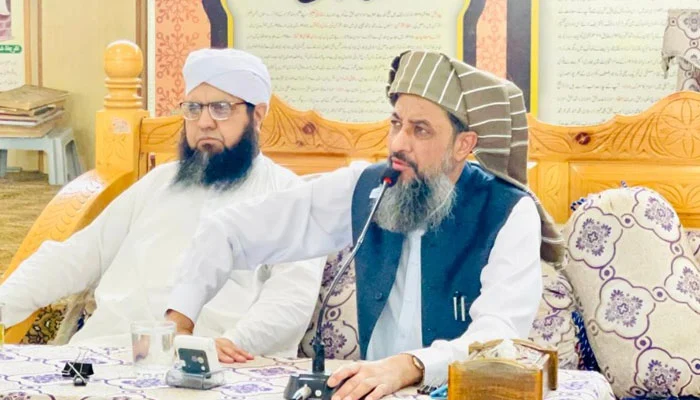
The shocking assassination of Maulana Hamid-ul-Haq Haqqani in a suicide blast at Darul Uloom Haqqania, Nowshera, has left many questioning the motive behind the attack. As investigations unfold, speculation is rising over whether his strong stance on women’s education made him a target for extremist elements.
A Voice for Women’s Education in a Conservative Society
Maulana Haqqani, a well-respected Deobandi scholar and leader of Jamiat Ulema-e-Islam (Sami), was known for his moderate views. Unlike many hardline clerics, he openly supported women’s education, declaring that Islam does not prohibit it. His statements challenged extremist narratives that seek to suppress female education in Pakistan.
Security sources have revealed that Maulana Haqqani had received threats for his views. He had reportedly stated that denying women the right to education was against Islamic teachings, a stance that angered radical elements. The attack on him has raised concerns about whether his advocacy for education led to his assassination.
Details of the Attack
The suicide blast took place moments after Friday prayers at Darul Uloom Haqqania’s mosque. Witnesses reported that the explosion occurred near the exit, just as Maulana Haqqani was leaving. The attack killed six people and injured 12 others, sending shockwaves across the region.
Police and security agencies quickly launched an investigation, with initial reports suggesting that the bomber specifically targeted Maulana Haqqani. His home, located just a few feet away from the mosque, was his intended destination when the explosion occurred.
Who Was Behind the Attack?
While no group has officially claimed responsibility, security experts believe that the attack bears the hallmark of extremist factions opposed to educational reforms. The involvement of radical elements who view female education as a threat cannot be ruled out.
Historically, clerics who have promoted progressive Islamic teachings have been targeted in Pakistan. The pattern suggests that anyone challenging extremist ideologies, especially on issues like women’s rights, faces significant danger.
Political and Religious Reactions
Leaders from various political and religious groups have strongly condemned the attack. Khyber Pakhtunkhwa Chief Minister Ali Amin Gandapur called it a “cowardly act” and assured that authorities would bring the perpetrators to justice.
Jamiat Ulema-e-Islam-Fazl (JUI-F) also expressed deep sorrow, urging its members to assist in relief efforts. The party’s spokesperson, Aslam Ghauri, called for a thorough investigation, stating that religious figures must be protected from such targeted attacks.
The Bigger Picture
Maulana Haqqani’s assassination highlights the growing dangers faced by religious scholars who promote moderate and progressive views. His call for female education challenged extremists who seek to impose their rigid interpretations of Islam. If his stance on this issue was the reason behind his murder, it signals a dangerous trend of silencing voices that advocate for educational and social reforms.
Conclusion: A Tragic Loss for Moderate Islam
Maulana Hamid-ul-Haq Haqqani’s death is a significant loss for those advocating for a balanced and enlightened interpretation of Islam. His fearless stand on women’s education may have made him a target, but his legacy as a voice for knowledge and progress will not be forgotten.
As Pakistan mourns his death, one question remains—will his vision of a more educated society prevail, or will fear and violence continue to suppress those who speak out for change?
The recent statement by Bangladesh Army Chief General Waker-Uz-Zaman, warning that the country is at risk due to internal anarchy, raises serious concerns about the future of democracy in Bangladesh. His remarks, which suggest a growing role of the military in governance, should be viewed with caution, as they pose a direct challenge to civilian rule and democratic principles. If left unchecked, such statements could pave the way for increasing military influence over political affairs, threatening the democratic foundation that the people of Bangladesh have fought hard to establish.
A Dangerous Precedent
General Waker-Uz-Zaman’s statement, made at an army memorial event on February 25, 2025, comes at a time when Bangladesh is already experiencing political instability following the ouster of former Prime Minister Sheikh Hasina in August 2024. The interim government led by Muhammad Yunus has struggled to manage the transition, and law enforcement agencies have faced difficulties in maintaining order. However, allowing the military to intervene in civilian affairs under the pretext of maintaining stability would set a dangerous precedent for future governance.
History shows that military involvement in politics often leads to authoritarian rule. In many countries where the military has stepped in under similar circumstances, democratic institutions have weakened, civil liberties have been curtailed, and opposition voices have been silenced. Bangladesh must not follow this path. The country’s people must reject any move that seeks to normalize military intervention in governance.
Undermining Civilian Authority
The Bangladesh Army Chief’s assertion that the “anarchy we have witnessed is of our own making” may be a reflection of the current political divisions, but the implication that the military should step in to restore order is deeply problematic. It signals an erosion of trust in civilian leadership and the institutions meant to uphold democracy. The primary responsibility of maintaining law and order should lie with the government and civilian security forces, not the military.
By making such a statement, General Waker-Uz-Zaman has overstepped his role and entered the realm of political discourse, which is not the domain of the military. In a democratic system, it is the elected representatives of the people who should lead the country, make decisions on governance, and address political conflicts. Any deviation from this principle undermines the authority of civilian institutions and weakens democracy.
Threat to Political Stability
One of the biggest risks of the Army Chief’s statement is that it may embolden certain factions within the military to seek a more direct role in political affairs. This could lead to an increase in military-backed governance, as seen in other nations where democracy has eroded due to excessive military influence. Moreover, such remarks can create fear among politicians and activists, discouraging open debate and opposition, which are essential components of a healthy democracy.
The statement also risks deepening existing divisions within the country. Instead of fostering dialogue and cooperation among political parties, it could be used as a justification for crackdowns on dissenting voices. This, in turn, could lead to further instability rather than restoring order.
Democracy Must Be Defended
The people of Bangladesh must not allow such statements to go unchallenged. Civil society organizations, political parties, and international allies must call out this dangerous rhetoric and demand a firm commitment to democratic governance. The interim government must reaffirm civilian supremacy and ensure that the military remains within its constitutional role.
Bangladesh has made significant progress in its democratic journey, despite challenges. Allowing the military to play an outsized role in governance would undo these achievements and risk pushing the country towards authoritarian rule. The people of Bangladesh deserve a future where their leaders are accountable to them, not to the military. It is essential to oppose any statement or action that threatens the core values of democracy, freedom, and civilian rule.
Conclusion
General Waker-Uz-Zaman’s statement is a warning sign that must not be ignored. While Bangladesh faces political challenges, the solution lies in strengthening democratic institutions, not in increasing military influence. The people of Bangladesh, civil society, and the international community must come together to ensure that democracy remains the guiding principle of governance. Any attempt to shift power away from elected representatives must be firmly resisted, as democracy is the only path to a stable and prosperous future for Bangladesh.
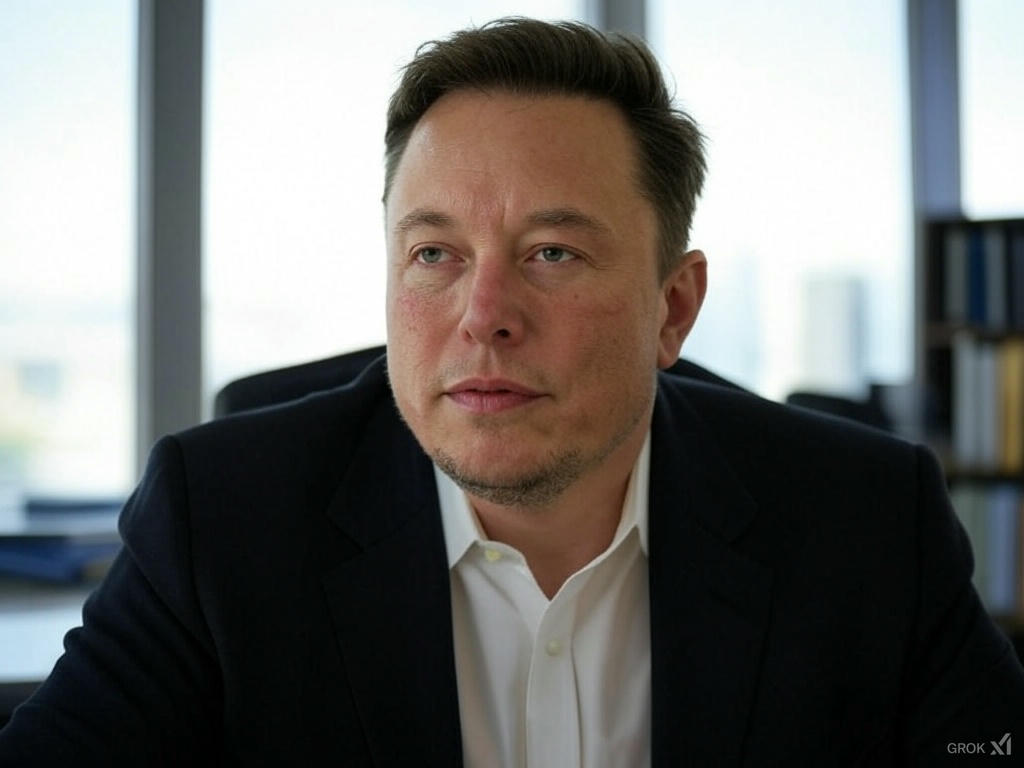
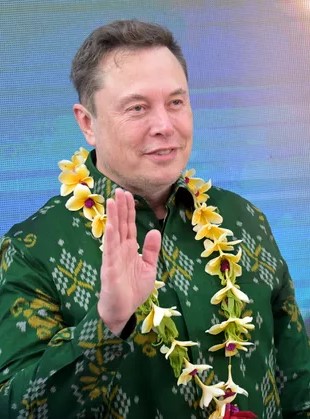
Elon Musk, the enigmatic billionaire entrepreneur, inventor, and visionary, has become a household name synonymous with innovation and audacity. Born on June 28, 1971, in Pretoria, South Africa, Musk’s journey from a curious, tech-obsessed child to one of the world’s most influential figures is nothing short of extraordinary. With a net worth fluctuating in the hundreds of billions, he’s the mastermind behind revolutionary companies like Tesla, SpaceX, Neuralink, and The Boring Company, each pushing the boundaries of what humanity believes is possible. His relentless drive has seen him transform the electric vehicle industry, pioneer reusable rocket technology, and even dream of colonizing Mars—ambitions that sound like science fiction but are steadily becoming reality under his leadershi
Musk’s early life hinted at his future brilliance. After teaching himself to code at age 10, he sold his first video game for $500 by 12—an omen of the entrepreneurial spirit that would later define him. Fleeing South Africa at 17 to avoid mandatory military service, he landed in Canada before making his way to the United States, where he earned degrees in physics and economics from the University of Pennsylvania. His first major success came with Zip2, a software company he co-founded and sold for nearly $300 million in 1999. That windfall fueled his next venture, X.com, which evolved into PayPal and cemented his fortune when eBay acquired it for $1.5 billion in 2002.
But Musk isn’t just a businessman—he’s a disruptor with a flair for the dramatic. From tweeting cryptic memes to smoking weed on a podcast, his unpredictable personality keeps the world guessing. Love him or hate him, Musk’s influence is undeniable: Tesla’s market dominance, SpaceX’s historic launches, and his bold $44 billion acquisition of Twitter (now X) in 2022 showcase a man who thrives on risk. Yet, behind the headlines lie untold stories—of sleepless nights, near bankruptcies, and a relentless quest to reshape the future. What drives this modern-day Tony Stark? And what’s the next jaw-dropping move he’s got up his sleeve? Buckle up—Musk’s saga is far from over!
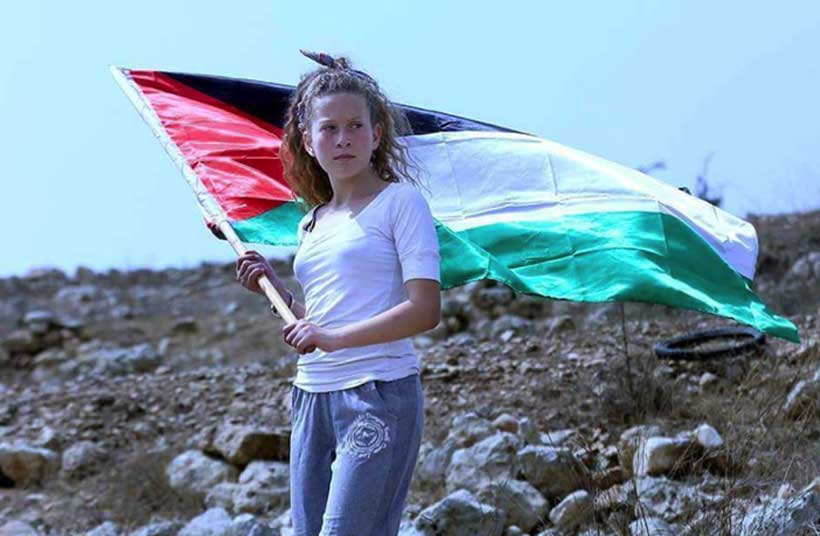
On a crisp December day in 2017, a 16-year-old Palestinian girl with wild blonde curls and a steely gaze stood in the courtyard of her family home in Nabi Salih, a small village in the Israeli-occupied West Bank. Ahed Tamimi faced two armed Israeli soldiers, her hands swinging in a flurry of slaps and shoves, her voice sharp with fury. The incident, captured on video by her mother and shared with the world, was no isolated outburst—it was the culmination of a life steeped in resistance, a moment that would propel her into global consciousness as a symbol of Palestinian defiance against occupation.
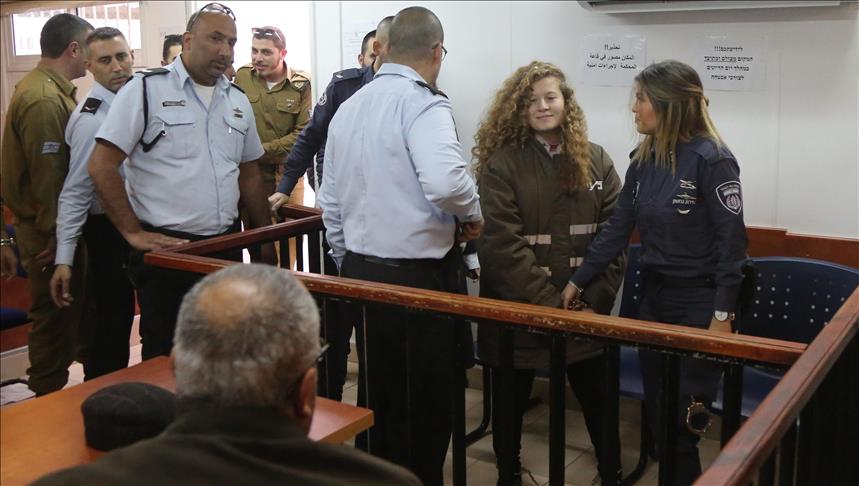
Palestinian girl Ahed Tamimi (C) challenges Israeli soldiers during a protest in the West Bank.Anadolu Agency / Getty Images file
Born on January 31, 2001, Ahed Tamimi has spent her entire existence under the shadow of Israel’s military control, where checkpoints, night raids, and the loss of land to settlements are daily realities. Her story, now etched into the annals of the Israeli-Palestinian conflict as of , is one of courage, controversy, and unrelenting struggle. To her supporters, she is a “lioness,” a young woman who embodies the resilience of a people fighting for freedom. To her detractors, she is a provocateur, a threat to security whose actions inflame an already volatile region. This article delves into her life, her family’s legacy, and the broader forces that have shaped her into an enduring icon.
Historical Context: Nabi Salih and the Roots of Resistance
To understand Ahed Tamimi, one must first grasp the world she inhabits. Nabi Salih, a village of under 600 people nestled 20 kilometers northwest of Ramallah, has been a microcosm of Palestinian resistance since the late 2000s. The catalyst came in 2009, when the nearby Israeli settlement of Halamish, established in 1977 on land Palestinians claim as theirs, annexed a crucial freshwater spring long used by Nabi Salih’s residents. This act, emblematic of broader settlement expansion across the West Bank, sparked weekly protests organized by the village’s Popular Struggle Coordination Committee, co-founded by Ahed’s father, Bassem Tamimi.
The West Bank itself has been under Israeli military occupation since the 1967 Six-Day War, when Israel captured it from Jordan along with East Jerusalem, Gaza, and the Golan Heights. The Oslo Accords of the 1990s promised a path to Palestinian statehood, dividing the West Bank into Areas A, B, and C, with Israel retaining full control over 60% of the territory (Area C), including Nabi Salih. Yet, decades later, settlement growth has accelerated—by 2025, over 700,000 Israeli settlers live in the West Bank and East Jerusalem, according to Peace Now, often on land expropriated from Palestinians. For Nabi Salih, the loss of the spring was not just a practical blow but a symbolic one, galvanizing a community to resist.
Ahed Tamimi exits an armored military vehicle as she is released by the Israeli army after serving an eight month sentence at the entrance of her village of Nebi Saleh in the West Bank, July 29, 2018. AP Photo/Nasser Shiyoukhi)
Bassem Tamimi envisioned the protests as nonviolent, drawing inspiration from figures like Martin Luther King Jr. and Mahatma Gandhi. Yet, the Israeli military’s response—tear gas, rubber bullets, and live ammunition—often turned peaceful marches into violent clashes. By 2017, the Tamimi family estimated that over 150 military raids had targeted their home, a testament to their role as protest leaders and the price they paid for it.
Early Life: A Childhood Forged in Struggle
Ahed Tamimi was born into this volatile reality, the eldest daughter of Bassem and Nariman Tamimi. Her father, a wiry man with a sharp intellect, had been arrested at least nine times by 2017, spending over three years in Israeli prisons for charges ranging from organizing protests to stone-throwing—accusations he often contested as fabricated. Nariman, a fierce matriarch, was no less committed, frequently filming the military’s actions to document abuses, a practice that would later amplify Ahed’s confrontations.
Growing up, Ahed knew no other life. Her earliest memories include the acrid sting of tear gas and the sound of soldiers banging on the door. “I don’t remember a time when the occupation wasn’t part of our lives,” she wrote in her 2022 memoir, They Called Me a Lioness: A Palestinian Girl’s Fight for Freedom, co-authored with journalist Dena Takruri. Her childhood was punctuated by loss—cousins injured or killed, family members detained—and by moments of defiance that would define her.
At age 11, in August 2012, Ahed gained her first taste of global attention. During a protest, her mother was arrested, and Ahed was filmed confronting soldiers, her small frame dwarfed by their gear as she shouted and raised her fists. The video spread rapidly online, earning her praise from Palestinian President Mahmoud Abbas, who called her a “brave girl.” That same year, another incident saw her trying to free her older brother from detention, her image plastered across media with headlines like “The Girl Who Stood Up.” Then-Turkish Prime Minister Recep Tayyip Erdoğan invited her to Turkey, a trip that cemented her status as a child symbol of resistance.
In 2015, at 14, she was recorded biting and hitting a soldier who pinned her younger brother to the ground for allegedly throwing stones—an act that further fueled her reputation. These early encounters were not orchestrated stunts, as some critics claimed, but visceral reactions rooted in a family ethos of resistance. “We were taught to stand up, not to be silent,” Ahed later told Al Jazeera.
The 2017 Incident: A Slap Heard Around the World
The defining moment of Ahed’s life came on December 15, 2017. That morning, her 15-year-old cousin Mohammed Tamimi was shot in the head with a rubber-coated bullet during a Nabi Salih protest, leaving him in a coma with part of his skull shattered. Hours later, two Israeli soldiers entered the Tamimi courtyard, ostensibly to monitor the village. Ahed, enraged by her cousin’s injury and the soldiers’ presence, confronted them. The video, filmed by Nariman, shows her slapping and kicking the soldiers, who remain largely impassive, their rifles slung over their shoulders.
Ahed Tamimi / Image Source Different Israeli Media Agencies Loaded This Image
Within hours, the footage went viral, amassing millions of views. For Palestinians, it was a raw expression of their frustration—here was a teenage girl, unarmed, facing down the might of an occupying army. Protests erupted globally, with hashtags like #AhedTamimi and #FreeAhed trending. Murals of her appeared in Gaza, Belfast, and Los Angeles, often paired with slogans like “Resist” or “Freedom.”
In Israel, the reaction was starkly different. Politicians like Naftali Bennett, then education minister, demanded she “end her life in prison,” while others labeled her a “terrorist.” Right-wing commentators dubbed her “Shirley Temper,” mocking her defiance as childish tantrums. The military arrested her on December 19 in a predawn raid, followed by Nariman and cousin Nour. Charged with assault, incitement (based on her call in the video for resistance), and prior stone-throwing, Ahed faced Israel’s military court system.
The trial was a spectacle. Held in Ofer military prison, it drew international observers who criticized the proceedings as a sham—military courts convict over 99% of Palestinians, per B’Tselem data. Ahed’s plea bargain in March 2018 resulted in an eight-month sentence and a 5,000-shekel fine (about $1,400 USD). She served her time in HaSharon prison, emerging on July 29, 2018, to a crowd of supporters waving Palestinian flags.
Life After 2018: A Voice on the Global Stage
Prison did not silence Ahed—it amplified her. Upon release, she declared her intent to study law, aiming to “hold the occupation accountable internationally,” as she told reporters. Denied a U.S. visa in 2016 for a planned tour titled “No Child Behind Bars,” she now traveled to Spain, France, and Jordan, speaking at rallies and universities. Her message was clear: the occupation must end, and Palestinian youth deserve freedom.
In 2022, while pursuing a B.A., Ahed released They Called Me a Lioness. The memoir, written with Dena Takruri, offers a firsthand account of her life—nights interrupted by raids, the trauma of detention, and her resolve to fight on. Critics lauded its emotional depth; Kirkus Reviews called it “a trenchant testimony,” and it won a Palestine Book Award. Yet, some, like The Jerusalem Post, argued it oversimplified the conflict, lacking Israeli perspectives.
Her prominence came at a cost. The Tamimi family faced ongoing harassment—settlers vandalized their home, and Bassem’s arrests persisted, seen by many as leverage to quiet Ahed. “They want to break us, but they won’t,” she told CNN in 2019.
The 2023 Arrest: War and Controversy
The Israel-Hamas war, ignited on October 7, 2023, by Hamas’s attack on Israel, brought Ahed back into the spotlight. On November 6, amid a West Bank crackdown detaining over 2,000 Palestinians, she was arrested again. The military pointed to an Instagram post under her name, allegedly threatening to “slaughter” settlers and invoking the Holocaust—a message her family insisted she didn’t write, claiming her account was hacked. With dozens of fake profiles mimicking her online, their defense was plausible but unproven.
Held under administrative detention—Israel’s practice of imprisoning without charge, condemned by groups like Amnesty International—Ahed endured weeks of isolation. Released on November 29, 2023, in a prisoner swap with Hamas, she returned alleging beatings and sleep deprivation. She claimed interrogators threatened her father’s life—Bassem, detained separately, remained in custody into 2025—to silence her. “Their cruelty only makes us stronger,” she told Al Jazeera.
Legal and Ethical Dimensions: A System Under Scrutiny
Ahed’s arrests spotlight Israel’s military justice system. Unlike Israeli settlers, who face civilian courts, Palestinians in the West Bank fall under military law, a dual system critics call apartheid-like. Administrative detention, used against Ahed in 2023, allows indefinite holds based on secret evidence, with over 1,000 Palestinians detained this way by late 2023, per B’Tselem. Human Rights Watch has documented abuses in these facilities, including torture, aligning with Ahed’s post-release claims.
Her 2017 slap raised ethical questions: Was it violence or resistance? Legal scholar Noura Erakat argues it’s the latter, contextualizing it against decades of dispossession. Israeli officials counter that such acts escalate tensions, justifying their response. The debate remains unresolved, reflecting the conflict’s moral ambiguity.
Global Reactions: A Polarized World
Ahed’s story has elicited starkly divided responses. In 2018, South Africa’s Desmond Tutu praised her as “a shining example of resistance,” while Spain’s Podemos party invited her to speak. Conversely, U.S. commentators like Fox News’ Sean Hannity called her a “propaganda tool.” During her 2023 detention, PEN International demanded her release, while Israel’s Itamar Ben-Gvir celebrated it as a security win.
Her image—blonde, youthful, defiant—challenges Western stereotypes, amplifying her reach. “She’s not what people expect a Palestinian fighter to look like, and that’s why she’s so powerful,” activist Abby Martin told Empire Files.
Conclusion: The Lioness Endures
As of February 22, 2025, Ahed Tamimi, now 24, remains a lightning rod. Her plans to wield law against the occupation signal a maturing activism, but with Bassem still detained and the West Bank in turmoil, her fight is personal as much as political. She is a paradox—a child of conflict who became its face, a symbol of hope and division. In her own words from They Called Me a Lioness, “We are not victims; we are survivors who resist.” Whether lioness or lightning rod, Ahed’s roar continues to echo, a testament to a struggle that refuses to fade.
Maulana Abul Kalam Azad stands as one of the most remarkable figures in the history of India’s struggle for independence—a scholar, journalist, and political leader whose intellectual prowess and foresight left an indelible mark on the subcontinent’s trajectory. Born on 11 November 1888 in Mecca, in what is now Saudi Arabia, to an Indian family displaced by the fallout of the 1857 Indian Rebellion, Azad’s life was shaped by a deep commitment to unity, education, and the rejection of divisive ideologies. Among his many contributions, perhaps his most striking legacy is his prescient prediction in 1946 of the eventual fragmentation of Pakistan, a prophecy that came to fruition with the establishment of Bangladesh in 1971. This article explores Azad’s life, his unwavering advocacy for Hindu-Muslim unity, and the extraordinary accuracy of his warnings about the instability of a nation founded on religious separatism.
Early Life and Intellectual Awakening
Azad’s family history was rooted in the upheavals of colonial India. After the failed 1857 uprising against British rule, his father, Maulana Khairuddin, relocated to Mecca, where Azad was born into an environment steeped in Islamic scholarship and Indian cultural heritage. In 1898, when Azad was ten, the family returned to India and settled in Calcutta (now Kolkata). From a young age, Azad displayed an insatiable curiosity and a profound love for books. By the age of twelve, he was already contributing articles to children’s magazines, showcasing an early talent for writing that would later define his revolutionary influence.
Educated primarily at home under his father’s tutelage, Azad mastered Arabic, Persian, Urdu, and Islamic theology, while also teaching himself English and delving into Western philosophy. This eclectic education shaped his worldview, blending traditional Islamic thought with modern ideas of nationalism and unity. By his late teens, Azad had emerged as a prolific writer and thinker, determined to use his pen as a weapon against colonial oppression and communal division.
The Revolutionary Voice of Al-Hilal
In 1912, at the age of 24, Azad launched Al-Hilal, a weekly Urdu magazine that became a clarion call for Indian nationalism and Hindu-Muslim unity. Published from Calcutta, Al-Hilal was revolutionary in its tone and content, urging Indians—regardless of religion—to unite against British rule. Its bold editorials and incisive critiques of colonial policies quickly drew the ire of the British authorities. Within two years, the magazine’s security deposit was confiscated, heavy fines were imposed, and it was shut down in 1914. Undeterred, Azad briefly revived his efforts with another publication, Al-Balagh, but the British response was swift and severe.
In 1916, Azad was ordered to leave Bengal and was interned in Ranchi (in present-day Jharkhand) until 1920. This period of confinement only strengthened his resolve. Far from silencing him, it provided time for reflection and cemented his belief that India’s freedom depended on the solidarity of its diverse communities, particularly Hindus and Muslims—a vision that would guide his political career.
Champion of Unity Over Division
Azad’s entry into the mainstream political arena coincided with the rise of the Indian National Congress, which he joined with a fervent commitment to its secular ethos. He emerged as a staunch opponent of the Muslim League’s Two-Nation Theory, which posited that Hindus and Muslims constituted separate nations requiring distinct homelands. For Azad, such an idea was anathema to India’s pluralistic heritage and a betrayal of the shared struggle against British rule.
In a powerful speech delivered in Agra in 1921, Azad articulated the core mission of Al-Hilal: “My first objective is Hindu-Muslim unity. I wish to tell Muslims that it is their duty to establish a bond of love and brotherhood with Hindus so that we may build a successful nation together.” This conviction was not mere rhetoric; Azad believed that unity was more vital than independence itself. In his presidential address at a special Congress session in 1923, he famously declared, “Even if a goddess descended from the heavens and offered us freedom within 24 hours in exchange for Hindu-Muslim unity, I would reject it. A delay in freedom might cause us some harm, but if our unity is broken, it will be a loss to all of humanity.”
At a time when nationalist sentiments were increasingly entangled with religious identities, Azad envisioned an India where religion, caste, sect, or gender would not obstruct equal rights—a radical stance that set him apart from many contemporaries.
Opposition to the Muslim League and Partition
As the Muslim League, led by Muhammad Ali Jinnah, gained traction with its demand for Pakistan, Azad became its most vocal critic within the Congress. On 15 April 1946, as Congress president, he delivered a scathing assessment of the Two-Nation Theory: “I have examined the Muslim League’s demand for a separate country in the form of Pakistan from every angle and concluded that this decision will not only be detrimental to India but will also exact a heavy toll on Muslims themselves. Far from being a solution, it will create more problems.”
Azad fought tirelessly to prevent the partition of India, warning of the catastrophic consequences of division. When the contours of partition became clear in 1946, and both the Congress and the Muslim League appeared resigned to it, Azad issued a chilling prophecy: “This new country, built on the foundation of hatred, will survive only as long as that hatred persists. When the fire of partition cools, this nation will begin to split into pieces.” He foresaw that Pakistan, conceived in enmity, would struggle to cohere as a unified state—an insight that would prove uncannily accurate.
The Prediction of Bangladesh’s Emergence
Azad’s warnings about Pakistan’s future were not vague generalities; they were specific and prescient. Before Pakistan’s creation in 1947, he predicted that it would not remain united, that its political leadership would be overshadowed by military rule, that it would sink under debt, and that it would face conflicts with neighbouring countries. Most strikingly, he anticipated the rise of regional identities that would fracture the nation. He cautioned that the imposition of a singular national identity based on religion would falter against the cultural and linguistic diversity of its people.
This foresight was dramatically validated in 1971, when East Pakistan—home to a Bengali-speaking majority—broke away to form Bangladesh after a bloody war of independence. The seeds of this schism were sown in Pakistan’s early years, as the dominance of West Pakistan’s Urdu-speaking elite alienated the Bengali population, who comprised over half of Pakistan’s citizens yet were marginalized politically and economically. Azad’s 1946 prediction that “this new country will begin to split into pieces” found its clearest expression in Bangladesh’s emergence, a testament to his understanding of the fragility of a state built on division rather than unity.
Warnings for Indian Muslims and Pakistan’s Future
Azad’s vision extended beyond Pakistan’s borders. He urged Indian Muslims not to migrate to Pakistan, arguing that their exodus would weaken the Muslim community in India rather than strengthen the new nation. “If you cross the border, Pakistan will not become stronger; instead, Indian Muslims will be weakened,” he cautioned. He foresaw that in Pakistan, migrants from India—later termed Muhajirs—would be treated as outsiders, while indigenous populations would assert their regional identities. “The time is not far when those already living in Pakistan will rise for their regional identity, and those coming from India will be seen as uninvited guests,” he warned.
Addressing Muslims directly, Azad emphasized the shared national bond with Hindus: “Though Hindus differ from you in religion, they are not different in terms of nationhood and patriotism. In Pakistan, however, you will be seen as citizens of another nation.” His words proved prophetic as Pakistan grappled with internal strife—between Muhajirs and local communities, and between provinces like Sindh, Balochistan, and Punjab—while Indian Muslims navigated their identity in a secular state.
Legacy and Final Years
Maulana Azad’s life was a testament to his principles. He served as India’s first Education Minister after independence, laying the foundation for institutions like the Indian Institutes of Technology (IITs) and championing universal education. Yet, the partition he had fought to prevent remained a source of profound sorrow. On 22 February 1958, he passed away in Delhi, leaving behind a legacy of intellectual rigor, moral courage, and an unyielding belief in unity.
Azad’s prediction of Bangladesh’s establishment in 1946 underscores his extraordinary prescience. He understood that nations forged in hatred and exclusion could not endure, a lesson borne out by Pakistan’s division less than 25 years after its birth. His advocacy for Hindu-Muslim unity, though unheeded in his time, remains a powerful vision for a pluralistic society. In an era of rising division, Azad’s life and words continue to resonate, reminding us that true strength lies in solidarity, not separation.
( Writer : Sheikh Mohammad Isa Famous Journalist and Writer From India )
Honda Motorcycle & Scooter India (HMSI) has kicked off 2025 with a bang, unveiling the updated Hornet 2.0 for the Indian market. This latest iteration brings a slew of enhancements, including an OBD2B-compliant engine, refreshed aesthetics, and modern features, all wrapped in a package starting at Rs 1.57 lakh (ex-showroom). Available at Honda’s Red Wing and BigWing dealerships, the 2025 Hornet 2.0 aims to solidify its position in the fiercely competitive 200cc motorcycle segment. Let’s dive into the details of this exciting launch.
1. Honda’s Commitment to Innovation
HMSI has been diligently updating its lineup to meet evolving emission norms and customer expectations. The 2025 Hornet 2.0 is a testament to this commitment, blending performance with sustainability through its OBD2B-compliant powertrain.
2. Pricing and Availability
Priced at Rs 1.57 lakh (ex-showroom), the Hornet 2.0 remains competitively positioned. It’s now available for purchase across India via Honda’s extensive Red Wing and premium BigWing dealership networks.
3. Aesthetic Evolution: Design Updates
The 2025 Hornet 2.0 retains its aggressive streetfighter stance but introduces subtle design tweaks. Sharp character lines and new graphics enhance its bold look, making it a head-turner on the road.
4. All-LED Lighting Setup
A major upgrade comes in the form of an all-LED lighting system, including the headlamp, taillight, and turn indicators, improving visibility and adding a premium touch.
5. Color Options Galore
Honda offers four striking color choices for the Hornet 2.0: Pearl Igneous Black, Radiant Red Metallic, Athletic Blue Metallic, and Mat Axis Gray Metallic, catering to diverse buyer preferences.
6. Engine: OBD2B Compliance Explained
The heart of the 2025 Hornet 2.0 is its OBD2B-compliant 184.40cc single-cylinder, 4-stroke engine. This update ensures adherence to India’s latest emission standards while maintaining performance.
7. Power and Torque Specifications
The engine delivers 16.76 hp at 8,500 rpm and 15.7 Nm of torque at 6,000 rpm, offering a balanced mix of power and efficiency for urban and highway riding.
8. Transmission and Clutch Enhancements
Paired with a 5-speed gearbox, the bike features an assist & slipper clutch, ensuring smooth gear shifts and preventing rear-wheel lockup during aggressive downshifts.
9. Feature-Packed TFT Display
A standout addition is the 4.2-inch TFT display, replacing the older LCD unit. It offers a crisp interface with customizable layouts and vital ride information.
10. Bluetooth Connectivity with Honda RoadSync
The TFT display integrates Bluetooth connectivity via the Honda RoadSync app, enabling call alerts, SMS notifications, and turn-by-turn navigation for a connected riding experience.
11. USB-C Charging Port
Keeping modern needs in mind, Honda has added a USB-C port, allowing riders to charge their devices on the go—a practical feature for long rides.
12. Honda Selectable Torque Control (HSTC)
The inclusion of Honda Selectable Torque Control enhances safety by preventing wheel slip in slippery conditions, a first for the Hornet 2.0.
13. Dual-Channel ABS for Enhanced Safety
The 2025 model comes equipped with dual-channel ABS, ensuring confident braking performance across varied terrains and weather conditions.
14. Unchanged Hardware: Suspension and Chassis
The bike retains its proven hardware, including an upside-down front fork and a rear monoshock, paired with a robust diamond-type frame for stability and agility.
15. Wheels and Tires
The Hornet 2.0 rolls on the same 17-inch alloy wheels with tubeless tires, offering a balance of grip and durability for Indian roads.
16. Competitive Landscape
In the 200cc segment, the Hornet 2.0 locks horns with rivals like the TVS Apache RTR 200 4V, Bajaj Pulsar NS200, and Yamaha MT-15, each bringing unique strengths to the table.
17. Target Audience
Aimed at young, urban riders seeking a blend of style, tech, and performance, the Hornet 2.0 appeals to enthusiasts and daily commuters alike.
18. Honda’s Market Strategy
By introducing these updates, Honda aims to capture a larger share of India’s growing premium motorcycle market while adhering to stricter environmental regulations.
19. Riding Experience Expectations
With its refined engine, advanced features, and sharp handling, the 2025 Hornet 2.0 promises an engaging ride, whether navigating city traffic or cruising on highways.
20. Environmental Impact and Future Readiness
The OBD2B compliance not only reduces emissions but also future-proofs the Hornet 2.0, aligning with India’s push toward cleaner, greener mobility solutions.
Conclusion: A Step Forward for Honda
The 2025 Honda Hornet 2.0 is a well-rounded update that strengthens its appeal in the competitive 200cc segment. With an eco-friendly engine, cutting-edge features like the TFT display and HSTC, and a refreshed design, it offers excellent value at Rs 1.57 lakh. Honda has struck a fine balance between performance, practicality, and style, making the Hornet 2.0 a compelling choice for riders in India. As the two-wheeler market evolves, this launch reaffirms HMSI’s dedication to innovation and customer satisfaction.
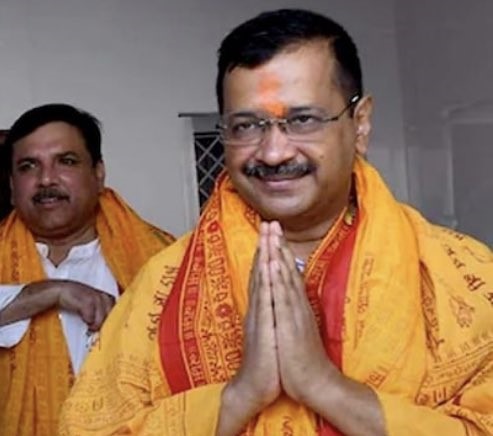
Yesterday, when Kejriwal lost in Delhi, we said that we have no regret about his defeat. Kejriwal has shown through his actions how deeply he is connected to Hindutva and how much he is against Muslims. His past also proves his connection to Hindutva. But people who only rely on Facebook and YouTube for news never take the time to research or study political awareness.
Kejriwal and his Aam Aadmi Party (AAP) have harmed Muslims in ways that remind us of the violent days of the Congress government. Why should we support another Congress-like party that could one day demolish its own version of Babri Masjid? Those who lack political awareness make a big mistake by supporting every opponent of the BJP. Right now, political wisdom says that Muslims should not become blind followers of Kejriwal’s so-called secular party in the BJP-RSS power struggle. Instead, they should research, study history, and understand the facts before supporting any politician. Do not blindly support someone just because they are against Modi.
Who is Arvind Kejriwal?
The answer is simple: Kejriwal rose to political fame through the Anna Hazare movement. Do you remember that movement? It happened before the 2014 elections and was against corruption in the Congress-led government. This movement played a key role in bringing down Manmohan Singh’s government and boosting Modi’s popularity. The Rashtriya Swayamsevak Sangh (RSS) was a major force behind this movement, and Kejriwal entered politics through this same RSS-backed protest. His role in bringing Modi to power should be enough reason to stay away from him.
However, we will still discuss some of Kejriwal’s major actions to help our readers understand his true nature.
Silence on the Release of Bilkis Bano’s Rapists
When the BJP released the rapists of Bilkis Bano, Kejriwal and AAP refused to take a stand. He remained silent because he did not want to lose Hindu votes. This is an example of the worst kind of political selfishness.
Support for Modi Against Kashmiris
Kejriwal supported Modi and Amit Shah in removing Article 370, which stripped Kashmiris of their special rights. Instead of opposing this injustice, he sided with the BJP government.
Demand for Hindu Gods on Indian Currency
In October 2022, Kejriwal asked the central government to print images of Goddess Lakshmi and Lord Ganesha on Indian currency notes. He claimed that India’s economy could only improve with the blessings of Hindu gods. This is a clear step towards making India a Hindu Rashtra (Hindu nation), which is the core agenda of the RSS. By making this demand, Kejriwal openly supported the Hindu nationalist agenda.
Role in Jahangirpuri Riots
In April 2022, during the Hanuman Shobha Yatra violence in Jahangirpuri, Kejriwal sided with Hindutva rioters and blamed Muslims for the violence. His statements matched those of the BJP and Vishwa Hindu Parishad. After the riots, bulldozers were used to demolish Muslim homes, but Kejriwal did nothing to stop it.
If people had realised Kejriwal’s anti-Muslim face during the Delhi riots, he would not have dared to act against Muslims in Jahangirpuri. However, he knows that Muslims in Delhi see no option but to support him, which is why he treats them like his political slaves.
Delhi Riots and Kejriwal’s Role
During the 2020 Delhi riots, which were planned to crush the anti-CAA protests, many Muslims were killed. Kejriwal did nothing to stop the violence. In fact, some reports suggest that he was aware of the planning behind the riots.
Before this, Kejriwal had said that if he controlled the Delhi Police, he would have removed the Shaheen Bagh protest. He also supported the arrest of student leader Sharjeel Imam and even approved the draconian UAPA law against activist Khalid Saifi. This is the same Khalid Saifi who once gave Kejriwal water and a place to sit when no Brahmin politician cared about him. Despite this, Kejriwal allowed him to be jailed and tortured.
Attack on Tablighi Jamaat
Kejriwal played a key role in demonising the Tablighi Jamaat during the COVID-19 pandemic. He shut down the Nizamuddin Markaz and falsely blamed the Jamaat for spreading the virus across India. No other politician damaged the image of Tablighi Jamaat more than Kejriwal did.
Labeling Muslims as Illegal Immigrants
After the Jahangirpuri violence, AAP made the shocking claim that “Bangladeshi and Rohingya infiltrators” were responsible for the riots. This is the same accusation that the BJP and RSS have been making against Indian Muslims for years. By promoting this narrative, Kejriwal’s party put Delhi’s Muslims in serious danger.
Even senior journalist Nikhil Wagle, who was previously soft on AAP, was shocked by this statement. He wrote that Kejriwal’s claim about Bangladeshis and Rohingyas would hurt Muslims and help the BJP in the long run. We all know that the BJP wants to use NRC and CAA to target Indian Muslims under the excuse of identifying illegal immigrants. Kejriwal is now supporting this dangerous plan.
Conclusion
There are many more examples that show how Kejriwal is no different from the BJP when it comes to Muslims. But the main message is clear: Kejriwal is the RSS’s new project. He is a cruel, hateful Hindutva politician who helped remove Manmohan Singh and bring Modi to power. Do not make him your leader. Break free from the mindset of always choosing a Hindu politician as your political master. This mentality has led to the humiliation of Muslims in India’s political system.
If Kejriwal ever gets the chance, he will definitely demolish his own Babri Masjid.
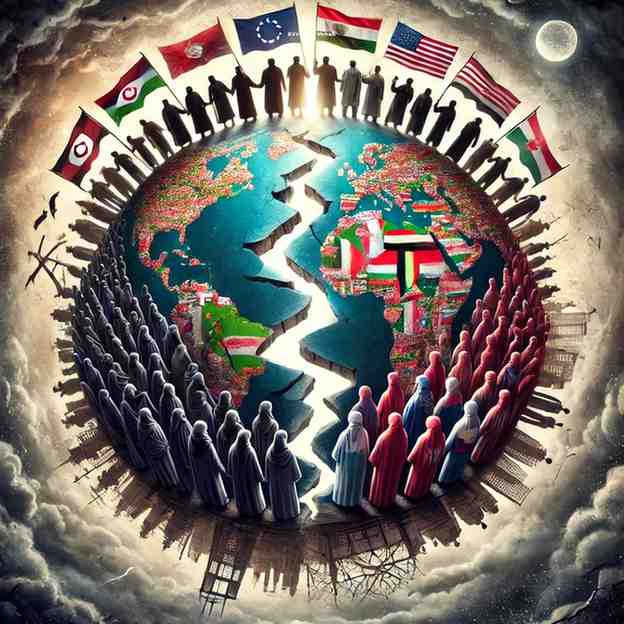
The recent statement by former U.S. President Donald Trump, suggesting the relocation of Gaza’s population to another country, has sparked a firestorm of controversy. While Israel has reportedly welcomed the idea, the reaction—or lack thereof—from the Islamic world has been deafening in its silence. This silence is not just a momentary lapse but a glaring reflection of the deep divisions and systemic failures within the Muslim world, often referred to as the Ummah. Trump’s proposal, though widely condemned as inhumane and impractical, has laid bare the fractured state of Muslim leadership and the growing disconnect between rulers and their people.
Trump’s Controversial Proposal
Trump’s statement, made during a private meeting and later leaked to the media, proposed resettling the people of Gaza in another country as a “solution” to the ongoing Israeli-Palestinian conflict. The idea was immediately criticized by human rights organizations and international observers, who labeled it as a violation of international law and the rights of Palestinians to their homeland. However, what stood out more than the proposal itself was the muted response from the Islamic world. While ordinary Muslims expressed outrage on social media and in public forums, the official response from Muslim-majority nations was conspicuously absent or tepid at best.
The Silence of Muslim Leaders
The silence of Muslim leaders in the face of such a provocative statement has raised serious questions about their commitment to the Palestinian cause. Historically, the Palestinian issue has been a unifying factor for the Muslim world, symbolizing resistance against occupation and injustice. However, in recent years, the solidarity once shown by Muslim nations has eroded, replaced by geopolitical alliances and economic interests. Many Muslim-majority countries have normalized relations with Israel, often under pressure from Western powers, particularly the United States. This normalization has come at the cost of sidelining the Palestinian struggle, leaving the people of Gaza to fend for themselves.
The lack of a unified, forceful response to Trump’s proposal underscores the deep divisions within the Muslim world. While countries like Iran and Turkey have been vocal in their support for Palestine, others, particularly those in the Gulf region, have remained silent or offered only token condemnations. This disparity highlights the growing rift between nations that prioritize ideological solidarity and those that prioritize economic and strategic partnerships with the West.
The Anger of the Muslim Public
In stark contrast to the silence of their leaders, the Muslim public has expressed widespread anger and frustration. Social media platforms have been flooded with hashtags condemning Trump’s statement and calling for action to support Gaza. Protests have erupted in several countries, with demonstrators demanding that their governments take a stronger stance against what they see as a blatant disregard for Palestinian rights. This disconnect between the rulers and the ruled is not new but has become increasingly pronounced in recent years.
The anger of the Muslim public is not just directed at Trump or Israel but also at their own leaders, who are perceived as being complicit in the oppression of Palestinians. Many see the silence of Muslim rulers as evidence of their subservience to Western powers, particularly the United States. This perception has fueled a sense of betrayal and disillusionment, further deepening the divisions within the Ummah.
A Divided Ummah: Causes and Consequences
The divisions within the Muslim world are not merely political but also ideological, sectarian, and economic. Sectarian conflicts, such as the rivalry between Saudi Arabia and Iran, have undermined efforts to present a united front on issues like Palestine. Economic disparities have also played a role, with wealthier nations prioritizing their own interests over collective action. Additionally, the lack of strong, visionary leadership has left the Muslim world fragmented and unable to respond effectively to external challenges.
The consequences of this division are far-reaching. The inability to present a unified stance on critical issues like Palestine weakens the Muslim world’s influence on the global stage. It also emboldens external powers to take actions that undermine the rights and dignity of Muslims, as seen in Trump’s proposal. Moreover, the growing disconnect between rulers and their people threatens the stability of many Muslim-majority countries, as public discontent continues to rise.
A Call for Unity and Action
The silence of the Islamic world in the face of Trump’s Gaza proposal is a wake-up call for Muslim leaders and communities alike. It is a reminder that the unity of the Ummah cannot be taken for granted and that the Palestinian cause remains a litmus test for the Muslim world’s commitment to justice and human rights. To address these challenges, Muslim leaders must prioritize the interests of their people over geopolitical alliances and work towards greater unity and cooperation.
Ordinary Muslims, too, have a role to play. By holding their leaders accountable and advocating for collective action, they can help bridge the divisions within the Ummah and ensure that the voices of the oppressed are heard. The Palestinian cause is not just a political issue but a moral one, and it is incumbent upon the Muslim world to stand together in defense of justice and dignity.
Conclusion
Trump’s proposal to resettle the people of Gaza may have been dismissed as impractical and inhumane, but it has exposed the deep divisions and systemic failures within the Muslim world. The silence of Muslim leaders in the face of such a provocative statement is a stark reminder of the challenges facing the Ummah. However, it is also an opportunity for reflection and action. By addressing the root causes of these divisions and working towards greater unity, the Muslim world can reclaim its voice and reaffirm its commitment to justice, not just for Palestinians but for all oppressed people. The time for silence is over; the time for action is now.