When Saffron Bloomed Beyond Pampore: A Nostalgic Journey Through Kashmir’s Golden Fields

Saffron Seeds

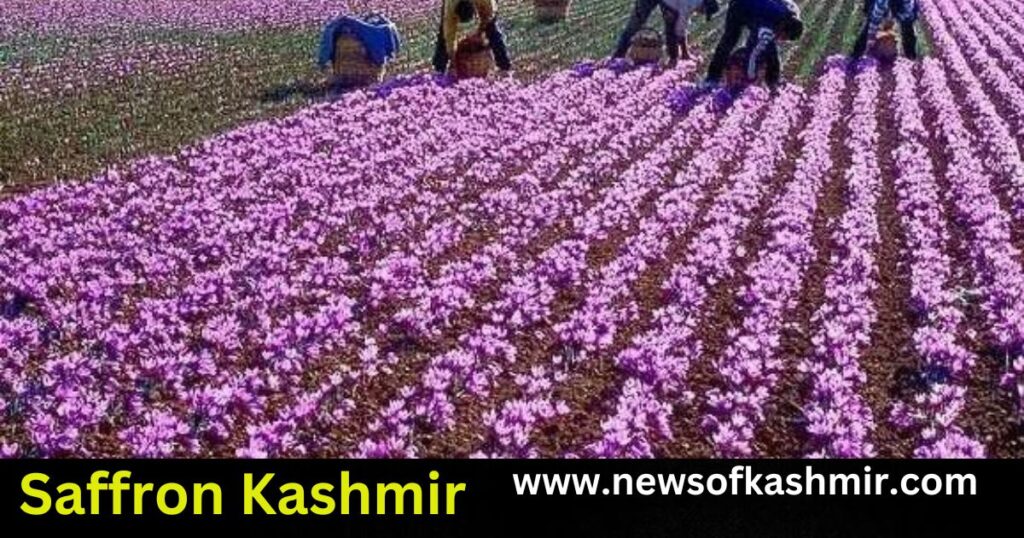
There was a time when saffron—the golden spice of Kashmir—wasn’t just grown in Pampore. From the early 80s to the mid-90s, it coloured the karewas of many villages like a purple dream. Back then, our childhood wasn’t about carefree laughter or idle play. It was about agricultural chores, hard work, and yes—saffron.Click Here To Follow Our WhatsApp Channe

October days were spent in the fields, plucking those delicate blossoms. Nights turned into long hours of separating the red stigmas by hand—our eyes half-closed, our backs aching, but the hearts of our parents filled with quiet pride. I still remember, our family would produce heaps of saffron, selling it at around ₹100 per tola—a decent amount for the time, though it never quite matched the labour behind it.

National Saffron Mission

But saffron cultivation wasn’t easy. Rodents were the biggest enemies. We dug holes, stuffed them with chilli smoke & sometimes used poison baits to control them. Once, sometime in the late 80s, I was digging a rat hole when suddenly, instead of a rodent, a huge snake rose up before me. I froze for a second, dropped my tool (بیل), & ran away quickly!

Another day, in the early 90s, my cousin faced worse luck—he was digging a similar hole when someone accused him of making an underground hideout! That was the last time our family took the rodent issue seriously—we simply gave up managing them.
Then came the dry years of the mid to late 90s — a time that has devastating effects on the crops grown on Karewa. Prolonged dryness damaged a large number of almond & plum trees, and the saffron crop too began to suffer. With no borewells around those days & the karewas gradually losing their moisture, the land that once glowed purple in October slowly turned pale and tired.

Finally, the Yields declined sharply & slowly and saffron corms didn’t disappear only from the soils but it disappeared from our villages—leaving only memories behind.

We grew saffron as both a standalone crop & an intercrop under walnuts, almonds, & plums. We had a particular 32-kanal “nad-ناڈ” (as we called it in Kashmiri) on Karewa land filled with walnut trees that gave the excellent yields of saffron. Perheps due to topography, it would recive lesser heat, so moisture remained available at critical periods of time for the cf crop. The beauty was—saffron grew in winter when trees stood leafless, letting sunlight reach to the intercrop.

Those were the days — when our hands smelled of soil and saffron, & as kids, we’d secretly curse the corms that stole our holidays. Days went in plucking flowers, nights in separating crimson threads. Now, when I see “sensational news” of saffron beyond Pampore made for likes and views, I just smile — & remember those saffron days that left behind fragrance, toil, & memories to cherish forever.

Javid Ahmad Dar Says Centre’s Special Package for Affected Farmers Likely to Be Announced Soon

Javid Ahmad Dar

Minister for Agriculture Production, Rural Development & Panchayati Raj, Cooperative and Election Departments, Javid Ahmad Dar on Wednesday said the Government of India’s special package for farmers affected is expected to be announced soon.Click Here To Follow Our WhatsApp Channel

Speaking to reporters at SKUAST Wadura, the Minister, as per the news agency—Kashmir News Observer (KNO) said loss assessments have been completed and the proposal has been sent to the Centre.

He expressed hope that the package would be announced soon, assuring farmers of timely compensation and support.On the upcoming Rajya Sabha elections, the Minister said four nominated candidates have filed their nominations and the party is optimistic of winning all seats.

3-Day UT-Level Apex Committee Mid-Term Review of HADP Begins at SKUAST-K Shalimar

Review of HADP

A three-day Union Territory (UT)-level Apex Committee mid-term review of the Holistic Agriculture Development Programme (HADP) began today at Sher-e-Kashmir University of Agricultural Sciences and Technology of Kashmir (SKUAST-K), Shalimar.

The review meeting is being presided over by renowned agricultural scientist Dr. Mangla Rai, who is also the chairman of the Apex Committee. Senior officials, agricultural experts, scientists, and representatives from allied departments are participating in the deliberations.

Officials said the mid-term review aims to assess the implementation progress of HADP projects across Jammu and Kashmir, identify challenges, and suggest corrective measures to ensure timely achievements of set targets. The programme is expected to play a transformative role in strengthening the agri-economy of the region by focusing on modern farming practices, technological interventions, and value-chain development.

Dr. Rai, while opening the session, stressed the importance of integrated efforts between government departments, research institutions, and farmers for successful implementation. He emphasised that HADP has the potential to boost productivity, generate employment, and enhance farmers’ income across the UT.

The review meetings will continue over the next two days, covering project-specific presentations, field-level assessments, and future planning.

Hazratbal Shrine Vandalism Sparks Political, Religious Row in Jammu & Kashmir

Hazratbal Emblem Row: Waqf Board Chief Darakshan Andrabi Demands FIRs

Srinagar-Jammu Highway to Reopen for Light Vehicles After Weeks of Closure

Engineer Rashid Narrowly Escapes Attack Inside Tihar,AIP Demands Probe into Alleged Harassment

Kashmir Fruit Growers Face Heavy Losses as Highway Closure Disrupts Transport

Jammu-Srinagar Highway

Kashmir’s fruit growers are facing mounting financial losses after the closure of the Srinagar–Jammu National Highway (NH-44) for four days left hundreds of fruit-laden trucks stranded during the peak harvest season.

Trucks Stranded, Crores at Risk

From August 26, heavy rains, landslides, and road damage blocked the region’s primary all-weather trade route, halting the movement of 700–800 trucks carrying early-season fruit varieties such as Bagogosha pears, Galamast apples, and Red Ghala apples. Each truckload is valued at ₹5–9 lakh, with losses estimated in crores due to the short shelf life of the produce.

Growers like Muhammad Maqbool of Shopian voiced fears that crops may rot if traffic disruptions persist.

Sopore Mandi Sounds Alarm

According to Fayaz Ahmad Malik, President of Sopore Fruit Mandi—Asia’s second-largest wholesale fruit market—300–400 trucks were stuck at different points, threatening the livelihoods of lakhs of people tied to the fruit economy.

The crisis has been worsened by a bumper crop from Himachal Pradesh, which has driven down prices in external markets, further squeezing Kashmir’s growers.

Alternative Routes Fall Short

The Mughal Road, considered an alternative, only accommodates smaller six-tyre trucks. Larger 10- and 16-tyre vehicles, needed for bulk transport to major markets beyond Delhi, remain barred.

On August 30, the highway reopened for stranded vehicles, permitting regulated movement of trucks. Yet, Bashir Ahmad Basheer, Chairman of the Kashmir Valley Fruit Growers-cum-Dealers Union, warned that partial restoration would not be enough. “Full-scale traffic must resume to avoid further devastation,” he stressed.

Calls for Government Intervention

Fruit growers have urged the government to:

  • Prioritize fruit trucks on NH-44.
  • Permit larger trucks round-the-clock via the Mughal Road.
  • Expedite long-term alternatives for transport reliability.

Hope in Rail Cargo Service

Relief may come with the launch of the Railway Cargo Service (JPP-RCS) from Budgam to New Delhi, scheduled for late September 2025. Growers believe the service will provide faster, more dependable transport, reducing dependence on the vulnerable highway.

Kashmir Politics From Mahraja Hari Singh To Syed Ali Geelani

From Boom to Bust: How the April 22 Terror Attack Shattered Pahalgam’s Tourism Dream

Jairam Ramesh Slams PM Modi Over Foreign Visits, Says Manipur Still Awaits His Healing Presence

Modi in Japan: PM Stresses Crucial India-China Ties for Global Stability Ahead of SCO Summit in Tianjin

Vice-Chancellor of SKUAST-K, ICRISAT Team Meet CM Omar Abdullah to Discuss Key Agricultural Initiatives in J&K

ICRISAT Team

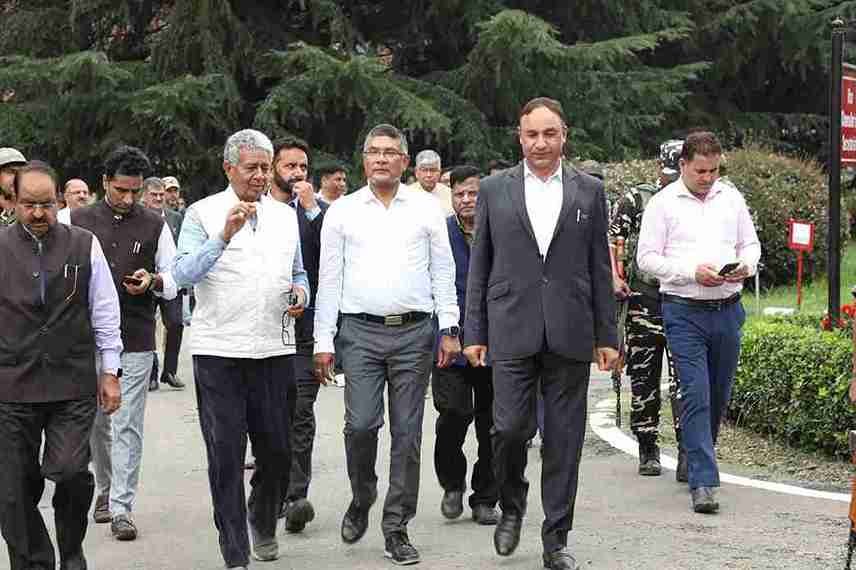
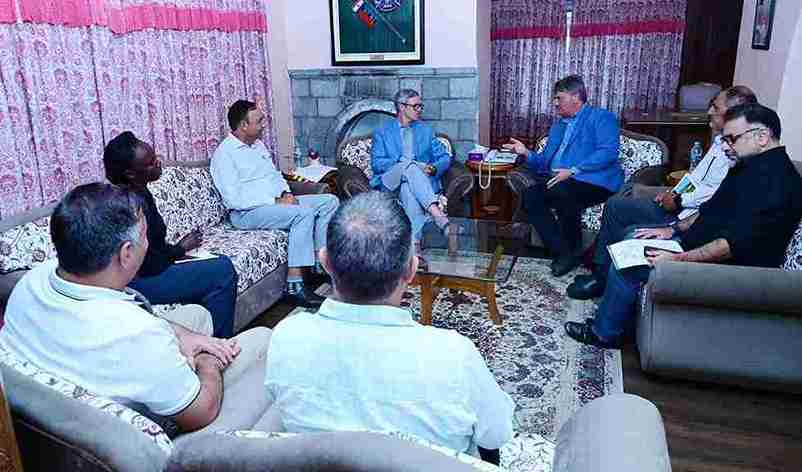
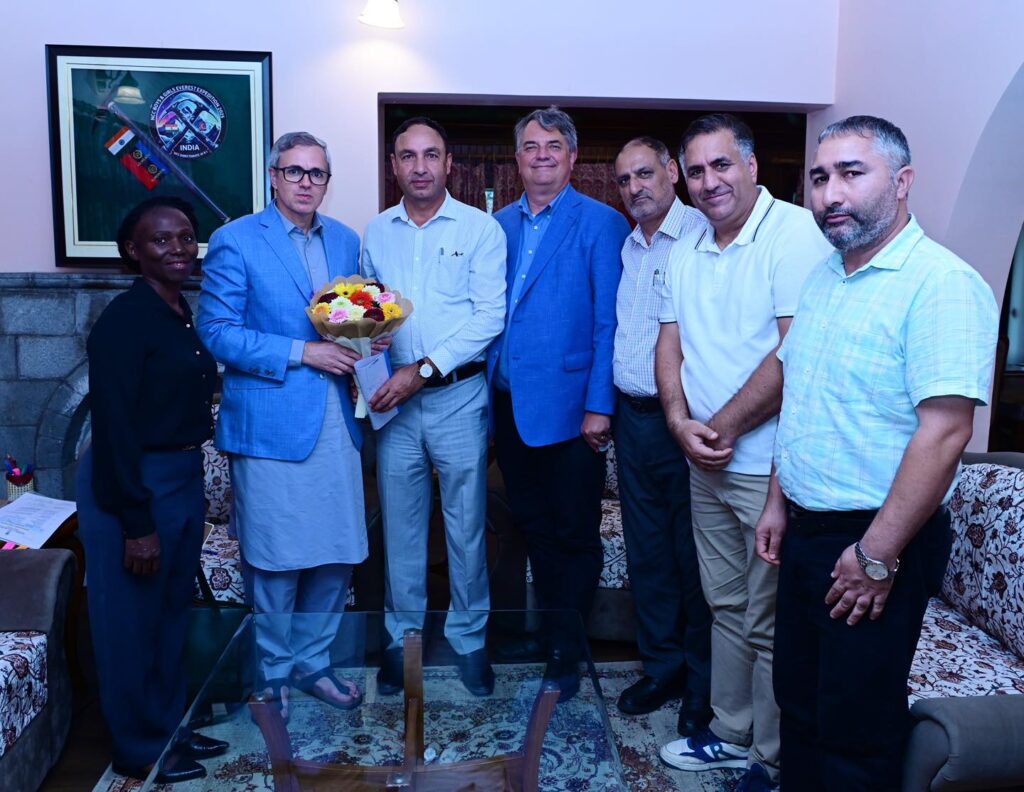
Vice-Chancellor of Sher-e-Kashmir University of Agricultural Sciences and Technology, Kashmir (SKUAST-K), along with a delegation from the International Crops Research Institute for the Semi-Arid Tropics (ICRISAT), called on Chief Minister Omar Abdullah on Wednesday to discuss key initiatives for strengthening agriculture in Jammu and Kashmir.

The meeting focused on collaborative measures aimed at boosting productivity, improving farmers’ incomes, and ensuring sustainable use of resources in the region. The Vice-Chancellor briefed the Chief Minister about SKUAST-K’s recent research achievements in horticulture, crop diversification, and livestock management. He also highlighted the challenges farmers face, including climate change, soil degradation, and lack of advanced post-harvest technologies.

Representatives from ICRISAT shared their expertise in climate-resilient crops, dryland farming systems, and water-use efficiency. They emphasised the need for introducing innovative technologies and farmer-centric models to ensure long-term food and livelihood security in Jammu and Kashmir, especially in semi-arid and hilly areas.

Chief Minister Omar Abdullah appreciated the joint efforts of SKUAST-K and ICRISAT, underlining the government’s commitment to transforming agriculture into a profitable and modern sector. He assured full support in creating policy frameworks that would enable large-scale adoption of scientific practices. “Farmers are at the heart of J&K’s economy, and empowering them with the latest research and technology is our top priority,” he said.

The discussions also explored opportunities for skill development, farmer training programs, and international collaborations to link local produce with wider markets. The CM directed concerned departments to extend cooperation with SKUAST-K and ICRISAT for timely execution of projects.

The meeting ended on a positive note with all stakeholders reaffirming their commitment to strengthen agricultural research, promote sustainable practices, and secure a better future for farming communities across J&K.

J&K Police Attach Property of Active Terrorist in Anantnag Under UAPA Crackdown

Khelo India Water Sports Festival 2025 at Dal Lake: Boost for J&K Athletes and Tourism

Ganderbal Shock: 22-Year-Old Girl Arrested for Killing Her 14-Year-Old Sister After Altercation

Rumors Claim Turkish Actress Fatima Bushra Quit Showbiz, Adopted Hijab — But No Verified Evidence Yet

SKUAST Kashmir Recruitment 2025: Apply for Assistant Registrar & Comptroller Posts – 10th August Last Date

Skuast Kashmir

The Sher-e-Kashmir University of Agricultural Sciences & Technology of Kashmir (SKUAST-K) has announced a golden opportunity for job aspirants across Jammu and Kashmir. The university has invited online applications for the recruitment of Assistant Registrar and Assistant Comptroller posts. Candidates meeting the eligibility criteria can apply through the official website www.skuastkashmir.ac.in by 10th August 2025.

📌 Key Highlights

  • Recruitment Notice: Advertisement No. 01 of 2025
  • Published On: 10th July 2025
  • Application Start Date: 15th July 2025 (10:00 AM)
  • Application End Date: 10th August 2025 (11:59 PM)
  • Mode of Application: Online only
  • Official Website: www.skuastkashmir.ac.in

🧾 Vacancy Details

Post NamePay LevelNo. of Posts
Assistant RegistrarLevel-10 (₹56,100–1,77,500)03
Assistant ComptrollerLevel-10 (₹56,100–1,77,500)02

Vacancies are distributed as per J&K Reservation Rules, covering categories such as Open Merit, RBA, SC, ST, EWS, and others.


🎓 Eligibility Criteria

Educational Qualification:

  • A Master’s Degree with at least 55% marks or an equivalent grade based on UGC guidelines.

Age Limit (as on 01.01.2025):

  • General Category: 18 to 40 years
  • Reserved Categories: 18 to 43 years
  • Persons with Disability (PwD): 18 to 42 years
  • In-service Candidates: 18 to 40 years
  • Ex-servicemen: 18 to 48 years

💳 Application Fee

  • Open Merit Candidates: ₹1000/-
  • Reserved Category Candidates: ₹700/-
  • Mode of Payment: Online (Net Banking, Credit Card, Debit Card)

Selection Process

The recruitment process consists of:

  1. Written Test – 80 marks (80%)
  2. Interview – 20 marks (20%)

📝 Note: The syllabus for the written test will be released separately on the official SKUAST-K website.


🖥️ How to Apply

  1. Visit the official website: www.skuastkashmir.ac.in
  2. Click on the “Recruitment 2025” section.
  3. Fill out the online application form with accurate information.
  4. Upload required documents, photograph, and signature.
  5. Pay the application fee.
  6. Submit the form and take a printout for future reference.

⚠️ No other mode of application will be accepted.


📢 Important Instructions

  • Applicants must go through the official notification carefully before applying.
  • Any form of misinformation or incomplete applications may lead to rejection.
  • Ensure that all documents, especially the proof of category and qualification, are uploaded properly.
  • Keep checking the official website for updates on the syllabus, exam date, and interview schedule.

📞 Help Desk

For queries related to online application submission, candidates can reach out to the university’s recruitment cell through contact details available on the website.


Conclusion:
The SKUAST Kashmir recruitment for Assistant Registrar and Assistant Comptroller posts is an excellent opportunity for postgraduates seeking a government job in the education sector. Interested candidates are encouraged to apply before the last date – 10th August 2025.


Kashmir Mother Donates Kidney to Save Son, Wins Hearts Across the Valley

Landslide Kills Two in Reasi as Relentless Rains Trigger Floods, Highway Blockades Across Jammu

Tarun Chugh Slams Farooq Abdullah for ‘ISI-Backed Politics’, Questions Silence on Kashmiri Pandit Exodus

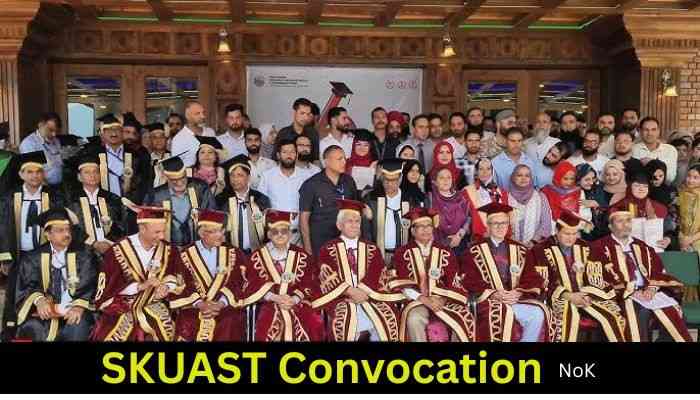
LG Manoj Sinha Highlights J&K’s Agri Transformation at SKUAST Convocation; Women Shine in Agricultural Excellence

SKUAST Convocation

Emphasising the Government of India’s commitment to developing Jammu & Kashmir as a horticultural epicenter, and aligning with the broader national vision of “Viksit Bharat” (Developed India) and “Viksit Jammu Kashmir,” Lieutenant Governor Manoj Sinha today underscored the dynamic transformation of the region’s agricultural landscape. His remarks were made during the 6th Convocation Ceremony of Sher-e-Kashmir University of Agricultural Sciences and Technology (SKUAST), held in Srinagar.

Union Minister for Agriculture and Farmers Welfare, Shivraj Singh Chouhan, was the Chief Guest at the event, which marked a significant milestone for the graduating class. The convocation highlighted key themes such as gender inclusivity, agricultural innovation, and J&K’s growing role as a hub for sustainable farming.

In his keynote address, the Lieutenant Governor praised SKUAST for its pivotal role in shaping the future of Jammu and Kashmir’s agricultural and allied sectors. He recognized the university’s contributions toward creating a competitive workforce and advancing research in agriculture.

A standout feature of the ceremony was the recognition of women students, who have made significant strides in Agricultural Science & Technology. The Lieutenant Governor celebrated their achievements, noting that women had earned the majority of the gold medals and Certificates of Merit. “Our daughters are breaking barriers and leading the way in agricultural sciences,” he remarked, reflecting on the achievements of female students at SKUAST.

In a compelling address, the Lieutenant Governor highlighted the Holistic Agriculture Development Programme (HADP) as a pioneering initiative in Jammu & Kashmir’s agricultural reform. He laid out the key goals of the government’s agricultural vision, including the transformation of the region into a commercial agricultural economy, the creation of a thriving agri-business ecosystem, and the improvement of farmers’ incomes.

“Under the visionary leadership of Prime Minister NarendraModi, agriculture has become a cornerstone of India’s economy, and this transformation is clearly evident in Jammu and Kashmir’s evolving agricultural sector,” Sinha said.

The Lieutenant Governor also urged the graduating students to apply their education and innovative ideas to drive progress in agri-tech, food technology, and other cutting-edge areas. “Your contributions will shape the future of India’s agricultural landscape,” he stressed, emphasizing that education is a powerful tool for societal change.

Commending the university’s growth, Sinha noted SKUAST’s modern infrastructure and the introduction of new research centers focusing on artificial intelligence, gene editing, regenerative medicine, and other pioneering fields. These advancements, he added, are vital for J&K’s ambition of becoming a knowledge economy.

During the ceremony, Union Minister Shivraj Singh Chouhan laid the foundation stone for a new girls’ hostel at SKUAST Kashmir, further enhancing the university’s infrastructure and support for female students pursuing higher education in agriculture.

The event was attended by several prominent personalities, including Chief Minister Omar Abdullah, Deputy Chief Minister Surinder Kumar Chouhdary, J&K Agriculture Minister Javid Ahmad Dar, along with other government officials, faculty, students, and their families.

Noushaba Jeelani: Kashmir’s ‘Saffron Queen’ Empowering Women and Taking Local Spice Global

Noushaba Jeelani

Noushaba Jeelani, popularly known as the ‘Saffron Queen of Kashmir’, has turned a traditional crop into a global sensation, with an aim of women’s empowerment. Her saffron brand ‘Noush’ exports saffron in Europe and the Middle East.

Jeelani involved hundreds of local women in saffron harvesting, packaging, and quality control, turning saffron cultivation into a sustainable livelihood. Her startup has collaborated with global e-commerce platforms and luxury wellness brands, putting Kashmir’s saffron back on the worldwide map.

Speaking to ANI, Noushaba Jeelani said, “We shifted to Saudi Arabia for five years. Seeing a decline in the saffron business, we thought to come back and give a new identity to an already running business. We did a survey and found that people did not know about adulteration.”

She said that the firm has a network of 600 farmers, and growing and sowing are done by women, as the initiative aimed at empowering them.

Discussing the challenges they faced initially, she said the lack of education among people, as they could not differentiate between Kashmiri and foreign saffron.

“We have our in-house production and processing, so quality control is in our hands, so we make sure we give unadulterated saffron. In the survey, the farmers said their monetary return isn’t included in the business. We wanted to show the process to the farmers so they get a return on their money,” she said.

She said, “We want the women who grow and process saffron to feel empowered and build a community. Basic vision is to grow more saffron, we want to take it forward and want more women to join.”

Giving a message to young girls, Jeelani said, “Today, girls are brave and focused. I would say, do what you want and take the first step. You will evolve as you enter the process… Be fearless.”

Her husband, Afan Basu, told ANI, “We took the initiative to support my wife. In families, women control the work of saffron. In parallel to our B2B business, we wanted to have a women-led, women-empowered (business). In Kashmir’s culture, women don’t open up to men, so we wanted to build a society of empowered women and transparency from top to bottom.”

On building a Kashmir brand, Basu said, “In India, there are a lot of brands which sell foreign saffron. Here we have the GI tag also, but if you go out of Kashmir and ask for saffron, they will name brands which do not belong to Kashmir… This is our identity, like apples and walnuts.” (ANI)

J&K Govt Ensures Fertilizer and Pesticide Quality Through Strict Testing Mechanism: Javed Ahmad Dar Minister for Agriculture Production

Javed Ahmad Dar

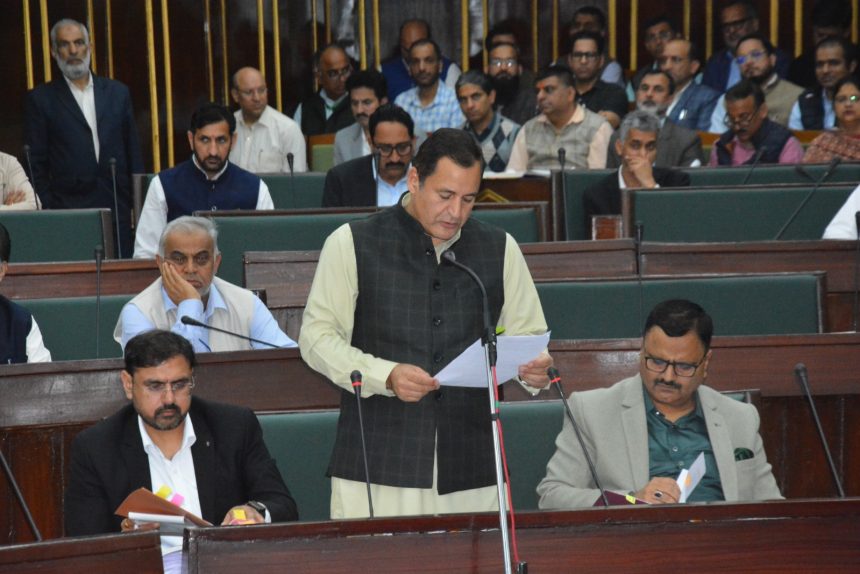
Minister for Agriculture Production, Javed Ahmad Dar, today informed the House that the consignments of fertilizers are allowed to move to Valley only after the samples test as standard.The Minister was replying to a question raised by Hilal Akbar Lone in the Legislative Assembly.

He informed the House that there is an established mechanism for sampling of the products batch-wise in respect of Fertilizers at Udhampur Rack, being tested from the quality Control Lab at Jammu and the consignments are allowed to move to Valley only after the samples test as standard. He said that there is one check point at Lower Munda where the documents of consignments are checked and the source is verified. He added that the sale is allowed only after the samples test as standard.

In addition, the samples are being taken at random from stocks of the wholesalers and retailers, which too are tested and in case the samples test as below standard, prosecution is launched against the wholesalers/ dealers/retailers, he added.

The Minister said that a similar procedure is being adopted in respect of the pesticides for proper testing before its sale to the farmers. He said that the Agriculture Production Department has an Enforcement Directorate at UT level and Law Enforcement Agencies at District level, which are vigilant to any complaints regarding substandard pesticides and fertilizers.

Sharing the details, the Minister said that 3010 and 1065 samples of pesticides and fertilizers respectively have been collected for testing during 2024-25 accordingly.Bashir Ahmad Veeri raised the supplementary to the question.

Sericulture Development Department J&K Bids Farewell to Mohammad Abdullah Bhat and Jagdesh Kumar

Sericulture Development dept

The Sericulture Development Department J&K today organised a warm farewell ceremony in honor of Mohammad Abdullah Bhat, Development officer E&T, Sericulture Dev. Deptt J&K Jammu and Mr. Jagdesh Kumar, Senior Assistant of P.E.O Jammu upon their superannuation Retirement. The event was held at the Directorate of Sericulture Development Department, Camp Office, Jammu, where colleagues, senior officers, and officials gathered to acknowledge their dedicated service and bid them adieu.

The farewell function was presided over by Ajaz Ahmad Bhat (IAS), Director, Sericulture J&K and attended by the Projector Executive Officer, Accounts Officer, Administrative Officer and staff members. Recalling their contributions over the years, speakers highlighted their unwavering commitment, professionalism and teamwork.

Speaking on the occasion, Bhat commended their outstanding work ethic, impeccable integrity, and leadership qualities. He remarked that throughout their tenure in the department, they not only demonstrated exceptional performance but also earned the admiration of their colleagues and superiors for their articulate nature and confident approach.

In his concluding remarks, Mr. Bhat extended his best wishes to Mr. Mohammad Abdullah Bhat and Jagdesh Kumar for a happy, healthy, and fulfilling post-retirement life.

Expressing his gratitude, Mr. Mohammad Abdullah Bhat and Jagdesh Kumar thanked their colleagues and the department for their unwavering support and camaraderie.