Shashi Tharoor Condemns Terrorism in Panama, Calls for Global Accountability After Pahalgam Attack

Shashi Tharoor

All-Party Delegation Leader Shashi Tharoor on Thursday said that terrorism should not be a resort to address international disputes.

While addressing the Panamanian side led by Panamanian Foreign Minister Javier Martinez Acha, Tharoor, referring to the April 22 Pahalgam terror attack, said that India will go after the perpetrators of terrorism.

“Terrorism should not be a resort of attempting to addressing international disputes. If there are problems, there are other ways of dealing with them; sending terrorists across the border is simply unacceptable, and that should be made clear. We should go after the perpetrators, the killers ourselves, and we will do so,” he said.

Tharoor said that the countries which provide a safe haven to terrorists should also be held accountable.

“But those who give them safe haven, those who protect them, finance them, train them, arm them, dispatch them and guide them, they should also be held accountable. And increasingly it seems to me it will become inescapable for us to face this particular aspect of the challenge,” he said.

Tharoor also thanked Acha for Panama’s support to India with regards to a seat in the United Nations Security Council.

“I want to start by thanking you for the very constructive statement that Panama issued on this subject and the very helpful role that you have played in the Security Council. And we certainly hope that your instructions to your ambassador will continue to be to show understanding for India’s position. We know that Panama, indeed, the President of the National Assembly said this already, has consistently stood against terrorism,” he said.

Tharoor explained the motive of the All-Party Delegation, saying that the idea behind it is to explain the Indian narrative on the Pahalgam terror attack and its aftermath.

“Our delegation, which covers five political parties and represents all parts of the country. And what we are trying to do is to go to a few countries in this region. The Prime Minister has sent smaller delegations to other regions as well. The idea is to explain to you our perspective on the recent events in our country and to seek your understanding for not just what we did, and what stand we have taken in the event of any future developments of a similar nature. And we certainly would like to seek your understanding,” he said.

Earlier in the day, Acha backed India for a permanent seat in the United Nations Security Council.

Acha, during his address to the All-Party Delegation Group 5, led by Congress leader Shashi Tharoor, noted the steady bilateral relations between both countries.

“It is not the first time that I say this, but probably it is the first time that you hear this. I have said publicly that India deserves to be in the Security Council of the United Nations,” he said.

Earlier on Wednesday, the Tharoor-led delegation met with the President of the Republic of Panama, Jose Raul Mulino, at the Presidential house.

The delegation led by Tharoor includes Shambhavi Chaudhary (Lok Janshakti Party), Sarfaraz Ahmed (Jharkhand Mukti Morcha), G M Harish Balayagi (Telugu Desam Party), Shashank Mani Tripathi, Tejaswi Surya, Bhubaneswar Kalita–all from BJP; Mallikarjun Devda (Shiv Sena), former Indian Ambassador to the US, Taranjit Singh Sandhu, and Shiv Sena MP Milind Deora. (ANI)

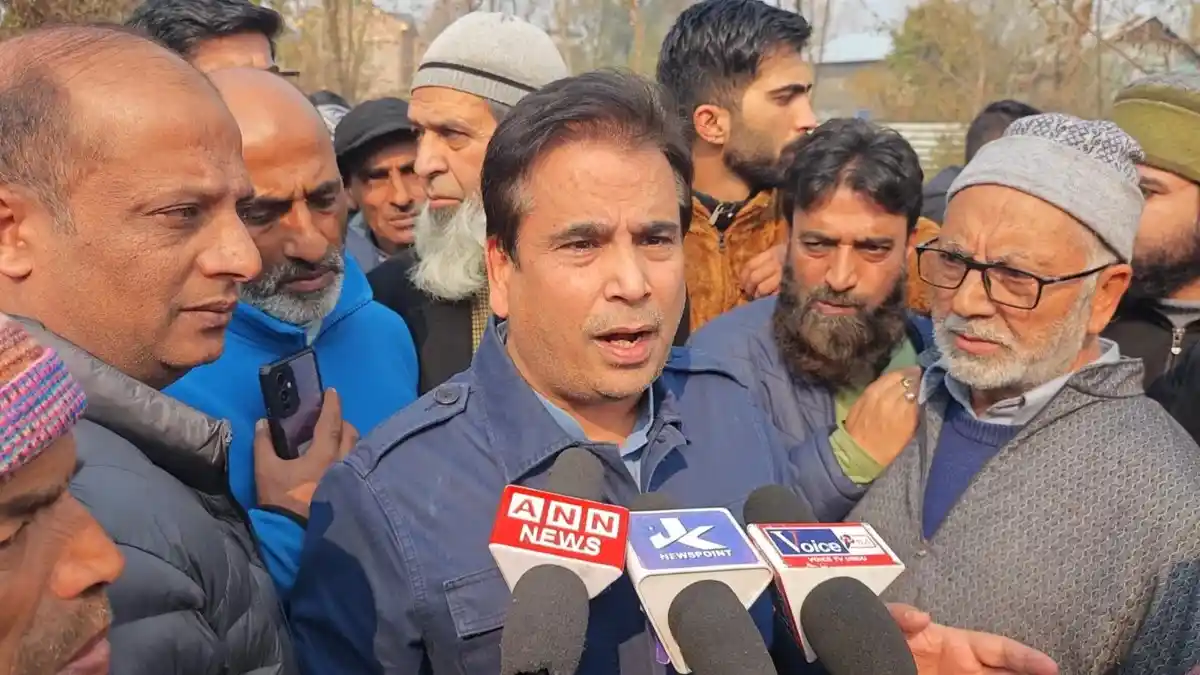
Tanvir Sadiq Refutes Walkout Claims of Agha Ruhullah, Says NC United on J&K Special Status

Spokesperson Tanvir Sadiq

National Conference Chief Spokesperson and MLA Zadibal, Tanvir Sadiq, on Sunday strongly refuted reports suggesting that senior party leader Agha Ruhullah Mehdi walked out of the party’s recent working committee meeting, calling them “fabricated, baseless, and politically motivated.”

Sadiq said that the meeting, chaired by Dr. Farooq Abdullah, was held in a cordial atmosphere and witnessed meaningful participation from all members, including Agha Ruhullah.

“Agha Ruhullah did not stage any walkout. He was present throughout the discussions, and everything transpired in a healthy and respectful environment,” Sadiq said. “He left only after informing both Dr. Farooq Abdullah and Omar Abdullah, due to a personal emergency involving a sick relative. He took proper permission before exiting the meeting, and this occurred well before any such misleading reports surfaced.”

Sadiq alleged that the rumours were intentionally spread by certain vested interests seeking to create confusion and weaken the party’s image at a critical time, when the NC had taken a firm and united stand on the restoration of Jammu and Kashmir’s special status and full statehood.

“We passed seven significant resolutions, including one demanding the restoration of Article 370 and full statehood. The entire working committee, including Agha Ruhullah Sahab, unanimously supported these resolutions,” he said. “Some people are clearly unsettled by our unity and clarity of purpose, and are resorting to misinformation to distract the public.”

Sadiq also highlighted the National Conference’s consistent grassroots outreach, referring to the party’s practice of holding cabinet-style meetings across various regions of Jammu and Kashmir.

“This is governance at the doorstep. The National Conference has always remained closely connected with the people—be it in Pahalgam, Gulmarg, or any other region,” he said.

“While other parties remain confined behind closed doors, the NC is actively engaging with the people and passing resolutions aimed at their welfare,” he added.

Tanvir Sadiq urged both the public and the media not to fall prey to “motivated propaganda” and reaffirmed that the National Conference remains united, focused, and firm in its political commitments. (KNS)

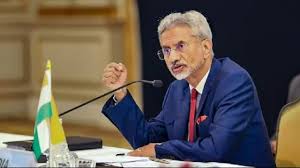
Jaishankar Rejects Mediation, India-Pakistan Ceasefire Was Bilateral, Reaffirms Stand on Kashmir and Operation Sindoo

S Jaishankar

In a firm and clear statement, External Affairs Minister Dr. S. Jaishankar has asserted that the recent ceasefire agreement between India and Pakistan was a strictly bilateral decision, not brokered by any third party. The statement was made during an interview with Dutch broadcaster NOS and comes amid global speculation that international actors might have played a role in de-escalating tensions following a deadly terror attack in Jammu and Kashmir.

Refuting claims of international mediation, Jaishankar said,

“The ceasefire was not negotiated by anyone else. It was the Pakistani army which sent a message that they were ready to stop firing, and we responded accordingly.”

This declaration effectively shuts down narratives suggesting U.S. or other foreign involvement in achieving the ceasefire. Jaishankar added,

“The US was in the United States. We made it clear to everyone that if the Pakistanis want to stop fighting, they need to tell us directly.”

The clarity of Jaishankar’s words is seen as a reflection of India’s longstanding position that bilateral issues with Pakistan must be handled between the two countries—without external intervention.

Tensions between India and Pakistan spiked following a brutal terrorist attack in Pahalgam, Jammu and Kashmir, on April 22, which resulted in the deaths of 26 civilians. The incident was widely condemned across India and prompted swift retaliation.

India launched **Operation Sindoor**, a precision military campaign targeting nine terror-linked sites across Pakistan and Pakistan-occupied Kashmir (PoK). Over 100 terrorists were reportedly neutralised, including operatives from the banned groups Jaish-e-Mohammed and Lashkar-e-Taiba.

“If there are acts of the kind we saw on April 22nd, there will be a response. We will hit the terrorists. If the terrorists are in Pakistan, we will hit them where they are.”

His remarks underline a key shift in India’s security doctrine—one that promises direct and targeted retaliation for any terror activity emanating from across the border.

No Room for Third Parties on Kashmir

On the sensitive issue of Kashmir, Jaishankar reiterated India’s firm stance:

“Kashmir is part of India. No country negotiates a part of its territory.”

He dismissed any possibility of third-party involvement in discussions related to Kashmir and emphasized that any future talks with Pakistan must be serious and strictly bilateral in nature.

“This is something between us and the Pakistanis. We propose to deal with it bilaterally.”

This position is in line with India’s historical rejection of foreign intervention in the Kashmir issue, dating back to the Simla Agreement of 1972.

Diplomatic Clarity in Uncertain Times

Jaishankar’s interview marks a significant moment in India’s foreign policy narrative. By publicly denying third-party mediation and taking ownership of both the ceasefire and retaliatory military operations, India is asserting itself as a sovereign and decisive power in regional security matters.

It also serves as a warning to Pakistan that future acts of terrorism will not be tolerated and will invite robust military responses. Simultaneously, it reassures international stakeholders that India is committed to peace, but not at the cost of its national security or territorial integrity.

Conclusion

The Indian government’s message is clear: dialogue with Pakistan is possible, but only on India’s terms and without external interference. As tensions ease for now, the path ahead will depend on whether Pakistan continues to uphold the ceasefire or if further provocations compel India to respond with equal, if not greater, force. Either way, New Delhi has made its red lines unmistakably clear.

India’s Message Loud and Clear: All-Party Delegation in Japan Seeks Global Unity Against Pakistan-Sponsored Terrorism

All-Party Delegation in Japan

Janata Dal (United) MP Sanjay Jha who is leading an All-Party Delegation to Japan ahs appealed to all world leaders to side with India against Pakistan’s sponsorship of terrorism.

Jha, who along with his delegation members arrived in the Japanese capital of Tokyo on Thursday while talking to ANI said that they aimed to present India’s stand on the new normal in context of Pakistan-sponsored cross border terrorism.

“Pakistan is a state sponsor of terrorism. One must differentiate between terrorists and the terrorist sponsor, which is the state that promotes them, funds it, gives them training. This is known, but we must make it clear that after the Pahalgam terror attack, India’s stance is to wipe off the terror sponsors. Now people from all over the world should gather to eliminate this source from which terrorists are located,” he said.

The JD(U) leader said that the delegation aimed to tell people about the stand adopted by Prime Minister Narendra Modi, which is the “new normal.”

“Today our delegation is in Tokyo and we offered floral tributes to Mahatma Gandhi. School children sung ‘Vaishnav Jan To’ and in a way, the journey of our delegation began here. We are now going to meet the think tanks, the ministers here, and present the stand of Prime Minister Narendra Modi- especially the stand of the ‘new normal’ or the opinions on Pakistan.

India has endured a lot and we have dismantled the nine terrorist camps from where training was conducted. The biggest achievement of the Indian army was that neither did any civilian die in this operation, nor was any military infrastructure harmed.

We went to the terrorist camp we had, to help them and there were many terrorists in it,” he said.

Jha said the delegation aimed to sensitize people on Pakistan’s state sponsorship of terrorism.

“Normally everyone is aware that Pakistan promotes terrorism because all the wanted terrorists are found there in the same way as Osama Bin Laden was found. After the manhunt conducted around the world, he was found in Pakistan. Everyone knows about the state policy of terrorism there, so we are here to sensitize people about it and explain Operation Sindoor. We are also here to tell people about the new normal and that when India faces cross-border terrorism, we will respond to it on our own way,” he said.

Jha said that the world has shown overwhelming support against terrorism, and agrees with India’s zero tolerance for terrorism.

“We held talks with the Indian Ambassador here in the embassy and discussed our agenda for the next three days. People support India’s stance on terrorism and everyone believes in zero tolerance against terrorism,” he said.

Jha expressed dismay at how Pakistan’s Army Chief was promoted to a Field Marshal even after he spoke about the ‘Two Nation Theory’. Jha said that it showed Pakistan’s attitude towards terrorism.

“Pakistan’s Army Chief is promoted to a Field Marshal. The language they used in the week before. The way being an Army Chief he spoke on the Two-Nation Theory, so imagine what kind of society they have, what kind of government is sponsoring the entire army there, so I think it is a very good move to sensitize the world,” he said.

After their arrival, the all-member delegation paid floral tributes to the Mahatma Gandhi’s bust in Tokyo.

The members were seen offering floral tributes as a children’s choir sung “Vaishnava Jana To”, a Hindu prayer or bhajan.

Earlier in the day, Indian Ambassador to Japan, Sibi George briefed the All-Party delegation, where he noted that after the dastardly April 22 Pahalgam terror attack, Japan was the first country to respond. The briefing aimed at setting the context for a strong message of India’s fight against terrorism.

Indian embassy in Tokyo stated that India’s unwavering stand against cross-border terrorism, as seen in Operation Sindoor, will be highlighted in all engagements.

In a post on X, the Embassy stated, “All-Party Parliamentary Delegation was briefed by Ambassador Sibi George on Japan- specific approach to engagements, setting the context for a strong messaging of India’s fight against terrorism.” (ANI)

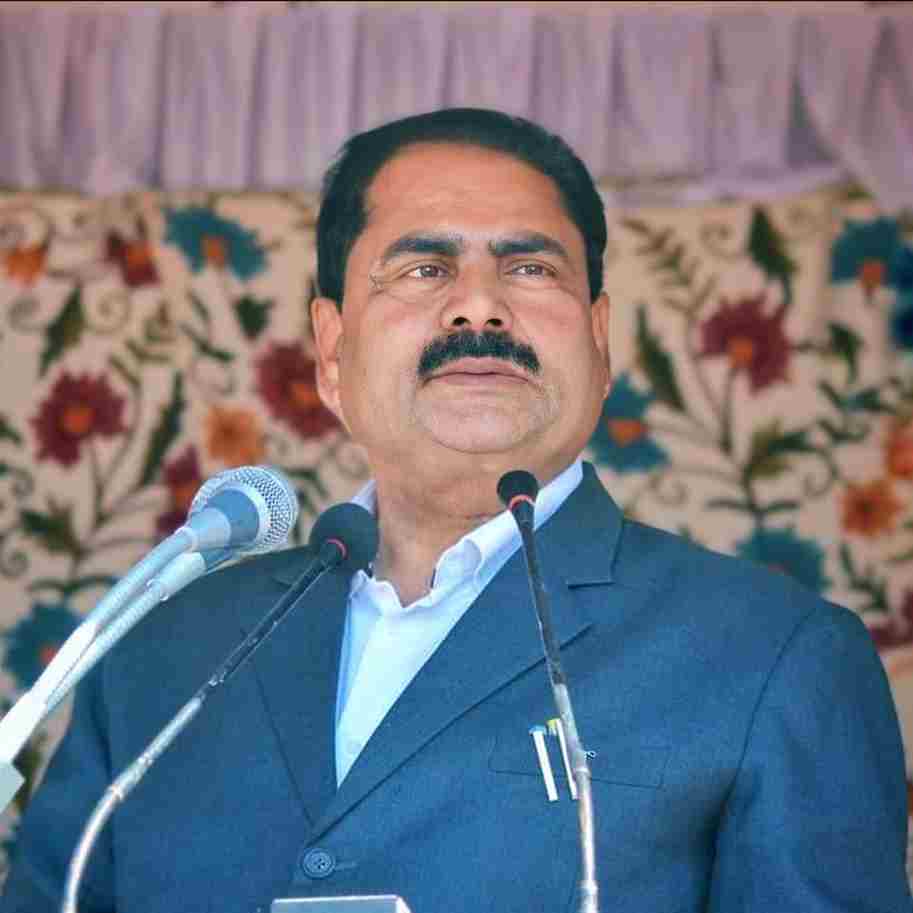
Former Devsar MLA Muhammad Amin Bhat Rejoins Congress, Boosting Party’s Presence in South Kashmir

MLA Muhammad Amin Bhat

Former MLA Devsar Muhammad Amin Bhat on Wednesday rejoined Congress party in presence of its top leadership here,

As per news agency—Kashmir News Observer (KNO), Bhat returned to the party during a function held at Dak Banglow here.

J&K Congress Committee president Tariq Hamid Karra and senior leaders Ghulam Ahmad Mir, Raman Bhalla, Ravinder Sharma and others were present on the occasion.

With this joining, the Congress has got a boost in the south Kashmir region where the National Conference swept the 2024 Lok Sabha as well as Assembly polls.

In the last Assembly polls, NC won 10 out of 16 seats in the region, while Congress and Peoples Democratic Party won two seats each.

The formation of the Justice & Development Front(JDF) has added a new dimension to politics of South Kashmir—(KNO)

Mamata Banerjee Nominates Abhishek Banerjee for Global Anti-Terror Delegation Under Operation Sindoor

Abhishek Banerjee

The All India Trinamool Congress (AITC) has announced that its Chairperson, Mamata Banerjee, has nominated National General Secretary Abhishek Banerjee to represent the party in an all-party delegation for India’s global outreach against terrorism.

In a post on X, AITC stated that Abhishek Banerjee’s inclusion in the delegation underscores the party’s resolute stance against terrorism.

“We’re delighted to share that our Chairperson, Smt. @MamataOfficial has nominated National GS Shri @abhishekaitc to represent Trinamool Congress in the all-party delegation for India’s global outreach against terrorism. At a time when the world must unite to confront the growing threat of terrorism, Shri Abhishek Banerjee’s inclusion brings both conviction and clarity to the table.His presence will not only reflect Bengal’s firm stand against terror but also strengthen India’s collective voice on the global stage,” reads X post.

The multi-party delegation, consisting of seven groups led by one MP each, has been initiated to counter global misinformation and highlight India’s zero-tolerance policy on terrorism.

The list includes Members of Parliament from multi-party groups, which have been divided into seven groups consisting of 8-9 members. A leader has been assigned for each group who will lead the delegation at the global level.

Union Minister Kiren Rijiju, while posting the list on Saturday, also highlighted how the Members of Parliament have shown a united stance of “One mission. One message. One Bharat.”

“One mission. One message. One Bharat. Seven All-Party Delegations will soon engage key nations under Operation Sindoor, reflecting our collective resolve against terrorism. Here’s the list of MPs & delegations representing this united front,” Rijiju said in a post on X.

Group 1, led by Bharatiya Janata Party MP Baijayant Panda will be visiting Saudi Arabia, Kuwait, Bahrain, and Algeria. Three more BJP MPs–Nishikant Dubey, Phangnon Konyak, Rekha Sharma are part of the group. AIMIM chief Asaduddin Owaisi, former Jammu and Kashmir Chief Minister Ghulam Nabi Azad, nominated Rajya Sabha member Satnam Singh Sandhu and Former Foreign Secretary Harsh Shringla will be part of the group.

Group 2, led by BJP’s Ravi Shankar Prasad will be going to certain European countries, including to United Kingdom, France, Germany, Italy, Denmark and others. BJP’s Daggubati Purandeswari and Samik Bhattacharya, along with Shiv Sena (UBT)’s Priyanka Chaturvedi, nominated Rajya Sabha member Ghulam Ali Khatana, Congress’ Amar Singh, former Minister of state for External Affairs MJ Akbar will be part of this group.

Group 3 is led by Sanjay Kumar Jha, Janata Dal (United)’s National Working President. The nine member group will be visiting Indonesia, Malaysia, Republic of Korea, Japan, and Singapore. BJP’s Aparajita Sarangi, Brij Lal, Pradan Baruah, Hemang Joshi, along with Trinamool Congress’s Yusuf Pathan, CPI(M)’s John Brittas, former External Affairs Minister Salman Khurshid and Mohan Kumar are part of the group.

Group 4 will be led by Shiv Sena MP Shrikant Eknath Shinde, who will be visiting United Arab Emirates, Liberia, Congo, and Sierra Leone. BJP’s Bansuri Swaraj, Atul Garg, Manan Kumar Mishra, along with Opposition members including Indian Union Muslim League MP Mohammed Basheer, BJD’s Sasmit Patra, and Sujan Chinoy will be part of the group.

Group 5 is led by Congress’ Shashi Tharoor, with them slated to go to United States, Panama, Guyana, Brazil, and Colombia. BJP’s Shashank Mani Tripathi, Bhubaneswar Kalita, and Tejasvi Surya, along with LJP (Ram Vilas)’s Shambhavi Choudhary, TDP’s GM Harish Balayogi, Shiv Sena’s Milind Deora, JMM’s Sarfaraz Ahmad will be accompanied along with former Ambassador to US, Taranjit Singh Sandhu.

Group 6, led by DMK MP Kanimozhi Karunanidhi will be going to a second group of European countries, such as Spain, Greece, Slovenia, Latvia, and Russia. Samajwadi Party’s Rajeev Rai, National Conference’s Mian Altaf Ahmad, BJP’s Brijesh Chowta, RJD’s Prem Chand Gupta, AAP’s Ashok Kumar Mittal will be accompanied by Manjeev S Puri, and Jawed Ashraf.

Group 7, led by NCP (SCP) MP Supriya Sule will be representing India’s stand in Egypt, Qatar, Ethiopia, and South Africa. BJP’s Rajiv Pratap Ruddy, Anurag Singh Thakur, V Muraleedharan along with Congress’ Manish Tewari, Anand Sharma, TDP’s Lavu Sri Krishna Devarayalu, AAP’s Vikramjeet Singh Sahney, and former permanent representative of India to UN, Syed Akbaruddin will be putting forth India’s policy of zero-tolerance against terrorism.

Operation Sindoor was launched on May 7, targeting terror bases in Pakistan in retaliation for the deadly Pahalgam terror attack on April 22. (ANI)

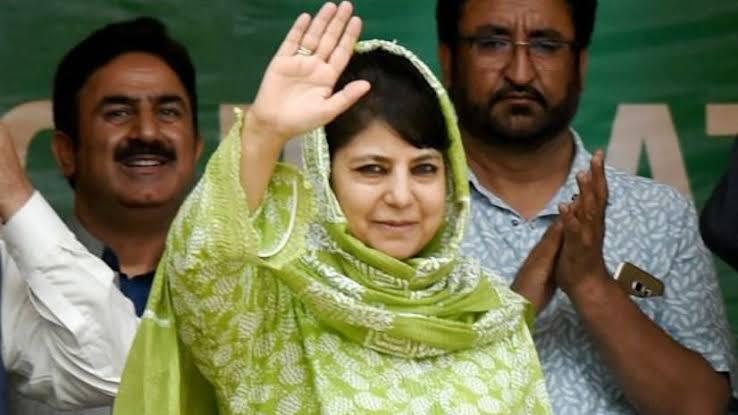
War Not an Option for Nuclear Powers: Mehbooba Mufti Urges Diplomacy Over Conflict After Pahalgam Attack

mehbooba

Peoples Democratic Party (PDP) chief Mehbooba Mufti on Tuesday asserted that war was not even a “last option” given that India was a nuclear power. She said the central government should have sent the multi-party delegation earlier, after the Pahalgam attack, to apprise other countries about the country’s ordeal.

“What the government of India is doing today – sending delegations to different countries- it should have been done earlier to raise awareness in other countries about what has happened and what could be done. War is not an option, not even a last option, when you are a nuclear power,” Mufti, former Chief Minister of Jammu and Kashmir, told ANI.

Mufti said that this war was not between civilians, but between two countries. She suggested that the conflict could have been resolved by political intervention and diplomacy.

“The government must do many things, as it is not our war. It’s between two countries – the thing that could have been sorted out by political intervention and diplomacy – where a knife was needed, you put out the sword. What is there to gain from it?” she asked.

She further said that both countries need to understand that war is not a solution since it only brings destruction, while the lives of people in border areas are affected.

“I hope that both countries understand that war is not a solution. War brings destruction, and it just increases media TRPs. The lives of the people living in the border areas, especially from J&K, get destroyed,” Mufti said.

“We lost 27-28 people in Pahalgam, and then we lost more people. Many of the houses were destroyed, and our city, Poonch, has been destroyed. Children and women were killed, and those militants involved in Pahalgam are yet to be caught. What have we achieved then?” she added.

Earlier, Mufti welcomed the central government’s decision of sending an all-party delegation to key global capitals to brief different countries on the recent India-Pakistan tension. She said that while diplomatic outreach by India in the wake of Operation Sindoor is a good step but the Centre should have called a Parliament session and held a discussion with the parliamentarians. (ANI)

Jairam Ramesh Slams Centre’s Global Delegation Move as ‘Damage Control’ After Operation Sindoor

jairam ramesh

Congress General Secretary in charge of Communications, Jairam Ramesh, on Monday criticised the Central government, describing the decision to send a delegation to key partner countries as a ‘damage control’ effort.

Ramesh claimed that India’s ‘Vishwa Guru’ image has taken a hit following tensions with Pakistan.
He further argued that the delegation’s visit to key partner countries to highlight India’s ongoing fight against cross-border terrorism and Operation Sindoor would have been more appropriate if it had come after an all-party meeting chaired by Prime Minister Narendra Modi.

“…Congress party believes that an all-party meeting should have been done before this and PM Modi should have chaired the meeting…Our second demand was to hold a special session of the Parliament to discuss the issues of the relationship between China and Pakistan,” Ramesh told ANI.

“If this delegation had gone after this, then it would have made a lot more sense…You are sending 7 delegations now, but what is the difference that it is going to make? Our narrative has already gotten worse. Pakistan and India are again being compared…The narrative of ‘Vishwa Guru’ has also gotten worse,” the Congress Rajya Sabha MP added.

Ramesh further criticised the government for omitting three of the names recommended by the party for the all-party delegation.

“This delegation is going for damage control. We have been saying that we need to stay united, and we are standing with our armed forces like a rock. We have said that Operation Sindoor is a historic operation, but PM Modi does not speak with the LoP or the Congress President. They ask us to give names.

When we gave 4 names, they picked only one of them and added names on their own. What type of politics is this?” he added.

The all-party delegations will project India’s national consensus and resolute approach to combating terrorism in all forms and manifestations. They would carry forth to the world the country’s strong message of zero tolerance against terrorism.

According to Congress, the party had submitted four names to the Minister of Parliamentary Affairs by May 16, but the final list released late on May 17 included only one of the suggested names.

The list includes MPs from multiple parties, divided into seven groups of 8-9 members. A leader has been assigned for each group, who will lead the delegation at a global level.

This came after India’s decisive military response to the April 22 Pahalgam terror attack. Operation Sindoor, launched on May 7, targeted terror infrastructure in Pakistan and Pakistan-occupied Jammu and Kashmir, leading to the death of over 100 terrorists affiliated with terror outfits like the Jaish-e-Mohammed, Lashkar-e-Taiba and Hizbul Mujahideen.

After the attack, Pakistan retaliated with cross-border shelling across the Line of Control and Jammu and Kashmir as well as attempted drone attacks along the border regions, following which India launched a coordinated attack and damaged radar infrastructure, communication centres and airfields across 11 airbases in Pakistan. (ANI)

Political Parties in Jammu and Kashmir Welcome Ceasefire, Urge Long-Term Peace

Welcome Ceasefire

Political parties across the spectrum in Jammu and Kashmir have broadly welcomed the recent ceasefire agreement between India and Pakistan, calling it a much-needed move to restore peace in the region. The announcement of a “full and immediate ceasefire”—effective from 5 p.m. on May 10—comes after several days of intense cross-border violence that had severely impacted residents living near the Line of Control (LoC) and International Border (IB).Click Here To Follow Our WhatsApp Channel

The ceasefire, reportedly mediated through diplomatic efforts involving the U.S. and U.K., followed direct communication between the Directors General of Military Operations (DGMOs) of both countries. While global powers expressed satisfaction at the outcome, Indian officials underlined that the final understanding was a result of bilateral efforts.

Farooq Abdullah (National Conference):

Veteran leader and National Conference (NC) president Farooq Abdullah welcomed the development, saying the ceasefire would provide “much-needed relief” to civilians who have borne the brunt of escalating tensions.

“Peace on the borders is essential for the dignity and well-being of our people. We hope this ceasefire holds and sets the stage for more meaningful dialogue,” Abdullah said.

Mehbooba Mufti (Peoples Democratic Party):

Peoples Democratic Party (PDP) chief Mehbooba Mufti described the announcement as “good news” for the people of J&K, who have long lived under the shadow of conflict.

“The ceasefire is a positive step. India must take a leadership role in promoting long-term regional peace,” she stated, while also calling for demilitarization of civilian areas and resumption of diplomatic engagement.

Omar Abdullah (Chief Minister, J&K):

Jammu and Kashmir Chief Minister Omar Abdullah said he welcomed the ceasefire “from the depths of my heart,” adding that earlier action could have prevented loss of life and property. He ordered all District Commissioners to assess damages and provide immediate relief to affected families.

“Better late than never. My appeal to both governments is to ensure this ceasefire lasts—not for days, but for decades.”

Sajad Lone (Peoples Conference):

Sajad Lone, president of the Peoples Conference, also lauded the ceasefire. He said it would bring an end to the “harrowing ordeal” of civilians in border areas like Uri, Poonch, and Rajouri.

“Now is the time to help affected communities rebuild. They’ve suffered silently for too long.”

M.Y. Tarigami (CPI-M):

M.Y. Tarigami, senior leader of the Communist Party of India (Marxist), said the ceasefire was a “big relief” and stressed the importance of continuing political and diplomatic dialogue to prevent future escalations.

“Peace must not be treated as a short-term pause but as a national policy goal.”

Indian National Congress:

The Congress Party also welcomed the ceasefire but issued a statement urging the government to hold an all-party meeting and a special session of Parliament to discuss both the Pahalgam terror attack and the subsequent Operation Sindoor by Indian forces.

“The nation deserves clarity. Parliament must be taken into confidence,” the party said.


Public Relief and Return to Normalcy

The ceasefire agreement has brought visible relief to border communities in Jammu, Poonch, Rajouri, and Baramulla, who were reeling under frequent shelling, drone intrusions, and power blackouts. With markets reopening and flights resuming, a sense of normalcy is gradually returning.

In a symbolic sign of calm, preparations for the Hajj pilgrimage—which had been disrupted by the hostilities—have resumed, offering spiritual reassurance to many families.


Cautious Optimism Ahead

While the ceasefire has been met with general optimism, political voices across J&K agree that peace must go beyond military silence. Many leaders stressed the need for structured political engagement, economic recovery, and rehabilitation efforts for those displaced or injured in recent days.

As the dust settles, the people of Jammu and Kashmir, weary of conflict, look to their leaders—and both national governments—for a lasting solution.

Omar Abdullah Condemns Pakistan’s Shelling of Civilians After India’s Targeted Strikes on Terror Camps

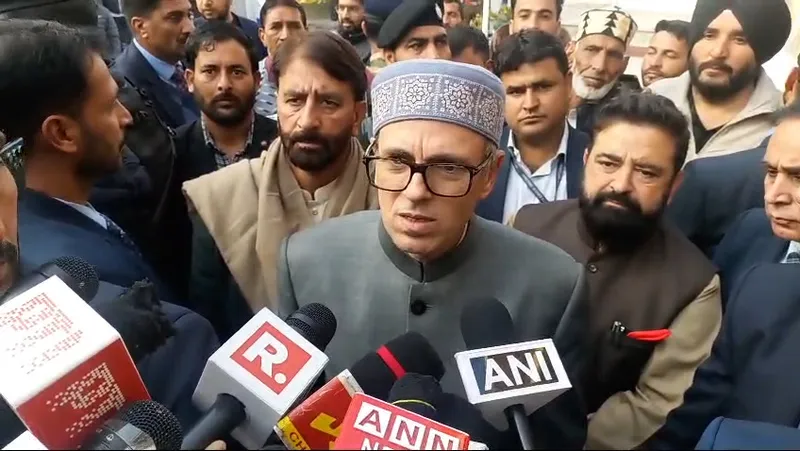
Omar Abdullah Threatens

Jammu and Kashmir Chief Minister Omar Abdullah on Wednesday said Pakistan has “gone out of its way” to target civilian population in the Union Territory following India’s missile strikes targeting terror infrastructure in the neighbouring country.

“As reports are coming, Pakistan has gone out of its way to target the civilian population. So I have taken stock of the situation, and we are dealing with the situation as it develops,” Abdullah told PTI Videos after chairing a review meeting here.

The chief minister said India had gone out of its way to ensure that no military and civilian targets were hit in the strikes.

“After the inhumane and barbaric murder of 26 innocent civilians in Pahalgam, it was expected that India would use its right to respond in an appropriate and proportionate way. I think the Government of India and Indian defence forces have gone out of the way to ensure no military and civilian targets were hit in Pakistan. They have only hit terror bases,” he added.

Earlier, Abdullah chaired a meeting to assess the preparedness of the government along the Line of Control and border areas of the Union Territory.

“Held a meeting to assess the security and preparedness along the border/LoC areas. Emphasis laid on safeguarding civilian lives, strengthening infrastructure, and ensuring swift response to any emerging challenges,” the chief minister posted on his official handle on X.

The meeting was attended by advisor to the chief minister, Nasir Aslam Wani, Chief Secretary Atal Dulloo and Divisional Commissioner Kashmir V K Bhiduri.

The Jammu-based officers joined the meeting via video-conferencing.

The review meeting was held in the backdrop of Pakistan’s indiscriminate shelling of civilian areas in Jammu and Kashmir after Indian armed forces carried out missile strikes in the neighbouring country to target the terror infrastructure there.