Bakshi Ghulam Mohammad: The Man Who Built Modern Kashmir

Bakshi Ghulam Mohammad was a central, yet controversial, figure in Jammu and Kashmir’s history. As Prime Minister from 1953 to 1964, his rule is remembered for both incredible progress and fierce political debate.

Born in 1907 in Srinagar to a humble family, he left school early. He began as a teacher and a low-paid worker before joining Sheikh Abdullah’s freedom struggle against Dogra rule. A brave organiser, he was nicknamed “Khalid-e-Kashmir” and faced multiple imprisonments. Click Here To Follow Our WhatsApp Channel

His rise to power marked a major shift. In 1953, he replaced the arrested Sheikh Abdullah as PM, an event many saw as a coup backed by New Delhi. For the next decade, Bakshi launched a whirlwind of development. He built roads, schools, hospitals, and stadiums, pushed land reforms, and created jobs. His hands-on, approachable style—often giving out jobs on the spot—made him popular with many.

But his legacy has another side. Critics call him a traitor for toppling Abdullah and tightening India’s grip. His government was accused of rigging elections, crushing dissent, and widespread corruption. While supporters call his time a “Golden Period,” opponents saw it as an authoritarian occupation that buried Kashmir’s hopes for self-determination.

Forced to resign in 1963, he had a brief political comeback before dying in 1972. Today, Bakshi is a divided memory: celebrated as the architect of modern Kashmir, but also blamed for setting the stage for its ongoing political conflicts.

At 13, This Kashmiri Boy Built 31 Apps and AI Tools

Delhi Court Convicts Kashmiri Separatist Asiya Andrabi in UAPA Case

Sheikh Mohammad Abdullah: Architect of Modern Kashmir and Champion of Peace

Sheikh Mohammad Abdullah

Sheikh Mohammad Abdullah: The Lion of Kashmir

Sheikh Mohammad Abdullah, popularly known as Sher-e-Kashmir (Lion of Kashmir), remains one of the most revered and influential figures in the history of Jammu and Kashmir. His life was dedicated to the service of his people, championing their rights, promoting social justice, and striving for a dignified existence within the framework of democracy and secularism.

Early Life and Education

Born on December 5, 1905, in Soura, near Srinagar, Sheikh Abdullah hailed from a middle-class family. His early education was in Srinagar, after which he pursued higher studies at the Islamia College, Lahore, and later at Aligarh Muslim University. It was during his time at Aligarh that he was deeply influenced by the ideas of nationalism, secularism, and social reform. He earned a Master’s degree in Physics and later a degree in Chemistry, but his true calling lay in public service. Click Here To Follow Our WhatsApp Channel

Political Awakening and the Freedom Struggle

Returning to Kashmir in the early 1930s, Sheikh Abdullah was deeply moved by the plight of the common people, who faced exploitation under the autocratic rule of the Dogra Maharaja. In 1932, he founded the Muslim Conference, which later evolved into the National Conference in 1939 to reflect a broader, secular platform inclusive of all communities.

Under his leadership, the National Conference launched the “Naya Kashmir” movement, envisioning a society based on democracy, socialism, and secularism. The Naya Kashmir Manifesto (1944) outlined progressive policies including land reforms, free education, workers’ rights, and gender equality.

Role in Kashmir’s Accession to India

During the tumultuous period of Partition in 1947, Sheikh Abdullah emerged as a key figure in guiding Kashmir’s political destiny. He opposed the idea of joining Pakistan, citing its two-nation theory, and advocated for accession to India based on secular and democratic principles. His support was instrumental in Maharaja Hari Singh’s decision to sign the Instrument of Accession to India in October 1947.

Sheikh Abdullah believed that Article 370, which granted special autonomy to Jammu and Kashmir, was essential to protect the region’s unique identity while being part of the Indian Union. He served as the Prime Minister of Jammu and Kashmir from 1948 to 1953, implementing landmark land reforms that abolished feudal landlordism and distributed land to tillers, earning him immense popularity among the masses.

Commitment to Secularism and National Integration

Throughout his life, Sheikh Abdullah was a staunch advocate of Kashmiriyat—a syncretic cultural identity that celebrated Hindu-Muslim unity. He often quoted the poetry of Lal Ded and Nund Rishi, spiritual saints revered by all communities in Kashmir, to emphasize communal harmony.

Despite political differences with the central government at times, his commitment to India’s secular fabric never wavered. After periods of detention, he returned to active politics and signed the 1975 Indira-Sheikh Accord, which reaffirmed Kashmir’s relationship with India while preserving its regional autonomy. He served as the Chief Minister of Jammu and Kashmir from 1975 until his passing in 1982.

Legacy and Contributions

Sheikh Mohammad Abdullah’s legacy is multifaceted:

  1. Social Reforms: His land redistribution policies transformed the agrarian structure and empowered peasants.
  2. Educational Advancement: He established schools, colleges, and the University of Kashmir, emphasizing education for all.
  3. Women’s Empowerment: He promoted gender equality and encouraged women’s participation in public life.
  4. Democratic Values: He strengthened democratic institutions in Jammu and Kashmir and ensured peaceful political transitions.
  5. Cultural Pride: He championed Kashmiri language, art, and heritage, fostering a sense of regional pride within national unity.

Even after his death on September 8, 1982, Sheikh Abdullah’s vision continues to inspire generations. The Sher-e-Kashmir Institute of Medical Sciences and numerous educational institutions across the valley stand as testaments to his dedication to public welfare.

Conclusion

Sheikh Mohammad Abdullah was not just a political leader but a symbol of hope, resilience, and progressive ideals. His life reflected a profound love for Kashmir and an unwavering faith in India’s democratic ethos. As a unifying figure, his efforts to bridge communities and promote peace remain relevant today. The Lion of Kashmir’s roar for justice, equality, and dignity continues to echo in the hearts of his people.

At 13, This Kashmiri Boy Built 31 Apps and AI Tools

Delhi Court Convicts Kashmiri Separatist Asiya Andrabi in UAPA Case

Grand Mufti Shaykh Abdulaziz bin Abdullah Al-Sheikh: Life, Scholarship, and Service to the Muslim Ummah

Shaykh Abdulaziz bin Abdullah

Shaykh Abdulaziz bin Abdullah Al-Sheikh (1362 AH / 1943 CE – 1447 AH / 2025 CE) was the 𝗚𝗿𝗮𝗻𝗱 𝗠𝘂𝗳𝘁𝗶 of the Kingdom of Saudi Arabia, 𝗖𝗵𝗮𝗶𝗿𝗺𝗮𝗻 of the Council of Senior Scholars, and 𝗣𝗿𝗲𝘀𝗶𝗱𝗲𝗻𝘁 of the General Presidency of Scholarly Research and Ifta.
He was one of the most prominent scholars of the contemporary Islamic world and served the Ummah with dedication for decades. Click Here To Follow Our WhatsApp Channel

He was born on 3 Dhul-Hijjah 1362 AH ( 𝟑𝟎 𝐍𝐨𝐯𝐞𝐦𝐛𝐞𝐫 𝟏𝟗𝟒𝟑 CE) in 𝗠𝗮𝗸𝗸𝗮𝗵 𝗮𝗹-𝗠𝘂𝗸𝗮𝗿𝗿𝗮𝗺𝗮𝗵. He lost his father at the age of eight and grew up as an orphan. In his early years, he memorized the Holy Qur’an under Shaykh Muhammad bin Sinan and later studied Islamic sciences under the former Grand Mufti Shaykh Muhammad bin Ibrahim Al-Sheikh. Despite losing his eyesight in his twenties, he continued his pursuit of knowledge with strong determination.

Shaykh Abdulaziz studied under many senior scholars, including 𝗦𝗵𝗮𝘆𝗸𝗵 𝗔𝗯𝗱𝘂𝗹𝗮𝘇𝗶𝘇 𝗯𝗶𝗻 𝗕𝗮𝘇, 𝗦𝗵𝗮𝘆𝗸𝗵 𝗔𝗯𝗱𝘂𝗹𝗮𝘇𝗶𝘇 𝗯𝗶𝗻 𝗦𝗮𝗹𝗲𝗵 𝗔𝗹-𝗠𝘂𝗿𝘀𝗵𝗶𝗱, 𝗮𝗻𝗱 𝗦𝗵𝗮𝘆𝗸𝗵 𝗔𝗯𝗱𝘂𝗹𝗮𝘇𝗶𝘇 𝗔𝗹-𝗦𝗵𝗮𝘁𝗵𝗿𝗶. He graduated from the College of Sharia at Imam Muhammad bin Saud Islamic University in Riyadh in 1384 AH (1965 CE), specializing in Arabic language and Islamic sciences.

He began his professional career as a teacher at Imam al-Da’wah Institute in Riyadh. Later, he served as a professor at the College of Sharia and the Higher Institute of Judiciary. He also supervised postgraduate research at Imam Muhammad bin Saud University and Umm al-Qura University, contributing to the academic development of many students and scholars.

As a preacher and khatib, Shaykh Abdulaziz delivered sermons at several mosques, most notably 𝗜𝗺𝗮𝗺 𝗧𝘂𝗿𝗸𝗶 𝗯𝗶𝗻 𝗔𝗯𝗱𝘂𝗹𝗹𝗮𝗵 𝗠𝗼𝘀𝗾𝘂𝗲 in Riyadh. He was also widely known for delivering the Hajj sermons at Masjid Namirah in Arafat, where millions of pilgrims benefited from his guidance.

His major official appointments included becoming a member of the Council of Senior Scholars in 1407 AH (1987 CE), Deputy Grand Mufti in 1416 AH (1995 CE), and finally the Grand Mufti of Saudi Arabia in 1420 AH (1999 CE), succeeding Shaykh Abdulaziz bin Baz رحمه الله.

Throughout his life, he played a vital role in issuing fatwas and guiding Muslims through programs such as Nur ‘ala al-Darb. He authored several important works, including The Book of Allah and Its Great Status, The Reality of the Testimony that Muhammad is the Messenger of Allah, and The Collection of Arafat Sermons, along with many compilations of fatwas related to worship and Islamic law.

Shaykh Abdulaziz bin Abdullah Al-Sheikh passed away on 1 Rabiʿ al-Thani 1447 AH (23 September 2025 CE). He left behind a lasting legacy of knowledge, leadership, and service to Islam and the Muslim Ummah.

May Allah grant him mercy, forgive his shortcomings, elevate his rank in Jannah, and reward him abundantly for his lifelong service to the religion. Ameen

Writer : Dr Abdul Lateef Alkindi ( Writer is President of Jamiat e Ahlihadees Of J&K )

Pahalgam Railway Line Is About Future, Not Fear—Connectivity Is Development

Farooq Abdullah: The Political Journey of a Kashmiri Veteran

Farooq Abdullah

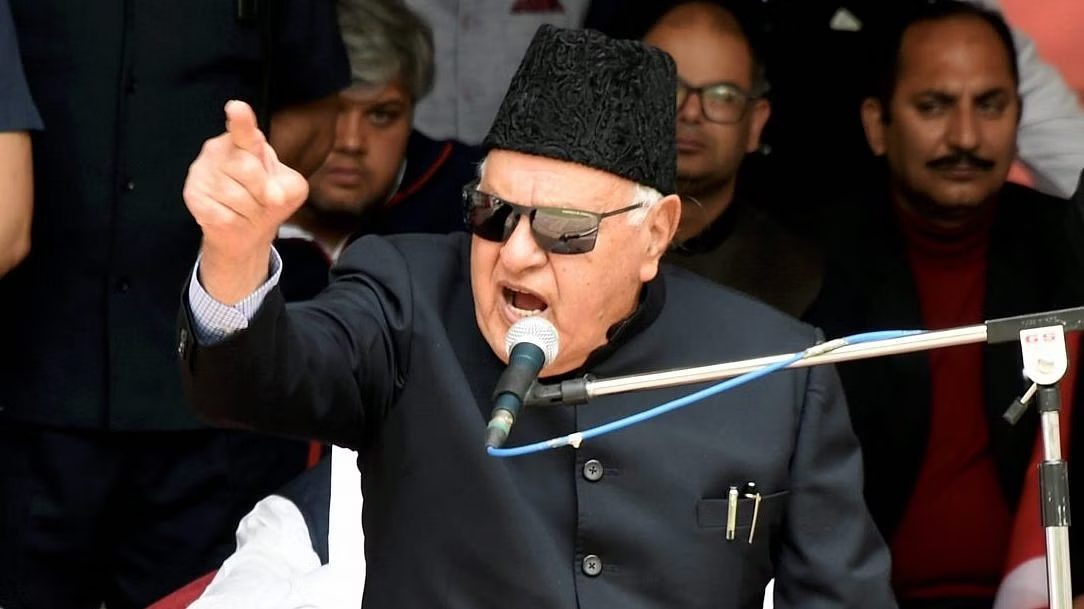
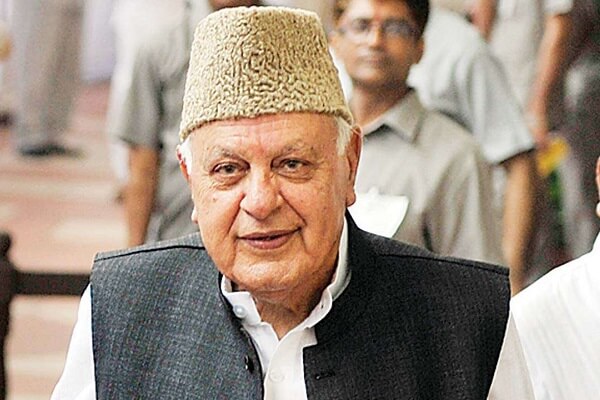
Farooq Abdullah is one of the most experienced and colourful political leaders in India. For more than forty years, he has been at the centre of politics in Jammu and Kashmir, carrying forward the legacy of his father, Sheikh Abdullah, while also carving out his own distinct identity. Known for his charisma, outspoken nature, and sharp political instincts, Abdullah remains a towering figure in Kashmiri public life.


farooq

Early Life and Education

Farooq Abdullah was born on 21 October 1937 in Srinagar, Jammu and Kashmir. He is the eldest son of Sheikh Mohammad Abdullah, also known as the “Lion of Kashmir,” who founded the Jammu and Kashmir National Conference (NC) and played a key role in shaping the state’s political destiny after independence.

Farooq grew up in a politically charged atmosphere but chose medicine as his profession. He studied medicine in India and then went on to the United Kingdom, where he trained further and worked as a doctor. His years abroad gave him both professional skills and exposure to global culture.


Entry into Politics

Though trained as a doctor, Farooq Abdullah’s destiny was tied to politics. After his father Sheikh Abdullah’s death in 1982, Farooq returned fully to public life and was chosen as the President of the Jammu and Kashmir National Conference. Within months, he was sworn in as the Chief Minister of Jammu and Kashmir.

His entry marked a generational shift in Kashmiri politics. Charismatic, tall, and outspoken, Farooq Abdullah quickly became a familiar figure in national politics as well.


Farooq Abdullah with NC Elected Members

Chief Minister of Jammu and Kashmir

Farooq Abdullah served as Chief Minister of Jammu and Kashmir multiple times:

  • 1982–1984: His first term, which ended abruptly after he was dismissed by the then Governor in a dramatic political coup supported by the Centre.
  • 1986–1990: His second term saw major challenges, including growing unrest and the rise of militancy in Kashmir. He resigned in 1990 when insurgency peaked.
  • 1996–2002: After six years of President’s Rule, Farooq Abdullah returned as CM with a large majority. This period was marked by attempts at normalisation, though violence and instability continued.

Throughout these years, Abdullah’s leadership style was often described as bold and sometimes controversial, but he remained the key face of mainstream politics in Jammu and Kashmir.


Role in National Politics

Farooq Abdullah also made his mark in New Delhi. He was elected several times to the Lok Sabha and served as a Union Minister in the United Progressive Alliance (UPA) government under Prime Minister Manmohan Singh. As Union Minister of New and Renewable Energy (2009–2014), he promoted solar and wind energy projects across the country.

His presence in Parliament was never dull—Abdullah became known for his candid speeches, humour, and ability to build friendships across party lines.


Personal Style and Popularity

Farooq Abdullah has always stood out because of his personality. Whether in Kashmir or Delhi, he is known for mixing humour with political sharpness. His frank and often bold statements have landed him in controversies but also won him admirers.

In Kashmir, many see him as a “people’s politician” who connects easily with ordinary citizens. At the same time, his critics argue that his party’s governance did not do enough to resolve deep-rooted problems in the state.


Controversies and Challenges

Farooq Abdullah’s career has not been free of controversy.

  • His terms as Chief Minister coincided with some of the most difficult years in Kashmir, especially the rise of militancy in the late 1980s and early 1990s.
  • Political opponents have accused him of being too close to New Delhi at times, while others have accused him of not doing enough to check violence.
  • In recent years, he has also faced investigations in alleged financial irregularities, including the Jammu and Kashmir Cricket Association (JKCA) case. Abdullah has denied any wrongdoing.

farooq

Current Role and Legacy

Even in his late eighties, Farooq Abdullah remains active in politics. He continues to lead the Jammu and Kashmir National Conference and has played an important role in recent political developments, especially after the abrogation of Article 370 in August 2019. He was one of the senior leaders detained during the clampdown but later released, after which he helped form the People’s Alliance for Gupkar Declaration (PAGD) to push for the restoration of Jammu and Kashmir’s special status.

Farooq Abdullah’s legacy is a mix of achievements, controversies, and resilience. He has been a bridge between Kashmir and New Delhi, sometimes criticised, sometimes praised, but always central to the political story of Jammu and Kashmir.


Conclusion

From doctor to chief minister, from national politician to regional elder statesman, Farooq Abdullah’s life is a reflection of the complex history of Jammu and Kashmir itself. Loved and criticised in equal measure, he remains a key voice for his people and one of the most influential Kashmiri leaders of modern times.

Police Personnel Shafaqat Ahmad from Bandipora Dies of Heart Attack at Home

Violence Erupts in Leh as Protesters Clash with Police Amid Statehood Movement in Ladakh

UK, Canada and Australia Recognise Palestinian State, Defying Israel and US to Revive

Professor Mufti Abdul Ghani Azhari: Scholar, Sufi, Historian, and Social Reformer of Kashmir

Mufti Abdul Ghani Azhari

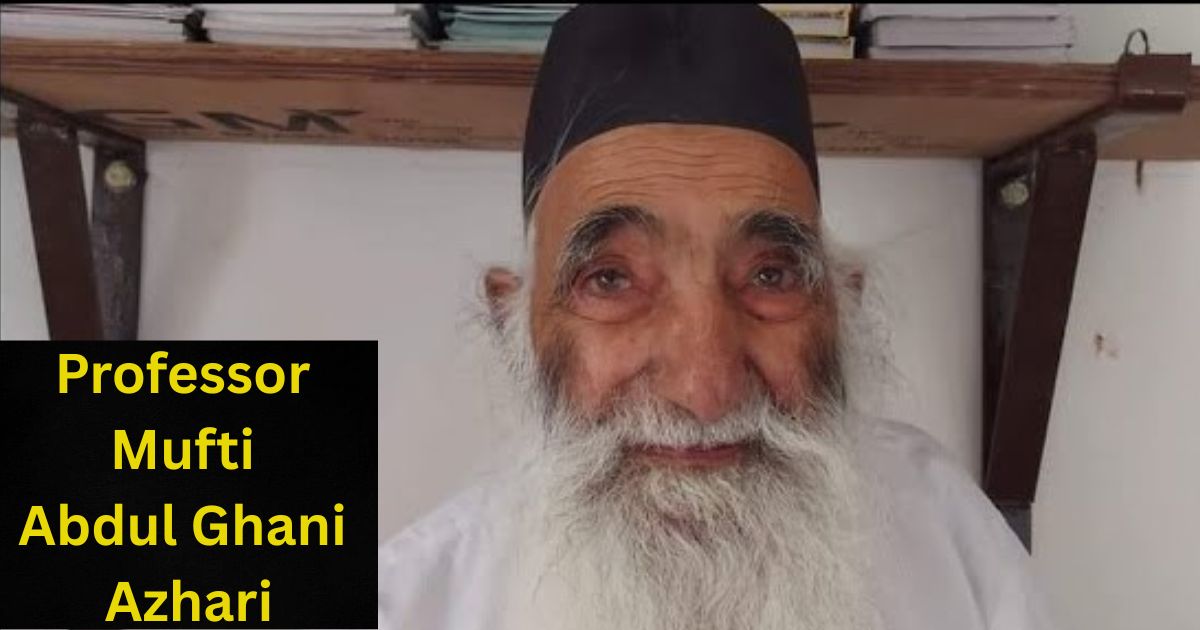
Professor Mufti Abdul Ghani Azhari (1922–2023), also known as Abdul Ghani Shah al-Shashi, was one of India’s most respected Islamic scholars, Sufi teachers, historians, and community reformers. Born in Poonch, Jammu and Kashmir, he belonged to the Gujjar community, a group often marginalised in society. Over his long life of nearly 100 years, he dedicated himself to spreading Islamic knowledge, guiding people spiritually, and uplifting the poor through education and support. His work touched the lives of thousands, especially Gujjar Muslims in Kashmir and across South Asia, leaving a lasting legacy of compassion, wisdom, and unity.

Early Life

Abdul Ghani Azhari was born in 1922 in Poonch, a hilly region of Jammu and Kashmir, to Ali Miyan Shashi. Growing up in the Gujjar community, he saw the challenges faced by his people, including poverty and lack of education. From a young age, he loved learning and had a deep respect for Islamic teachings. His grandfather, Maulana Abdul Halim al-Shashi, a well-known Gujjar scholar of the Quran, played a big role in shaping his early years, encouraging his passion for knowledge and faith. Later, Azhari moved to Sogam, Kokernag, in Anantnag, where he spent much of his life.

Education

Azhari’s thirst for knowledge took him to some of the world’s top Islamic institutions, where he studied under great scholars and gained expertise in many fields:

  • Darul Uloom Deoband (1943): At this famous Islamic school in India, Azhari studied under Hussain Ahmad Madani, a scholar and freedom fighter who taught him key Islamic texts like Sahih al Bukhari and Sunan al Tirmidhi. Madani’s passion for India’s freedom also inspired Azhari to serve his country and community.
  • Mazahir Uloom Saharanpur (1949): Here, he learned from Muhammad Zakariyya Kandhlawi, a leading expert in Hadith (sayings of the Prophet Muhammad). He studied important books like Bulugh al Maram and Mishkat al Masabih, which deepened his understanding of Islamic teachings and spirituality.
  • Al-Azhar University, Cairo (1966): Azhari earned a PhD in Hadith studies with a thesis called Al Imam Al Muslim Wa Manhajuhu Fi Al Hadith Riwayatn Wa Dirayatan (The Methodology of Imam Muslim in Hadith Narration and Analysis). He also gained a diploma in psychology, which helped him combine religious and modern knowledge. His teachers included Abdel-Halim Mahmoud and Abdul Wahhab Abdul Latif, both renowned scholars.

Azhari was also influenced by Maulana Abul Kalam Azad, India’s first education minister, who encouraged blending traditional Islamic learning with modern ideas. This mix made Azhari a unique scholar who could connect with both religious and academic audiences.

Academic and Teaching Career

After his studies, Azhari became a teacher, sharing his knowledge with students and communities. He first taught at Madinatul Uloom in Hazratbal, Srinagar, where he made complex Islamic ideas easy to understand. Later, he became head of the Arabic Department at the University of Kashmir, a role he held until he retired in 1997. His teaching style was clear and inspiring, helping students from all backgrounds learn about Islam, Arabic, and more.

Azhari was a master of many Islamic sciences, including:

  • Quranic Interpretation (Tafsir): He explained the Quran’s meanings, often teaching Tafsir Jalalayn, a well-known commentary.
  • Hadith: As a muhaddith (Hadith scholar), he certified others to teach Hadith and had a chain of transmission going back to Shah Waliullah Dehlawi, a famous 18th-century scholar. He gave famous lectures, like teaching Sahih al Bukhari in just 13 days in Kuwait and at Masjid-e-Nabawi in Madinah.
  • Islamic Law (Fiqh): He was an expert in both Hanafi and Shafi’i schools of Islamic law, teaching books like Bahr al Raiq (Hanafi) and Al Umm (Shafi’i).
  • Sufism (Tasawwuf): As a Naqshbandi Sufi, he guided people towards spiritual growth and inner peace.

He believed the Quran should be read with understanding in any language and urged Muslims to follow its teachings as their guide. He also taught that Hadith should be studied for its own sake, not twisted to fit personal views, following the approach of great scholars like Muhammad Yunus Jaunpuri.

Sufi Teachings

As a follower of the Naqshbandi Sufi order, Azhari focused on the spiritual side of Islam. He believed in:

  • Inner Purification: Remembering Allah to cleanse the heart and soul.
  • Following the Quran and Sunnah: Living by the teachings of the Prophet Muhammad with sincerity.
  • Unity and Peace: Bringing Muslims together and building good relations with other communities.

His sermons were heartfelt and easy to understand, inspiring people to live with love, kindness, and tolerance. His diploma in psychology helped him understand the human heart, making his spiritual guidance even more powerful. He followed the teachings of Imam Ghazali, a famous Sufi scholar, and was seen as a Jamiul Salasil (someone who combined all Sufi orders). He held the title of Amir al Shari‘ah and Sadr al Muftiyeen (chief jurist) of Jammu and Kashmir, showing his high standing as a spiritual leader.

Institutions Founded

Azhari believed education could change lives, especially for those who were poor or marginalised. He set up several schools and seminaries to provide free education, food, and clothing, focusing on the Gujjar community and others in need. These institutions followed the principles of Ahl-i Sunnat wal Jama‘at (Sunni Islam) and taught subjects like Arabic, Persian, Urdu, and logic. Some of his key institutions include:

  • Maktabah Anwar al Uloom (Kokernag, 1950s): Co-founded with Maulana Hafiz Muhammad Chiragh Qasmi, this centre helped Gujjar students learn about their faith and culture.
  • Maktabah al Azhariya (1960, later a Darul Uloom in 1980): A major hub for Islamic learning in Kashmir, serving as the heart of Azhari’s work.
  • Darul Uloom Kawthariya (New Theed, Harwan, 1990): Built near Zabarwan Hills in Srinagar for advanced Islamic studies.
  • Darul Uloom Shah Wali Allah (Donipawa, Anantnag, 2003): A centre for Islamic law and spirituality.
  • Darul Uloom Nizamiyya Madinatul Islam (Badshahibagh, Saharanpur): A leading seminary with an open school up to the 10th standard, serving both poor and privileged students.
  • Seminaries in Jammu: Set up in areas like Nagrota, Sidrah, and Tandah to reach more people.

These schools gave thousands of students, especially from the Gujjar community, a chance to learn and grow, breaking the cycle of poverty through education.

Books and Writings

Azhari wrote several important books that are still used by students and scholars. His works cover Islamic teachings, Sufism, and the history of the Gujjar community. Some of his most notable books include:

  • Qadim Tarikh-e-Gujjar: A detailed history of the Gujjar people, showing their important role in South Asia’s culture and history. This book helped Gujjars feel proud of their heritage and fought against feelings of inferiority. It also had an impact abroad, challenging atheistic ideas in places like Russia.
  • Ma La Budda Minh: An Urdu translation of a book by Mir Syed Ali Hamdani, a great Sufi saint, covering key Islamic beliefs like faith, worship, and kindness.
  • Noor-i Irfan: A collection of Naqshbandi Sufi teachings and letters by Peer Muhammad Sharifuddin, explaining spiritual practices and the lives of Sufi leaders.
  • Gulzar-i Marifat: A book in Punjabi about Sufism and spiritual growth.
  • Urdu Translation of Amir Kabir Mir Syed Ali Hamdani’s Works: Making the teachings of this Sufi saint available to more people.
  • Talimat-e Qur’an: Unfinished writings on the Quran’s teachings, showing his deep love for the holy book.

These books helped preserve Gujjar culture, spread Islamic knowledge, and guide people towards a spiritual life.

Social Work and Gujjar Upliftment

Azhari spent over 70 years helping the poor, especially orphans and those from marginalised groups like the Gujjars. He provided clothing, shelter, and education to anyone in need, regardless of their background. His work gave hope to the Gujjar community, who faced social and economic challenges. By writing about their history and setting up schools, he helped them gain confidence and respect.

Azhari also worked to bring people together, promoting peace between Muslims and other communities. His efforts were praised by scholars like Emmanuel David Singh, who noted his role in fostering harmony in South Asia. Inspired by freedom fighters like Hussain Ahmad Madani and Abul Kalam Azad, Azhari believed in serving both his faith and his country, working to make India a better place for all.

Final Years and Legacy

In his later years, Azhari lived in Sogam, Kokernag, and Saharanpur, Uttar Pradesh, where he continued teaching and guiding people. He passed away on 19 January 2023 in Saharanpur at the age of about 100. His funeral, led by Moulana Mohammad Aaqil, was attended by thousands, showing the love and respect he had earned. Leaders like Farooq and Omar Abdullah paid tributes, calling him a great scholar and spiritual guide.

Professor Abdul Ghani Azhari’s legacy lives on through his schools, books, and the many lives he changed. He was a scholar who made complex ideas simple, a Sufi who spread love and peace, a historian who gave the Gujjars pride, and a reformer who fought for equality and education. For the people of Kashmir and beyond, his work continues to inspire, proving that one person’s dedication can make a difference for generations.

Faith, Family & the Future: Navigating Chaos with Purpose

Kashmir Fruit Growers Face Heavy Losses as Highway Closure Disrupts Transport

From Boom to Bust: How the April 22 Terror Attack Shattered Pahalgam’s Tourism Dream

11 Dead in Ramban and Reasi Weather Tragedies as Landslides and Cloudburst Devastate Jammu

Maulana Abul Kalam Azad: The Visionary Who Predicted the Establishment of Bangladesh in 1946

Maulana Abul Kalam Azad

Maulana Abul Kalam Azad stands as one of the most remarkable figures in the history of India’s struggle for independence—a scholar, journalist, and political leader whose intellectual prowess and foresight left an indelible mark on the subcontinent’s trajectory. Born on 11 November 1888 in Mecca, in what is now Saudi Arabia, to an Indian family displaced by the fallout of the 1857 Indian Rebellion, Azad’s life was shaped by a deep commitment to unity, education, and the rejection of divisive ideologies. Among his many contributions, perhaps his most striking legacy is his prescient prediction in 1946 of the eventual fragmentation of Pakistan, a prophecy that came to fruition with the establishment of Bangladesh in 1971. This article explores Azad’s life, his unwavering advocacy for Hindu-Muslim unity, and the extraordinary accuracy of his warnings about the instability of a nation founded on religious separatism.

Early Life and Intellectual Awakening

Azad’s family history was rooted in the upheavals of colonial India. After the failed 1857 uprising against British rule, his father, Maulana Khairuddin, relocated to Mecca, where Azad was born into an environment steeped in Islamic scholarship and Indian cultural heritage. In 1898, when Azad was ten, the family returned to India and settled in Calcutta (now Kolkata). From a young age, Azad displayed an insatiable curiosity and a profound love for books. By the age of twelve, he was already contributing articles to children’s magazines, showcasing an early talent for writing that would later define his revolutionary influence.

Educated primarily at home under his father’s tutelage, Azad mastered Arabic, Persian, Urdu, and Islamic theology, while also teaching himself English and delving into Western philosophy. This eclectic education shaped his worldview, blending traditional Islamic thought with modern ideas of nationalism and unity. By his late teens, Azad had emerged as a prolific writer and thinker, determined to use his pen as a weapon against colonial oppression and communal division.

The Revolutionary Voice of Al-Hilal

In 1912, at the age of 24, Azad launched Al-Hilal, a weekly Urdu magazine that became a clarion call for Indian nationalism and Hindu-Muslim unity. Published from Calcutta, Al-Hilal was revolutionary in its tone and content, urging Indians—regardless of religion—to unite against British rule. Its bold editorials and incisive critiques of colonial policies quickly drew the ire of the British authorities. Within two years, the magazine’s security deposit was confiscated, heavy fines were imposed, and it was shut down in 1914. Undeterred, Azad briefly revived his efforts with another publication, Al-Balagh, but the British response was swift and severe.

In 1916, Azad was ordered to leave Bengal and was interned in Ranchi (in present-day Jharkhand) until 1920. This period of confinement only strengthened his resolve. Far from silencing him, it provided time for reflection and cemented his belief that India’s freedom depended on the solidarity of its diverse communities, particularly Hindus and Muslims—a vision that would guide his political career.

Champion of Unity Over Division

Azad’s entry into the mainstream political arena coincided with the rise of the Indian National Congress, which he joined with a fervent commitment to its secular ethos. He emerged as a staunch opponent of the Muslim League’s Two-Nation Theory, which posited that Hindus and Muslims constituted separate nations requiring distinct homelands. For Azad, such an idea was anathema to India’s pluralistic heritage and a betrayal of the shared struggle against British rule.

In a powerful speech delivered in Agra in 1921, Azad articulated the core mission of Al-Hilal: “My first objective is Hindu-Muslim unity. I wish to tell Muslims that it is their duty to establish a bond of love and brotherhood with Hindus so that we may build a successful nation together.” This conviction was not mere rhetoric; Azad believed that unity was more vital than independence itself. In his presidential address at a special Congress session in 1923, he famously declared, “Even if a goddess descended from the heavens and offered us freedom within 24 hours in exchange for Hindu-Muslim unity, I would reject it. A delay in freedom might cause us some harm, but if our unity is broken, it will be a loss to all of humanity.”

At a time when nationalist sentiments were increasingly entangled with religious identities, Azad envisioned an India where religion, caste, sect, or gender would not obstruct equal rights—a radical stance that set him apart from many contemporaries.

Opposition to the Muslim League and Partition

As the Muslim League, led by Muhammad Ali Jinnah, gained traction with its demand for Pakistan, Azad became its most vocal critic within the Congress. On 15 April 1946, as Congress president, he delivered a scathing assessment of the Two-Nation Theory: “I have examined the Muslim League’s demand for a separate country in the form of Pakistan from every angle and concluded that this decision will not only be detrimental to India but will also exact a heavy toll on Muslims themselves. Far from being a solution, it will create more problems.”

Azad fought tirelessly to prevent the partition of India, warning of the catastrophic consequences of division. When the contours of partition became clear in 1946, and both the Congress and the Muslim League appeared resigned to it, Azad issued a chilling prophecy: “This new country, built on the foundation of hatred, will survive only as long as that hatred persists. When the fire of partition cools, this nation will begin to split into pieces.” He foresaw that Pakistan, conceived in enmity, would struggle to cohere as a unified state—an insight that would prove uncannily accurate.

The Prediction of Bangladesh’s Emergence

Azad’s warnings about Pakistan’s future were not vague generalities; they were specific and prescient. Before Pakistan’s creation in 1947, he predicted that it would not remain united, that its political leadership would be overshadowed by military rule, that it would sink under debt, and that it would face conflicts with neighbouring countries. Most strikingly, he anticipated the rise of regional identities that would fracture the nation. He cautioned that the imposition of a singular national identity based on religion would falter against the cultural and linguistic diversity of its people.

This foresight was dramatically validated in 1971, when East Pakistan—home to a Bengali-speaking majority—broke away to form Bangladesh after a bloody war of independence. The seeds of this schism were sown in Pakistan’s early years, as the dominance of West Pakistan’s Urdu-speaking elite alienated the Bengali population, who comprised over half of Pakistan’s citizens yet were marginalized politically and economically. Azad’s 1946 prediction that “this new country will begin to split into pieces” found its clearest expression in Bangladesh’s emergence, a testament to his understanding of the fragility of a state built on division rather than unity.

Warnings for Indian Muslims and Pakistan’s Future

Azad’s vision extended beyond Pakistan’s borders. He urged Indian Muslims not to migrate to Pakistan, arguing that their exodus would weaken the Muslim community in India rather than strengthen the new nation. “If you cross the border, Pakistan will not become stronger; instead, Indian Muslims will be weakened,” he cautioned. He foresaw that in Pakistan, migrants from India—later termed Muhajirs—would be treated as outsiders, while indigenous populations would assert their regional identities. “The time is not far when those already living in Pakistan will rise for their regional identity, and those coming from India will be seen as uninvited guests,” he warned.

Addressing Muslims directly, Azad emphasized the shared national bond with Hindus: “Though Hindus differ from you in religion, they are not different in terms of nationhood and patriotism. In Pakistan, however, you will be seen as citizens of another nation.” His words proved prophetic as Pakistan grappled with internal strife—between Muhajirs and local communities, and between provinces like Sindh, Balochistan, and Punjab—while Indian Muslims navigated their identity in a secular state.

Legacy and Final Years

Maulana Azad’s life was a testament to his principles. He served as India’s first Education Minister after independence, laying the foundation for institutions like the Indian Institutes of Technology (IITs) and championing universal education. Yet, the partition he had fought to prevent remained a source of profound sorrow. On 22 February 1958, he passed away in Delhi, leaving behind a legacy of intellectual rigor, moral courage, and an unyielding belief in unity.

Azad’s prediction of Bangladesh’s establishment in 1946 underscores his extraordinary prescience. He understood that nations forged in hatred and exclusion could not endure, a lesson borne out by Pakistan’s division less than 25 years after its birth. His advocacy for Hindu-Muslim unity, though unheeded in his time, remains a powerful vision for a pluralistic society. In an era of rising division, Azad’s life and words continue to resonate, reminding us that true strength lies in solidarity, not separation.

( Writer : Sheikh Mohammad Isa Famous Journalist and Writer From India )

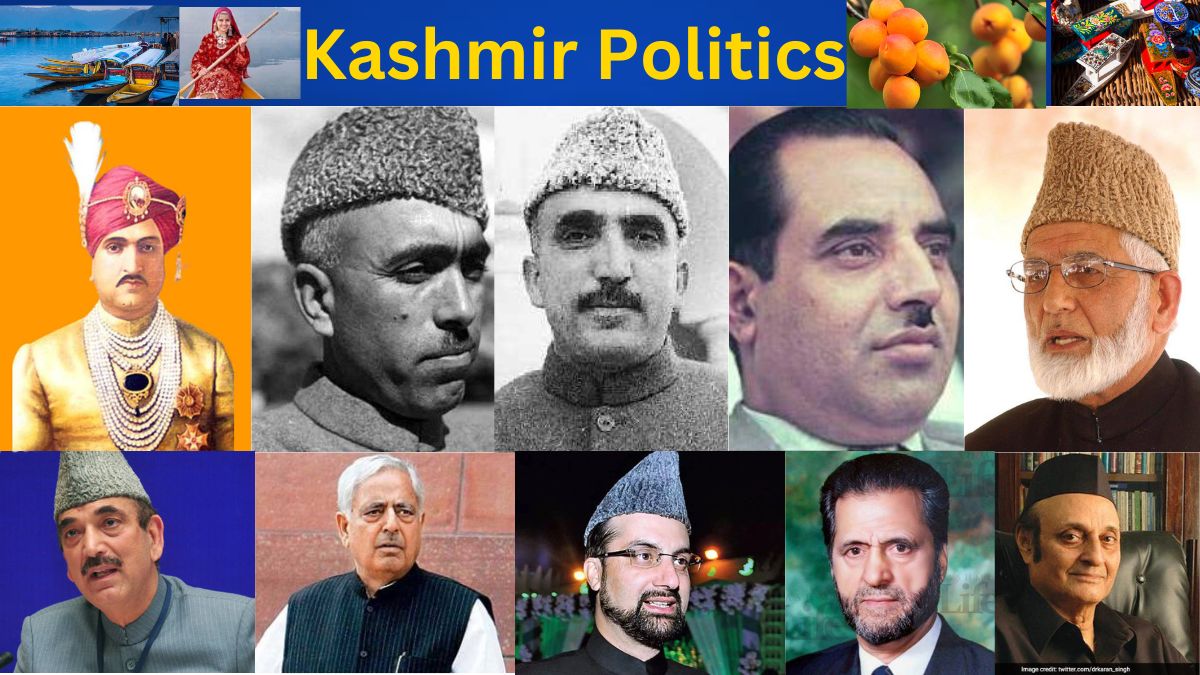
Kashmir Politics From Mahraja Hari Singh To Syed Ali Geelani

Kashmir Politics

The political landscape of Kashmir, an enchanting region in the northernmost part of the Indian subcontinent, is a captivating tapestry of culture, history, and diverse perspectives. With a rich and complex history that dates back centuries, Kashmir’s politics is a dynamic field that has evolved through time. This unique region, with its breathtaking landscapes and a multifaceted population, has its own set of challenges, aspirations, and political nuances that shape the local political discourse.

The political narrative of Kashmir extends beyond its picturesque scenery to encompass governance, cultural preservation, economic development, and regional dynamics. This introduction will provide an overview of the historical and contemporary aspects of Kashmir’s political landscape, exploring the various dimensions that contribute to its distinctive identity and political character. Without delving into the contentious sovereignty issues, we’ll uncover the intricacies of a region where politics is deeply intertwined with the aspirations and challenges of its people.

Maharaja Hari Singh, a prominent figure in the history of the princely state of Jammu and Kashmir, was born on September 23, 1895, in the royal family of Jammu. As the last ruling Maharaja of the princely state, Hari Singh played a crucial role during a period of significant political upheaval in the Indian subcontinent. His reign, which spanned from 1925 to 1947, witnessed the challenges of a changing political landscape as the Indian independence movement gained momentum.

Hari Singh ascended to the throne of Jammu and Kashmir at a time when the region was marked by diverse cultures, languages, and religious communities. His leadership was tested during the tumultuous times leading up to the partition of British India in 1947, when he faced the difficult decision of acceding to either India or Pakistan. The choices he made during this critical juncture had profound and lasting implications for the future of the region.

Beyond the political complexities, Maharaja Hari Singh was known for his contributions to the cultural and social development of Jammu and Kashmir. His legacy is a multifaceted one, reflecting the challenges and responsibilities of leading a princely state during a period of historic significance. This introduction merely scratches the surface of the life and times of Maharaja Hari Singh, a figure whose influence on the destiny of Jammu and Kashmir is indelible.

Bakshi Ghulam Mohammad, a prominent political figure in the post-independence era of India, was born on February 5, 1907, in the town of Rajouri, Jammu and Kashmir. He emerged as a key player in the political landscape of the region during a critical period marked by the integration of princely states into the newly formed Indian Union.

Bakshi Ghulam Mohammad’s political career gained momentum in the aftermath of Maharaja Hari Singh’s reign in Jammu and Kashmir. Serving as the Prime Minister of the state from 1953 to 1963, he navigated through the complex socio-political landscape, addressing the challenges of governance in a region with diverse ethnicities, languages, and religious communities. His tenure witnessed significant developments, including the establishment of the Constituent Assembly of Jammu and Kashmir, which played a crucial role in defining the political future of the state.

Known for his pragmatism and political acumen, Bakshi Ghulam Mohammad played a pivotal role in consolidating Jammu and Kashmir’s ties with the Indian Union. However, his political journey was not without controversy, as his leadership faced criticism and opposition from various quarters. Despite the challenges, Bakshi Ghulam Mohammad left an indelible mark on the political history of the region.

This introduction provides a glimpse into the life of Bakshi Ghulam Mohammad, shedding light on his contributions and the complex dynamics that characterized his tenure as a key political figure in the post-independence era of Jammu and Kashmir.

Sheikh Mohammad Abdullah, a towering figure in the political landscape of Jammu and Kashmir, was born on December 5, 1905, in Soura, a village near Srinagar. Fondly known as the “Lion of Kashmir,” Abdullah played a pivotal role in shaping the region’s destiny during a crucial period of transition and change.

As a charismatic leader and the founder of the Jammu & Kashmir National Conference, Sheikh Abdullah became the voice of the people, advocating for their rights and socio-economic development. His political journey saw him at the forefront of the struggle against the autocratic rule of the Maharaja in the princely state. Popularly known as the “Sher-e-Kashmir,” he spearheaded the demand for political autonomy and social justice.

Sheikh Abdullah’s influence extended beyond regional boundaries, engaging with national leaders and contributing to discussions on India’s political landscape. His leadership took a nuanced turn when he briefly held the position of Prime Minister of Jammu and Kashmir and later served as the Chief Minister.

The complex and multifaceted legacy of Sheikh Mohammad Abdullah is marked by his efforts to bridge cultural divides, empower the marginalized, and navigate the intricate socio-political dynamics of the region. This introduction only scratches the surface of the life and impact of a leader whose imprint on the history of Jammu and Kashmir remains indelible.

Abdul Gani Lone was a prominent political figure from Kashmir. Born on July 17, 1932, in the town of Kreeri in Baramulla district, Lone played a significant role in the political landscape of Jammu and Kashmir.

Abdul Gani Lone was associated with the Jammu & Kashmir People’s Conference, a political party that he co-founded in the late 1970s. He was known for his advocacy of political autonomy and his efforts to represent the aspirations of the people of Jammu and Kashmir on various platforms. Over the years, he engaged in dialogues with different stakeholders, seeking a peaceful resolution to the complex issues facing the region.

Lone’s political journey was marked by a commitment to dialogue and a belief in a peaceful resolution to the issues surrounding the region. Tragically, his life was cut short when he was assassinated on May 21, 2002, during a commemorative rally in Srinagar. His death was a significant event that had repercussions on the political landscape of Jammu and Kashmir.

It’s important to note that developments may have occurred since my last update, and for the latest and most accurate information about Abdul Gani Lone, I recommend checking recent and reliable sources.

Syed Ali Shah Geelani, a prominent political and religious figure, played a key role in shaping the political landscape of Jammu and Kashmir for several decades. Born on September 29, 1929, in the town of Zoorimunz, Gilgit-Baltistan, Geelani emerged as a steadfast advocate for the rights and self-determination of the people of Kashmir.

A prominent voice in Kashmiri politics, Geelani was associated with various political and religious movements throughout his life. He was a long-time member of the Jamaat-e-Islami and later became a prominent leader of the All Parties Hurriyat Conference, an amalgam of various separatist groups in the region. Geelani consistently called for the implementation of the United Nations resolutions on Kashmir and advocated for the right to self-determination for the people of the region.

Known for his uncompromising stance on the Kashmir issue, Syed Ali Shah Geelani faced various challenges and controversies during his political career. His advocacy for Kashmir’s independence or accession to Pakistan made him a polarizing figure, drawing both support and criticism.

Syed Ali Shah Geelani’s influence extended beyond political realms to include a significant religious following. His commitment to the Kashmir cause and his principled stand on the region’s political status have left a lasting impact on the complex and often contentious dynamics of Jammu and Kashmir.

Annual Conference Held at Darul Uloom Noor-ul-Islam Tral Pulwama

Dastar Bandi Programme Organised at Jamia Masjid Chowgam by Darul Uloom Syed ul Mursaleen

Mirwaiz-e-Kashmir: Deepen Commitment to Prophet Muhammad’s (PBUH) Teachings to Respond to Hurtful Actions

Dar-ul-Uloom Baba Nazuk Celebrates Annual Day,Moulana Syed Ahmad Khazir Shah Masoodi Attend Event in Kupwara