Jammu and Kashmir AAP chief and MLA Mehraj Malik was on Monday detained under the stringent Public Safety Act (PSA) in Doda district, officials said.This is for the first time that a sitting MLA has been detained under the PSA, an administrative law that allows detention without charge or trial for up to two years in some cases.
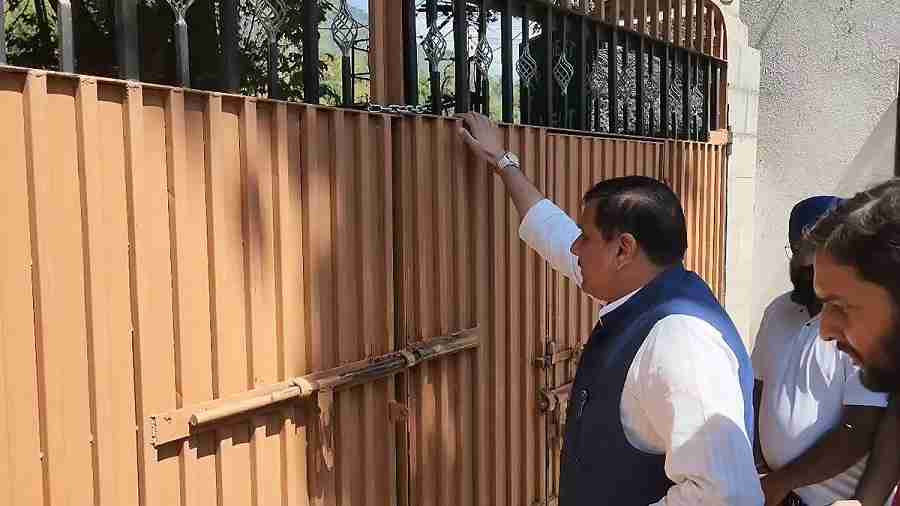
Earlier, a case was registered against Malik after he was allegedly seen removing medical equipment and life-saving drugs from a government-run Ayushman Arogya Mandir/Health and Wellness Centre at Kencha village in Doda district.
The incident was live-streamed on social media, reported Tribune newspaper.
Quoting an official statement from the district health authorities, it said the wellness centre in Kencha village, Thathri block, has been operating out of a rented two-room private building for over five years. Nearly two years ago, one of the rooms had sunk and sustained structural damage, prompting repeated safety concerns from residents.
Following inspections, the Block Medical Officer, Thathri, took up the matter with the Chief Medical Officer (CMO), Doda, to relocate the facility. Several committees were formed to assess alternative sites, and after due process, a building owned by one Abdul Rashid was approved. However, Malik opposed the decision, accusing the administration of corruption and favouritism, and instead supported another proposal from Ghulam Ali Malik, which was rejected for failing to meet the required criteria.
The statement alleged that the MLA, accompanied by others, forcibly removed equipment and medicines, disrupting emergency services and affecting the distribution of drugs to patients.
An FIR has been registered at Gandoh Police Station under Sections 221, 329(3), 351(2), 305(e), and 191(2) of the Bharatiya Nyaya Sanhita (BNS) against those involved, including the MLA.
In response, Mehraj Malik issued a statement on social media, saying he had already submitted a written request to the CMO, Doda, for relocating the centre in line with public demand and to a location he claimed was more suitable. He further alleged that the Deputy Commissioner was attempting to “favour the mafia” and used harsh words against the official in his remarks.
Police cited as many as 18 FIRs and multiple public complaints against Malik, accusing him of abusing officials, obstructing relief and development works, and instigating youth in Doda district. Authorities said the detention was necessary to maintain public order, and hinted that more PSA detentions could follow in the coming days, reported news agency KDC.
In the 2024 Jammu and Kashmir elections, Malik defeated his nearest rival from the BJP in Doda constituency by a margin of over 4,538 votes and registered the first win for his party in the Union territory.
He won the District Development Council elections from Kahara constituency of Doda on December 24, 2020. He resigned from the post after winning the assembly elections in October last year.
Click Here To Follow Our WhatsApp Channel
You Might Also Like:
Hazratbal Shrine Vandalism Sparks Political, Religious Row in Jammu & Kashmir
Hazratbal Emblem Row: Waqf Board Chief Darakshan Andrabi Demands FIRs
Engineer Rashid Narrowly Escapes Attack Inside Tihar,AIP Demands Probe into Alleged Harassment
Milad un Nabi 2025: History, Significance, Celebrations, and Debates Around Prophet Muhammad