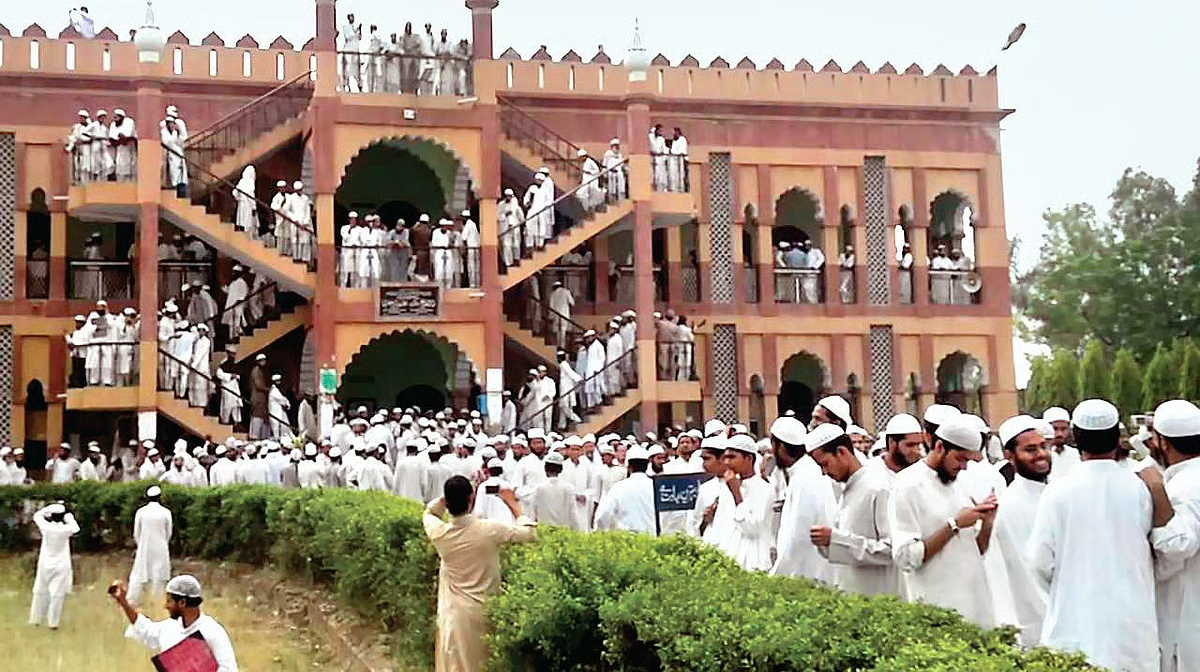
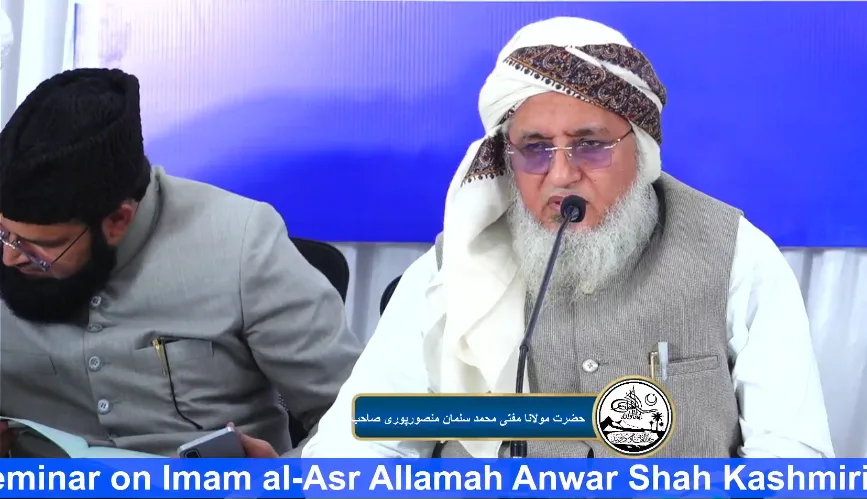
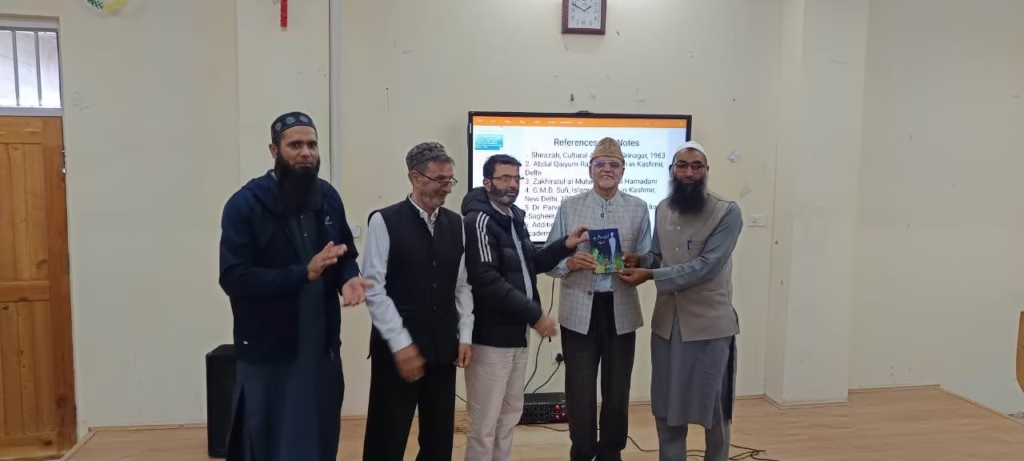
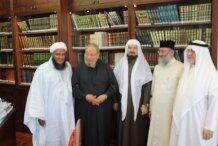
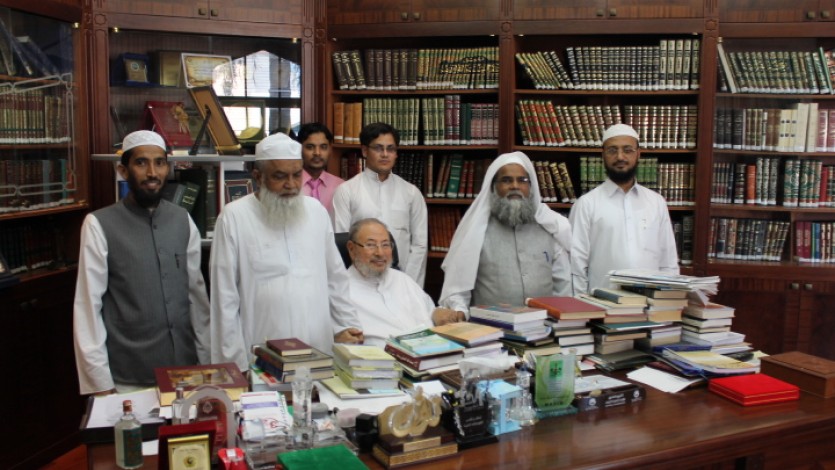
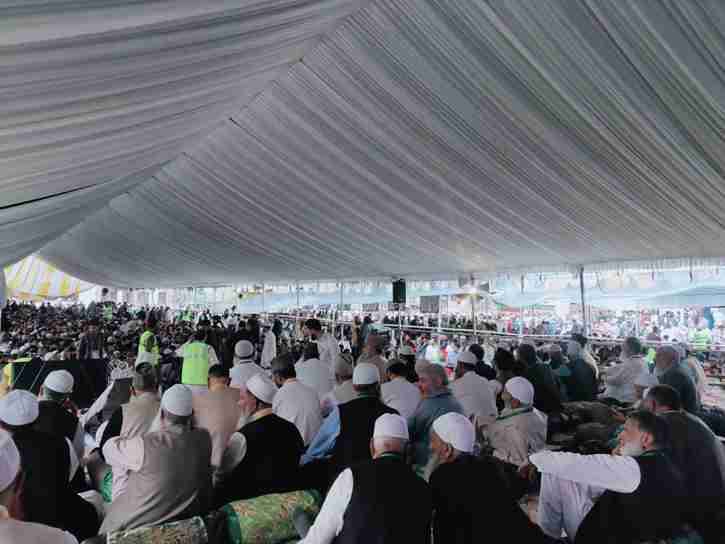
A two-day international seminar focusing on the life, thoughts, and scholarly contributions of Alama Anwar Shah Kashmiri (رحمہ اللہ) has formally begun in Deoband. The event has brought together leading Islamic scholars, researchers, university teachers, and madrasa representatives from across India and abroad.Click Here To Follow Our WhatsApp Channel
The opening session was held in a serious and dignified academic atmosphere. Ameer-e-Shariat and thinker of the Ummah, Hazrat Maulana Ahmad Wali Faisal Rahmani (دامت برکاتہم), the sajjada-nashin of Khanqah Rahmani, Munger, attended the inaugural programme along with many senior scholars and well-known academic personalities. Their presence added weight and importance to the seminar.
From the very beginning, the seminar reflected deep respect for knowledge and tradition. A large gathering of scholars and researchers participated, showing the lasting influence of Anwar Shah Kashmiri (رحمہ اللہ) in Islamic learning. The organisers highlighted that the purpose of the seminar is not only to remember his personality, but also to understand his thoughts and apply them in today’s academic and intellectual environment.
During different sessions over the two days, detailed papers are being presented on his major contributions to Hadith, Tafsir, Fiqh, and Arabic literature. Speakers are discussing his teaching style, depth of knowledge, strong memory, and his role in shaping Islamic scholarship in the Indian subcontinent. Special attention is being given to how his works continue to guide students and scholars even today.
Speakers also stressed that Anwar Shah Kashmiri (رحمہ اللہ) was not limited to one field of learning. His ability to connect different branches of knowledge made him a unique scholar of his time. Through discussions and presentations, participants are exploring how his approach can help strengthen current educational and research traditions.
The organisers said that this international seminar is a sincere effort to promote intellectual dialogue and encourage research-based learning. It aims to provide a strong academic foundation for future generations while keeping alive the rich legacy of past scholars.
Overall, the seminar stands as a meaningful tribute to Imam al-Asr Anwar Shah Kashmiri (رحمہ اللہ), reminding the academic world of his lasting impact and the continued relevance of his scholarly heritage.
The Department of English Language and Literature, Islamic University of Science and Technology (IUST) conducted a two-day workshop titled “Bridging Barriers: Connecting Communities through Language and Literature” under its Community Outreach Program.Click Here To Follow Our WhatsApp Channel
According to a statement issued here, the workshop engaged students from Darul Uloom Jamiat-ur-Rashad, Awantipora, through a series of interactive and skill-oriented sessions designed to promote communication skills and strengthen community bonds, in line with the University’s Community Connect initiative.
Welcoming the participants, Head of the Department, Dr. Munejah Khan, introduced the visiting students to the Department’s academic offerings and the advanced facilities of the Language Lab. She underscored the importance of effective communication and the need to build meaningful connections across diverse communities. Day one focused on the foundational skills of language reading, writing, listening, and speaking through practical language activities, a hands-on session on application writing, and a guided tour of the University campus.
Day two explored the power of storytelling and poetry in fostering expression and understanding. Participants took part in literary exercises aimed at enhancing their appreciation of narrative techniques and poetic forms, gaining a deeper insight into the elements and structure of both genres. The workshop was coordinated by Dr. Muddasir Ramzan, Community Connect Coordinator for the Department included sessions by different faculty members of the department.
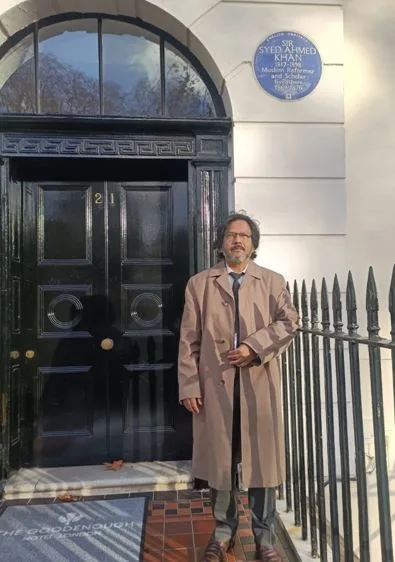
Professor Mohammad Sanaullah al-Nadawi, a well-known Indian Arabic scholar and former Head of the Department of Arabic at Aligarh Muslim University (AMU), recently represented India at a major international conference held in London. The two-day event was organised by the prestigious Al-Furqan Islamic Heritage Foundation and focused on “Early Traditions of Translation in Islamic History.”
Keynote Lecture on India’s Influence on Medieval Baghdad
During the conference, Professor Sanaullah delivered an important keynote lecture titled “India’s Role in the Formation of Medieval Baghdad.” In his talk, he explained how large numbers of Indian (especially Sanskrit) books on medicine, astronomy, philosophy, mathematics, and literature were translated into Arabic during the Abbasid period in Baghdad.
Sanskrit scientific works greatly influenced the development of Islamic knowledge.
Abbasid rulers and the famous Barmakid ministers strongly supported translation projects.
Indian ideas helped shape Baghdad’s intellectual and scientific culture in the medieval period.
His lecture received appreciation from scholars and participants for shedding light on India’s long-standing contribution to global learning.
Strong Role in Al-Tilmeez Research Journal
Professor Sanaullah is also the Vice Chief Patron of the International Research Journal Al-Tilmeez, one of the leading Arabic journals published from Jammu & Kashmir under the Chief Editorship of Dr Meraj Nadvi. His guidance and international experience have helped the journal grow in academic quality and global recognition.
Visits to London’s Historic and Academic Centres
During his visit, Professor Sanaullah also toured several iconic places in London, including:
The Royal Palaces
University of London
The British Museum
The British Library
The Athenaeum Club
Caxton Hall
21 Mecklenburg Square
The Athenaeum Club and 21 Mecklenburg Square hold great historical value, as they are linked to Sir Syed Ahmad Khan, the founder of Aligarh Muslim University, who stayed there during 1869–70.
Engagements at Oxford and Cambridge
After the London conference, Professor Sanaullah visited the Universities of Oxford and Cambridge, where he met prominent scholars such as:
Professor Julia Bray, Bodleian Chair of Medieval Arabic Literature at Oxford
Professor Tahera Qutbuddin, award-winning scholar of Arabic oratory
Scholars from the Oxford Centre for Islamic Studies, including Dr Mohammad Akram Nadwi, founder of the Al-Salam Institute in London
He also met Dr Wafaa Abdul Razzaq, a distinguished literary figure and nominee for the Nobel Prize in Literature.
A Proud Moment for Indian Scholarship
Professor Sanaullah’s participation in this international conference and his interactions with leading academics have been widely appreciated in India’s academic community. His visit highlighted the important historic links between India and the Islamic world and strengthened India’s presence in global scholarly discussions on Islamic heritage.
My dear students, It has been brought to my attention, through my dear student, Mr Ali Rasul, that many of you at Al-Salam feel disheartened because, despite your sincere effort and hard work, you still struggle to progress quickly in understanding the Arabic language. Some of you mentioned that it can take nearly an hour to read a single page from my book Man ‘Allamani, even when you consult a good dictionary. I understand this feeling very well, and I wish to offer you some guidance that may help you move forward with renewed clarity and confidence.
Let me first reassure you that what you are experiencing is entirely normal. Arabic, being a rich and deeply expressive language, requires time and steady exposure before one begins to read it with ease and fluency. The book Man ‘Allamani was not designed for beginners; it assumes a certain mastery of grammar, morphology, and vocabulary, as well as familiarity with Arabic style and idiom. Starting directly with such a book can make you feel discouraged because it demands skills that naturally develop only after reading many simpler texts. Therefore, do not begin your Arabic reading journey with Man ‘Allamani. Instead, build your foundation through easier and more enjoyable readings that will strengthen your understanding step by step.
Language learning is most effective when it follows a graded progression, moving gradually from the simple to the complex, from short phrases to longer and more sophisticated expressions. Begin with texts that are easy, fluent, and engaging. A very useful starting point is the Silsilat al-‘Arabiyyah lil-Nāshi’īn (العربية للناشئين) series or similar graded readers. These books teach you grammar, vocabulary, and sentence structure in a balanced way, helping you gain confidence in both reading and comprehension. Once you have mastered such materials, you can move on to the next stage: developing a taste for Arabic literature.
After completing the elementary stage, I strongly recommend that you study Kalīlah wa Dimnah. This marvellous collection of fables, originally an Indian work translated into Persian and then rendered into Arabic by the great writer Ibn al-Muqaffa‘, is a masterpiece of Arabic prose. It combines simplicity with eloquence, wisdom with beauty, and offers a gateway into the world of Arabic literature. Our revered teacher, Shaykh Abul Hasan ‘Ali Nadwi (may Allah have mercy on him), once told us that he read Kalīlah wa Dimnah forty times, and he advised his students to do the same. I have followed his example and likewise recommend that you read it repeatedly, each reading will reveal new subtleties and deepen your appreciation of Arabic expression.
Once you have become comfortable with Kalīlah wa Dimnah, continue with Majmū‘ah min al-Nazm wa al-Nathr lil-Ḥifẓ wa al-Tasmī‘, reading it attentively and analysing the beauty of both its poetry and prose. Thereafter, explore Manthūrāt min Adab al-‘Arab by Shaykh Muḥammad al-Rābi‘ al-Ḥasanī al-Nadwī, and Mukhtārāt min Adab al-‘Arab by Shaykh Abul Hasan ‘Ali al-Ḥasanī al-Nadwī. For students who wish to experience the grandeur of classical Arabic, I also recommend studying Dīwān al-Ḥamāsah by Abū Tammām, especially the sections on manner, elegy, and valour, accompanied by the commentaries of al-Marzūqī and al-Tabrīzī. These works will train your literary sensitivity and help you appreciate the strength and elegance of Arabic expression.
In addition to classical works, it is equally important to read the writings of modern masters of Arabic style, who combined clarity, depth, and eloquence. Among them are Muṣṭafā Luṭfī al-Manfalūṭī, Ṭāhā Ḥusayn, Aḥmad Amīn, Muṣṭafā Ṣādiq al-Rāfi‘ī, Shaykh ‘Alī al-Ṭanṭāwī, and Abul Hasan ‘Ali al-Nadwī. Their books are treasures of modern Arabic literature, rich in thought and refined in language, and they can serve as excellent models for students who aspire to write and speak with fluency and taste.
For practical guidance, I suggest the following sequence. Begin with simple, well-written Arabic texts containing short, clear, and eloquent sentences. Progress to short storybooks that use familiar vocabulary and straightforward grammar. Then move on to longer narratives and essays with richer vocabulary and more complex ideas. For Arabic learners, the following books are highly beneficial and beautifully written: the children’s stories of Kāmil Kilānī; Qiṣaṣ al-Nabiyyīn by Abul Hasan ‘Ali Nadwī; Ṣuwar min Ḥayāt al-Ṣaḥābah and Ṣuwar min Ḥayāt al-Tābi‘īn by ‘Abd al-Raḥmān Rāfat Bashā; Al-Ayyām by Ṭāhā Ḥusayn; and Dhikrayāt by ‘Alī al-Ṭanṭāwī. Reading these works in order will gradually increase your fluency, vocabulary, and literary appreciation.
Finally, remember that progress in Arabic, or in any language, depends not on speed, but on consistency, patience, and genuine love for the language. Read daily, even if only for a few pages. Try to understand the context before looking up every new word; allow your mind to absorb meaning naturally. Read aloud when possible, and listen to good Arabic speech to attune your ear to the language’s rhythm and melody. With time, you will find that what once took you an hour to read will take only minutes. The Arabic language will open its beauty to you gradually, and your effort will surely bear fruit.
May Allah bless your studies and make your journey in the Arabic language one of joy, insight, and spiritual enrichment.
Islam is unique in that it is the only religion that established a civilisation according to its own principles and temperament. Islam is unique also in recognising that religions other than itself exist, that their adherents claim they are true, and that these religions somehow have to coexist. From a position of political and cultural strength the Muslims accordingly established a civilisation that made space for other religions, and the languages and cultures associated with them. The language of its founding Scripture and its founding figure retained its authority. In fact, the authority of that language naturally flowed out of its Arab heartland to wherever the Muslims went, and it became the common language of all cultured peoples, whatever their religion, throughout the vast area from the Atlantic to the South China Sea.Click Here To Follow Our WhatsApp Channel
Other religions have, either by choice or by force of circumstance or a mixture of the two, developed within civilisations founded on principles other than their own. Christianity is perhaps the most extreme case. Its beliefs and rituals, its conception of religious authority and the expression of that authority in formal structures and organisations, were heavily influenced by the Hellenic civilisation into which it had deliberately drifted, away from the beliefs and rituals of the Jewish community where it began. Its principal scriptural language was not the language of the man claimed as its founding figure, but the Greek and, later the Latin, of the Roman world.
History in Islam is dated to the Hijrah – one of a number of momentous decisions taken by the Companions without specific guidance from the Qur’an or God’s Messenger. Another was the decision to collect the Qur’an into a single Mushaf, or Book. The first hijrah, to Abyssinia, was a flight from danger into safety, from persecution to protection. The Hijrah proper, to Yathrib, had those aspects, but more than that, it was the foundation of Madina, the first Muslim city, the gathering in a territory and a jurisdiction of people associated not by tribe, nor by a military and political alliance, but by a common commitment to the faith and to what that commitment entailed. The Hijrah represented an effort to leave behind one way of life and establish a new way of life based on the faith. The conversion of Yathrib into Madina symbolises that momentous change. It entailed lasting effects on personal manners, ethical conduct, social, economic and political relationships, and, very importantly on the pursuit of knowledge, the relationship human beings build with the world around them. This world includes the past as well as the present; it includes natural as well as human phenomena. Muslims made huge leaps in understanding both.
History is important in Islam. It is the informal and unfolded expression of being Muslim. The five daily prayers, the Ramadan fasting, the hajj, and other distinctively Muslim acts of worship and lifestyle, are formal and closed expressions of being Muslim, not shared with peoples who are not Muslim. But history is what Muslims do in the world, the public space, the space that they share with non-Muslims as well as Muslims. In this respect also the exceptional unity of Islam is evident. Aristotle achieved astonishing feats as a thinker and philosopher – many of the divisions and disciplines of knowledge we know today are owed to him. Yet he was a cultural bigot; he despised peoples other than the Greeks and considered them barbarians who should be enslaved until they could become civilised, i.e. Greek. His pupil Alexander, and his imperial successors, put this concept into practice with astonishing courage, military and organisational skill, and unflinching cruelty. Within the mainstream of Islam, by contrast, the greatest men and women were not admired unless they combined great achievement in the world with depth of understanding of Islam and personal piety. It is not until the twentieth century that men like Kemal Ataturk came to be regarded as popular heroes because of their political service to the Muslims, even though, in their personal conduct and attitudes to Islam, they were on the side of the cultural enemies of the Muslims.
The history of Islam is a story of human effort to express and achieve unity between culture, civilisation and religion in every sphere of life. It is an uneven effort, with uneven success. IN our diminished present time, it is found very active in personal lives, especially among the poor; there is not much evidence of it in legal and political structures. But even now, there is very little of elaborated liturgy, or song and dance, in Islamic worship. Worship is still every-day and is allowed to flow into the rest of life. The aesthetic elements of religious activity, among the mainstream Sunnis, are not elaborated and emphasised as they are in other religions, and so expressions in art-forms do not become a substitute for the expression of faith and identity in history.
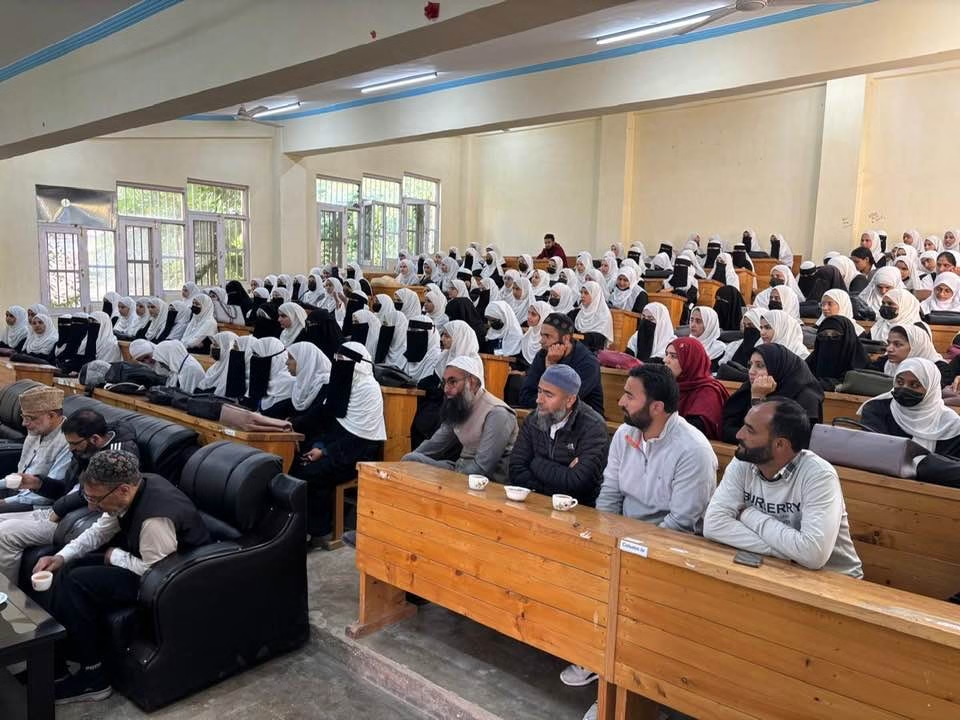
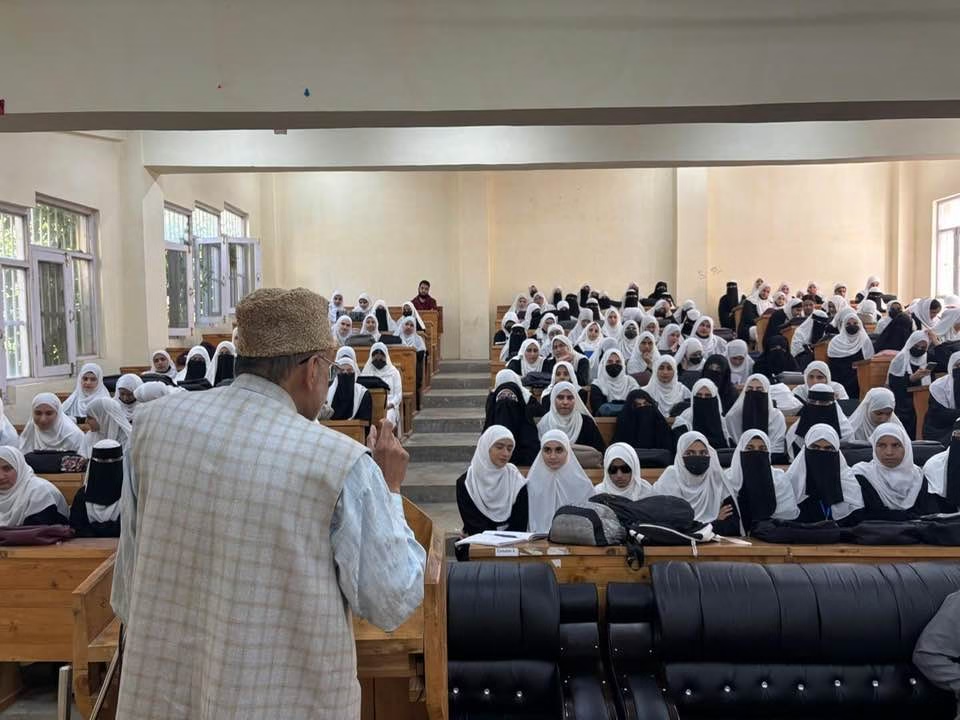
Government Degree College (GDC) for Women, Baramulla, organised an insightful extension lecture on the life, works, and contributions of the revered Sufi scholar and reformer, Mir Syed Ali Hamadani (RA). The event was held under the guidance of the college Principal, Prof. (Dr.) Neelofar Bhat, and aimed to shed light on the multidimensional impact of Hamadani’s teachings on Kashmir’s spiritual, cultural, and intellectual evolution.
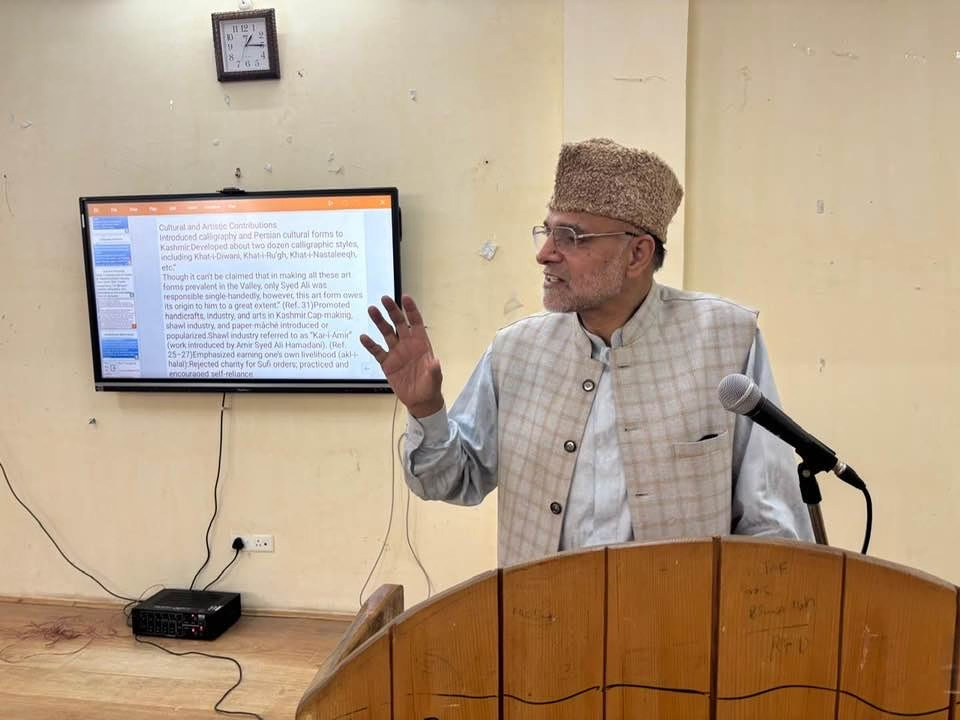
The lecture was delivered by Prof. Hamid Naseem Rafiabadi, a distinguished scholar and former Chairperson of the Department of Islamic and Religious Studies at the Central University of Kashmir. Prof. Rafiabadi has also served as the Director of the Shah-i-Hamadan Institute of Islamic Studies, Dean of the Schools of Social Sciences and Media Studies at the Central University of Kashmir, and Director of the International Centre for Spiritual Studies at the Islamic University of Science and Technology, Awantipora. He is currently a Visiting Researcher at ISTAC, International Islamic University Malaysia.
In his address, Prof. Rafiabadi offered a comprehensive overview of Mir Syed Ali Hamadani’s (RA) spiritual mission and intellectual legacy. He described the 14th-century Sufi saint as a bridge between Central Asian scholarship and Kashmiri civilisation, noting that Hamadani’s arrival in Kashmir introduced a transformative era in art, spirituality, and social ethics.
Highlighting his contributions to Persian literature, calligraphy, crafts, and architecture, Prof. Rafiabadi explained how Hamadani (RA) helped shape the very identity of Kashmir as a centre of culture and spirituality. He particularly emphasised his influence on the introduction of handicrafts and shawl weaving in the Valley, which later became the hallmark of Kashmiri economy and aesthetics.
The speaker further reflected on Hamadani’s efforts to reform society through education, ethical trade, and moral discipline, underscoring that his teachings were deeply rooted in the Quran and Sunnah. “Mir Syed Ali Hamadani (RA) was not only a spiritual leader but also a visionary social reformer who understood the importance of knowledge, unity, and economic independence,” Prof. Rafiabadi remarked.
Principal Prof. (Dr.) Neelofar Bhat, in her concluding remarks, appreciated the enlightening lecture and said that understanding figures like Hamadani (RA) is crucial for young generations to reconnect with their spiritual and cultural roots. She also stressed the need to integrate such legacy-based discourses into academic learning for a holistic educational experience.
Faculty members, students, and scholars from different departments attended the event, engaging actively in the interactive session that followed. The lecture concluded with a note of gratitude to Prof. Rafiabadi for his scholarly insights and to the organising committee for successfully hosting a session that celebrated one of Kashmir’s most influential spiritual personalities.
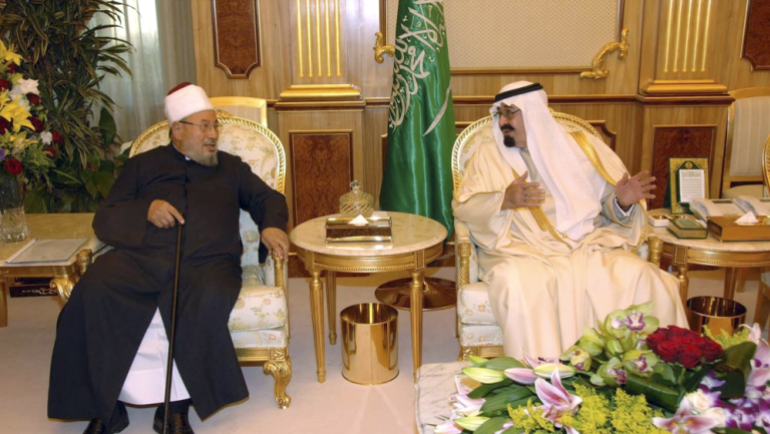
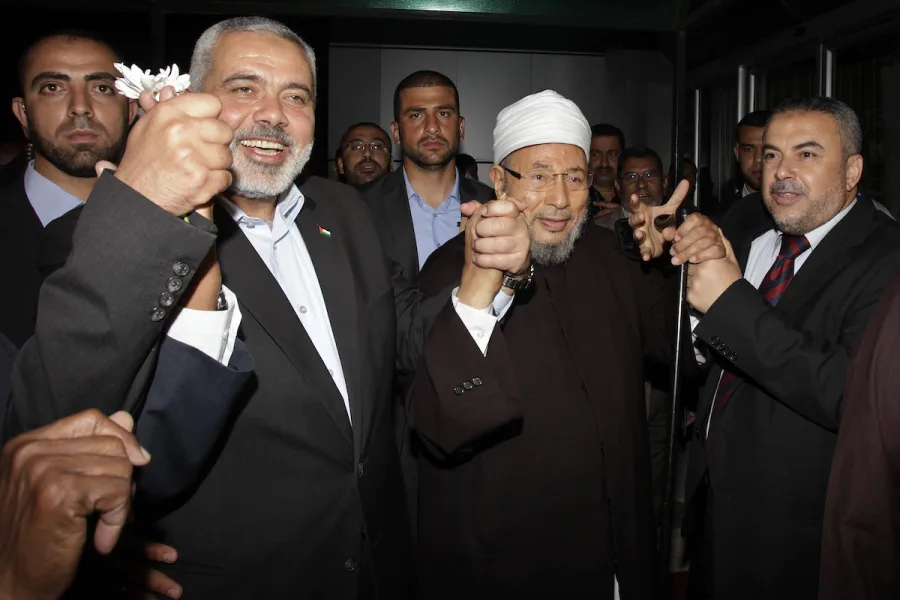
When I think about Dr. Yusuf al-Qaradawi, I picture a man whose life touched millions, sparking both admiration and debate. He was a scholar, a preacher, and a voice for Muslims worldwide, blending old Islamic teachings with the challenges of modern life. Born in a small Egyptian village on September 9, 1926, he grew up to become one of the most famous Sunni Muslim scholars of our time. He passed away on September 26, 2022, in Doha, Qatar, at 96, leaving behind a legacy that still stirs hearts and minds. Let me take you through his story in a way that feels like we’re sitting down for a chat, exploring who he was, what he stood for, and why he remains such a big deal.
Growing Up in Egypt
Yusuf al-Qaradawi’s early life wasn’t easy. Born in Safat Turab, a village in Egypt’s Nile Delta, he lost his father at two years old. His uncle raised him, and even as a kid, Yusuf showed a knack for faith. By 12, he’d memorized the entire Quran—a huge feat that marked him as special. He loved learning and went to Al-Azhar University in Cairo, one of the oldest and most respected Islamic schools in the world. In 1953, he graduated with a degree in Islamic theology, and years later, in 1973, he earned a PhD there. His thesis was about zakat (Islamic charity) and how it could help solve social problems. That work became a book that’s still studied today.
As a teenager, Yusuf joined the Muslim Brotherhood, a group founded by Hassan al-Banna to revive Islamic values and resist Western influence. This choice shaped his life. The Brotherhood’s ideas about faith and justice spoke to him, but it also got him in trouble. Egypt’s rulers—first King Farouk, then Gamal Abdel Nasser—saw the group as a threat. Yusuf was arrested three times (in 1949, 1954, and 1962) for his activism. By 1961, things got so tough that Egypt took away his citizenship, forcing him to leave. He moved to Qatar, where he’d spend most of his life.
A New Home in Qatar
In Qatar, Yusuf found a fresh start. He taught at universities and started building a name for himself. Qatar gave him a safe place to write, speak, and share his ideas. In 1977, he helped start the Faculty of Sharia and Islamic Studies at Qatar University, where he served as dean. Later, he founded the Centre for Sunnah and Seerah, a place to study the Prophet Muhammad’s life. These roles let him teach young Muslims and shape how Islam was understood in a fast-changing world.
But what really made him famous was his TV show, Al-Sharia wa al-Hayat (Sharia and Life), which aired on Al Jazeera from 1996 to 2013. Every week, millions tuned in to hear him talk about everything—family life, money, politics, even how Muslims should live in non-Muslim countries. His warm, clear style made complex religious ideas feel approachable. I imagine people sitting in their living rooms, nodding along as he explained how to be a good Muslim in today’s world.
A Voice for the “Middle Way”
Yusuf al-Qaradawi believed in something called wasatiyya, or the “middle path.” For him, Islam didn’t have to be stuck in the past or blindly follow modern trends. He wanted a balance—sticking to core Islamic values while adapting to new times. This idea made him popular, especially with younger Muslims who felt torn between tradition and modernity.
He wrote over 120 books, covering topics like charity, women’s rights, and jihad (struggle or holy war). His book on zakat is still a go-to for scholars. He also started groups like the International Union of Muslim Scholars in 2004, which he led until 2018, and the European Council for Fatwa and Research, helping Muslims in the West live by Islamic rules. His fatwas (religious rulings) were practical—like saying it’s okay for Muslims to wish Christians a happy holiday or that women could study and work.
But not everyone agreed with him. His views on some issues stirred up big arguments, and that’s where things get complicated.
What He Believed
Let’s talk about what made Yusuf al-Qaradawi such a big figure—and why some people loved him while others didn’t.
Palestinian Rights and Jihad: He strongly supported Palestinians, calling their fight against Israeli occupation a legitimate form of jihad. He believed Muslims had a duty to resist oppression. This made him a hero to many who saw him standing up for justice. But he also supported suicide bombings in Palestine and attacks on U.S. troops in Iraq, which shocked others. To critics, this was promoting violence, and it led to bans from countries like the U.S., UK, and France.
Women’s Roles: He encouraged women to get educated and work, which was progressive for some Muslim scholars. But he also said husbands could lightly “discipline” their wives in rare cases, based on his reading of the Quran. Many called this outdated and harmful, accusing him of supporting abuse.
The Arab Spring: When uprisings swept the Arab world in 2011, he cheered them on, seeing them as a chance for Muslims to demand fair governments. He wanted societies based on Islamic principles but not strict theocracies. Some saw this as a push for democracy; others thought he was tied too closely to the Muslim Brotherhood’s political goals.
Interfaith and Social Issues: He was open to dialogue with other faiths, saying Muslims could greet Christians or Jews on their holidays. He also called stoning for adultery “un-Islamic,” linking it to Jewish law, not the Quran. But he held harsh views on homosexuality, saying it deserved punishment, and made comments about Jews and the Holocaust that critics called anti-Semitic.
These mixed messages made him a lightning rod. Supporters saw him as a bold voice for justice and moderation. Critics said he fueled division, with some calling him the Muslim Brotherhood’s spiritual leader.
Why He Mattered
Yusuf al-Qaradawi wasn’t just a scholar; he was a bridge between old and new. His TV show, books, and fatwas reached people from Morocco to Malaysia. He gave Muslims a way to think about faith in a world of smartphones, global politics, and cultural clashes. For many, he was a guide who made Islam feel alive and relevant.
When he died in 2022, people mourned him as a giant. Posts on X called him a “light for the Muslim ummah” (community), quoting his prayers for places like Al-Aqsa Mosque. Others criticized him, pointing to his controversial fatwas as a source of division. His family carries on his legacy—his three daughters are PhD holders, one a nuclear scientist, and his son, Abdulrahman, is a poet and activist. Sadly, Abdulrahman has been detained in Egypt since 2023, and groups like Amnesty International are fighting for his release.
The Big Picture
Looking back, I see Yusuf al-Qaradawi as a man of his time. He lived through wars, revolutions, and huge changes in the Muslim world. He tried to answer tough questions: How do you stay true to faith in a globalized world? How do you fight injustice without losing compassion? Not everyone liked his answers, but he got people talking. His life reminds me that faith isn’t just about rules—it’s about wrestling with big ideas and trying to make a difference.
If you want to dig deeper, his autobiography, Ibn al-Qarya wa al-Muhtadi (Son of the Village and the Guide), tells his story in his own words. For now, his name lives on—in classrooms, mosques, and debates about what it means to be Muslim today.
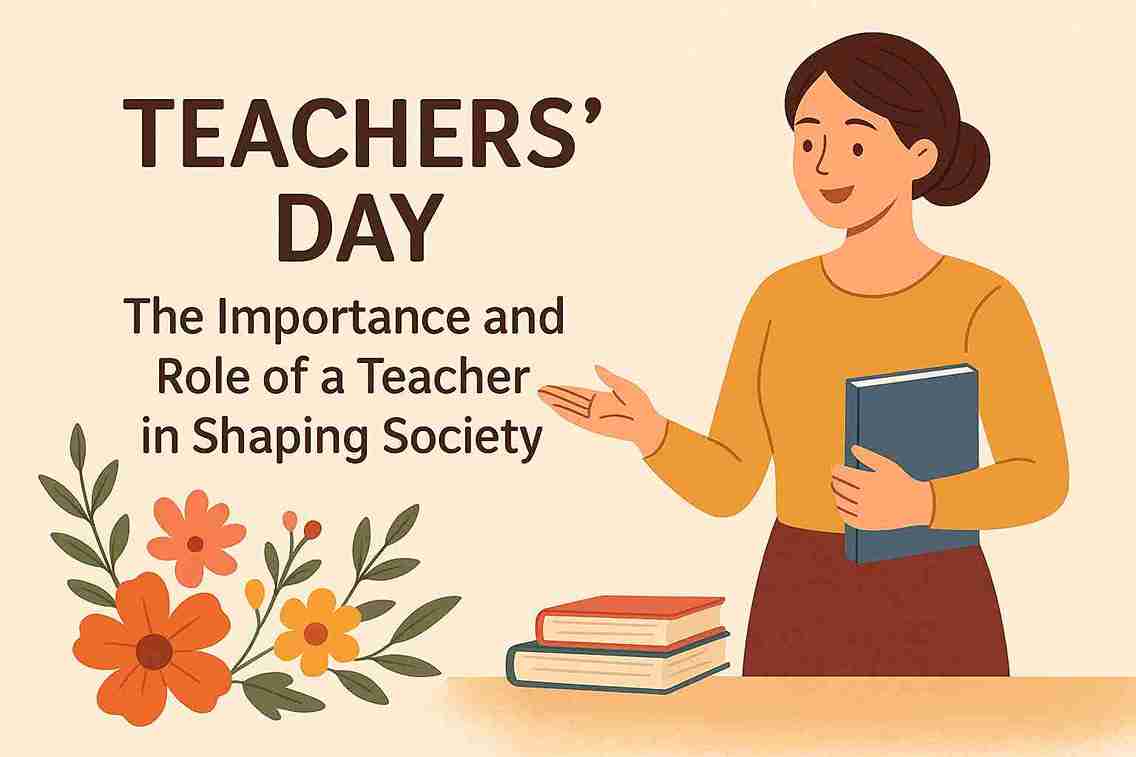
A teacher is often described as a guide, mentor, and a second parent. Teachers’ Day is celebrated every year to honour their dedication and contribution in shaping the future of students and society. While doctors save lives and engineers build cities, it is teachers who build minds, values, and the foundation upon which every profession rests.
The Importance of a Teacher
A teacher is not just a transmitter of knowledge but a builder of character. Their importance can be seen in different aspects:
Knowledge Provider – Teachers help students learn new concepts, ideas, and skills. They open the doors of wisdom and curiosity.
Character Builder – A good teacher instills discipline, respect, honesty, and empathy in students. These qualities last a lifetime.
Role Model – Students often look up to teachers as examples to follow. A teacher’s words and actions deeply influence young minds.
Nation Builder – By educating individuals, teachers indirectly shape the destiny of a nation. As the saying goes, “No country can rise above the level of its teachers.”
The Role of a Teacher in Society
Mentorship: Teachers guide students not only in academics but also in personal growth.
Motivation: They encourage learners to dream big and work hard towards achieving their goals.
Counselling: In times of confusion or weakness, teachers act as counsellors, offering wisdom and support.
Innovation: A good teacher adapts to modern methods of teaching and nurtures creativity.
Bridging Generations: Teachers pass knowledge, culture, and values from one generation to another.
The Eternal Respect for Teachers
In every culture and religion, the position of a teacher is considered sacred. In Islam, a teacher is seen as a guide to truth. In Hindu philosophy, the teacher is revered as Guru – the remover of darkness. Across the world, teachers are recognised as architects of humanity.
Conclusion
Teachers are more than professionals; they are torchbearers of wisdom, moral strength, and social progress. Celebrating Teachers’ Day reminds us that their hard work deserves gratitude and recognition every single day. A society that honours its teachers secures a bright future for generations to come.
🌹 A Poem for Teachers
The Light of a Teacher
A teacher is a gentle flame, That lights the path, yet seeks no fame. Through words of hope, through patient care, They build a world beyond compare.
They shape the mind, they touch the soul, They guide the heart, they make it whole. With wisdom deep and spirit true, They paint the sky in brighter hue.
No crown they wear, no throne they own, Yet seeds of greatness they have sown. For every dream, for every start, A teacher lives in every heart.
Srinagar witnessed a profound spiritual gathering on Sunday as the Azmat-e-Quran Conference 2025, organised by Jamiat Ahli Hadees Jammu & Kashmir, drew thousands of participants at Markaz Masood Ground, Moominabad Bypass and Markaz Ibn Masood Ground, Batmaloo.
The day-long event, inaugurated by Dr. Zahoor Ahmad Malik al-Madani (Hafizahullah), featured lectures from prominent Islamic scholars who underlined the need to uphold the Quran and Sunnah as guiding principles in daily life.
A highlight of the conference was the Huffaz-ul-Quran Dastarbandi ceremony, where young memorizers of the Quran were honoured for their achievement. Scholars stressed the importance of nurturing Quranic education for future generations, calling it a collective responsibility of the community.
The atmosphere was described as both spiritual and unifying, with reminders of peace, steadfastness, and devotion. Residents praised the organisers for creating an inclusive space that attracted scholars, students, and worshippers from across the Valley.
A parallel gathering at Al-Kulliyah Salafia, Bemina also reflected the widespread enthusiasm for the conference. Organisers said the aim was to strengthen faith, promote unity, and encourage Muslims to reconnect with the Quran and Sunnah.
The Azmat-e-Quran Conference 2025 continues Srinagar’s tradition of hosting major religious events, leaving attendees inspired and committed to living by the Quranic message.
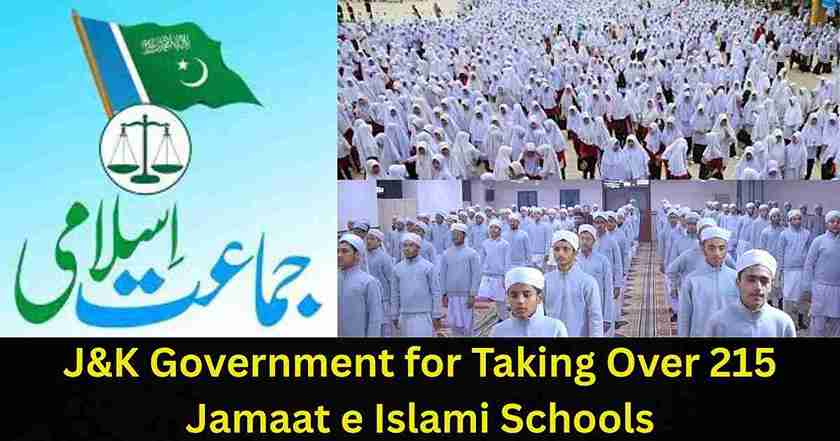
The Jammu and Kashmir (J&K) government has ordered the takeover of the management of 215 schools affiliated with the banned Jamaat-e-Islami (JeI) and its educational wing, Falah-e-Aam Trust (FAT), starting August 23, 2025. This decision follows adverse reports from intelligence agencies indicating direct or indirect links between these schools and the proscribed organization, with the managing committees of these schools either expired or flagged negatively. The move is authorized under the J&K School Education Rules of 2010, aiming to safeguard the academic future of approximately 55,000 students enrolled in these institutions.
The schools, spread across districts including Anantnag (37), Baramulla (53), Budgam (20), Bandipora (6), Ganderbal (6), Kulgam (16), Kupwara (36), Pulwama (21), Shopian (15), and Srinagar (4), were previously managed by FAT, which offered both Islamic and modern syllabi. The government has directed District Magistrates/Deputy Commissioners to assume control and propose new managing committees after verification, ensuring uninterrupted education aligned with the National Education Policy (NEP) 2020 norms.
However, J&K Education Minister Sakina Itoo clarified that she had not ordered Deputy Commissioners to take over but instead intended for principals of nearby government schools to manage these institutions temporarily for three months due to registration issues and expired committees. She noted errors in the official order issued by the School Education Department’s secretary, which she claims misrepresented her instructions. The minister emphasized protecting students’ futures, as the J&K Board of School Education had refused examination forms from these schools post the 2019 JeI ban.
The decision has sparked controversy, with political figures like Peoples Conference chairman Sajad Lone calling it “shameful” and PDP legislator Waheed Parra labeling it “unfortunate, undemocratic, and derogatory,” accusing the government of servility. The JeI, banned in 2019 and again in 2024 under the Unlawful Activities (Prevention) Act for alleged terror links, has a history of controversy, including ties to militancy and separatist movements, notably through its role in the 1987 Muslim United Front.
The takeover aims to ensure quality education and secure students’ academic careers, but the conflicting statements from the minister and the official order highlight administrative discrepancies, drawing significant local criticism.