School Timings Changed in Kashmir Division from April 1, Says DSEK

School Timings

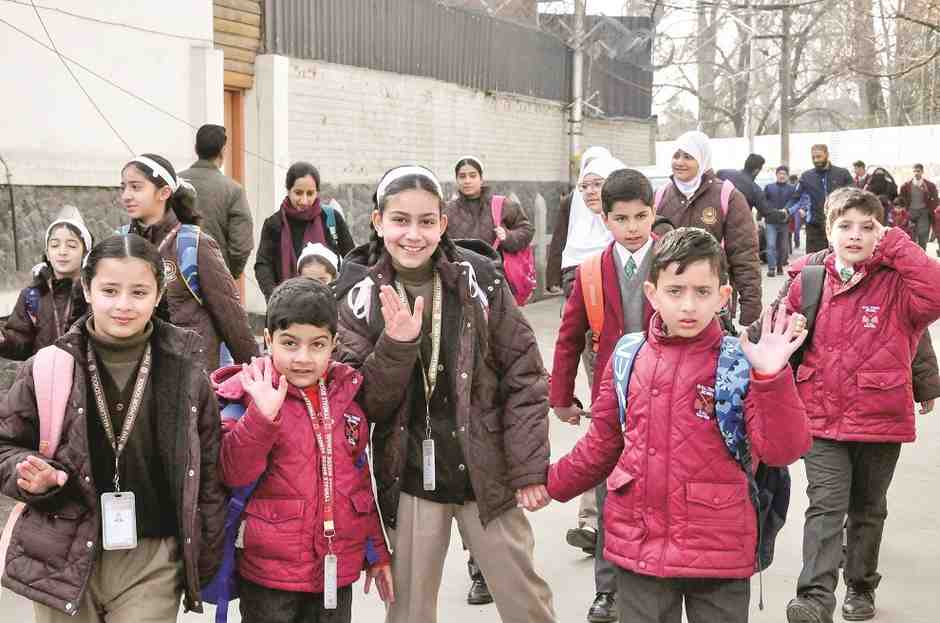
The Director of School Education Kashmir (DSEK) Saturday ordered change in school timing for Kashmir division with effect from April-01.

DSEK in a order said that the schools within Srinagar municipal limits shall have a school time of 9:00 am to 3:00 pm in all government and private schools.

It also said that the educational institutes outside municipal limits of Srinagar and other areas of Kashmir province shall have timing of 09:30 am to 03:30 pm.

“The order and instructions shall be adhered to strictly by all the concerned institutions. Any deviation in this regard shall be viewed seriously.,” DSEK said—(KNO)

IUST Awantipora Hosts Seminar on Melting Himalayan Cryosphere Before First World Day for Glaciers

Melting Himalayan Cryosphere

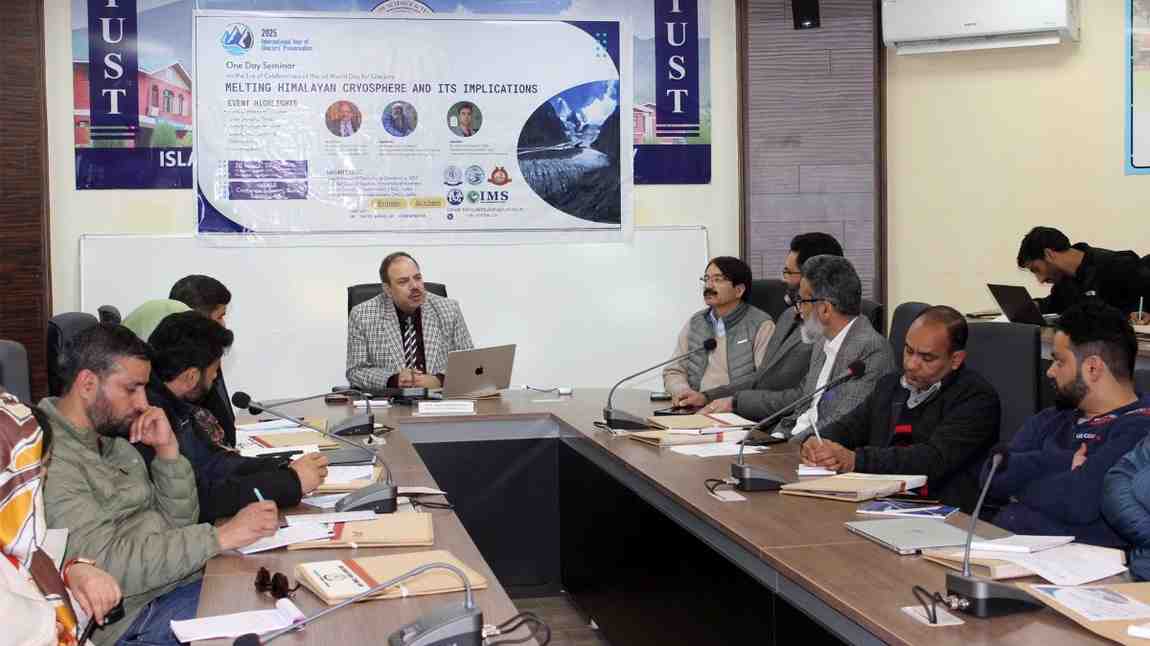
Awantipora, J&K – The Islamic University of Science and Technology (IUST), Awantipora hosted a one-day seminar on “Melting Himalayan Cryosphere and its Implications” ahead of the First World Day for Glaciers. The event brought together researchers, academicians, policymakers, and environmentalists to discuss the alarming rate of glacier melt in the Himalayas and its consequences for ecosystems, water security, and regional communities.

Organizers and Participants

The seminar was organized in collaboration with:

  • Centre of Excellence for Glacial Studies, University of Kashmir (UoK)
  • Indian Society of Geomatics (ISG), Kashmir Chapter
  • Indian Meteorological Society (IMS), Srinagar Chapter

The event saw participation from leading scientists, climate researchers, and students from various institutions. Eminent speakers shed light on the causes, current trends, and future projections of glacial retreat in the Himalayas.

Key Objectives of the Seminar

The seminar aimed to:

  1. Raise Awareness – Highlight the impact of climate change on the fragile Himalayan cryosphere.
  2. Facilitate Scientific Discourse – Provide a platform for experts to share research findings on glacial retreat and its implications.
  3. Discuss Policy Measures – Explore environmental and socio-economic risks, including water shortages and biodiversity loss.
  4. Encourage Collaboration – Strengthen partnerships between researchers, policymakers, and institutions to find sustainable solutions.

Major Topics Discussed

Experts delivered insightful presentations on various aspects of climate change and glacier dynamics, including:

  • Glacial Retreat Trends – Scientific studies showing rapid ice loss in the Himalayan region.
  • Water Security Concerns – How melting glaciers affect river systems, drinking water supplies, and hydropower.
  • Ecosystem Disruptions – The impact of climate change on biodiversity, agriculture, and local communities.
  • Disaster Risks – Increased threats of glacial lake outburst floods (GLOFs), landslides, and avalanches.
  • Adaptation Strategies – Measures to mitigate the effects of glacier melt, including conservation policies and community-based solutions.

Significance of the First World Day for Glaciers

The seminar was held on the eve of the First World Day for Glaciers, a global initiative aimed at raising awareness about the importance of glaciers and the urgent need to protect them from climate change. The observance of this day underscores the role of glaciers in sustaining life and maintaining ecological balance.

Expected Outcomes and Recommendations

As a result of the seminar, participants emphasized:

  • The need for enhanced monitoring of Himalayan glaciers through satellite imagery and field studies.
  • Strengthening climate policies to curb greenhouse gas emissions.
  • Promoting sustainable water management to counteract the effects of glacier loss.
  • Increasing community engagement to ensure local populations are equipped to handle environmental changes.

Conclusion

The IUST Awantipora seminar served as a vital platform to discuss one of the most pressing environmental challenges of our time. With glaciers melting at an unprecedented rate, the need for immediate and collective action has never been more critical. Experts urged governments, institutions, and individuals to take concrete steps toward protecting the Himalayan cryosphere for future generations.

The event concluded with a call for further research, policy interventions, and community-driven solutions to safeguard the region’s water resources and biodiversity against the growing threat of climate change.

SBI, School Education Department Distribute Free Bicycles to Students in Kashmir

School Education Department

Under Corporate Social Responsibility (CSR), State Bank of India and Directorate of School Education Kashmir today distributed free bicycles to students of Kashmir Division, who have either performed well during their studies or belonging to economically weaker sections.

In this regard, a function was held today at Girls Higher Secondary School Kothibagh Srinagar where Director School Education Kashmir Dr. G.N. Itoo was present as the chief guest.

Speaking on the occasion, DSEK said that the Department will continue its efforts at all levels to provide various facilities to all the students across the Kashmir division.

On the sidelines of the function, Director School Education Kashmir Dr.G.N Itoo said that keeping in view the climate and environmental change, we have started an important initiative, ONE STUDENT ONE PLANT ,which will be implemented in all the schools of Kashmir division.

On this occasion, the DSEK participated in the sapling planting campaign by the girl students and encouraged them.


DSEK asked all school principals and teachers to involve all students and participate actively in this campaign,so that ,effects of climate change do not occur in the future. Regional Manager, State Bank of India Chandrakant and other officers were also present during the function.(KNS) 

Jamia Millia Islamia Hikes Fees by Up to 41% Across Programs for 2025-26

Jamia Millia Islamia

Students at Jamia Millia Islamia (JMI) will have to shell out significantly more for their education this year, with tuition fees rising by 19 per cent to 41 per cent across undergraduate and postgraduate programs.

The sharpest hikes are seen in humanities, social sciences, and science courses, traditionally considered more affordable, while technical and professional programs have also seen significant revisions. This was revealed after comparing the 2025-26 prospectus with that of the previous year.
Jamia’s administration did not respond to calls or messages for comment.

Students enrolling in the Department of Persian will see a 41.41 per cent increase, with annual fees rising from Rs 6,700 to Rs 9,475, the comparison of the two prospectuses revealed.

The Department of Arabic follows closely with a 37.15 per cent hike, pushing fees from Rs 7,200 to Rs 9,875.

Similarly, fees for foreign language programs such as BA in Turkish, French, and Spanish have also jumped by 37.15 per cent, now costing Rs 9,875 per year.
Among social sciences programs, students pursuing M.A. and B.A. in Political Science, History, and Sociology, as well as the four-year B.A.

(Multidisciplinary) program, will now have to pay Rs 9,875 per year, reflecting a 32.99 per cent hike from Rs 7,425 last year. B Com (Hons.) fees have also risen from Rs7,425 to Rs9,875 per year (33.02% increase). The fee hikes extend to science programs as well.

B.Sc. students in Geography, Mathematics, and Physics will now pay Rs 10,475 annually, a 34.29 per cent increase from Rs 7,800 last year.
Technical and professional courses have also been affected.

The B Tech program has seen a 19.04 percent hike, with fees increasing from Rs 16,150 to Rs 19,225 per cent. M.Tech programs will now cost Rs 21,375 per year, up 16.48 per cent from the previous Rs 18,350. Law students in B.A. LL.B. and LL.M. programs will pay Rs 17,850 per year, reflecting a 19 per cent hike from Rs 15,000.

In addition to the tuition fee hikes, Jamia Millia Islamia has introduced several new courses for the academic year 2025-26, particularly in self-financed programs. Notable additions include the MSc in Artificial Intelligence and Machine Learning (Rs52,400 per year) and the MSc in Disaster Management & Climate Sustainability Studies (Rs58,775 per year).

The university has also launched postgraduate diploma programs such as the P.G.

Diploma in Air and Space Laws (Rs29,000 per year), along with new certificate courses in design, textile, photography, and calligraphy.

Additionally, JMI has introduced an installment-based payment system for self-financed courses, allowing students to pay their fees in two parts. (ANI)

JKBOSE Mandates Use of Prescribed Textbooks for All Affiliated Schools

textbooks in Private

The Jammu & Kashmir Board of School Education develops textbooks strictly in alignment with the curricular goals envisaged in National Curriculum Frameworks.

The process is carried out by a dedicated panel of experts drawn from higher education, school education and other distinguished fields.

The process of reviewing, editing and finalization of textbooks is conducted solely by experts engaged and entrusted based on their academic credentials and subject expertise.

This ensures that textbooks are developed with academic rigor, free from any undue intervention. JKBOSE reviews and develops syllabi, courses of studies and textbooks for class 1st to 12th as per the guidelines and recommendations of National Curriculum Frameworks which are seminal documents on the National Education Policy to have uniformity in the education system throughout the country. This has facilitated our students to compete at national and international level.

Section-10 of the JKBOSE Act of 1975 mandates the JKBOSE to develop courses of instruction, prepare curricula, and prescribe textbooks from pre-primary to higher secondary levels and Elementary Teachers Training Course. Further, as per SRO 123 Clause 11(a), every affiliated school must follow the curriculum and textbooks prescribed by JKBOSE. Any deviation from this directive is a violation of regulatory norms, and no external publisher can dictate or alter the prescribed textbooks. On the top of that the High Court has also reaffirmed that all affiliated schools must adhere to SRO 123, reinforcing that JKBOSE is well within its rights to make it mandatory for all the Private Schools to prescribe Textbooks published by JKBOSE.

The State Affiliation Committee/ Recognition Committee in its meetings held on 7th August, 2013 and 18th May, 2023, has resolved that any deviation or non-compliance of the Instructions or orders of the JKBOSE or Government of Jammu and Kashmir issued from time to time regarding prescribed text books and curricula by any academic institution shall warrant a disciplinary action, imposition of a penalty up to Rs.50,000 or both and that it shall be reinforced for strict implementation. Accordingly, the Jammu and Kashmir Board of School Education issued a notification bearing No: F (Acad-C)/E-File-7318285/TXT/BK/-XIV/23. Dated 22-12-2023 for implementation of JKBOSE curriculum and textbooks published / prescribed by JKBOSE from academic session 2024-25 for classes 1st to 12th with the strict directions that no school shall force any parent /student to purchase books and material other than those published by JKBOSE.

The BOSE shall take all measures to implement its statutory mandate of ensuring uniform curricula in all schools as has been endorsed by the High Court also in line with the provisions of National Education Policy. Of late it has been decided that special teams will be constituted in collaboration with School Education department to carry out inspections across the Union Territory to ensure compliance of uniform curricula in all the schools, and if any educational institution affiliated with BOSE is found violating the instructions, it might face action as per the relevant provisions of Board of School Education norms.

While free textbooks stand already distributed in all the government schools in winter zone, the BOSE has taken measures in earnest to make sure that the supply of textbooks meant for private schools is also readily available with registered book sellers in the market.

Apt to mention that the textbooks prescribed by BOSE are well developed and cost effective. The printing is up to the mark and well researched. These textbooks are based on the NCERT format and content and are locally contextualised with local specific touch and infusion thus creating a sense of belongingness which is missing in the books offered by private publishers. BOSE textbooks have been received well and appreciated by its stakeholders for their student friendly features. All the affiliated schools of JKBOSE, including private schools are advised to implement the textbooks prescribed/published by JKBOSE.

University of Kashmir (KU) Hosts National Seminar on Women’s Role in Nation-Building for Viksit Bharat 2047

University of Kashmir

To emphasize the role of women in shaping a developed nation, the Centre for Women’s Studies & Research (CWSR) and the Institute of Home Science (IHS), University of Kashmir (KU), organized a one-day national seminar on ‘Viksit Bharat 2047: Strengthening Communities for a Developed Nation through Community Science’ as part of International Women’s Day celebrations.

The seminar focused on the crucial contributions of women in various fields, highlighting their role in promoting social, economic and scientific progress. Experts and participants deliberated on ways to empower communities by empowering women for a stronger and more inclusive future.

Speaking at the inaugural session, Vice-Chancellor KU, Prof. Nilofer Khan, in her presidential address, highlighted the university’s dedication to gender equality and women’s empowerment.

“Our university has always provided equal opportunities to women, with a significant number holding key administrative positions and excelling academically as well. This seminar reinforces the importance of women-led development for a prosperous future,” she said.

Registrar KU, Prof. Naseer Iqbal, acknowledged the indispensable role of women in nation-building.

“Women are the pillars of society, and their active participation is crucial for realizing the vision of Viksit Bharat 2047. Strengthening communities begins with empowering women,” he said.

Earlier, in her welcome address, Head, IHS KU, Prof. Humaira Azim, highlighted the vital contributions of women across diverse sectors, stressing the need for inclusive policies to support their growth and leadership.

The seminar featured three technical sessions on key themes including women’s health and well-being, economic empowerment and sustainable development. Resource persons from SKUAST-K, SKIMS, IUST, and GMC were also present. The event was attended by various heads of the departments, faculty members, scholars and students of the campus.

The proceedings of the event were conducted by Dr. Shazia Malik, faculty at CWSR KU while Dr. Roshan Ara, Coordinator CWSR KU presented a formal vote of thanks.

Kashmir University Approves Nursing Course at Kupwara Campus, Expanding Educational Opportunities

Kupwara Campus

In a significant academic development, Kashmir University has approved the establishment of a Nursing course at its Kupwara Campus. The decision was taken on Tuesday during the Academic Council meeting, chaired by Vice-Chancellor Prof. Nilofer Khan.
According to a statement issued by the university, the council deliberated on various academic matters, including a review of program choices at the university’s satellite campuses. It considered market demand, intake capacity, and admission trends before approving new courses. Additionally, the feasibility of introducing more undergraduate programs in affiliated colleges was assessed.
The Academic Council also assessed the academic feasibility of introducing various subjects and courses at the undergraduate level in the affiliated colleges of the University. Additionally, the council approved the syllabi of various five-year integrated courses and endorsed the introduction of new programs in Cybersecurity and Digital Forensics, Artificial Intelligence and Data Science, as well as Nursing and Paramedical Sciences at the Kupwara Campus.
The announcement was met with widespread appreciation, with Advisor to the Chief Minister, Nasir Aslam Wani (Sogami), sharing the news on X (formerly Twitter).
“Great news for Kupwara! I am delighted to share that the Nursing College has been officially approved for the Kupwara University Campus!My heartfelt gratitude to VC Prof. Nilofer Khan and Dean Academic Affairs Prof. Peerzada Sharifdin for considering my request,” he wrote.
The decision was also praised by local representatives. DDC Member Nasir Lone and youth leader Tahir Syeed thanked the university authorities and acknowledged Advisor Sogami’s efforts in securing approval for the course.
Nasir Lone expressed his appreciation on social media, stating, “Great news indeed. Kudos for your efforts @nasirsogami!”
Meanwhile, Tahir Syeed also took to X, posting, “Great news indeed for Kupwara! A big appreciation to Advisor to CM @nasirsogami Sb for his dedicated efforts in making this possible.”
It is pertinent to mention that on November 12, 2024, Advisor to the Chief Minister Nasir Aslam Wani had submitted a recommendation letter to university authorities, along with a representation from Civil Society Kupwara, advocating for the introduction of a Nursing college at the Kupwara University Campus.
The approval of this course is expected to provide significant educational and career opportunities for aspiring students in the district.(KNS)

Islamic University of Science and Technology Awantipore (IUST) Hosts Plantation Drive & Environmental Awareness Campaign to Promote Sustainability

Plantation Drive

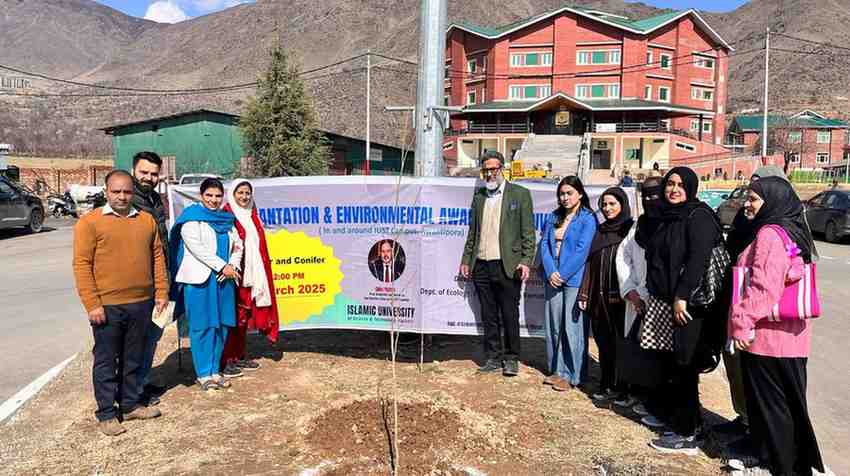
The Islamic University of Science and Technology (IUST) organized a Plantation Drive and Environmental Awareness Campaign at its campus, reinforcing its commitment to sustainability and environmental conservation. The event was conducted by the Department of Environment, Sustainability & Climate Change in collaboration with the Social Forestry Department, Pulwama; Floriculture Department, Kashmir; and the Department of Ecology, Environment & Remote Sensing (DEERS).

Inauguration and Key Attendees

The event was inaugurated by Prof. Shakil A. Romshoo, Vice Chancellor of IUST, in the presence of key officials, faculty members, and students. Notable attendees included:

  • Prof. Abdul Wahid Makdoomi, Registrar, IUST
  • Prof. A.H. Moon, Dean Academics
  • Prof. Humayun Rashid, Professor of Practice
  • Prof. Parvez A. Mir, CEO, CIED
  • Ms. Gazalla Abdullah, Divisional Forest Officer (DFO), Social Forestry, Pulwama
  • Shri Manzoor Ahmad Beig, Executive Engineer, R&B Pulwama
  • Shri S. Iqbal Qurashi, Deputy Registrar, Estates
  • Dr. Asifa Baba, Dean Students Welfare
  • Dr. Sumira Nazir Zaz, Coordinator, Department of Environment, Sustainability & Climate Change
  • Dr. Dharam Chand, Coordinator, Biodiversity & Aromatic Park
  • Shri Sajad Ahmad Khaki, Mass Media Officer (DEERS)
  • Dr. Yasir Altaf and Dr. Zubair Ahmad Dar, along with other faculty members, students, and field staff from the collaborating departments.

Speeches and Key Messages

During the event, Prof. Shakil A. Romshoo emphasized the urgent need for collective action to tackle climate change and environmental degradation. He highlighted the role of youth in environmental conservation and encouraged students to actively participate in green initiatives.

Prof. Humayun Rashid stressed the importance of academic institutions in fostering sustainability and promoting eco-friendly practices among students. He urged young minds to integrate environmental consciousness into their daily lives to ensure a sustainable future.

Plantation Drive and Environmental Awareness Campaign

As part of the environmental awareness campaign, the plantation drive at IUST aimed to promote tree plantation, biodiversity conservation, and sustainable environmental practices.

  • The Floriculture Department provided 50 Chinar saplings for the drive.
  • The Social Forestry Department contributed 250 Deodar saplings to the initiative.
  • Students, faculty, and the local community actively participated, reinforcing the shared responsibility of creating a greener future.

The campaign is part of a larger sustainability initiative by the Department of Environment, Sustainability & Climate Change, which focuses on educating students about the importance of environmental conservation and promoting sustainable practices within and beyond the university campus.

Conclusion

The Plantation Drive and Environmental Awareness Campaign at IUST marked another milestone in the university’s sustainability efforts. By involving students, faculty, and local stakeholders, the initiative not only encouraged tree plantation but also strengthened the message of collective responsibility in protecting the environment.

With such proactive measures, IUST continues to play a pivotal role in promoting environmental consciousness and encouraging young minds to be active contributors to a sustainable and green future.

JKBOSE Announces Fresh Exam Dates for Classes 10, 11 & 12 in Hard Zone

Over 44 Lakh Students

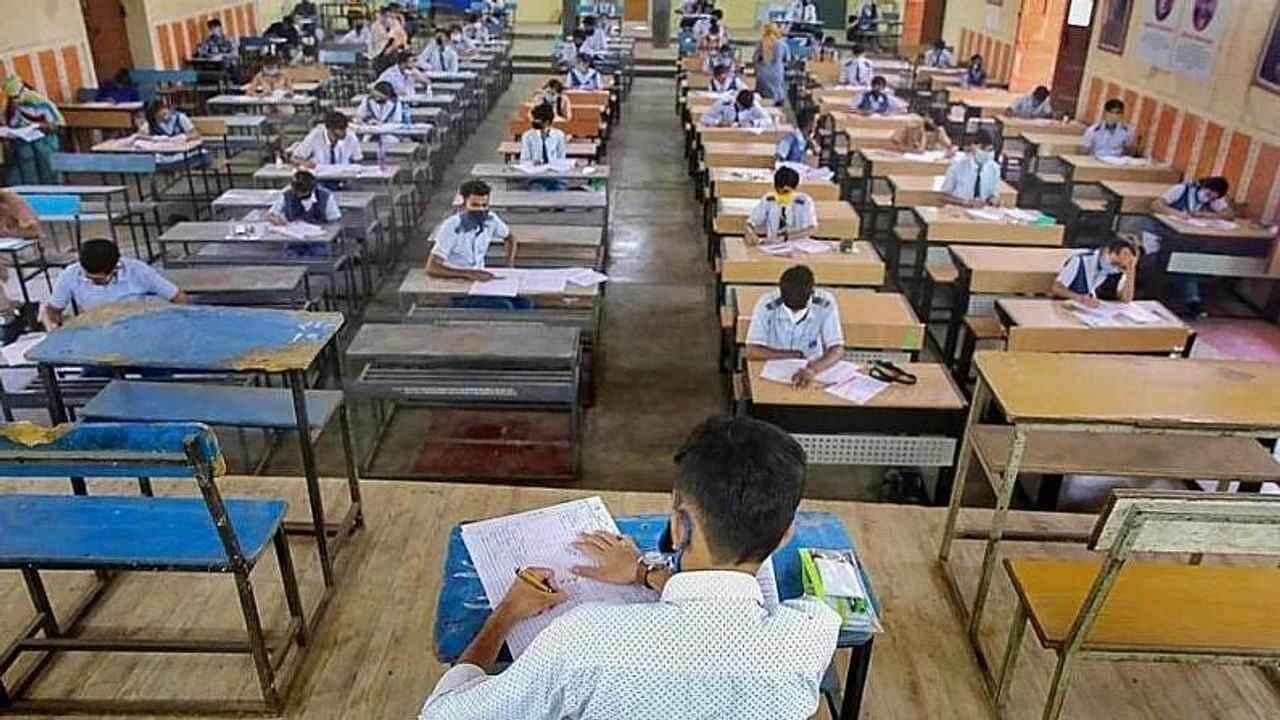
The Jammu and Kashmir Board of School Education (JKBOSE) has announced fresh dates for the conduct of examinations pertaining to Classes 10th, 11th & 12th (Hard Zone)Annual (Regular) Session 2024-25 for centre set up at Govt. HSS, Baduab, Tulail Gurez.

According to a notification issued, the class 10th examination of English will be held on April 3 and class 11th examination of Biology/Political science on April 4 in the morning session while class 12th examination for vocational subjects on April 3 in the afternoon session.

J&K Implements National Education Policy (NEP-2020) in All Colleges, Focuses on Skill-Based Education

sakeena itoo

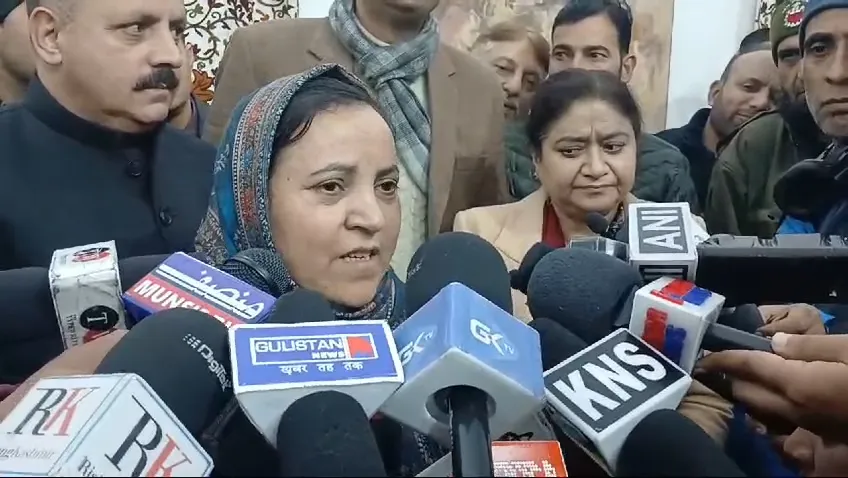
Minister for Health and Medical Education, Social Welfare and Education, Sakeena Itoo, informed the Legislative Assembly that the Higher Education department has successfully implemented the National Education Policy (NEP)-2020 in all Government Degree Colleges across Jammu and Kashmir.

The Minister was replying to a question raised by Javid Riyaz in Legislative Assembly today. The Minister informed the House that the colleges of J&K are already offering job-oriented and skill-based courses to enhance students’ employability and practical learning.

She apprised that the Business Management programs are being offered in various colleges in J&K but Artificial Intelligence as a separate program has not been introduced as yet as the subject is new and developing area of learning.

She further said that Artificial Intelligence is taught as part of curriculum of Computer Applications.