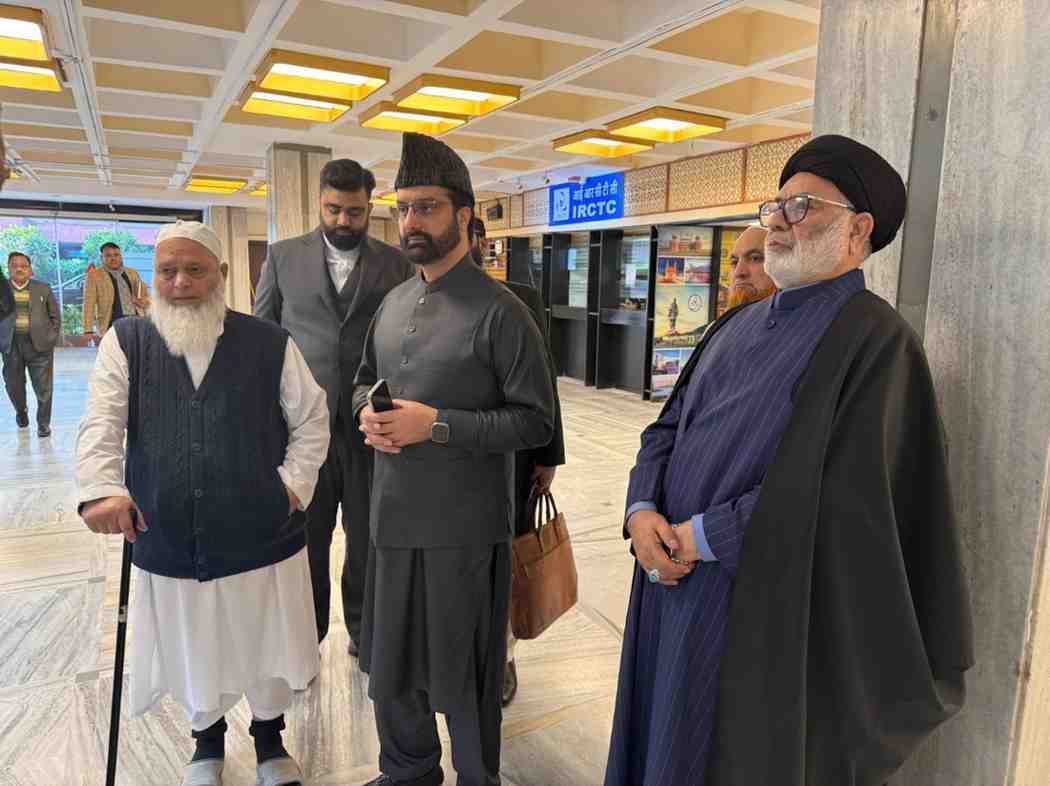
Mirwaiz Omar Farooq Reaches Parliament of India to Present Concerns on Waqf (Amendment) Bill, 2024

Mirwaiz Omar Farooq

The head of the Mutahida Majlis-E-Ulema (MMU) and the chief cleric of Kashmir, Mirwaiz Omar Farooq, arrived in Parliament today to participate in a significant meeting of the Joint Parliamentary Committee (JPC) on the Waqf (Amendment) Bill, 2024.

Mirwaiz Umar Farooq emphasized the importance of this meeting, stating, “Our delegation from the Mutahida Majlis-E-Ulema (MMU) is here to meet the JPC. We have prepared a detailed proposal on the proposed amendments to the Waqf Bill, and we intend to present our concerns and suggestions during this session.”

The cleric expressed hope that the JPC members would take their concerns seriously and address them appropriately. “We aim to ensure that the issues surrounding the Waqf properties and their management are resolved effectively. The proposed amendments should benefit all stakeholders and uphold the sanctity and purpose of Waqf institutions,” he added.

The Waqf (Amendment) Bill, 2024, seeks to address various challenges related to the management of Waqf properties, including issues of transparency, digitization, and reclaiming encroached assets. The input from influential figures like Mirwaiz Umar Farooq and his delegation highlights the critical role of community leaders in shaping the discourse around these amendments.

This meeting is a significant step toward fostering collaboration between lawmakers and religious organizations, ensuring that the proposed reforms cater to the needs of the community while aligning with the broader legislative framework.
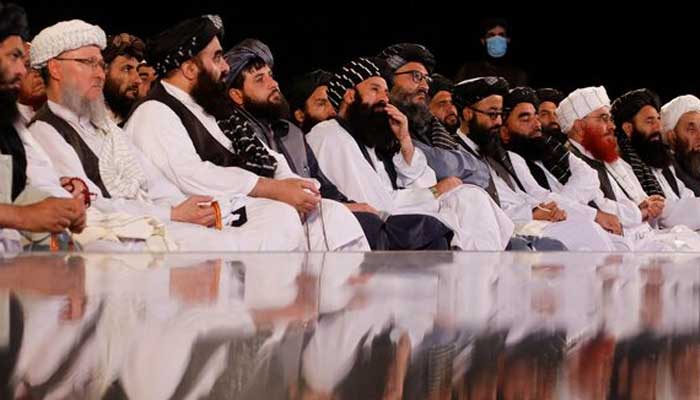
International Criminal Court (ICC) Prosecutor Applies for Arrest Warrants Against Taliban Leaders Over Crimes Against Humanity

Taliban

The International Criminal Court prosecutor said on Thursday he had applied for arrest warrants for two Taliban leaders in Afghanistan including supreme spiritual leader Haibatullah Akhundzada, accusing them of crimes against humanity for widespread discrimination against women and girls.

A statement issued by the office of chief Prosecutor Karim Khan said evidence collected as part of investigations provided reasonable grounds to believe that Akhundzada and Abdul Hakim Haqqani, who has served as chief justice since 2021, “bear criminal responsibility for the crime against humanity of persecution on gender grounds.”

They are “criminally responsible for persecuting Afghan girls and women, as well as persons whom the Taliban perceived as not conforming with their ideological expectations of gender identity or expression, and persons whom the Taliban perceived as allies of girls and women,” the statement said.

The persecution has taken place from at least Aug 15, 2021 until the present day, across the territory of Afghanistan and is ongoing, the prosecutor said.

There was no immediate comment by Taliban leaders on the prosecutor’s statement.

It will now be up to a three-judge panel at the ICC to rule on the prosecution request, which has no set deadline. Such procedures take an average of three months.

In August last year, the Taliban codified a long set of rules governing morality in line with Islamic sharia law. The rules are enforced by the morality ministry, which says it has detained thousands of people for violations.

Khan said his office was demonstrating its commitment to pursuing accountability for gender-based crimes and that the Taliban’s interpretation of sharia could not be a justification for human rights abuses or crimes.

The prosecutor said Afghan women and girls are facing an unprecedented, unconscionable and ongoing “persecution” by the Taliban. “Our action signals that the status quo for women and girls in Afghanistan is not acceptable,” he added.

The Afghanistan probe is one of the longest by ICC prosecutors and has been beset by legal and practical delays. The initial preliminary examination started in 2007 and it was only in 2022 that a full-scale investigation moved forward.

Since Taliban returned to power in 2021 it has clamped down on women’s rights, including limits to schooling, work and general independence in daily life.