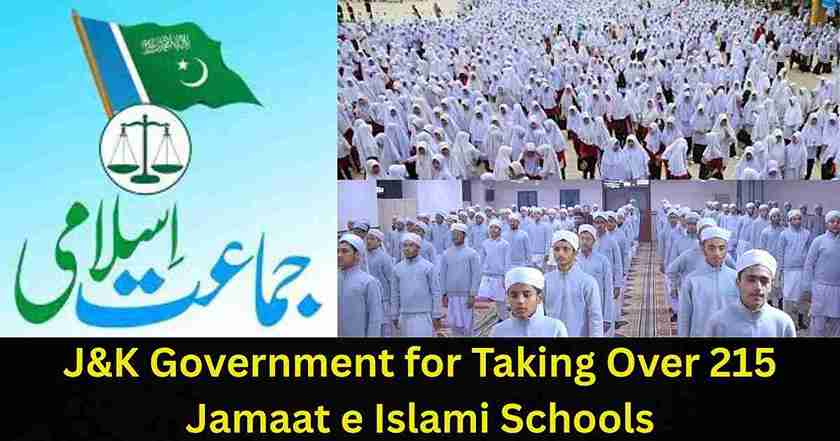
J&K Government Takes Over 215 Jamaat-e-Islami Schools Amid Intelligence Concerns, Sparks Political Backlash

Jamaat e Islami Schools

The Jammu and Kashmir (J&K) government has ordered the takeover of the management of 215 schools affiliated with the banned Jamaat-e-Islami (JeI) and its educational wing, Falah-e-Aam Trust (FAT), starting August 23, 2025. This decision follows adverse reports from intelligence agencies indicating direct or indirect links between these schools and the proscribed organization, with the managing committees of these schools either expired or flagged negatively. The move is authorized under the J&K School Education Rules of 2010, aiming to safeguard the academic future of approximately 55,000 students enrolled in these institutions.

The schools, spread across districts including Anantnag (37), Baramulla (53), Budgam (20), Bandipora (6), Ganderbal (6), Kulgam (16), Kupwara (36), Pulwama (21), Shopian (15), and Srinagar (4), were previously managed by FAT, which offered both Islamic and modern syllabi. The government has directed District Magistrates/Deputy Commissioners to assume control and propose new managing committees after verification, ensuring uninterrupted education aligned with the National Education Policy (NEP) 2020 norms.

However, J&K Education Minister Sakina Itoo clarified that she had not ordered Deputy Commissioners to take over but instead intended for principals of nearby government schools to manage these institutions temporarily for three months due to registration issues and expired committees. She noted errors in the official order issued by the School Education Department’s secretary, which she claims misrepresented her instructions. The minister emphasized protecting students’ futures, as the J&K Board of School Education had refused examination forms from these schools post the 2019 JeI ban.

The decision has sparked controversy, with political figures like Peoples Conference chairman Sajad Lone calling it “shameful” and PDP legislator Waheed Parra labeling it “unfortunate, undemocratic, and derogatory,” accusing the government of servility. The JeI, banned in 2019 and again in 2024 under the Unlawful Activities (Prevention) Act for alleged terror links, has a history of controversy, including ties to militancy and separatist movements, notably through its role in the 1987 Muslim United Front.

The takeover aims to ensure quality education and secure students’ academic careers, but the conflicting statements from the minister and the official order highlight administrative discrepancies, drawing significant local criticism.

Kashmir Politics From Mahraja Hari Singh To Syed Ali Geelani

From Boom to Bust: How the April 22 Terror Attack Shattered Pahalgam’s Tourism Dream

Former Jamat-e-Islami Spokesperson Advocate Zahid Ali Surrenders to Jammu and Kashmir Police
Sajad Lone Slams J&K Government for Taking Over 215 Jamaat e Islami Schools, Calls Move Political Overreach

Former Members of Jamaat-e-Islami Jammu & Kashmir Launches New Political Party

Jamaat-e-Islami

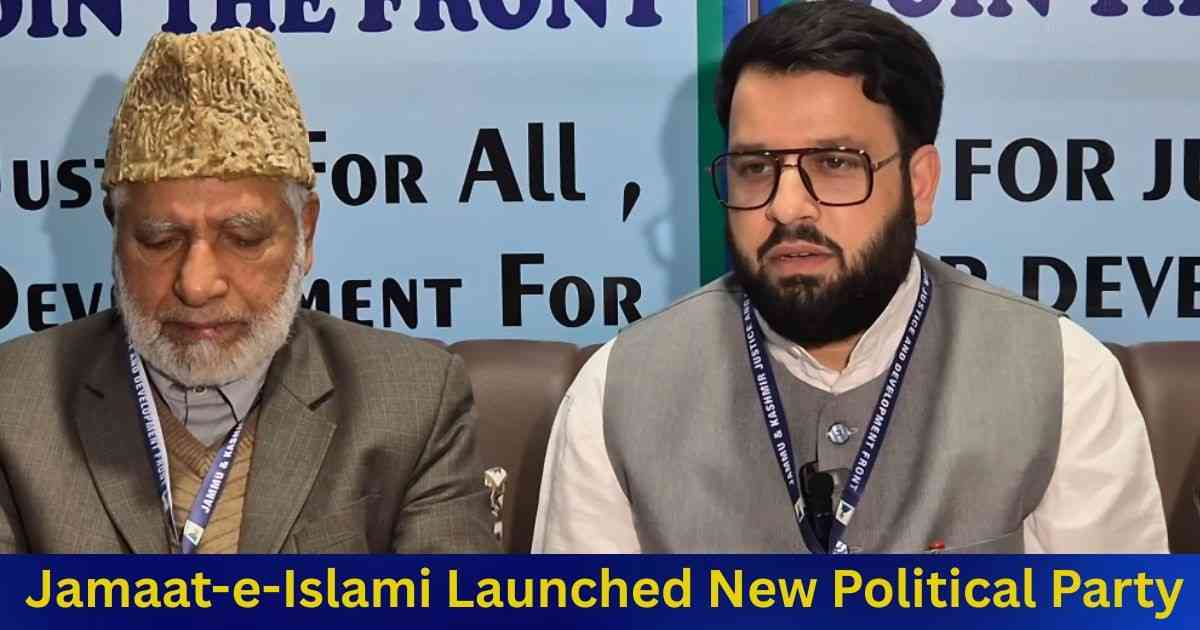
In a major political development, Jamaat-e-Islami Jammu & Kashmir (JeI) has officially launched a new political party named The Justice and Development Front. The announcement was made today at the party’s headquarters in Nowgam, Srinagar, marking what leaders described as “a new beginning dedicated to justice, progress, and empowerment.”

Party representatives highlighted that the formation of the Justice and Development Front comes after careful deliberations on the political aspirations and needs of the people of Jammu and Kashmir. Speaking at the launch event, leaders expressed their vision to work towards a future that ensures social justice, economic progress, and protection of fundamental rights for all citizens.

“Today is not just the launch of a new political party; it is the launch of a new hope for the people of Jammu and Kashmir,” said one of the senior members at the event. They emphasised that the Front aims to bridge the gap between governance and the grassroots, focusing on issues such as education, healthcare, youth employment, and community empowerment.

The newly formed party pledged to maintain a non-violent and democratic approach in its political activities, firmly rooting its ideology in peaceful progress and constructive dialogue. Leaders also stressed that the Justice and Development Front would strive to unite communities and build a strong, resilient society based on equality and fairness.

The launch of this new political entity comes at a time when Jammu and Kashmir’s political landscape is undergoing significant changes. Observers believe that the Justice and Development Front could offer a fresh option to the electorate, especially among young voters looking for development-driven leadership.

As the Justice and Development Front begins its journey, it has called upon the people to join hands for a brighter, stronger, and more just future for Jammu and Kashmir.

Banned Jamaat-e-Islami Members Launch New Political Party ”Justice and Development Forum” in Kulgam

Jamaat e Islami

Former members of the banned Jamaat-e-Islami have launched a new political party, the Justice and Development Forum, in Kulgam, Jammu and Kashmir. The group announced its intention to work at the grassroots level and address social issues across the region.

“We are launching a new political party. We will go to the grassroots and fight social evils across Kashmir,” the party’s representatives said while unveiling their plans.

The move comes years after the central government banned Jamaat-e-Islami in 2019, citing its alleged links with separatist activities. The newly formed Justice and Development Forum, however, claims to focus solely on social justice, development, and public welfare.

Political analysts view this development as a significant shift in the region’s political landscape, as former members of the banned outfit seek to re-enter mainstream politics. The party’s formation is expected to draw attention from both local authorities and central agencies, given its members’ past affiliations.

Security agencies are closely monitoring the party’s activities to ensure compliance with legal and constitutional frameworks. Meanwhile, the party’s leaders have asserted that their focus remains on governance, justice, and public welfare, distancing themselves from any controversial agendas.