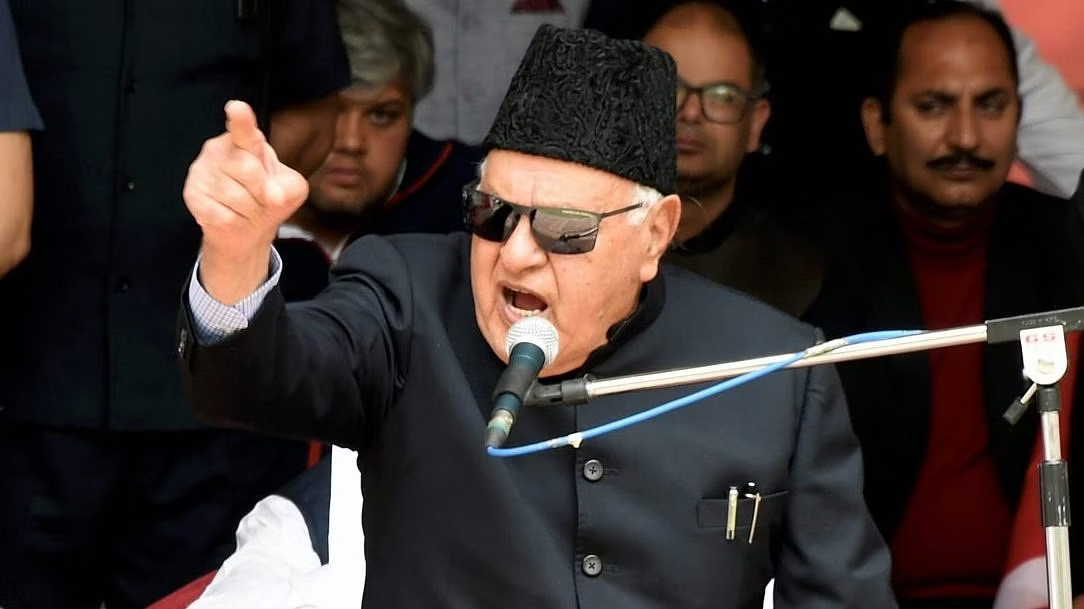
Farooq Abdullah calls medical college closure in Reasi an injustice to students

Farooq Abdullah

National Conference president Farooq Abdullah on Thursday strongly criticised the closure of the Shri Mata Vaishno Devi Institute of Medical Excellence in Reasi district of Jammu and Kashmir, calling the move “wrong” and an “injustice” to students.

Speaking to reporters, the former chief minister said he was deeply saddened by the decision and expressed concern over what he described as the direction the country was taking. “This is wrong. This is definitely injustice,” Abdullah said, reacting to the development.

The National Conference leader was responding to the decision of the Medical Assessment and Rating Board (MARB) under the National Medical Commission, which withdrew the letter of recognition earlier granted to the Shri Mata Vaishno Devi Institute of Medical Excellence.

According to the MARB, the recognition was withdrawn due to the institute’s failure to meet minimum required standards. However, the board clarified that students admitted to the college during the 2025–26 counselling process will not be left in limbo. It said these students will be accommodated as supernumerary seats in other medical institutions across Jammu and Kashmir by the competent authority of the Union Territory administration.

The decision followed protests by the Sangharsh Samiti, a recently formed group of right-wing organisations reportedly backed by the BJP. The group had demanded cancellation of admissions to the medical college and called for reservation of seats exclusively for students who profess faith in Mata Vaishno Devi.

Abdullah’s remarks add a political edge to the controversy, as concerns continue to grow over the impact of the closure on medical education and students’ futures in the region.

Farooq Abdullah Travels by Vande Bharat to Srinagar, Hails Rail Link

Farooq Abdullah

National Conference president Dr Farooq Abdullah on Monday travelled to Srinagar by the Vande Bharat train from Katra, the base camp of Mata Vaishno Devi.Abdullah arrived in Katra town, from where he took the Vande Bharat train to Srinagar, officials said.

He said that the railway link between Kashmir and the rest of the country has immensely benefited the valley as it has provided an all-weather connectivity for the residents here.“The train has benefitted immensely. Even if the flights don’t operate or the road is closed, the train will still ply. It will ease the problems of the people,” Abdullah told reporters here.Click Here To Follow Our WhatsApp Channel

He said the snowfall has been a blessing for the people of Kashmir, as it was needed.“It has eased some of the problems. We pray for more snowfall as it will be beneficial for us,” he added.When asked about the restoration of statehood to Jammu and Kashmir, Abdullah said, “It will also come. Will come on time (waqt par aayega).”

Farooq Abdullah: The Political Journey of a Kashmiri Veteran

Farooq Abdullah

Farooq Abdullah is one of the most experienced and colourful political leaders in India. For more than forty years, he has been at the centre of politics in Jammu and Kashmir, carrying forward the legacy of his father, Sheikh Abdullah, while also carving out his own distinct identity. Known for his charisma, outspoken nature, and sharp political instincts, Abdullah remains a towering figure in Kashmiri public life.


farooq

Early Life and Education

Farooq Abdullah was born on 21 October 1937 in Srinagar, Jammu and Kashmir. He is the eldest son of Sheikh Mohammad Abdullah, also known as the “Lion of Kashmir,” who founded the Jammu and Kashmir National Conference (NC) and played a key role in shaping the state’s political destiny after independence.

Farooq grew up in a politically charged atmosphere but chose medicine as his profession. He studied medicine in India and then went on to the United Kingdom, where he trained further and worked as a doctor. His years abroad gave him both professional skills and exposure to global culture.


Entry into Politics

Though trained as a doctor, Farooq Abdullah’s destiny was tied to politics. After his father Sheikh Abdullah’s death in 1982, Farooq returned fully to public life and was chosen as the President of the Jammu and Kashmir National Conference. Within months, he was sworn in as the Chief Minister of Jammu and Kashmir.

His entry marked a generational shift in Kashmiri politics. Charismatic, tall, and outspoken, Farooq Abdullah quickly became a familiar figure in national politics as well.


Farooq Abdullah with NC Elected Members

Chief Minister of Jammu and Kashmir

Farooq Abdullah served as Chief Minister of Jammu and Kashmir multiple times:

  • 1982–1984: His first term, which ended abruptly after he was dismissed by the then Governor in a dramatic political coup supported by the Centre.
  • 1986–1990: His second term saw major challenges, including growing unrest and the rise of militancy in Kashmir. He resigned in 1990 when insurgency peaked.
  • 1996–2002: After six years of President’s Rule, Farooq Abdullah returned as CM with a large majority. This period was marked by attempts at normalisation, though violence and instability continued.

Throughout these years, Abdullah’s leadership style was often described as bold and sometimes controversial, but he remained the key face of mainstream politics in Jammu and Kashmir.


Role in National Politics

Farooq Abdullah also made his mark in New Delhi. He was elected several times to the Lok Sabha and served as a Union Minister in the United Progressive Alliance (UPA) government under Prime Minister Manmohan Singh. As Union Minister of New and Renewable Energy (2009–2014), he promoted solar and wind energy projects across the country.

His presence in Parliament was never dull—Abdullah became known for his candid speeches, humour, and ability to build friendships across party lines.


Personal Style and Popularity

Farooq Abdullah has always stood out because of his personality. Whether in Kashmir or Delhi, he is known for mixing humour with political sharpness. His frank and often bold statements have landed him in controversies but also won him admirers.

In Kashmir, many see him as a “people’s politician” who connects easily with ordinary citizens. At the same time, his critics argue that his party’s governance did not do enough to resolve deep-rooted problems in the state.


Controversies and Challenges

Farooq Abdullah’s career has not been free of controversy.

  • His terms as Chief Minister coincided with some of the most difficult years in Kashmir, especially the rise of militancy in the late 1980s and early 1990s.
  • Political opponents have accused him of being too close to New Delhi at times, while others have accused him of not doing enough to check violence.
  • In recent years, he has also faced investigations in alleged financial irregularities, including the Jammu and Kashmir Cricket Association (JKCA) case. Abdullah has denied any wrongdoing.
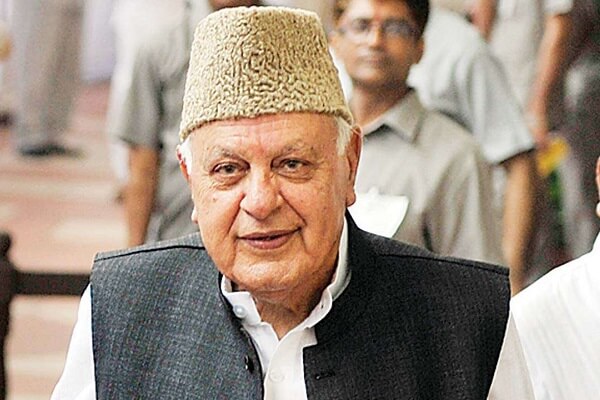
farooq

Current Role and Legacy

Even in his late eighties, Farooq Abdullah remains active in politics. He continues to lead the Jammu and Kashmir National Conference and has played an important role in recent political developments, especially after the abrogation of Article 370 in August 2019. He was one of the senior leaders detained during the clampdown but later released, after which he helped form the People’s Alliance for Gupkar Declaration (PAGD) to push for the restoration of Jammu and Kashmir’s special status.

Farooq Abdullah’s legacy is a mix of achievements, controversies, and resilience. He has been a bridge between Kashmir and New Delhi, sometimes criticised, sometimes praised, but always central to the political story of Jammu and Kashmir.


Conclusion

From doctor to chief minister, from national politician to regional elder statesman, Farooq Abdullah’s life is a reflection of the complex history of Jammu and Kashmir itself. Loved and criticised in equal measure, he remains a key voice for his people and one of the most influential Kashmiri leaders of modern times.

Police Personnel Shafaqat Ahmad from Bandipora Dies of Heart Attack at Home

Violence Erupts in Leh as Protesters Clash with Police Amid Statehood Movement in Ladakh

UK, Canada and Australia Recognise Palestinian State, Defying Israel and US to Revive
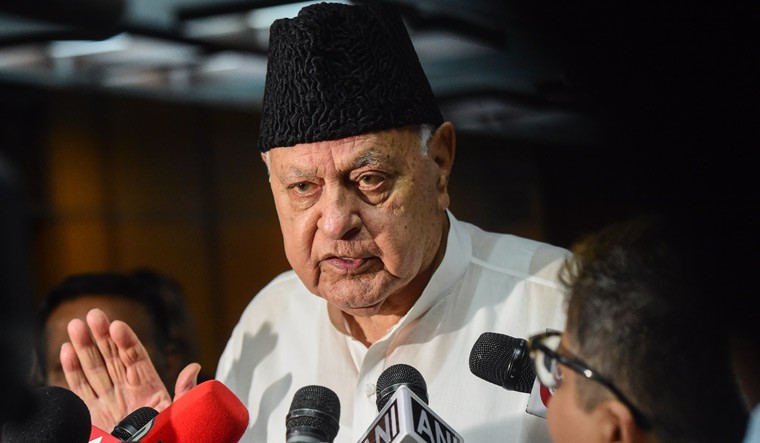
Farooq Abdullah Backs PM Modi Amid Pahalgam Attack Tensions, Warns Pakistan Over Nuclear Provocation

Farooq Abdullah Speaking With media on India Pakistan War

National Conference President Farooq Abdullah on Tuesday voiced strong support for Prime Minister Narendra Modi amid rising tensions with Pakistan in the wake of the Pahalgam attack.

Calling for national unity and cautioning Islamabad against further provocations, Abdullah said, “We have given our full support to the prime minister. After that, we should not be questioned. The prime minister should do whatever work he necessary.”

Responding to Pakistan’s repeated assertions of being a nuclear power, the veteran leader reminded them of India’s own capabilities.“We also have nuclear power, and we had it even before them,” he said.

Asserting India’s stand of being non-aggressive, he said, “India has never attacked anyone first. It all started from there (Pakistan), and we responded. Even today, we will not use it (nuclear weapons) unless they do. But if they use it, we have it too. May God never let such a situation arise”.

On the Congress party’s criticism of the Prime Minister, including posters claiming he is “missing in action”, Abdullah dismissed them.

“Where is he missing? I know he is in Delhi,” he said.

The former J&K Chief Minister strongly condemned Pakistan for repeated terror attacks on Indian soil.

“There was the Mumbai attack, and it was proven they did it. The Pathankot attack, they did it, the Uri attack, they did it. They attacked in Kargi, and I was the chief minister at that time. They said they were not involved, but when we took strong action, they ran to the US President asking for help.”

“If they want friendship, then such things cannot continue. It must stop. But if they want hostility, we are ready, and so are they,” Abdullah said.

Farooq Abdullah Seeks Centre’s Help After Ramban Landslides, Omar Abdullah Reviews Relief Efforts

Farooq Abdullah

National Conference chief Farooq Abdullah on Sunday expressed concern over the heavy damage caused by landslides and flash floods in Jammu and Kashmir’s Ramban district.

He said lives were lost, infrastructure was damaged, and many vehicles were trapped under debris and urged the central government to provide support and compensation.

“A huge loss has occurred in Ramban. There is a report of three deaths. Many vehicles are stuck under the debris. A lot of damage has been incurred. A bridge near a tunnel is damaged. There is a huge loss in Banihal as well. The Deputy Chief Minister has left for Ramban. Our ministers are also reaching out from Kashmir,” Farooq Abdullah told the media.

He assured that all help would be provided by the Jammu and Kashmir government and requested help from the Centre.

“This is a disaster and we will provide all the possible assistance we can. We have also requested that the centre help us in managing this disaster and compensate for the loss to some extent,” he said.

Several vehicles and people were feared trapped after a landslide hit the Shan Palace area in Ward No. 2 of Ramban following heavy rains.

Local police and hotel staff quickly reached the spot and rescued those who were trapped.

Visuals from the site showed vehicles buried under mud, stones, and debris. Shops and a restaurant were also damaged. Locals were seen standing on rooftops, trying to assess the extent of the damage.

So far, there is no official confirmation on the exact number of people trapped or any further casualties.

Earlier in the day, Jammu and Kashmir Chief Minister Omar Abdullah expressed his grief over the situation and said that restoration and relief work would be reviewed later in the day.

In a post on X, the Jammu and Kashmir Chief Minister’s Office quoted Omar Abdullah as saying, “Extremely anguished by the tragic landslide and flash flood in Ramban, which has caused considerable damage to life and property. My thoughts are with the affected families in this difficult hour. We are in touch with the local administration to ensure immediate rescue efforts wherever needed. Later today, I will be reviewing restoration, relief, and repair plans. For now, the focus remains on managing the situation on the ground. Citizens are advised to follow travel advisories and avoid non-essential movement in vulnerable areas.”

He offered his condolences to the affected families and assured them that rescue work was underway.

Due to the landslides, the Jammu-Srinagar National Highway (NH-44) remains completely blocked. Commuters have been advised not to travel on this route until the weather improves and the debris is cleared.

Deputy Traffic Inspector Javed Kataria told ANI,”The national highway (Jammu-Srinagar NH in Ramban district) is completely blocked (due to landslides). Avoid this highway till the weather improves. Clearance work is ongoing, but it does not seem that the highway will open before evening or tomorrow because it is raining continuously.”

Political Earthquake: Ex-RAW Chief Claims Farooq Abdullah Privately Backed Abrogation of Article 370

farooq

In a revelation that has sent shockwaves through Jammu and Kashmir’s political landscape, former Research and Analysis Wing (RAW) chief A.S. Dulat has claimed in his latest book, published by Juggernaut, that National Conference (NC) leader Farooq Abdullah privately supported the Indian government’s decision to abrogate Article 370 in August 2019. This claim, despite Abdullah and his party’s public condemnation of the move as a “betrayal,” has ignited fierce debate and drawn sharp reactions from regional political figures, raising questions about the NC’s stance and the behind-the-scenes dynamics of one of India’s most contentious policy decisions.

The Revelation: Dulat’s Account

Dulat, a seasoned intelligence officer with deep ties to Kashmir’s political elite, writes that Farooq Abdullah expressed private willingness to support the abrogation of Article 370, which granted special autonomous status to Jammu and Kashmir. According to Dulat, Abdullah lamented the lack of consultation, asking, “We would have helped (pass the proposal). Why were we not taken into confidence?” This suggests that the NC patriarch was open to cooperating with the central government’s move, despite the party’s vocal opposition.

Further fueling speculation, Dulat notes a secretive meeting between Farooq Abdullah, his son Omar Abdullah, and Prime Minister Narendra Modi in New Delhi just days before the abrogation on August 5, 2019. “What transpired…nobody will ever know,” Dulat writes, as quoted by Hindustan Times. The opacity of this meeting has added intrigue, with critics suggesting it may have been a pivotal moment in shaping Abdullah’s stance.

Following the abrogation, which revoked Article 370 and bifurcated Jammu and Kashmir into two Union Territories, Farooq Abdullah was detained for seven months under the Public Safety Act. During this period, Dulat claims, Delhi discreetly probed Abdullah’s position, seeking to ensure he would “accept the new reality.” This raises questions about whether Abdullah’s detention was partly a means to align him with the central government’s agenda.

Political Reactions: A Firestorm of Accusations

The claims have elicited sharp responses from rival political leaders in Jammu and Kashmir, who have seized the opportunity to challenge the NC’s credibility and question its public narrative.

Sajad Lone: “No Surprise”

Sajad Lone, the Peoples Conference Chief and MLA from Handwara, described Dulat’s revelation as “very credible,” citing Dulat’s close relationship with Farooq Abdullah. In a series of posts on X, Lone portrayed Dulat as Abdullah’s “closest ally” and “alter ego,” lending weight to the claims. Lone suggested that the NC’s public opposition to the abrogation was a facade, accusing the party of “perfecting playing the victim card.”

Lone pointed to the 2019 meeting with Modi as evidence of Abdullah’s complicity, sarcastically imagining Abdullah saying, “Humey roney deejiye—Aap apna kaam karein—hum aap kay saath hain” (Let us cry, you do your work, we are with you). He further speculated that the NC’s strong performance in the 2024 Jammu and Kashmir Assembly elections was a “prize” for services rendered in 2019, framing it as a calculated move in the “national interest.” Lone also mocked the NC’s likely response, predicting they would dismiss the claims as a conspiracy and lean on their allies in Delhi to silence critics.

Iltija Mufti: A Betrayal Normalized

Iltija Mufti, a leader of the Peoples Democratic Party (PDP), echoed Lone’s skepticism, accusing Farooq Abdullah of complicity in the abrogation. In a post on X, Mufti, daughter of PDP chief Mehbooba Mufti, described Dulat as an “ardent Abdullah supporter” and argued that the claims clarified long-standing doubts about the NC’s role. She alleged that Farooq Abdullah deliberately chose to stay in Kashmir instead of attending Parliament during the abrogation, thereby helping to “normalize gutting of J&K’s constitution & subsequent betrayal.”

Mufti’s remarks reflect the PDP’s ongoing rivalry with the NC, with both parties vying for influence in Kashmir’s fractured political landscape. Her accusations amplify the narrative that the NC’s public stance was a performance, masking a more pragmatic alignment with Delhi.

The Context: Article 370 and Its Aftermath

The abrogation of Article 370 was a landmark decision by the Bharatiya Janata Party (BJP)-led central government, fulfilling a long-standing ideological goal. The move stripped Jammu and Kashmir of its special status, repealed Article 35A (which granted special rights to permanent residents), and reorganized the state into two Union Territories—Jammu and Kashmir, and Ladakh—under direct central control. The decision was accompanied by a massive security lockdown, internet shutdowns, and the detention of prominent political leaders, including Farooq Abdullah, Omar Abdullah, and Mehbooba Mufti.

The NC, under Farooq and Omar Abdullah, has consistently opposed the abrogation publicly, framing it as an assault on Kashmir’s identity and autonomy. The party’s 2019 election manifesto promised to restore Article 370, and its leaders have repeatedly criticized the move in speeches and media appearances. However, Dulat’s claims suggest a disconnect between the NC’s public rhetoric and private negotiations, potentially undermining its credibility among its voter base.

The NC’s Silence and the Road Ahead

As of now, the National Conference has not issued an official response to Dulat’s claims or the accusations from Lone and Mufti. The party’s silence may reflect a strategic choice to avoid engaging with a narrative that could alienate its supporters, particularly in the Kashmir Valley, where resentment over the abrogation remains strong. Alternatively, it may signal internal deliberations on how to address the allegations without fueling further controversy.

The timing of the revelations is significant. The NC’s strong performance in the 2024 Jammu and Kashmir Assembly elections, where it emerged as the single-largest party and formed a government with Omar Abdullah as Chief Minister, has bolstered its regional influence. However, Dulat’s claims risk casting a shadow over this victory, providing ammunition to rivals like the Peoples Conference and PDP, who are eager to portray the NC as duplicitous.

Broader Implications

Dulat’s account underscores the complex interplay of public posturing and private pragmatism in Jammu and Kashmir’s politics. The region’s leaders have long navigated a delicate balance between local sentiments and Delhi’s authority, often engaging in backchannel dialogues that remain hidden from public view. If true, Abdullah’s private support for the abrogation could reflect a pragmatic recognition of the central government’s resolve, even as he maintained a public stance aligned with his electorate’s aspirations.The controversy also highlights the enduring sensitivity of Article 370’s abrogation.More than five years later, the issue remains a flashpoint, with regional parties leveraging it to rally support and settle scores. For the central government, Dulat

Farooq Abdullah Reaffirms Commitment to Jammu and Kashmir’s Statehood Restoration

Farooq Abdullah

National Conference president Farooq Abdullah on Thursday reaffirmed his commitment to restoring statehood to Jammu and Kashmir, expressing confidence that it will be achieved soon.

“Inshallah, statehood will come soon. It will come,” Farooq Abdullah told reporters on Thursday.

Earlier, Jammu and Kashmir Deputy Chief Minister Surinder Choudhary took a strong stance against former Chief Minister Mehbooba Mufti’s comments regarding the region’s current political situation.

“Mehbooba Mufti can say anything because she is the reason for the destruction of J&K. If J&K has lost its statehood and special status, it is because of her,” Choudhary said.

Earlier on March 3, LG Sinha addressed the inaugural session of the J-K Legislative Assembly’s Budget Session.

Manoj Sinha said that his government is steadfast in its commitment to the Union Territory’s statehood and is actively engaging with all stakeholders to facilitate this process.

“One of the foremost aspirations of the Jammu and Kashmir people is the restoration of the full statehood. My government remains steadfast in its commitment to addressing this legitimate desire of the citizens of J-K. My government recognizes the emotional and political significance of the statehood for the people and is actively engaging with all stakeholders to facilitate this process in a manner that ensures peace, stability and progress,” he said.

He emphasized that the budget represents a new era of participatory governance, ensuring that the need and aspirations of the common people remain at the heart of policy making.

Notably, the restoration of Article 370, the reinstatement of Jammu and Kashmir’s statehood, and the implementation of the autonomy resolution were key promises in the National Conference’s manifesto for the Jammu and Kashmir elections.

On August 2019, the Central government led by Prime Minister Narendra Modi repealed Article 370 of the Indian Constitution, effectively ending the special status given to Jammu and Kashmir. (ANI)

Vehicle in Farooq Abdullah’s Convoy Meets with Accident in Rajasthan while En Route to Ajmer Sharif

farooq

A vehicle in the convoy of former Jammu and Kashmir Chief Minister Farooq Abdullah met with an accident near Dausa, Rajasthan, while en route to Ajmer Dargah Sharif.

The Delhi Police-escorted vehicle according to Kashmir Dot Com hit a blue bull (Neel Gai) on the highway. The impact caused both front airbags to deploy, ensuring safety for the occupants.

Abdullah, who was traveling in a separate car, remained unharmed.

Dr.Farooq Abdullah Responds to Aga Ruhullah,We Don’t want Confrontation With Center and J&K Government Can’t Fight

Farooq Abdullah

National Conference (NC) president Dr. Farooq Abdullah emphasized the importance of cooperation between the Centre and the Jammu and Kashmir government, stating that both must work together instead of engaging in conflicts. Responding to recent remarks by NC MP Aga Ruhullah, who claimed that Omar Abdullah was risking being perceived as a “Centre’s man,” Farooq Abdullah defended Omar, asserting that he is the people’s Chief Minister and not working on anyone’s directives.

Farooq Abdullah highlighted the necessity of maintaining a working relationship with the Centre for the region’s progress, stating that confrontation would hinder resolving people’s issues and developing infrastructure like schools and hospitals. He clarified that while they are not aligned with the BJP, cooperation with the Centre is essential for Jammu and Kashmir’s development.

Addressing the controversy surrounding a BSF Commandant accused in a paper scam who reportedly sought to join the National Conference, Farooq Abdullah stated that the individual cannot join the party until he gets a clean chit.

Who is Farooq Abdullah?

Farooq Abdullah is a veteran Indian politician and a prominent leader from the region of Jammu and Kashmir. Born on October 21, 1937, he is the son of Sheikh Abdullah, the founder of the National Conference (NC) and a pivotal figure in the political landscape of Jammu and Kashmir. Farooq Abdullah has played a significant role in shaping the political narrative of the region over several decades.

He began his political journey following in his father’s footsteps, becoming an active member of the National Conference. Abdullah has served as the Chief Minister of Jammu and Kashmir multiple times, first assuming office in 1982 after the death of his father. His leadership has been characterized by efforts to navigate the complex political dynamics of the region, which is marked by a unique cultural identity and geopolitical sensitivities.

In addition to his role at the state level, Farooq Abdullah has been a significant figure in national politics. He has served as a Member of Parliament in the Lok Sabha, representing Srinagar, and has held ministerial positions in the central government, including as the Minister of New and Renewable Energy. His tenure has been marked by his advocacy for greater autonomy for Jammu and Kashmir and efforts to safeguard its special status under the Indian Constitution.

Throughout his career, Abdullah has been involved in numerous political challenges, including periods of turmoil in Jammu and Kashmir. Despite controversies and political adversities, he has remained a central figure in the region’s politics. His contributions to public life and his efforts to maintain peace and development in Jammu and Kashmir continue to make him an influential and respected leader.

Farooq Abdullah Expresses Grief Over Manmohan Singh’s Death, Remembers His Contributions to India

Farooq Abdullah

National Conference leader Farooq Abdullah on Friday expressed grief on former Prime Minister Manmohan Singh’s demise, saying that there are very few leaders like these in the world.

Speaking to ANI, National Conference leader Farooq Abdullah said, “I was a minister in his Cabinet, it is during his time that renewal energy was recognized. I hope the work done by him can be taken forward. If there was anyone who took steps to rehabilitate our Kashmiri pandits in Kashmir, it was Dr Manmohan Singh. Only those who work are criticised. It will be very difficult for the entire country to find such a leader; there are few leaders like him in the world.”

Former Prime Minister Manmohan Singh’s cousin brother Amarjit Singh Kohli also expressed his deepest condolences saying he used to inspire everyone to study.

Speaking to ANI, Amarjit Singh Kohli said, “He was our uncle’s son. He used to visit us since childhood, he loved us a lot and blessed us. He used to inspire everyone to study. He lived his whole life in simplicity and there was nothing showy in his life.”

Earlier today, Prime Minister Narendra Modi paid his last respects to former Prime Minister Manmohan Singh at his residence in Delhi.

Union Home Minister Amit Shah and Union Health Minister and BJP National President JP Nadda also paid their last respects to Manmohan Singh.

Congress leaders, including KC Venugopal, were also present at the former PM’s residence.

Manmohan Singh passed away at AIIMS, Delhi, on Thursday evening at the age of 92 due to age-related medical conditions. He had a sudden loss of consciousness at home after which he was rushed to the AIIMS Delhi.

Condolences have poured in from around the globe in response to Singh’s demise. Leaders from neighbouring countries, including the United States, Maldives, and Afghanistan, expressed their deep grief over his passing, highlighting his contributions and the warm relationships he fostered with their nations.

Former Prime Minister Manmohan Singh’s body will be displayed at the All India Congress Committee (AICC) headquarters in New Delhi for public viewing. His last rites are scheduled for Saturday, according to Congress sources.

Serving as the finance minister of India in PV Narasimha Rao’s government, Singh has been given credit for economic liberalisation in the country in 1991. The reforms made the Indian economy more accessible to foreign investors, which increased FDI and reduced government control. It greatly contributed to the country’s economic growth. (ANI)