The Anti-Corruption Bureau (ACB) Jammu on Tuesday filed charge-sheets in two separate corruption cases before the Court of Special Judge, Anti-Corruption, Jammu.
The first case relates to the illegal transfer of a large portion of State land in Nagrota to private beneficiaries. The charge-sheet in FIR No. 09/2020 was filed against Rajesh Kumar, the then Incharge Tehsildar Nagrota, Riaz Ahmed, the then Patwari Halqa Jagti, and 31 private beneficiaries. Click Here To Follow Our WhatsApp Channel
According to ACB, the illegal land transfers took place between 2016 and 2018 in villages Jagti, Nagrota, Dung, Marh, and Sitni of Tehsil Nagrota, Jammu district. Investigations revealed that the accused officials, in connivance with illegal occupants, wrongly granted ownership rights over State land by misusing old government orders issued in 1958 and 1966.
As a result, around 196 kanal and 10 marla of State land was illegally transferred through 18 unauthorised mutations. The current market value of the land is estimated to be more than ₹22 crore. ACB said these actions caused heavy loss to the State exchequer and unlawful gains to the beneficiaries. After completing the investigation, the charge-sheet was submitted and later transferred to the Court of Additional Sessions Judge, Anti-Corruption, Jammu.
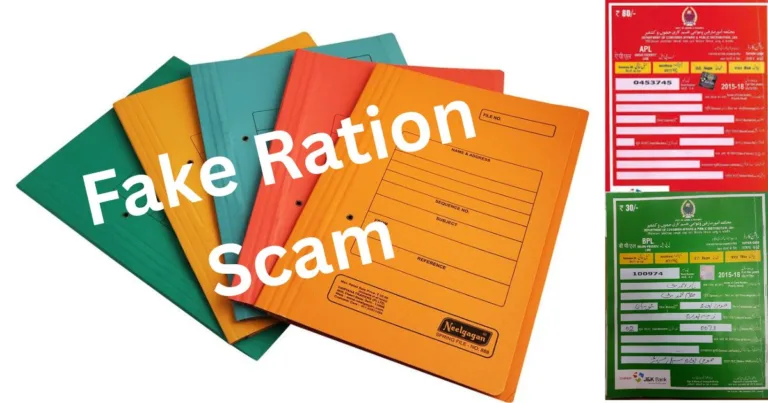
In the second case, ACB produced a charge-sheet in FIR No. 16/2011 related to the issuance of ration to non-existent BPL and AAY families in village Khandwal, Jammu.
The charge-sheet names Bhajan Singh, the then Tehsil Supply Officer Jammu; Miraj-U-Din, the then Assistant Director CA&PD Rural Jammu; Mohammad Rashid, then Patwari Halqa Khandwal; Paramdeep Singh, then Sarpanch; and Dhrub Singh, then Panch. Several other accused, including ration dealer Harbans Lal and village officials, have since passed away.
ACB said the scam began in 2004 when officials processed and approved a fake list of beneficiaries without proper verification, allowing ration to be issued to 188 non-existent BPL/AAY families. Between 2004 and 2010, large quantities of subsidised wheat, rice, and sugar were misappropriated.
The investigation revealed that only a small number of families listed were genuine, while the rest were fake. Due to this scam, the State suffered a loss of over ₹30 lakh. ACB said the accused abused their official positions and acted in criminal conspiracy for personal financial gain.
After completing the investigation, ACB confirmed that sufficient evidence was found and charge-sheets were filed for judicial determination.
You Might Also Like:
At 13, This Kashmiri Boy Built 31 Apps and AI Tools
Delhi Court Convicts Kashmiri Separatist Asiya Andrabi in UAPA Case
Why Is Omar Abdullah Silent as a Kashmiri Shawl Seller Is Brutally Attacked in Uttarakhand?