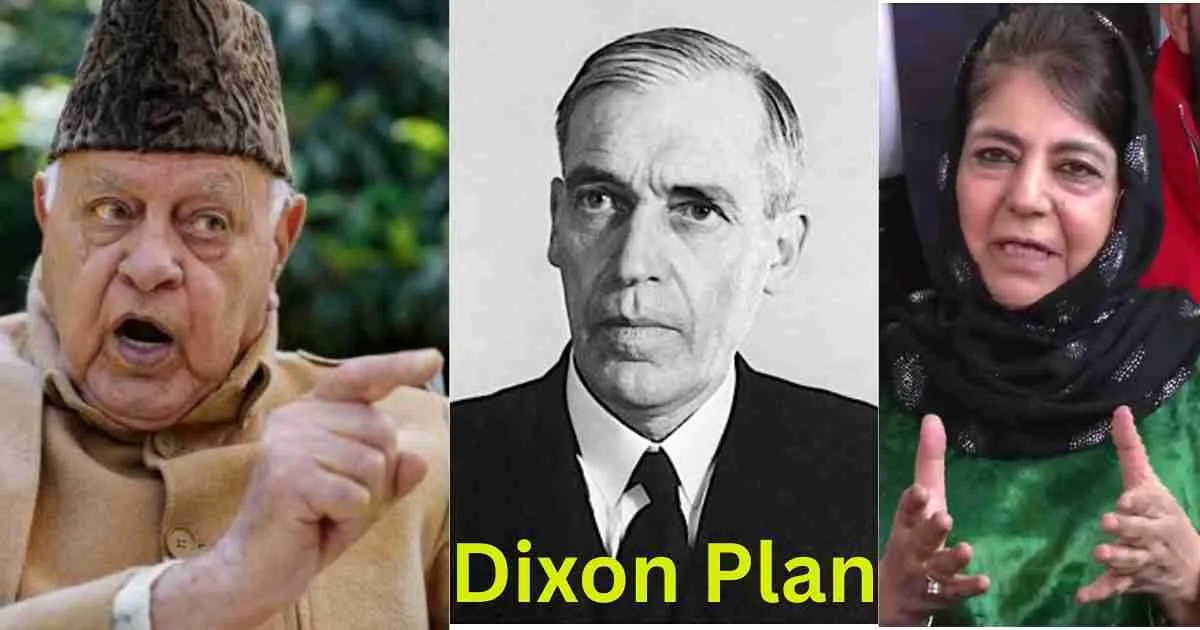
The Dixon Plan was a proposal made in 1950 to resolve the long-standing dispute over Jammu and Kashmir between India and Pakistan.
The plan was suggested by Sir Owen Dixon, who was appointed by the United Nations as a mediator after the first India–Pakistan war over Kashmir.
After visiting the region and holding talks with both sides, Dixon concluded that holding a single plebiscite across the entire state was not practical. Instead, he proposed dividing Jammu and Kashmir on regional and demographic lines. Click Here To Follow Our WhatsApp Channel
Key features of the Dixon Plan
- Kashmir Valley
The Muslim-majority Kashmir Valley would be separated, and a plebiscite would be held only in this region to decide its future. - Jammu region
Hindu-majority areas of Jammu would remain with India. - Ladakh
Buddhist-majority Ladakh would also remain with India. - Natural division line
The Chenab River was discussed as a natural boundary to divide regions.
In simple words, the Dixon Plan did not treat Jammu and Kashmir as one unit. Instead, it suggested breaking it into parts based on religion, geography, and population.
Why the Dixon Plan failed
- India rejected the proposal, saying Jammu and Kashmir had already acceded to India legally.
- Pakistan also raised objections and wanted broader changes.
- There was no agreement on demilitarisation and voting methods.
Because of these disagreements, the plan was abandoned, and Sir Owen Dixon resigned as mediator. The Dixon Plan was never implemented.
Why Has the Dixon Plan Become Today’s Discussion?
The Dixon Plan has returned to public debate because of recent political statements and proposals that talk about regional separation or administrative division within Jammu and Kashmir.
Link to present-day politics
When leaders suggest:
- Separate divisions for Chenab or Pir Panchal regions
- Administrative restructuring based on regional identity
- Stronger regional boundaries within Jammu and Kashmir
Critics say such ideas resemble the Dixon Plan, as they revive the old concept of dividing the region instead of keeping it united.
Political reactions
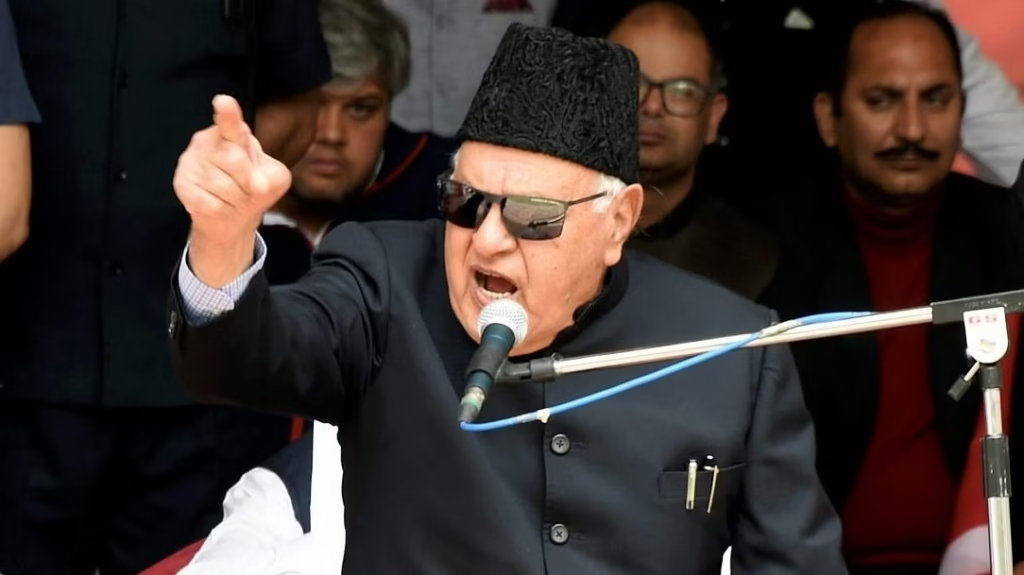
Senior leaders like Farooq Abdullah have openly opposed such ideas, calling them a revival of the Dixon Plan. They argue that:
- Division weakens unity
- Past examples show separation does not always benefit people
- Any move towards regional break-up could reopen old political wounds
Fear of further fragmentation
Many people believe that reopening discussions similar to the Dixon Plan could:
- Create new regional tensions
- Increase political instability
- Undermine the historical identity of Jammu and Kashmir
This is why even administrative proposals are closely watched and strongly debated.
Conclusion
For decades, the Dixon Plan has been rejected by Kashmiri Muslims, Jammu Hindus, and the people of the Pir Panchal region, and this rejection remains strong even today. Kashmiri Muslims opposed the plan because it treated their land as a bargaining unit rather than recognising their shared history, culture, and political identity within a united Jammu and Kashmir. Many felt the plan would reduce a complex human issue to lines on a map, without addressing dignity, rights, or long-term peace. In Jammu, Hindu communities also rejected the idea, fearing that division based on religion or geography would permanently weaken social harmony and create instability rather than security. Similarly, people living in the Pir Panchal belt—who have long acted as a cultural and social bridge between regions—opposed any plan that threatened to split families, trade routes, and shared traditions. Historically, these communities believed that separation would only deepen mistrust and prolong conflict. Even today, the same concerns remain. Many across all three regions see any revival of Dixon-like thinking as a step backwards, reopening wounds of the past. Their consistent stance shows a shared belief that peace, development, and identity can only be protected through unity, not division, and that externally designed plans have never reflected the real aspirations of the people on the ground.
You Might Also Like:
At 13, This Kashmiri Boy Built 31 Apps and AI Tools
Delhi Court Convicts Kashmiri Separatist Asiya Andrabi in UAPA Case
Pahalgam Railway Line Is About Future, Not Fear—Connectivity Is Development