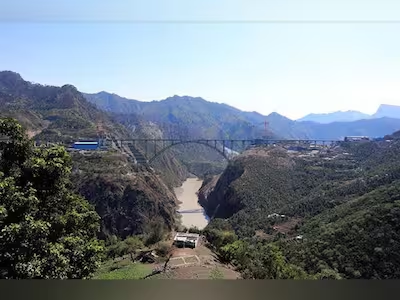
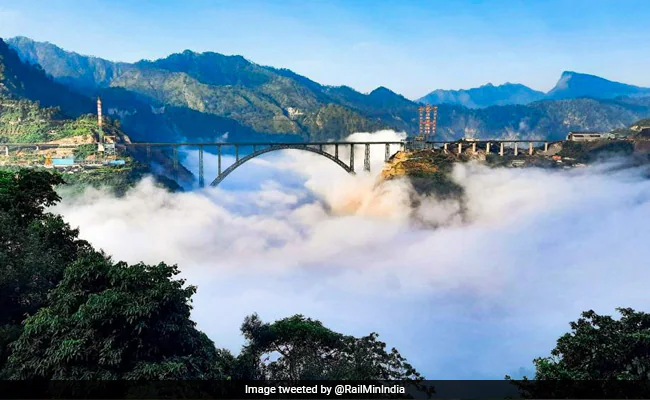
The Chenab Railway Bridge is one of the most significant infrastructure projects in India’s history, representing not only the engineering prowess of the nation but also its commitment to improving the connectivity and economic growth of Jammu and Kashmir. Spanning across the mighty Chenab River in the Reasi district, the bridge forms an integral part of the Udhampur-Srinagar-Baramulla Rail Link (USBRL) project. This rail link aims to connect Jammu and Kashmir with the rest of India, improving access to this remote and sensitive region. The Chenab Railway Bridge is a testament to the country’s ambition to provide world-class infrastructure in difficult terrains, overcoming geographical and environmental challenges.
Introduction: The Need for the Chenab Railway Bridge
Before delving into the significance of the Chenab Railway Bridge, it’s important to understand the context in which it was conceived. Jammu and Kashmir, the northernmost region of India, has always faced challenges related to connectivity. The state’s geographical terrain is diverse and often difficult, with mountainous landscapes and unpredictable weather conditions. Historically, this has made transportation and communication between Jammu and Kashmir and the rest of India a challenge. These issues were compounded by the political instability in the region, which further limited the development of infrastructure.
The idea behind the Chenab Railway Bridge was to provide a reliable and safe railway route to the remote areas of Jammu and Kashmir, thereby improving connectivity for trade, tourism, and general travel. It is part of the ambitious Udhampur-Srinagar-Baramulla Rail Link project, which aims to connect the Kashmir Valley with the rest of India via rail. This railway network is expected to revolutionize the region by providing easier access to essential services, economic opportunities, and a direct link to the rest of the country.
Engineering Marvel: The Design and Structure of the Chenab Railway Bridge
At the heart of the USBRL project, the Chenab Railway Bridge stands out as an engineering marvel due to its unique design and the challenges it overcame during construction. The bridge spans the Chenab River at a height of 359 meters (1,178 feet) above the riverbed, making it one of the highest railway bridges in the world. Its height is equivalent to about the same height as the Eiffel Tower, and this makes it an iconic structure not only in India but globally.
The construction of the bridge began in 2004, and it was designed by the Indian Railways and the Konkan Railway Corporation Ltd. (KRCL) with the help of international expertise. The bridge was constructed using modern engineering techniques, ensuring it could withstand harsh weather conditions, seismic activities, and high winds. The region where the bridge is located is prone to earthquakes, and engineers took great care in designing it to be earthquake-resistant.
One of the most remarkable features of the bridge is its use of high-strength materials. The steel and concrete used in its construction are designed to endure extreme weather conditions, including heavy rainfall, snow, and the harsh winters typical of the region. This is essential, as the Chenab River is subject to frequent fluctuations, and the bridge had to be designed to accommodate these changes without compromising structural integrity.
The design of the bridge also ensures that it can withstand the extreme winds and seismic activity that are common in the region. The construction team used an innovative approach to deal with the challenges posed by the deep gorge and fast-flowing river. The design incorporates the use of advanced technology, including computer simulations, to determine the most suitable structural components and materials that would ensure the bridge’s longevity.
The bridge itself consists of several distinct parts. The main span, which is the section that crosses the river, is built using a combination of reinforced concrete and steel. The bridge has been equipped with 17 spans, with the longest span being 467 meters (1,532 feet). This massive span allows the railway tracks to cross the river without being obstructed by the water or the surrounding terrain. The bridge also includes 1.3 kilometers of approach roads, which were constructed in a challenging environment, requiring precise planning and execution.
In terms of its operational capabilities, the bridge is designed to carry trains traveling at speeds of up to 100 km/h. It is also capable of handling heavy loads, ensuring that it can accommodate both passenger and freight trains. The rail link is expected to drastically reduce travel time between Jammu and Srinagar, offering an efficient and fast means of transportation.
Strategic Significance of the Chenab Railway Bridge
The construction of the Chenab Railway Bridge is not only an engineering achievement but also a strategic move that holds immense importance for the region’s economic, social, and political development. Jammu and Kashmir, due to its geographical location and political significance, has always been a focal point of national and international attention. Over the years, the region has faced numerous challenges, ranging from political instability to economic underdevelopment. The lack of proper connectivity has been a major bottleneck in the region’s growth.
The Chenab Railway Bridge is expected to be a game-changer in this regard. It will significantly improve connectivity between Jammu and Kashmir and the rest of India. Currently, the region is largely dependent on road and air transport, which can be time-consuming, costly, and unreliable, especially during the harsh winter months when roads are often closed due to snowfall or landslides. The introduction of a railway system will drastically reduce the time taken to travel between Jammu and Srinagar, which currently takes anywhere between 6-8 hours by road.
The railway link will also have a significant impact on the region’s economy. By improving transportation, it will facilitate easier movement of goods and people, promoting trade and tourism. The easier access to remote areas will also help improve the delivery of essential services, including healthcare, education, and employment opportunities, thereby contributing to the overall development of the region.
In terms of tourism, Jammu and Kashmir is one of the most beautiful regions in India, with its picturesque landscapes, lakes, and mountains. However, the region has often been underdeveloped due to the lack of infrastructure, which has deterred tourists from visiting. The introduction of a reliable and efficient railway system will make it easier for tourists to visit the region, boosting the tourism sector and creating new job opportunities for locals.
Environmental and Social Impact of the Chenab Railway Bridge
While the Chenab Railway Bridge has been hailed for its engineering excellence and strategic importance, its construction also raises important environmental and social questions. The region where the bridge is located is home to diverse ecosystems, including forests, water bodies, and wildlife. The construction of such a massive structure has inevitably had an impact on the surrounding environment, including the disruption of local flora and fauna during the construction process.
The construction process required extensive use of heavy machinery, which could have contributed to soil erosion, deforestation, and pollution. Additionally, the river itself, which is an important water source for the surrounding areas, could have been affected by the construction, potentially impacting local communities that depend on it for their livelihoods.
However, the Indian Railways and other responsible agencies have taken measures to minimize these impacts. The design and construction of the bridge were done in consultation with environmental experts, who ensured that the project complied with environmental regulations. Efforts were made to minimize soil erosion and prevent damage to the surrounding ecosystems. Additionally, the construction process employed the use of techniques that helped preserve the natural landscape as much as possible.
From a social perspective, the Chenab Railway Bridge has the potential to transform the lives of the people living in Jammu and Kashmir. The improved connectivity will open up new job opportunities, especially in construction, tourism, and trade. It will also improve the access to education and healthcare services, which have often been limited in remote areas due to poor transportation infrastructure.
Moreover, the bridge and the associated rail link project are likely to foster greater integration between Jammu and Kashmir and the rest of India. This can help bridge the social and cultural divide that has historically existed between the region and the rest of the country, promoting national unity.
Conclusion: A Symbol of Progress for Jammu and Kashmir
The Chenab Railway Bridge is much more than just a physical structure; it is a symbol of India’s commitment to building world-class infrastructure in even the most challenging terrains. The bridge’s completion marks a new era of connectivity for Jammu and Kashmir, providing better access to the rest of the country and opening up new opportunities for growth and development.
The economic and social impacts of the bridge will be far-reaching, particularly in the areas of trade, tourism, and regional integration. It will contribute to the region’s long-term stability and prosperity by providing a safer, faster, and more efficient transportation route. Ultimately, the Chenab Railway Bridge is a testament to the determination and vision behind India’s infrastructural ambitions, which will undoubtedly play a key role in shaping the future of Jammu and Kashmir and the entire nation.
You Might Also Like :
Double-Storey Residential House Gutted in Dardihaji Rajwar Handwara
J&K Additional Resident Commissioner Anil Sharma Felicitates Gold Medalists of 62nd National Roller Skating Championship
Drug Peddler Nisar Ahmad Kambay Arrested in Ganderbal; Contraband Substance Recovered
Police Seizes Vehicle Hyundai Venue of Notorious Drug Peddler Javeed Ahmad Sofi worth Rs 10.5 lacs in Handwara
Jammu and Kashmir Chief Minister Omar Abdullah Likely to Meet Amit Shah Tomorrow Over Statehood Restoration Issue