Congress Seeks Immediate Restoration of Jammu & Kashmir Statehood

Congress

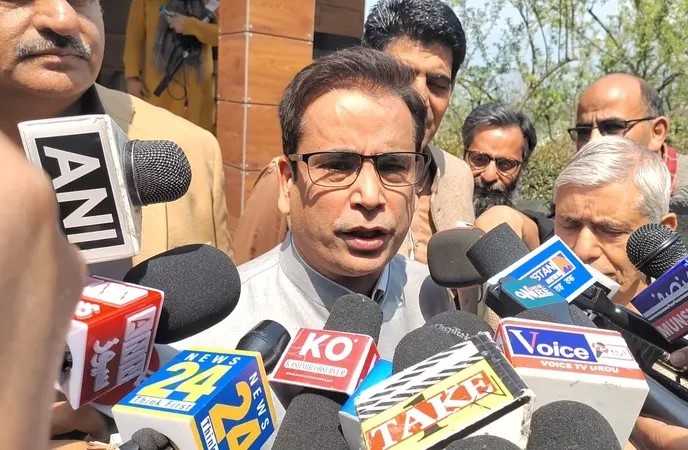
Congress leader Syed Naseer Hussain on Friday questioned the “continuing delay” in restoring statehood to Jammu and Kashmir.

“We had always said statehood must be restored. Now that the government is in place, why is there a delay? We have already protested, and we will continue to fight for Jammu and Kashmir’s statehood,” said Hussain while reiterating the Congress party’s long-standing stance.

Hussain also stated that the Congress President Mallikarjun Kharge will write to Prime Minister Narendra Modi to restore statehood in Jammu and Kashmir.

Rajya Sabha MP pointed out the gap between official statements and ground realities over the terrorism incidents in the Union Territory.

“In Parliament, the government claims terrorism is under control, but infiltration attempts continue, and 50 people have died. Terrorism, especially in the Jammu region, is increasing,” Hussain said.

In August 2019, the Central Government, led by Prime Minister Narendra Modi, repealed Article 370 of the Indian Constitution, effectively ending the special status given to Jammu and Kashmir.

Meanwhile, Jammu and Kashmir Chief Minister Omar Abdullah on Thursday criticised former RAW Chief Amarjit Singh Dulat’s recent book, which has sparked controversy over its portrayal of Dr Farooq Abdullah.

Omar Abdullah criticised Dulat, saying he prioritises selling books over truth and humiliated Farooq Abdullah in his latest book, “The Chief Minister and the Spy.”

“To sell his book, it is Dulat sahib’s habit not to go with the truth. In his first book, he spared no one, and in this book, he left no stone unturned to humiliate Farooq sahib. It is said that when you have friends like this, there is no need for enemies. Finally, Farooq sahib has found out the truth about Dulat sahib,” he said.

The book’s contents have sparked debate, with some opposition parties interpreting it as revealing hidden political negotiations. Dulat, however, dismisses claims that Farooq Abdullah privately backed the Centre’s move to abrogate Article 370, calling such reports “absolutely misquoted”. (ANI)

Jammu and Kashmir National Conference Leaders Denounce Dulat’s Book Claims, Call Them Publicity Stunt and Baseless

National Conference

The Jammu and Kashmir National Conference rank and file Thursday criticized the remarks made by former RAW chief A S Dulat against Dr. Farooq Abdullah in his book “The Chief Minister and the Spy” as completely detached from reality and a blatant attempt to generate publicity for the book.

In a joint statement, the senior leaders of the party, including party General Secretary Ali Muhammad Sagar, Additional General Secretary Ajay Kumar Sadhotra, Advisor to HCM Nasir Aslam Wani, Treasurer Shammi Oberoi, Chief Spokesperson Tanvir Sadiq, Provincial Presidents Showkat Mir, Rattan Lal Gupta, party MPs, senior leaders Sakina Itoo, Choudhary Muhammad Ramzan, Muhammad Shafi Uri, Sharief Ud Din Shariq, Ratan Lal Gupta, Ajay Sadhotra, Khalid Nejeeb Suharwardhy, Shameema Firdous, Mubarak Gul, district presidents, block presidents vehemently denounced the remarks made by Dulat as a desperate attempt to gain cheap publicity for the book.

They emphasized that the party president, Dr. Farooq Abdullah, is a symbol of democratic resistance against the unilateral decisions made by the center on August 5, 2019. “Dr. Abdullah was the driving force behind the formation of the PAGD in response to these decisions,” they added.

The leaders pointed out that Dulat’s accusations are baseless, especially considering his previous allegations against Mufti Syed, which were denied by the PDP.

“How can PDP trust his current claims when his past statements have been refuted by them? It is clear that Dulat’s motives are questionable.”

Furthermore, the leaders highlighted Dr. Farooq Abdullah’s history of standing up for Kashmir’s autonomy, even in the face of adversity. “His government was dismissed in 1984, and he has been unjustly jailed and placed under house arrest multiple times since 2019. The NC had warned the PDP against forming an alliance with the BJP, foreseeing the negative impact it would have on the region’s autonomy. People of Kashmir are well aware of who truly stands up for their rights.

Dulat’s attempts to smear Dr. Farooq Abdullah’s reputation have been debunked, leaving no room for the PDP and other parties to spread false narratives. Even the author had retracted from what is being peddled on social media platforms,” they said.

Sajad Lone Criticises Omar Abdullah Over NC’s Adjournment Motion on Waqf Act in J&K Assembly

Sajad Lone Criticises

Jammu and Kashmir’s People Conference Chief Sajad Lone took a jibe at Chief Minister Omar Abdullah on Wednesday after the latter had said that the National Conference MLAs had made a ‘mistake’ by bringing in an adjournment motion to discuss the Waqf Act in the J-K Assembly.

“Omar Abdullah is saying that a mistake has happened. In my tweet of April 7, I mentioned that our friends in NC are doing wrong…I remember a member saying to me that I must have got a call from Delhi, but it did not happen,” Sajad Lone said.

His comments come after there was a ruckus for multiple days in the Jammu and Kashmir Assembly on the recently passed Waqf (Amendment) Act, with NC MLAS, who are the majority in the house, tearing the bill and demanding a discussion on the Waqf Bill.

Referencing his old post on X, Lone said that NC had simply done a ‘song and dance’ in the Assembly.

“How can it happen that 50 people only make noise in the Assembly session for 3 days, they are from NC, the Speaker is from NC, and now the Leader of the House is saying that they will go to the Supreme Court?” Lone asked.

On April 7, following a ruckus in the assembly, Sajad Lone had posted on X, “If NC’s song and dance performance in the assembly is not theatre–/Why NC is not bringing a no- confidence motion against it’s own speaker for disallowing their adjournment motion. Is the Waqf bill really sub judice? The petition against the Waqf bill has not been admitted yet. So How can it be sub judice.”

“Let me tell my friends in NC that adjournment motion is a censure motion against government? It is brought to discuss failures of government. You cannot bring an adjournment motion on the Waqf Bill. Adjournment means discussion and reply by the Minister in charge concerned,” his post added.

Earlier on April 15 (Tuesday), while Omar Abdullah attended a public meeting in J-K’s Pulwama district, he told reporters that MLAS had “perhaps made a mistake” bringing the adjournment motion on the Waqf Bill as the motion should pertain to the matters of the J-K government.

“The speaker had cleared up everything on the last day. Perhaps the mistake was on the part of the members at that time that they have brought an adjournment motion. Adjournment Motion is brought only for the work of the Government of Jammu and Kashmir. It was introduced because, at that time, the government had to respond. Now tell me what would we have answered if this Adjournment Motion had been admitted?” CM Abdullah had said.

Reiterating the party’s resolve to fight against the Act, the Chief Minister said that if the issue of Waqf was brought up in some other way, it could be admitted. The CM added, “We did not introduce this Waqf Bill.

This Waqf Bill was passed by the central government and parliament so what would the Jammu and Kashmir government answer? If this resolution had been brought in any other way or brought under any other law, then perhaps it could have been admitted. But now, there is a challenge in Supreme Court regarding it.” (ANI)

West Bengal CM Mamata Banerjee Refuses to Implement Waqf Amendment Act

West Bengal CM Mamata Banerjee

West Bengal Chief Minister Mamata Banerjee has taken a defiant stand against the recently passed Waqf Amendment Act, announcing that her government will not implement the controversial legislation in the state. The declaration, made during a program organized by the Jain community in Kolkata on Wednesday, has ignited a fierce political debate, with the Bharatiya Janata Party (BJP) accusing her of vote-bank politics and failing to maintain law and order amid violent protests in the state.

Mamata’s Stand: A Defense of Minority Rights

Addressing the gathering, Banerjee emphasized her commitment to protecting minority communities and their properties, stating, “I will protect the minority people and their property. I know you are unhappy with the implementation of the Waqf Act. But have faith—nothing will happen in Bengal that will allow anyone to divide and rule.” She framed her rejection of the Act as a resistance to what she perceives as a divisive agenda by the BJP-led central government.

Banerjee also drew parallels with the unrest in neighboring Bangladesh, cautioning against similar instability in West Bengal. “Look at the situation in Bangladesh. The Waqf Amendment Bill should not have been passed now,” she remarked, suggesting that the timing of the legislation was ill-considered and provocative.

The Chief Minister’s announcement comes on the heels of violent protests in Murshidabad’s Jangipur area, where demonstrators clashed with police, set fire to vehicles, and pelted stones in opposition to the Act. Banerjee sought to calm tensions, urging unity and assuring minorities that her administration would safeguard their interests.

The Waqf Amendment Act: A Polarizing Legislation

The Waqf (Amendment) Bill, which received presidential assent from Draupadi Murmu on Saturday after being passed by the Lok Sabha on Thursday and the Rajya Sabha on Friday, introduces significant changes to the management of Waqf properties—lands dedicated under Islamic law for religious, educational, or charitable purposes. The central government has defended the law, arguing that it will enhance transparency, efficiency, and accountability in the functioning of Waqf Boards while reducing land-related disputes.

However, critics, including Banerjee and other opposition leaders, have condemned the Act as an overreach into religious affairs and an attempt to target the Muslim community. A particularly contentious provision allows non-Muslims to participate in reviewing Waqf activities, a move that has drawn sharp criticism for undermining the autonomy of religious institutions.

Political Backlash and Escalating Tensions

The BJP wasted no time in slamming Banerjee’s decision. Suvendu Adhikari, the Leader of Opposition in the West Bengal Assembly, accused the state government of indulging in “vote bank politics” and failing to curb the violence in Murshidabad. In a post on X, Adhikari shared a video allegedly showing protesters burning public property and police vehicles, claiming that “anti-social elements” were spreading anarchy under the guise of dissent. He called for the deployment of central forces and urged the Union Home Ministry to intervene.

BJP leader Amit Malviya echoed Adhikari’s sentiments, criticizing Banerjee for “going silent” during the unrest and accusing her of suppressing the truth. The party has argued that the violence reflects a broader failure of law and order under her leadership, with Malviya citing prohibitory orders imposed by the Murshidabad District Magistrate under Section 163 of the BNSS, banning gatherings of five or more people for 48 hours.

In response, Banerjee’s supporters within the Trinamool Congress (TMC) have portrayed her stance as a principled defense of constitutional values and minority rights. The TMC has long positioned itself as a counterweight to the BJP’s alleged majoritarian policies, and Banerjee’s rejection of the Waqf Amendment Act aligns with this narrative.

Legal and Constitutional Implications

Banerjee’s declaration raises questions about the legal feasibility of her stance. Under India’s federal structure, laws passed by Parliament on matters in the Concurrent List—such as the Waqf Act—are binding on all states. While states can resist implementation through non-cooperation or challenge the law in courts, outright refusal to comply could invite legal and political repercussions. The TMC has hinted at exploring a Supreme Court challenge, a route also being considered by other opposition parties like the Congress.

The Congress, while opposing the bill in Parliament, has distanced itself from Banerjee’s unilateral approach. Former Uttarakhand Chief Minister Harish Rawat, speaking in Ahmedabad, clarified that Banerjee’s position was her “personal view,” though he reiterated the party’s broader opposition to the legislation.

Protests and Security Measures

The unrest in Murshidabad has underscored the polarizing impact of the Waqf Amendment Act. Clashes between protesters and police in Jangipur have prompted heightened security measures, with authorities tightening arrangements in the area. The violence, which saw railway tracks blocked and public property damaged, has fueled the BJP’s narrative of administrative collapse, while Banerjee’s administration has accused opposition forces of instigating trouble.

A Broader Political Battle

Banerjee’s rejection of the Waqf Amendment Act is more than a policy disagreement—it’s a salvo in the escalating war of words between the TMC and BJP ahead of West Bengal’s assembly elections next year. The TMC has vowed to nullify the Act if a non-BJP government comes to power at the center, a promise Banerjee reiterated earlier this month. “When a new government is formed after ousting the current regime, we will bring a new amendment to nullify this Waqf Bill brought by the BJP,” she had said on April 3.

For the BJP, the issue is an opportunity to rally its base by accusing Banerjee of appeasement and portraying her government as soft on lawlessness. The party’s leaders have repeatedly framed the protests as evidence of radical elements gaining ground in West Bengal, drawing comparisons to recent upheavals in Bangladesh.

Conclusion

Mamata Banerjee’s rejection of the Waqf Amendment Act has thrust West Bengal into the center of a national controversy, pitting her against the BJP in a high-stakes battle over identity, governance, and federal authority. As protests simmer and legal questions loom, the standoff is likely to reverberate beyond the state, shaping the discourse around minority rights and religious autonomy in India. For now, Banerjee remains steadfast, casting herself as a protector of minorities against what she calls a “divide and rule” policy—a stance that promises to keep West Bengal’s political cauldron boiling in the months ahead.

NC, Opposition Demand Debate on Waqf Bill; Accuse Speaker of Suppression, Move No-Confidence Motion

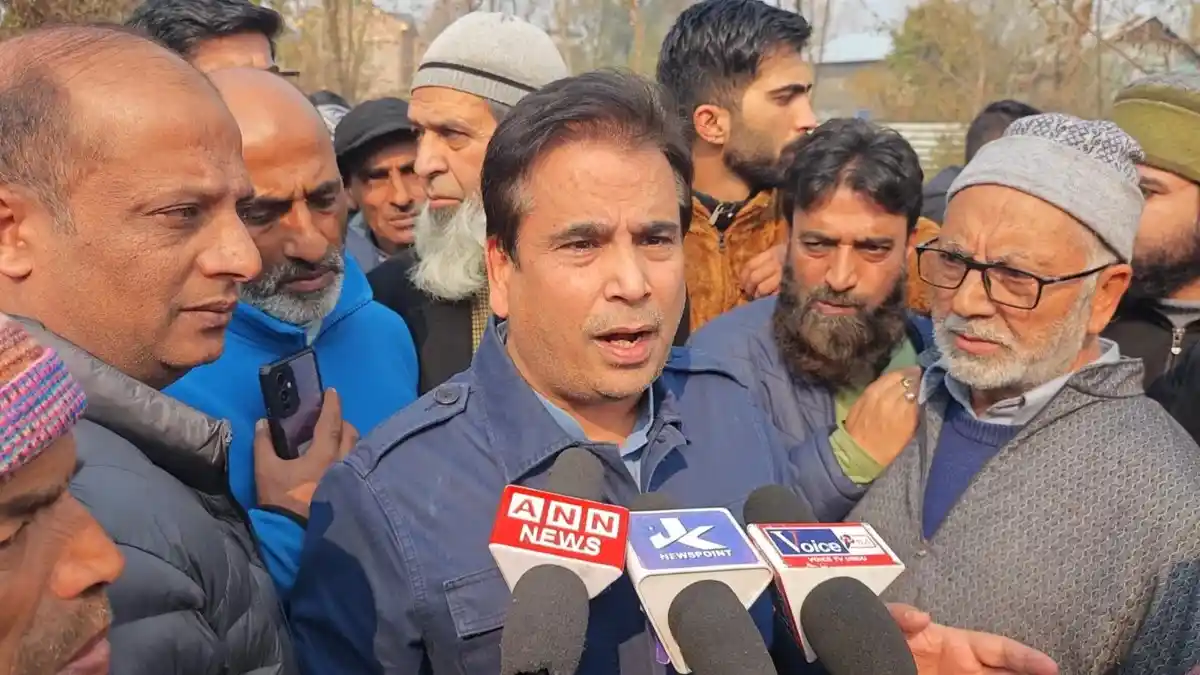
Spokesperson Tanvir Sadiq

National Conference MLA Tanvir Sadiq on Wednesday demanded a discussion on the Waqf Amendment Act. He asserted that it’s their democratic right to express views on the bill, which affects the Muslim-majority region.

“We just want one thing, let us discuss (Waqf Amendment Act). Where will we have a discussion if not in the assembly? Again, I want to reiterate that we are not challenging the authority of the Parliament, but it is our right to talk about it and express our views and opposition. This is what we have been doing,” Sadiq told reporters.

The Jammu and Kashmir Assembly witnessed chaos as NC MLAs protested against Speaker Abdul Rahim Rather’s decision to disallow their adjournment motion.

Earlier in the day, Leader of Opposition in the Assembly Sunil Sharma slammed the National Conference’s stance on the Waqf Amendment Act, saying that the party opposed the act because it had a vested interest in keeping the status quo.

“National Conference’s pain on the Waqf exists from the time of Sheikh Abdullah. Ever since independence, the National Conference has administered the Waqf in J&K. Their own office is on Waqf land,” Sharma said.

“There are many offices and landholdings with their relatives and workers, which belong to the Waqf, and they are scared of being questioned on that. A common, poor, and oppressed Muslim has no problem with it. He is happy with the bill,” he added.

J&K People’s Conference chief Sajad Lone said that his party has moved a no-confidence motion against the speaker, “We demanded that the Speaker either goes back to his chambers temporarily and Mubarak Gul take over for the time being and our work will be done. We also brought in a no-confidence motion. If he persists, then I think the no-confidence motion should be successful… Discussions on the Waqf bill will be held if they (NC) want.”

Congress MLA Irfan Hafeez Lone said that secularism was being violated and federalism was under threat,

“The Constitution and rule of law is being violated. Secularism is being brazenly violated. Federalism is under threat… It is the need of the hour to restore our identity of unity in diversity. The Waqf amendment bill is in concluding our religious matters, and the members have expressed their concern about it… We will not tolerate their interference in our religious matters. They have divided our beautiful state,” he said. (ANI)

J&K Assembly Uproar: AIP, PDP, and JKPC Slam NC Over Waqf Act, Demand Speaker’s Removal

khurshid

As the Jammu and Kashmir Assembly continued to witness uproar over the Waqf Amendment Act, Awami Ittehad Party MLA Khursheed Ahmad Sheikh on Tuesday accused the ruling National Conference of having a “fixed match” with the BJP.

“This is a fixed match between the BJP and the NC. The Leader of the House is not here in the assembly; he is busy welcoming the BJP leaders in Tulip Garden,” Sheikh told ANI.

Following chaos that erupted in the Assembly for the second day in a row over demands to discuss the Waqf Amendment Act, Speaker Abdul Rahim Rather adjourned the House till 1 PM.

“The house proceedings are being affected here. Some members of the National Conference are accusing the Speaker of being partial. Some 5-6 members have moved a no-confidence motion. If NC is sincere, they should come and sign… 7 important resolutions had to be discussed and passed,” the Awami Ittehad Party MLA said.

“We moved a no-confidence motion against the Speaker. We want to know the intentions of the Speaker. If they (NC) are sincere, if they want a debate on the Waqf Bill, and if they want the 7 resolutions to be tabled, they should change the Speaker,” he added.

Earlier, several MLAs, including those from the ruling National Conference party, had demanded a discussion on the recently passed reforms to the Waqf Board. The Mehbooba Mufti-led People’s Democratic Party had also moved a resolution urging the Central government to repeal the Act. However, that resolution was not voted on earlier today.

Earlier on Monday, the National Conference MLA had torn the bill reforming the Waqf Board in the House.

Today, PDP MLA Waheed Para and other MLAs of the party reached the Well of the House, showing some papers on their resolution. Following this, they were marshalled out. NC leaders, who had also reached the Well of the House, entered into an argument with J&K People’s Conference chief Sajad Lone.

In turn, the JKPC president, Sajad Lone, attacked the National Conference-led government, claiming that the party should remove the speaker they appointed so that a discussion on the Waqf Act could take place in the Assembly.

Lone said that the NC MLAs’ demand for a discussion “reeks of theatre,” as the party’s own Speaker, Abdul Rahim Rather, had denied discussions on the Waqf Bill under Rule 58.

“We, too, want that there should be a resolution. J&K is the only Muslim-majority province in the entire country. Muslims of India deserve that a strong message be sent from here. But for that, the Speaker is not ready. The Speaker has been elected by the NC. If they are serious, they should bring a no-confidence motion against him, remove him and bring in a new Speaker who would allow this,” Sajad Lone told reporters.

NC MLA Altaf Kaloo had moved an adjournment motion and sought time to speak in the House, but the Speaker did not respond. (ANI)

Sajad Lone Slams NC Over Waqf Bill Chaos, Calls Assembly Drama “Theatre”; PDP’s Waheed Para Marshalled Out

Sajad Lone

Jammu and Kashmir People’s Conference President Sajad Lone attacked the National Conference-led government, claiming that the party should remove the speaker appointed by them so that discussion on the Waqf Act can take place in the assembly.

Lone said that the NC MLAs demanding a discussion “reeks of theatre,” as it was the party’s own Speaker, Abdul Rahim Rather, who had denied discussions on the Waqf Bill under Rule 58.

Earlier, the PDP had submitted a fresh resolution in the House urging the Central Government to repeal the Waqf Amendment Act.

“Speaker sir has the pleasure of NC, He is the speaker of the National Conference. The party chose him, if the party feels that he is obstructing, then bring no confidence (motion) change him and bring a new speaker, otherwise it reeks of theatre. People will taking us intro confidence,” Sajad Lone told reporters outside the Assembly.

Criticising the lapse of other resolutions, he added, “Earlier, other resolutions were also lapsed, why are we lapsing everything else? If everyone in NC feels that there should be a discussion, then bring a new Speaker. What is so big in it?”

Sajad Lone was also seen getting into an argument with other NC MLAs in the assembly.

Following chaos in the Jammu and Kashmir Assembly over the demand to discuss the Waqf Board reforms, PDP MLA Waheed Para was marshalled out. Subsequently, the house was adjourned for 30 minutes.

NC MLA Altaf Kaloo had moved an adjournment motion and sought time to speak in the House, but the Speaker did not respond. PDP MLA Waheed Para and other MLAs of the party reached the Well of the House, showing some papers. Following this, they were marshalled out. NC leaders, who had also reached the Well of the House, entered into an argument with J&K People’s Conference chief Sajad Lone.

Meanwhile, PDP’s Waheed Para, speaking to reporters outside the assembly, called the chaos in the house “unfortunate” because Jammu and Kashmir is a Muslim majority state.

“It is unfortunate that Jammu and Kashmir is the Muslim majority region; if there is a Muslim CM in all of India, then it is in J&K. The whole country’s 24 crore Muslims are watching this,” Para told reporters.

Urging for all MLAs to support the resolution brought by PDP, he added, “There are 60 MLAs here, out of those 60 if they do not support a resolution which we have moved against the Waqf Act…I think history will judge us forever” (ANI)

Omar Abdullah Seeks Greater Support for Jammu & Kashmir at Lok Samvardhan Parv

Omar Abdullah

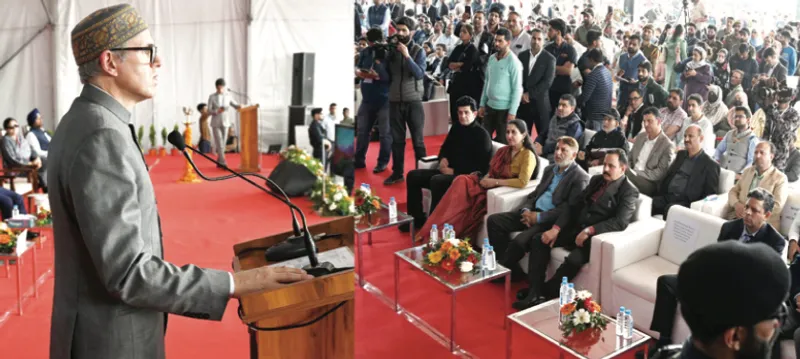
Chief Minister Omar Abdullah today said that Jammu and Kashmir has faced numerous challenges over the years but is now gradually emerging from these challenges.

He emphasized that efforts are underway to ensure the region becomes an equal stakeholder in the country’s overall development.

The Chief Minister was speaking at Lok Samvardhan Parv, being held at the University of Kashmir from April 5 to 13 under the theme ‘Bhagidari se Bhagyodaya’.

“Wherever support is possible and wherever proposals from our side are pending approval, I humbly request that they be considered and approved so that people of Jammu and Kashmir can benefit,” the Chief Minister said.

He was the Chief Guest at the event, which was inaugurated by Union Minister for Parliamentary Affairs and Minority Affairs, Kiren Rijiju.

Minister of State for Minority Affairs, George Kurien, also attended the event.

Vice Chancellor of Kashmir University, Professor Nilofer Khan, along with other senior dignitaries, was also present on the occasion.

Highlighting the importance of the programme, Omar Abdullah said the event marks a new beginning in the relationship between the Ministry of Minority Affairs and Jammu & Kashmir.

“This initiative offers a window into the rich cultural diversity, handicrafts and cuisines of the country, while also providing us the opportunity to showcase our own heritage—be it our crafts, traditional cuisine or natural beauty—to the visiting guests,” he said.

The Chief Minister noted that while the Ministry of Minority Affairs may appear smaller in scope, its work holds deep national significance.

“In a country as diverse as ours—with different ways of life, multiple languages, varied cuisines and unique cultures—it is crucial to foster a sense of belonging and unity. The ministry plays a key role in ensuring that every citizen, regardless of background, feels part of the nation’s progress,” he said.

He further acknowledged that the event has enabled local artisans, including those involved in handicrafts and traditional wazwan cuisine, to showcase their exceptional talent.

“The magic in their hands is on full display. At the same time, it is heartening to see participants from across the country sharing this platform,” he added.

Referring to the tourist rush coinciding with the onset of the spring season, he said: “I understand the challenges many of you may have faced in reaching here—especially due to the traffic around the Tulip Garden. But what can we say—the charm of Kashmir draws everyone in.” The Chief Minister expressed hope that guests from across the country will carry back fond memories of the event and the valley’s hospitality.

Urging the Union Minister to continue his ministry’s support for Jammu & Kashmir, the Chief Minister said the region continues to face various challenges, including unemployment. “Your ministry’s initiatives—be it in education, skill training or market access—are vital. Our artisans work hard but struggle to reach broader markets. They face challenges in grooming the next generation for this craft, and often do not receive adequate support in skill development and training. I hope your ministry will help bridge this gap,” he said

NC-Led Alliance Passes Resolutions Urging Centre to Respect J&K’s Democratic Mandate

NC-Led Alliance

 The ruling National Conference (NC) and its alliance partners convened a legislative party meeting in Srinagar on Friday, where they passed two significant resolutions, calling on the central government to respect the democratic mandate of the people of Jammu and Kashmir.
The nearly two-hour-long meeting, chaired by Chief Minister Omar Abdullah, was held at the residence of Deputy Chief Minister Surinder Choudhary in Gupkar. National Conference President Dr Farooq Abdullah, cabinet ministers, all NC MLAs, four Congress legislators led by Chief Whip Nizamuddin Bhat, and independent lawmakers who support the government, were present.


The meeting comes amid growing tensions between the Raj Bhawan and the six-month-old NC-led government, especially after recent administrative decisions taken by Lieutenant Governor Manoj Sinha. The meeting also assumes importance ahead of Union Home Minister Amit Shah’s scheduled three-day visit to Jammu and Kashmir starting April 6.
Speaking to the media after the meeting, NC Chief Spokesperson Tanvir Sadiq announced that two resolutions had been unanimously passed. The first resolution strongly rejected the Waqf Amendment Bill, 2025, calling it discriminatory and against the interests of the people of Jammu and Kashmir. The second resolution urged the BJP-led central government to respect the democratic will of the people, an apparent reference to the recent administrative decisions made by the Lieutenant Governor’s office.
“We want to run the government with love and respect. But our silence should not be seen as our weakness,” Tanvir Sadiq said. “We are coordinating with the LG administration and the Government of India, but we will not tolerate any unjust or one-sided decisions. Don’t push us to the wall.”
He further said that the alliance remains united in defending the rights and aspirations of the people and will continue to engage constructively with the administration.
Congress leader and MLA Bandipora Nizamuddin Bhat, who also attended the meeting, said that all lawmakers are united and fully support the leadership of Chief Minister Omar Abdullah.
“We met to discuss both political and administrative matters that impact the people of Jammu and Kashmir,” Bhat said.
He added that both long-term and short-term issues were discussed.
Bhat informed that two senior Congress leaders could not attend the meeting as they were preparing for another important meeting in Delhi. “They asked me to represent the party on their behalf,” Bhat said.
He further added that matters related to the Waqf Board, the need for a people-driven government, and public sentiments were discussed in detail. “We want to make it clear that even though some forces may try to disturb peace, we are united to protect democracy,” he said.
Calling the legislature a strong and credible institution that holds the people’s mandate, Bhat urged all political parties to stand together in maintaining peace and working for the development of Jammu and Kashmir.

Congress Leadership Meets DCC Presidents to Strengthen Grassroots Organisation in Jammu & Kashmir

Congress Leadership

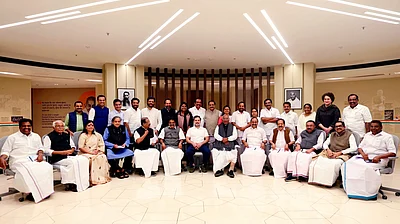
A landmark meeting of District Congress Committee (DCC) Presidents was held at the AICC headquarters, Indira Bhawan, New Delhi, in the presence of Congress President Mr. Mallikarjun Kharge, Leader of Opposition Mr. Rahul Gandhi and other senior party leaders.

During the session, Mr.Mallikarjun Kharge and Mr.Rahul Gandhi addressed the gathering and stressed the importance of strengthening the Congress organization at the district level.They emphasized that a robust and active grassroots structure is crucial for the party’s future success and public outreach.

In a separate consultative session,the Jammu & Kashmir Congress leadership, including all DCC Presidents, met with AICC J&K Incharge General Secretary Mr. Nasir, JKPCC President Mr. Tariq Hameed Karra, senior leader and former JKPCC President Mr. Ghulam Ahmad Mir and other key office bearers. The meeting was seen as a pivotal step toward party reorganization in the Union Territory.

Discussions focused on the current political scenario in J&K, strategies for strengthening the party at the grassroots, addressing public issues, and outlining a roadmap for the future.

A major decision during the meetings was to grant greater autonomy to District Presidents in appointing and reshuffling local office bearers.This move is part of a wider decentralization initiative aimed at revitalizing the party’s grassroots leadership.

District Congress Committee President Bandipora, Mr. Mushtaq Tantary, who actively participated in the meetings, expressed gratitude for being part of the important deliberations. “This historic gathering will certainly infuse a new spirit of dedication and hard work among all of us. It’s an honor to be part of this new chapter in the Congress party’s journey,” he said.

The Congress leadership reaffirmed its commitment to enhancing the party’s presence and performance across Jammu & Kashmir through collective vision, strategic planning and grassroots empowerment.