3 Injured as Landslide Strikes Pahalgam in South Kashmir’s Anantnag

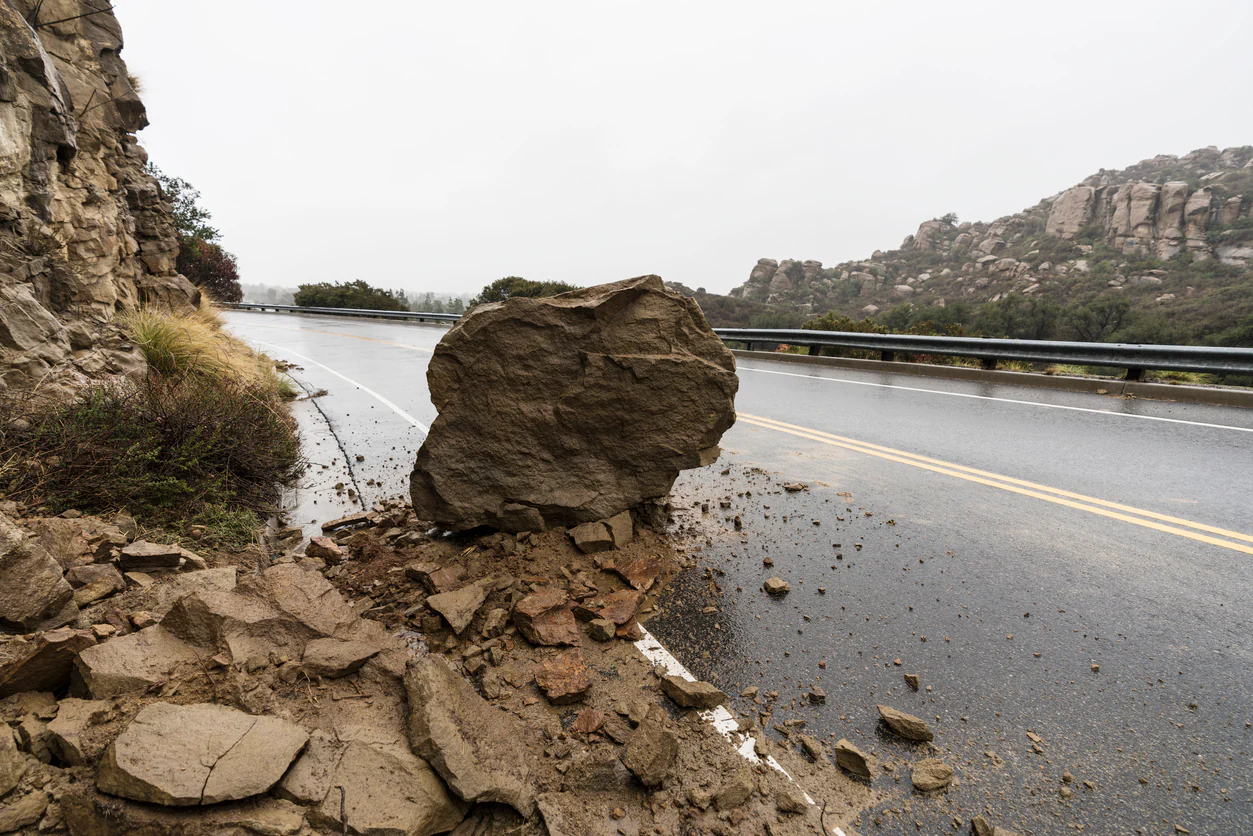
landslide in pahalgam

At least three persons were injured after landslide hit the Pahalgam area of south Kashmir’s Anantnag district on Thursday, officials said.

An official said that the landslide hit near the sumo stand in Pahalgam today afternoon.

He said that in the incident three persons were injured and they were shifted to a nearby hospital where from they have been referred to GMC Anantnag—(KNO)

J&K Excise Department Denies Reports of Increased Wine Shops, Calls Social Media Claims Baseless

Liquor Vends

The Jammu and Kashmir Excise Department today strongly rebutted the news being circulated on various social media platforms regarding the increase in number of vends (Wine Shops) in Jammu & Kashmir, terming it as fake and baseless.

A communication issued by the department in this regard stated that “As per J&K Excise Policy for the year 2025-26 notified vide SO 38 dated 15th February, 2025, 305 number of vends (Wine Shops) were put to e-auction on 15.02.2025 and after culmination of the bidding process, 271 vends got allotted through the e-auction process (which was conducted by J&K Bank) to the successful H1 bidders and rest of 34 locations are being put to re-auction through Public Notice Issued on 07.03.2025 and bidding process (again to be conducted by the J&K Bank) shall be completed on 17.03.2025 for these 34 vends.”

The document further added that, “It is relevant to mention that the number of JKEL-2 vends (Wine Shops) remained unchanged i.e. 305, since FY 2023-24 and there is no increase in the number of vends, either in Jammu or in Kashmir. The break up of the vends (Wine Shops) is: Jammu-291 and Kashmir – 14).”

All details regarding the Excise Policy along with location of the vends (Wine Shops) etc is available on the official website of the Excise Department i.e. https://jkexcise.nic.in

J&K Government Rules Out Revisiting Decision on Kashmiri Migrant Employee Accommodations

74071 New Ration Cards

The Jammu and Kashmir government on Wednesday ruled out reconsidering its decision regarding the construction of accommodations for employees appointed under the Prime Minister’s Package for Kashmiri Migrants.

In response to a question by MLA Mir Mohammad Fayaz, the Department of Disaster Management, Relief, Rehabilitation & Reconstruction (DMRRR), stated that 6,000 one-bedroom flats (1-BHK) were approved under PMDP 2015 for Kashmiri migrant employees at 20 locations.

The sanctioned cost, initially Rs 920 crore, has now been revised to Rs 1,325.84 crore, it said.

However, based on directions from the then Chief Minister Mufti Mohammed Syed permission was granted for constructing 2-BHK flats at two locations-Sheikhpora and Vessu-instead of 1-BHK units. The Ministry of Home Affairs (MHA) communicated that the additional cost escalation would be borne by the Union Territory government, it said.

Regarding the possibility of revisiting or restoring the earlier decision to address concerns of inadequate accommodation, the government clarified that no such proposal is under consideration at present—(KNO)

Army Soldier Injured in Suspected Sniper Attack at Nowshera Sector, Rajouri

army

An army soldier was injured in a cross-border firing incident at Nowshera sector in Rajouri district on Wednesday.

Official sources said that today morning that an army personnel was injured in a suspected sniper attack from accross the border He has been airlifted to command hospital Udhampur for advanced treatment.He has been identified as Man Kumar Bega.(GNS)

Pakistani Security Forces Free 150 Hostages, Kill 27 Rebels in Dramatic Train Hijacking Raid

solider

In a stunning display of bravery and precision, Pakistan’s security forces successfully freed 150 hostages and killed 27 rebels during a dramatic raid on a hijacked train in the country’s southwest. The operation, which unfolded on Sunday night near the town of Mastung in Balochistan province, has been hailed as a significant victory in Pakistan’s ongoing fight against terrorism.

The train, carrying approximately 200 passengers, was seized by insurgents from the Baloch Liberation Army (BLA), a separatist group demanding greater autonomy for the resource-rich province. The rebels had halted the train and taken its passengers hostage, demanding the release of several imprisoned comrades as a condition for their freedom. However, after negotiations broke down, the Pakistani military launched a decisive operation to reclaim the train and rescue the captives.

The Raid: A Night of Intense Combat

Backed by helicopters and armored vehicles, the security forces descended on the hijacked train in a carefully coordinated assault. The operation, which spanned several hours, was marked by fierce firefights between the troops and the heavily armed rebels. Despite the insurgents’ resistance, the security forces overpowered them, neutralizing 27 rebels and securing the release of all 150 hostages, who emerged unharmed.

Eyewitnesses described a chaotic yet heroic scene. “It was terrifying—bullets were flying everywhere,” said one passenger, who requested anonymity. “But then the security forces stormed in. They saved us. They are heroes.”

A military spokesperson praised the operation as a “major success,” emphasizing the professionalism and courage of the troops involved. “Our security forces have once again shown their resolve to protect the nation and its people,” the spokesperson stated. The swift and effective response underscored the government’s determination to combat insurgent threats head-on.

Background: The Balochistan Insurgency

The hijacking took place in Balochistan, a province long plagued by a separatist insurgency led by groups like the BLA. Rich in natural gas and minerals, Balochistan has been a focal point of contention, with rebels accusing the central government of exploiting the region’s resources while neglecting its people. The BLA and similar groups have frequently targeted infrastructure, security personnel, and civilians in their campaign for greater autonomy or independence.

The Pakistani government, in turn, has accused the rebels of receiving support from foreign powers, notably India, as part of a broader effort to destabilize the country. The BLA has denied these claims, framing their struggle as a fight for the rights of the Baloch people. Sunday’s train hijacking was the latest in a series of bold attacks aimed at pressuring the government into meeting their demands.

Implications for Security and Stability

The successful raid has been widely celebrated as a triumph for Pakistan’s counterterrorism efforts. The military’s ability to execute such a high-stakes operation has bolstered confidence in its capacity to tackle insurgent threats. Internationally, the raid has drawn praise, with the United States—a key ally in Pakistan’s anti-terrorism campaign—calling it a “testament to the courage and determination of the Pakistani security forces.”

However, the incident has also exposed vulnerabilities in the country’s transport infrastructure, prompting calls for enhanced security measures to protect passengers. The government has vowed to reassess its protocols to prevent future attacks, acknowledging that such incidents undermine public safety and economic stability.

For the freed hostages, the ordeal ended in relief and gratitude. Families reunited with their loved ones, many of whom had feared the worst. “I thought I was going to die,” the anonymous passenger recounted. “But thanks to the security forces, I’m here with my family again.”

A Step Forward, But Challenges Remain

While the operation has been lauded as a tactical success, some analysts caution that it may not address the deeper roots of the Balochistan conflict. “This is a significant win for the government, but military victories alone won’t end the insurgency,” said one expert, speaking on condition of anonymity. “The underlying grievances—poverty, marginalization, and resource disputes—need to be tackled for lasting peace.”

The raid’s broader significance lies in its demonstration of Pakistan’s resolve to confront terrorism and secure its territory. As the government continues its efforts to stabilize Balochistan and other restive regions, the bravery of its security forces offers a glimmer of hope. Yet, the path to enduring security remains complex, requiring not just strength, but also dialogue and development to heal the divides fueling unrest.

Ex-DGP SP Vaid Warns of Pakistan’s Collapse Amid Jaffar Express Train Attack in Balochistan

SP-Vaid

The ongoing unrest in Balochistan has once again come under the spotlight after former Director General of Police (DGP) of Jammu and Kashmir, SP Vaid, warned that Pakistan is on the verge of disintegration. His statement came in response to the recent Jaffar Express train attack, where the Baloch Liberation Army (BLA) took over 400 passengers hostage, highlighting the deteriorating security situation in the region.

Jaffar Express Attack: A Major Security Breach

On March 11, the Baloch Liberation Army (BLA) ambushed the Jaffar Express train, which was traveling from Quetta in Balochistan to Peshawar in Khyber Pakhtunkhwa. The attackers opened fire, injuring the train driver and forcing the train to a halt. Following this, they took passengers hostage, warning that they would execute them if the Pakistani military attempted a rescue operation.

According to local reports, over 450 passengers and railway staff were onboard when the attack took place. The BLA later claimed responsibility, stating that they had successfully repelled an initial counter-operation by the Pakistani military and were prepared for further confrontations.

SP Vaid: “Pakistan Has Lost Control Over Balochistan”

Reacting to the crisis, SP Vaid stated that the Pakistani government and army have completely lost their grip on Balochistan, leading to a rise in separatist movements. He cited reports that at least six to seven districts in Balochistan are under the full control of militant groups, making it difficult for the government to impose its authority.

“Pakistan is on the verge of breaking up. The situation in Balochistan is spiraling out of control, and even Sindh’s separatist groups have joined forces with Baloch insurgents. If this trend continues, Pakistan could disintegrate into multiple parts,” Vaid said in an interview.

Major General GD Bakshi: Pakistan Army’s Weakness Exposed

Retired Indian Army officer Major General GD Bakshi also weighed in on the incident, pointing out that the Jaffar Express attack is a clear indicator of Pakistan’s declining internal stability. He highlighted that hostage rescue operations require precision, something that the Pakistan Army struggles with.

“There is growing demoralization within the Pakistan Army. This hostage situation is extremely delicate. The Pakistan Army is known for using brute force rather than tactical precision, and if they mishandle this situation, it could lead to mass civilian casualties,” he stated.

BLA’s Warning: Retaliation Against Military Operations

The Baloch Liberation Army has issued a final warning to the Pakistani government, demanding an immediate halt to aerial strikes in the region. In a statement, BLA spokesperson Jeeyand Baloch said,

“If the airstrikes are not stopped immediately, we will execute all 100+ hostages within the next hour. Our fighters are fully prepared for any further military incursions, and Pakistan will bear the consequences of its actions.”

With tensions at an all-time high, the Pakistani military is under pressure to manage the crisis without worsening the already fragile situation.

Pakistan’s Struggle to Contain Separatist Movements

The Jaffar Express attack is not an isolated incident but part of a larger pattern of separatist activities in Balochistan. Over the years, the Baloch Liberation Army and other groups have carried out numerous attacks targeting Pakistani security forces, infrastructure, and government officials. The region has long been a center of resistance against what locals describe as the Pakistani government’s exploitation of Balochistan’s resources without benefiting its people.

In response to the growing insurgency, Pakistan has imposed heavy military crackdowns in Balochistan, but these efforts have only fueled more resentment among the local population. Allegations of human rights abuses, enforced disappearances, and extrajudicial killings by Pakistani security forces have further escalated tensions.

The Road Ahead: Is Pakistan Headed for Disintegration?

With growing internal turmoil, economic struggles, and increasing separatist movements, experts like SP Vaid and GD Bakshi believe that Pakistan is heading toward collapse. The alliance between Baloch and Sindhi separatist groups poses a new challenge for Islamabad, as it indicates a more coordinated effort to break away from Pakistan.

Moreover, Pakistan’s economic crisis, political instability, and strained relations with its neighbors further weaken its position. If the government fails to address the Balochistan crisis effectively, it could mark the beginning of a larger breakdown within the country.

As the world watches the unfolding situation in Balochistan, the coming days will be critical in determining whether Pakistan can maintain its territorial integrity or if the warnings of a possible breakup will become a reality.


Amit Shah Warns of Strict Action as Ministry of Home Affairs Bans JKIM and AAC Under UAPA

Ministry of Home Affairs

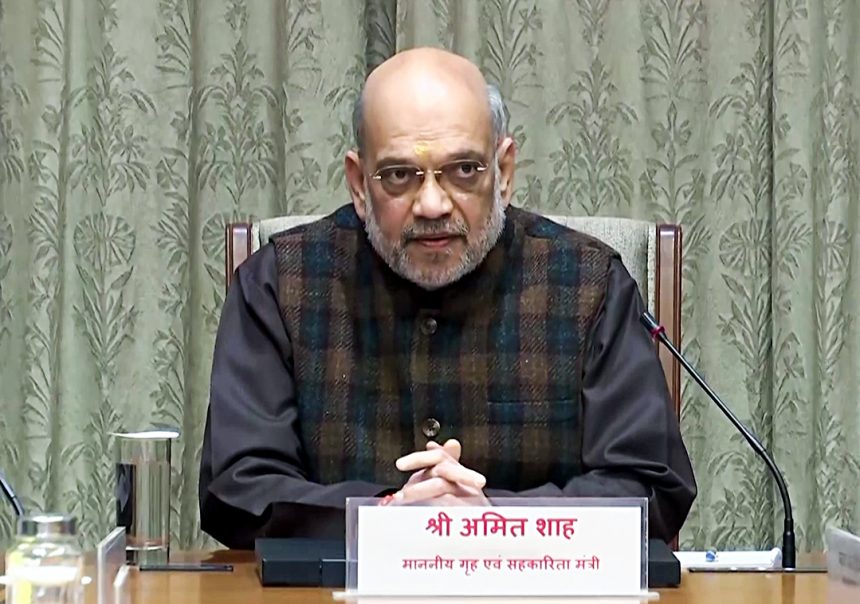
After the Ministry of Home Affairs (MHA) banned Jammu and Kashmir Ittihadul Muslimeen (JKIM) and Awami Action Committee Union Home Minister Amit Shah on Tuesday said that anyone found involved in activities against the nation’s peace is bound to face the “crushing blow” of the central government.

“Jammu and Kashmir Ittihadul Muslimeen’ and ‘Awami Action Committee’ have been declared unlawful associations under UAPA. These organizations were found inciting people to cause law and order situations, posing a threat to the unity and integrity of Bharat. Anyone found involved in activities against the nation’s peace, order, and sovereignty is bound to face the crushing blow of the Modi government,” Shah posted on X.

The Ministry of Home Affairs (MHA) announced on Tuesday that it has designated the Jammu and Kashmir Ittihadul Muslimeen (JKIM) and Jammu and Kashmir-based Awami Action Committee (AAC) as an unlawful organization and imposed an immediate five-year ban on it accusing the organization of engaging in activities that threaten the country’s sovereignty, integrity, and security.

As per an official notification, the AAC, led by Umar Farooq, has been involved in supporting terrorist activities and spreading anti-India propaganda to fuel separatism in Jammu and Kashmir.

The ministry stated that the group has been mobilizing funds to support secessionist, separatist, and terrorist operations in the region. Additionally, it accused the AAC of showing blatant disregard for India’s constitutional authority by promoting unrest, encouraging armed insurgency, and spreading hatred against the government.

According to a notification, JKIM, under the leadership of Masroor Abbas Ansari, has been involved in supporting terrorist activities and spreading anti-India propaganda to fuel separatism in Jammu and Kashmir.

It further stated that the organization and its members have been raising funds to facilitate unlawful activities, including separatist and terrorist operations in the region.

This move follows a series of actions taken against organizations accused of promoting separatism and terrorism in Jammu and Kashmir. The government continues to enforce strict measures under UAPA to curb activities perceived as threats to national security. (ANI)

Baloch Liberation Army Hijack Jaffar Express with 450 Passengers Threatens to Execute Hostages Amid Pakistan Military Response

Baloch Liberation Army

The Baloch Liberation Army on Tuesday in a statement said that it has taken as hostages passengers of the Jaffar Express train that it seized in Pakistan earlier today, adding that it will execute the captives if Pakistani forces launch an operation.

The Jaffar Express, with some 400 passengers on board in nine bogies, was on its way from Quetta in Pakistan’s southwestern Balochistan province to Peshawar in Khyber Pakhtunkhwa when the BLA opened fire on it, injuring the driver and taking the passengers as hostages.

In a statement, the Baloch Liberation Army (BLA) said that they have “completely repelled the Pakistani military’s ground assault following the seizure of Jaffar Express. After intense clashes, Pakistani ground troops were forced to retreat, but airstrikes from helicopters and drones continue unabated.”

“The BLA issues a final warning: if the aerial bombardment is not halted immediately, all 100+ hostages will be executed within the next hour. Majeed Brigade, STOS, Fateh Squad, and ZIRAB Unit fighters are actively engaged in countermeasures, and any further military incursion will have catastrophic consequences,” the statement read.

“Over 100 enemy personnel remain in BLA custody. The occupying forces still have a chance to cease airstrikes and save their men, or else the Pakistani military will bear full responsibility for the execution of all hostages,” the statement by Jeeyand Baloch, spokesperson for the Baloch Liberation Army read.

Pakistan local media, earlier today, reported that the Jaffar Express train was on its way from Quetta in Pakistan’s southwestern Balochistan province to Peshawar in Khyber Pakhtunkhwa when it came under intense firing in Balochistan.

Over 450 passengers and staff are feared to have been taken hostage, local media reported.

The Balochistan government has imposed emergency measures and all institutions have been mobilised to deal with the situation, government spokesperson Shahid Rind said, according to the Dawn.

As per ARY News, the driver of the train sustained severe injuries. Pakistan’s Samaa TV said that according to Raiway officials, no contact has been established with the 450 passengers and staff aboard the 9-coach Jaffar Express, the train departed Quetta at 9 AM. (ANI)

Kashmiri Youth Faizan Rasool Held Hostage by Human Traffickers in Myanmar: MEA Assures Swift Action

Faizan Rasool

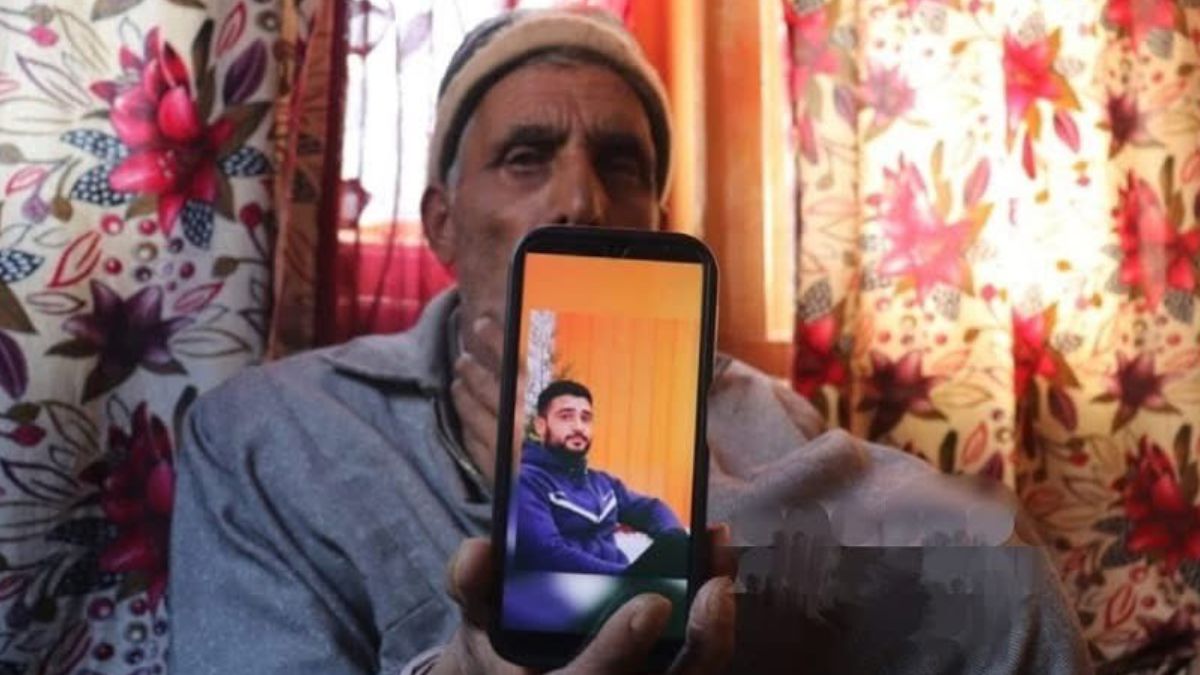
The Ministry of External Affairs (MEA) on Tuesday has responded to the Jammu and Kashmir Students Association (JKSA) regarding the distressing case of Faizan Rasool, a Kashmiri youth from Safakadal, Srinagar, who has been held hostage for ransom by human traffickers in Myanmar.

National Convenor of Association Nasir Khuehami said that the MEA has confirmed that the Indian Mission has strongly taken up the issue of Indian nationals trapped in Myawaddy with the concerned authorities in Myanmar, including the specific case of Faizan Rasool.

In its official response, the MEA said that “Requests for the rescue and repatriation of all Indian nationals, including Kashmiri youth Faizan Rasool, entrapped in Myawaddy, have been forwarded to the concerned authorities in Myanmar. We are actively working on it.”

The Ministry also reiterated the need for caution against fraudulent job offers abroad, advising individuals to verify employment opportunities through proper channels before traveling.

Earlier, JKSA had written to External Affairs Minister Dr. S. Jaishankar, urging immediate diplomatic intervention to secure Faizan Rasool’s release. He was lured to Myanmar under false promises of employment and is now being held for ₹4.5 lakh ransom.

Welcoming the MEA’s swift response, Khuehami emphasized the urgency of Faizan’s case, given the life-threatening situation he faces. He said, “While we appreciate the Ministry’s prompt action, we have urged them to pursue this particular case with greater urgency. Faizan Rasool’s life is at immediate risk. His family is in distress, and they cannot afford the ransom being demanded by the traffickers. Immediate diplomatic intervention is necessary to bring him home safely.”

The association has also urged the Government of India to launch awareness campaigns and take strict action against trafficking networks operating both in India and abroad to prevent more innocent lives from falling victim to such scams.

J&K Govt Issues 74071 New Ration Cards Since 2022 to Cover Left-Out Households

74071 New Ration Cards

The Jammu and Kashmir government on Tuesday informed that the Department of Food, Civil Supplies & Consumer Affairs (FCS&CA) has issued 74,071 new ration cards since September 2022, ensuring the inclusion of left-out households.

In response to a question by MLA Rajiv Jasrotia, the minister incharge, said that government has taken consistent measures to bring all left-out eligible families under the Public Distribution System (PDS).

“Since the transition to the Ration Card Management System (RCMS) in September 2022, 28,996 new ration cards have been issued under the National Food Security Act (NFSA) and 45,075 under the Non-Priority Household (NPHH) category, ensuring that eligible households are not deprived of benefits,” the department stated.

The government also said that the distribution network currently consists of 6,630 sale outlets, including Fair Price Shops (FPS) and Government Sale Centres.

It said that it is contemplating the opening of new Fair Price Shops (FPS) under the Jammu and Kashmir Targeted Public Distribution System (Control) Order 2023, especially in panchayats without such facilities.

“The government has also decided to involve elected members to identify and firm up the requirements for new Fair Price Shops across Jammu and Kashmir. This process will prioritize opening outlets in areas that meet the criteria as per policy,” it said.

Regarding the augmentation of ration supplies for the Above Poverty Line (APL) category, it said that food grains are provided to beneficiaries under the Non-Priority Household (NPHH) category at a scale of 5 kg per person per month. The approved sale rates stand at Rs 15 per kg for rice, Rs 12 per kg for wheat, and Rs 13 per kg for wheat flour—(KNO)