Delhi Police Arrest Al Falah University Chairman Javad Ahmad Siddiqui in Fraud and Forgery Case Linked to UGC Complaints

Al-Falah University

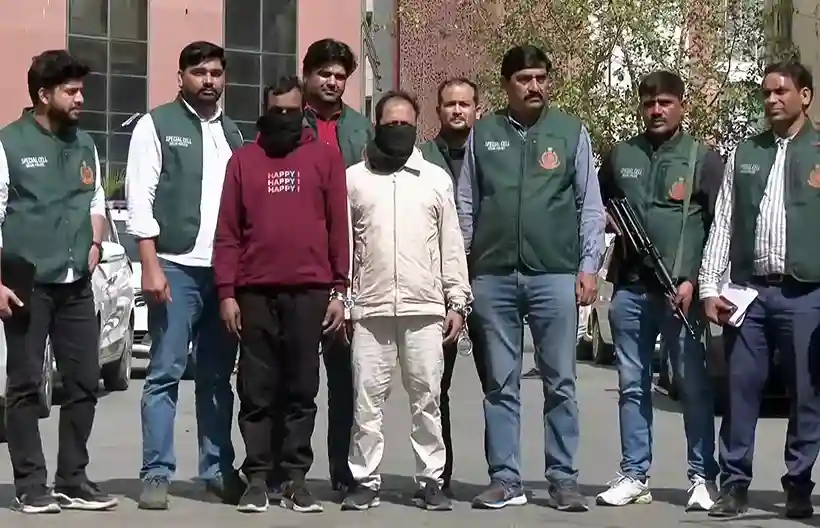
Delhi Police’s Crime Branch has arrested Javad Ahmad Siddiqui, the chairman of Al Falah University in Faridabad, Haryana. This follows two FIRs filed based on complaints from the University Grants Commission (UGC).

The cases involve serious allegations of irregularities, fraud, forgery, and cheating related to how the private university operates. Specifically, reports point to claims that the university falsely advertised NAAC accreditation and may have issued degrees improperly. Click Here To Follow Our WhatsApp Channel

The action comes after the Enforcement Directorate (ED) already started looking into the matter earlier. Siddiqui’s name came under scrutiny following the tragic car bomb blast near Delhi’s Red Fort on 10 November 2025. That explosion killed around 13-15 people and injured many more, and investigations linked the suicide bomber — an assistant professor at Al Falah University — to the institution. This put the university in the spotlight for security agencies.

Siddiqui was produced in a Delhi court (some reports mention Saket court), where judges granted the Crime Branch four days of police custody. Officers will question him further to gather more evidence and details.

The university is a well-known private institution, but these allegations — including fake accreditation claims — could have big implications for students and staff.

Police say the probe is ongoing, and more details might emerge soon. This arrest highlights how seriously authorities are taking complaints about higher education standards, especially when tied to broader security concerns.

We’ll keep an eye out for updates as the investigation continues. If you’re following education or security news in India, this one is worth watching.

At 13, This Kashmiri Boy Built 31 Apps and AI Tools

Delhi Court Convicts Kashmiri Separatist Asiya Andrabi in UAPA Case

Army Soldier Dies in Tragic Accident onto Jammu–Srinagar National Highway

Accident Near Sinthantop

A tragic accident on Wednesday evening claimed the life of a 35-year-old Indian Army soldier in the Ramban district. The incident happened near Dalwas when a Tata Tiago car (registration JK14G-5411) veered off the Sawni Link Road and plunged roughly 200 feet down onto the Jammu–Srinagar National Highway (NH-44) below.

According to local officials, the car was heading toward Sawni village when the driver lost control. The fall was so severe that the driver died instantly at the scene. Click Here To Follow Our WhatsApp Channel

The Station House Officer (SHO), Jatinder Singh Rakwal, confirmed that the body has been moved to the District Hospital Ramban for the necessary legal and medical formalities before being handed over to his family.

At 13, This Kashmiri Boy Built 31 Apps and AI Tools

Delhi Court Convicts Kashmiri Separatist Asiya Andrabi in UAPA Case

Beloved Sopore Physician Dr Attiqullah Passes Away, Leaving a Legacy of Selfless Service and Compassion in Kashmir

Sopore Physician Dr Attiqullah

The people of Sopore and North Kashmir are grieving today following the death of Dr Haji Attiqullah, a man many knew affectionately as “Dr Ali Jan.” He wasn’t just a doctor; he was a pillar of the community who dedicated his entire life to helping others.Click Here To Follow Our WhatsApp Channel

Dr Attiqullah was a true pioneer of healthcare in the region. He was famous for being available at any time of the day or night, making sure that everyone—no matter how much money they had—could get the medical help they needed. Those who knew him best say he had a “rare human touch,” treating every patient with genuine care and kindness.

A Huge Loss for the Community

Since the news broke, tributes have been pouring in from all over. Doctors, teachers, and local leaders have all expressed their sadness, calling his passing an irreparable loss. They highlighted how he helped build up local healthcare and set a standard of kindness that will inspire people for years to come.

  • A Life of Service: He focused on helping the underprivileged.
  • Community Respect: Hundreds gathered to offer prayers for his peace.
  • Final Farewell: His funeral was held on Wednesday evening at the Old Eidgah, Iqbal Market.

The massive turnout at his funeral showed just how much he was loved. People from all walks of life came together to say goodbye to a man whose name became synonymous with compassion. Our thoughts are with his family during this incredibly difficult time.

At 13, This Kashmiri Boy Built 31 Apps and AI Tools

Delhi Court Convicts Kashmiri Separatist Asiya Andrabi in UAPA Case

Is Your Rice Safe? J&K Health Dept Finds Adulteration in Market Samples

Rice

The government has confirmed it is actively checking rice sold in shops across Jammu and Kashmir, including Srinagar, to stop the sale of poor-quality or adulterated products.

Health Minister Sakeena Itoo shared the update in the legislative assembly on Wednesday, after being asked by Legislator Shamim Firdous about the issue of ‘adulterated rice’. Click Here To Follow Our WhatsApp Channel

She provided detailed figures from this financial year (2025-26). So far, health officials have collected 121 samples of rice from the market. These were sent to accredited labs for testing.

Out of the 110 results received back, a concerning 7 samples failed the quality standards. The government has already started legal action against those sellers by filing cases in court under food safety laws.

The Minister explained what was wrong with the failed samples. Three were found to have less Folic Acid than the legal requirement, which is an important nutrient. The other four contained too many “chalky” grains, meaning the rice kernels were of poor texture and quality.

The Health Department has assured that these regular market inspections and sample checks will continue across the region to protect consumers.

At 13, This Kashmiri Boy Built 31 Apps and AI Tools

Delhi Court Convicts Kashmiri Separatist Asiya Andrabi in UAPA Case

“Instigating in Sensitive Border Zone”: Centre Defends Sonam Wangchuk’s Detention to Supreme Court

Sonam wangchuk

The central government told the Supreme Court on Monday that Ladakhi activist and education reformer Sonam Wangchuk was detained for “instigating people in a border area,” emphasizing the heightened sensitivity of the region adjacent to Pakistan and China. The submission was made during a hearing on a petition challenging Wangchuk’s detention earlier this year.

Solicitor General Tushar Mehta, representing the Centre, urged the apex court to exercise caution. “This court is dealing with a person who is instigating people in a border area, adjacent to Pakistan and China, where regional sensitivity is involved,” Mehta told a bench comprising Justices B.R. Gavai and Sandeep Mehta.

The government’s argument pivoted squarely on national security, framing the ongoing protests in Ladakh—which Wangchuk has come to symbolise—as a potential threat to stability in a strategically critical region. Ladakh has been a focal point of military standoffs with China since 2020 and has a long-standing territorial dispute along the Line of Control with Pakistan.

Context: The Ladakh Protests

Wangchuk’s detention in March followed his participation in a 21-day “climate fast” in sub-zero temperatures in Leh. The fast was part of a larger, months-long public movement demanding two key constitutional safeguards for Ladakh: full statehood and inclusion under the Sixth Schedule of the Constitution.

The protests erupted from a deep-seated anxiety among Ladakh’s residents following the region’s reorganization in August 2019. When the erstwhile state of Jammu and Kashmir was bifurcated, Ladakh was carved out as a separate Union Territory without a legislative assembly. This change stripped the region of its limited autonomies and direct democratic voice, raising fears about the unchecked exploitation of its fragile ecosystem, the loss of control over land and resources, and the erosion of its distinct tribal culture.

Wangchuk, a Ramon Magsaysay awardee widely known as the inspiration for the character Phunsukh Wangdu in the film 3 Idiots, emerged as the articulate and prominent face of this grassroots agitation. His calls for peaceful democratic protest, including a planned march to the China border, drew national attention.

The Court’s Scrutiny

The Supreme Court, however, sought tangible evidence to support the government’s grave allegations. The bench posed pointed questions, moving beyond the broad security argument to examine the specifics of the protest’s conduct.

Justice B.R. Gavai notably asked, “What is wrong with him asking people to preserve their culture?” This query directly challenged the government’s characterisation of Wangchuk’s actions as mere “instigation.”

The court directed the government to provide more concrete details. It asked:

  • Were the protests led by Wangchuk fundamentally peaceful?
  • Was there any material to show they triggered violence or damage to public property?
  • What were the specific actions or speeches that constituted a threat to public order and security?

The bench underscored that the constitutional right to protest and the demand for cultural preservation must be weighed carefully against the state’s claims of disruption.

Analysis: Security vs. Democratic Rights

The hearing highlighted a classic, tense dichotomy in Indian jurisprudence and governance: the state’s imperative to ensure national security versus the citizens’ fundamental rights to expression, assembly, and dissent.

The Centre’s stance reflects a long-standing policy of applying heightened scrutiny to political activities in border states, where it argues that civilian unrest can be exploited by adversarial nations. The reference to Pakistan and China was a deliberate invocation of this security paradigm.

On the other side, activists and legal experts argue that branding legitimate, constitutionally protected demands for autonomy and environmental protection as “instigation” sets a dangerous precedent. They contend it risks conflating peaceful democratic mobilization with sedition, especially in regions where the central government’s policies are being contested.

What Happens Next?

The Supreme Court has adjourned the hearing, giving the central government time to file a more detailed affidavit substantiating its claims. The response will be crucial. It must demonstrate a direct and imminent link between Wangchuk’s peaceful calls for protest and a tangible threat to the region’s security, beyond the general sensitivity of the location.

The outcome of this legal battle will have significant repercussions. It will not only determine the fate of the specific allegations against Sonam Wangchuk but could also establish important contours for the scope of democratic protest and the limits of state power in India’s sensitive frontier regions. The nation now awaits the government’s detailed evidence and the Supreme Court’s subsequent interpretation of this delicate balance.

Click Here To Follow Our WhatsApp Channel

Who Is Sonam Wangchuk: The Innovator, Educator, and Voice of Ladakh

Sonam Wangchuk is not merely an individual; he is a living symbol of transformative change, resilience, and visionary leadership from the high-altitude desert of Ladakh. Born in 1966 in the remote village of Uleytokpo, his journey from a student struggling with conventional education to becoming an internationally acclaimed innovator and social reformer is a testament to his belief in contextual, compassionate, and sustainable solutions.

Trained as a mechanical engineer, Wangchuk’s true education began with the stark realities of Ladakh. Witnessing the challenges of his homeland—harsh climate, educational disconnect, and environmental degradation—he co-founded the Students’ Educational and Cultural Movement of Ladakh (SECMOL) in 1988. Its mission was radical: to reform an educational system that was failing Ladakhi youth by making it relevant to their culture, environment, and needs. The success of this model became globally renowned, inspiring the core narrative of the blockbuster Bollywood film 3 Idiots, where the character of “Phunsukh Wangdu” was loosely based on his pioneering work.

However, Wangchuk’s legacy extends far beyond educational reform. He is the mind behind the Ice Stupa Artificial Glacier, a breathtakingly simple yet revolutionary invention that addresses acute water scarcity. By freezing stream water into conical ice structures during winter, he created slow-melting reservoirs that provide water for irrigation in the critical spring planting season, empowering villages and greening barren landscapes. This innovation earned him the Rolex Award for Enterprise in 2016 and cemented his status as a climate resilience pioneer.

Today, Wangchuk embodies a broader role: that of a fearless civic leader and environmental activist. Following Ladakh’s transition to a Union Territory in 2019, he has emerged as the articulate and Gandhian face of a mass movement demanding constitutional safeguards for the region. He advocates for statehood and inclusion under the Sixth Schedule to protect Ladakh’s fragile ecology, tribal culture, and democratic autonomy from unchecked industrialization and bureaucratic control.

His activism, marked by peaceful fasts and passionate appeals, has brought the aspirations of Ladakh to the national forefront. Yet, it has also placed him at the center of legal and political scrutiny, with authorities recently labeling his calls for democratic protest as “instigation” in a sensitive border zone—a charge he faces as a testament to his unwavering commitment to his people’s future.

In essence, Sonam Wangchuk is a multifaceted force: an engineer who speaks the language of ice and mountains, a teacher who reshapes destinies, and a civic leader courageously navigating the complex intersection of ecological survival, cultural preservation, and democratic rights in one of the world’s most geopolitically sensitive landscapes.

At 13, This Kashmiri Boy Built 31 Apps and AI Tools

Delhi Court Convicts Kashmiri Separatist Asiya Andrabi in UAPA Case

Hizbul Mujahideen Commander Qaiser Ahmed Mir Dies in Islamabad

Qaiser Ahmed Mir

Qaiser Ahmed Mir, a founding member and senior commander of the Pakistan-based militant group Hizbul Mujahideen, has died in the Pakistani capital after a prolonged illness, according to sources.

Mir, who also used the alias Mohammad Iqbal, was one of the original figures when the group was formed in April 1990. He was active in the Kashmir Valley for nearly two decades before fleeing to Pakistan. Click Here To Follow Our WhatsApp Channel

Indian security sources allege he played a key role in the insurgency in the Pulwama and Shopian districts and was involved in violence against Kashmiri Pandits. After crossing into Pakistan, he was reportedly involved in overseeing training operations.

The commander had been residing in Islamabad’s Tarlai Kalan area and succumbed to cancer, the sources stated. His death is seen as a significant loss for the organisation, which is designated as a terrorist group by India and the United States.

At 13, This Kashmiri Boy Built 31 Apps and AI Tools

Delhi Court Convicts Kashmiri Separatist Asiya Andrabi in UAPA Case

Why the Centre Put Three Kashmir Railway Projects on Hold After Farmers’ Protests

train

In a significant decision acknowledging local livelihood and environmental concerns, the Central Government has temporarily halted three proposed railway line projects in Kashmir. The move follows sustained protests by apple growers and residents who feared the projects would cause irreversible damage to the region’s agricultural heartland.

The Union Railway Minister, Ashwini Vaishnaw, confirmed the decision, stating that while there was a demand for enhanced connectivity, the Jammu and Kashmir government and local Members of Parliament raised strong objections. The primary concern centred on large-scale land acquisition that would have severely impacted apple orchards—the economic backbone of the Kashmir Valley. Click Here To Follow Our WhatsApp Channel

The Core Conflict: Connectivity vs. Cultivation

The government’s vision for improved rail infrastructure clashed directly with the ground reality of Kashmiri farmers. The proposed lines threatened to cut through prime agricultural and horticultural land in the fertile districts of Pulwama, Shopian, and Anantnag. For the local communities, this wasn’t just about losing land, but about jeopardising a way of life.

Apple cultivation is not merely a crop in Kashmir; it is a multi-generational livelihood that supports thousands of families and forms a critical part of the region’s economy. Farmers argued that the loss of orchards would lead to long-term economic displacement, damage the local ecosystem, and alter the social fabric of their villages.

A Wave of Grassroots Protest

Over recent months, the regions saw consistent peaceful protest demonstrations. The growers and residents were not outrightly opposing development but were demanding:

  • Rerouting of projects to minimise damage to orchards.
  • Fair and transparent compensation for any acquired land.
  • Genuine consultation before any land acquisition process.

Their collective voice highlighted a growing insistence on participatory development, where local communities have a say in projects that directly affect their environment and economic survival.

The Government’s Pragmatic Pause

By putting the projects on hold, the Centre has signalled a shift towards a more consultative and sensitive approach to infrastructure development in the region. This decision can be seen as an attempt to:

  1. Listen to Local Stakeholders: Addressing the concerns of elected representatives and the public.
  2. Assess Socio-Economic Impact: Taking time to fully evaluate the trade-off between connectivity and agricultural loss.
  3. Explore Alternatives: Potentially revisiting the project alignments to find a less disruptive path forward.

The Road Ahead

This pause is not necessarily a cancellation. It represents a critical moment for dialogue. The future of these projects likely hinges on the government’s ability to engineer solutions that balance strategic infrastructure goals with the imperative of preserving Kashmir’s vital horticulture sector. The outcome will set a precedent for how development, environmental conservation, and community welfare are reconciled in one of India’s most ecologically and economically sensitive regions.

At 13, This Kashmiri Boy Built 31 Apps and AI Tools

Delhi Court Convicts Kashmiri Separatist Asiya Andrabi in UAPA Case

Four Injured in Rajouri District After Bike-Car Collision Near College

Accident Near Sinthantop

Four people were injured on Tuesday morning after a motorcycle and a car collided in the Thanamandi area of Rajouri district, officials said.

An official said that the accident occurred on the Shahdara Sharief road near the Government Degree College (GDC) in Thanamandi, resulting in injuries to at least four people.He said the injured were rushed to the Primary Health Centre (PHC) in Thanamandi. Following initial treatment, all four were referred to the Government Medical College (GMC) in Rajouri for further medical attention. Click Here To Follow Our WhatsApp Channel

A police officer said that a case has been registered in this regard, and further investigation has been set into motion.

At 13, This Kashmiri Boy Built 31 Apps and AI Tools

Delhi Court Convicts Kashmiri Separatist Asiya Andrabi in UAPA Case

JKSA Raises Alarm Over Alleged Assault of Kashmiri Shawl Seller in Himachal Pradesh

Jammu and Kashmir Students Association

The Jammu and Kashmir Students Association (JKSA) on Sunday expressed serious concern over a fresh case of alleged harassment and assault involving a Kashmiri shawl seller in Himachal Pradesh. The incident comes just days after two Kashmiri shawl seller brothers were reportedly assaulted in Uttarakhand. Click Here To Follow Our WhatsApp Channel

JKSA National Convenor Nasir Khuehami said a Kashmiri shawl seller, Mohd Ramzan, was allegedly harassed, threatened, and later assaulted in Kangra district. He alleged that the attack was carried out by a right-wing activist identified as Surjeet Rajput Guleria, who is reportedly linked to at least three similar incidents last month.

According to Khuehami, despite repeatedly stating that he is an Indian citizen, Mohd Ramzan was allegedly forced to prove his identity, threatened, and told to leave the state. His shawl bundles were reportedly checked, and he was mockingly accused of carrying an AK-47 instead of shawls. JKSA described the act as humiliating, communal, unlawful, and provocative.

The association said Kashmiri traders in the area are being regularly intimidated, threatened, and stopped from selling their goods, with warnings issued to leave the region. Calling it the fourth such case in Himachal Pradesh this year, JKSA said the incident reflects a disturbing and repeated pattern.

Over the past year, several cases of harassment against Kashmiri shawl sellers have been reported in Himachal Pradesh. However, JKSA noted that in most cases, either no FIR was registered or complaints were weakened. Despite multiple incidents, only one FIR has reportedly been lodged so far.

The association said it was alarming that such incidents continue in states that claim to support constitutional values and minority rights. It added that Kashmiri shawl sellers have long contributed to Himachal Pradesh’s economy and culture but are now being pushed into fear due to their identity.

JKSA strongly criticised the Himachal Pradesh Government and Chief Minister Sukhvinder Singh Sukhu for failing to take firm action. It said the lack of arrests and preventive steps has encouraged fringe elements and sent a dangerous message.

The association appealed to the Chief Minister to intervene immediately, ensure the arrest of those responsible, and direct police and district officials to protect Kashmiri traders and their livelihoods. JKSA warned that the growing climate of fear could destroy livelihoods built over generations and further alienate a vulnerable community.

At 13, This Kashmiri Boy Built 31 Apps and AI Tools

Delhi Court Convicts Kashmiri Separatist Asiya Andrabi in UAPA Case

Two PDD Employees Die as Car Falls into Gorge in Poonch’s Mandi Area

Two PDD Employees Die

Two employees of the Power Development Department lost their lives after a private car skidded off the road and fell into a deep gorge in the Jandrolla area of Mandi, Poonch district, on Sunday.

Officials said the accident happened near Jandrolla while the occupants were returning from a picnic to the Noorpur area. They had gone there to enjoy the recent snowfall.

After the crash, local residents and police teams quickly reached the spot and started a rescue operation. The injured were taken to District Hospital Poonch, where doctors declared two people dead on arrival.

The deceased were identified as Chinder Singh (54), son of Sukhdev Singh and a resident of Kamsar, and Kulbir Singh, son of Shiv Ram, who lived near DIET Poonch. Both worked with the Power Development Department.

Officials said one more person was injured in the accident and is currently receiving treatment. Police have taken note of the incident and started further investigation.

At 13, This Kashmiri Boy Built 31 Apps and AI Tools

Delhi Court Convicts Kashmiri Separatist Asiya Andrabi in UAPA Case