SKUAST-K Reviews Preparations for 11th Gongul Agritech Mela Scheduled from February 14–16

Agritech Mela

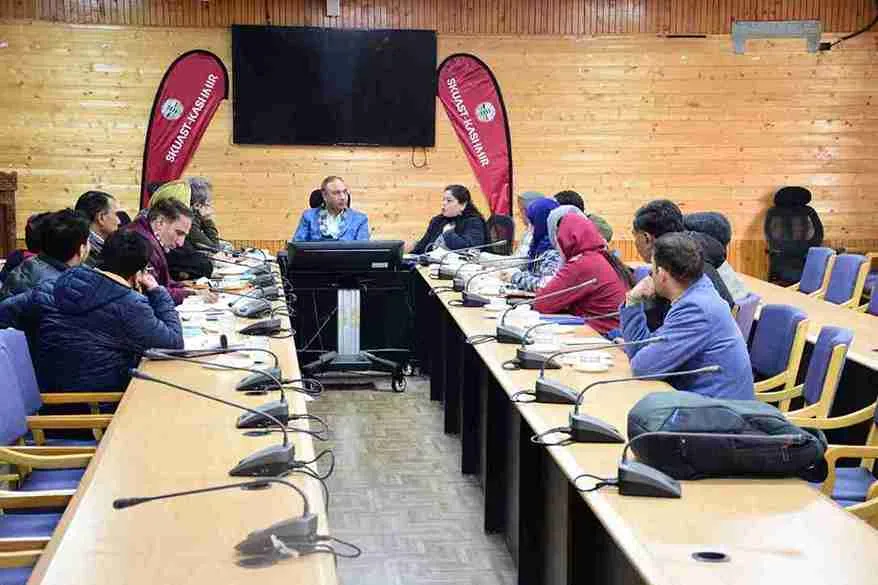
A review meeting on the preparations for the 11th Gongul Agritech Mela, scheduled to be held from 14–16 February 2026, was convened on 8 February 2026 at the Vice-Chancellor’s Secretariat, SKUAST-Kashmir, under the chairmanship of Prof. Nazir Ahmad Ganai, Hon’ble Vice-Chancellor, SKUAST-Kashmir.

During the meeting, the Hon’ble Vice-Chancellor reviewed the progress made by various committees and held detailed discussions on the overall preparedness for the mega event. He emphasized the importance of effective coordination, timely execution of responsibilities, and maintaining high standards in planning and implementation to ensure the smooth and successful conduct of the mela.Click Here To Follow Our WhatsApp Channel

Prof. Ganai highlighted that the Gongul Agritech Mela is a key platform for showcasing innovative agricultural technologies, disseminating research-based solutions, and strengthening farmer–scientist interaction. He stressed the need for focused farmer-centric demonstrations, promotion of agri-startups and entrepreneurship, exposure to modern agri-technologies, and adoption of sustainable agricultural practices suited to the agro-climatic conditions of Jammu and Kashmir.

The Hon’ble Vice-Chancellor also directed all concerned committees to ensure adequate arrangements for exhibitions, technical sessions, farmer facilitation, logistics, publicity, safety, and visitor management to maximize benefits for the farming community.

The meeting was attended by Prof. Raihana Habib Kanth, Director Extension and Dean, Faculty of Horticulture; Director Research; Director Education; Registrar,; SKUAST-K, senior officers of the University, and Chairpersons of various committees.

At 13, This Kashmiri Boy Built 31 Apps and AI Tools

Delhi Court Convicts Kashmiri Separatist Asiya Andrabi in UAPA Case

J&K Government Transfers 500 Kanals Land in Sallar Anantnag for SKUAST-Kashmir South Campus

Sallar Anantnag for SKUAST

The Jammu and Kashmir government has officially transferred a substantial parcel of land — measuring 500 kanals and 11 marlas — in Sallar, located in the Anantnag district, to the Sher-e-Kashmir University of Agricultural Sciences and Technology (SKUAST)-Kashmir for the establishment of its South Campus. This development was announced on Thursday in the Jammu and Kashmir Legislative Assembly in response to an unstarred question by MLA Altaf Ahmad Wani regarding progress on the proposed campus.Click Here To Follow Our WhatsApp Channel

Land Transfer and Possession

According to information provided by the Agriculture Production Department, the land under Survey No. 2009 (min) has been formally transferred to SKUAST-Kashmir through Government Order No. 146-JK (Rev) of 2023, issued on 14 September 2023. The transfer reflects the government’s continued commitment to expanding agricultural education and research infrastructure in the southern region of Jammu and Kashmir.

The department further clarified that possession of the entire land has been taken, and fencing of the parcel has been completed, ensuring readiness for future development activities. This demarcation underscores the government’s intent to safeguard the land and begin phased development as approvals are secured.

Vision for the South Campus

The transferred land is earmarked for the South Campus of SKUAST-Kashmir, a strategic initiative aimed at broadening the university’s reach and promoting agricultural education, research, and field activities in the southern belt of the Union Territory. However, the government noted that the campus’s conceptual development plan, including specific infrastructure projects and execution timelines, are not yet finalized and will be determined after obtaining the requisite approvals from competent authorities.

Funding and Current Utilization

For the current financial year 2025-26, the government disclosed that Rs 1.00 crore has been allocated from SKUAST-Kashmir’s internal revenue to support Research and Experimentation (R&E) activities. This allocation reflects a focused effort to enhance on-ground research capabilities even as long–term campus plans are being shaped.

According to the Agriculture Production Department, this fund has already been utilized for several early-stage developmental activities, including:

  • Construction of a pre-fabricated structure to serve as a camp office for administrative and academic functions.
  • Creation of raceways for trout fish development, underscoring an emphasis on aquaculture research.
  • Various land development works to prepare the site for future expansion and research use.

These preliminary activities aim to foster an operational presence at the Sallar site and build momentum for the campus’s broader vision.

Strategic Importance

The decision to establish a South Campus of SKUAST-Kashmir in Anantnag carries significant educational and socio-economic implications:

  • Educational accessibility: A southern campus will bring SKUAST’s academic and training programs closer to students and farming communities in the southern districts of J&K, reducing travel barriers and fostering local talent.
  • Research expansion: The campus provides space for region-specific agricultural research, which can address local farming challenges, crop diversification, and allied sectors such as aquaculture and horticulture.
  • Economic uplift: Through research, training, and extension services, the campus can contribute to enhanced productivity and livelihoods in agriculture and allied sectors across the southern region.

Government Commitment

The transfer of land and initial funding for infrastructure and research signifies the government’s commitment to strengthening agricultural education and research in Jammu and Kashmir. While detailed plans and timelines for the South Campus are pending, the groundwork laid so far — including land acquisition, fencing, and preliminary facilities — establishes a foundation for future growth.

As the project evolves, further announcements regarding structural construction, funding support from the union and state sources, and strategic partnerships are expected, aligning with SKUAST-Kashmir’s mandate to serve as a premier agricultural university in the region.

At 13, This Kashmiri Boy Built 31 Apps and AI Tools

Delhi Court Convicts Kashmiri Separatist Asiya Andrabi in UAPA Case

Week-Long Biofertilizer Training Concludes at Wadura Agriculture Faculty, Empowering Agri-Entrepreneurs

Biofertilizer Training

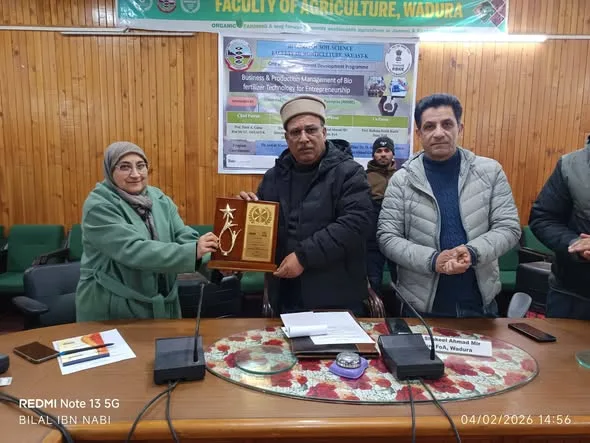
A one-week training programme on how to set up and manage a biofertilizer business has finished successfully. It was held at the Faculty of Agriculture in Wadura and was sponsored by the MSME organisation.

The course coordinator, Dr. Inayat Mustafa Khan, explained that the training aimed to build skills and promote self-employment in the biofertilizer sector. He said it gave participants the technical know-how and business management tools needed to start their own sustainable farming enterprises. Click Here To Follow Our WhatsApp Channel

The chief guest for the closing ceremony was the Dean of the Faculty, Professor Shakeel A Mir. In his speech, he stressed the importance of biofertilizers for sustainable farming. He also praised MSME-supported programmes for helping young people become self-reliant and create jobs.

The event was smoothly organised with the help of PhD scholar Ms. Asma Shakeel, who was the Student Convenor. She thanked the teaching staff and the trainees for their active participation.

A formal vote of thanks was given by Professor Dr. Rehana Rasool from the Soil Science department. She expressed gratitude to the chief guest, the coordinator, the trainers, the MSME authorities, and all the participants for making the programme a success.

The function ended with certificates being handed out to all the trainees, marking the close of a week dedicated to fostering new agricultural entrepreneurs and eco-friendly farming methods.

At 13, This Kashmiri Boy Built 31 Apps and AI Tools

Delhi Court Convicts Kashmiri Separatist Asiya Andrabi in UAPA Case

SKUAST–Jammu Vice Chancellor Meets LG Manoj Sinha, Shares University Progress

manooj sinha

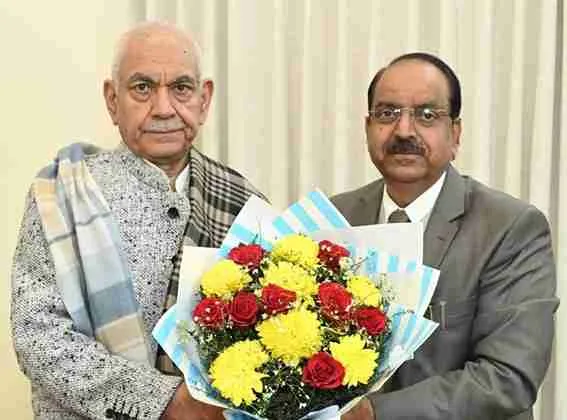
Prof. B. N. Tripathi, Vice Chancellor of SKUAST–Jammu, met the Lieutenant Governor of Jammu and Kashmir, Manoj Sinha, at Lok Bhavan on Friday.

During the meeting, Prof. Tripathi briefed the Lieutenant Governor on the university’s progress in education, research, and extension work. He highlighted key initiatives under the Holistic Agriculture Development Programme and the J&K Climate Innovation Programme.Click Here To Follow Our WhatsApp Channel

The Vice Chancellor informed that SKUAST–Jammu has been designated as a Centre and Regional Outreach Unit of the Commission for Agricultural Costs and Prices for Jammu. This centre will help collect region-specific data on crop costs, prices, and farmers’ issues. The move is expected to support better Minimum Support Price recommendations and farmer-focused policy planning.

Prof. Tripathi also shared details about the approval of an ANRF-PAIR project under the Partnership for Accelerated Innovation and Research, in collaboration with IIT Bombay. The project, with a budget of over Rs 6 crore, aims to develop an AI-based agriculture system to improve market access and efficiency for farmers, especially for traditional products.

In addition, an ICAR-NASF project worth Rs 2 crore for genome analysis has been sanctioned. He further said that approval for setting up an AICRP Centre for Poultry Breeding at SKUAST–Jammu is at an advanced stage. Proposals for centres on beekeeping and mushroom cultivation are also under active consideration.

At present, the university is implementing externally funded projects worth around Rs 100 crore.

SKUAST-K Hosts High-Level Iranian Delegation for Collaborative Saffron Research

Iranian Delegation

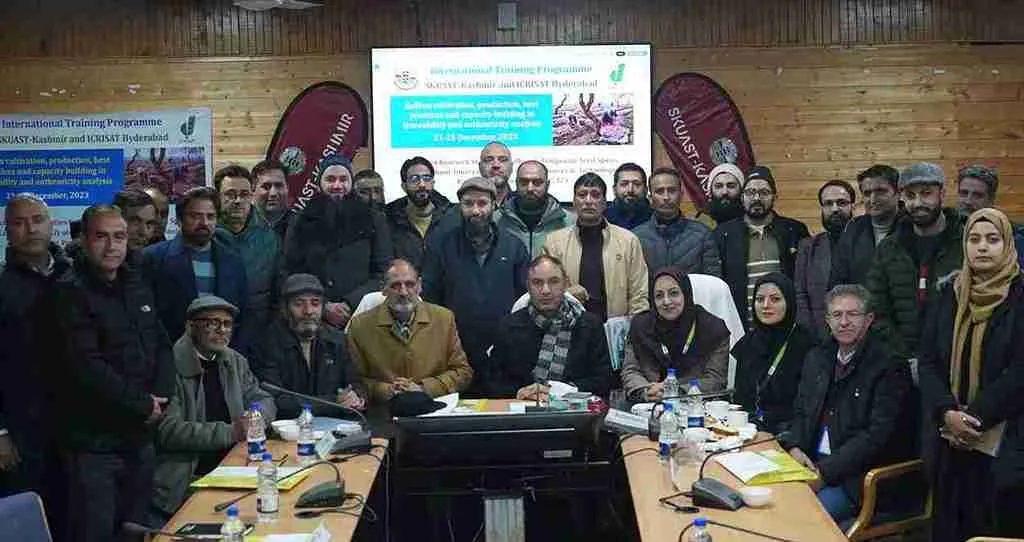
In a landmark development for the global agricultural landscape, a high-level delegation of scientists and policy experts from Iran arrived at the Sher-e-Kashmir University of Agricultural Sciences and Technology of Kashmir (SKUAST-K) on Sunday to begin a high-stakes study tour aimed at revolutionising saffron production.Click Here To Follow Our WhatsApp Channel

The visit, facilitated through SKUAST-K collaboration with the International Crop Research Institute for Semi-Arid Tropics (ICRISAT), marks a significant moment of ‘science diplomacy’ between two of the world’s most prominent saffron-growing regions.

The inaugural ceremony of the five-day program, titled ‘Saffron Cultivation, Production, Best Practices & Capacity Building in Traceability & Authenticity Analysis’, was held at the university’s Shalimar campus. The session was chaired by Vice Chancellor Prof Nazir Ahmed Ganai and co-chaired by Dr Stanford Blade, Deputy Director General of ICRISAT. The visiting Iranian team includes Elham Fattahifar, Director General for Greenhouses and Medicinal Plants, along with Parisa Pourali and senior saffron specialist Ramin Esmi, all representing the Iranian Ministry of Agriculture Jahad.

During his address, Vice-Chancellor Prof Ganai highlighted SKUAST-K’s rapid ascent in national rankings and its commitment to cutting-edge research and academic excellence. He emphasised that the presence of Iranian experts offers a unique opportunity for a ‘cross-talk’ between international specialists and local scientists, allowing for a mutual exchange of traditional wisdom and modern technological interventions. Dr Stanford Blade of ICRISAT echoed these sentiments, expressing strong confidence that this partnership would pave the way for long-term cooperation in global research efforts and the exchange of students and scholars.

The opening session was also attended by SKUAST-K’s Director Research Prof Haroon Naik, Registrar Prof Azmat Alam Khan, Heads of Divisions & Research Stations, Scientists associated with Saffron Research & Research Scholars.

A technical highlight of the day was the keynote address by renowned saffron expert Dr FA Nehvi, the former head of SKUAST-K’s Saffron Research Station. Dr Nehvi, who was instrumental in the National Mission on Saffron, detailed the urgent challenges facing the industry, specifically the volatile impact of climate change. He urged the visiting delegation and local researchers to prioritise crop modeling as a vital tool to navigate environmental shifts and ensure the sustainability of the “Red Gold” industry.

The five-day itinerary will see the Iranian experts tour SKUAST-K’s advanced facilities, including SKUAST-K Incubation Centre, Centre for Artificial Intelligence and Machine Learning, and Research Centre for Residue and Quality Analysis. A pivotal segment of the tour includes a visit to SKUAST’s Advanced Research Station for Saffron and Seed Spices and India International Kashmir Saffron Trading Centre (IIKSTC) in Dusu, Pampore, where the delegation will examine Kashmir’s sophisticated GI-tagging and e-auction systems. The program, coordinated by a joint team led by Dr Manzoor Husain Dar of ICRISAT and Prof Sher A Dar of SKUAST-K, is expected to culminate in a shared vision for enhancing the traceability and global market value of saffron.

SKUAST-K Holds 21st SAC Meeting of KVK Srinagar, Launches Students’ Rural Exploration Programme

SKUAST-K

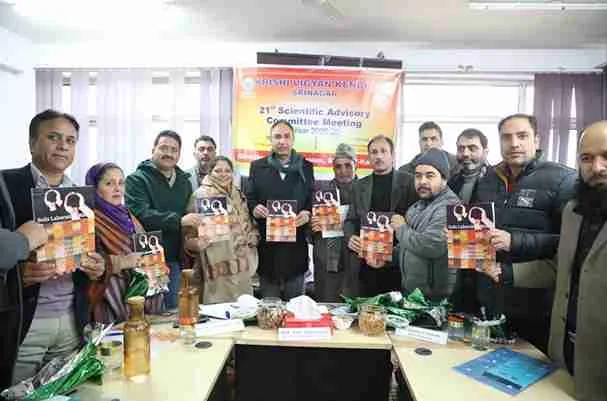
 Sher-e-Kashmir University of Agricultural Sciences and Technology of Kashmir held the 21st Scientific Advisory Committee (SAC) Meeting of Krishi Vigyan Kendra (KVK) Srinagar for the year 2025-26.

According to a press release issued ,Vice Chancellor, SKUAST-K, Prof Nazir Ahmad Ganai, who chaired the meeting at KVK office Nadergund Peerbagh, highlight the launch of the Students’ Rural Exploration Programme (SREP).Click Here To Follow Our WhatsApp Channel

He said the initiative will engage students from various agricultural and allied disciplines with approximately 400 village panchayats to collect real-time data on local challenges and opportunities.

The aim is to generate data for evidence-driven policies and need-based interventions at the grassroots level. Prof Ganai urged participants to ensure the SREP’s effective execution through field-level engagement.

The Vice-Chancellor also emphasised the importance of the Holistic Agriculture Development Programme (HADP) and the JKCIP in providing financial support and strategic direction to boost farmers’ income.

During the event, Prof Ganai inaugurated new facilities, including a NABARD-funded Farmer Facilitation Centre and a Hi-Tech Polyhouse, and inspected a stall showcasing technological interventions, products, and niche crops developed by Self-Help Groups (SHGs) and progressive farmers.

Dr SA Simnani, Head KVK, presented the Action Taken Report for 2024-25 and the Annual Action Plan for 2025-26. Statutory members from line departments, including Agriculture, Horticulture, and Animal Husbandry, along with farmers, FPOs, and civil society representatives, provided valuable inputs for the plan’s refinement.

The meeting concluded with the Director Extension, Prof. Raihana Habib, acknowledging the KVK Srinagar’s efforts in strengthening the connection between the research system and farmers’ fields.

The meeting saw participation from statutory officers, district heads, progressive farmers, Self-Help Groups (SHGs), Farmer Producer Organizations (FPOs), civil society representatives, agri-preneurs, public representatives and KVK Heads of Kashmir division.(KNS) 

SKUAST-K Wadura Celebrates World Soil Day 2025 with Awareness Events, Competitions and Calls for Sustainable Urban Development

SKUAST-K Wadura

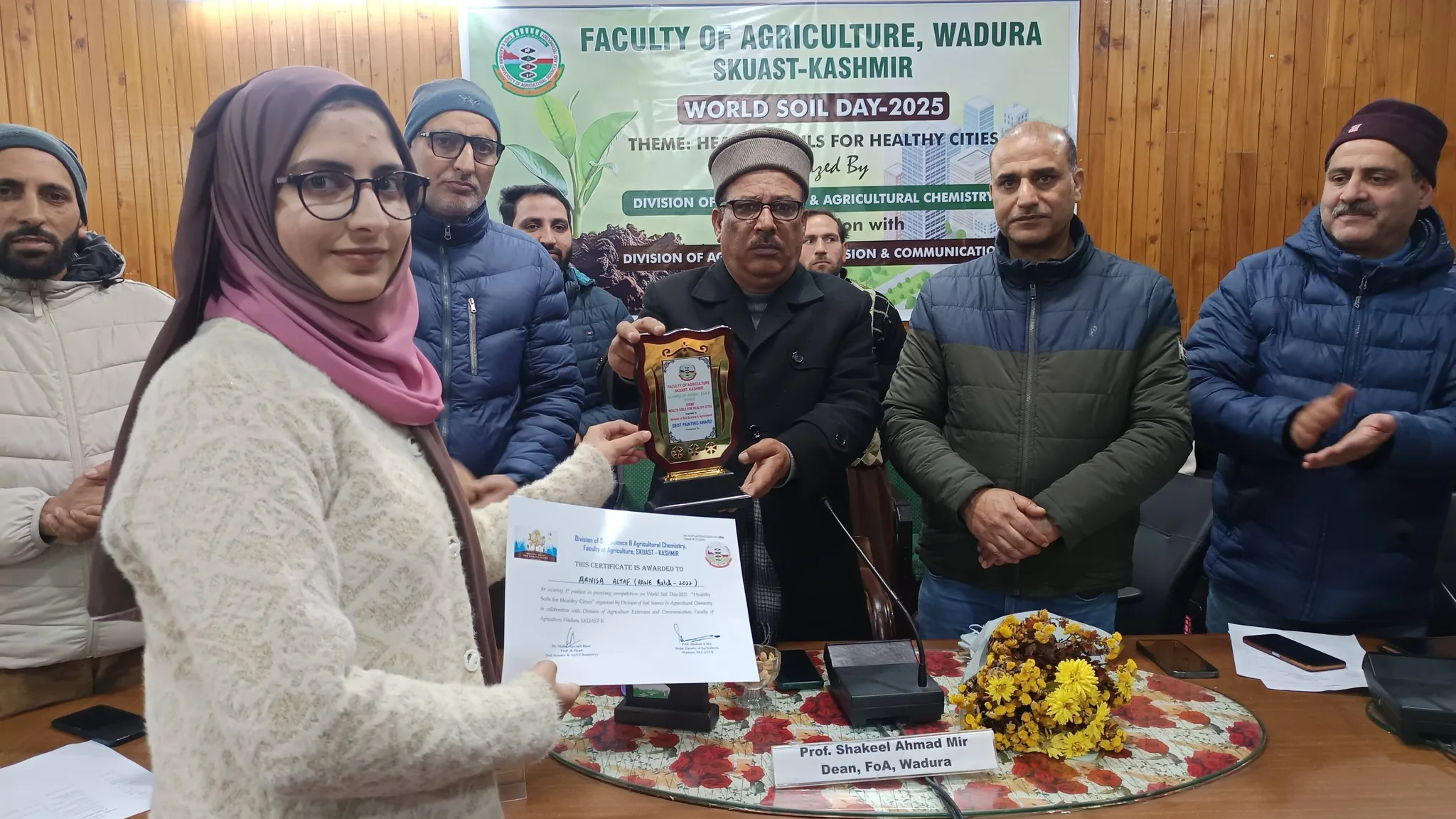
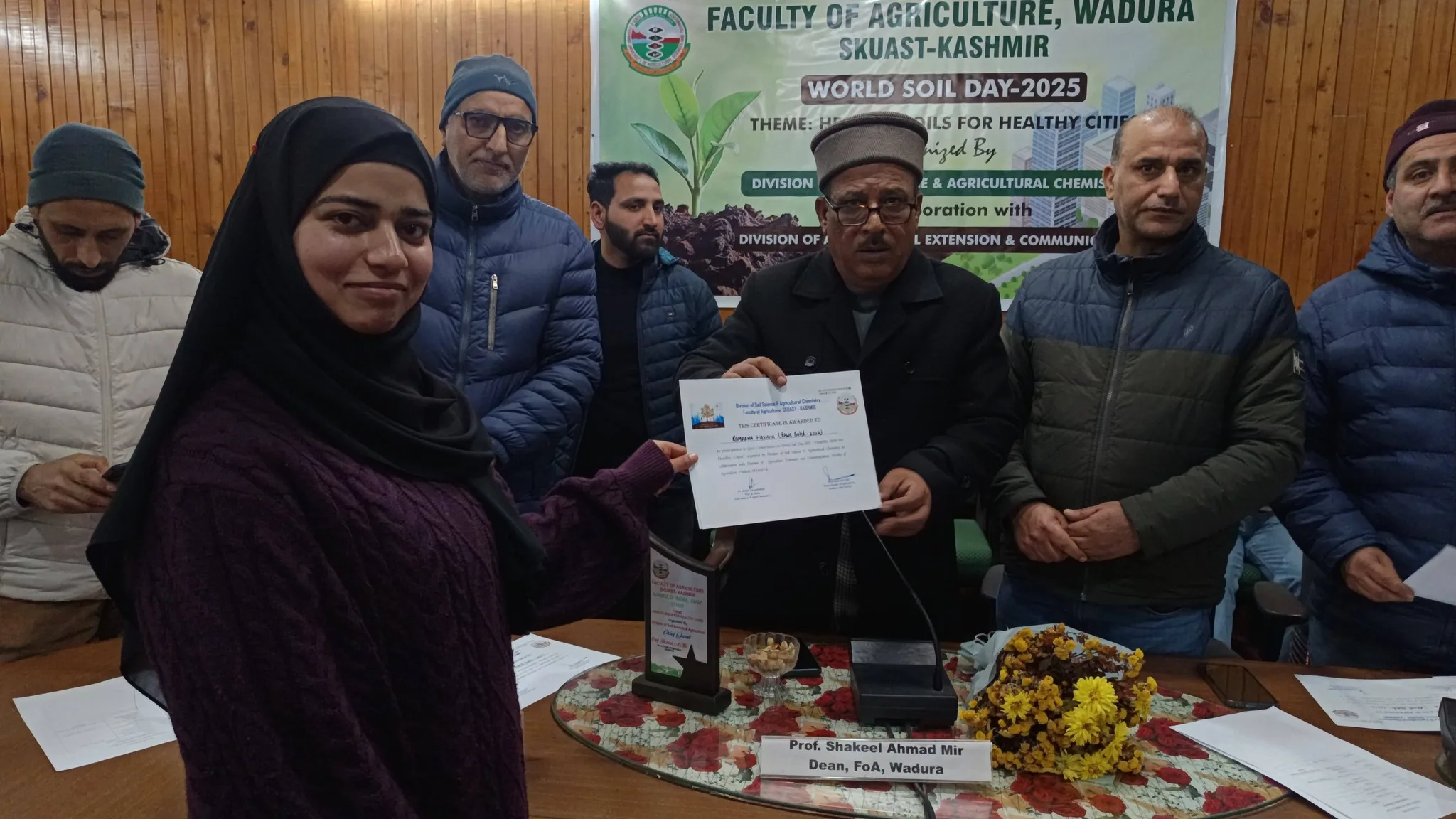
The programme was graced by Prof. Shakeel Ahmad Mir, Dean, Faculty of Agriculture, who served as the Chief Guest. World Soil Day, internationally recognized following a recommendation by the International Union of Soil Sciences (IUSS) in 2002, aims to raise global awareness about the alarming rate of soil degradation, its environmental impact, and the need for sustainable soil management. The observance underscores the indispensable role of soil in sustaining life on Earth. Click Here To Follow Our WhatsApp Channel This year’s global theme, “Healthy Soils for Healthy Cities,” reflected the growing challenge of maintaining soil health amid rapid urban expansion. The theme highlights how healthy soils underpin urban well-being-supporting food security, water purification, green infrastructure, climate resilience, and overall quality of life.

The programme began with a welcome address by Prof. Mohammad Auyoub Bhat, who described soil as “the quiet engine that sustains urban life.” He emphasized that soil is not only vital for agriculture and rural ecosystems but also for the sustainability, resilience, and ecological balance of modern cities. In his keynote address, Prof. Shakeel Ahmad Mir, Dean, Faculty of Agriculture, enlightened students on the significance of World Soil Day. He cautioned against unplanned urbanization and the unchecked spread of concrete structures, both of which threaten soil health. He called upon policymakers, urban planners, civil society members, and citizens to adopt nature-based solutions and innovative technologies to protect soil resources and promote sustainable urban development.

The event witnessed enthusiastic participation from more than 150 undergraduate and postgraduate students, along with faculty members and soil scientists. To mark the occasion, a series of engaging competitions-including quiz, speech, painting, and a mock farmer-expert interaction were organized, showcasing student’s creativity, awareness, and commitment to soil conservation. Winners of the various competitions were felicitated with prizes during the ceremony.

The event concluded with a formal vote of thanks by Dr. M. H. Chesti, who acknowledged the contributions of faculty, students, and the organizing committees for the successful conduct of the programme.

J&K Assembly Committee Probes Rise in Malignant Brain Tumours Among Orchard Workers Linked to Pesticide Exposure

Brain Tumour

A meeting of the Committee on Environment, Jammu and Kashmir Legislative Assembly, was held on Monday to discuss malignant Brain tumours linked with pesticide exposure among the Orchard workers and farmers in the Kashmir Valley.

The meeting was presided over by the Chairman of Environment Committee, MLA Mohammad Yousuf Tarigami and attended by members Dr Sajjad Shafi; Peerzada Feroze Ahmad; Zafar Ali Khatana; Mushtaq Guroo and Darshan Kumar.Click Here To Follow Our WhatsApp Channel

The meeting had a detailed discussion on the alarming rise of primary malignant brain tumours among the orchard workers and farmers in Kashmir Valley, reportedly linked to pesticide exposure. The SKIMS data (2005-2008) highlighted the issue, sparking concerns about the health and well-being of those living and working in the region’s orchards. Key questions were raised about annual screening programs for neurological illnesses and cholinesterase levels, and the proposed steps for initiating mass health surveillance.

Other issues discussed included issuance of departmental advisory to the public regarding safe pesticide use and health hazards, steps being taken to introduce safe pesticide alternatives and biological agents, conduct of awareness programs for the farmers, existing rehabilitation or medical assistance schemes for the pesticide-affected families and orchard workers besides status of the mechanism for periodic reassessment of pesticide safety on neurological health.

Secretary, Health & Medical Education, Dr Abid Rasheed Shah, Director SKIMS, Srinagar and other senior health authorities briefed the Committee about the issues highlighted in the meeting. They assured that every possible step would be taken up to sort out all these issues on priority.

Chairman, Pollution Control Board J&K, Vasu Yadav; Principal GMC Jammu; Director Health Jammu; Director Horticulture (K); Director Agriculture (K) and Director Law & Enforcement JK also apprised the Committee of the issues highlighted in the meeting.

The Chairman directed the concerned officers to evolve an effective mechanism for prompt redressal of the issues highlighted in the meeting. He also directed them to constitute a task force involving experts of the field to look into the main cause behind this cancerous disease.

The Chairman asked the Horticulture and Agriculture authorities to adopt a mechanism to check quality of pesticides and their uses. He also asked to educate the farmers and orchard workers  regarding safety and prevention measures.

The Chairman directed the health authorities to take measures to conduct fresh study in the matter to ascertain the factual position so that the risk of cancer (malignant brain tumour) cases could be reduced.

SKUAST-K’s RBIC Hosts Workshop on Innovation to Product Commercialisation with NABARD Support

SKUAST-K’s RBIC

Rural Business Incubation Centre (RBIC) at Sher-e-Kashmir University of Agricultural Sciences and Technology of Kashmir, supported by NABARD, hosted a one-day hands-on workshop on ‘Innovation to Product Commercialisation’, aimed at transforming research ideas into commercially viable ventures in the agriculture and allied sectors.Click Here To Follow Our WhatsApp Channel

The workshop was conducted by national deep-tech expert Dr Kaushik Choudhury, CEO, AIC IPR Plasmatech Innovation Foundation (Department of Atomic Energy, GoI), Ahmedabad. Dr Choudhury shared a practical roadmap for innovators, drawing on his vast experience in supporting startups and co-founding companies that successfully commercialised high-impact medical and agricultural technologies.

The session focused on bridging the critical gap between laboratory discovery and market application, providing participants with the mindset and tools needed for scaling up their products. About 100 scholars, students, faculty members, innovators and startup founders participated in the daylong workshop.

The workshop was inaugurated by Director Education, SKUAST-K, Prof Mohd Altaf Bhat, who was the chief guest at the occasion.

Prof Bhat highlighted the University’s commitment, driven by the vision of the Vice-Chancellor, Prof Nazir Ahmad Ganai, who established Innovation and Entrepreneurship as the Fourth Mandate of the institution. He emphasised SKUAST-K is equipped with 21 state-of-the-art labs and vast intellectual capital to turn the valley into a startup hub.

Assistant General Manager, NABARD, Kanav Sharma, said that RBIC at SKUAST-K shall prove a game changer in empowering rural community through entrepreneurship and innovation for employment generation and economic development.

Head, IBPR, SKUAST-K Prof Farhet Shaeen, in his concluding remarks, said that RBIC must reach out to young talent to look for innovative ideas that have high potential of real world problem solving.

Dr Jameel Ahmad Khan, CEO, RBIC, introduced the centre as the institutional mechanism to provide end-to-end support through its five verticals – incubation, mentorship, capacity building, funding – to agripreneurs and rural startups in the region.

A select number of startups that displayed their products will receive an opportunity to showcase their products and ideas at the People’s Festival of Innovations 2025 in New Delhi from November 17-20, 2025.

Recently established Rural Business Incubation Centre hosted at SKUAST-K, funded and supported by National Agriculture and Rural Development Bank (NABARD), aims to strengthen the innovation and startup ecosystem in J&K and Ladakh through dedicated mentorship, incubation facilities, funding and other required facilities for startups and ventures.

Founder Vice Chancellor of SKUAST J&K Dr. Allaudin Ahmed Passes Away in Patna After Brief Illness

Dr. Allaudin Ahmed

Dr. Allaudin Ahmed, the Founder Vice Chancellor of Sher-e-Kashmir University of Agricultural Sciences and Technology (SKUAST) Jammu & Kashmir, passed away yesterday evening (28 October 2025) at around 7 pm in Patna after a brief illness. His passing has brought a deep sense of sorrow among the academic community, students, and everyone who worked with him during his long and respected career.Click Here To Follow Our WhatsApp Channel

A Visionary Leader in Agricultural Education

Dr. Allaudin Ahmed played an important role in the growth and establishment of SKUAST J&K. When he became the first Vice Chancellor of the university, the institution was still in its early stages. Under his leadership, SKUAST grew into one of the most respected institutions in agriculture, horticulture, and veterinary sciences in Jammu & Kashmir.

He focused on modern research, scientific farming methods, and training young students to improve food and agricultural development in the region. Many teachers, researchers, and agricultural scientists who studied or worked under him continue to serve the country today.

Contributions to Society

Throughout his career, Dr. Ahmed worked on key agricultural challenges faced by farmers. He was known for his simple nature, strong leadership, and passion for improving farmers’ lives. His research and policy guidance helped in introducing better seeds, modern tools, and new farming practices.

He also supported young minds, especially students from rural backgrounds, to pursue careers in agriculture and become future leaders for the country.

A Guiding Light Remembered

Colleagues remember him as a humble and inspiring leader. Students often called him a mentor who encouraged innovation, discipline, and dedication. His strong commitment to education built the foundation of SKUAST J&K, which continues to thrive and help thousands of people.

The news of his passing has led to an outpouring of condolences from academic circles, alumni, and government officials. Many messages on social media described him as a “pillar of agricultural education” and a “true builder of institutions.”

Final Goodbye

Dr. Ahmed breathed his last in Patna, where he had been receiving medical care. His funeral plans have not yet been officially announced, but many are expected to attend and pay their final respects.

With his death, Jammu & Kashmir has lost a great academician and a remarkable human being. His contributions will always be remembered in the history of agricultural science and education in India.