LG Manooj Sinha Inaugurates 3-day Literary Fest Jashn-e-Sangam at Tagore Hall Srinagar and Says that Art, literature, & Music Bind us together

LG Sinha

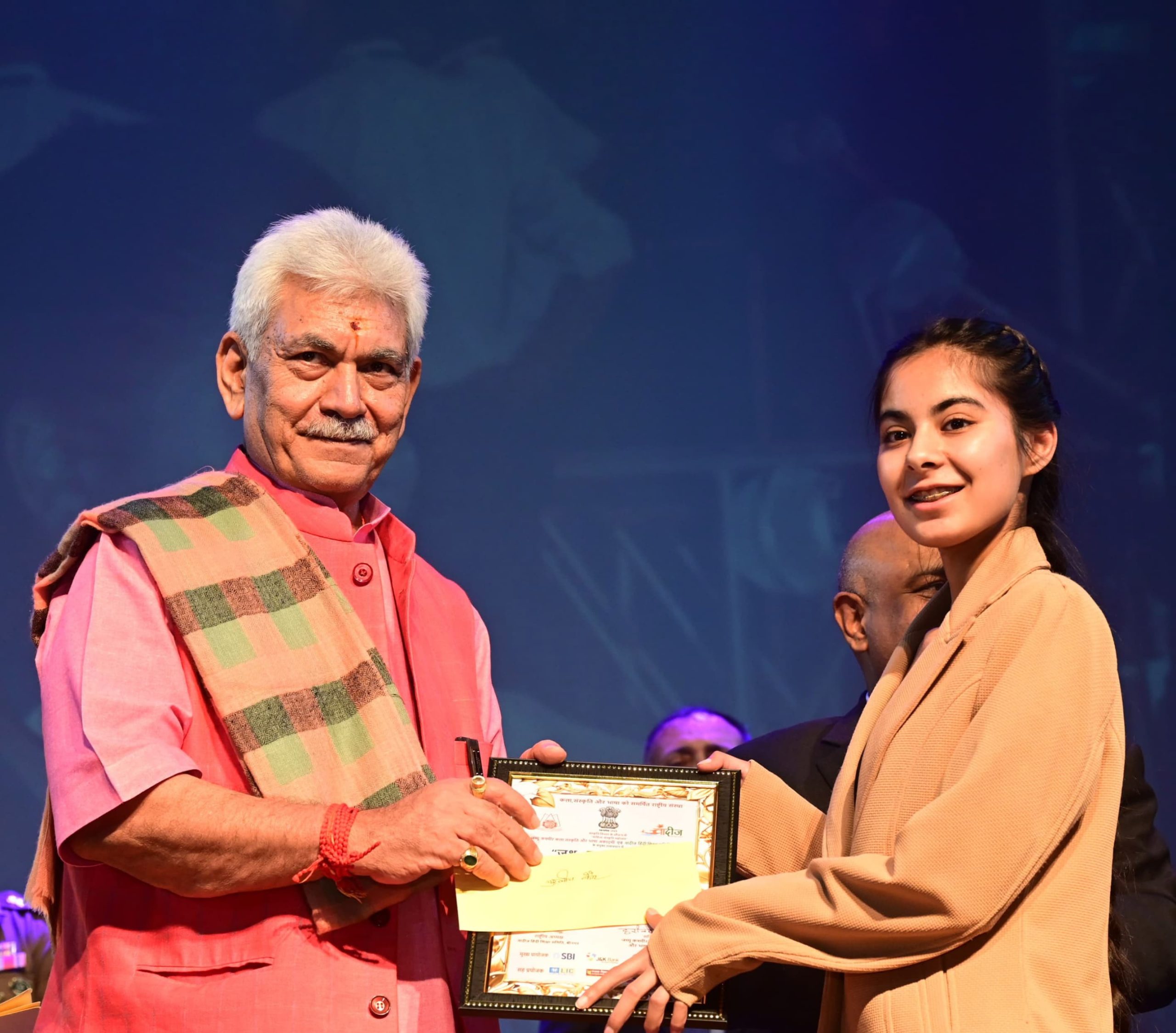
Lieutenant Governor Manoj Sinha on Tuesday emphasized that Jammu and Kashmir boasts rich cultural diversity in art, literature, music, folk traditions, and more, which unite the people. He was speaking at the inauguration of the three-day literary fest  Jashn-e-Sangam at Tagore Hall, Srinagar.
LG Sinha commended the efforts of the J&K Academy of Art, Culture, and Languages, along with Wadies Hindi Shiksha Samiti, for organizing the fest dedicated to promoting art, culture, and language. He noted that events like  Jashn-e-Sangam bring together individuals from various regions, languages, and cultures to celebrate unity and shared cultural roots, embodying the spirit of  Ek Bharat Shreshtha Bharat .
The Lieutenant Governor acknowledged the significant contributions of writers, poets, and literary figures from Kashmir in promoting Hindi. “Non-Hindi speaking individuals have made immense contributions to the promotion of the Hindi language,” he remarked.
He highlighted the importance of promoting Hindi and other languages among students in non-Hindi-speaking regions as a crucial initiative. Hindi cinema, with its global outreach, has played a significant role in promoting the language. Likewise, regional languages have greatly contributed to literature, culture, and nation-building. He also noted that the  National Education Policy (NEP) 2020 emphasizes promoting mother tongues and local languages as mediums of instruction in schools. Such efforts reinforce values of unity, cultural pride, and shared expression, he added.
LG Sinha further outlined vital steps taken under the guidance of Prime Minister Narendra Modi over the past few years to promote languages in J&K, including Hindi, Kashmiri, Dogri, Urdu, Gojri, Pahari, Punjabi, and Shina.
During the event, the Lieutenant Governor honored students from the Kashmir Division who excelled in Hindi during their 10th standard examinations. He urged the youth to draw inspiration from the lives of Lalleshwari, Sheikh-ul-Alam, Sant Kabir Das, and other prominent figures, and work towards promoting literature and languages.
Present at the occasion were Suresh Kumar Gupta, Principal Secretary of the Culture Department; Vijay Kumar Bidhuri, Divisional Commissioner Kashmir; Baldev Prakash, Managing Director and CEO of J&K Bank; Harvinder Kour, Secretary of JKAACL; Kumar Manoj, Patron of Wadies Hindi Shiksha Samiti; Nasreen Ali “Nidhi,” National President; and other members of the Wadies Hindi Shiksha Samiti, along with prominent literary personalities.

Addl. SP Awantipora and other officers Inaugurates Kick boxing tournament in Awantipora

Candle Light March Held at Bandipora to Condemn Recent Tragic Civilian killings at Gagangir, Ganderbal

Yousuf Tarigami Calls on Government to Airlift Bodies of Migrants Workers Killed in Gangangeer Ganderbal Attack

Minister for Jal Shakti, Forest & Tribal Affairs Javed Rana Says Omar Abdullah Led Govt Committed to Balanced Development of all Regions of J&K

Violence can’t take us anywhere,violence will not lead to any meaningful solutions: Er Rashid on Gagangeer attack

Sheikh Noor-ud-Din Noorani (R.A): The Beacon of Sufi Mysticism and Spiritual Renaissance in Kashmir

Sheikh Noor-ud-Din Noorani

Sheikh Noor-ud-Din Noorani (R.A.), also known as Alamdar-e-Kashmir (the Flagbearer of Kashmir), stands as one of the most influential figures in the spiritual and cultural history of Kashmir. Born in the 14th century, he emerged as a mystic, Sufi saint, poet, and social reformer whose teachings transcended religious boundaries, earning him immense respect among both Muslims and Hindus. His life is a testament to the power of faith, simplicity, and devotion to a higher spiritual purpose.

The socio-political and cultural landscape of Kashmir during Sheikh Noor-ud-Din’s time was marked by transition. Islam had already taken root in the valley, but it was often mixed with local traditions and practices. Sheikh Noor-ud-Din’s mission was to purify this synthesis, preaching the essence of Islam through his unique Sufi path, while also maintaining the spirit of local Kashmiri culture. His influence helped shape the religious identity of Kashmir, leaving a lasting impact on its art, culture, and spiritual thought.

Early Life and Spiritual Awakening

Sheikh Noor-ud-Din Noorani (R.A.), also known as Nund Rishi, was born in the village of Kaimuh, Kulgam, to a Rajput Hindu family. His father, Salar Sanz, later embraced Islam under the influence of Yasman Reshi, a prominent Sufi figure of the time. From an early age, Noor-ud-Din demonstrated a profound inclination towards spirituality, often retreating into isolation to contemplate and meditate on life’s deeper meanings.

Tradition holds that even as a child, Noor-ud-Din exhibited signs of deep spiritual insight. When he was born, it is said that he refused to suckle from his mother, an event that many saw as a sign of his future ascetic path. According to legend, the renowned mystic Lal Ded, a female Sufi saint of the time, intervened and spoke to the newborn in mystical language, urging him to accept nourishment. This event is often considered a turning point in his early life, marking the beginning of his spiritual journey.

Despite being born into a family with a blend of local Hindu and Islamic traditions, Noor-ud-Din (R.A.) was deeply drawn to the teachings of Islam, particularly its Sufi dimension. His early years were spent in deep meditation and contemplation, seeking the true essence of Islam beyond the rituals and externalities that many had adopted without understanding their spiritual significance.

Renunciation and Spiritual Transformation

At the age of thirteen, Sheikh Noor-ud-Din (R.A.) was married to Zai Ded, and the couple had two children, a daughter named Zooni and a son named Hayder. However, despite his family life, he found himself increasingly disillusioned with worldly pursuits. His heart yearned for a deeper connection with the Divine, and he became more engrossed in spiritual contemplation.

At the age of thirty, Noor-ud-Din (R.A.) decided to renounce worldly life entirely. He retired to a cave in Kaimuh, where he spent the next twelve years in seclusion, devoted to meditation and prayer. This period of intense spiritual isolation solidified his status as a Sufi mystic, and upon emerging from the cave, Noor-ud-Din (R.A.) had undergone a complete spiritual transformation.

He expressed his feelings of detachment from worldly life in his poetry:

Nasar Baba Jangal gachum gayam khaemi
Doup ye chhe baed ibadat
Ye aes patus baed badnaemi sarea aes Karen kuni kath

This verse reflects his realisation that true devotion cannot be found in mere physical isolation but in the balance of living a righteous life while engaging with the world.

Teachings and Philosophy

Sheikh Noor-ud-Din Noorani’s (R.A.) teachings focused on the principles of love, unity, and brotherhood. He believed that the essence of religion lies in the purity of heart and sincerity of actions, rather than in outward rituals or rigid dogmas. His philosophy, deeply rooted in the Sufi tradition, emphasised the following key themes:

  1. Purity of Heart and Simplicity
    Sheikh Noor-ud-Din (R.A.) lived a life of extreme simplicity. He wore ragged clothes, abstained from luxurious food, and practised vegetarianism, which was unusual for a Muslim saint. His choice to remain vegetarian was symbolic of his desire to conquer the nafs (carnal desires) and attain a higher state of spiritual purity. He often criticised those who claimed to be religious but were caught in the trappings of material wealth and outward displays of piety.
  2. Universal Brotherhood
    One of Sheikh Noor-ud-Din’s (R.A.) most enduring teachings is his call for universal brotherhood. In an era marked by religious tensions and social divides, he preached that all humans, regardless of their religion or social status, are equal in the eyes of God. He believed that Muslims and Hindus should live together in harmony and respect each other’s beliefs, as exemplified by his verse: “He shall win the world who serves others.” This message of unity resonated deeply in a society where communal strife was often a source of conflict, making him a beloved figure among both Muslims and Hindus.
  3. Critique of Hypocrisy and False Piety
    Sheikh Noor-ud-Din (R.A.) was vocal in his criticism of the religious scholars and clerics of his time, whom he accused of hypocrisy and selfishness. He lamented that many religious leaders sought worldly gain rather than true spiritual enlightenment. In one of his verses, he warns: “You have acquired knowledge for selfish ends,
    Your endeavour is to see each other fall,
    You consider yourself the favourite of the Lord,
    But there, not one in a thousand can escape the doom.” This critique of false piety is a central theme in his teachings, urging people to focus on inner spirituality rather than outward displays of religious knowledge.
  4. Environmental Consciousness
    Sheikh Noor-ud-Din (R.A.) is often remembered for his concern about the environment and the balance between nature and human life. One of his most famous sayings, which has become a popular proverb in Kashmir, is: “Ann poshi teli yeli wan poshi”
    (Food will last as long as forests last) This statement reflects his awareness of the importance of ecological balance and the need to preserve nature for future generations. His foresight in understanding the connection between environmental sustainability and human well-being is remarkable, especially considering that he lived over six centuries ago.

Poetry and Legacy

The poetry of Sheikh Noor-ud-Din Noorani (R.A.) is one of the most enduring aspects of his legacy. Written in the Kashmiri language, his verses reflect a deep sense of spirituality, mysticism, and moral guidance. His poetry addresses a wide range of subjects, from the inner struggles of the soul to the social and moral issues of his time.

One of the most notable features of his poetry is its accessibility. Sheikh Noor-ud-Din (R.A.) used simple language and everyday imagery to convey profound spiritual truths, making his teachings easily understandable to the common people. His verses often reflect the themes of renunciation, love for humanity, and the futility of worldly attachments.

Here is a selection from his poetry that captures his mystical thought:

“How are you still living after treating the holy Quran so lightly
And reciting it without your heart in it?
You may benefit in your worldly gains for a while,
But be ready now for the wrath of Allah.”

Through his poetry, Sheikh Noor-ud-Din (R.A.) expressed his concerns about the religious and moral decline he observed in society, urging people to return to the true spirit of Islam, which is rooted in love, compassion, and humility.


Sheikh Noor-ud-Din’s (R.A.) Influence on Kashmiri Society

The influence of Sheikh Noor-ud-Din Noorani (R.A.) on Kashmiri society is profound and far-reaching. His teachings shaped the spiritual and moral values of Kashmiris for centuries, and his emphasis on love, unity, and simplicity continues to resonate with people today. He is often regarded as the founding father of the Rishi tradition in Kashmir, a Sufi movement that combined Islamic spirituality with the local culture and traditions of the valley.

During his lifetime, Sheikh Noor-ud-Din (R.A.) attracted a large number of followers, including notable disciples such as Baba Bam-ud-Din and Baba Zain-ud-Din. These disciples carried forward his teachings, spreading his message of love, humility, and service to others.

One of the key contributions of Sheikh Noor-ud-Din (R.A.) to Kashmiri society was his ability to bridge the gap between Muslims and Hindus. His message of universal brotherhood and his critique of social injustice appealed to people of all faiths, making him a unifying figure in a time of religious and political turbulence. Even today, his shrine at Charar-e-Sharief is visited by both Muslims and Hindus, reflecting the enduring appeal of his teachings.


Conclusion

Sheikh Noor-ud-Din Noorani (R.A.), through his life, teachings, and poetry, continues to be a beacon of spiritual wisdom and guidance in Kashmir. His emphasis on love, simplicity, and purity of heart, combined with his critique of hypocrisy and false piety, offers valuable lessons for people of all faiths. His message of universal brotherhood and environmental consciousness is as relevant today as it was during his time.

In an age marked by growing divisions and conflicts, the teachings of Sheikh Noor-ud-Din Noorani (R.A.) serve as a reminder of the power of compassion, unity, and devotion to the Divine. His legacy as the spiritual guide of Kashmir lives on, inspiring generations to seek a higher purpose in life and to live in harmony with the world around them.

Urs of Sheikh Abdul Qadir Jeelani (RA) observed with fervour in Khanyar Srinagar

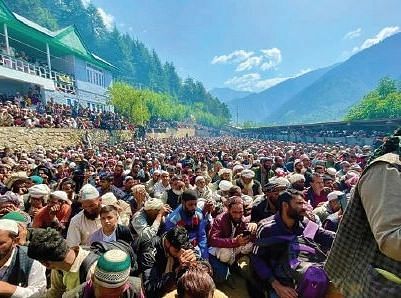
A fervour of devotion gripped Srinagar as the ‘Friday following’ Urs of Hazrat Sheikh Syed Abdul Qadir Jeelani (RA) was celebrated with zeal and zest, with thousands of devotees thronging the shrine in the city’s Khanyar area.

To observe the Urs, all roads led to the shrine, with long queues of people moving toward the shrine with devotion. As the faithful gathered, the air was devotional with the sounds of Quranic verses and collective prayers.

According to the news agency—Kashmir News Observer (KNO), the holy relic was displayed at the shrine with emotional scenes witnessed. People were seen crying while raising their hands towards the Almighty and asking for blessings.

At the crowded chowk of Khanyar were men, women, and children, all crying and asking for blessings from the Almighty while their eyes were moist amid hues and cries. Standing in the crowd was an elderly man raising his hands for forgiveness, with tears rolling down his cheeks.

The devotees said he had been visiting Khanyar since childhood. “I first came here along with my father and now I bring my children here with me. This place gives me peace,” said Mukhtar Ahmad, from Budgam.

Raja Begum, a devotee, said she comes here every year with a heart full of prayers and leaves with peace. “I am emotional today and feel an eternal peace,” she said.

Authorities had made arrangements to ensure smooth management of the Urs by ensuring security and facilities for the comfort of the devotees—(KNO)

50 Enchanting Places to Visit in Jammu and Kashmir

Drug peddler Naseer Ahmad Mir Arrested in Pulwama: Police 

Crack Down Against Riders in Baramulla involved in Triple Riding and Helmetless Riding

2 PDD Daily Wagers Mohd Farooq and Mohd Khaliq Injured While Repairing 11Kv Line In JK’s Poonch

Power Shutdown: Kashmir Power Distribution Corporation Limited (KPDCL) Announces Power shutdown in Different Areas

MP Er Rashid Sanctions ₹30 Lakhs for Lights, Approves Funds for Berwah Hospital in Budgam Visit

To Promote Tourism and culture Kashmir Music Festival “Kashur Fankaar” Held in SK Stadium Bandipora

 A “Koshur Funkar” event was held as part of the Bandipora Autumn Festival at S.K Stadium, Bandipora, aimed at promoting the area as a tourist destination.

The event was presided over by Major General Vivek Narang, GOC Kilo Force, and organized by the Indian Army in collaboration with Ali Sports Academy Bandipora. It featured performances by aspiring musicians, prominent singers, Sports lovers and artists from the valley.

“Kashur Fankar” provided a platform for emerging artists to showcase their musical skills and cultural heritage. The festival included performances ranging from traditional Kashmiri folk music to contemporary genres, highlighting the region’s cultural diversity.

Famous Kashmiri singer Shazia Bashir mesmerized the audience at the Kashur Fankaar event with her soulful voice. Her captivating performance was one of the highlights of the festival, leaving the crowd in awe of her talent. Known for her ability to blend traditional Kashmiri music with contemporary styles, Shazia Bashir’s performance further enriched the cultural experience of the event.

The festival was hosted by popular RJs of Chinar Radio Group, including RJ Deeba, who kept the audience engaged throughout the evening with their lively presence and witty commentary. Their dynamic hosting added an extra layer of excitement to the festival, making it a memorable experience for everyone in attendance.

In addition to the performances, master classes were conducted by musicians and artists. The event aimed to support and develop local artistic talent.

The GOC Kilo Force, during his remarks, emphasized the importance of preserving Kashmiri cultural heritage and providing platforms for the youth to express their talents. He expressed appreciation for those involved in organizing the event and encouraged the continued development of the local artistic community.

Several budding singers advanced to the finals, and attendees congratulated the winners and participants.

ADDC Bandipora, SSP Bandipora, CO 14 RR, Padma Shri Faisal Ali, Gh Nabi Tantrey, besides other many respected citizens of Bandipora were present on the occasion. (KNS) 

You Might Also Like:

Bhand Pather: Kashmir’s Vibrant Folk Theatre Tradition

Kashmiri Culture : Language,Spirituality,Art,Cuisine,Traditions and Architectures

Near the Line of Control Indian Army Organizes Annual Bagtore Mela in Gurez Valley

Preparations are in full swing to celebrate Dusseshra in Jammu and Kashmir’s Srinagar

Near the Line of Control Indian Army Organizes Annual Bagtore Mela in Gurez Valley

gurez mela

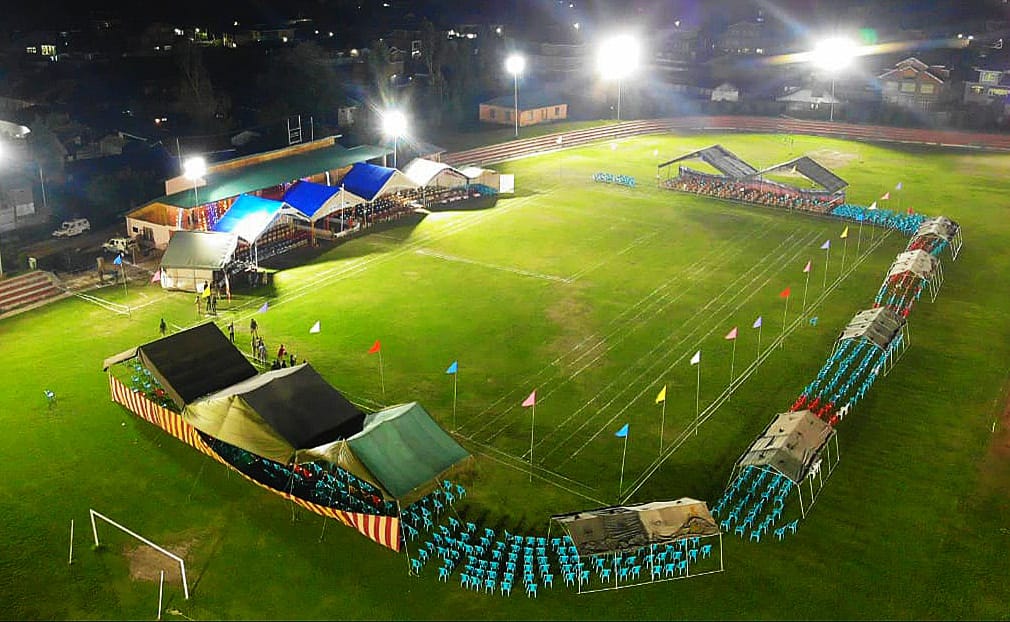
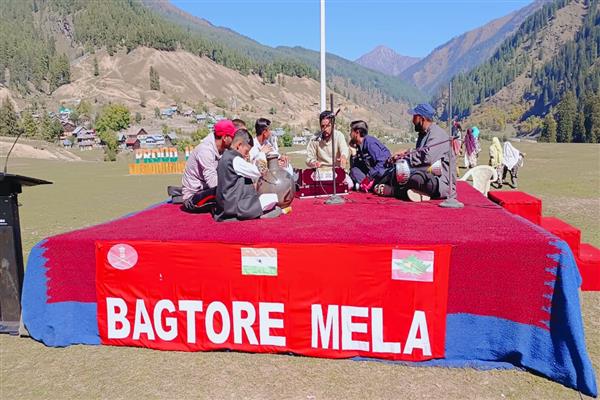
The Indian Army hosted its annual Bagtore Mela today near the Line of Control (LOC) in the scenic Gurez Valley of Bandipora district. The event, a beloved tradition in the region, drew a large crowd of local residents and enthusiastic participation from students.

The Commanding Officer (CO) of the Rana Battalion, Bagtore Himanshu Yadav, graced the occasion as the Chief Guest. The Mela featured a diverse array of cultural events, including popular activities like tug-of-war, musical chairs, and horse riding, providing entertainment and fostering community spirit.

At the end of the Mela, participants were awarded prizes for their active involvement. Local residents expressed their heartfelt gratitude to the Indian Army for organizing the event. “The Army’s dedication to hosting the Bagtore Mela in this remote corner of Gurez Valley is truly commendable. Their efforts have brought joy and unity to our community,” said a local attendee.

The Bagtore Mela serves as a testament to the strong bond between the Indian Army and the people of Gurez Valley, fostering goodwill and camaraderie in this border region.(KNS) 

You Might Also Like:

Forest official Abdul Majeed Rather Dies at Nadihal Bandipora in Road Accident

J&K paper leak case: ED attaches immovable property worth Rs 1.31 crore in Srinagar

8 Years Zobia Gulzar Mauled to Death by Stray Dogs in Awantipora Pulwama

Fire in Marwah Kishtwar: Over 70 Houses Gutted as Major Fire Rages in J&K’s Kishtwar

National Conference are now hardly seeing the restoration of Statehood after coming into power: Er Rashid

Preparations are in full swing to celebrate Dusseshra in Jammu and Kashmir’s Srinagar

Preparations are in full swing to celebrate Dusseshra in Jammu and Kashmir’s Srinagar. Effigies of Ravana has been set up for ‘Ravana Dahan’.

Ratan Chaku, who is the organizer, General Secretary Kashmiri Pandit Sangarsh Samiti expressed his happiness, saying that all the people in the community are excited to celebrate this festival together and people from other communities also enjoy it.

“Preparations are underway. We celebrate Dussehra with full enthusiasm. We have been celebrating this festival since 2007. All communities celebrate this programme together. People from other communities also enjoy it. Everyone feels happy,” said Ratan Chaku.

Meanwhile, preparations are underway across various parts of the country. In Delhi, the Sri Ram Lila Society has claimed to have erected the tallest Ravan effigy in India, standing at an impressive 211 feet tall in Sector 10 of Dwarka.

The organisers have also sent an invitation to Prime Minister Narendra Modi.

According to the Sri Ram Lila Society, it took 4 months to prepare and install this structure.

Speaking to ANI, Rajesh Gehlot, Chairman of the organizing committee shared that the theme of this year’s Ramlila decorations and events is inspired by the old Ram Mandir temple in Ayodhya, which was demolished. The entry gates are designed in the style of South Indian temples, known as ‘Gopuram’. He also highlighted that they strive to present Ramleela in the most beautiful way possible, with careful attention to decorations and artist performances.

To ensure the success of this event, the committee has conducted auditions for over 400 artists from across Delhi NCR, selecting fresh talent. These artists undergo three months of practice before performing live on stage, with dedicated directors overseeing every aspect of the production.

Amid these celebrations, the committee has heightened the security, with over 50 Delhi Police personnel, 200 volunteers and 100+ civil officers safeguarding the venue. The DCP receives daily reports, and the SHO conducts regular rounds to maintain safety. (ANI)

You Might Also Like:

Omar Abdullah Ready to Reclaim Cheif Minister chair

Now Panchayat polls in J&K, State Election Commission begins process for polls in J&K

Baba Ghulam Shah Badshah University Rajouri Celebrates World Mental Health Day

2nd Legends League Cricket Match Bakshi stadium witnesses overwhelming turnout

Reasons to Visit Kashmir: Explore the Beauty, Culture, and Adventure of Paradise on Earth

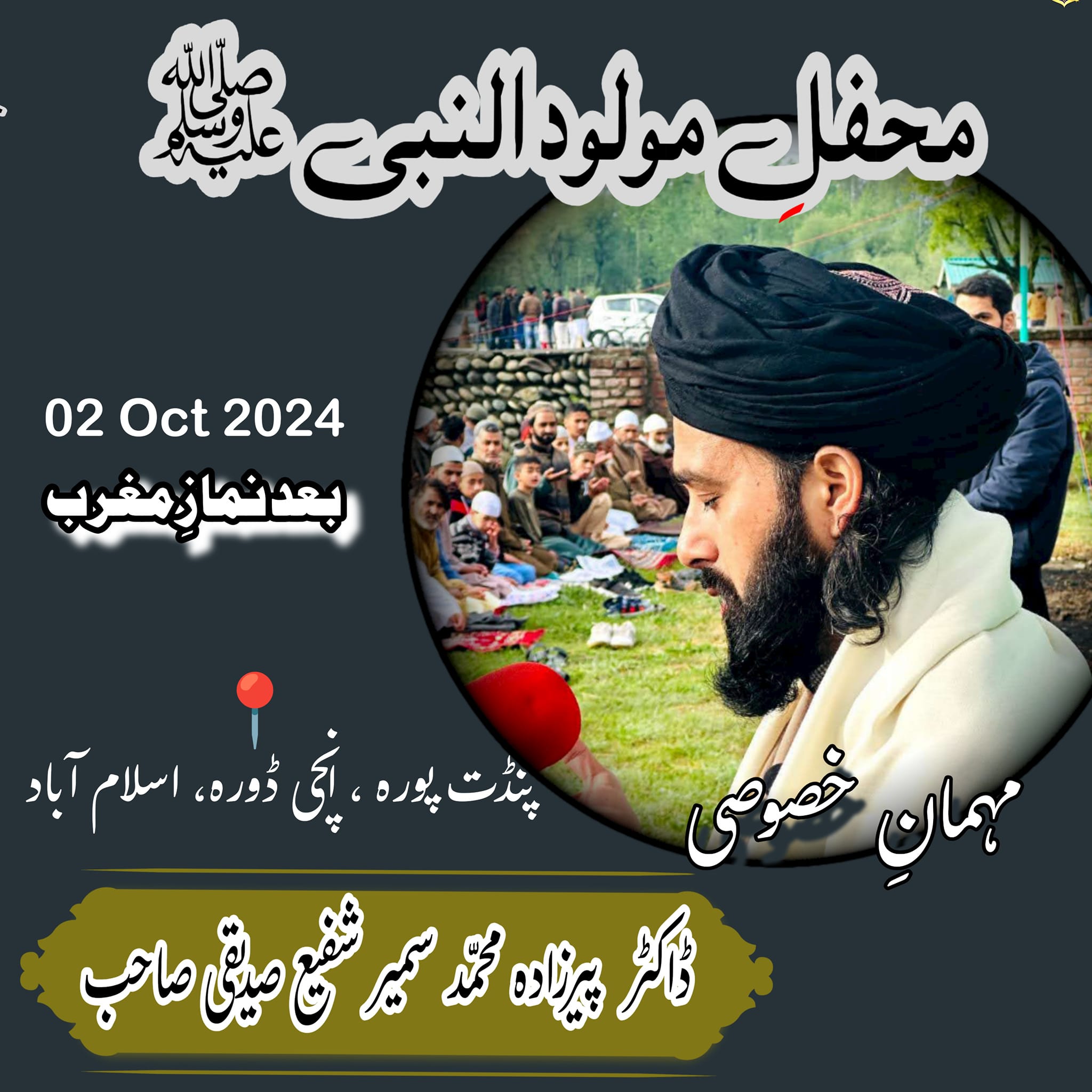
Public Gathering for Mawlid al-Nabi (PBUH) After Maghrib Prayer in Anchi Dora, Islamabad

A special gathering in honour of Mawlid al-Nabi (PBUH), the birth of our beloved Prophet Muhammad (peace be upon him). This event will take place after Maghrib prayer on [02-10-2024] at Anchi Dora, Islamabad.

Mawlid al-Nabi is a time for reflection, celebration, and unity among Muslims. It offers a wonderful opportunity to come together as a community to share in the teachings and blessings of the Prophet Muhammad (PBUH). His life is a source of inspiration for millions around the world, and this gathering aims to celebrate his legacy through remembrance and reverence.

Honoured to announce that Dr. Sameer Shafi Siddique will be esteemed speaker for the evening. Dr. Siddique will share insightful reflections on key aspects of the Prophet’s life, his teachings, and their relevance in today’s world.

Bhand Pather: Kashmir’s Vibrant Folk Theatre Tradition

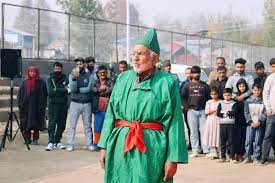
Kashmir, often called ‘Paradise on Earth,’ is known for its stunning views and rich culture. But beyond its natural beauty, Kashmir is also famous for a unique and lively form of folk theatre called Bhand Pather. This entertaining art combines music, dance, and acting to explore and comment on important social issues.

What Does Bhand Pather Mean?

To understand Bhand Pather, it helps to break down the name:

  • Bhand: This word means ‘actor’ or ‘performer’.
  • Pather: This means ‘to act’ or ‘to imitate’.

So, Bhand Pather is about actors performing and imitating real-life situations, often in a funny way. It’s a way to reflect and comment on life through acting.

A Long History

Bhand Pather has a long history in Kashmir. It is believed to have started around 1324 and has been an important part of Kashmiri culture ever since. Over the centuries, it has evolved but still keeps its traditional charm.

In the past, Bhand Pather was performed during local gatherings and festivals. It was a popular way for people to come together and enjoy a good show. Even though times have changed, Bhand Pather remains a beloved tradition in Kashmir.

What Happens in a Bhand Pather Show?

Bhand Pather shows are known for their high energy and fun style. Here’s what you can expect:

  • Colourful Costumes: Actors wear bright and elaborate outfits that make the performance visually exciting. These costumes often reflect traditional styles.
  • Humorous Acting: The acting is exaggerated and comedic. Actors use funny voices and physical comedy to entertain the audience. This humour helps to discuss serious topics in a light-hearted way.
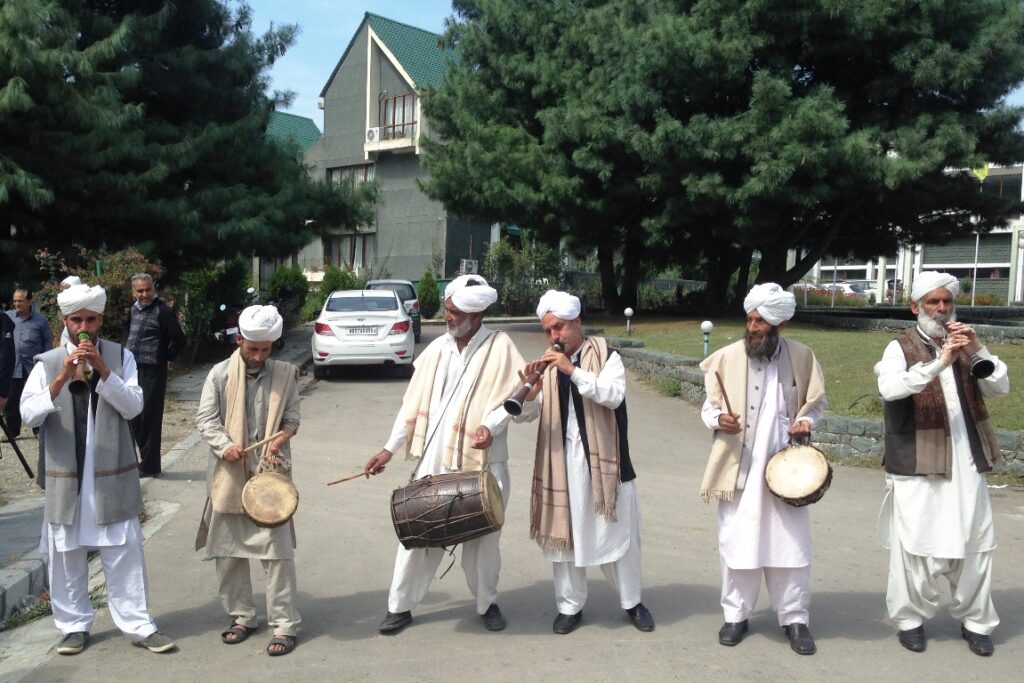
  • Music and Dance: Music and dance are key parts of Bhand Pather. Performances include traditional songs and dances that add rhythm and mood. The dance moves enhance the visual appeal of the show.
  • Storytelling: Bhand Pather stories often focus on social issues like politics, religion, and social norms. The actors use humour and satire to highlight these issues, making people think and laugh at the same time.

Why Is Bhand Pather Important?

Bhand Pather is more than just entertainment; it serves several important roles in Kashmiri society:

  • Social Commentary: It provides a way to talk about and reflect on social problems. The performances often bring attention to issues and encourage people to think about solutions.
  • Cultural Identity: Bhand Pather is a big part of Kashmiri culture. It helps keep traditional values and customs alive. Through its stories and performances, it connects people to their heritage.
  • Community Building: Bhand Pather shows bring people together. They are a chance for the community to share laughter and emotions. These performances strengthen social bonds and create a sense of unity.

Challenges and Revival

Over time, Bhand Pather has faced challenges. Conflicts and social changes have made it harder to keep the tradition alive. However, many people are working hard to revive it and ensure it continues.

Efforts are being made to support and promote Bhand Pather. Performances are being organized, and there is a push to educate younger generations about this important art form. These efforts are crucial for keeping Bhand Pather alive.

The Future of Bhand Pather

Bhand Pather is an important part of Kashmir’s cultural heritage. It helps people connect with the past, understand the present, and shape the future. Supporting and preserving this tradition is key to maintaining Kashmir’s cultural identity.

Here’s how you can help:

  • Attend Performances: By going to Bhand Pather shows, you support the artists and help keep the tradition alive.
  • Learn About Its History: Knowing more about Bhand Pather’s history enhances your appreciation of the art form.
  • Promote the Art Form: Sharing information about Bhand Pather and encouraging others to learn about it helps raise awareness.
  • Support Artists: Many artists rely on Bhand Pather for their livelihood. Supporting them through attendance or donations helps sustain their work.

Notable Bhand Pather Plays and Artists

Some Bhand Pather plays and artists are especially well-known. These notable works and individuals often highlight the best of Bhand Pather:

  • Famous Plays: Certain plays are remembered for their impactful storytelling and performances. These often address important social issues.
  • Renowned Artists: Skilled Bhand Pather artists are celebrated for their creativity and contribution to the art form. Their performances are known for their talent and connection with the audience.

Conclusion

Bhand Pather is a treasured form of Kashmiri folk theatre. With its lively mix of music, dance, and acting, it provides a unique way to explore important social issues. This tradition reflects Kashmiri culture and offers valuable insights into the region’s heritage.

As Bhand Pather faces challenges, it is important to support and promote this art form. By attending performances, learning about its history, and supporting the artists, we help ensure that Bhand Pather continues to be a vibrant part of Kashmiri culture for future generations.

Whether you are a long-time fan or new to Bhand Pather, there is much to discover and appreciate about this remarkable tradition. Its blend of humour, music, and social commentary makes it a special and enduring part of Kashmiri heritage.

(writen By S Koul)

You May Like:

Kashmiri Culture : Language,Spirituality,Art,Cuisine,Traditions and Architectures

Baba Nagri Shrine’s Community Kitchen Feeds Thousands Daily and Tens of Thousands During Urs
Baba Nagri Shrine’s Community Kitchen Feeds Thousands Daily and Tens of Thousands During Urs

The Baba Nagri shrine, also known as Darbar Laar Sharief Wangat, boasts one of the largest free community kitchens, or ‘langar’, serving around 1,000 people daily. During Urs days, this number surges, with food being prepared for over 70,000 to 80,000 devotees.

Operating 24 hours a day, the langar is staffed by both management and numerous volunteers who tirelessly serve the many visitors. According to the shrine’s administration, this round-the-clock service ensures that devotees have access to free meals throughout the year.

Mian Mehar Ali, overseeing the arrangements, shared with Greater Kashmir that on Urs days, a special langar is organized, where food for thousands is prepared. Volunteers noted that special sweet rice, made with rice, ghee, and dry fruits, is served on these occasions.

Managing such a large-scale operation daily is no small feat, but the dedicated volunteers and about 100 permanent workers ensure everything runs smoothly, from cooking to timely delivery of food.

Baba Nagri shrine is one of the most revered sites for the Gujjar, Bakerwal, and Pahari communities in Jammu and Kashmir and beyond. Every year, tens of thousands of devotees gather at the shrine on June 7 and 8 to observe the annual Urs of Sufi saint Mian Nizamuddin Kiyanwi (RA), also known as Hazrat Baba Ji Sahib Larvi, who was a prominent 18th-century Sufi saint and social reformer.

Nestled at the base of a mountain in the picturesque village of Wangat, the shrine is surrounded by lush forests and becomes a focal point of religious activities year-round. On Urs days, the site transforms into a bustling hub for devotees.

The Mian family, the shrine’s custodians, are responsible for accommodating the thousands of visitors each year. The current Sajadh Nasheen, Mian Altaf Ahmad, inherited the position from his late father, Mian Bashir Ahmad Larvi, who succeeded Mian Nizamuddin Kiyanwi in overseeing the shrine.

Kashmiri Culture : Language,Spirituality,Art,Cuisine,Traditions and Architectures

Kashmiri Culture

Culture refers to the shared beliefs, values, customs, traditions, behaviors, and practices that characterize a group or society. It encompasses the collective way of life of a particular group of people, providing a framework for how they interact, communicate, and understand the world around them. Culture can manifest in various forms, including language, religion, art, music, cuisine, clothing, rituals, and social norms.

Key aspects of culture include:

  1. Language: Language is a fundamental component of culture. It shapes communication and reflects the unique expressions and idioms of a group.
  2. Religion and Spirituality: Religious beliefs and practices often play a significant role in culture, influencing moral values and rituals.
  3. Art and Creativity: Art, music, literature, and other forms of creative expression are integral to cultural identity. They reflect the values and aesthetics of a society.
  4. Cuisine: Traditional foods and cooking methods are essential elements of culture. They provide insights into local ingredients, flavors, and eating habits.
  5. Traditions and Rituals: Cultural traditions and rituals, such as ceremonies, festivals, and rites of passage, are a way to celebrate and pass down cultural heritage.
  6. Social Norms: Social norms dictate acceptable behavior within a society. They include customs related to family, relationships, and social interactions.
  7. Dress and Attire: Clothing and attire often reflect cultural values, climate, and historical influences.
  8. Values and Beliefs: Cultural values shape the principles by which a society operates. They influence individual and collective decision-making.
  9. History and Heritage: A society’s history and heritage play a crucial role in shaping its culture, as past events and experiences inform present practices and identity.
  10. Architecture and Design: Architectural styles and design preferences can vary significantly from one culture to another.

Culture is not static; it evolves over time in response to social, political, economic, and technological changes. Additionally, cultures can blend and adapt as societies become more interconnected in the modern world. Understanding and respecting different cultures is essential for promoting tolerance, diversity, and effective communication in a globalized society.

Through the sands of time, cultures have been carefully nurtured and passed from one generation to the next, forming an unbreakable thread that weaves people together. This robust tapestry of culture not only forges connections among individuals but also fosters the development of vibrant and harmonious communities that share common cultural backgrounds. Culture, as a concept, has been expounded by scholars in myriad ways, encompassing a particular set of customs, ideas, and social norms inherent to a group of kindred individuals within a society. It embodies the collective mosaic of human existence, encapsulating behaviors, knowledge, language, art, traditions, attire, ethics, beliefs, sentiments; essentially, it comprises all that is acquired as essential by the denizens of a society. Culture is the repository of learned, normative patterns of behavior—a compendium of shared thought processes, emotions, and actions.

The significance of culture in our lives cannot be overstated, for it molds our identity and provides invaluable insights into our ancestral ethos. Our culture is the compass that guides us, endowing life with profound meaning and making each one of us unique amidst the diversity of the world.

Our beloved Kashmir, a pristine jewel on the Earth’s canvas, boasts not only of its natural beauty but also a rich cultural heritage that is an invaluable resource. The people of Kashmir, renowned for their warmth and amiability, have created a culture that is expansive and beguiling, leaving an indelible impression on all who venture into its embrace. Indeed, it is these deeply rooted cultural traditions that have etched an identity for Kashmir in the annals of history.

However, the winds of change blow forcefully across the globe, precipitating an open battle against cultures. In the name of modernization and westernization, societies find themselves on the precipice of relinquishing their cherished cultural moorings. Kashmir is no exception to this global trend. The allure of modernity has cast a shadow over the timeless traditions, prompting a contemplative examination of the delicate equilibrium between preserving cultural heritage and embracing progress.