Grand Milad-un-Nabi (ﷺ) and Ahmad Raza Khan Conference Held in Malpora, Baramulla

Grand Milad-un-Nabi

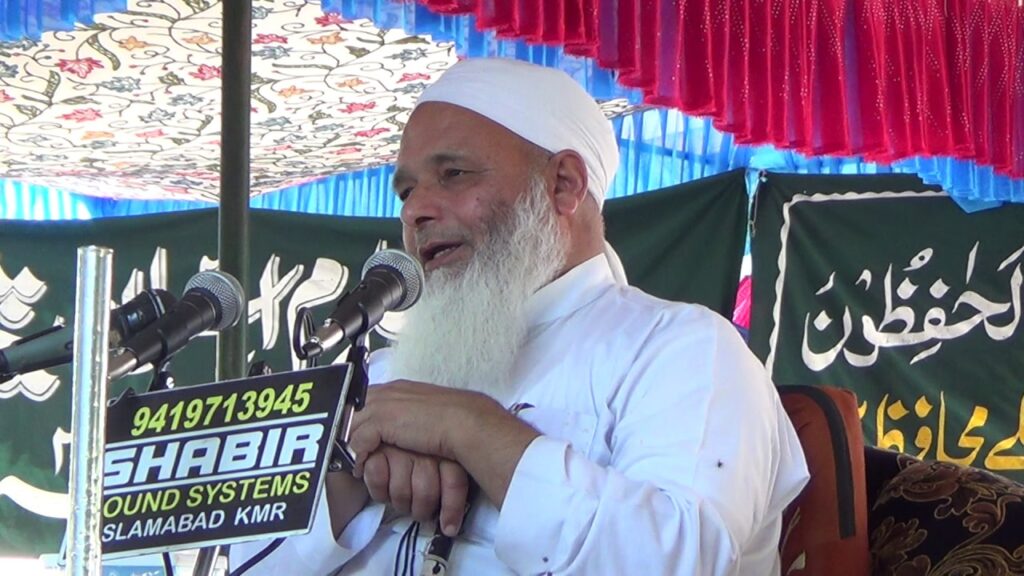
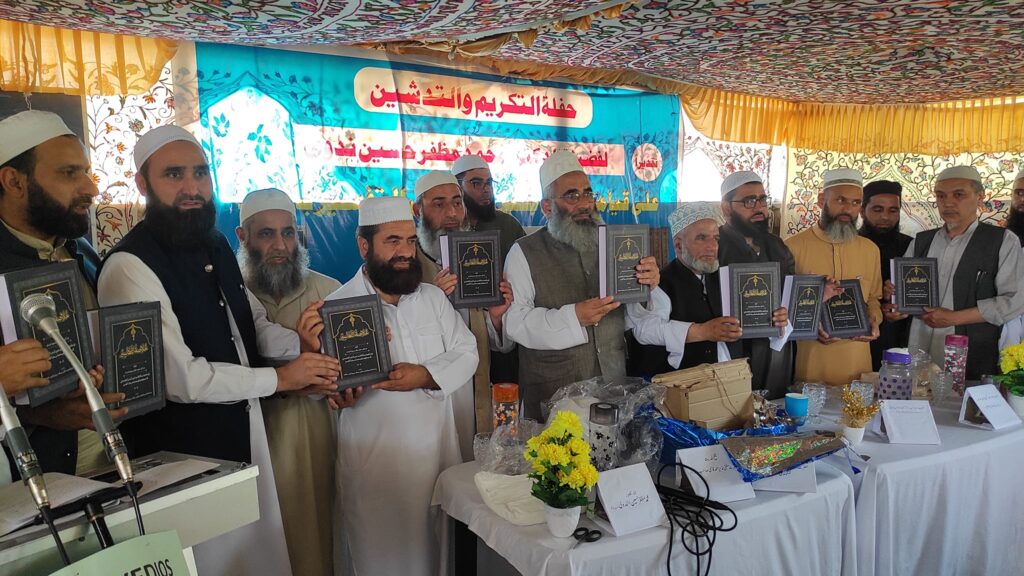
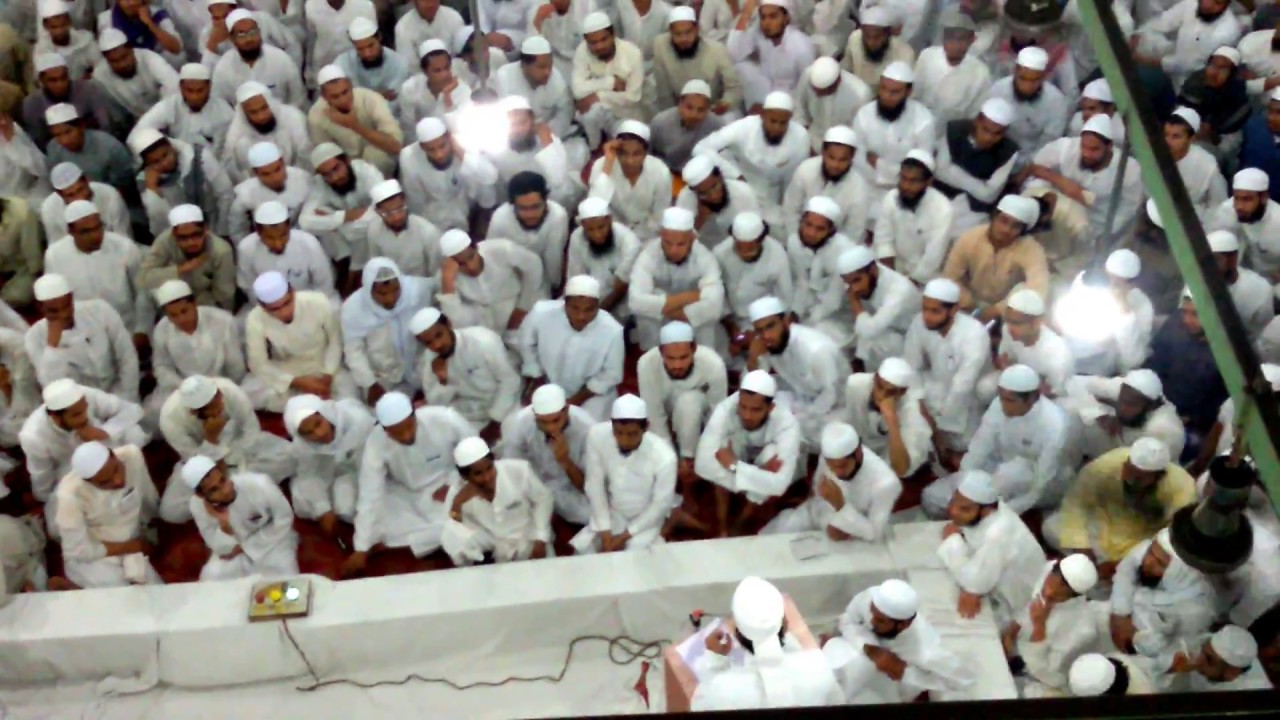
The village of Malpora in Narwav Tehsil, Baramulla district, Jammu and Kashmir, hosted a grand Milad-un-Nabi (ﷺ) and Ahmad Raza Khan (RA) Conference on Saturday, July 26, 2025, at the Central Eidgah. Organized by the Sout-ul-Awliya Unit, the day-long event drew thousands of devotees and prominent Islamic scholars from across the Kashmir Valley to celebrate the birth of Prophet Muhammad (ﷺ) and honor the legacy of Ahmad Raza Khan, a revered figure in the Barelvi Sunni tradition. Moulana Abdul Rasheed Dawoodi, the esteemed founder and chief patron of Tehreek Sout-ul-Awliya, presided as the chief guest, delivering a powerful message of mercy, unity, and spiritual revival that resonated deeply with attendees.

A Day of Spiritual Enlightenment

The conference, held from 8:00 AM to 6:00 PM, was a vibrant celebration of faith, featuring a series of sermons, spiritual talks, and religious discourses centered on the Prophet’s life and teachings. Large waterproof pandals were erected at the Central Eidgah to accommodate the massive turnout and ensure comfort despite potential weather challenges. The event was meticulously planned by the Sout-ul-Awliya Unit, reflecting their commitment to fostering spiritual unity and devotion in the region.

Prominent scholars from various parts of Kashmir delivered enlightening addresses, emphasizing the Prophet’s role as Rahmatul-lil-Alameen (Mercy to the Worlds). Their sermons highlighted the importance of emulating the Prophet’s compassion, tolerance, and justice in daily life, particularly in a region that has faced decades of conflict and division. The atmosphere was charged with devotion as attendees participated in recitations of Naats (poetry in praise of the Prophet) and listened to melodious renderings of the Quran.

Moulana Abdul Rasheed Dawoodi’s Message of Mercy and Unity

The highlight of the conference was the arrival of Moulana Abdul Rasheed Dawoodi at 1:00 PM, greeted by an enthusiastic crowd eager to hear his words. A Kashmiri Sunni Muslim scholar and follower of the Qadriya Sufi lineage, Moulana Dawoodi is renowned for his melodious oratory and unwavering dedication to the Prophet’s teachings. As the chief patron of Tehreek Sout-ul-Awliya, he has been a torchbearer for the Ahle-Sunnat community since the martyrdom of his mentor, Dr. Qazi Nisar (RA), in the 1990s.

In his address, Moulana Dawoodi emphasized the Prophet’s universal message of mercy, urging attendees to embody compassion in their interactions. “The Prophet Muhammad (ﷺ) was sent as a mercy to all creation,” he said. “His teachings guide us to unite as one Ummah, to support the weak, and to spread love in a world filled with challenges.” He called for Muslims to set aside differences and work together to counter divisive forces, a message that carried particular weight in Kashmir’s complex socio-political context.

Moulana Dawoodi also paid tribute to Imam Ahmad Raza Khan (RA), highlighting his contributions to Islamic scholarship and the Barelvi tradition’s emphasis on love for the Prophet. He urged the revival of spiritual practices such as the recitation of Awrad Al Fatiha, a devotional practice attributed to Hazrat Ameer-e-Kabir Mir Syed Ali Hamadani, a revered Sufi saint in Kashmir. “Let us bring these practices back to our mosques and homes to strengthen our connection with Allah and His Messenger,” he said, inspiring attendees to deepen their spiritual commitment.

Drawing from his long-standing advocacy for unity, as seen in previous conferences like the 14th Annual Sout-ul-Awliya Conference in Anantnag, Moulana Dawoodi stressed the need for collective action to address social and religious challenges. He called on the Muslim Ummah to “hold hands together” to defeat conspiracies aimed at sowing discord, reinforcing his vision of a united community grounded in the Prophet’s teachings.

Tehreek Sout-ul-Awliya: A Legacy of Service

Founded in November 2005 by Moulana Dawoodi at an Islamic conference in Anantnag, Tehreek Sout-ul-Awliya (The Voice of Saints) is a non-political, religious, and human welfare organization dedicated to promoting the Quran, Sunnah, and Sufi teachings. Headquartered at Bagh-e-Nowgam, Anantnag, the organization has grown significantly, with nearly 500 members by 2022 and a network of educational and welfare initiatives across Jammu and Kashmir.

The organization operates several departments, including Darsi-Nizami for Islamic education, Hifzu-Nasir for Quranic memorization, Darul Ift-ul-Qaza for Islamic jurisprudence, and a health wing offering free medical services and awareness programs. In September 2024, Tehreek Sout-ul-Awliya laid the foundation stone for Markazus Solihat, a women’s Arabic school, demonstrating its commitment to inclusive education. The organization’s student wing organizes weekly Ijtimas (gatherings) to educate youth about the Sunnah, while its health wing conducts initiatives like blood donation drives and seminars on drug de-addiction.

Moulana Dawoodi’s leadership has been instrumental in the organization’s growth, despite significant challenges. He has faced multiple grenade attacks by adversaries but has miraculously escaped serious harm, earning admiration for his resilience. His arrest in September 2022 by the Jammu and Kashmir government, along with other scholars, highlighted the difficulties of operating in a politically sensitive region, yet he continues to advocate for peace and spiritual reform.

Community Impact and Broader Significance

The Malpora conference was a powerful testament to the enduring appeal of Milad-un-Nabi celebrations in Kashmir, where the Barelvi tradition’s emphasis on love for the Prophet resonates deeply. The event provided a platform for spiritual reflection and community unity, offering hope in a region marked by conflict. Attendees left inspired by Moulana Dawoodi’s call to embody the Prophet’s mercy and work collectively for social good.

The conference also highlighted the organizational strength of Tehreek Sout-ul-Awliya, which successfully mobilized scholars and devotees for a large-scale event. By honoring Imam Ahmad Raza Khan (RA), the conference reinforced the importance of the Barelvi tradition in Kashmir’s religious landscape, fostering a sense of pride and continuity among attendees.

Conclusion

The Milad-un-Nabi and Imam Ahmad Raza Khan Conference in Malpora, Baramulla, on July 26, 2025, was a landmark event that brought together thousands to celebrate the Prophet’s birth and teachings. Moulana Abdul Rasheed Dawoodi’s stirring address, centered on mercy and unity, inspired attendees to embrace the Prophet’s values in their lives and communities. Through his leadership of Tehreek Sout-ul-Awliya, Moulana Dawoodi continues to guide Kashmir’s Muslims toward spiritual renewal and social reform, navigating challenges with resilience and faith. The event underscored the power of collective devotion and the enduring relevance of the Prophet’s message in fostering hope and unity in trying times.

Kashmir Mother Donates Kidney to Save Son, Wins Hearts Across the Valley

Landslide Kills Two in Reasi as Relentless Rains Trigger Floods, Highway Blockades Across Jammu

Tarun Chugh Slams Farooq Abdullah for ‘ISI-Backed Politics’, Questions Silence on Kashmiri Pandit Exodus

Mufti Nazir Ahmad Qasmi Suffers Heart Attack, Stable After Treatment; Community Rallies in Prayer

Renowned Islamic scholar and Shaykh-ul-Hadith at Darul Uloom Raheemyah, Mufti Nazir Ahmad Qasmi, suffered a major heart attack on Friday, sending shockwaves throughout Kashmir’s religious and academic communities. The 65-year-old scholar was rushed to a local medical facility where he received emergency treatment. By late evening, sources close to the seminary confirmed that Mufti Qasmi’s condition had stabilized, thanks to timely medical intervention and widespread public concern.

Incident Details and Current Health Status

The heart attack reportedly occurred in the early hours of May 23. As soon as the news surfaced, especially on social media platform X (formerly Twitter), an outpouring of support began. Dozens of users posted urgent calls for prayers (duas), expressing their deep concern for the health of a man widely regarded as one of Kashmir’s foremost Islamic jurists and community leaders.

Though official medical bulletins are yet to be released, reliable sources from Darul Uloom Raheemyah indicated that Mufti Qasmi is now out of immediate danger. “He is under observation, and we are hopeful of a full recovery,” said a close associate of the seminary. Family members have requested privacy but acknowledged the immense love and prayers pouring in from across the region.

Mufti Qasmi’s Eminence in Islamic Scholarship

Mufti Nazir Ahmad Qasmi is no ordinary figure in Kashmir’s religious landscape. As Shaykh-ul-Hadith and head jurist (faqih) at Darul Uloom Raheemyah in Bandipora, he has long been a pillar of scholarly guidance, deeply rooted in the Deobandi school of thought. His teachings in Hadith and Fiqh have shaped generations of students and imams across Jammu and Kashmir.

Known for blending traditional Islamic principles with contemporary issues, Mufti Qasmi has addressed subjects ranging from medical ethics to socio-economic justice. He was one of the most prominent voices during the COVID-19 pandemic, urging the public to take vaccinations and support preventive measures in mosques.

In February 2025, he gained further attention for officiating the marriage of Maulana Shah Mohammad Asghar Kirmani, where he stressed the importance of simplifying Islamic weddings and removing social and financial barriers.

Community Reactions and Social Media Mobilization

As news of the heart attack spread, religious leaders, scholars, and laypersons alike took to social media to express their distress and extend prayers. One user wrote, “In contemporary times, Mufti Nazir Qasmi is not just a scholar, he is a spiritual light for our youth.” Another referred to him as “the topmost faqhi in Kashmir,” a sentiment echoed in tributes that poured in throughout the day.

Community leaders offered collective prayers (duas) in several mosques across the Valley, while some institutions postponed academic sessions in solidarity. The spiritual stature of Mufti Qasmi was evident in the unity his health crisis inspired—across sects, regions, and age groups.

Broader Reflections on the Health of Religious Leaders

Mufti Qasmi’s health scare follows a pattern that has become familiar in recent years—where prominent religious leaders face health challenges due to demanding schedules and the emotional weight of communal responsibilities. In 2023, similar concern followed the injury of Mufti Muzaffar Hussain Qasmi during Umrah in Mecca, who later recovered. Such incidents bring attention to the need for health awareness and support systems for aging scholars whose services are critical to community guidance.

A Scholar Beyond Borders

Though based in Bandipora, Mufti Nazir Ahmad Qasmi’s influence extends far beyond Kashmir. His lectures, writings, and public interventions have earned him respect across the Muslim world. He is often described as “a torchbearer of divine light,” whose balanced approach has helped youth bridge faith with modernity.

His advocacy for ecological awareness, reform in religious practices, and unity among Muslims has made him a figure of national and even global relevance. For many, Mufti Qasmi represents not just scholarly depth, but moral clarity in times of social confusion.

Looking Ahead

While the immediate danger appears to have passed, the coming days will be critical in determining Mufti Qasmi’s recovery path. His students, followers, and fellow scholars remain hopeful and continue to organize prayer sessions for his health. In the absence of his regular lectures and public appearances, many reflect on his lasting impact and the need to support those who dedicate their lives to spiritual and social leadership.

As the sun sets over the Valley today, countless prayers are being whispered in homes and mosques alike—for a scholar whose voice has brought guidance, compassion, and clarity to an entire generation.

Maulana Ghulam Mohammad Vastanvi Passes Away at 75: A Visionary in Islamic and Modern Education

Maulana Ghulam Mohammad Vastanvi

The Islamic world and educational community mourn the loss of Maulana Ghulam Mohammad Vastanvi, a towering figure in Islamic scholarship and modern education, who passed away on May 4, 2025, at the age of 75. The revered scholar and educationist breathed his last in a Mumbai hospital, leaving behind a legacy that transformed the landscape of Islamic education in India and beyond. His funeral, held in Akkalkuwa, Maharashtra, on May 5, 2025, was attended by thousands, reflecting the profound impact of his life and work.

A Visionary Educationist

Maulana Vastanvi was the founder and rector of Jamia Islamia Ishaatul Uloom, an institution established in 1979 in Akkalkuwa, a remote town in Maharashtra’s Nandurbar district. Under his leadership, the institution grew from humble beginnings into a beacon of learning, blending traditional Islamic studies with modern disciplines. Today, Jamia Islamia is a sprawling educational hub, offering courses in theology, medicine, engineering, pharmacy, and more. Its medical college, recognized by the Medical Council of India, holds the distinction of being the first minority-run medical institution in the country.

Vastanvi’s vision was rooted in the belief that education could bridge divides and empower marginalized communities. He championed the integration of Islamic teachings with contemporary sciences, ensuring that students were equipped to navigate both spiritual and professional realms. His efforts provided opportunities to thousands of students, particularly from underprivileged backgrounds, who went on to serve as scholars, doctors, engineers, and educators across the globe.

A Brief but Controversial Tenure at Darul Uloom Deoband

In January 2011, Maulana Vastanvi was appointed Vice Chancellor of Darul Uloom Deoband, one of the most prestigious Islamic seminaries in the world. His appointment was initially celebrated, given his reputation as a progressive educationist. However, his tenure was short-lived and marred by controversy. Vastanvi’s remarks praising the economic development of Gujarat under then-Chief Minister Narendra Modi sparked outrage among some sections of the Deoband community, who viewed the comments as politically charged and insensitive to the state’s history of communal tensions. The backlash led to his removal from the post within months, a decision that remains a subject of debate among scholars and followers.

Despite the controversy, Vastanvi’s contributions to education and his commitment to fostering harmony through knowledge remained undeterred. He returned to Akkalkuwa, focusing on expanding Jamia Islamia and mentoring the next generation of scholars and professionals.

A Legacy of Compassion and Innovation

Born in 1950 in Vastan, a village in Gujarat, Maulana Vastanvi rose from modest beginnings to become a globally respected figure. His life was a testament to the power of education and perseverance. He was known for his humility, accessibility, and unwavering dedication to his students and community. Colleagues and students recall his ability to inspire, often spending hours discussing ideas to improve educational access and quality.

Under his guidance, Jamia Islamia introduced innovative programs, including vocational training and women’s education, at a time when such initiatives were rare in minority institutions. Vastanvi also emphasized interfaith dialogue, fostering understanding between communities through educational outreach programs. His work earned him recognition as a bridge-builder in a diverse and often divided society.

Tributes Pour In

The news of Maulana Vastanvi’s passing prompted an outpouring of grief and tributes from political leaders, scholars, and students. Congress leader and former Telangana Minister Mohammed Ali Shabbir described him as “a guiding light for the Muslim community,” emphasizing his role in revolutionizing education. Former MP and AIMIM leader Imtiaz Jaleel called his death “an irreparable loss,” noting that Vastanvi’s institutions had empowered countless individuals to achieve their dreams.

Social media platforms, particularly X, buzzed with messages of condolence, with many sharing personal anecdotes of Vastanvi’s kindness and wisdom. “Maulana Vastanvi was not just a scholar but a visionary who showed us that faith and progress can go hand in hand,” wrote one user. Another recalled, “His doors were always open to students, no matter the time of day.”

A Lasting Impact

Maulana Vastanvi’s passing marks the end of an era, but his legacy endures through the institutions he built and the lives he touched. Jamia Islamia Ishaatul Uloom stands as a living testament to his vision, producing graduates who carry forward his ideals of knowledge, compassion, and service. His emphasis on education as a tool for empowerment continues to inspire educators and community leaders worldwide.

As the world bids farewell to this remarkable scholar, his words resonate: “Education is the key to dignity and progress. Without it, we are lost.” Maulana Ghulam Mohammad Vastanvi’s life was a beacon of that belief, illuminating the path for generations to come.

Massive Fire Erupts in Bemina, Srinagar; Six Firefighters Injured, Fire Engulfs Madrassa Sabeel-ul-Huda and Homes

Madrassa Sabeel-ul-Huda

A major fire broke out on Friday evening in Gousia Colony, Bemina, Srinagar, prompting a swift response from the Fire and Emergency Services Department.

According to officials, the fire alert was received at 7:19 PM, and the first fire units reached the spot within a minute. Nine fire tenders were deployed from various stations, including Fire Headquarters Bemina, Veer Chatabal, Safa Kadal, Syed Hameed Pora, and Rawalpora.

Firefighters faced intense and risky conditions while battling the blaze. Six personnel, including a senior officer, were injured during the operation. The injured have been identified as Divisional Fire Officer Zorawar Singh, and firemen Ishfaq Ahmad, Waseem Ahmad Ganaie, Bashir Ahmad Ahangar, Javaid Baba, and Sahil.

All injured firefighters received immediate medical attention. The fire has been brought under control, and cooling operations are currently underway to prevent any flare-ups.

Authorities have launched an investigation to find the cause of the fire and assess the property damage.

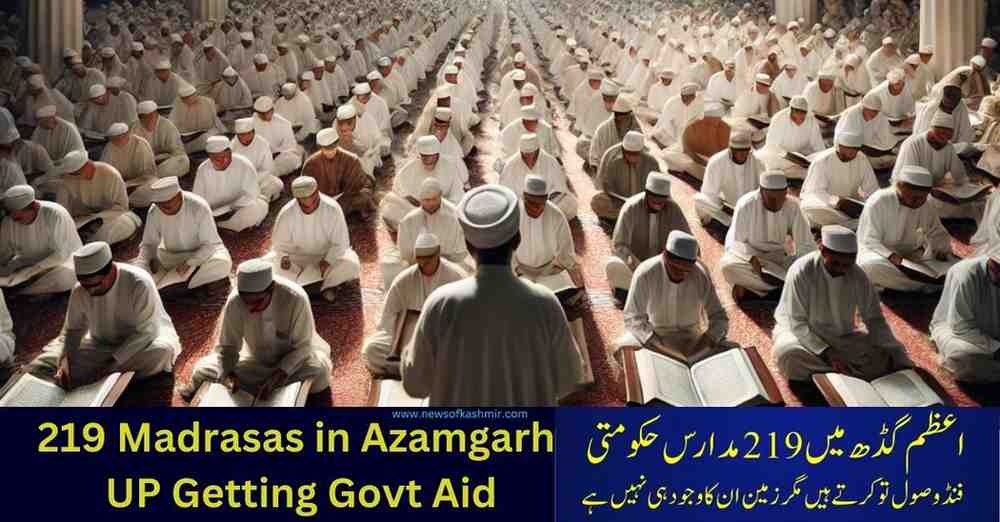
219 Madrasas in Azamgarh UP Getting Govt Aid Found Non-Existent, FIRs Lodged

219 Madrasas in Azamgarh

In a major crackdown on financial fraud, the police in Azamgarh have registered cases against 219 madrasas that were found to be non-existent despite receiving government aid. The action follows an investigation by the Economic Offences Wing (EOW), which uncovered irregularities in government funding.

Investigation Uncovers Fraud

The probe began after discrepancies were noticed during online data entry on the madrasa portal. Initially, 313 madrasas were flagged for irregularities. However, a Special Investigation Team (SIT) inquiry, initiated after a 2017 complaint to the government, confirmed that 219 of these institutions did not exist at all.

Superintendent of Police Hemraj Meena stated, “Investigation was done in this case through EOW, in which there was an allegation of government money being siphoned off in the name of madrasas. Government money was received on the basis of forged documents.”

FIRs Registered Across the District

Following the EOW’s findings, FIRs were lodged at 22 police stations across the district. The first case was registered on February 6 at Kandharapur police station, based on a complaint by EOW Inspector Kunwar Brahma Prakash Singh. Subsequently, additional cases were registered at Kotwali, Sidhari, Rani ki Sarai, Mubarakpur, Nizamabad, and other police stations.

Legal Action and Further Investigation

The authorities have assured strict action against those involved in the scam. “The matter is being investigated, and action will be taken based on whatever facts come to light during the investigation,” SP Meena added. The police are also looking into whether officials or other entities were complicit in approving funds for these non-existent madrasas.

The revelation has raised serious concerns about transparency in the allocation of government funds meant for educational institutions. The authorities are now focusing on identifying the individuals responsible for submitting forged documents and ensuring that such fraudulent practices are curbed in the future.

This case highlights the importance of stringent monitoring mechanisms to prevent financial fraud and ensure that public funds are utilized for genuine educational purposes.

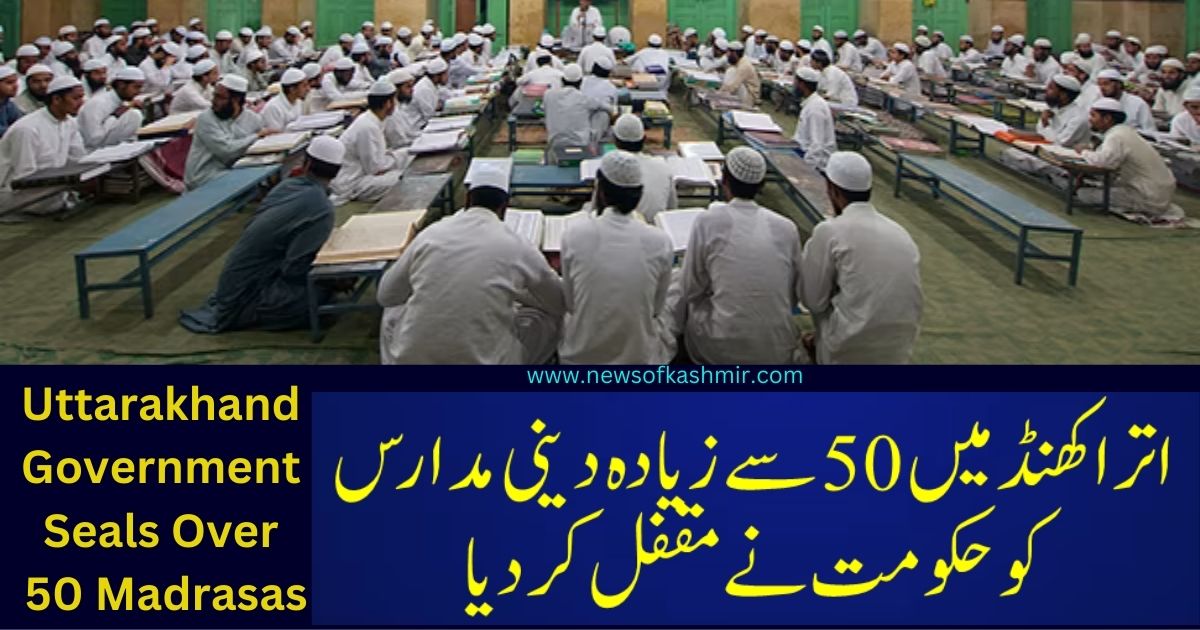
Uttarakhand Government Seals Over 50 Madrasas, Sparking Controversy and Protests

Uttarakhand Government Seals Over 50 Madrasas

The Uttarakhand government has recently sealed more than 50 ‘illegal’ madrasas in various parts of the state, triggering strong reactions from political leaders, religious organizations, and human rights activists. The move, ordered by Chief Minister Pushkar Singh Dhami, is part of an intensified crackdown on unregistered religious educational institutions. While the state government claims that the action is necessary to curb illegal activities, critics have termed it discriminatory and unconstitutional.

Crackdown on Madrasas

Over the past two weeks, authorities have sealed 52 madrasas in different districts, particularly in Dehradun and Udham Singh Nagar. According to officials, these institutions were operating without proper registration, violating land use policies, and failing to meet the state’s education standards.

Chief Minister Dhami defended the move, stating, “In ‘Devbhoomi’ Uttarakhand, we will not allow any illegal madrasa or unlawful construction. Action has been taken against those that were found to be violating the law, and this drive will continue.”

The decision comes months after Dhami highlighted issues such as religious conversions, illegal encroachments, and demographic changes in the state. He emphasized that the government would not tolerate any activity perceived as a threat to the state’s religious and cultural identity.

Opposition and Backlash

The sealing of madrasas has drawn sharp criticism from opposition parties, Muslim organizations, and human rights groups, who argue that the action unfairly targets a specific community. The Uttarakhand Congress has accused the government of using communal politics to divert attention from pressing issues like unemployment, women’s safety, and drug abuse.

Congress spokesperson Garima Dasauni questioned the selective crackdown, stating, “Are only madrasas illegal in the state? What about the numerous unauthorized hotels, restaurants, and other educational institutions? The government should take action across the board rather than targeting one community.”

The Muslim Seva Sangathan, a rights group advocating for the Muslim community, has called the move “unconstitutional” and has staged protests demanding justice for affected students and institutions. Naeem Qureshi, the president of the organization, condemned the action, saying, “The Constitution grants minorities the right to establish and manage their own educational institutions. The authorities have sealed madrasas without any prior notice or due process.”

Impact on Students

One of the biggest concerns arising from this crackdown is the impact on students. According to estimates, around 2,000 students have been affected, many of whom now face uncertainty regarding their education. Critics argue that the government has failed to provide alternative arrangements for these students.

Shadab Shams, the chairman of the Uttarakhand Waqf Board, acknowledged the problem but defended the government’s action, stating, “There are 419 recognized madrasas in Uttarakhand, but around 400 others are running illegally. The government is taking action only against unregistered institutions. We are working to establish ‘modern madrasas’ to provide quality education.”

Political and Religious Implications

Several political analysts believe that the crackdown is part of the ruling BJP’s broader Hindutva agenda. Jai Singh Rawat, a political expert from Uttarakhand, remarked, “Under CM Dhami, the state government has shifted its focus from development issues to communal politics. By emphasizing topics like ‘land jihad’ and ‘love jihad,’ the government aims to consolidate its support among Hindu voters.”

Reports suggest that some BJP leaders have been vocal about demographic shifts in the state, particularly migration from neighboring Uttar Pradesh. These leaders argue that unchecked expansion of religious institutions could alter the region’s religious composition.

Government’s Justification

State officials have defended the crackdown, citing legal violations as the primary reason. “We have received multiple complaints about illegal madrasas operating in unauthorized areas. Many of them do not follow basic safety regulations and lack proper educational standards,” said a senior government official.

Another official explained that the action was taken primarily against institutions that had encroached on government land or failed to meet state educational requirements. However, opposition leaders argue that such legal actions should apply equally to all illegal establishments, not just madrasas.

Conclusion

The sealing of over 50 madrasas in Uttarakhand has ignited a heated debate over religious freedom, communal politics, and governance. While the state government maintains that the action is purely legal, critics see it as an attempt to target a specific community under the guise of regulation. With protests mounting and legal challenges likely, this issue is expected to remain a significant flashpoint in the coming months.

As the controversy unfolds, questions remain about the fate of the displaced students and whether the state will offer them alternative education pathways. Meanwhile, opposition leaders continue to demand a fair and transparent approach to dealing with illegal institutions across the board, rather than singling out religious schools.

Grand Islamic institution Darul Uloom Raheemia Kashmir First-Ever Islamic University on Deoband Pattern

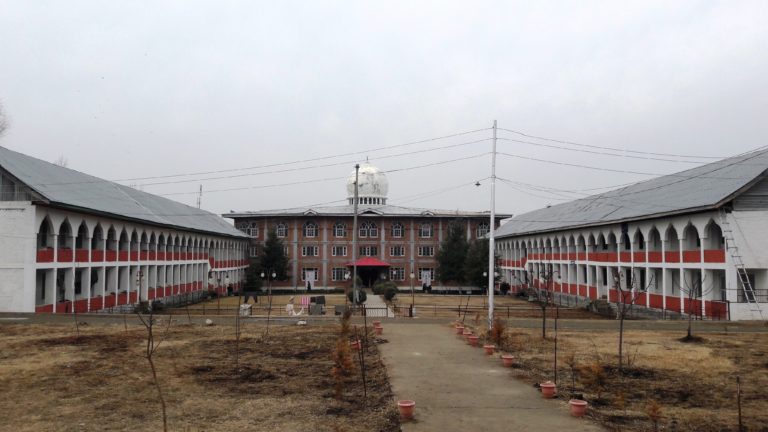
DARUL ULOOM RAHEEMIAH

Bandipora, a picturesque township nestled in the foothills of the snow-clad Harmukh peaks and overlooking the serene Wular Lake, is embarking on a transformative journey. Long known for its historical significance, literary richness, and intellectual contributions, the town is now taking a monumental step in the realm of education and faith. The establishment of an Islamic University on the revered Deoband pattern marks a turning point not only for Bandipora but also for the entire region of Jammu and Kashmir.

The Legacy of Bandipora: A Hub of Learning and Culture

Historically, Bandipora was a thriving centre for trade and literature, boasting an illustrious past that extended well beyond the borders of Kashmir. The town produced scholars and intellectuals of great repute, including the renowned historian Hassan Khoehami. Before 1947, Bandipora’s prominence as a cultural and educational hub was unmatched. However, post-partition upheavals led to its gradual neglect, relegating it to a “far-flung, backward area.” Despite these challenges, the township maintained its literary essence, achieving one of the highest literacy rates in Jammu and Kashmir.

The establishment of an Islamic University in Bandipora draws inspiration from its historical legacy. It aims to revive the intellectual and spiritual traditions that once defined the region, addressing the long-standing need for higher Islamic education in the predominantly Muslim state.

Darul Uloom Raheemia: A Journey of Faith and Knowledge

At the heart of this historic leap lies Darul Uloom Raheemia, an institution that has been a beacon of Islamic education in Bandipora since its inception in September 1979. Initially launched as “Madrasah Islamia Arabia” after the renaming of Islamic Public School, the institution began with modest resources. With only 11 students, three teachers, and an annual budget of Rs 11,000, its mission was clear: to impart Islamic teachings and revive the spiritual consciousness of the community.

Under the visionary leadership of Maulana Muhammad Rahmatullah Qasmi, an alumnus of the prestigious Darul Uloom Deoband, the institution has grown exponentially. By 1994, the student strength had increased to 225, supported by 37 staff members. The annual budget had surged to Rs 13 lakh, reflecting the community’s trust and commitment to the cause. Over the years, Darul Uloom Raheemia has produced 73 Hafiz-e-Quran, 22 advanced Arabic scholars, and countless students proficient in Quranic recitation and Islamic jurisprudence.

The Vision: A Full-Fledged Islamic University

The transformation of Darul Uloom Raheemia into a full-fledged Islamic University is a dream nurtured by Maulana Rahmatullah and the institution’s dedicated management. Modelled on the iconic Darul Uloom Deoband, this university aims to become a centre of excellence in Islamic education, with a modern approach to teaching and learning.

Three Main Wings of the University:

  1. Hadees College: Focused on the sayings and traditions of Prophet Muhammad (PBUH).
  2. Tafseer College: Dedicated to the interpretation and understanding of the Quran.
  3. Fiqah College: Specialising in Islamic jurisprudence and law.

These wings will offer a comprehensive curriculum that balances traditional Islamic studies with contemporary educational methodologies, ensuring that graduates are well-equipped to address the challenges of modern society.

Facilities and Infrastructure

The proposed Islamic University promises state-of-the-art facilities to create a conducive environment for learning and spiritual growth. Some of the key features include:

  • Hostel Accommodation: Housing for 1,000 students, fostering a sense of community and discipline.
  • Grand Mosque: A mosque with a capacity for 1,000 worshippers, expandable to accommodate 5,000 during congregations.
  • Family Quarters: One hundred family quarters and single-room sets to support the needs of staff and students’ families.
  • Library and Reading Room: A fully equipped library with an attached reading room to encourage scholarly pursuits.
  • Guest House: A welcoming space for visitors and dignitaries.

The institution also plans to integrate modern amenities such as a water tank and other essential infrastructure to ensure the seamless operation of the university.

A Remarkable Act of Generosity

One of the most inspiring aspects of this initiative is the story behind the acquisition of land for the university. The management of Darul Uloom Raheemia faced a significant challenge in finding suitable land for the expansion. The existing premises were surrounded by a graveyard, a government hospital, a stream, and army barracks, leaving no room for growth. An appeal for land donation was published in the institution’s magazine, Al-Noor, in July 1993.

In a heartwarming turn of events, Aziz-u-Nisa, a pious widow in her eighties, came forward to donate her 48 canals (6 acres) of land for the cause. Her selfless act ensured that the dream of an Islamic University could move closer to reality. Tragically, she passed away shortly after formalising the donation, but her legacy lives on. She was laid to rest in a corner of the donated orchard, as per her wishes. Aziz-u-Nisa’s contribution is a testament to the enduring spirit of community and faith.

A Centre of Independent Learning

One of the defining principles of Darul Uloom Raheemia and the proposed university is its independence. Maulana Rahmatullah has emphasized that the institution has no affiliations with any political or non-political organisation. This independence ensures that the focus remains solely on imparting quality education and fostering a deeper understanding of Islam.

The curriculum at the university will continue to prioritise core Islamic subjects such as:

  • Tafseer: Interpretation of the Quran.
  • Hadees: Teachings and traditions of Prophet Muhammad (PBUH).
  • Fiqah: Islamic jurisprudence.
  • Tajweed-u-Kirat: Proper recitation of the Quran.

These disciplines, complemented by modern teaching methods, will prepare students to become well-rounded individuals capable of contributing meaningfully to society.

Community Support and Financial Sustainability

The success of this ambitious project hinges on the unwavering support of the Muslim community in Jammu and Kashmir. The institution relies solely on donations to meet its financial needs. The overwhelming response to the appeal for land is indicative of the community’s commitment to this noble cause. With continued support, the Islamic University is poised to become a beacon of knowledge and spirituality.

Reviving Bandipora’s Glory

The establishment of this Islamic University is not just an educational milestone but also a cultural renaissance for Bandipora. It signifies the revival of the town’s historical role as a centre of learning and intellectual discourse. The university will attract students, scholars, and visitors from across the region, fostering an exchange of ideas and enriching the local community.

Moreover, the project underscores the resilience and determination of the people of Bandipora. Despite decades of neglect and challenges, the town has retained its literary and spiritual essence. The Islamic University is a symbol of hope and progress, reflecting the aspirations of a community that values education and faith.

Challenges and the Road Ahead

While the journey to establish the Islamic University is filled with promise, it is not without challenges. Securing sufficient funds for construction and operational costs remains a significant hurdle. Additionally, the management must ensure that the institution upholds its commitment to independence and quality education.

Collaboration with established institutions such as Darul Uloom Deoband will be crucial in shaping the university’s academic and administrative framework. By learning from the experiences of similar institutions, Darul Uloom Raheemia can position itself as a model for Islamic education in the region.

Conclusion: A Transformative Vision

The establishment of the first-ever Islamic University in Bandipora on the Deoband pattern is a historic leap for the township and Jammu and Kashmir as a whole. It is a testament to the power of vision, faith, and community support. This initiative not only addresses the pressing need for higher Islamic education but also revives the rich intellectual and cultural heritage of Bandipora.

As the university takes shape, it will inspire generations to come, nurturing scholars, leaders, and individuals who embody the principles of knowledge, compassion, and spirituality. Bandipora’s leap into the future is firmly rooted in its past, creating a legacy that will shine for years to come.

Dr. Muzaffar Hussain Nadvi An Esteemed Arabic and Islamic Scholar from Kashmir

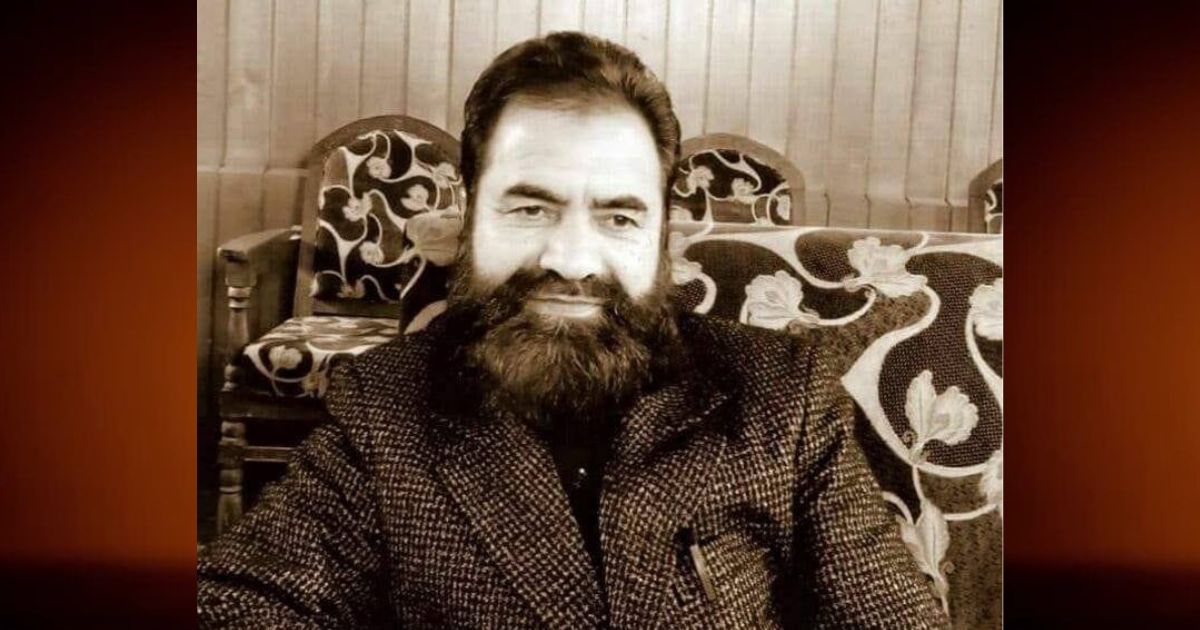
DR Muzaffar Nadwi

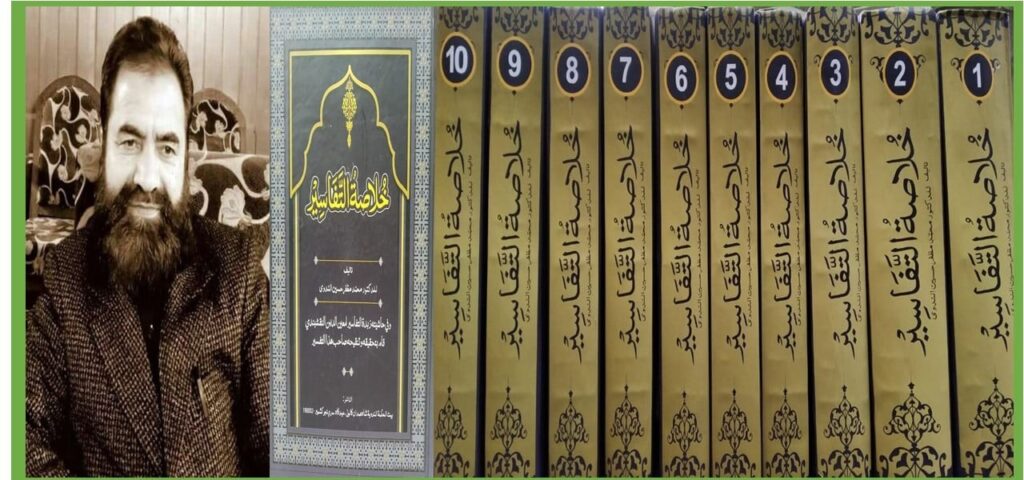
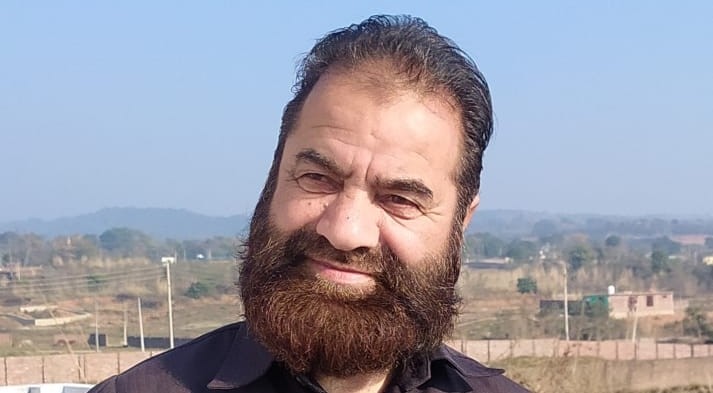
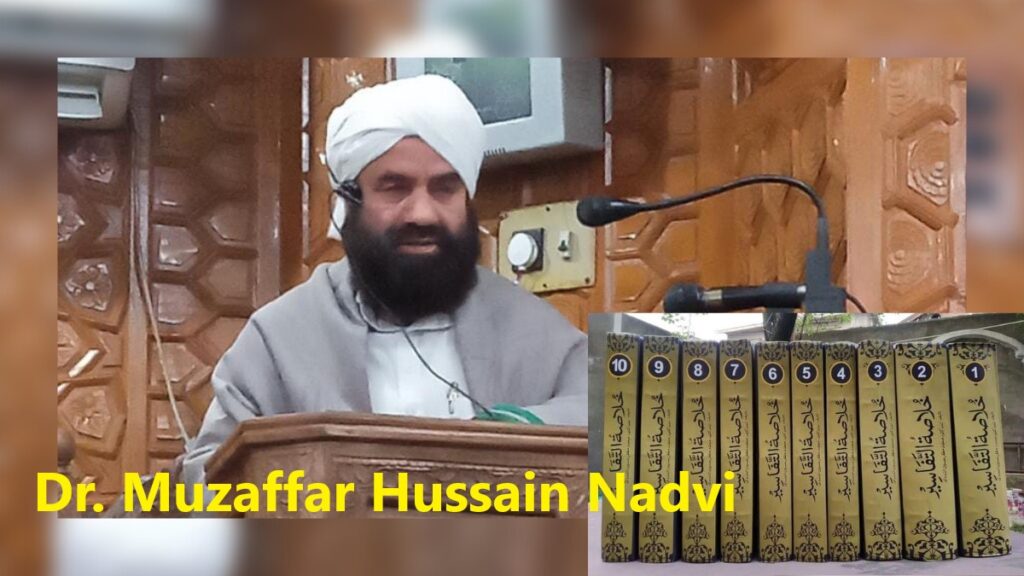
Dr. Muzaffar Hussain Nadvi, a renowned scholar from Bandipora, Kashmir, has left an indelible mark on Arabic and Islamic literature. His magnum opus, Khulasat-ul-Tafseer, a simplified Arabic exegesis of the Quran, epitomises his dedication to making Islamic knowledge accessible to a broader audience. Over decades of scholarly pursuits, Dr. Nadvi has contributed significantly to the fields of Arabic language, Islamic theology, and Kashmiri cultural heritage. This article delves into his monumental contributions under several thematic headings.


1. Early Life and Educational Journey

Dr. Muzaffar Hussain Nadvi was born in the serene district of Bandipora, Kashmir. His early passion for knowledge led him to pursue advanced studies in Islamic theology and Arabic literature, culminating in a PhD from the University of Kashmir.

2. Inspiration Behind Scholarly Pursuits

While studying at Nadwatul Ulama, Lucknow, Dr. Nadvi was deeply influenced by a remark from a teacher, suggesting a decline in Kashmir’s scholarly contributions. This spurred his resolve to research and revive Kashmir’s intellectual legacy.

3. Doctoral Dissertation: A Foundation for Future Work

His doctoral research focused on the contributions of Kashmiris to Arabic language and literature between 900 and 1300 AH. This comprehensive study became the cornerstone for his future works.

4. Introduction to Khulasat-ul-Tafseer

Khulasat-ul-Tafseer is Dr. Nadvi’s masterpiece, a simplified Arabic exegesis of the Quran. This work, a product of 14 years of dedication, aims to make Quranic interpretation accessible to non-Arabic speakers.

5. Simplifying Tafseer for Broader Understanding

Unlike classical tafseers, which often use complex linguistic styles, Khulasat-ul-Tafseer employs easy Arabic, enabling even novice readers to understand Quranic verses and their meanings.

6. Influence of Kashmiri Scholars on Khulasat-ul-Tafseer

Dr. Nadvi drew inspiration from the works of Kashmiri scholars like Molana Mohideen Naqsbandi, whose Zurda-dut-Tafseer laid the groundwork for his simplified approach.

7. A Blend of Classical and Contemporary Interpretations

In Khulasat-ul-Tafseer, Dr. Nadvi amalgamates insights from 30 classical tafseer books, offering a holistic view of Quranic interpretation.

8. Promoting Accessibility Through Language

By translating Quranic interpretations into easy Arabic, Dr. Nadvi made Islamic knowledge more approachable for learners and scholars alike.

9. 14 Years of Scholarly Dedication

The journey of creating Khulasat-ul-Tafseer was arduous, involving meticulous research, editing, and verification over 14 years.

10. Support from UGC for Scholarly Endeavors

Dr. Nadvi’s work was bolstered by two UGC-funded projects, which facilitated the research and compilation of Khulasat-ul-Tafseer.

11. Reviving Kashmiri Intellectual Legacy

Through his writings, Dr. Nadvi has spotlighted Kashmir’s rich tradition of scholarship in Arabic and Islamic studies, bridging the past with the present.

12. Compilation of Manuscripts and Rare Works

Dr. Nadvi’s meticulous efforts in gathering and preserving Arabic manuscripts have provided invaluable resources for future scholars.

13. Collaboration with Libraries and Institutions

His research often involved collaboration with prestigious institutions like Khuda Bhaksh Library, enriching his understanding of classical tafseers.

14. Highlighting Contributions of Kashmiri Scholars

In his works, Dr. Nadvi has chronicled the lives and contributions of Kashmiri luminaries, such as Shaykh Yaqub Sarfi and Sayyid Ali Hamadani.

15. Arabic Poetry and Literature

Apart from tafseer, Dr. Nadvi has explored Arabic poetry, showcasing the linguistic prowess of Kashmiri scholars in this genre.

16. Academic Relations Between Kashmir and Delhi

Dr. Nadvi has highlighted the historical academic exchanges between Kashmiri and Delhi-based scholars, emphasizing mutual enrichment.

17. Role of Sufi Saints in Islamic Scholarship

He extensively documented the contributions of Sufi saints like Sayyid Ali Hamadani, who played a pivotal role in spreading Islam in Kashmir.

18. Importance of Sustainable Islamic Education

Dr. Nadvi advocates for sustainable educational models that combine traditional Islamic teachings with contemporary needs.

19. Editing and Annotating Classical Texts

His editorial work on classical Arabic texts ensures their relevance and accuracy for modern readers.

20. Modern Relevance of Khulasat-ul-Tafseer

In today’s context, Khulasat-ul-Tafseer serves as a vital tool for understanding the Quran in an increasingly globalized world.

21. Inspiring Future Generations

Dr. Nadvi’s dedication inspires young scholars to explore Arabic and Islamic studies, fostering a new wave of intellectual growth.

22. Challenges Faced During Research

His journey was fraught with challenges, from limited access to manuscripts to the reluctance of private collectors to share resources.

23. Recognition and Appreciation

Dr. Nadvi’s works have been widely acclaimed, earning praise from scholars and institutions globally.

24. Impact on Arabic Language Studies in Kashmir

His contributions have sparked renewed interest in Arabic studies among students and academics in Kashmir.

25. Preserving Kashmir’s Cultural and Scholarly Heritage

Through his writings, Dr. Nadvi has played a crucial role in preserving and celebrating Kashmir’s rich cultural and intellectual heritage.

26. Promoting Interdisciplinary Approaches

Dr. Nadvi’s works bridge theology, literature, and history, promoting an interdisciplinary approach to Islamic studies.

27. Encouraging Lifelong Learning

Dr. Nadvi’s belief in lifelong learning underscores the importance of passion and dedication in scholarly pursuits.

28. Expanding the Horizons of Islamic Scholarship

With his innovative approach, Dr. Nadvi has expanded the boundaries of traditional Islamic scholarship.

29. Vision for the Future

Dr. Nadvi envisions a world where Islamic knowledge is accessible to all, fostering understanding and harmony.

Conclusion

Dr. Muzaffar Hussain Nadvi’s contributions to Arabic and Islamic literature are unparalleled. His magnum opus, Khulasat-ul-Tafseer, exemplifies his dedication to making Islamic teachings accessible to all. By bridging the gaps between tradition and modernity, he has revitalized the rich legacy of Kashmiri scholarship. Dr. Nadvi’s life and works will continue to inspire generations, illuminating the path of knowledge and understanding.

10th Meeting of the Internal Quality Assurance Cell The Islamic University of Science and Technology

10th Meeting of the Internal Quality

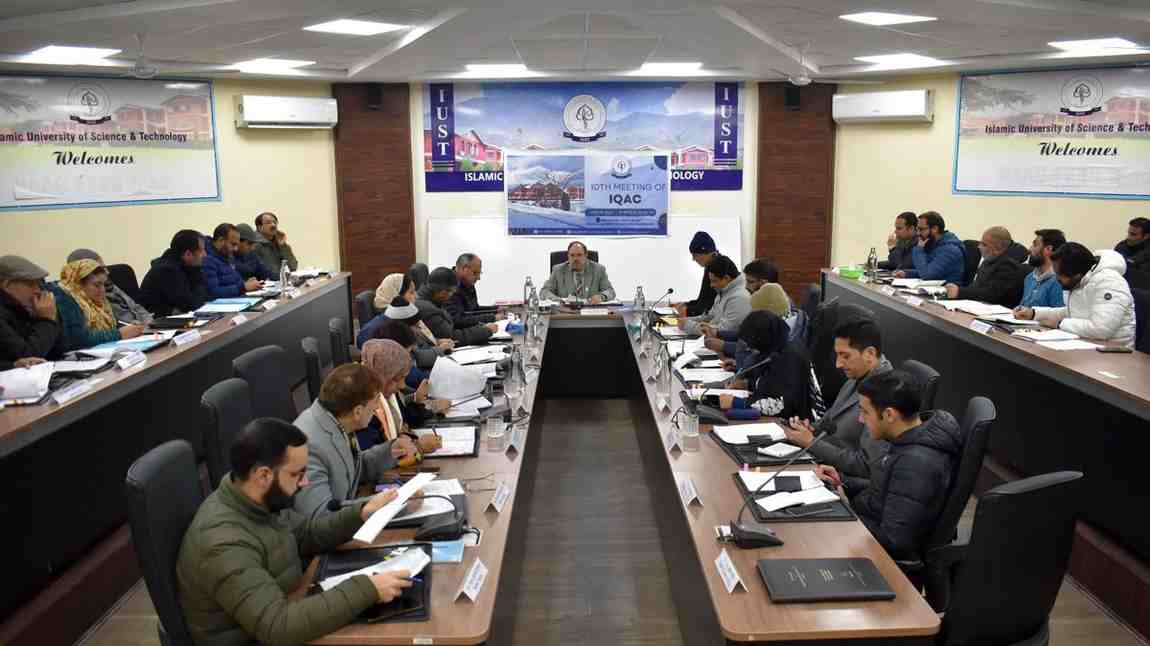
The Islamic University of Science and Technology (IUST) today convened its 10th meeting of the Internal Quality Assurance Cell (IQAC). The meeting was chaired by Prof. Shakil A. Romshoo, Vice Chancellor IUST, and coordinated by Dr. Peer Bilal Ahmed, Director DIQA.

The meeting addressed several significant issues aimed at enhancing the academic and administrative environment at the university. Key discussions focused on the digitalization of services, the implementation of advanced student and scholar support systems, the development of a comprehensive feedback mechanism, and the establishment of a tribal museum to promote cultural heritage and inclusivity.

The meeting was attended by university officials, including the Dean Academic Affairs, Registrar, Dean Research, Controller of Examinations, Dean Students, Dean Outreach, Finance Officer, and External members, including representatives from industry and academia, also participated.

Prof. Romshoo emphasized the importance of adopting innovative practices to ensure quality education and efficient services. He appreciated the efforts of the IQAC team in fostering a culture of continuous improvement and highlighted the university’s commitment to creating a student-centric and technologically advanced campus. The meeting concluded with actionable strategies to streamline services and improve the overall academic and administrative framework.

During the meeting, the actions taken on previous decisions were also reviewed, highlighting the progress made. Emphasis was also placed on conducting academic and administrative audits on campus, which have already shown good progress. Furthering linkages and collaborations with society and industry was also a key point of discussion.

Special Meeting of Rabita Madaris Islamia J&K Discusses Challenges and Upcoming Exams

Special Meeting of Rabita Madaris Islamia

A special meeting of Rabita Madaris Islamia Jammu and Kashmir was convened on 4 December 2024 to address critical issues concerning affiliated schools and their educational framework. The session was chaired by the organization’s president and focused on protecting the Islamic character of educational institutions while ensuring timely conduct of annual examinations.

During the meeting, several resolutions were passed to streamline operations. Exam Schedules Finalized: It was resolved that annual exams for primary-level students will be completed by 31 December 2024. For higher grades, including “Shahadatul Fazil,” examinations are scheduled to commence on 8 February 2025 and conclude on 12 February 2025.

Educational Standards and Religious Values: The meeting emphasized the need to uphold Islamic values in schools.Members highlighted the importance of integrating quality education with spiritual guidance to shape well-rounded students.
Combating Negative Influences: Expressing concern over the spread of immorality, the members called upon parents and educators to join forces to protect children from societal threats and preserve Islamic culture.
The Rabita Madaris Islamia reaffirmed its dedication to following the teachings of Islam and the legacy of prominent Kashmiri scholars. Members stressed the significance of maintaining strong Islamic principles amid evolving challenges.

An appeal was also made to parents to actively support the Islamic educational system and collaborate in fostering an environment conducive to Islamic learning. (KNS)

Meet Iqra Ali: The PhD Aspirant Who Translated the Quran in Just Six Months

School Education Department Announces Winter Vacations for Kashmir schools

Three Drug Peddlers Danish Rasheed Bhat,Danish Ashraf Dar and Umer Rasool Dar Arrested in Awantipora, Charas Recovered