Israeli Navy Stops Global Sumud Flotilla Near Gaza, Arrests Activists; None Allowed to Reach Gaza

Global Sumud Flotilla

Israeli navy stopped a group of over 40 ships, called the Global Sumud Flotilla, about 75 miles off Gaza’s coast on October 1, 2025. These ships carried around 500 activists, some politicians, and aid like baby formula and medicine, aiming to break Israel’s sea blockade of Gaza. The navy boarded at least six ships, arrested everyone on them, and took them to Ashdod port for questioning. They’ll likely be sent back to their home countries soon.

The activists wanted to deliver aid directly to Gaza, but Israel said the aid could go through their official channels instead. The activists refused, wanting to challenge the blockade. Israel says the blockade is needed for security against Hamas, a group they call terrorists. Some countries and groups are upset, calling the arrests unfair, while others support Israel’s actions. No one was hurt, but the situation is tense, and people are watching what happens next.

Leh Apex Body Halts Talks with Home Ministry Until Normalcy Returns in Ladakh

Kargil Democratic Alliance Demands Release of Sonam Wangchuk, Urges Justice

Former Masjid al-Haram Imam Dr. Sheikh Saleh Al-Talib Released After 7 Years Detention

Baramulla Police File Charge Sheets Against Tehreek-e-Hurriyat, J&K National Front in Unlawful Activities Cases

Global Sumud Flotilla Nears Gaza: 44 Vessels Defy Naval Blockade Amid Rising Tensions

Sumud Flotilla Nears Gaza

The Global Sumud Flotilla, a large humanitarian convoy of over 40 boats carrying aid for Gaza, is now closer than ever to its destination. As of 1 October 2025, the fleet has entered the “high-risk zone”, about 150 nautical miles (278 km) from Gaza’s coast. After a month-long journey of around 1,700 nautical miles, organisers say the flotilla may arrive in 3–4 days, though an Israeli interception looks likely.

The mission, called “Sumud” (meaning resilience in Arabic), aims to break Israel’s 18-year naval blockade of Gaza. It is delivering food, medicine, and medical equipment, while also drawing attention to the ongoing humanitarian crisis. This is the largest attempt yet, involving 500 activists from 39 countries—including lawyers, doctors, journalists, parliamentarians, and Swedish climate activist Greta Thunberg.

Recent Developments

  • High-Risk Zone: The flotilla, now 44–47 vessels strong, has entered waters where earlier aid missions were stopped or attacked. Live video streams are running for safety and monitoring.
  • Israeli Harassment: On the night of 30 September–1 October, two Israeli warships approached lead boats, jamming communications and performing warning manoeuvres but did not board. Israeli media reports that an operation is being prepared.
  • International Monitoring: Turkish drones and escort ships from Spain, Italy, and Greece are nearby. The UN and EU have urged Israel to allow safe passage, citing international maritime law.
  • Crew Preparations: Activists have been training for possible boarding. Medics are stationed on every vessel, and organisers have warned of an “imminent attack”, calling for global support if stopped.

Wider Context

The flotilla left Barcelona on 31 August 2025, joined by groups from Tunisia, Italy, and Asia-Pacific countries such as Indonesia and Malaysia. It has already survived drone attacks and storm damage.

Israel claims the convoy has links to militants and insists the blockade is needed for security. Activists, the UN, and rights groups say the blockade is illegal collective punishment and demand it be lifted. Italy even suggested aid should be rerouted via Cyprus, but organisers rejected this, insisting on direct delivery to Gaza.

IssueActivists / UNIsraeli Government
Legal RightsFreedom of navigation under international law; humanitarian aid allowed.Blockade justified for security reasons.
CargoFood, medicine, baby formula, no weapons.Items could be “dual use” and must be inspected.
Past Incidents2010 raid killing 9 still demands accountability.Actions taken were defensive.
Global ReactionEU, UN call for protection; dockworkers threaten strikes if flotilla attacked.Some allies warn flotilla to stop; US voices support for Israel.

Current Situation

Despite the risks, activists vow to continue:

“We sail onward… Your resilience is our compass,” the flotilla stated.

Israeli Foreign Minister Gideon Sa’ar urged organisers to hand over aid to Cyprus, saying it was “not too late.” However, activists remain committed to non-violence and plan to record any Israeli boarding attempts with mobile phones and CCTV.

If the flotilla is stopped, it could trigger new global criticism of Israel’s blockade. Either way, organisers say more fleets will follow until the siege is broken.

Leh Apex Body Halts Talks with Home Ministry Until Normalcy Returns in Ladakh

Kargil Democratic Alliance Demands Release of Sonam Wangchuk, Urges Justice

Former Masjid al-Haram Imam Dr. Sheikh Saleh Al-Talib Released After 7 Years Detention

Baramulla Police File Charge Sheets Against Tehreek-e-Hurriyat, J&K National Front in Unlawful Activities Cases

Trump’s Gaza Peace Plan Faces Palestinian Skepticism Amid Escalating Israeli Strikes, 31 Killed in Ongoing Conflict

Gaza Peace Plan

Israeli forces killed at least 31 Palestinians in the Gaza Strip on Tuesday, local hospitals said, as questions churned about US President Donald Trump’s peace plan aimed at ending the nearly two-year war in Gaza.

Hamas announced it would review the proposal with group members and other Palestinian factions before reaching a decision.While the proposal offers an end to the fighting, guarantees the flow of humanitarian aid and promises reconstruction, the Palestinian militant group will have to disarm, something it has rejected in the past. Also, Gaza and its more than 2 million Palestinians would be put under international control for the foreseeable future.

Israeli Prime Minister Benjamin Netanyahu backs the plan, and several leaders of Arab countries have applauded it.

Palestinians are sceptical of the peace plan

Many Palestinians in the decimated coastal enclave are wary of the proposal. Notably, the plan sets no path to Palestinian statehood and brings a so-called “Board of Peace,” headed by Trump and former British Prime Minister Tony Blair, to supervise the administration of Gaza.

To some, that smacked of the colonial British Mandate over Palestine from 1920 to 1948, when the British ran the area.

“They want to impose their own peace,” Umm Mohammed, a history teacher who sheltered with her family in Gaza City, told The Associated Press. “In fact, this is not a peace plan. It’s a surrender plan. It returns us to times of colonialism.”

Mahmoud Abu Baker, a displaced Palestinian from Rafah, said the proposal favours Israel and implements all its demands without giving concessions.

“(The proposal) tells that we, as Palestinians, as Arabs, are not qualified to rule ourselves and that they, the white people, will rule us,” he said.

In the Israeli-occupied West Bank, some Palestinians accused Netanyahu and Trump of attempting to solve the issue without any input from people on the ground in Gaza.

“It turned into a joke. They acted like they own the whole world, deciding, analysing and dividing things however they want,” said Mohammad Shahin, a Nablus resident.

Israelis bank on Trump despite doubt

Israelis visiting a memorial for the music festival where 364 people were killed during the Hamas attack on Oct. 7, 2023, expressed scepticism that the proposal may pause the war.

Amit Zander, whose daughter, Noa Zander, was killed at the festival, said Trump was the only one with enough power to make a deal happen.

“Everyone pins their hopes on (Trump) … it’s up to Hamas. Israel wants it, and beyond that, it’s no longer in our hands,” he said.

“It’s definitely an effort to change something, but there have been efforts the whole time during this whole war and change hasn’t really happened, so I think it’s all up in the air,” said Adi Nissim, who was also visiting the memorial on Tuesday.

More than 30 Palestinians killed

Israeli forces killed at least 31 Palestinians on Tuesday, according to local hospitals. Al-Awda Hospital said Israeli troops opened fire, killing 17 Palestinians and wounding 33 others while they were attempting to access humanitarian aid in Netzarim, the Israeli-controlled corridor that bisects northern and southern Gaza.

An Israeli strike later in the day killed four people in central Gaza’s Nuseirat refugee camp, the hospital said.

Israeli forces also hit two tents housing displaced Palestinian families in Muwasi, the stretch of tent cities along the Mediterranean coast that the Israeli military had once declared a safe zone.

One of the strikes killed seven people, including four women and a child, who had fled from Gaza City earlier this month to escape Israel’s intensifying offensive, Al Aqsa hospital said. The second killed a man, his 7-months-pregnant wife and their young child, Nasser Hospital in the southern city of Khan Younis said.

The Israeli military did not immediately comment on the shooting or strikes. It said in a statement that over the past 24 hours, its troops killed several armed militants and struck more than 160 targets of Hamas infrastructure, including weapons storage facilities and observation posts.

Hamas is believed to be holding 48 hostages, 20 of whom are believed by Israel to be alive. The militant group has previously demanded that Israel agree to end the war and withdraw from all of Gaza as part of any permanent ceasefire.

Gaza’s Health Ministry said in its daily report the death toll has surpassed 66,000, with almost 170,000 wounded since the war began.

The ministry, part of the Hamas-run administration, does not differentiate between civilians and militants in its toll, but has said women and children make up around half the dead. Its figures are seen as a reliable estimate by the UN and many independent experts. Israel accuses Hamas of hiding its military infrastructure in civilian areas.

Israel’s offensive has destroyed vast areas of Gaza, displacing around 90 per cent of the population amid a catastrophic humanitarian crisis, with experts saying Gaza City is experiencing famine.

Leh Apex Body Halts Talks with Home Ministry Until Normalcy Returns in Ladakh

Kargil Democratic Alliance Demands Release of Sonam Wangchuk, Urges Justice

Former Masjid al-Haram Imam Dr. Sheikh Saleh Al-Talib Released After 7 Years Detention

Baramulla Police File Charge Sheets Against Tehreek-e-Hurriyat, J&K National Front in Unlawful Activities Cases

Behind the Scenes: What’s Cooking Between Trump Sharif and Munir?

Trump Sharif and Munir

U.S. President Donald Trump welcomed Pakistan’s Prime Minister Shehbaz Sharif and Chief of Army Staff (now Field Marshal) Asim Munir to the White House Oval Office—the first such visit by a Pakistani prime minister in six years. This high-profile meeting has sparked global curiosity, with public reports shedding light on diplomatic overtures, economic deals, and geopolitical shifts. While the headlines are clear, the behind-the-scenes dynamics hint at a transactional reset in U.S.-Pakistan relations, with implications for the Middle East, resource strategies, and regional power balances. Here’s what the world knows—and what might be simmering beneath the surface.

Trump’s Gaza Plan: Pakistan’s Surprising Endorsement

During a White House press briefing on September 29, Trump praised Sharif and Munir as “incredible” for their “early and full support” of his 20-point proposal to end the Israel-Hamas war in Gaza. The plan, described as a roadmap to a “deradicalized, terror-free zone,” includes a 72-hour ceasefire, hostage/prisoner exchanges, staged Israeli withdrawals, and Hamas’s demilitarization—without explicit commitments to a Palestinian state or East Jerusalem as its capital. Pakistan’s endorsement marks a notable shift, positioning it as a key ally in Trump’s Middle East vision, potentially tied to expanded Abraham Accords normalizing ties with Israel.

Behind the Scenes: This move has stirred controversy in Pakistan, where public sentiment traditionally supports Palestine. Critics on platforms like X have accused Sharif and Munir of “surrendering” to U.S. pressure, possibly to secure economic relief amid Pakistan’s financial struggles. The endorsement may reflect a pragmatic trade-off: diplomatic alignment with Washington in exchange for economic and political leverage on the global stage.

Economic “Trump Cards”: Rare Earth Minerals and Trade

A centerpiece of the meeting was Pakistan showcasing samples of rare earth minerals (like bastnaesite and monazite, rich in cerium, lanthanum, and neodymium) to Trump, signaling untapped reserves as a bargaining chip. This ties into a $500 million Memorandum of Understanding (MoU) signed on September 8 between Pakistan’s Frontier Works Organisation and U.S. Strategic Metals for mining, processing, and exporting these minerals—aimed at reducing U.S. reliance on China, which controls roughly 80% of global supply.

Additionally, a July 2025 deal lowered U.S. tariffs on Pakistani imports to 19% (compared to India’s 50% for Russian oil imports), paired with U.S. investments in Pakistan’s energy, mining, and agriculture sectors. Bilateral trade reached $10.1 billion in 2024, up 6.3% year-over-year, with Trump pledging further collaboration on Pakistan’s oil reserves. Discussions also reportedly touched on cryptocurrency and tech transfers, hinting at deeper economic-security linkages.

Behind the Scenes: These deals are likely a lifeline for Pakistan’s economy, strained by IMF pressures, while securing U.S. access to critical resources. The focus on rare earths and oil suggests a strategic U.S. push to counter China’s influence in Pakistan, possibly alongside covert agreements on military logistics or basing rights in the region.

Geopolitical Ripples: India and Regional Dynamics

India is closely watching this U.S.-Pakistan rapprochement, with its policy circles questioning America’s reliability as a partner. The tilt toward Pakistan could strain the Quad (U.S.-India-Australia-Japan) and Indo-Pacific strategies against China, especially given Pakistan’s recent defense pact with Saudi Arabia, which includes mutual defense clauses. Analysts describe U.S.-Pakistan ties as “transactional and cyclical,” driven by immediate needs like logistics in West and Central Asia, rather than a full pivot away from India.

Behind the Scenes: The U.S. may be leveraging Pakistan to balance India’s growing ties with Russia and its reluctance to align fully with Western policies. However, this risks alienating New Delhi, particularly if U.S. pressure mounts on issues like tariffs or regional security alignments.

What’s Really Cooking?

The public narrative—diplomatic praise, mineral deals, and trade agreements—masks a deeper, pragmatic reset. Pakistan gains economic relief and global relevance, while the U.S. secures a pliable ally for its Middle East and resource strategies. However, the costs are evident: domestic backlash in Pakistan over the Gaza stance and regional tensions with India. As one X post put it, the Sharif-Munir-Trump summit reflects “elite sellout” for short-term gains, with long-term consequences still unfolding.

For real-time updates, follow White House briefings or discussions on X. The world is watching, but the full recipe of this deal remains behind closed doors.

Leh Apex Body Halts Talks with Home Ministry Until Normalcy Returns in Ladakh

Kargil Democratic Alliance Demands Release of Sonam Wangchuk, Urges Justice

Former Masjid al-Haram Imam Dr. Sheikh Saleh Al-Talib Released After 7 Years Detention

Baramulla Police File Charge Sheets Against Tehreek-e-Hurriyat, J&K National Front in Unlawful Activities Cases

Former Masjid al-Haram Imam Dr. Sheikh Saleh Al-Talib Released After 7 Years Detention in Saudi Prison

Dr. Sheikh Saleh Al-Talib

Dr. Sheikh Saleh Al-Talib, former Imam and preacher of Masjid al-Haram in Mecca, has been released from Saudi prison after over seven years of detention, advocacy groups confirmed. However, the prominent Sunni scholar is now under house arrest and required to wear an electronic ankle monitor, drawing criticism from human rights organizations.

Al-Talib, born in 1974 and a judge in Mecca’s District Court, was arrested in August 2018 amid a crackdown on dissent under Crown Prince Mohammed bin Salman. His detention stemmed from sermons criticizing government policies, including mixed-gender gatherings and normalization with Israel. Despite an initial acquittal in 2022, an Appeals Court sentenced him to 10 years, with the Supreme Court later intervening to prolong his ordeal.

“His release is a step forward, but house arrest and digital monitoring are a transfer from prison to a ‘digital prison,’” said Together for Justice, a human rights group. They demand his unconditional freedom and call for UN intervention to address Saudi Arabia’s detention of dissidents.

The case reflects a broader pattern of targeting clerics and activists, such as Salma al-Shehab, sentenced to 34 years for critical tweets. No official Saudi statement has been issued on Al-Talib’s release. Advocacy groups like Prisoners of Conscience and DAWN continue to monitor the situation, urging global solidarity for free expression in the Kingdom.

Leh Apex Body Halts Talks with Home Ministry Until Normalcy Returns in Ladakh

Kargil Democratic Alliance Demands Release of Sonam Wangchuk, Urges Justice

When Joe Biden Nearly Sold His House for His Son: A Story of Family, Friendship, and Leadership

Baramulla Police File Charge Sheets Against Tehreek-e-Hurriyat, J&K National Front in Unlawful Activities Cases

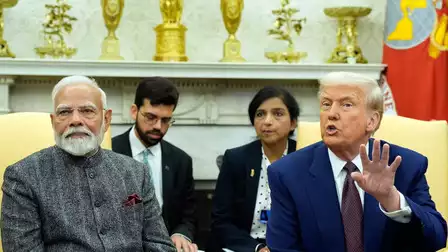
PM Modi Welcomes Trump’s Gaza Peace Plan as Pathway to Long-Term, Sustainable Peace

PM Modi at BRICS

Prime Minister Narendra Modi on Tuesday welcomed US President Donald Trump’s comprehensive plan for ending the two-year-old Israel-Gaza conflict.

PM Modi said that Trump’s plan provides a pathway to “long term and sustainable peace”, for the Palestinian and Israeli people.

Sharing an X post, the Prime Minister wrote, “We welcome President Donald J. Trump’s announcement of a comprehensive plan to end the Gaza conflict. It provides a viable pathway to long-term and sustainable peace, security and development for the Palestinian and Israeli people, as also for the larger West Asian region.”

“We hope that all concerned will come together behind President Trump’s initiative and support this effort to end conflict and secure peace,” the X post added.

PM Modi’s remarks came as the White House on Monday (local time) released a peace plan to end the Gaza conflict following a meeting between US President Donald Trump and Israeli Prime Minister Benjamin Netanyahu.

Earlier, Canada, Qatar, Jordan, the United Arab Emirates, Indonesia, Pakistan, Turkey, Saudi Arabia, and Egypt also welcomed US President Trump’s plan.

The peace plan included that Gaza will be a deradicalised, terror-free zone that does not pose a threat to its neighbours and will be redeveloped for the benefit of the people of Gaza, who have suffered more than enough.

The peace plan stated that if both sides agree to this proposal, the war will immediately end. Israeli forces will withdraw to the agreed-upon line to prepare for a hostage release. During this time, all military operations, including aerial and artillery bombardment, will be suspended, and battle lines will remain frozen until conditions are met for the complete staged withdrawal.

The peace plansfurther stated that within 72 hours of Israel publicly accepting this agreement, all hostages, alive and deceased, will be returned.

Once all hostages are released, Israel will release 250 life sentence prisoners plus 1700 Gazans who were detained after October 7, 2023, including all women and children detained in that context. For every Israeli hostage whose remains are released, Israel will release the remains of 15 deceased Gazans.

The point plan states that once all hostages are returned, Hamas members who commit to peaceful co-existence and to decommission their weapons will be given amnesty. Members of Hamas who wish to leave Gaza will be provided safe passage to receiving countries.

Upon acceptance of this agreement, full aid will be immediately sent into the Gaza Strip. At a minimum, aid quantities will be consistent with what was included in the January 19, 2025, agreement regarding humanitarian aid, including rehabilitation of infrastructure (water, electricity, sewage), rehabilitation of hospitals and bakeries, and entry of necessary equipment to remove rubble and open roads.

The peace plan mentioned that entry of distribution and aid in the Gaza Strip will proceed without interference from the two parties through the United Nations and its agencies, and the Red Crescent, in addition to other international institutions not associated in any manner with either party. Opening the Rafah crossing in both directions will be subject to the same mechanism implemented under the January 19, 2025, agreement. (ANI)

Leh Apex Body Halts Talks with Home Ministry Until Normalcy Returns in Ladakh

Kargil Democratic Alliance Demands Release of Sonam Wangchuk, Urges Justice

When Joe Biden Nearly Sold His House for His Son: A Story of Family, Friendship, and Leadership

Baramulla Police File Charge Sheets Against Tehreek-e-Hurriyat, J&K National Front in Unlawful Activities Cases

Trump: Gaza Peace Plan Promises Immediate End to War, Hostage Release in 72 Hours if Hamas Accepts

trump

US President Donald Trump stated on Monday (local time) that the Gaza peace proposal, “if accepted by Hamas,” means the “immediate end of the war itself”, remarks made during a joint press conference with Israeli Prime Minister Benjamin Netanyahu.

“If accepted by Hamas, this proposal calls for the release of all remaining hostages immediately, in 72 hours… It means the immediate end to the war itself, not just Gaza… Arab and Muslim countries have committed in writing to demilitarise Gaza, decommission the military capabilities of Hamas and all other terror organisations immediately… destroy all terror infrastructure, including the tunnels, weapons, and production facilities. They have a lot of production facilities that we’re destroying…”

Trump expressed hope that there would be “no more shooting” and said that Arab and Muslim countries have “probably an understanding” of dealing with Hamas.

“All parties will agree on a timeline for Israeli forces to withdraw in phases… No more shooting, hopefully. As progress is made toward achieving these goals, Arab and Muslim nations need to be allowed the chance to fulfil these commitments of dealing with Hamas… They probably have an understanding… If they’re unable to do so, then Israel would have the absolute right and full US backing… Israel will have my fallback to finish the job of destroying the threat of Hamas…,” Trump added.

He doesn’t rule out the possibility of Hamas “rejecting the deal” and reiterated his full support to Israel to deal with the “danger” posed by Hamas in the region.

“I hope that we’re going to have a deal for peace… If Hamas rejects the deal, which is always possible…, you know, Bibi (Israeli PM Netanyahu), you’d have our full backing to do what you would have to do. The ultimate result must be the elimination of any danger posed in the region. And that danger is caused by Hamas. The tyranny of terror has to end… To ensure the success of this effort, my plan calls for the creation of a new international oversight body, the ‘Board of Peace’, ” Trump said.

Earlier, White House on Monday (local time) released a peace plan to end the two-year-old Gaza conflict following a meeting between US President Donald Trump and Israeli Prime Minister Benjamin Netanyahu.

The peace plan included that Gaza will be a deradicalized terror-free zone that does not pose a threat to its neighbors and will be redeveloped for the benefit of the people of Gaza, who have suffered more than enough.

The peace plan stated that If both sides agree to this proposal, the war will immediately end. Israeli forces will withdraw to the agreed upon line to prepare for a hostage release. During this time, all military operations, including aerial and artillery bombardment, will be suspended, and battle lines will remain frozen until conditions are met for the complete staged withdrawal.

The peace plans further stated that within 72 hours of Israel publicly accepting this agreement, all hostages, alive and deceased, will be returned.
Once all hostages are released, Israel will release 250 life sentence prisoners plus 1700 Gazans who were detained after October 7th 2023, including all women and children detained in that context. For every Israeli hostage whose remains are released, Israel will release the remains of 15 deceased Gazans. (ANI)

Leh Apex Body Halts Talks with Home Ministry Until Normalcy Returns in Ladakh

Kargil Democratic Alliance Demands Release of Sonam Wangchuk, Urges Justice

When Joe Biden Nearly Sold His House for His Son: A Story of Family, Friendship, and Leadership

Baramulla Police File Charge Sheets Against Tehreek-e-Hurriyat, J&K National Front in Unlawful Activities Casesk

Pakistan-Occupied Kashmir (POK) Protests Turn Violent Over Rights, Autonomy, and Economic Grievances

Pakistan-Occupied Kashmir

Pakistan-Occupied Kashmir (POK) is witnessing widespread unrest as the Jammu Kashmir Joint Awami Action Committee (JKJAAC) initiated an indefinite “lockdown” and wheel-jam strike on Monday, shutting down transport, markets, and schools across Muzaffarabad, Mirpur, Rawalakot, and Bagh.

The demonstrations, part of a growing “rights movement,” turned violent, with reports of at least one protester killed and 12 others injured after security forces, including Rangers and Punjab Police, allegedly opened fire on crowds.

The protests are driven by a 38-point Charter of Demands, which includes economic relief, political reforms, and an end to federal interference. Residents voiced frustration over soaring utility and flour prices, lack of hydropower royalties, and the perceived “puppet” status of the POK government under Islamabad. “We’re fighting for our rights, not just survival,” said a JKJAAC spokesperson, accusing authorities of “looting” local resources.

Tensions escalated further after a federal-mandated internet and mobile shutdown, which critics say was intended to suppress dissent. Videos circulating on X show clashes between security forces and demonstrators, with allegations that ruling party supporters also attacked protesters.

The protests, now in their second day, follow months of stalled talks, with a June 2025 deadline for the charter of demands unmet. Prime Minister Shehbaz Sharif called for an end to the strike, but no major concessions have been offered.

Solidarity demonstrations have erupted in London, and social media campaigns with hashtags like #RightsMovementPOK are seeking global attention to human rights violations. Analysts warn that continued suppression risks escalating tensions in this conflict-prone region and urge dialogue to address demands for genuine autonomy and resource equity.


Protesters in New York Oppose Muhammad Yunus During UNGA

When Joe Biden Nearly Sold His House for His Son: A Story of Family, Friendship, and Leadership

Sonam Wangchuk’s Wife Gitanjali Angmo Rejects ‘Pakistan Link’ Allegations, Defends His Gandhian Protests and HIAL’s Work

Protesters in New York Oppose Muhammad Yunus During UNGA, Demand Release of Hindu Monk and Quick Elections

mohammad yunus

On September 26, 2025, a group of people gathered outside the United Nations (UN) headquarters in New York City to protest against Muhammad Yunus, the interim leader of Bangladesh. These protesters, mostly Bangladeshi people living in the United States, were supporters of Bangladesh’s former Prime Minister Sheikh Hasina, who was removed from power in August 2024. They were upset with Yunus, a Nobel Peace Prize winner, and accused him of poor leadership and favoring certain groups. This article explains what happened, why people were protesting, and the background of the situation in simple terms.

What Happened During the Protest?

The protest took place during the 80th United Nations General Assembly (UNGA), a big meeting where world leaders discuss global issues. The demonstrators shouted slogans like “Yunus is Pakistani. Go back to Pakistan!” They also held up signs with messages like “Stop Killing” and “Free Chinmoy Krishna Das.” These slogans and signs showed their anger toward Yunus, whom they blamed for problems in Bangladesh.

The protesters accused Yunus of:

  • Bias toward certain groups: They claimed he was supporting Islamist groups, like Jamaat-e-Islami, which they believe are harmful to Bangladesh.
  • Poor governance: They said his leadership has caused chaos and failed to protect people, especially religious minorities like Hindus, Buddhists, and Christians.
  • Mistreatment of minorities: They alleged that since Yunus took over, there have been attacks on minorities, including killings and forcing people to leave their homes.
  • Unlawful leadership: They argued that Yunus’s interim government is illegal because he was not elected, and they demanded that he step down immediately.

The protesters also called for the release of Chinmoy Krishna Das, a Hindu monk they believe is being unfairly held in prison under Yunus’s government. They demanded quick elections to replace the current government with a democratically chosen one.

Why Are People Angry?

The protest is part of a bigger conflict in Bangladesh. Here’s a simple explanation of what led to this event:

  • Sheikh Hasina’s Removal: Sheikh Hasina was Bangladesh’s Prime Minister for 15 years until August 5, 2024, when a youth-led uprising forced her to leave the country. Many of her supporters believe she was unfairly removed and that her government was better at keeping Bangladesh peaceful and secular (treating all religions equally).
  • Yunus’s Leadership: After Hasina left, Muhammad Yunus, known for his work in microfinance (helping poor people with small loans), became the interim leader on August 8, 2024. His job is to run the country until new elections happen, planned for 2026. However, Hasina’s supporters think Yunus is not doing a good job and is favoring groups that could harm Bangladesh’s secular values.
  • Violence Against Minorities: The protesters claimed that since Yunus took over, there has been an increase in violence against religious minorities. They said millions of people have been forced to leave their homes, and some have been killed. They even called Bangladesh a “semi-Taliban nation” under Yunus, comparing it to a place with extreme and violent rule.
  • Tensions with India: During his speech at the UNGA, Yunus criticized India for giving shelter to Sheikh Hasina, who fled to India after leaving Bangladesh. This has caused tension between Bangladesh and India, and the protesters, many of whom support Hasina, were upset about this.

Who is Muhammad Yunus?

Muhammad Yunus is a well-known figure in Bangladesh and around the world. In 2006, he won the Nobel Peace Prize for creating the Grameen Bank, which gives small loans to poor people to help them start businesses and improve their lives. He is respected for his work in fighting poverty, but his role as Bangladesh’s interim leader has made him a target of criticism from Hasina’s supporters.

In his UNGA speech, Yunus praised the 2024 uprising that removed Hasina, saying it brought back the spirit of Bangladesh’s independence in 1971 (when the country was formed after breaking away from Pakistan). However, his critics, like the protesters, believe he is not the right person to lead the country and accuse him of making things worse.

Image Credit TO ANI

The Bigger Picture

The protest shows how divided people are about Bangladesh’s future. Sheikh Hasina’s supporters believe her government was better at protecting all citizens and keeping the country stable. They see Yunus’s leadership as a step backward, accusing him of allowing violence and supporting groups that could harm Bangladesh’s secular identity.

On the other hand, those who support Yunus and the 2024 uprising believe Hasina’s government was too controlling and that the uprising was necessary to bring change. They see Yunus as someone trying to fix the country’s problems and prepare it for fair elections in 2026.

What’s Next?

The protests highlight the challenges Yunus faces as Bangladesh’s interim leader. With elections planned for 2026, his government will need to address concerns about violence, governance, and fairness to regain trust. Meanwhile, the Bangladeshi diaspora and people in Bangladesh continue to express their views through protests, social media, and other platforms. For example, recent posts on X have shared pictures of the protest signs and slogans, showing how strongly some people feel about this issue.

This situation is a reminder of how complex leadership changes can be, especially in a country with a diverse population and a history of political struggles. The world will be watching to see how Bangladesh moves forward in the coming months.

Cristiano Ronaldo Greets Fans on Saudi National Day, Celebrates Pride and Unity 

Abhishek Sharma, Shubman Gill Script Record 105-Run Partnership as India Defeat Pakistan

School of Engineering and Technology Wins Vice Chancellor’s Employee Cricket Tournament 2025 Final with Enthusiasm

Cristiano Ronaldo Greets Fans on Saudi National Day, Celebrates Pride and Unity 🇸🇦

Happy Saudi National Day

Football superstar Cristiano Ronaldo extended warm wishes to his fans in Saudi Arabia on Wednesday, celebrating the country’s National Day. Sharing a message on his official Twitter handle, Ronaldo wrote:

“Happy Saudi National Day to everyone in Saudi Arabia! 🇸🇦 Wishing you a day filled with pride, unity, and celebration with your loved ones.”

The post quickly garnered thousands of likes and retweets, highlighting Ronaldo’s global popularity and his connection with fans in the Middle East.

Cristiano Ronaldo

Saudi National Day, celebrated annually on September 23, marks the unification of the Kingdom of Saudi Arabia by King Abdulaziz in 1932. The day is observed with nationwide festivities, including cultural events, parades, and public celebrations.

Ronaldo’s message adds to the growing trend of international sports personalities acknowledging significant national occasions, strengthening their engagement with fans worldwide.His gesture was widely appreciated by Saudi fans, with many expressing their excitement and gratitude on social media.

Cristiano Ronaldo, currently playing in Saudi Arabia, has become a prominent figure in the region, both for his sporting achievements and his influence off the field.

Police Personnel Shafaqat Ahmad from Bandipora Dies of Heart Attack at Home

UK, Canada and Australia Recognise Palestinian State, Defying Israel and US to Revive

Oxford Presentation School Anantnag Hosts IIMUN 2025 in South Kashmir, Fostering Leadership and Diplomacy