Brazil Urges Restraint Between India and Pakistan Amid Rising Tensions; Advises Citizens to Avoid Kashmir

India Suspends All Inbound Mail

Brazil’s Ministry of Foreign Affairs has called on India and Pakistan to exercise the utmost restraint to prevent an escalation of tensions. It also advised Brazilian nationals to avoid non-essential travel to Kashmir and adjacent areas.

In a statement issued on Thursday on the situation of conflict between India and Pakistan, Brazil’s Ministry of Foreign Affairs reiterated its condemnation of all acts of terrorism and said it is monitoring the situation of Brazilians in the area.

It also shared consular emergency hotline numbers for Brazilian nationals in New Delhi and Islamabad.

It said, “As expressed in the statement of 23 April regarding the attack in Kashmir on the previous day, the Government of Brazil reiterates its repudiation of all acts of terrorism. Brazil calls on the parties involved to exercise the utmost restraint in order to prevent an escalation of tensions.”

“The Ministry of Foreign Affairs advises Brazilian nationals to refrain from non-essential travel to Kashmir and adjacent regions. Itamaraty is monitoring the situation of Brazilians in the area. There are no reports of Brazilian victims. The Embassies of Brazil in New Delhi and Islamabad remain at the disposal of the Brazilian community through the following consular emergency hotline numbers,” it added.

Tensions between India and Pakistan have escalated following the terrorist attack in Pahalgam on April 22. In retaliation, the Indian Armed Forces on May 7 carried out precision strikes at the terror infrastructure in Pakistan and Pakistan-occupied Jammu and Kashmir in response to the Pahalgam terror attack. Operation Sindoor, launched by Indian forces, targeted nine terror sites, which were successfully hit.

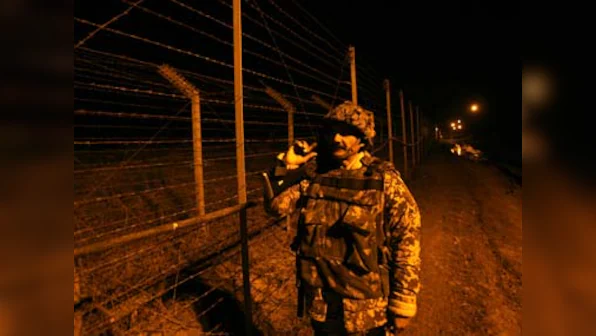
During the intervening night of May 8 and 9, the Indian Army has successfully repelled and decisively responded to multiple drone attacks and ceasefire violations by Pakistan along the western border and the Line of Control (LoC) in Jammu and Kashmir, the Indian Army stated.

In a post on X on Friday, the Additional Directorate General of Public Information (ADG PI) stated that the drone attacks were “effectively neutralised” and the ceasefire violations were appropriately responded to. The ADG PI also noted that the successful retaliation by the Indian Armed Forces was also under Operation Sindoor, which was launched in the early hours of Wednesday, during which the Armed Forces neutralised nine terror camps in Pakistan and the Pakistan-occupied Kashmir.

“Pakistan Armed Forces launched multiple attacks using drones and other munitions along entire Western Border on the intervening night of 08 and 09 May 2025. Pak troops also resorted to numerous cease fire violations (CFVs) along the Line of Control in Jammu and Kashmir. The drone attacks were effectively repulsed and befitting reply was given to the CFVs. Indian Army remains committed to safeguarding the sovereignty and territorial integrity of the Nation. All nefarious designs will be responded with force,” the Army stated.

Earlier on Thursday, the Indian Army had shot down more than 50 Pakistani drones during the large-scale counter-drone operation along the LoC and International Borders (IB), sources told ANI. The operation was launched after Pakistan made failed attempts to send multiple swarm drones into Indian territory across different locations. (ANI)

Maulana Abdul Aziz Ghazi Declares War With India ‘Un-Islamic,’ Slams Pakistan’s Leadership in Fiery Lal Masjid Sermon

Maulana Abdul Aziz Ghazi

In a striking sermon delivered at Islamabad’s renowned Lal Masjid, Maulana Abdul Aziz Ghazi, a prominent Deobandi cleric, has sent shockwaves through Pakistan’s political and military establishment. Ghazi denounced the country’s governing system as “tyrannical” and “oppressive,” accusing it of perpetuating violence against its own citizens. More provocatively, he declared that a potential war with India would be “un-Islamic,” arguing that such a conflict is driven by nationalistic agendas rather than religious principles. His remarks, made in the wake of escalating tensions following the April 22, 2025, Pahalgam terrorist attack, reflect a rare and bold critique from within Pakistan’s religious sphere, highlighting deep-seated discontent with the nation’s leadership.

A Cleric’s Defiance

Maulana Abdul Aziz Ghazi, long a controversial figure due to his association with Lal Masjid and its turbulent history, used his platform to challenge Pakistan’s state narrative. During his sermon, he posed a direct question to his congregation: Would they support Pakistan in a war against India? The response was deafening silence—not a single hand was raised. This moment, widely reported on social media platforms like X, underscored a growing disillusionment among segments of Pakistan’s populace, particularly those who feel marginalized by the state’s policies. Ghazi’s rhetoric was not merely anti-war; it was a scathing indictment of Pakistan’s internal governance. He claimed that Muslims in Pakistan face greater oppression than their counterparts in India, pointing to military operations in regions like Waziristan and Khyber Pakhtunkhwa as evidence of state-sponsored violence against its own people.

The Lal Masjid Legacy

Ghazi’s critique is deeply rooted in his personal history with the Pakistani state. In 2007, Lal Masjid became the epicenter of a violent confrontation when Pakistani security forces besieged the mosque, which had become a hub for radical activities under Ghazi’s leadership. The operation resulted in numerous deaths, including that of Ghazi’s brother, and left a lasting scar on Pakistan’s socio-political landscape. Ghazi referenced this incident in his sermon, accusing the government of bombing and abducting its own citizens while framing India as a lesser oppressor in comparison. His narrative flips the traditional Pakistan-India rivalry, suggesting that the real enemy lies within. This perspective, while shocking to some, resonates with those who view the state’s counterterrorism operations as heavy-handed and indiscriminate.

The Pahalgam Attack and Rising Tensions

Ghazi’s sermon comes at a time of heightened friction between India and Pakistan. On April 22, 2025, a terrorist attack in Pahalgam, Jammu and Kashmir, claimed 26 lives, including civilians and Indian security personnel. Indian authorities swiftly attributed the attack to Pakistan-backed militant groups, reigniting accusations of state-sponsored terrorism. The incident has fueled calls for retaliation in India, while Pakistan’s government has denied involvement, urging de-escalation. Against this backdrop, Ghazi’s declaration that war with India is not a religious obligation but a nationalistic pursuit challenges the Pakistani military’s long-standing narrative of jihad against India. His stance is particularly significant given Lal Masjid’s historical association with militant ideologies, making his pivot toward anti-war rhetoric a notable departure.

Public Sentiment and Social Media Amplification

The sermon’s impact was amplified by its rapid spread on platforms like X, where users shared clips and translations of Ghazi’s speech. Posts described the congregation’s refusal to support a war as a sign of Pakistan “imploding from within,” with some Indian users framing it as a strategic opportunity. For instance, one X post suggested that Ghazi’s words could be used to “add fuel to the fire” of internal dissent in Pakistan. Others highlighted the cleric’s comparison of oppression, noting his claim that India does not bomb or abduct its Muslim citizens to the extent Pakistan does. These posts, while not conclusive evidence, reflect a mix of astonishment, opportunism, and validation among Indian observers, alongside concern among Pakistani users about the deepening internal rift.

Broader Implications

Ghazi’s remarks signal a rare fracture in Pakistan’s religious and political discourse, where criticism of the state is often muted or met with severe repercussions. By framing war with India as un-Islamic, he undermines the military’s ability to rally public support under the banner of religion—a tactic that has historically unified disparate factions. His focus on internal oppression also aligns with growing unrest in Pakistan’s border regions, where military operations have displaced thousands and fueled local grievances. However, Ghazi’s credibility is complicated by his past. His association with militancy and the 2007 Lal Masjid siege makes him a polarizing figure, and some may dismiss his sermon as opportunistic or hypocritical. Nonetheless, the lack of support from his congregation suggests that his message resonates with at least some segments of society.

A Critical Perspective

While Ghazi’s sermon is a bold critique, it’s worth examining the broader context. His comparison of oppression in Pakistan and India glosses over India’s own challenges with minority rights, including documented cases of discrimination against Muslims. Similarly, his anti-war stance, while principled in its rejection of nationalism, does not address the complexities of cross-border terrorism, which both nations accuse each other of sponsoring. The Pakistani state’s operations in Waziristan and elsewhere, while criticized for their human cost, are also a response to real security threats from groups like the Tehrik-i-Taliban Pakistan. Ghazi’s narrative, though compelling, simplifies a multifaceted issue, and his motives—whether genuine or strategic—remain open to scrutiny.

Conclusion

Maulana Abdul Aziz Ghazi’s sermon at Lal Masjid marks a pivotal moment in Pakistan’s internal discourse, exposing deep frustrations with the state’s governance and its reliance on religious rhetoric to justify conflict. By declaring war with India un-Islamic and condemning Pakistan’s “tyrannical” system, Ghazi has challenged the status quo in a way few religious figures have dared. His words, amplified by social media, have sparked debate and speculation about Pakistan’s stability and its future relations with India. While his sermon may not shift the geopolitical landscape overnight, it underscores the power of dissent in a nation grappling with its identity, security, and moral compass. As tensions with India persist, Ghazi’s voice—flawed, controversial, but undeniably resonant—adds a new layer to an already complex narrative.

UN Chief Urges India, Pakistan to Avoid Confrontation After Pahalgam Attack, Calls for Justice and Accountability

UN Chief

Amid escalating tensions between India and Pakistan following the Pahalgam terror attack, UN Secretary-General Antonio Guterres spoke with Pakistani Prime Minister Shehbaz Sharif and Indian External Affairs Minister Subrahmanyam Jaishankar, and emphasised the need for justice and accountability.

He also expressed concern over rising tensions between India and Pakistan, warning that “confrontation could have catastrophic consequences.”

While addressing a press briefing on Tuesday, Stephane Dujarric, Spokesperson for the Secretary-General, said, “UN Secretary General spoke separately with Shehbaz Sharif, Prime Minister of Pakistan, and he also spoke with Subrahmanyam Jaishankar, the Minister of External Affairs of India. In his phone call, the Secretary General reiterated strong condemnation of the April 22 terrorist attack that took place in Jammu and Kashmir. The Secretary General noted the importance of pursuing justice and accountability for these attacks through lawful means.”

Dujarric added, “The Secretary General also expressed his deep concern at the rising tension between India and Pakistan, and he also underscored the need to avoid a confrontation that could result in tragic consequences.

The Secretary General offered his good officers to support any de-escalation efforts.
Guterres stressed that the region and the world cannot afford a confrontation between the two nations.

“The Secretary General remains concerned by the high level of tension between the two countries… He wants to see both sides towards a de-escalation. The region and the world cannot afford a confrontation between India and Pakistan, which would be catastrophic for those two countries and for the world as a whole,” Dujarric said.

Notably, Jaishankar received calls from various world leaders condemning the April 22 Pahalgam attack in Jammu and Kashmir, where Pakistan-sponsored terrorists killed 26 people, mostly tourists, and injured many others.

In a post on X, Jaishankar said, “Received a call from UN SG Antonio Guterres. Appreciate his unequivocal condemnation of the terrorist attack in Pahalgam. Agreed on the importance of accountability. India is resolved that the perpetrators, planners and backers of this attack are brought to justice.”

Sharif, in his telephonic conversation with Guterres, pleaded for a neutral investigation into the Pahalgam incident.

“Had a telephone conversation with UN Secretary-General Antonio Guterres. I reaffirmed Pakistan’s condemnation of terrorism in all its forms, rejected baseless Indian accusations, and called for a transparent and neutral investigation into the Pahalgam incident…

Pakistan remains committed to peace, but will defend its sovereignty with full force if challenged,” Sharif wrote on X on Tuesday. (ANI)

Pakistani Nationals Leave India Amid Visa Revocation After Pahalgam Attack; Families Appeal for Compassion

Pakistani Nationals

The departure of Pakistani citizens from India through the Attari Border saw a significant rise on Tuesday, coinciding with the last day of validity for medical visas issued to Pakistani nationals as per the Union Government’s decision in wake of the terror attack in Pahalgam.

Several Pakistani nationals returning to Pakistan shared their concerns and appealed to the Indian government for reconsideration of the decision, particularly in cases involving families and long-term residents.

Meanwhile, the validity of short-term visas for Pakistani nationals had already expired on Sunday, as per a statement by the Ministry of External Affairs.
Samreen, a Pakistani national at the Attari Border, stated that she got married in India after coming here in September with a 45-day visa, but now she has to leave the country as she hasn’t been issued her long-term visa.

“I came here in September with a 45-day visa. After that, I got married here. I have not got my long-term visa yet, and now suddenly I have been asked to leave the country. The terrorists should be questioned. What is our fault? Why are we being punished? The people who have relatives in the country should be allowed to stay,” Samreen said.

Ira, another Pakistani national, said, “I got married 10 years ago in Delhi. My visa expired during COVID. I am a NORI visa holder, but I have been asked to leave the country because of the attack in Pahalgam. Whatever happened there is absolutely wrong, but we should not be punished for this.”

Krishan Kumar, who also returned to Pakistan, said, “I came to India on a tourist visa for 45 days and now we are going back. The government should take action on the Pahalgam terrorist attack. Both countries should stay together since half of the families are there and half are here. What happened in Pahalgam is not right.”

On Friday, the Indian government revoked all categories of visas issued to Pakistani citizens, except long-term, diplomatic, and official visas, with immediate effect from April 27, with medical visas valid till April 29.

In a statement, the Ministry of External Affairs stated, “All existing valid visas issued by India to Pakistani nationals stand revoked with effect from 27 April 2025. Medical visas issued to Pakistani nationals will be valid only till 29 April 2025.”

Earlier on Sunday, Arun Pal, a protocol officer at the Attari Border, stated that 537 Pakistani nationals have left India through the Attari border over the past three days after the deadline for short-term visa holders ended.

Speaking to ANI, Pal stated that 850 Indian nationals have returned to India in the past three days. He added that on Sunday alone, 237 Pakistani nationals returned to their country, while 116 Indian nationals came back.

The terror attack, which claimed 26 lives in Jammu and Kashmir’s Pahalgam, was one of the deadliest attacks in the region since the 2019 Pulwama strike, which claimed the lives of 40 Central Reserve Police Force (CRPF) jawans. (ANI)

Israeli Consul Kobbi Shoshani Condemns Kashmir Terror Attack, Calls India-Israel Bond “Unbreakable”

Kobbi Shoshani

Consul General of Israel to Midwest India, Kobbi Shoshani, said on Monday that the terrorist attack in Kashmir that happened a few days ago is “unacceptable” and called the photos that emerged from there “heartbreaking.” He said that Pakistan needs to deal with the terrorist activities that they have carried out in Kashmir.

Speaking to ANI, Shoshani emphasised the good ties between India and Israel, calling it “unbreakable.” He stated that Israel and India need to fight against terrorism in a determined way.

On being asked about the recent terrorist attack in Pahalgam, he said, “First of all, the bond between India and Israel is unbreakable, and there is a lot of reason for that, the history, the tradition, the family importance, definitely the support that we got from India for many, many years, and I think that we give also our support as well. It’s a bond between people. It’s a bond between the government. It’s a bond between leaders as well. First of all, but above all. What we saw a few days ago in Kashmir is unacceptable. It’s something that we cannot stand aside as a human being, as friends, as brothers of India, and the photos that I’ve seen was heartbreaking, and I think that was very, very difficult even to watch it.”

As many as 26 people were killed and several others were injured after terrorists attacked tourists at Baisaran meadow in Pahalgam on April 22. Following the attack, India has taken strong countermeasures against Pakistan for its support of cross-border terrorism.

On being asked about Pakistan Peoples’s Party (PPP) chairman Bilawal Bhutto Zardari’s ‘either water or blood will flow’ remarks, Shoshani responded, “I think that what’s happened first of all. I think that Pakistan needs to deal with the terror activities that they have carried out in Kashmir and….I think that’s my advice to the Pakistani government. I think that’s the only thing that I can say. I think India is playing in a very, very smart way, into diplomacy and relations with the people who are actually sending troops into their places. I mean to make such an event or massacre, I cannot even define it in a different way. It’s something unacceptable in my opinion.”

Following the terror attack in Pahalgam, the Central government announced several counter-measures against Pakistan, such as closing the Integrated Check Post (ICP) at Attari, suspending the SAARC Visa Exemption Scheme (SVES) for Pakistani nationals, giving them 40 hours to return to their country, and reducing the number of officers in the High Commissions on both sides. India also halted the Indus Waters Treaty signed in 1960 in the wake of the Pahalgam attack.

When asked about Israel and India facing the problem of terrorism, he said, “I have to tell you, India was born in 1947, but the roots are many, many years before, and Israel was born nine months after, right? By the way, from the same mother, England and since our first day, like you have a deportation plan and afterwards, you know, this war of independence, we have the same thing and terrorists didn’t stop to target Israel and India since 1947 in your case, in our case, even a little bit before and afterwards until today, it’s there is no 100 per cent success.”

“We have to remember that, but we have to fight in a very determined way to fight against terrorism because otherwise it will jump up and up and up. Then we have to put it at a certain level. I’m sorry to say something which people don’t like to hear. There is no 100%, I mean, terrorists will continue to succeed once in a while, but they have to know that if they do something, they’re going to pay them personally and their leaders, the payment and the punishment, that’s, that’s a very clear message,” he added.

He expressed his love for India and how he feels safe living here. He said that he wanted to travel to Kashmir after the terror attack, as terrorists don’t want people to live normally, and stressed that being a tourist in Kashmir is the only answer.

He said, “First of all, I’m Israeli. Then, for me, I think that it’s very, very safe, and I know that even in Israel, it’s very, very safe, and we know how to live along with, but I feel very, very safe. You touch my heart because I feel Mumbaiker this way or another. I love India very much. I feel safe, and I told you what my first reaction was when I heard about this massacre. I said, my time is to go right now as a tourist to Kashmir, that was the reaction and I think this should be the reaction because the terrorists don’t want us to live normally, and the only answer is to go and to be a tourist in Kashmir. That was my first reaction, but security-wise, I know that even the government didn’t allow me to go there, but if, if you ask me, I should be there.”

When asked about the difference in ties between India and Israel before 2014 and now, he said, “It’s a very big question. I have to tell you, I was not born in 1948. I mean, but it was very …relations between India and, between the government of India and the government of Israel for many, many years, because of a variety of issues. But since 2014, I have also been here since 1992 after the establishment of full diplomatic relations between the two nations. I came here and I saw the progress and since Modi visited Israel in 2017 after PM Netanyahu came to visit here in India, I saw the bond, but even in 1948, even in 1992, I was here in New Delhi, I came to New Delhi for a very short time for one year I was a young diplomat at our embassy there. I saw and I felt the love of the people between the two nations. There is a bond; there is something that I cannot even explain to you.” (ANI)

Pakistan Violates Ceasefire Again Along LoC as Tensions Rise After Pahalgam Terror Attack

Army

Pakistani troops resorted to unprovoked firing, violating the ceasefire along the Line of Control (LoC) in Jammu and Kashmir for the fourth straight night, officials said this morning.

“During the night of April 27-28, Pakistan Army posts initiated unprovoked small arms fire across the Line of Control in areas opposite Kupwara and Poonch districts,” the Indian Army said in a statement, adding that they responded “swiftly and effectively”.

This was the first time that the Pakistan Army violated the ceasefire in the Poonch sector.

The exchange of fire between Indian and Pakistani troops started after 26 people were killed in a terrorist attack in Jammu and Kashmir’s Pahalgam last Tuesday.

Relations between India and Pakistan have soured further after the role of a terror group linked to Pakistan-based Lashkar-e-Taiba emerged in the Pahalgam terror attack — the worst in Jammu and Kashmir since the Pulwama incident.

India has hit Pakistan with a series of strict measures, including expulsion of Pakistani military attaches, suspension of the over six-decade-old Indus Waters Treaty and immediate shutting down of the Attari land-transit post.The decisions were taken on Wednesday after a meeting of the Cabinet Committee of Security chaired by Prime Minister Narendra Modi, who has vowed that India will “identify, track and punish” every terrorist and their “backers” who were behind the deadly attack.

Pakistan has also suspended all bilateral pacts with India, including the Simla agreement.

The police have released sketches of three terrorists suspected of being involved in the Pahalgam attack.

According to the notices made public by the police on X, the three suspects are: Hashim Musa alias Suleman and Ali Bhai alias Talha Bhai, both residents of Pakistan, and Adil Hussain Thoker, a native of Anantnag district.

Pakistani Woman Living in India for 35 Years Ordered to Leave Amid Tensions After Pahalgam Attack

Pakistani Woman

write title and 18 words meta for this article ”Sarada Bai, a Pakistani national, who has been living in India for over since 35 years, has been asked by the Odisha police to leave India immediately. The authorities confirmed that the visa of Sarada Bai has been cancelled and she has been instructed to return to Pakistan without delay. The police have warned that if she fails to comply with the expulsion order, legal action will be taken against her.

The police move is part of a series of measures taken to counter Pakistan after the Pahalgam massacre.Sarad Bai was married to a Hindu family in Bolangir and tied the knot with Mahesh Kukreja several years ago. Her son and daughter are Indians.

Despite having all key documents including voter ID, she was never granted Indian citizenship.She has now requested that the government not separate her from her family.With folded hands, she has appealed to be allowed to continue living in India, the country she has called home for over three decades.

“I was first in Koraput then came to Bolangir. I have no one in Pakistan… Even my passport is to old. I ask the government and you all with folded hands, please allow me to live here. I have two grown children, grand children… I wish to live here as an Indian,” she said.

Her petition to the government has touched many hearts but the Bolangir Police have said they will take action under the law. The situation remains tense. India’s non-military measures, announced on Wednesday — a day after the massacre in Kashmir’s Pahalgam that cost 26 lives — includes immediate and indefinite suspension of the Indus water treaty, shutting the Attari border and revoking visas of all Pakistan nationals currently in India.

The terror attack that took place on Sunday was the worst in years, specifically targeting tourists in Kashmir’s Pahalgam.

Terrorists from a Lashkar-e-Taiba offshoot had emerged from pine forests around the scenic meadows of Baisaran, often dubbed “mini Switzerland” and opened fire on a group of unsuspecting tourists.

China Urges India and Pakistan to Show Restraint Amid Rising Tensions After Pahalgam Terror Attack

777

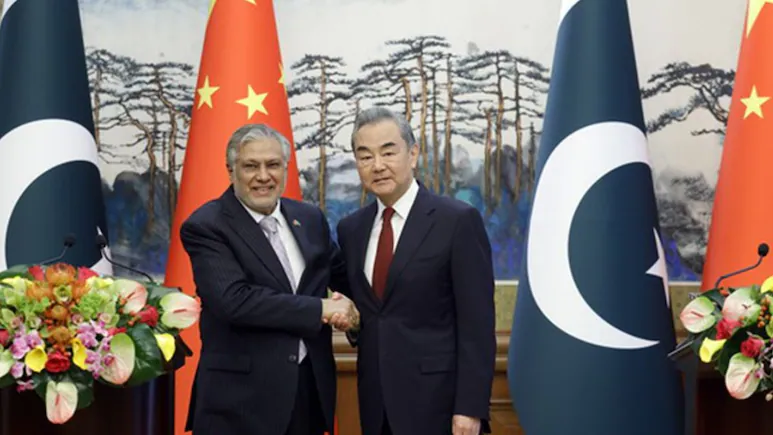
China has called for calm between India and Pakistan following a deadly terror attack in Jammu and Kashmir’s Pahalgam that killed 26 tourists. In a phone call with Pakistani Foreign Minister Mohammad Ishaq Dar on Sunday, Chinese Foreign Minister Wang Yi stressed the importance of restraint and dialogue between the two neighbouring nations.

According to China’s state-run Global Times, Wang Yi, who is also a member of the Political Bureau of the Communist Party of China Central Committee, said that China is closely monitoring the situation. He urged both sides to “exercise restraint, move toward each other, and work to de-escalate tensions.”

Wang Yi expressed China’s support for an impartial investigation into the Pahalgam attack and reiterated that combating terrorism is a shared responsibility of the international community. He also reaffirmed China’s backing of Pakistan’s counter-terrorism efforts.

The conversation comes at a time when India has taken several steps against Pakistan, including the suspension of the Indus Waters Treaty and a complete ban on Pakistani visas. Additionally, the National Investigation Agency (NIA) of India has launched a full probe into the Pahalgam incident. Teams of officials have sealed off the attack site and are currently questioning eyewitnesses to gather crucial evidence.

Amid the rising tensions, over 500 Pakistani nationals have reportedly left India through the Attari border in the last three days, following the expiry of short-term visas.

Pakistan’s Foreign Minister briefed Wang on the current developments and expressed concern over India’s recent measures. China’s call for de-escalation highlights Beijing’s growing role in regional diplomacy and its continued emphasis on stability in South Asia.

The situation remains tense, but the international community, led by voices like China’s, hopes for a peaceful resolution between the two nuclear-armed neighbours.


UN Security Council Condemns Jammu & Kashmir Terror Attack, Urges Global Action for Justice

US aligns with Russia to oppose UN Resolution

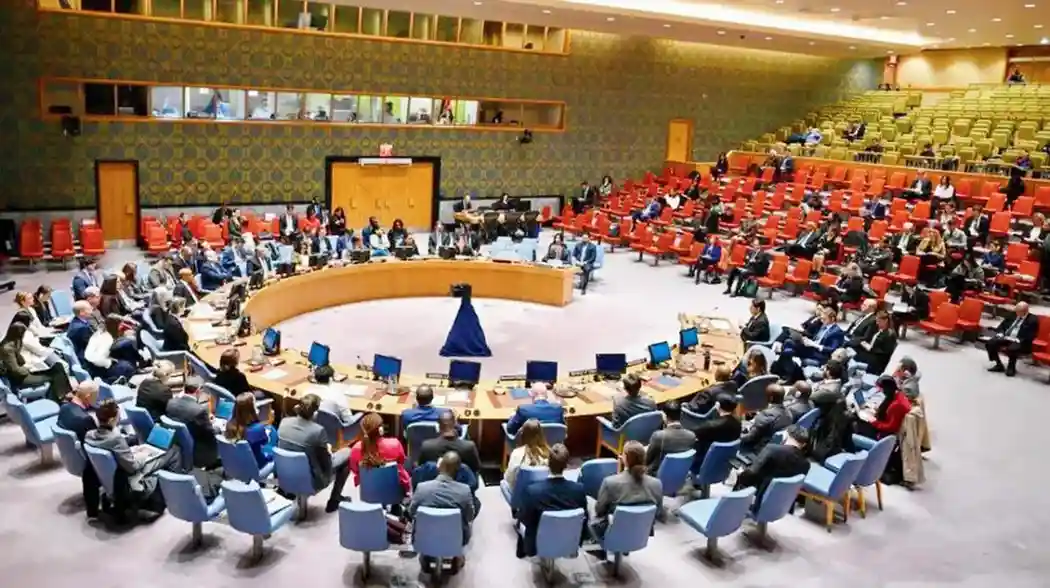
The United Nations Security Council (UNSC) has issued a strong condemnation of the recent terrorist attack in Jammu and Kashmir on 22 April, which left at least 26 dead and scores injured.

In a press statement released on 25 April, the Council’s President, Jerome Bonnafont of France, expressed deep solidarity with the victims’ families and the governments of India and Nepal, while also wishing a swift recovery for the injured. The attack, described as a “reprehensible act of terrorism,” has drawn global outrage, with the UNSC emphasizing the urgent need to bring the perpetrators to justice.

The Council reaffirmed that terrorism in all its forms remains one of the gravest threats to global peace and security. The statement highlighted the indiscriminate nature of such violence, stressing that no ideology or motive justifies the targeting of innocent civilians. The UNSC’s unified stance reflects growing international concern over escalating terrorist activities in conflict-prone regions, with Jammu and Kashmir remaining a focal point of instability.

Emphasizing accountability, the UNSC called for decisive action against those responsible–including perpetrators, organizers, financiers, and sponsors of the attack. The statement urged all nations to cooperate under international law and existing Security Council resolutions to ensure justice is served.

This includes sharing intelligence, extraditing suspects, and cutting off financial support to terrorist networks. The Council’s demand for accountability aligns with broader counter-terrorism efforts, reinforcing the principle that impunity for such crimes cannot be tolerated.

The statement also reiterated that terrorism is unjustifiable under any circumstances, regardless of political, ideological, or religious motivations. The UNSC stressed the importance of a comprehensive approach, urging member states to combat terrorism within the framework of international law, including human rights and humanitarian obligations.

By referencing the UN Charter, the Council underscored the necessity of lawful and coordinated measures to address security threats while safeguarding fundamental freedoms.

The attack in Jammu and Kashmir has further intensified calls for global solidarity against terrorism, with the UNSC’s response serving as a reminder of the collective responsibility to prevent such atrocities. (ANI)

US Woman Says ChatGPT Helped Detect Hidden Cancer After Doctors Misdiagnosed Her Symptoms

ChatGPT

In a remarkable and emotional revelation, a 40-year-old woman from the United States has claimed that ChatGPT — the artificial intelligence tool developed by OpenAI — helped her detect a hidden cancer that was repeatedly missed by medical professionals.

A Mysterious Illness and Repeated Misdiagnoses

Lauren Benen had been experiencing unusual and distressing symptoms for some time. She reported rapid weight loss, persistent stomach pain, and general discomfort — symptoms serious enough to warrant medical attention. Concerned, she consulted her doctors, expecting a clear diagnosis and treatment plan.

However, instead of answers, Lauren said she was sent on a frustrating medical journey filled with vague and incorrect diagnoses. “They told me it could be arthritis or just a gastrointestinal issue,” she told Fox News. Despite her worsening condition, no definitive cause was found, and she felt increasingly helpless.

“I kept going back, hoping for someone to connect the dots. But they just kept circling around the same answers,” Lauren said.

Turning to AI for Help

Feeling dismissed and desperate, Lauren decided to try something unconventional — she turned to ChatGPT. She entered her symptoms into the AI tool, hoping for insight or at least a fresh perspective.

To her surprise, ChatGPT suggested a possible diagnosis of Hashimoto’s thyroiditis, an autoimmune disease that can, in some cases, be connected to thyroid cancer. Even though she had no family history of the condition, and lacked some of the common symptoms (like fatigue), ChatGPT’s suggestion struck a chord.

It also recommended that she undergo a thyroid test, something that had not been considered up to that point.

The Shocking Diagnosis

Following ChatGPT’s suggestion, Lauren pushed for further tests, despite initial resistance from her doctors. Eventually, she underwent an ultrasound and biopsy that revealed two small nodules in her neck. Lab results confirmed the worst: both nodules were cancerous.

“If I hadn’t listened to ChatGPT, the cancer would have kept spreading silently. It literally saved my life,” Lauren said.

Her case highlights a chilling possibility — how easily serious conditions can be overlooked, and how AI tools may assist in complex diagnosis, especially when patients feel unheard.

“I Wasn’t Being Taken Seriously”

Lauren’s story is not just about a health scare; it’s also about the emotional burden of being dismissed. She explained that doctors initially refused to test for thyroid problems, telling her the condition was unlikely since she had no family history and didn’t fit the typical profile.

“I didn’t even feel tired, which is common in thyroid issues. That’s probably why they dismissed it. But it turns out the cancer had already started to grow,” she said.

The Bigger Picture: AI in Healthcare

This incident has sparked discussions about the role AI tools like ChatGPT could play in the future of healthcare. While ChatGPT is not a licensed medical professional, stories like Lauren’s suggest it could serve as a supplementary tool — offering a second opinion, flagging overlooked conditions, or helping patients advocate for their own health.

Medical experts continue to urge caution, however. AI tools should never replace real doctors, they warn, but could be used to support diagnosis and research if used responsibly.

Conclusion

Lauren Benen’s story is one of caution, hope, and curiosity. While it’s a reminder of the limits of modern medicine, it’s also a powerful example of how emerging technologies — when used wisely — can help bridge gaps in patient care.

In Lauren’s words:
“ChatGPT did what doctors couldn’t — it listened.”