Bitcoin Hits Record $124,000 Backed by Trump’s Crypto-Friendly Policies and US Stock Market Rally

Bitcoin Hits Record

Bitcoin surged to an all-time high on Thursday, surpassing $124,000 during early Asian trading, as a combination of favorable U.S. legislation, rising stock markets, and growing institutional adoption propelled the world’s largest cryptocurrency to unprecedented levels.

The digital asset briefly crossed $124,500 before easing slightly, eclipsing its previous record set in July. Analysts say the latest surge reflects a period of “highly favorable fundamentals” for the crypto sector.


Wall Street Rally Fuels Sentiment

The rally in Bitcoin coincided with fresh highs in U.S. equities. Both the S&P 500 and the Nasdaq closed at record levels on Wednesday, with investor optimism spilling over into digital assets. Market observers note that crypto prices often benefit when broader financial markets demonstrate strong momentum, reflecting a risk-on sentiment among investors.


Trump’s Pro-Crypto Policies

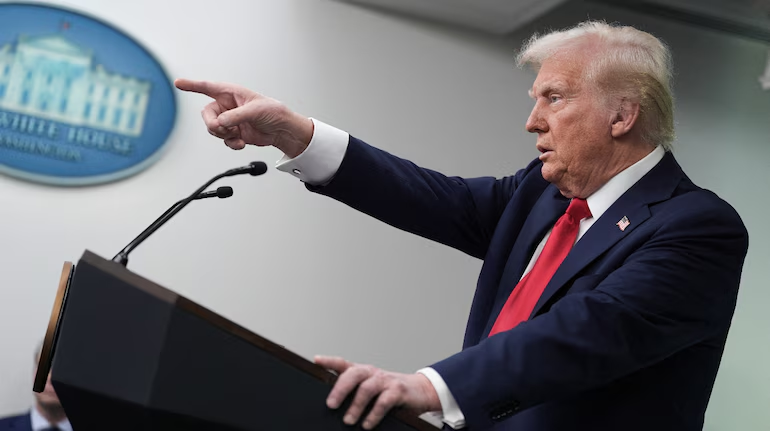
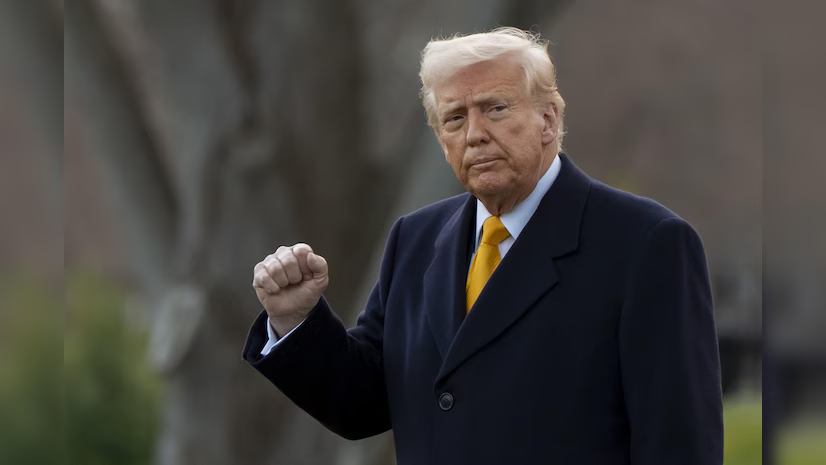
A major driver behind Bitcoin’s surge is the shift in U.S. regulatory policy under President Donald Trump, a vocal supporter of cryptocurrencies. Trump’s administration recently rolled back restrictions that had prevented banks from providing services to firms considered at “reputational risk” — a category that frequently included cryptocurrency businesses.

“President Donald Trump has moved to end restrictions that previously prevented banks from doing business with crypto firms, creating a highly favorable environment,” said Samer Hasn, senior market analyst at XS.com. “This policy change signals a clear intent to accelerate the integration of cryptocurrencies into the national financial system.”

Trump and his family have also been linked to increasing involvement in the sector, further reinforcing market confidence that crypto-friendly policies will continue.


Whales and Corporate Adoption Drive Momentum

Beyond regulatory tailwinds, Bitcoin’s rise is also being fueled by large-scale investors known as “whales” and major corporate buyers. Notably, Trump’s media company and Tesla, led by billionaire entrepreneur Elon Musk, have recently increased their holdings in Bitcoin. Their moves add to a growing trend of institutional and corporate adoption that many analysts believe will stabilize and legitimize the cryptocurrency market.

“Corporate accumulation of Bitcoin has created a supply squeeze,” explained one analyst. “When firms like Tesla or Trump’s group make significant purchases, it signals to the market that Bitcoin is becoming a mainstream financial asset.”


How This Rally Compares With Previous Bull Runs

Bitcoin’s current surge to $124,000 is being closely compared to earlier bull runs, particularly those in 2017 and 2021.

  • 2017 Rally: Bitcoin rose from under $1,000 to nearly $20,000, driven largely by retail investors and speculation. However, the lack of regulatory clarity and institutional support led to a dramatic correction in 2018.
  • 2021 Rally: Bitcoin peaked at around $69,000, fueled by institutional adoption, stimulus-driven liquidity, and interest from companies like Tesla. Yet, regulatory crackdowns in China and uncertainty in the U.S. slowed momentum, leading to sharp declines in 2022.
  • 2025 Rally: The current surge stands apart because of direct policy support from Washington. With President Trump openly backing cryptocurrencies, reducing banking restrictions, and signaling integration into the financial system, analysts say this rally is built on stronger foundations than past cycles. The involvement of both Wall Street and corporate America further distinguishes it from earlier speculative booms.

In short, while 2017 was retail-driven and 2021 was liquidity-driven, 2025 appears to be policy-driven, which could mark a more sustainable turning point in Bitcoin’s mainstream adoption.


Outlook: Integration Into Financial System

Experts suggest that Trump’s policy agenda could pave the way for deeper integration of digital currencies into the U.S. financial system. This includes the possibility of new regulations that formally recognize Bitcoin as part of the broader financial architecture.

With both favorable policy shifts and strong institutional backing, Bitcoin’s upward momentum shows no immediate signs of slowing. However, analysts caution that volatility remains a hallmark of the market, and investors should be prepared for sharp swings.

For now, Bitcoin’s surge past $124,000 marks another milestone in its evolution from a fringe digital experiment into a globally recognized financial asset — and signals that the crypto sector is entering a new phase of political and economic influence.

CISF Officer Aditya Kumar Becomes First ₹1 Crore Winner of KBC Season 17

From Boom to Bust: How the April 22 Terror Attack Shattered Pahalgam’s Tourism Dream

Senior Citizens’ Day: JKCSF, JKPUF Slam Govt Over Non-Implementation of Senior Citizens Act in J&K

Pakistan Foreign Minister Ishaq Dar Visits Bangladesh, First in Over a Decade, as Dhaka-New Delhi Ties Sour

Foreign Minister Ishaq Dar

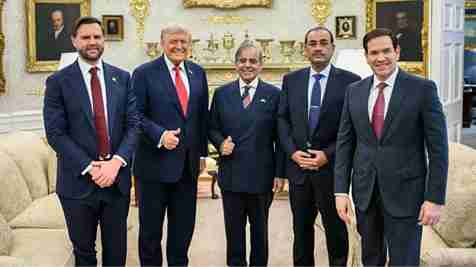
Pakistan’s Foreign Minister Ishaq Dar arrived in Dhaka on Saturday, marking the first high-level visit by a Pakistani official to Bangladesh since 2012. Islamabad described the trip as a “significant milestone” in improving ties between the two nations, which split after the 1971 war.

Dar is scheduled to meet Bangladesh’s interim leader, Nobel laureate Muhammad Yunus, on Sunday, when both sides are expected to sign agreements on trade and cooperation.

The visit comes at a sensitive time in South Asia, with regional balances shifting rapidly. Relations between Dhaka and New Delhi have cooled since August 2024, when a mass uprising forced longtime Prime Minister Sheikh Hasina to flee to India. The interim Bangladeshi government has since accused New Delhi of sheltering Hasina and backing her now-banned Awami League, charges India denies.

Analysts say India — which fought a brief war with Pakistan in May — is closely monitoring the growing engagement between Dhaka and Islamabad. “Bangladesh had been one of India’s closest partners, and now it is flirting with India’s chief adversary,” noted US analyst Michael Kugelman.

In recent months, Pakistan and Bangladesh have expanded cooperation, including launching sea trade last year and opening government-to-government commerce in February. Earlier this week, Pakistan’s Commerce Minister Jam Kamal Khan held talks in Dhaka, agreeing to set up joint commissions for trade and investment. Military leaders from both nations also met on Friday in Pakistan.

While efforts to rebuild relations continue, painful memories of the 1971 war remain unresolved. Bangladesh accuses Pakistan’s military of atrocities that killed hundreds of thousands — with Dhaka claiming millions. Calls for Islamabad to formally apologise persist.

Experts say the ouster of Hasina, once India’s strongest ally in Dhaka, has created space for Pakistan to rebuild ties. “The toppling of Hasina was a strategic setback for India, and the improved relations between Bangladesh and Pakistan are a consequence of her ouster,” said Thomas Kean of the International Crisis Group.

CISF Officer Aditya Kumar Becomes First ₹1 Crore Winner of KBC Season 17

From Boom to Bust: How the April 22 Terror Attack Shattered Pahalgam’s Tourism Dream

Senior Citizens’ Day: JKCSF, JKPUF Slam Govt Over Non-Implementation of Senior Citizens Act in J&K

John Kerry Criticises Trump’s Ultimatums, Calls India-US Strain “Unfortunate” Amid Tariff Dispute

John Kerry

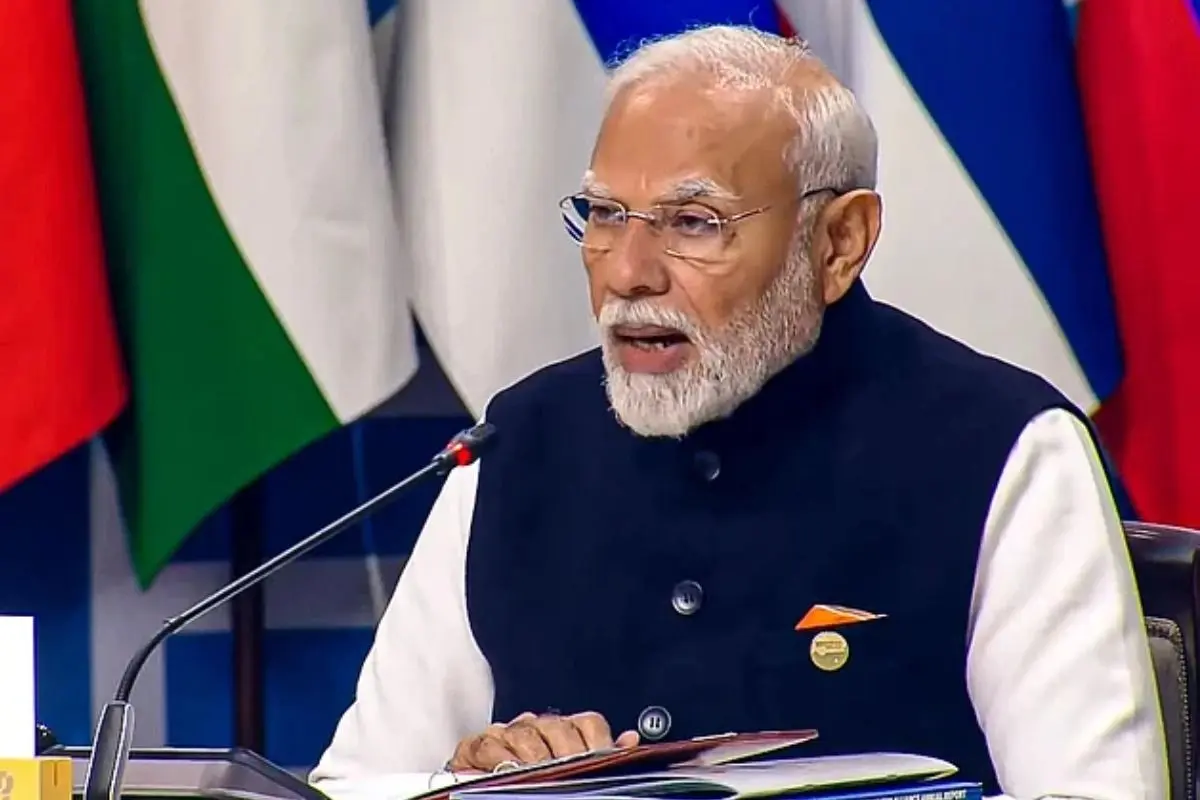
The concern over US President Donald Trump alienating allies like India has been echoed by former Secretary of State John Kerry. Giving ultimatums without making any genuine diplomatic efforts does not exhibit greatness, he told ET World Leaders Forum yesterday, describing the strain in India-US ties as “unfortunate”.

“We are concerned. This struggle between President Trump and PM Modi is unfortunate. Great nations don’t necessarily exhibit greatness by giving people ultimatums all the time without sort of a genuine diplomatic effort to try to find common ground and do things through the normal course of business,” he said.

The senior US official who served under President Barack Obama said that during the Obama regime, negotiations were done through cooperation and respect. But now, there has been “a little bit too much ordering, pressuring, and pushing around”, he said.

India and US ties had strained in recent weeks, after the Trump administration imposed secondary tariffs on India for buying Russian oil, and reportedly also over New Delhi denying his peacemaking role during their recent conflict with Pakistan. The US tariffs on Indian exports now stand above 50%.

Kerry hoped that New Delhi and Washington would resolve their trade dispute. He also referred to PM Modi and Commerce Minister Piyush Goyal as friends and said that he admired India’s negotiations.

“My hope is that we will resolve this dispute. I think India has made a pretty powerful offering frankly,” he said, noting reports that India had offered zero tariff on a number of US imports as a “big shift”.

Kerry is among the numerous former US officials and experts who have raised concerns over Trump’s policies that alienate India.

Trump’s former aide John Bolton had slammed the President earlier this month for jeopardising decades of American efforts to bring India away from Russia and China, and warned that his pro-China bias could be an “enormous mistake”.

In an interview with CNN, he had called it ironic that the secondary tariff, which was intended to hurt Russia, could push India closer to Russia and China, and perhaps even make them negotiate together against the US.

US foreign policy expert Christopher Padilla, a former US trade official, had also warned that the tariffs could pose a risk of long-term damage to India-US ties. It could raise questions later whether the US is a reliable partner, as the tariffs would remain in memory, he feared.

Jeffrey Sachs, a top US economist, had ripped into President Trump’s punitive tariffs as “the stupidest tactical move in US foreign policy.” “These tariffs on India are not a strategy; they’re sabotage…The imposition of the 25 per cent penalty tariff on India, what it did overnight was unify the BRICS countries as never before,” he said.

CISF Officer Aditya Kumar Becomes First ₹1 Crore Winner of KBC Season 17

From Boom to Bust: How the April 22 Terror Attack Shattered Pahalgam’s Tourism Dream

Senior Citizens’ Day: JKCSF, JKPUF Slam Govt Over Non-Implementation of Senior Citizens Act in J&K

Hamas Accepts 60-Day Ceasefire Deal Brokered by Egypt, Qatar; Israel Yet to Respond

Hamas

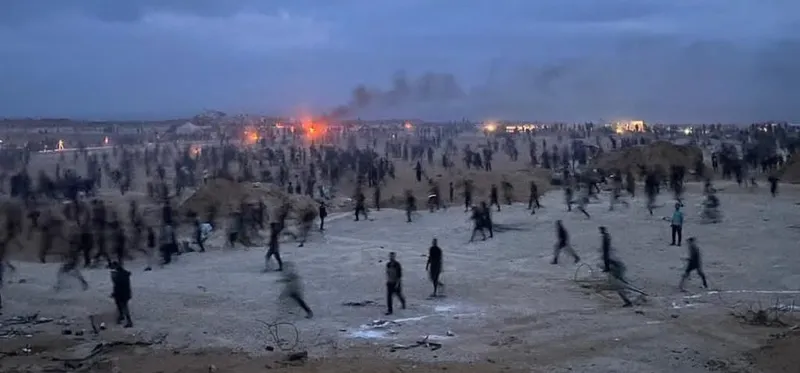
Hamas announced on Monday, August 18, its acceptance of a 60-day ceasefire proposal for the Gaza Strip, brokered by Egyptian and Qatari mediators. The proposal includes the release of 10 living Israeli hostages and the remains of 18 deceased hostages in exchange for Israel freeing 1,700 Palestinian prisoners, including 200 serving life sentences. It also outlines a partial Israeli military withdrawal to a buffer zone 800 meters from Gaza’s eastern, northern, and southern borders, allowing 600 trucks of humanitarian aid, commercial goods, and shelter materials to enter daily.
The deal, closely aligned with a prior US-backed plan, aims to initiate negotiations for a permanent ceasefire on the first day of the truce, with the goal of ending the conflict within 60 days. Egyptian Foreign Minister Badr Abdelatty, who visited the Rafah crossing on August 18, urged Israel to accept the proposal to alleviate Gaza’s humanitarian crisis, marked by famine and over 62,000 reported Palestinian deaths. Qatar’s Prime Minister Sheikh Mohammed bin Abdulrahman Al Thani emphasized the urgency of the talks, which continue in Cairo.
Israel has not yet formally responded. Prime Minister Benjamin Netanyahu reiterated his stance on continuing the war until all 50 remaining hostages are released and Hamas is disarmed, maintaining Israel’s security control over Gaza. An Israeli official, speaking anonymously, suggested Hamas’s acceptance stems from pressure due to Israel’s planned military operation in Gaza City. This follows mass protests in Israel on August 17, demanding a ceasefire and hostage release.
The United Nations and Amnesty International have accused Israel of exacerbating Gaza’s humanitarian crisis, citing starvation policies and restricted aid access, claims Israel denies. As mediators await Israel’s response, fears grow of an imminent Israeli offensive in Gaza City, potentially worsening the situation. Talks remain ongoing, with no new developments reported since August 18.
For updates, follow Al Jazeera, Reuters, or the Associated Press.

CISF Officer Aditya Kumar Becomes First ₹1 Crore Winner of KBC Season 17

From Boom to Bust: How the April 22 Terror Attack Shattered Pahalgam’s Tourism Dream

Senior Citizens’ Day: JKCSF, JKPUF Slam Govt Over Non-Implementation of Senior Citizens Act in J&K

India-US Ties Strain Over Tariffs, Nikki Haley Urges Trump to Treat New Delhi as Democratic Ally Against China

Nikki Haley Urges Trump

The relationship between New Delhi and Washington, long celebrated as a cornerstone of the global democratic order, has entered a turbulent phase. Former U.S. Ambassador to the United Nations, Nikki Haley, has warned that recent policy decisions under President Donald Trump’s administration are pushing India and the United States toward a dangerous rift, at a time when cooperation is crucial to counter China’s expanding influence.

Tariffs Over Russian Oil Purchases

Tensions have sharply escalated after the Trump administration imposed 25 per cent punitive tariffs on Indian goods and oil purchases linked to Russia. This comes on top of existing duties, effectively doubling the economic pressure on New Delhi. The move was justified by Washington as part of its push to penalise countries buying discounted Russian oil amid the ongoing Ukraine conflict.

India, however, has defended its energy trade with Moscow as a matter of national interest, arguing that affordable oil imports are vital for its fast-growing economy. For New Delhi, such purchases are not only a matter of cost-efficiency but also of strategic autonomy—ensuring it does not become overly dependent on any one supplier.

Haley’s Warning: Don’t Treat India Like China

Writing in an opinion piece for Newsweek, Nikki Haley urged the Trump administration to take a more balanced and strategic approach. She cautioned that India must not be treated as an adversary like China, which despite being one of Russia’s largest oil customers has so far avoided any major U.S. sanctions.

“India must be treated like the prized free and democratic partner that it is—not as a rival,” Haley argued. She stressed that scuttling 25 years of momentum in U.S.-India relations would be a strategic disaster, undermining America’s long-term foreign policy objectives of containing China and maintaining global stability.

India’s Strategic Importance

Haley highlighted several reasons why India remains irreplaceable for Washington:

  • Economic Powerhouse: India is the world’s fastest-growing major economy and recently surpassed China as the most populous country. Its young workforce is a contrast to China’s ageing population.
  • Manufacturing Alternative: With U.S. supply chains seeking to reduce dependence on China, India is one of the few nations capable of producing goods on a comparable scale, including textiles, affordable electronics, and renewable energy products.
  • Defence Cooperation: India’s expanding military ties with Israel, Japan, and other U.S. allies make it a key market for American defence exports and a strategic security partner.
  • Geopolitical Position: Situated at the centre of critical trade and energy routes, India’s location could be decisive in complicating China’s options during any future conflict.
  • Middle East Role: India’s growing engagement in the Middle East provides Washington with an ally capable of stabilising the region while the U.S. reduces its direct military footprint.

A Critical Juncture

Haley’s intervention reflects broader concerns among American policymakers who fear that Washington’s hardline tariff strategy could drive New Delhi closer to Moscow—or even Beijing—at a time when the U.S. needs India as a democratic counterweight in Asia.

She reminded the administration that India’s rise, unlike China’s, does not threaten the free world. Instead, India’s growing economic and political clout could help balance global power dynamics in favour of democracy.

The Road Ahead

While President Trump’s administration continues to push for “peace through strength” and tougher trade measures, Haley has made it clear that America’s goals of outcompeting China cannot be achieved without India on its side.

As the world’s two largest democracies, the United States and India share a history of cooperation rooted in shared values. Whether this partnership survives the current turbulence may depend on Washington’s willingness to treat New Delhi not as a target of sanctions, but as a strategic ally with whom differences can be managed without derailing the relationship.

J&K Police Attach Property of Active Terrorist in Anantnag Under UAPA Crackdown

Khelo India Water Sports Festival 2025 at Dal Lake: Boost for J&K Athletes and Tourism

Ganderbal Shock: 22-Year-Old Girl Arrested for Killing Her 14-Year-Old Sister After Altercation

Rumors Claim Turkish Actress Fatima Bushra Quit Showbiz, Adopted Hijab — But No Verified Evidence Yet

UN Humanitarian Chief Slams Aid Worker Killings as “Shameful Indictment” Amid Rising Deaths in Gaza and Sudan

28 Children Killed Daily in Gaza

United Nations humanitarian chief Tom Fletcher has issued a scathing criticism of the growing wave of violence against aid workers worldwide, calling it a “shameful indictment of international inaction and apathy.” His remarks came on World Humanitarian Day, observed annually on August 19 to honour fallen humanitarian workers and commemorate the 2003 UN Baghdad bombing that killed 22 staff, including UN rights chief Sergio Vieira de Mello.

Rising Global Toll of Humanitarian Deaths

According to UN data cited by Al Jazeera, 383 humanitarian workers were killed in 2024 — a shocking 31 percent rise from the previous year. Nearly half of these fatalities were recorded in Gaza, where 181 aid workers lost their lives, while 60 were killed in Sudan amid intensifying conflict.

The Aid Worker Security Database, which has tracked incidents since 1997, noted that 293 aid workers were killed in 2023. Provisional figures suggest that as of mid-August 2025, at least 265 humanitarian workers have already been killed this year.

“These attacks are not only senseless but illegal under international law,” Fletcher emphasized. “Even one attack against a humanitarian colleague is an attack on all of us and on the people we serve.”

Gaza: The Deadliest Zone for Humanitarians

The UN particularly highlighted the humanitarian crisis in Gaza, where international law violations have become alarmingly routine. One of the deadliest attacks occurred on March 23, 2025, in the southern city of Rafah. Israeli forces allegedly opened fire on clearly marked humanitarian convoys before dawn, killing 15 medics and emergency responders. Reports claim that bulldozers later crushed the vehicles and buried both bodies and wreckage in a mass grave, which UN and rescue workers could only reach a week later.

“This level of brutality and lack of accountability is unconscionable,” Fletcher said, urging the global community to demand investigations and justice.

Other Conflict Zones Also Dangerous

While Gaza and Sudan remain the most perilous, other regions also witnessed alarming spikes in violence against aid workers:

  • Lebanon: 20 humanitarian workers killed in 2024, compared to zero the previous year, amid the Israel-Hezbollah war.
  • Ethiopia and Syria: Each reported 14 deaths, nearly double their 2023 figures.
  • Ukraine: 13 aid workers killed in 2024, up from six in the previous year.

Most of those killed, according to the UN, were local staff working on the frontlines — often targeted in their homes or while performing life-saving duties.

WHO: Attacks on Healthcare Escalating

The World Health Organization (WHO) also reported an alarming 800+ verified attacks on healthcare facilities across 16 territories in 2025 alone. These attacks resulted in over 1,110 health workers and patients killed, leaving many communities without essential medical support.

“Each attack deprives entire communities of lifesaving care when they need it most, while weakening already strained health systems,” the WHO said in its statement.

A Call for Accountability

The UN reiterated that such attacks are clear violations of international humanitarian law, which requires the protection of civilians and aid workers. Fletcher called on those with “power and influence” to stop ignoring these atrocities:

“Violence against aid workers is not inevitable. It must end. Attacks on this scale with zero accountability are a shameful indictment of international inaction and apathy.”

Humanitarian groups warn that unless perpetrators are held accountable, the erosion of trust and safety will endanger future relief operations, leaving millions of civilians in war and disaster zones without vital assistance.

Pahalgam Terror Strike Casts Shadow Over J&K Statehood Demands, Supreme Court Observes

BJP Links J&K Statehood to Elimination of Terror Networks as Supreme Court Reviews Restoration Plea

Kashmiri MBBS Student Saba Rasool Dies in Iran; Family Seeks Urgent Repatriation, Alleging Medical Negligence

Wang Yi Says India-China Ties at Key Opportunity, Emphasises PM Modi’s SCO Summit Visit in Tianjin

Wang Yi

Chinese Foreign Minister Wang Yi expressed optimism in the India-China ties and said that it gives great importance to the Prime Minister’s visit to China to attend the SCO Summit. He said that the bilateral relationship is facing an important opportunity of improvement and growth, saying that a healthy and stable India-China relationship serves the fundamental and long-term interests of both of our countries.

Wang Yi made the initial remarks during his special representatives meeting with National Security Advisor Ajit Doval.

“The Chinese side attaches great importance to the Prime Minister’s visit to China to attend the SCO summit at our invitation. We believe that the Indian side will also make your contribution to a successful summit in Tianjin”, Wang Yi said.

Wang Yi said, “I am ready to work with you to build more consensus and identify the direction, the specific goals of the boundary consultations going forward and create all conditions for the improvement and further growth of our bilateral relations.”

He highlighted in his remarks that the two sides should follow the strategic guidance of our leaders, increase mutual trust through strategic communication, and expand common interests through exchanges and cooperation.

The Chinese Foreign Minister appreciated the developments in the bilateral ties since the meeting of PM Modi and Xi Jinping in Kazan last year, noting that it “pointed the direction for the development of our bilateral relations and provided impetus for the proper settlement of the boundary question.”

Appreciating the previous round of the 23rd round of special representatives talks at the end of last year, Yi said, “At that meeting, we reached new and important consensus on the management of disagreements, stabilising the borders and moving toward a settlement. We identified specific goals and formed a working framework”.

Wang Yi expressed contentment with the restoration of stability on the borders. “Mr Doval, I appreciate the effort you made as special representative of the Indian side. Now, the bilateral relationship is facing an important opportunity of improvement and growth.”

Wang Yi said that India and China should follow the strategic guidance of their leaders, increase mutual trust through strategic communication, expand common interest through exchanges and cooperation, and “properly settle the specific issues in the borders so as to advance our relationship in a healthy and sound manner.”

National Security Advisor (NSA) Ajit Doval said on Tuesday that, during his initial remarks in talks with Chinese Foreign Minister Wang Yi, Prime Minister Narendra Modi will be visiting for the SCO Summit shortly. He also appreciated the upward momentum in the ties, highlighting the peace and tranquillity along the borders and underlined the role played by the Indian and Chinese leadership in giving a boost to move ahead since their talks in Kazan last year.

Earlier, as per sources, China promised to address India’s three concerns, namely rare earths, fertilisers and tunnel boring machines.

Wang Yi arrived in India on Monday for a two-day visit and held talks with External Affairs Minister (EAM) S Jaishankar. (ANI)

Pahalgam Terror Strike Casts Shadow Over J&K Statehood Demands, Supreme Court Observes

BJP Links J&K Statehood to Elimination of Terror Networks as Supreme Court Reviews Restoration Plea

Kashmiri MBBS Student Saba Rasool Dies in Iran; Family Seeks Urgent Repatriation, Alleging Medical Negligence

Zelensky Meets Trump, European Leaders at White House in Crucial Talks on Ukraine War Ceasefire Roadmap

Trump

Ukraine’s President Volodymyr Zelensky has reached Washington, DC, for what is being called one of the most crucial diplomatic meetings since Russia’s full-scale invasion nearly three years ago.

At the White House today, Zelensky will join US President Donald Trump and top European leaders — including UK Prime Minister Keir Starmer, French President Emmanuel Macron, German Chancellor Friedrich Merz, Italian Prime Minister Giorgia Meloni, Finnish President Alexander Stubb, NATO Secretary General Mark Rutte, and European Commission President Ursula von der Leyen — to discuss a potential roadmap toward ending the war.

The talks come just days after Trump’s high-profile meeting with Vladimir Putin in Alaska. Trump has hinted that Moscow may be open to a ceasefire deal if Ukraine drops its bid to join NATO, a condition Zelensky is under intense pressure to navigate.

On his Truth Social platform, Trump wrote that Zelensky could “end the war almost immediately” if he accepts certain realities, including Crimea remaining under Russian control and Ukraine staying out of NATO. The remarks highlight the tough choices facing Kyiv, which is pushing for strong US and European security guarantees as part of any settlement.

The White House described the summit as a “critical step” in testing whether both Kyiv and Moscow are ready to inch closer to a truce. For Zelensky, the stakes are immense — securing Ukraine’s sovereignty while avoiding concessions that could undermine its future.


Pahalgam Terror Strike Casts Shadow Over J&K Statehood Demands, Supreme Court Observes

BJP Links J&K Statehood to Elimination of Terror Networks as Supreme Court Reviews Restoration Plea

Kashmiri MBBS Student Saba Rasool Dies in Iran; Family Seeks Urgent Repatriation, Alleging Medical Negligence

Trump-Putin Alaska Summit “Went Really Well,” Trump Says; Pushes for Peace Deal Over Ceasefire in Ukraine

Trump-Putin

US President Donald Trump said on Saturday that the meeting with Russian President Vladimir Putin in Alaska “went really well”.

He also held a telephonic conversation with Ukrainian President Zelenskyy, several European leaders and the Secretary General of NATO and highlighted that it was determined by all that a peace agreement is the best way going forward.

The US President said in a post on Truth Social, “A great and very successful day in Alaska! The meeting with President Vladimir Putin of Russia went very well, as did a late night phone call with President Zelenskyy of Ukraine, and various European Leaders, including the highly respected Secretary General of NATO. It was determined by all that the best way to end the horrific war between Russia and Ukraine is to go directly to a Peace Agreement, which would end the war, and not a mere Ceasefire Agreement, which often times do not hold up.”

He also shared that Ukrainian President Zelenskyy will be coming to Washington DC on Monday and if things work out then a meeting would be scheduled with Russian President Vladimir Putin.

“President Zelenskyy will be coming to D.C., the Oval Office, on Monday afternoon. If all works out, we will then schedule a meeting with President Putin. Potentially, millions of people’s lives will be saved. Thank you for your attention to this matter!”

Earlier on Friday, the United States and Russia held the much-anticipated truce talks meeting in Alaska to discuss bringing an end to the conflict in Ukraine.

Russia’s top economic envoy, Kirill Dmitriev, said the US received Russia “very well” in Alaska and that the two countries would continue building relations despite “resistance.”

“The US-Russia summit in Alaska has definitely been productive,” Dmitriev said according to CNN, adding that there were “lots of issues that we discussed and many we agreed on”.

“Some of them are to be agreed and definitely it’s very important that President Trump outlines a significant economic potential of cooperation between the US and Russia,” said Dmitriev.

“We will continue building US-Russia relations going forward despite lots of resistance to this, but we will continue strengthening US-Russia ties,” he added, as per CNN. (ANI)

Macron Condemns Israel’s Gaza City Takeover Plan, Proposes UN-Mandated Mission to Stabilise Strip

Macron

French President Emmanuel Macron condemned Israel’s plan to expand its operations and take control of Gaza City, calling it “a disaster waiting to happen” and proposed an international coalition under a United Nations mandate to stabilise Gaza, France 24 reported.

“This war must end now with a permanent ceasefire,” Macron said in a statement, adding Israel’s plan to take control of Gaza City was “a disaster of unprecedented gravity and a headlong rush into permanent war,” according to France 24.

Last week, Israel’s security cabinet approved a plan to take control of Gaza City, expanding its military operations in the shattered Palestinian territory, which has drawn strong criticism both domestically and internationally, France 24 stated.

“The Israeli cabinet’s announcement of an expansion of its operations in Gaza City and the Mawasi camps and for a re-occupation heralds a disaster of unprecedented gravity waiting to happen and of a drift towards a never-ending war,” Macron said.

“Israeli hostages and the people of Gaza will continue to be the primary victims of this strategy,” he added.

Israeli Prime Minister Benjamin Netanyahu’s office did not immediately respond to a request for comment. However, addressing international criticism during a press conference on Sunday, Netanyahu said Israel is “applying force judiciously.”

“Israel has no choice but to finish the job and complete the defeat of Hamas,” Netanyahu stated. “We have about 70 to 75 percent of Gaza under Israeli control, military control, but we have two remaining strongholds, OK? These are Gaza City and the central camps in Al Mawasi,” France 24 reported.

In his statement, Macron emphasised the importance of establishing a UN-mandated stabilisation mission to secure the Gaza Strip.

“The Security Council must now work to establish this mission and give it a mandate,” he said. “I have asked my teams to work on this without delay with our partners.”

By proposing a UN-mandated mission in Gaza, Macron is aiming to build on the momentum created by his recognition of a Palestinian state last month, which triggered a series of recognitions by other countries, including Britain and Canada, France 24 reported.

Macron said the UN mission would be tasked with securing the Gaza Strip, protecting civilians, and working in support of unspecified Palestinian governance. (ANI)

Night Curfew Imposed in Samba Border Areas

India Slams Pakistan’s “Nuclear Blackmail” After Army Chief’s Threats in US Visit

Traffic Police Seize Akshay Kumar’s Vehicle in Jammu for Black-Tinted Windows Violation

Fire at MG TVS Building in Nowshera, Srinagar Quickly Contained by Emergency Teams