Watch Video: Egypt Rescues ‘Rasheed Road Siblings’ in Gaza, Reuniting Brothers After Two Days of Separation

Rasheed Road Siblings

In war-torn Gaza, where bombardment, smoke, and cries of the displaced fill the air, a story of hope has touched many hearts. The Egyptian Committee for the Relief of the People of Gaza announced the safe rescue of two young brothers, now remembered as the “Rasheed Road siblings.”

The boys had disappeared for two days after being separated from their family during mass displacement. Their reunion with their mother, made possible by Egypt’s direct humanitarian mission, has become a symbol of compassion in a region filled with suffering.


The Viral Video That Shocked the World

The story first spread through a viral video on social media in late September 2025. It showed a boy of about 10 years old carrying his younger brother, around 5 or 6, on his shoulders. They were walking along Al-Rasheed Street, a road known as the “road of death” because of repeated shelling and sniper fire.

In the video, the older brother carefully moved through crowds of people fleeing the violence. Families were seen carrying mattresses, pushing bicycles loaded with belongings, and moving elders on donkey carts. Overhead, the constant sound of drones added to the danger.

The younger boy looked exhausted, his face covered in dust, but he clung tightly to his brother’s back. This short video, without any narration, reached millions of people across the world. Viewers saw not just statistics of war, but the pure image of a child protecting another. Palestinians soon began calling them the “Rasheed Road siblings.”


Lost in the Chaos

The brothers had been escaping Gaza City with their mother after Israeli forces ordered more evacuations. In the chaos, they became separated from her. The mother later said in a statement shared by the Egyptian committee:

“I searched for my sons and found the elder carrying his younger brother, walking with him despite the shelling.”

She recognised them briefly in the viral video, but then lost all contact. For two long days, she did not know if her children were alive, trapped under rubble, or killed in crossfire.

This situation is not unusual in Gaza. The United Nations says that nearly half of Gaza’s 2.3 million people are children, many facing hunger, trauma, and separation from their families. The Rasheed Road siblings’ struggle became a mirror of thousands of similar tragedies.


Egypt’s Search Mission

At this stage, Egypt stepped in. Acting on direct orders from President Abdel Fattah el-Sisi, the Egyptian Committee for the Relief of the People of Gaza launched a targeted search. The operation involved diplomats, doctors, aid workers, and intelligence support.

Teams searched hospitals, displacement centres, and aid camps for the missing boys. Since October 2023, Egypt has already delivered huge amounts of help into Gaza—over 570,000 tons of food, medicine, and fuel, 916 humanitarian flights, and 599 shipments from 59 countries. The Egyptian Red Crescent (ERC) has also deployed 35,000 volunteers, 209 ambulances, and set up several field hospitals in Gaza and Egypt.

The search lasted two days before the breakthrough finally came. The brothers were located in a crowded displacement area south of Gaza City. Though tired and hungry, they were alive and uninjured.


The Reunion

The committee quickly moved the children to Camp Four, a secure ERC relief centre in central Gaza. There, the brothers were given clean clothes, food, medical checks, and psychological support. Most importantly, they were reunited with their mother and relatives.

A spokesperson for the committee said:

“The children are now safe, reunited, and under our care. This rescue shows our commitment to every Palestinian child.”

The mother, filled with relief, thanked Egypt:

“We thank President El-Sisi for his concern for my children and our family.”


Egypt’s Wider Role in Gaza

Egypt has played a central role throughout the Gaza war. The Rafah border crossing, controlled by Egypt, is the only non-Israeli entry point for aid. Although restrictions and blockades slow the process, Egypt has allowed hundreds of thousands of tons of supplies into Gaza.

So far, Egypt has:

  • Hosted over 100,000 Palestinians for medical treatment.
  • Provided cash assistance to more than 2,000 families.
  • Delivered 244,000 medical services inside Gaza.

Egypt has also repeatedly called for a ceasefire, warning that the war could spread beyond Gaza. Ordinary Egyptians, too, have shown solidarity. In some coastal towns, children even floated bottles filled with aid towards Gaza’s shores—a small but powerful act of compassion.


A Symbol of Humanity

Despite these efforts, Gaza remains in deep crisis. As of September 2025, more than 42,000 Palestinians have been killed, 40% of them children. Human Rights Watch has accused Israel of forcing civilians into dangerous escape routes, with over 400 killed during aid distribution incidents.

In such a grim reality, the rescue of the Rasheed Road siblings stands out as a rare moment of hope. For their mother, it was the gift of life. For the world, it was a reminder that even in war, humanity still survives.


Conclusion

As the two brothers rest safely under the tents of Camp Four, they are more than just children saved—they are a symbol of endurance, innocence, and love. Their survival reminds us that while Gaza continues to suffer, compassion and solidarity can still shine through.

Omar Abdullah Says Yasin Malik’s Case Should Be Left to Judiciary

UK, Canada and Australia Recognise Palestinian State, Defying Israel and US to Revive

Oxford Presentation School Anantnag Hosts IIMUN 2025 in South Kashmir, Fostering Leadership and Diplomacy

UK, Canada and Australia Recognise Palestinian State, Defying Israel and US to Revive Two-State Solution

Recognise Palestinian State

Britain, Canada and Australia on Sunday formally recognised a Palestinian state in a coordinated diplomatic move aimed at reviving prospects for a two-state solution, despite strong opposition from Israel and the United States.

British Prime Minister Keir Starmer confirmed that the UK was extending recognition, describing the decision as a “historic moment” intended to “revive the hope of peace for the Palestinians and Israelis.”His announcement followed similar statements from Canadian Prime Minister Mark Carney and Australian Prime Minister Anthony Albanese.The move is largely symbolic but significant, given the UK’s historic role in the Middle East. Britain was the governing power of Palestine after World War I and author of the 1917 Balfour Declaration, which supported the creation of a Jewish homeland while pledging not to prejudice Palestinian rights.

Starmer said Hamas would have no role in any future governance and must release Israeli hostages still held from the October 7, 2023 attacks.

Canada said its recognition was accompanied by “direct commitments” from the Palestinian Authority to reform governance, hold elections in 2026, and exclude Hamas from power.

“This in no way legitimises terrorism, nor is it any reward for it,” Carney said. Australia echoed that position, stressing that Hamas must play no role in the Palestinian state.

Palestinian Foreign Minister Varsen Aghabekian Shahin welcomed the announcements, calling them “an irreversible step that preserves the two-state solution and brings us closer to sovereignty and independence.”

Husam Zomlot, head of the Palestinian mission in London, said the recognition corrected a “colonial-era wrong” dating back to 1917.

More than 140 UN member states already recognise Palestine, and further declarations are expected at this week’s UN General Assembly, including from France and Saudi Arabia.

Israel strongly rejected the move. Prime Minister Benjamin Netanyahu has repeatedly insisted there will “never” be a Palestinian state, while officials dismissed the recognitions as irrelevant gestures that change nothing on the ground.

US President Donald Trump, who visited the UK days earlier, said he “disagreed” with the decision. Washington has argued that recognition rewards Hamas and undermines negotiations.

Despite criticism, UK Deputy Prime Minister David Lammy said recognition was needed to keep the two-state option alive amid what he described as a “historical injustice.”

He noted that Israeli settlement expansion in the West Bank and the devastation of Gaza had made peace harder to achieve.

Israel has faced increasing diplomatic isolation over its nearly two-year military campaign in Gaza. A UN Commission of Inquiry last week concluded Israel has committed genocide in Gaza — an allegation Israel denies.

“This is not symbolic,” Shahin said. “It is practical, tangible, and irreversible. Today in Gaza, people are systematically murdered. Recognition is a step to hold Israel accountable and to protect the Palestinian people.”

How Sufiyan Muqeem Is Pakistan’s New Spin Game-Changer

Pakistan Women vs South Africa Women: ODI Series Kicks Off with World Cup Dreams

Operation Sindoor: JeM Commander’s Shocking Admission Exposes Masood Azhar’s Family Loss

Trump Claims Credit for Stopping India-Pakistan War, Seeks Nobel Prize for Brokering Peace Through Trade

trump

US President Donald Trump has repeated his claims of brokering peace between India and Pakistan earlier this year through trade, stating that he should be honoured with the Nobel Prize for “ending seven wars.”

Speaking at the American Cornerstone Institute Founder’s Dinner on Saturday, Trump said, “We are forging peace agreements, and we are stopping wars. So we stopped wars between India and Pakistan, Thailand and Cambodia.”

“Think of India and Pakistan. Think of that. And you know how I stopped that — with trade. They want to trade. And I have great respect for both leaders. But when you take a look at all of these wars that we’ve stopped,” he added.

The US president also listed other conflicts he claimed to have influenced, including those in Armenia, Azerbaijan, Kosovo and Serbia, Israel and Iran, Egypt and Ethiopia, Rwanda and the Congo.

“Just look at that. India, Pakistan, Thailand, Cambodia, Armenia, Azerbaijan, Kosovo and Serbia, Israel and Iran, Egypt and Ethiopia, Rwanda and the Congo. We stopped all of them. And 60 per cent of them were stopped because of trade,” he said.

He further claimed that, “like with India, I said, ‘look, we’re not going to do any trade if you’re going to fight and they have nuclear weapons. They stopped.”

On the Russia-Ukraine war, Trump claimed it could earn him a Nobel Prize. “I said, ‘Well, what about the seven others? I should get a Nobel Prize for each one’. So they said, ‘but if you stop Russia and Ukraine, sir, you should be able to get the Nobel’. I said I stopped seven wars. That’s one war, and that’s a big one,” he said.

Trump said he initially thought the Russia-Ukraine conflict would be easier to resolve due to his personal rapport with President Vladimir Putin. “Because I have a good relationship with President Putin, disappointed in him, but I do. I thought that would be the easiest one, but we’ll get it done one way or the other,” he said.

Linking energy policy to the war, Trump said, “… That (oil drilling) will automatically stop the war with Russia and Ukraine; you get the prices down a little bit more, that’s got to stop it. I am very disappointed in President Putin. Anywhere between 5000-7000 people are dying every week…”

Reiterating his criticism of Moscow, Trump said that Russian President Vladimir Putin “let me down” for not stopping the war with Ukraine during his state visit to Britain.

“He has let me down. I mean, he’s killing many people and he’s losing more people than he’s, you know, than he’s killing. I mean, frankly, Russian soldiers are being killed at a higher rate than the Ukrainian soldiers,” Trump said at a press conference with UK Prime Minister Keir Starmer.

Trump confessed that even though he thought that the Russia-Ukraine war would be the “easiest” one to solve, it was not the case.

Further, he insisted that the war in Ukraine would not have begun if he had remained in the White House. “This was a thing that would have never happened had I been president. If I were president, it would have never happened. And it didn’t happen for four years,” Trump asserted. “Most people agree it didn’t happen, nor was it close to happening.”

Trump also referred to his past diplomatic outreach, noting that despite a summit between him and Putin at Alaska, during which he urged the Russian president to hold talks with his Ukrainian counterpart Volodymyr Zelensky, a peace deal did not materialise.

The conflict has continued since then. In February 2022, Russia launched a large-scale invasion of Ukraine, aiming to “demilitarize and denazify” the country, according to President Vladimir Putin.

The Russia-Ukraine conflict that started in 2014 and escalated into a full-scale war in February 2022 has continued with Ukrainian counteroffensives and Russian gains in the Donetsk and Luhansk regions. In August 2024, Ukraine launched an incursion into Russia’s Kursk Oblast, capturing territory and prisoners. The conflict began with Russia’s annexation of Crimea in 2014, followed by support for separatist movements in eastern Ukraine’s Donbas region. (ANI)

U.S. Veto Blocks UN Gaza Ceasefire Resolution, Drawing Global Criticism Amid Worsening Humanitarian Crisis

28 Children Killed Daily in Gaza

On September 18, 2025, the United States exercised its veto power in the United Nations Security Council to block a resolution calling for an immediate, unconditional, and permanent ceasefire in the Gaza Strip, the release of all hostages held by Hamas and other Palestinian groups, and the lifting of Israeli restrictions on humanitarian aid deliveries to Gaza’s 2.1 million residents. The resolution, supported by the 14 other members of the 15-member Security Council, highlighted the dire humanitarian crisis in Gaza, including widespread famine risks, and urged unhindered access for aid. This marks the sixth U.S. veto since the onset of the Israel-Hamas war on October 7, 2023, underscoring persistent international divisions over the conflict and the U.S.’s unwavering support for Israel.

Background of the Resolution

The resolution was drafted by the Security Council’s 10 elected non-permanent members—Algeria, Guyana, South Korea, Sierra Leone, Slovenia, Denmark, Greece, Pakistan, Panama, and Somalia. It was backed by the Council’s other permanent members—China, France, Russia, and the United Kingdom. The text emphasized the “catastrophic” situation in Gaza, citing a recent UN report warning of famine in Gaza City, with risks of spreading across the enclave if aid flows remain restricted. The resolution demanded:

  • An immediate ceasefire to halt hostilities between Israel and Hamas.
  • The unconditional release of approximately 101 hostages still held by Hamas and other groups, out of 251 abducted during the October 7, 2023, attack on Israel.
  • The removal of Israeli restrictions on humanitarian aid to address the collapsing lifelines for Gaza’s civilians.

The resolution also called for compliance with international humanitarian law and condemned actions exacerbating civilian suffering, though it stopped short of explicitly naming any party for violations.

The U.S. Veto and Rationale

The U.S., as one of the five permanent Security Council members with veto power, blocked the resolution. U.S. Deputy Special Envoy to the Middle East, Morgan Ortagus, justified the veto by arguing that the resolution failed to adequately condemn Hamas for initiating the war through its October 7 attack, which killed 1,200 Israelis and triggered Israel’s military response. Ortagus emphasized that the resolution did not explicitly tie the ceasefire to the immediate release of hostages, which she argued would embolden Hamas. “This war could end today if Hamas freed the hostages and laid down its arms,” she stated, noting that Israel had accepted previous U.S.-brokered ceasefire proposals that Hamas rejected.

The U.S. position reflects its long-standing policy of shielding Israel from international pressure, particularly in the Security Council, where it has cast 43 vetoes historically to block measures critical of Israel. Ortagus reiterated U.S. support for Israel’s right to self-defense and criticized the resolution for not addressing Hamas’s role in prolonging the conflict by rejecting ceasefire deals tied to hostage releases.

International Reactions

The veto drew sharp criticism from other Security Council members, Palestinian representatives, and international observers. Palestinian UN observer Riyad Mansour called the U.S. decision a “setback for peace,” accusing it of prioritizing geopolitical alliances over humanitarian imperatives. Pakistan’s UN ambassador expressed regret, describing the veto as a shield for Israel against accountability for its actions in Gaza. China and Russia, frequent critics of U.S. policy on Israel, condemned the veto as undermining international efforts to address the humanitarian crisis.

Israel’s UN Ambassador Danny Danon welcomed the U.S. veto, stating that it prevented the Security Council from “turning a blind eye to terrorism.” He argued that the resolution ignored Hamas’s role as a terrorist organization and affirmed Israel’s right to continue targeting its infrastructure in Gaza to ensure national security.

Pro-Palestinian activists staged protests outside the U.S. Mission to the UN in New York, confronting Ortagus and chanting slogans accusing the U.S. of complicity in Gaza’s suffering. The veto also reignited debates about reforming the Security Council’s veto system, with some countries arguing it obstructs global consensus on urgent crises.

Humanitarian Crisis in Gaza

The resolution’s focus on Gaza’s humanitarian crisis was grounded in stark realities. A UN report cited in the resolution warned of famine gripping Gaza City, with malnutrition and disease spreading due to restricted aid access. Israel’s expanded ground operations in northern Gaza have displaced tens of thousands and disrupted aid deliveries, leaving hospitals, schools, and shelters overwhelmed. UN aid officials reported that only a fraction of needed supplies reaches Gaza due to Israeli restrictions and ongoing hostilities, exacerbating civilian suffering.

Since October 7, 2023, the conflict has claimed over 41,000 Palestinian lives, according to Gaza’s health ministry, and displaced nearly the entire population of 2.3 million. The war began after Hamas’s attack, which killed 1,200 Israelis and took 251 hostages. Israel’s subsequent military campaign, aimed at dismantling Hamas, has drawn international scrutiny for its impact on civilians, with a recent UN Human Rights Council expert panel concluding that Israel’s actions constitute genocide—a charge Israel vehemently denies.

Broader Diplomatic Context

The veto comes at a critical juncture, just days before the UN General Assembly’s high-level week beginning September 23, 2025, where the Israel-Palestine conflict is expected to dominate discussions. Several U.S. allies, including France, have signaled potential support for recognizing Palestinian statehood, a move that could further isolate the U.S. and Israel diplomatically. The Security Council’s paralysis on Gaza reflects deeper geopolitical divides, with the U.S. and its allies often at odds with China, Russia, and much of the Global South.

Ceasefire negotiations, mediated by Egypt, Qatar, and the U.S., have repeatedly stalled. Hamas has rejected deals that do not guarantee a permanent end to hostilities, while Israel insists on dismantling Hamas’s military capabilities. The fate of the remaining hostages remains a sticking point, with families of hostages pressing for urgent action.

U.S. Domestic and Global Perceptions

In the U.S., public opinion on the conflict is shifting. A September 2025 AP-NORC poll found that 50% of Americans believe Israel’s military response has “gone too far,” up from 40% in November 2023. However, ceasefire negotiations rank lower as a priority, particularly among Republicans, who remain strongly supportive of Israel. The Biden administration faces pressure from progressive Democrats to push for a ceasefire, but its foreign policy remains anchored in supporting Israel’s security.

Globally, the U.S. veto has fueled accusations of double standards, with critics pointing to Washington’s vocal support for humanitarian principles in other conflicts, such as Ukraine, while blocking action on Gaza. The veto risks further eroding U.S. credibility in the Global South, where sympathy for Palestinians is widespread.

Looking Ahead

The veto underscores the challenges of achieving a unified international response to the Israel-Hamas conflict. As fighting continues, with Israeli strikes also escalating in southern Lebanon against Hezbollah, the risk of regional escalation grows. Mediators are pushing for a deal that could secure the hostages’ release and pause hostilities, but prospects remain dim without a shift in U.S. or Israeli positions.

The UN General Assembly’s upcoming session may see renewed efforts to address the crisis, potentially through non-binding resolutions or statehood recognition votes. However, without Security Council action, such measures are unlikely to alter the situation on the ground. For now, Gaza’s civilians bear the brunt of the impasse, with humanitarian organizations warning of an impending collapse unless aid restrictions are lifted and fighting ceases.

How Sufiyan Muqeem Is Pakistan’s New Spin Game-Changer

Pakistan Women vs South Africa Women: ODI Series Kicks Off with World Cup Dreams

Operation Sindoor: JeM Commander’s Shocking Admission Exposes Masood Azhar’s Family Loss

Operation Sindoor: JeM Commander’s Shocking Admission Exposes Masood Azhar’s Family Loss, Pakistan’s Double Game

Masood Azhar

Terrorism has long been a shadow over South Asia, with Pakistan-based groups often at the centre of deadly attacks in India. One such group, Jaish-e-Mohammed (JeM), has been a constant threat. But in 2025, India launched a bold military response that is still shaking the terror network today.

A new viral video now shows a top JeM commander openly admitting what Pakistan has always denied – that India’s Operation Sindoor struck deep into JeM’s heart, killing members of Masood Azhar’s family and close aides. This confession has not only embarrassed Pakistan but also exposed its double game of sheltering terrorists while pretending innocence.


The Spark: Pahalgam Attack

On 22 April 2025, terrorists opened fire in Pahalgam, Jammu and Kashmir, killing 26 people, including tourists from India and Nepal. The brutal attack shocked the country and immediately pointed fingers at JeM, which has carried out many such operations in the past.

India vowed to respond. Just two weeks later, on 7 May 2025, the Indian armed forces launched Operation Sindoor – a joint mission by the Army, Navy, and Air Force. The aim was clear: destroy terror bases in Pakistan and Pakistan-occupied Kashmir (PoK) without escalating into full-scale war.


Inside Operation Sindoor

The strikes targeted nine major terror camps linked to JeM, Lashkar-e-Taiba (LeT), and Hizbul Mujahideen. The most important target was Bahawalpur in Pakistan’s Punjab province, home to JeM’s headquarters – a massive 15-acre complex called Markaz Subhan Allah.

  • Over 70 terrorists were killed in the strikes.
  • Satellite images later confirmed massive damage at the sites.
  • India avoided Pakistani military bases, calling the action “measured and focused.”

The mission carried a symbolic name: Sindoor, the red powder used by married women in India, chosen as a tribute to families torn apart by the Pahalgam killings.


Masood Azhar – The Man in the Shadows

JeM’s founder, Masood Azhar, has been a global terrorist since 2019. Released by India in 1999 during the hijacking of Indian Airlines Flight 814, he went on to mastermind some of India’s darkest days:

  • 2001 Parliament attack
  • 2008 Mumbai siege
  • 2016 Pathankot attack
  • 2019 Pulwama bombing

From his Bahawalpur base, Azhar built JeM into a family-run terror machine. His brothers-in-law and relatives were deeply involved in operations, training, and recruitment. For years, Pakistan claimed ignorance about his whereabouts, even as he openly addressed gatherings.


The Loss That Hit Home

During Operation Sindoor, Azhar’s own family was caught in the crossfire. A later statement from him admitted that:

  • His elder sister and her husband
  • A nephew and his wife
  • Another niece
  • Five young children
  • Four close aides (including one with his mother)

…all died in the Bahawalpur strike.

Azhar himself lamented, “It would’ve been better if I had died too.” For India, this was proof that terrorists were using family homes inside terror camps, blurring the line between civilian and militant losses.


Viral Video Confession

On 16 September 2025, a video surfaced online of Masood Ilyas Kashmiri, a senior JeM commander, speaking at a rally. Surrounded by gunmen, he admitted:

“After sacrificing everything, on May 7 in Bahawalpur, Maulana Masood Azhar’s family was torn into pieces by Indian forces.”

This was no propaganda – it was a blunt admission that the strikes had indeed destroyed JeM’s top base and family circle. The video went viral on X (formerly Twitter), widely shared by Indian media and analysts.

For Pakistan, which had insisted the strikes caused “no damage” and only hit empty land, the confession was a huge embarrassment.


Pakistan’s Double Game Exposed

For decades, Pakistan has denied hosting terror groups, even while international agencies like FATF (Financial Action Task Force) questioned its role. After Operation Sindoor, Pakistan claimed civilians were killed, but their own state funerals for Azhar’s family exposed the truth.

Now, with JeM commanders confirming the losses, the mask has slipped. Pakistan’s “see no evil” approach to Azhar and his group looks even weaker on the global stage.


What Next for JeM?

Reports suggest JeM is trying to rebuild by raising money – nearly £3.9 billion – through digital wallets linked to Azhar’s relatives. They reportedly plan to set up hundreds of mosques that double as recruitment centres. But Indian intelligence is keeping a close watch.


Conclusion: A Blow Against Terror, But Not the End

Operation Sindoor showed India’s resolve: it struck hard, deep, and precise without dragging the region into war. The death of Azhar’s relatives, confirmed by JeM itself, has dealt a psychological and operational blow to the group.

Yet, terrorism rarely ends with one operation. JeM and others may regroup, but the world has now seen undeniable evidence of Pakistan’s sheltering of terrorists. For India, Operation Sindoor stands as both a message of strength and a reminder that the fight against terror continues.

Nepal Ends Curfew as Ex-Chief Justice Sushila Karki Sworn in Interim Prime Minister After Gen Z Protests

Nepal Ends Curfew

write title and meta 18 words ”The Himalayan nation of Nepal is shifting towards a state of normalcy after days of violent protest, as the nationwide curfew had been ended on Saturday, a day after the former Chief Justice, Sushila Karki, was sworn in as the interim Prime Minister.
According to The Himalayan Times, the Nepalese Army hadn’t extended the curfew, which was initially enforced till 6 am today.

With the restrictions lifted, public transportation resumed service this morning, and long-distance buses from Kathmandu to various parts of the country have also begun their journeys.

However, according to Kathmandu’s Senior Superintendent of Police Bishwo Adhikari, although most areas of the Kathmandu Valley are now free of restrictions, some sensitive zones will continue to be off-limits to prevent potential protests and maintain order, The Kathmandu Post reported.

As per The Kathmandu Post, the decision was made during a committee meeting held on Saturday morning, following an assessment of the current security situation.

This move comes just a day after Nepal’s President Ramchandra Paudel appointed Karki as the new Prime Minister.

The 73-year-old former Chief Justice of Nepal was sworn in as the interim Prime Minister on Friday evening after a widespread Gen Z protest, due to frustration over political stagnation, corruption, and economic disparity, triggered by the ban of social media platforms in the country.

Her appointment as the interim PM came after the protesters collectively endorsed her name as their nominee for the interim position, citing her integrity and independence, following the resignation of the Prime Minister KP Sharma Oli after the widespread protests.

Karki’s selection marks a rare moment of consensus in Nepali politics. Chosen through a public vote held by Gen Z leaders on the online platform Discord, she emerged as the most popular and acceptable figure, not only among the youth movement but also among traditional political forces seeking stability and credibility in a time of upheaval.

The newly appointed interim Prime Minister of Nepal is also set to formally assume charge of office on Sunday and is likely to announce the expansion of her cabinet the same day, sources related to this development told ANI on Saturday.

On Friday, Nepal’s Parliament was formally dissolved, and fresh elections were scheduled for March 5, 2026, hours after former Karki was sworn in as the country’s new interim PM.

Announcing the decision, the President’s Office said the dissolution was approved in the first cabinet meeting convened by Karki at 11 pm (local time), marking the start of a six-month transitional government tasked with steering the country to the polls.

Karki, who took oath earlier in the day at Sheetal Niwas, the presidential residence in Kathmandu, became the first woman to hold the post of Prime Minister in Nepal. (ANI)”

Sanjay Singh Slams Detention of Doda MLA Mehraj Malik Under PSA, Calls It “Unconstitutional”

Police Block AAP Protest in Srinagar Against MLA Mehraj Malik’s Detention Under Public Safety Act

Mehbooba Mufti Demands Release of Doda MLA Mehraj Malik, Terms PSA Detention ‘Unjustified’

From Village Roots to Political Storm: How AAP’s Mehraj Malik Shook Jammu and Kashmir Politics

Nepal Gen Z Protests: Death Toll Reaches 51 as Interim Government Talks Gain Momentum

Gen Z Protests Escalate

The death toll from the ongoing Gen Z protests in Nepal has claimed 51 lives, as per the latest figures released by the country’s Ministry of Health and Population on Friday.

Of these, 30 individuals were killed by gunshots, while 21 others succumbed to burns, wounds, and other injuries, the ministry confirmed.

As per The Kathmandu Post, citing a co-spokesperson for Nepal Police, Ramesh Thapa said, the fatalities include one Indian national and three police personnel.

Out of the total deceased, 36 bodies have been kept at Tribhuvan University Teaching Hospital in Maharajgunj, where post-mortem examinations began on Friday.

Meanwhile, Tribhuvan University Teaching Hospital in Maharajgunj has also started to release the dead bodies of the Gen Z protestors following autopsies.

The protests began on September 8, 2025, in Kathmandu and other major cities, including Pokhara, Butwal, and Birgunj, following the government’s imposition of a ban on major social media platforms, citing concerns over tax revenue and cybersecurity.

Curfew was imposed in several cities, including Kathmandu, to control the situation, which will continue till 5 pm today and will again be imposed from 7 pm until 6 am on Saturday, as per a statement issued by the Nepalese Army.

Protesters have been demanding an end to “institutionalised corruption and favouritism” in governance. They want the government to be more accountable and transparent in its decision-making processes.

Public frustration deepened further when the “Nepo Babies” trend on social media exposed the lavish lifestyles of politicians’ children, highlighting the economic disparity between them and ordinary citizens.

Meanwhile, the meeting for the establishment of the interim government is scheduled to take place today.

The meeting will take place at the official residence of the President of Nepal, Sital Niwas, in Kathmandu.

This gathering comes amid Gen Z-led protests and political uncertainty in the country following the resignation of Prime Minister KP Sharma Oli.

One of the key agendas of the meeting is expected to be discussions around the formation of an interim government and the possible appointment of former Chief Justice Sushila Karki as interim Prime Minister.

According to The Kathmandu Post, Om Prakash Aryal, who has been actively coordinating with Karki in recent days, stated that the former Chief Justice is expected to first meet with senior advocate Baburam Kunwar, legal adviser to Nepal’s President, before holding crucial discussions with the President himself.

If a consensus is reached, Karki could be sworn in as the head of the interim cabinet later today, The Kathmandu Post reported.

The support for Karki comes at a time when frustration over political stagnation, corruption, and economic disparity has ignited widespread protests since September 8, triggered by the ban of social media platforms in the country.

Earlier on Thursday, the leaders of the Gen-Z protest in a press conference also collectively endorsed former Karki as their nominee for interim Prime Minister, citing her integrity and independence, following the resignation of the Prime Minister KP Sharma Oli, after widespread protests across the nation.

Kathmandu Metropolitan City Mayor Balendra Shah ‘Balen’ has also voiced his support for Karki, strengthening her standing as the probable candidate of the Gen Z movement. (ANI)

Sanjay Singh Slams Detention of Doda MLA Mehraj Malik Under PSA, Calls It “Unconstitutional”

Police Block AAP Protest in Srinagar Against MLA Mehraj Malik’s Detention Under Public Safety Act

Mehbooba Mufti Demands Release of Doda MLA Mehraj Malik, Terms PSA Detention ‘Unjustified’

From Village Roots to Political Storm: How AAP’s Mehraj Malik Shook Jammu and Kashmir Politics

Nepal in Crisis: PM Oli Resigns as Gen Z Protests Escalate into Violence, Arson, and Nationwide Turmoil

Gen Z Protests Escalate

Nepal has plunged into turmoil after two days of fierce youth-led protests turned deadly. Prime Minister K.P. Sharma Oli has resigned following widespread anger over corruption, authoritarian measures, and a controversial ban on social media platforms. At least 19 people have been killed in violent clashes, and protesters set fire to the private homes of top leaders, including Oli’s residence in Balkot. The unrest forced the temporary closure of Kathmandu’s international airport and triggered a nationwide curfew.

What Triggered the Unrest

The immediate spark was a sweeping ban on social media platforms such as Facebook, X, YouTube, and others. The government claimed the move was necessary to combat misinformation, but many saw it as an attack on free speech and dissent. Nepal’s Gen Z, already frustrated with corruption and unemployment, took to the streets in large numbers. Even after the government lifted the ban, the demonstrations continued, evolving into a broader movement demanding accountability and reform.

A Deadly Escalation

Protests began as peaceful sit-ins but soon escalated into violent confrontations with police. Security forces used tear gas, rubber bullets, and in some cases live rounds to disperse crowds. By evening, at least 19 people had died and more than 100 were injured. The following day, protesters turned their anger toward symbols of power, torching political offices and private residences of leaders. Oli’s family home in Balkot was set ablaze, while several other senior officials’ homes were vandalised.

Oli’s Resignation

Amid mounting pressure and nationwide fury, Prime Minister Oli announced his resignation, calling it a “sacrifice for stability.” He admitted mistakes had been made in handling the protests and the controversial social media ban but urged the public to embrace dialogue and peace. His resignation, however, has not calmed the streets, with demonstrators demanding further accountability and early elections.

Key Flashpoints

  • Kathmandu Valley: Protests turned violent as crowds clashed with police, leading to widespread arson and vandalism. Parts of the historic Singha Durbar complex and political party offices were attacked.
  • Balkot: Oli’s private residence was set on fire by angry protesters.
  • Across Nepal: Demonstrations spread to major towns, paralysing businesses, schools, and transportation networks.

Why Gen Z is Leading

Nepal’s younger generation has been at the forefront of the movement. With high youth unemployment, corruption scandals, and limited opportunities, frustration has boiled over. The ban on social media struck a nerve, as digital platforms are central to their daily lives for education, jobs, and activism. The protests reflect not only anger at Oli’s government but also a demand for generational change in politics.

Security and Information Clampdown

Authorities responded with curfews, heavy police presence, and temporary internet restrictions. The closure of Kathmandu’s airport stranded tourists and disrupted trade. While the government has lifted the social media ban, mistrust lingers, and rights groups warn that censorship risks further alienating young citizens.

Political Fallout

Oli’s departure has created a power vacuum. Nepal’s president is now tasked with forming a caretaker or interim government, but political instability and deep public mistrust pose major challenges. Protesters continue to demand fresh elections, stronger anti-corruption measures, and economic reforms.

Regional and Global Reaction

The crisis has drawn international concern. Neighbouring India and China have called for calm, while Western governments have criticised restrictions on free expression. The unrest is also damaging Nepal’s economy, particularly tourism, which is vital for the country’s income.

What Lies Ahead

Nepal stands at a crossroads. The resignation of Oli may be only the beginning of a longer struggle for reform. Key questions remain: Who will lead the caretaker government? Will youth demands for accountability and early elections be met? Can the country restore stability without further bloodshed?

For now, Nepal’s streets remain tense, as a new generation continues its fight for a more transparent and inclusive future.

Hazratbal Shrine Vandalism Sparks Political, Religious Row in Jammu & Kashmir

Hazratbal Emblem Row: Waqf Board Chief Darakshan Andrabi Demands FIRs

Engineer Rashid Narrowly Escapes Attack Inside Tihar,AIP Demands Probe into Alleged Harassment

IUST Hosts First Annual Architecture Festival ‘Nairang-e-Tameer’ on Theme “Rooted Futures

9 Killed as Gen-Z Protests Erupt in Nepal Over Social Media Ban and Corruption Allegations

Gen-Z Protests

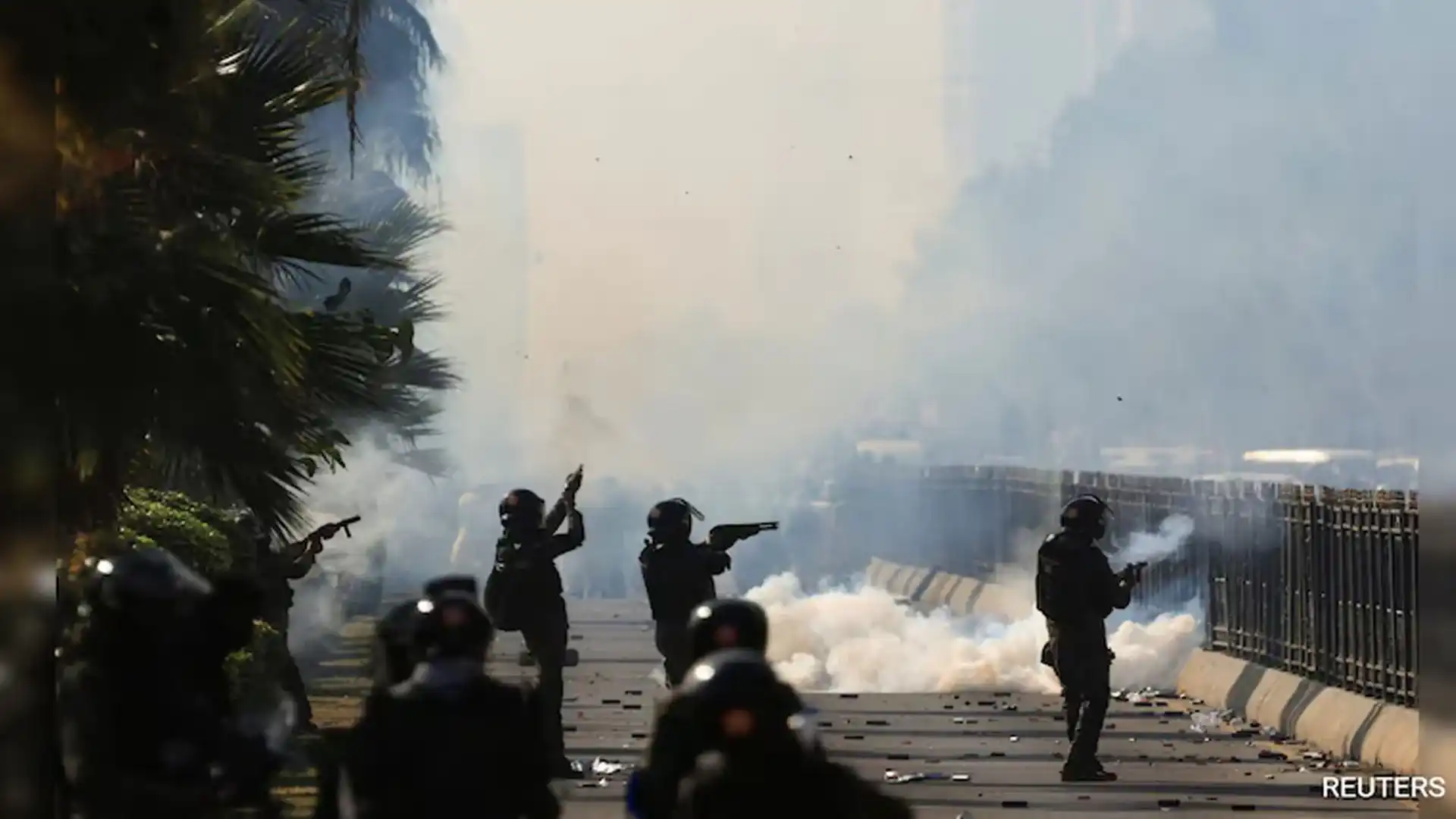
At least 9 people were confirmed dead on Monday in massive youth protests in Kathmandu and other cities of Nepal, which turned violent with bloody clashes with police. Police used lethal force against the demonstrators who attempted to break barricades and enter the Parliament building, days after the country imposed a ban on social media platforms, including Facebook and WhatsApp.

The agitation is being termed as Gen-Z protest in Nepal.Visuals from Kathmandu showed protesters vandalising the Parliament gate as the protest turned violent in Kathmandu.

Nepal Police said, “Nine people have lost their lives as protest turned violent in Kathmandu as people staged a massive protest against the ban on Facebook, Instagram, WhatsApp and other social media sites, leading to clashes between police and protesters.”

The Kathmandu District Administration Office has extended the curfew in parts of Baneshwar after protesters broke into a restricted area. The local administration extended the curfew areas, which include the President’s residence, Shital Niwas area, Maharajgunj, the vice-president’s residence in Lainchaur, all sides of Singha Durbar, the prime minister’s residence in Baluwatar, and surrounding areas.

Authorities have said the extension is intended to prevent further unrest and ensure security in sensitive government locations.

The curfew, issued by Chief District Officer Chhabilal Rijal under Section 6 of the Local Administration Act, is in effect from 12:30 pm to 10 pm. Movement, gatherings, demonstrations, or encirclements within these zones are strictly prohibited.

Thousands of youths joined the protests, criticizing rampant corruption and the government’s ban on 26 unregistered social media platforms, including Facebook, Instagram, WhatsApp, YouTube, and Snapchat. Authorities have urged citizens to stay indoors and comply with the curfew to prevent further incidents.

“A while ago the police fired a bullet which missed me but hit a friend who was standing behind me. He was hit in the hand. The firing has continued till now from inside (the parliament); we still can hear the sounds of the firing. My friend who was standing on the road was shot in the head. The police have been firing indiscriminately, targeting above the knee. Are they permitted to do so?” a protester told ANI.

Dozens of people have been injured and are being treated at various hospitals across Kathmandu. The situation escalated after protesters breached the restricted zone and entered the Parliament premises. Police responded with water cannons, tear gas, and live ammunition, injuring many.

The Gen Z protesters have taken to the streets against alleged government corruption and the ban on social media platforms.

“We were planning to hold a peaceful protest, but as we advanced further, we could see the violence by the police. The police are firing on the people, which is against the essence of a peaceful protest. Those who are sitting in power cannot impose their power on us. Anti-corruption protests are being suppressed, which is against the freedom of speech and the right to expression. The police have been firing at protestors every minute, and people are being rushed out from the site. This should be brought to greater attention,” another protestor told ANI.

From 9 AM (local time) on Monday, demonstrators gathered at Maitighar in Kathmandu to voice their dissent. In recent days, hashtags such as ‘Nepo Kid’ and ‘Nepo Babies’ have been trending online, gaining momentum after the government decided to block unregistered platforms.

According to the Kathmandu District Administration Office, ‘Hami Nepal’ organized the rally, which had sought prior approval. Organizers have been using social media to share information on protest routes and safety tips. They have also urged students to join the demonstrations in their uniforms, carrying books.

“This is the protest by the new generation in Nepal. A new slavery system has been introduced in the nation. Nepali youth’s age is being sold, and high post officials are involved in misappropriation of powers. Human rights are being violated by the major three political parties: CPN-UML, the radical nationalist party; Nepali Congress, which has been supporting from the background; and Maoist Center, which has also remained silent over the issue. They also had banned TikTok at the time,” another protester told ANI. (ANI)

Hazratbal Shrine Vandalism Sparks Political, Religious Row in Jammu & Kashmir

Hazratbal Emblem Row: Waqf Board Chief Darakshan Andrabi Demands FIRs

Engineer Rashid Narrowly Escapes Attack Inside Tihar,AIP Demands Probe into Alleged Harassment

Milad un Nabi 2025: History, Significance, Celebrations, and Debates Around Prophet Muhammad

Zelensky Backs Trump’s Tariffs on India, Calls Russian Energy Trade Putin’s Weapon Against Ukraine

Zelensky

Ukrainian President Volodymyr Zelensky has publicly endorsed U.S. President Donald Trump’s decision to impose steep tariffs on trading partners maintaining strong economic ties with Russia, including India. In a recent interview with American broadcaster ABC, Zelensky called Moscow’s energy exports “a weapon” in the hands of Russian President Vladimir Putin, and argued that punitive economic measures were a necessary step to weaken Russia’s ability to fund its war against Ukraine.

Zelensky: “Energy Is Putin’s Weapon”

Zelensky emphasised that Russia’s continued trade in oil and gas allows Putin to bankroll the invasion of Ukraine. He urged not just the United States, but also Europe and other countries to end all forms of energy dependence on Moscow.

“I think the idea to put tariffs on countries who continue to make deals with Russia is a right idea,” Zelensky said. “Energy is his [Putin’s] weapon. This is only one way to stop the killer – you need to take away his weapon.”

The Ukrainian leader expressed frustration that while many nations have expressed solidarity with Ukraine, some continue to purchase Russian gas and oil, undermining the effectiveness of Western sanctions.

Trump’s Tariffs Target India

The comments come amid escalating trade tensions between Washington and New Delhi. President Trump recently doubled tariffs on Indian goods to a massive 50 percent, citing India’s purchase of Russian crude oil as a direct violation of U.S. sanctions efforts. This includes an additional 25 percent penalty specifically tied to India’s energy imports from Russia.

India has strongly criticised the move, describing the tariff hike as “unfair, unjustified and unreasonable.” New Delhi has repeatedly called for a peaceful resolution to the Ukraine conflict but insists that its energy deals with Moscow are driven by national interest and economic necessity.

Sharp Words for Europe

Zelensky also criticised European partners for their reluctance to fully sever energy ties with Russia. He thanked allied governments for their political and military support, but argued that their ongoing purchases of Russian gas weaken the united front against Moscow.

“Some of them continue to buy oil and Russian gas. And this is not fair. We have to stop buying any kind of energy from Russia,” Zelensky said.

Putin’s Alaska Meeting With Trump

Zelensky further weighed in on Russian President Vladimir Putin’s recent meeting with Donald Trump in Alaska on August 15. Putin was given what many described as a “grand welcome,” but Zelensky said it was “a pity Ukraine was not there.”

According to him, the meeting gave Putin symbolic legitimacy on the global stage, without yielding any progress on a ceasefire. “Trump gave Putin what he wanted… he wanted to meet the U.S. President. Putin wanted to show everybody that he is there,” Zelensky remarked.

Rejecting Putin’s Invite to Moscow

In a pointed message, Zelensky dismissed Putin’s invitation to hold talks in Moscow. “He can come to Kyiv… I can’t go to Moscow when my country is under missiles,” he said, ruling out negotiations on Russia’s terms.

Escalation on the Battlefield

Zelensky’s remarks came shortly before Russia unleashed its largest aerial barrage since the war began. Missiles and drones struck Ukrainian cities, killing four people and setting government offices in Kyiv ablaze. In response, Trump warned that the U.S. was prepared to “move forward with new sanctions” against Moscow.

The failed Alaska summit and the intensifying Russian attacks have raised fears of further escalation. Zelensky, however, said he was counting on a “strong U.S. response” to push back against Russia’s renewed aggression.

Conclusion

By openly backing Trump’s punitive tariffs on India and other Russian trade partners, Zelensky has made clear that he views economic pressure as a vital tool in Ukraine’s survival. His comments underline Kyiv’s frustration with nations balancing between energy interests and moral responsibility. As the war enters a more dangerous phase, the alignment—or resistance—of global powers to Washington’s hard line on Russian trade could determine not only Ukraine’s future, but the stability of the broader international order.

Hazratbal Shrine Vandalism Sparks Political, Religious Row in Jammu & Kashmir

Hazratbal Emblem Row: Waqf Board Chief Darakshan Andrabi Demands FIRs

Engineer Rashid Narrowly Escapes Attack Inside Tihar,AIP Demands Probe into Alleged Harassment

Milad un Nabi 2025: History, Significance, Celebrations, and Debates Around Prophet Muhammad