Born Under a Fading Empire, Sir Syed Ahmad Khan Lit the Torch That Transformed Muslim India Forever

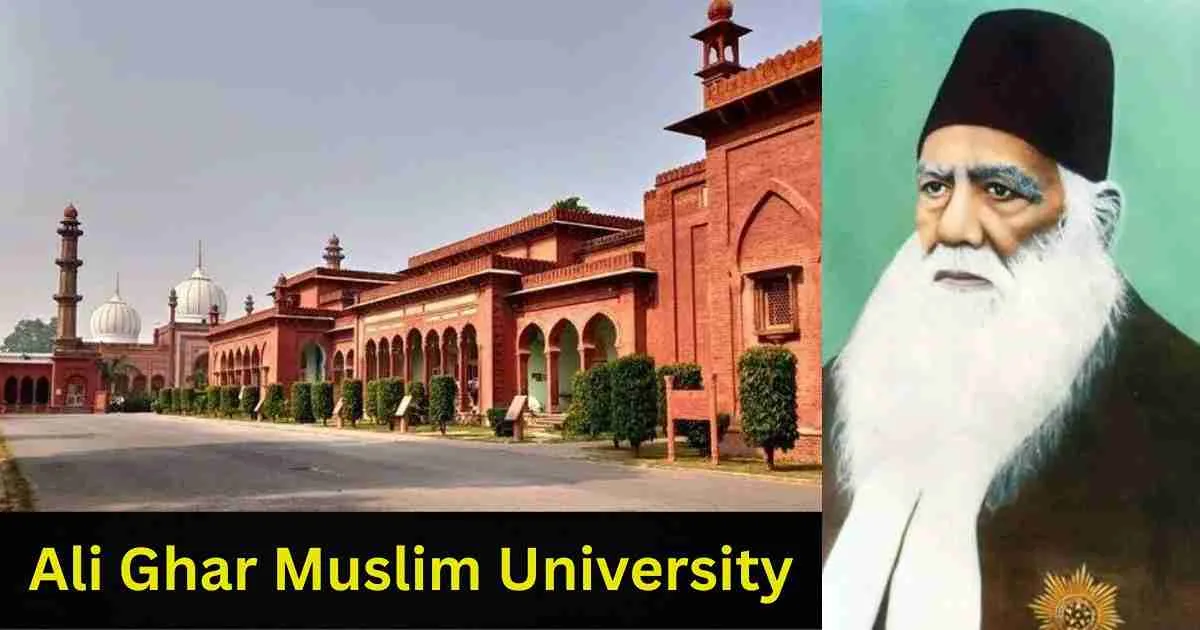
ali ghar muslim university

October 17 is the birthday of famous Islamic reformer, philosopher, educator, scholar and the founder of the Aligarh Muslim University, Sir Syed Ahmad Khan

Date of Birth: 17 October 1817

– Place: Delhi, Mughal Empire

– Ruling Monarch: Akbar II, the penultimate Mughal emperor (reigned 1806–1837)

At the time of Sir Syed’s birth, the Mughal Empire was a shadow of its former glory—its authority largely symbolic, with real power held by the British East India Company. Akbar II’s court was more ceremonial than sovereign, and Delhi had become a city caught between fading grandeur and colonial encroachment.Click Here To Follow Our WhatsApp Channel

Sir Syed’s birth under a declining Mughal regime deeply influenced his worldview. He witnessed firsthand the erosion of Muslim political power and the rise of British dominance. This backdrop shaped his reformist zeal—his push for modern education, scientific thinking, and Muslim upliftment through institutions like the Muhammadan Anglo-Oriental College (later Aligarh Muslim University).Sir Syed is considered as one of the most important architects of modern India.

Sir Syed was born in a family that had previously served the Mughal court for nearly two and a half centuries. He was descended from the family of Prophet Muhammad through his daughter Fatimah and Ali. As a child, he was brought up in a Sufi household by his maternal grandfather Khwaja Fariduddin who was among the descendants of the 12th Sufi scholar of Naqshbandi Tariqa, Khwaja Mohammad Yusuf Hamdani.

The Indian Uprising of 1857 was one of the major turning points in Syed Ahmed’s life. He foresaw the imperative need for the Muslims to acquire proficiency in the English language and modern sciences, if the community were to maintain its social and political clout, particularly in Northern India.

He began to prepare the road map for the formation of a Muslim University by starting various schools. He instituted Scientific Society in 1863, launched The Aligarh Institute Gazette in 1866, and founded the Madrasatul Uloom in Aligarh in 1875. The Madrasatul Uloom later became the Muhammadan Anglo-Oriental College in 1877.

He patterned MAO College after Oxford and Cambridge universities that he went on a trip to London in 1869. Later, the same MAO College turned into the Aligarh Muslim University in 1920. The year 2020 marks the 100 years of the prestigious Aligarh Muslim University.

Apart from education and social reforms, Sir Syed contributed a lot to the religious, legal, historical, and political disciplines of learnings. He wrote several books, journals, and articles on different subjects. Today, Sir Syed is not only celebrated by the Indians or Pakistanis but by the peoples from all around the world. He died on March 27, 1898, and lies buried next to the main mosque at AMU.
Mifta Hafiz from Poonch Clears J&K Assistant Director (E&S) Exam in Planning & Monitoring Department

Mifta Hafiz

In a proud moment for Jammu and Kashmir, Mifta Hafiz, daughter of Abdul Hafeez and a resident of Kanuyian village in Poonch district, has successfully cleared the Assistant Director (E&S) examination conducted by the Jammu and Kashmir Public Service Commission (JKPSC).

Mifta’s achievement has brought immense joy to her family, friends, and the entire region of Poonch. Her success highlights the growing participation of young and talented individuals from border districts in key administrative roles across Jammu and Kashmir.Click Here To Follow Our WhatsApp Channel

According to officials, Mifta will now serve as Assistant Director (Economics & Statistics) in the Planning, Development and Monitoring Department, a vital wing responsible for shaping the region’s developmental policies and data-driven planning.

Her dedication, hard work, and perseverance throughout the competitive selection process have been widely praised. Teachers and mentors described her as a sincere and disciplined student who always aimed to contribute to society through public service.

Locals from Kanuyian also expressed pride in her success, calling her an inspiration for young women across the Pir Panjal region who aspire to join civil and administrative services.

Family members thanked Allah Almighty for her success and expressed hope that she will continue to serve the people of Jammu and Kashmir with honesty and commitment.

With her appointment, Mifta Hafiz joins the growing list of youth from remote areas who are making their mark in public administration, strengthening the vision of an empowered and progressive Jammu and Kashmir.

Sir Syed Ahmad Khan: His Life, Education, and Lasting Services to the Muslim Community

Sir Syed Ahmad Khan

Sir Syed Ahmad Khan was one of the most important Muslim leaders of the 19th century. He was a reformer, educator, writer, and social thinker who worked tirelessly to uplift the Muslim community of India. At a time when Muslims were facing political downfall and educational backwardness, Sir Syed became a light of hope. Through his vision, he inspired generations to embrace modern education while staying true to their faith.


Early Life and Background

Sir Syed Ahmad Khan was born on 17 October 1817 in Delhi, during the last days of the Mughal Empire. His family was well-known for its scholarship and service in the Mughal court. His father, Syed Muttaqi, was connected with the royal family, while his mother, Aziz-un-Nisa, was a wise and religious woman who gave him a strong moral foundation.

From childhood, Sir Syed showed great interest in learning. He studied the Qur’an, Arabic, Persian, mathematics, and medicine. Unlike many others of his time, he wanted to understand both traditional and modern knowledge. His early education shaped his open-minded attitude towards the world.


Professional Life

In 1838, Sir Syed joined the East India Company as a judicial officer. During his service, he travelled to many parts of India and closely observed the social and political condition of the people, especially Muslims.

When the War of 1857 (also known as the First War of Independence) broke out, Sir Syed remained loyal to his duty and helped protect innocent lives during the chaos. The British, however, blamed Muslims for the revolt, and the community suffered severe punishment. Seeing their misery deeply affected Sir Syed and changed the direction of his life.


After the War of 1857

After the war, Muslims of India lost their positions in government, education, and trade. They became fearful of learning English or cooperating with the British. Sir Syed realised that without modern education, Muslims would remain weak and backward.

In response, he wrote his famous book “Asbab-e-Baghawat-e-Hind” (The Causes of the Indian Revolt), where he explained the true reasons behind the uprising. He argued that the British government’s policies, not religion, caused the revolt. His honesty earned him respect from the British and showed his courage to speak the truth.


Educational Efforts and the Aligarh Movement

Sir Syed believed that education was the only key to progress. He encouraged Muslims to study English, science, and modern subjects so that they could compete in a changing world.

In 1864, he founded the Scientific Society in Ghazipur to translate English books into Urdu, making modern knowledge accessible to ordinary Muslims.

His greatest contribution came in 1875, when he founded the Mohammedan Anglo-Oriental College in Aligarh, which later became the Aligarh Muslim University (AMU). This institution combined Western learning with Islamic morals. It produced educated Muslims who later became leaders in various fields. The Aligarh Movement started by Sir Syed was not just about education — it was about the revival and reform of the entire Muslim community.


Social and Religious Reforms

Sir Syed was a social reformer who wanted to remove outdated customs and superstitions from Muslim society. He encouraged critical thinking, honesty, and moral behaviour. He also supported women’s education and opposed child marriage and unnecessary spending on weddings.

In 1870, he started the journal “Tahzib-ul-Akhlaq” (The Refinement of Morals), through which he spread his message of social change. He urged Muslims to adopt modern ways of life without losing their Islamic identity.

Religiously, Sir Syed tried to show that Islam and modern science were not opposed to each other. He interpreted Islamic teachings in a rational way and believed that reason and faith could go hand in hand. He worked to create harmony between religion and modern knowledge.


Political Views

Sir Syed was not in favour of political confrontation with the British. He believed Muslims first needed education and unity before engaging in politics. When the Indian National Congress was formed in 1885, he advised Muslims not to join it immediately, fearing their interests might be ignored in a Hindu-majority organisation.

He encouraged Muslims to develop their own political awareness and identity. His foresight later influenced leaders like Allama Iqbal and Quaid-e-Azam Muhammad Ali Jinnah, who carried forward his vision in shaping the political destiny of Muslims in India.


Last Years and Death

Sir Syed continued his mission until the end of his life. He spent his final years in Aligarh, overseeing the development of the college and guiding the younger generation. He passed away on 27 March 1898 and was buried inside the campus of Aligarh Muslim University — the very institution that became the symbol of his dream.


Legacy

Sir Syed Ahmad Khan’s contribution to education and reform is unforgettable. The Aligarh Movement not only produced educated Muslims but also gave birth to a new sense of self-respect and confidence in the community. His efforts changed the direction of Muslim thought in India and left a deep mark on the history of South Asia.

Even today, Sir Syed is remembered as a pioneer of modern Muslim education, a bridge between tradition and progress, and a true reformer who devoted his life to the service of his people.


Conclusion

Sir Syed Ahmad Khan’s life was a journey of faith, courage, and vision. He taught Muslims that knowledge is power and that education is the real foundation of progress. His message still holds true — that no nation can rise without learning, unity, and moral strength. Through his lasting services, Sir Syed remains one of the most respected and inspiring figures in the history of the Indian subcontinent.


13000 PhDs and Engineers Fight for One Constable Job in Madhya Pradesh — A Shocking Reality Check!

unemployment

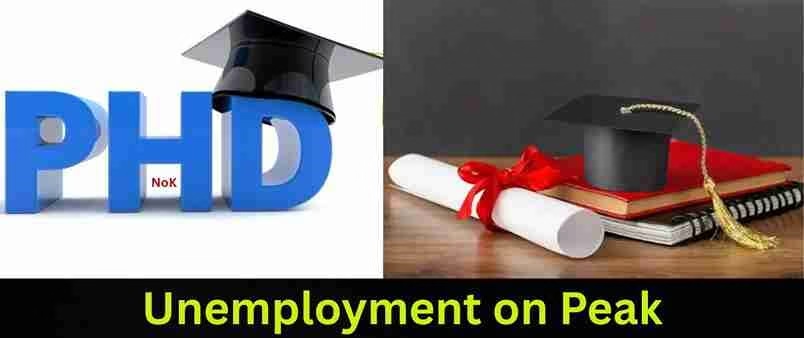
In a story that sounds almost unbelievable, more than 13000 highly educated candidates — including PhD holders, engineers, and postgraduates — have applied for just one constable post in Madhya Pradesh. The job, which only requires a Class 10 qualification, has exposed the growing gap between education and employment in India.Click Here To Follow Our WhatsApp Channel

Thousands Compete for Basic Government Job

The recruitment drive was part of the Madhya Pradesh Police Constable Recruitment 2025, where the department invited applications for 7,500 posts. What followed shocked everyone — nearly 9.76 lakh people applied. This means that, on average, 13,000 candidates are competing for a single post.

Among the applicants were 42 PhD holders, over 12,000 engineers, and around 23,000 postgraduates. Many of them had degrees in management, law, and even computer science. Despite their qualifications, they lined up for a job that offers a monthly salary between ₹25,000 and ₹30,000.

Why the Rush for a Constable Job?

The simple answer is — job security. In India, a government job still means stability, respect, and a steady income. With private sector layoffs, contract-based work, and poor salaries in small towns, many young people see even a police constable job as a safe option.

A postgraduate from Bhopal who applied said, “I studied for years, but I couldn’t find a job in my field. At least this one gives me some security.”

Experts say the incident is a reflection of the country’s deep unemployment crisis, especially among the educated youth. Despite spending years in universities, many are unable to find decent jobs that match their qualifications.

A Painful Picture of India’s Job Market

India produces millions of graduates every year, but the number of available jobs hasn’t grown at the same pace. The private sector is struggling, and government recruitment has slowed down in many departments.

The result? People are overqualified but underemployed. PhD holders apply for clerk jobs, engineers drive taxis, and now, postgraduates are competing for constable posts.

Economist Dr. R. K. Sharma explained, “This situation shows a serious mismatch between education and employment. We’re producing degree holders, but not enough opportunities to use their skills.”

Social Media Outrage and Public Reactions

Once the news broke, it spread like wildfire on social media. Many users expressed sadness, calling it a “wake-up call” for India’s leaders.

One user wrote on X (formerly Twitter): “When a PhD is applying for a constable job, it’s not competition — it’s desperation.”

Another said, “This shows how young Indians are losing faith in private jobs and depending only on government posts.”

What Can Be Done?

Experts suggest that the government needs to create more meaningful job opportunities, especially in rural and semi-urban areas. They say education should be better linked to the job market, with skill-based training and encouragement for startups and small businesses.

Dr. Sharma added, “India’s focus must shift from producing degrees to creating real employment. The youth want work that values their skills, not just any job.”

A Bigger Message for the Nation

The Madhya Pradesh case is not just a local issue — it’s a reflection of India’s wider employment challenge. The story of 13,000 PhDs and engineers fighting for a single police post is more than shocking — it’s heartbreaking.

It shows the reality of a system where education no longer guarantees success, and where young people are forced to settle for less just to survive. Until strong and smart employment policies are introduced, such stories will continue to repeat — turning ambition into anxiety for millions of India’s youth.


DPS Srinagar Wins First Prize at Media Fest 2025 for Outstanding Student Short Film

Media Fest 2025

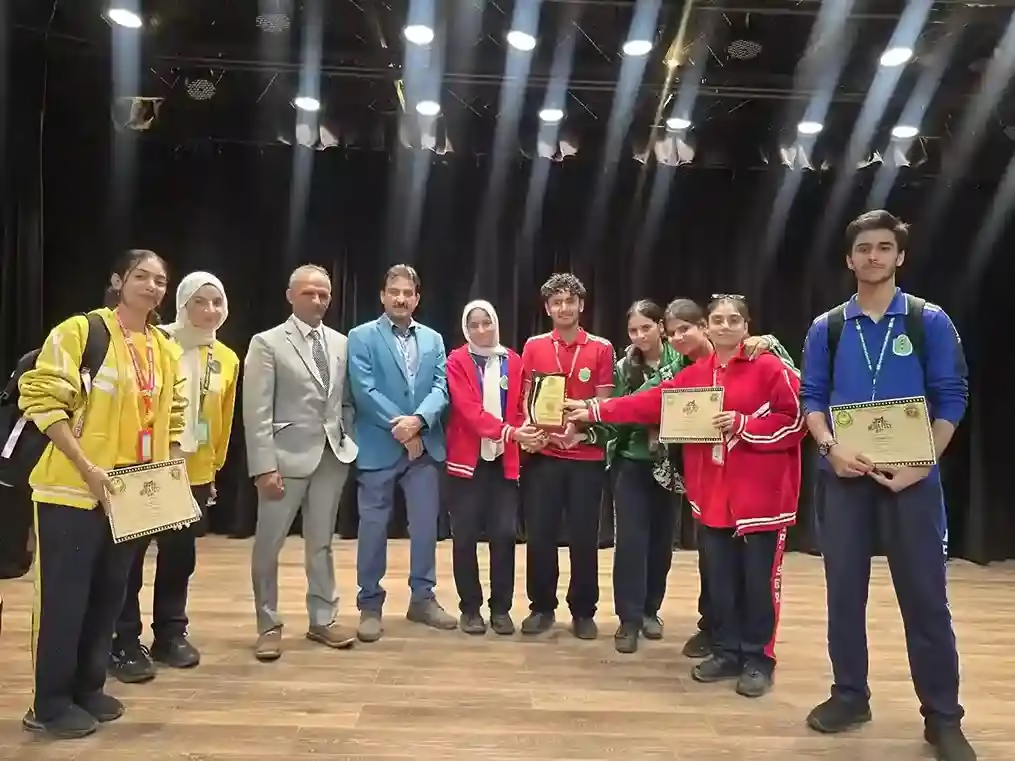
Showcasing exceptional creativity and storytelling talent, student filmmakers from Delhi Public School (DPS) Srinagar have won the first prize in the Student Short Film Competition at Media Fest 2025, hosted by the Green Valley Educational Institute. The event brought together young filmmakers from top schools across the Valley, offering a platform for innovation, imagination, and artistic expression.Click Here To Follow Our WhatsApp Channel

The award-winning short film by DPS Srinagar, screened on October 13, 2025, stood out for its technical excellence, emotional depth, and creative storytelling. The film captivated both the audience and the jury with its powerful narrative and cinematic finesse. Judges commended the students for skillfully blending technical mastery with meaningful content, creating a production that left a lasting impression.

The victory marks a significant milestone for DPS Srinagar’s Media and Arts Department, which has consistently encouraged students to explore the dynamic world of digital media and filmmaking. The recognition at such a competitive festival reaffirms the school’s growing reputation for nurturing creative excellence and innovation in the visual arts.

The theme of Media Fest 2025, “A Celebration of Imagination, Innovation, and Inspiration,” resonated perfectly with DPS Srinagar’s winning entry. The festival served as a vibrant platform for students to express their ideas and showcase how young minds perceive and portray real-world issues through art and media.

Expressing immense pride, Principal Ms. Shafaq Afshan congratulated the winning team and their mentors, saying:

“This is a wonderful achievement that shines a light on the incredible artistic talent within our school. Storytelling is a powerful tool, and our students have shown they can use it with both skill and sensitivity. Congratulations to the team and their mentors for this outstanding recognition.”

Chairman Mr. Vijay Dhar also praised the students for their creativity and dedication, noting that their success reflects the school’s holistic approach to education.

“To win in a field as innovative as digital media is a clear sign of our commitment to fostering all-round excellence. These young filmmakers have made the entire DPS family proud. This award is a great encouragement for all our students to explore their creative passions.”

The achievement highlights how DPS Srinagar continues to lead in promoting media literacy, artistic exploration, and innovative learning. Through such accomplishments, the school reinforces its mission of empowering students to express themselves meaningfully in a rapidly evolving digital world.

With this victory, DPS Srinagar once again proves that young filmmakers from Kashmir possess immense potential and global-standard storytelling ability, setting a benchmark for creativity and excellence in student cinema.

Islamic University of Science and Technology (IUST) Hosts Leadership Workshop on Climate Action and Innovation in Collaboration with HCI

Climate Action

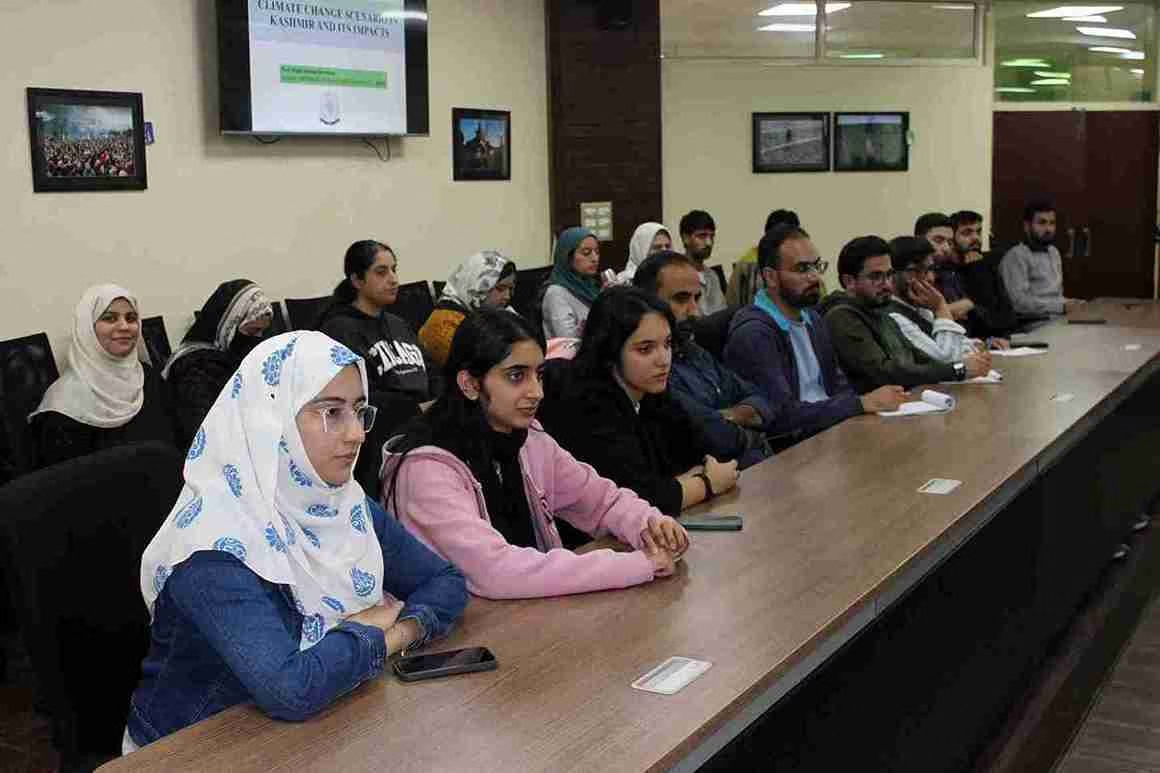
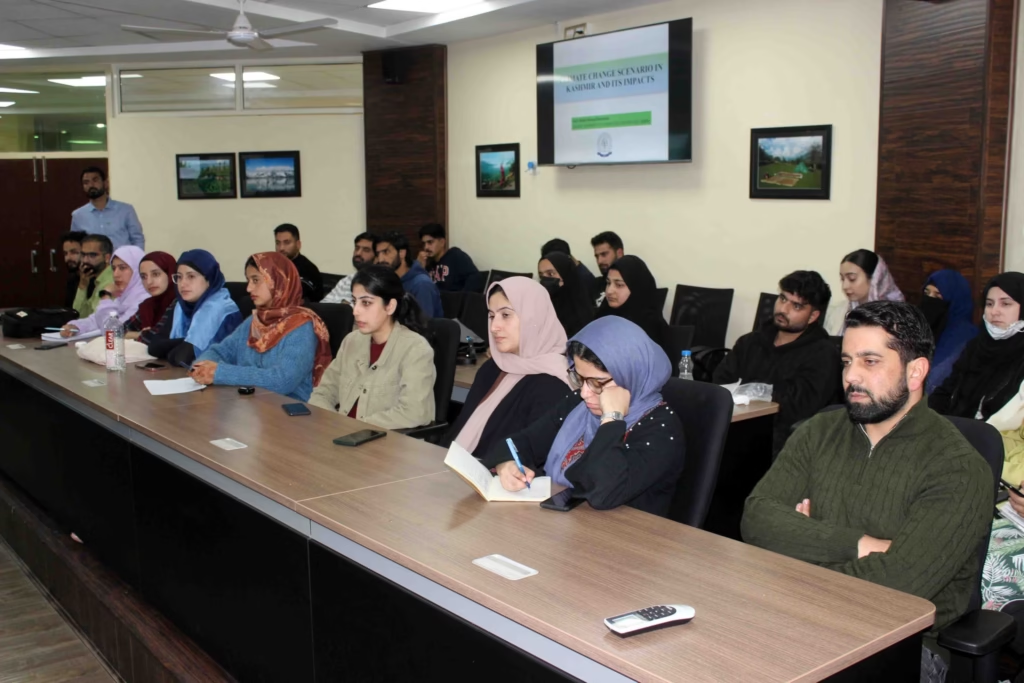
The Department of Geomatics, Islamic University of Science and Technology (IUST), in collaboration with the Healthy Climate Initiative (HCI), organized a Leadership Workshop on Climate Action and Innovation. The workshop aimed to fosterleadership and innovation in tackling climate change through research, technology, and community engagement brought together experts, academicians, and practitioners to discuss innovative solutions for climate resilience and sustainability.Click Here To Follow Our WhatsApp Channel

Delivering the keynote address, Prof. Shakil A. Romshoo, Vice Chancellor, highlighted the vulnerability of the Himalayan region to climate change and called for localized research and adaptive strategies. Dr. Soumitra Das, Chairman and Executive Director, HCI, spoke about innovative cooling technologies to mitigate the climate crisis, while Mr. Rituraj Phukan,

Director, HCI, emphasized climate justice and equitable action. Environmental lawyer Mr. Nadeem Qadri stressed the importance of environmental governance and community participation. Earlier, welcoming the guests, Dr. Tariq Abdullah, Head, Department of Geomatics, who emphasized the role of geospatial technologies in addressing climate challenges. The event also showcased IUST’s eco-friendly infrastructure, and concluded with a vote of thanks by Dr. Jasia Bashir, Assistant Professor, Department of Geomatics.

𝗜𝘀𝘀𝘂𝗲𝗱 𝗯𝘆 𝗣𝗥&𝗠𝗖, 𝗜𝗨𝗦𝗧

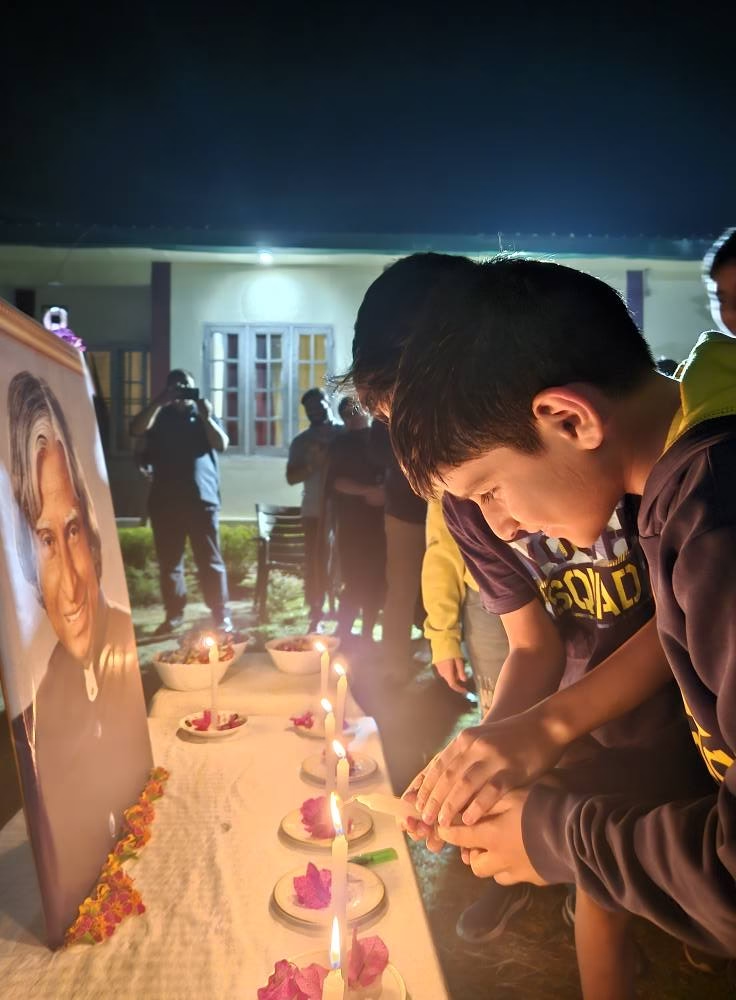
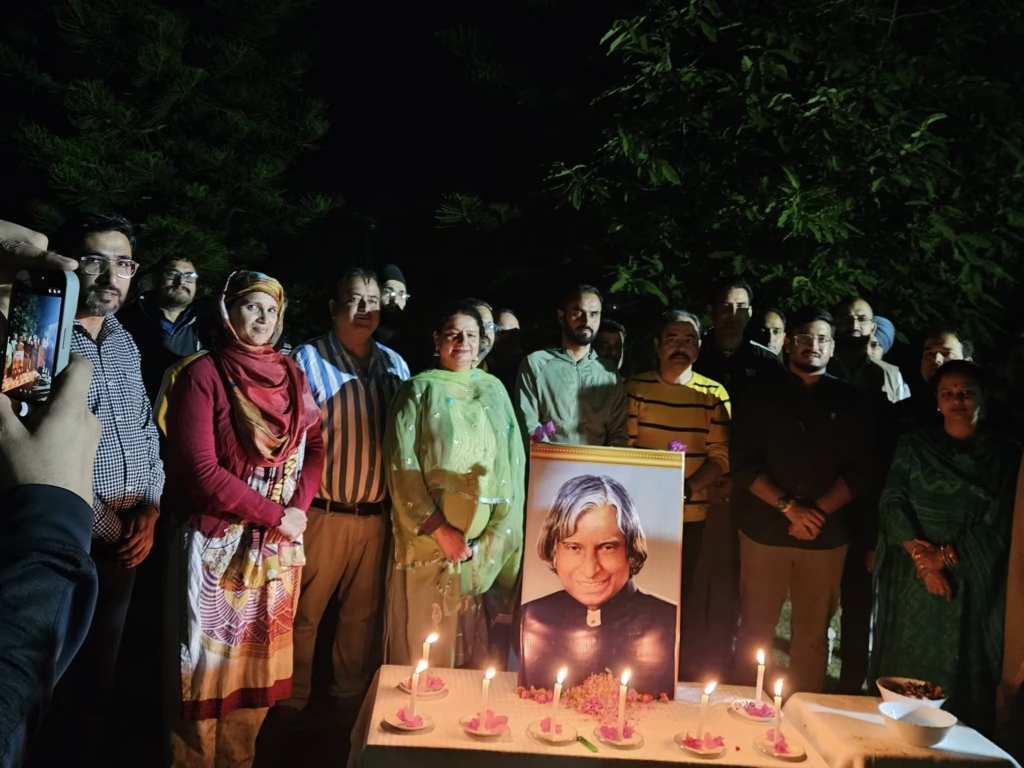
Baba Ghulam Shah Badshah University (BGSBU) Holds Candlelight Tribute to Dr. A. P. J. Abdul Kalam on His Birth Anniversary

Birth Anniversary Of Dr. A P J Abdul Kalam

To commemorate the birth anniversary of Dr. A. P. J. Abdul Kalam, former President of India, a candlelight tribute was organized this evening on the lawn of the University Guest House at Baba Ghulam Shah Badshah University.

Mr. Abhishek Sharma, IAS, Registrar BGSBU, graced the occasion and led the gathering in paying heartfelt homage to the “People’s President.”Click Here To Follow Our WhatsApp Channel

In his address, the Registrar said, “Dr. Kalam was not just a great scientist and statesman but also a true visionary who inspired millions with his humility, wisdom, and unwavering commitment to nation-building. His life continues to remind us that with knowledge, perseverance, and integrity, we can transform challenges into opportunities.”

He further emphasized the need to instill Dr. Kalam’s values among the youth, stating, “Our students are the torchbearers of the future, and it is our collective responsibility to guide them with the ideals that Dr. Kalam stood for.”

Faculty members also shared their views on the occasion, recalling Dr. Kalam’s enduring legacy as a teacher, a leader, and a symbol of hope for the nation. They highlighted his vision for a self-reliant India driven by education, innovation, and youth empowerment.

The event witnessed the participation of faculty members, administrative staff, and students.

GDC Women Baramulla Hosts Lecture on Mir Syed Ali Hamadani’s (RA) Enduring Legacy

naseem

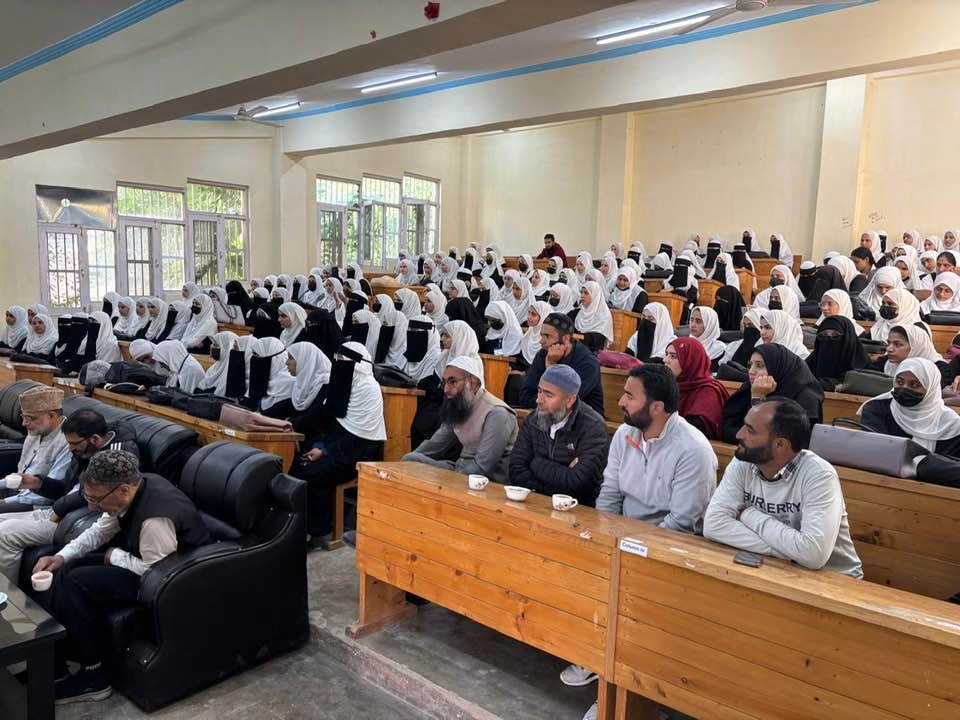
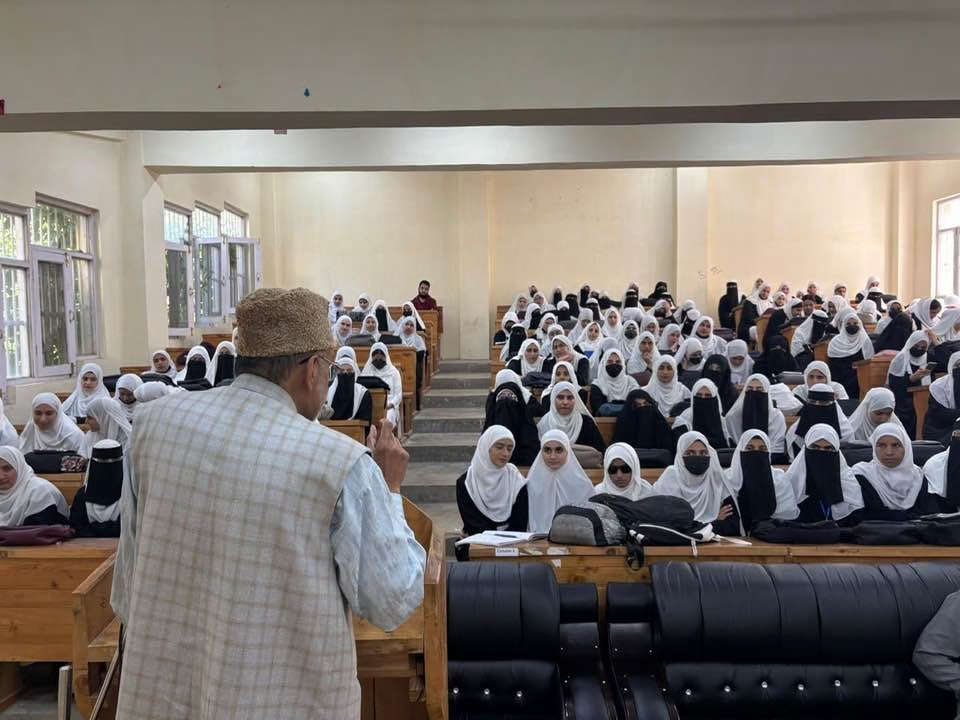
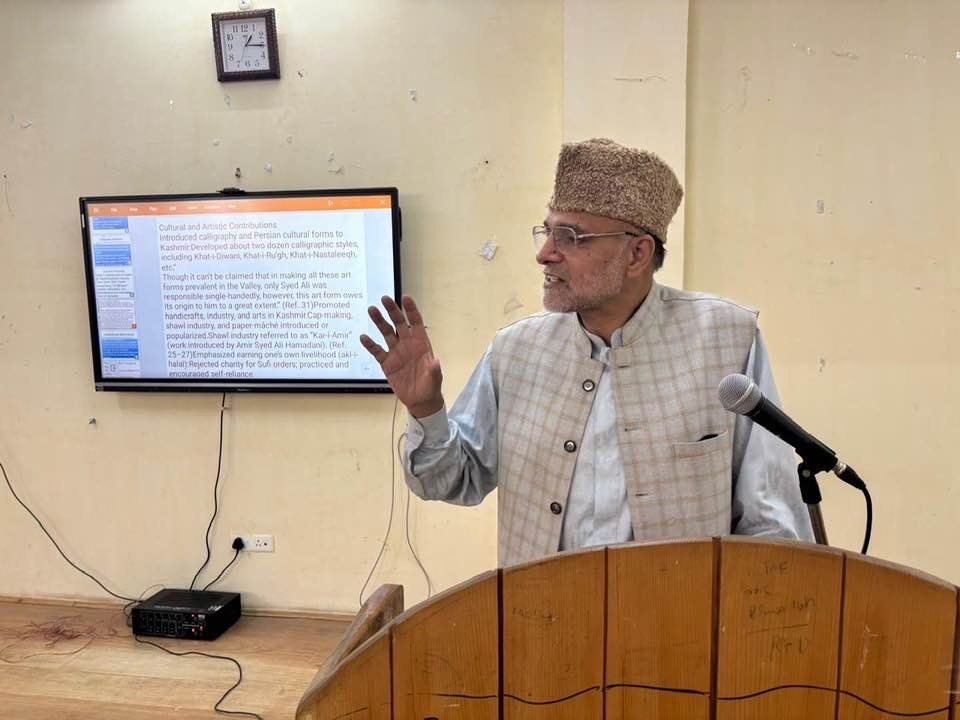
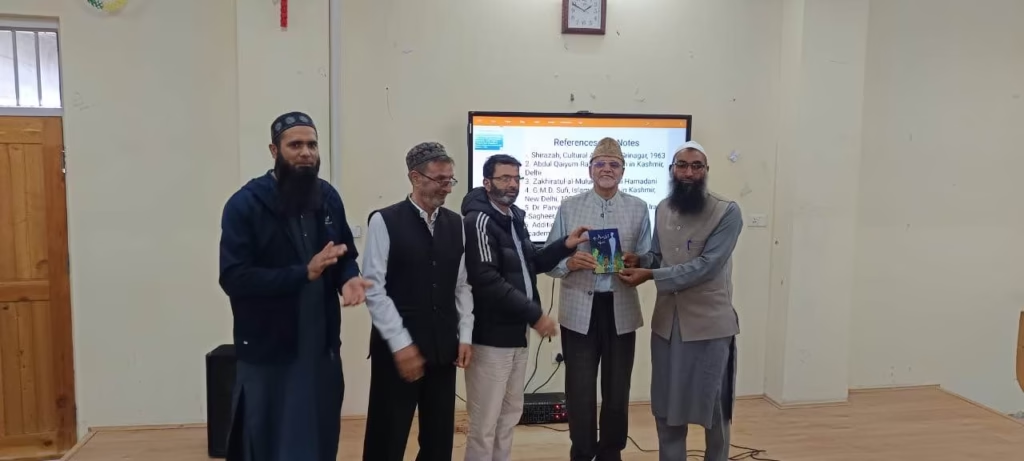
Government Degree College (GDC) for Women, Baramulla, organised an insightful extension lecture on the life, works, and contributions of the revered Sufi scholar and reformer, Mir Syed Ali Hamadani (RA). The event was held under the guidance of the college Principal, Prof. (Dr.) Neelofar Bhat, and aimed to shed light on the multidimensional impact of Hamadani’s teachings on Kashmir’s spiritual, cultural, and intellectual evolution.

In his address, Prof. Rafiabadi offered a comprehensive overview of Mir Syed Ali Hamadani’s (RA) spiritual mission and intellectual legacy. He described the 14th-century Sufi saint as a bridge between Central Asian scholarship and Kashmiri civilisation, noting that Hamadani’s arrival in Kashmir introduced a transformative era in art, spirituality, and social ethics.

Highlighting his contributions to Persian literature, calligraphy, crafts, and architecture, Prof. Rafiabadi explained how Hamadani (RA) helped shape the very identity of Kashmir as a centre of culture and spirituality. He particularly emphasised his influence on the introduction of handicrafts and shawl weaving in the Valley, which later became the hallmark of Kashmiri economy and aesthetics.

The speaker further reflected on Hamadani’s efforts to reform society through education, ethical trade, and moral discipline, underscoring that his teachings were deeply rooted in the Quran and Sunnah. “Mir Syed Ali Hamadani (RA) was not only a spiritual leader but also a visionary social reformer who understood the importance of knowledge, unity, and economic independence,” Prof. Rafiabadi remarked.

Principal Prof. (Dr.) Neelofar Bhat, in her concluding remarks, appreciated the enlightening lecture and said that understanding figures like Hamadani (RA) is crucial for young generations to reconnect with their spiritual and cultural roots. She also stressed the need to integrate such legacy-based discourses into academic learning for a holistic educational experience.

Faculty members, students, and scholars from different departments attended the event, engaging actively in the interactive session that followed. The lecture concluded with a note of gratitude to Prof. Rafiabadi for his scholarly insights and to the organising committee for successfully hosting a session that celebrated one of Kashmir’s most influential spiritual personalities.

Dachnipora Welfare Forum Strongly Condemns Indecent Acts at Physics Walla Event in Anantnag

ab rashid mir

The Dachnipora Welfare Forum, Anantnag, has strongly condemned the immoral and indecent acts witnessed during the recent Physics Walla event held in the district. In a statement, the forum said that such behaviour is completely against the moral, cultural, and religious values of the people of Anantnag.Click Here To Follow Our WhatsApp Channel

Master Abdul Rasid Mir, President of the Dachnipora Welfare Forum, expressed deep concern over the incident, calling it a disgraceful act that tarnishes the reputation of the district known for its dignity, respect, and moral integrity. He emphasised that education should enlighten the hearts and minds of the youth, not promote immodesty or disrespect in the name of modernity or entertainment.

The forum urged the local administration to take strict action against those responsible and to ensure that such un-Islamic and unethical acts are never repeated. It also appealed to parents, teachers, and community elders to guide the youth towards moral and respectful conduct in public events.

Reaffirming its commitment to protect the cultural and spiritual identity of Anantnag, the Dachnipora Welfare Forum vowed to oppose any attempt to corrupt the values and traditions of this sacred land.

University of Kashmir Marks International Day for Disaster Risk Reduction with Focus on ‘Fund Resilience, Not Disasters’

International Day for Disaster

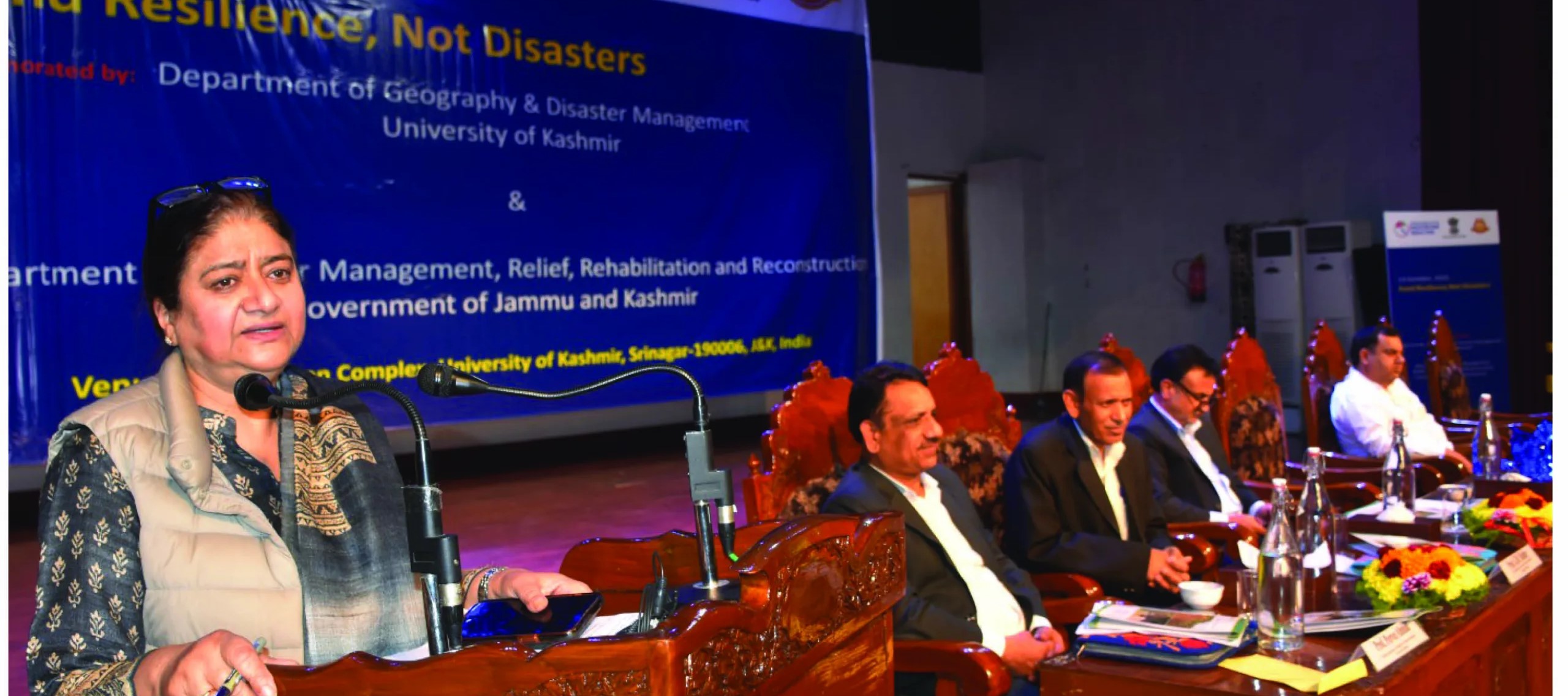
The Department of Geography and Disaster Management, University of Kashmir (KU), in collaboration with the Department of Disaster Management, Relief, Rehabilitation and Reconstruction (DMRRR), Government of Jammu and Kashmir, organised a special event on Monday to mark the International Day for Disaster Risk Reduction (IDDRR) at the university’s main campus.Click Here To Follow Our WhatsApp Channel

According to a statement issued by the university, the commemoration, themed “Fund Resilience, Not Disasters,” focused on the importance of investing in disaster prevention and preparedness rather than relying on reactive response measures. The event aimed to highlight the increasing financial and social burden of disasters and the urgent need for risk-informed policies that strengthen community resilience.

In her presidential address, KU Vice-Chancellor Professor Nilofer Khan stated: “Disasters expose the deep inequalities within our societies. The poorest and most vulnerable are often the worst affected and least equipped to recover. Building resilience requires us to address these underlying vulnerabilities through inclusive, equitable, and proactive planning.”

Dean Research KU, Professor Mohammad Sultan Bhat, observed that disasters are becoming increasingly expensive, with global losses amounting to billions of dollars each year. Giasul Haq, Additional Secretary to the Government, DMRRR J&K, stressed the need for coordinated institutional efforts to strengthen disaster preparedness and ensure effective implementation of risk reduction strategies at the local level.

In a virtual keynote address, Professor Peter Sammonds from University College London (UCL) said that disasters largely arise from societal vulnerabilities, underlining the need for strong governance, equitable planning, and community preparedness.

Registrar KU, Professor Naseer Iqbal, emphasised the importance of preparedness and the availability of safety equipment during disasters. Dr Jagvir Singh, Scientist-G and Advisor at the Ministry of Earth Sciences, Government of India, in his online address, highlighted the need to integrate research with community-based approaches to enhance disaster resilience.

Snober Jameel, Under Secretary, DMRRR J&K, emphasised the active role of youth in promoting resilience. Earlier, Professor Pervez Ahmed from the Department of Geography welcomed the participants and outlined the purpose of the event. Proceedings were conducted by Dr Akhtar Alam, while the vote of thanks was presented by Professor G. M. Rather, Head of the Department of Geography, KU.

The event also included students and faculty from allied departments and constituent colleges in a campus road show featuring placards and banners to raise awareness about the critical role of education in disaster risk reduction (DRR). Officials from DMRRR J&K showcased the department’s functions in disaster management, followed by live demonstrations and awareness sessions by the State Disaster Response Force (SDRF).

Taliban Reverses Ban on Women Journalists After Backlash During Muttaqi’s India Visit

Dr. Mohammad Sultan Khuroo: From Sopore’s Spiritual Roots to Global Excellence in Gastroenterology and Hepatology

TLP Leader Syed Ahmed Shah Bukhari Killed in Muridke Clash During Pro-Palestine March in Punjab