University of Kashmir Announces Winter Break From January 10 to February 22, 2026

kashmir university

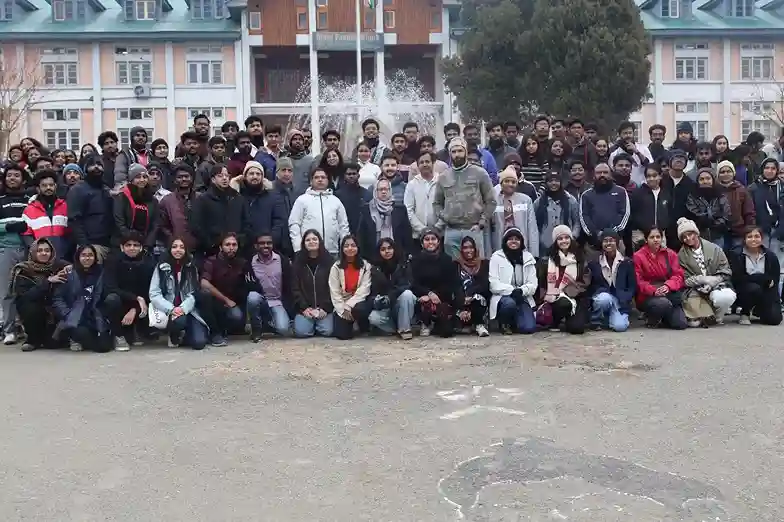
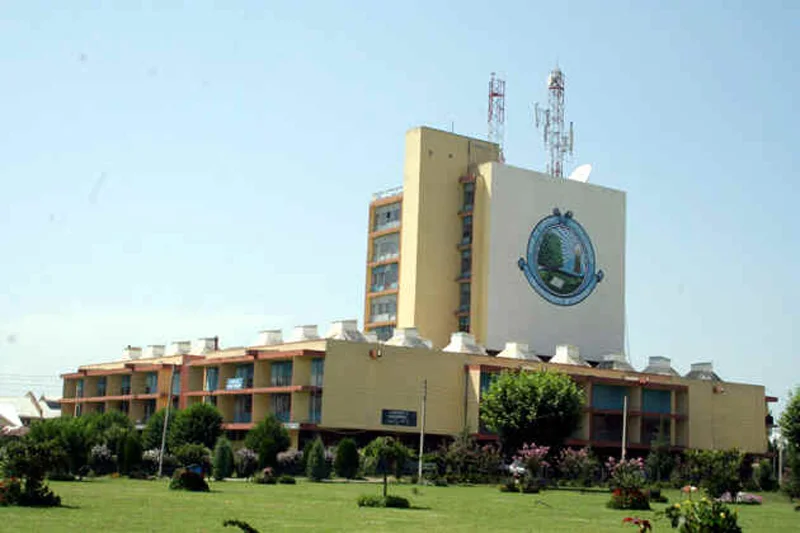
The University of Kashmir on Friday officially announced its winter break for the current academic year, bringing relief to students across its campuses.

According to an official order accessed by Kashmir News Service (KNS), the winter vacation will begin on January 10, 2026, and continue until February 22, 2026. Click Here To Follow Our WhatsApp Channel


Teaching Departments to Remain Closed

The order states that all teaching departments of the main campus and off-site campuses will observe the winter vacation during this period.

“It is for the information of all concerned that the teaching departments of the main and off-site campuses shall observe winter vacations with effect from January 10, 2026, to February 22, 2026,” the order reads.


Offices and Exams to Continue as Scheduled

Despite the teaching break, the university has clarified that all departmental and campus offices will remain functional.

Heads of departments, Directors, and Coordinators have been instructed to ensure that:

  • Offices function as usual
  • Examinations, if scheduled, are conducted on time
  • Other academic and administrative activities continue without disruption

This means students may still be required to appear for exams or complete formalities during the vacation period if notified.


In Line With Kashmir’s Winter Vacation Pattern

The university’s decision aligns with the phased winter vacation system currently followed across the Kashmir Valley.

For the 2025–2026 academic session:

  • Students from pre-primary to Class 8 began winter holidays on December 1, 2025, lasting until February 28, 2026
  • Students of Classes 9 to 12 started their break on December 11, 2025, which will end on February 22, 2026

Relief for Students During Harsh Winter

With severe cold conditions prevailing across Kashmir, the winter break is expected to provide comfort to students while ensuring that essential academic and administrative work continues smoothly.

Students have been advised to stay updated with official university notifications regarding exams or other academic requirements during the vacation period.

Sakina Itoo Slams SMVDIME (Shri Mata Vaishno Devi Institute of Medical Excellence) Derecognition, Calls It Political and Harmful to Students

sakeena itoo

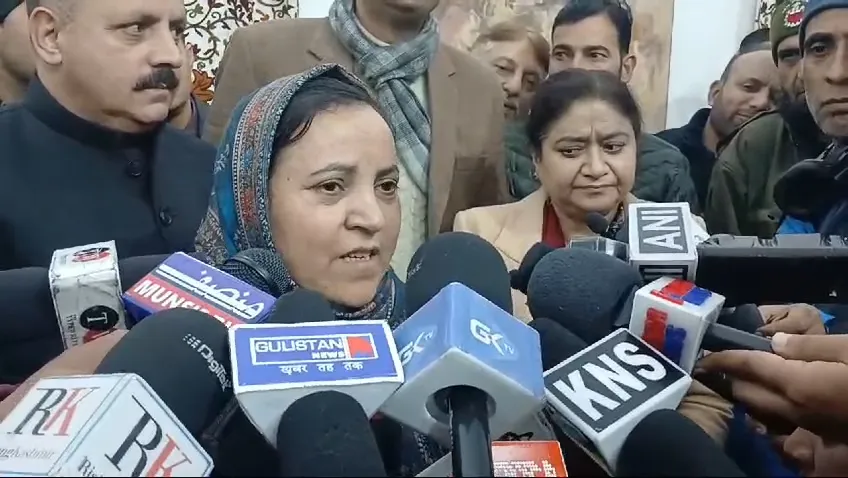
Health and Medical Education Minister Sakina Itoo has strongly criticised the decision to withdraw recognition of the Shri Mata Vaishno Devi Institute of Medical Excellence (SMVDIME), calling it an act of misfortune driven by political interests and the misuse of religion.

Speaking to Kashmir News Service (KNS), the minister said the decision has deeply affected students who earned their admissions purely on merit and warned against dragging religion into education and healthcare.Click Here To Follow Our WhatsApp Channel


“Our Children Earn Seats on Merit”

Minister Itoo said medical colleges in Jammu and Kashmir are limited, and students work extremely hard to qualify through the NEET examination.

“Our children qualify on merit and secure seats through hard work,” she said. “To cancel something that was already granted is deeply unfortunate. This college should have been strengthened to produce more doctors for our people. Instead, it is being targeted for political games by exploiting religious sentiments.”

She said the intention behind the move was clear and deeply regrettable.


Students Made Scapegoats

Addressing the condition of the affected students, Minister Itoo said many of them are mentally distressed after months of uncertainty.

“These children are depressed. They are being made scapegoats despite qualifying through NEET on merit,” she said. “They were not admitted through any favour. They earned their place fairly.”

She added that such actions damage trust in the education system and harm young careers.


Omar Abdullah Orders Immediate Relief

Minister Itoo said Omar Abdullah has directed the department to ensure that all affected students are shifted to the nearest possible recognised medical colleges within Jammu and Kashmir.

“The department is already working on this,” she said. “I have also instructed the Secretary to prepare a proposal so these students can be relieved from the mental torture they have faced and continue their MBBS studies smoothly.”


Questions Raised Over NMC Timing

Questioning the timing of the decision by the National Medical Commission (NMC), Minister Itoo asked why issues were not addressed earlier.

“If the earlier inspection by the Medical Council of India approved the college, why were shortcomings not fixed then?” she asked. “Why are these issues being highlighted now, especially after objections were raised about Muslim students getting admission?”

She called the cancellation on such grounds extremely unfortunate.


“Doctors Serve Humanity, Not Religion”

Minister Itoo strongly rejected the use of religion in medical education.

“A doctor’s oath is taken in the name of humanity, not religion,” she said. “Doctors treat human beings, not Hindus or Muslims.”

She added that religion should never be used in education or medicine and warned against politicising such sensitive areas.


Remarks at University of Jammu

Earlier, while speaking at the Shri Aurobindo Gyan Kendra in the Dhanvantri Library at the University of Jammu, the minister said certain forces are spreading hate for political gain.

“We can criticise the government and debate development,” she said. “But we cannot bring religion into education or medicine.”

She expressed sadness that such divisions were becoming common and said Jammu and Kashmir has suffered greatly due to politics of division.


Background of the Controversy

The controversy began after the NMC derecognised SMVDIME, citing failure to meet minimum standards. The order directed that all existing MBBS students be transferred to other recognised colleges in the Union Territory.

The issue became political after it emerged that 42 of the 50 students in the inaugural 2025–26 batch were Muslims, along with one Sikh and eight Hindu students from Jammu. This triggered protests by several Hindu right-wing groups in the region.


Call for Unity and Education Without Politics

Minister Itoo concluded by urging people to rise above religious divisions and focus on humanity.

“We must set aside religion and move forward together,” she said. “Education should unite us, not divide us. Politics has many spaces, but education and medicine should be kept free from it.”

Her remarks have added weight to the growing demand for a fair and swift resolution for the affected students.

Sakeena Itoo Honours Louis Braille on 217th Birth Anniversary, Reaffirms Support for Visually Impaired

sakeena itoo

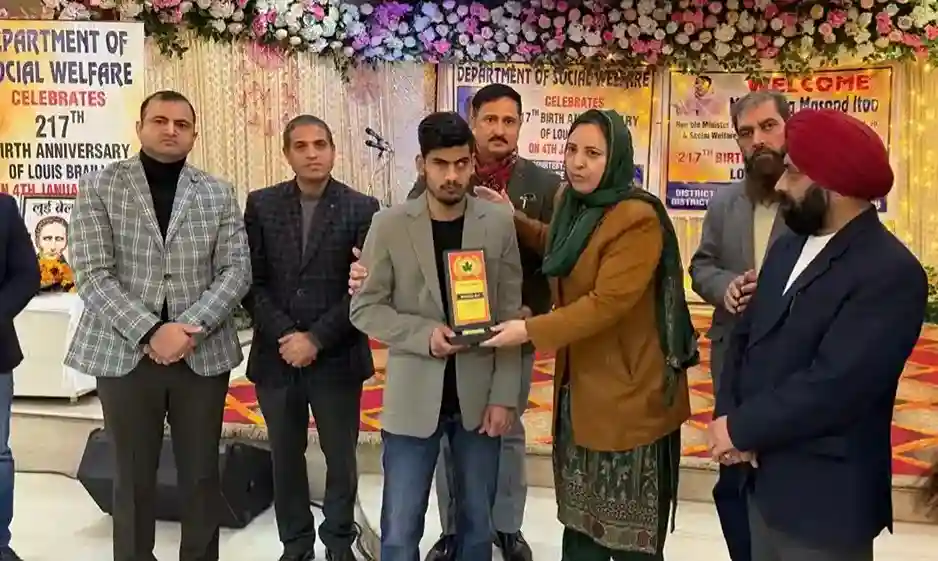
Minister for Social Welfare, Education, Health and Medical Education Sakeena Itoo on Sunday addressed the 217th birth anniversary celebrations of Louis Braille in Jammu, paying tribute to the inventor of the tactile reading system that has transformed the lives of visually impaired people across the world.Click Here To Follow Our WhatsApp Channel

Several senior officials attended the programme, including Secretary Social Welfare Bashir Ahmad Khan, Director Social Welfare Jammu Ranjeet Singh, Programme Officer ICDS, District Social Welfare Officer Jammu, and the Superintendent of the Rehabilitation Centre for the Speech and Visually Impaired (RSVI), Jammu. Parents and a large number of visually impaired children were also present.

Addressing the gathering, Minister Sakeena Itoo said the event was important as it was linked to a strong social cause. She said visually impaired children possess immense talent, which needs proper guidance and support to help them build a successful future. She stressed that a society’s real progress is measured by how it treats and uplifts its most vulnerable sections.

The Minister reaffirmed the government’s commitment to social justice and inclusive development, with special focus on the welfare and empowerment of specially abled children. “Every child is gifted in their own way. It is our collective responsibility to identify their strengths, nurture their abilities and ensure no child is left behind,” she said.

Sakeena Itoo called for a joint and compassionate approach towards supporting specially abled children. She said they need not only financial help but also emotional support, quality education, skill development opportunities and a supportive environment to achieve their full potential.

She also highlighted various initiatives of the Social Welfare Department aimed at early intervention, rehabilitation, inclusive education and livelihood support for persons with disabilities. The Minister urged parents, teachers, civil society groups and the wider community to work closely with the government to create a more caring and inclusive system.

The Minister said Jammu and Kashmir is a welfare state and that the Social Welfare Department plays a key role in ensuring support reaches every section of society. She appreciated the efforts of the department and RSVI for building confidence among children and enabling them to perform confidently at different platforms.

Referring to the leadership of Omar Abdullah, Sakeena Itoo said the government remains fully committed to the welfare of specially abled persons. Strengthening the social welfare framework and promoting inclusive growth, she added, remain central goals of the administration.

Paying rich tributes to Louis Braille, the Minister said that observing his birth anniversary is a way of remembering a great individual who brought light into the lives of visually impaired people by introducing the Braille system, allowing them to read and write through touch.

On the occasion, the Minister also felicitated visually impaired children who have won medals and honours in various sports championships across the country. She further honoured students who performed exceptionally well in different academic examinations, praising their hard work and determination.

Louis Braille (1809–1852) was a French educator and inventor who revolutionized the lives of the blind by creating Braille, a tactile system of reading and writing.His invention remains the global standard for blind literacy nearly 200 years later.

Early Life and Tragedy

Born in Coupvray, France, Braille was not born blind. At the age of three, while playing in his father’s leather workshop, he accidentally struck one of his eyes with a sharp tool called an awl. The wound became severely infected, and the infection spread to his other eye (a condition likely known as sympathetic ophthalmia).By age five, he was completely blind.

The Invention of the System

Braille was a brilliant student and received a scholarship to the National Institute for Blind Youth in Paris. At the time, blind students read by tracing large, embossed letters—a process that was slow and made writing nearly impossible.

When he was 12, he learned about a military code called “night writing,” developed by Captain Charles Barbier. It used 12 raised dots to allow soldiers to communicate silently in the dark. Braille recognized its potential but found it too complex. He spent the next three years simplifying it:

  • The 6-Dot Cell: He reduced the 12-dot system to a six-dot cell ($2 \times 3$ grid).
  • Finger-Friendly: This size was crucial because a person’s fingertip could feel the entire cell at once without moving.
  • Versatility: By age 15, he had perfected the system to include the alphabet, punctuation, and even music and mathematics.

Resistance and Legacy

Despite its efficiency, the Braille system faced significant pushback from sighted teachers who feared they would become obsolete if blind students could read independently. It was not officially adopted in France until 1854—two years after Louis Braille died of tuberculosis at the age of 43.
Why Educated Youth in Kashmir Are Still Jobless – The Truth No One Explains

kashmiri student

(Altaf Husain Nadwi)

In Jammu and Kashmir, there is a silent pain that rarely makes headlines. It sits in small rooms, in quiet homes, and in the eyes of young people who did everything they were told to do — yet have nothing to show for it.

They studied hard.
They cleared exams.
They waited patiently.

Still, they are jobless.

A promise that slowly faded

For years, education was sold as the key to dignity and security. Parents believed it deeply. Many sold land, took loans, or worked day and night so their children could earn a degree. The promise was simple: study well, and life will get better.

But for many educated youths in Kashmir, that promise never arrived.

students

Waiting has become a way of life

Graduates wake up every morning and check notifications. Recruitment notices appear, then disappear. Exams are held, results are delayed. Sometimes selections are cancelled without clear reasons.

Months turn into years.
Hope turns into exhaustion.

Waiting has become a full-time job — without salary, without respect.

The pain nobody talks about

Unemployment is not just about money. It slowly eats confidence. A young person who once spoke with pride now avoids questions. Family gatherings become uncomfortable. Every comparison feels like a wound.

Parents don’t say much, but their silence hurts. Society doesn’t shout, but it judges quietly.

This pain does not trend on social media, but it lives inside thousands of homes.

“Skill issue” is not the full truth

Youth are often told they lack skills. So they learn more. Computers, languages, diplomas, coaching classes — they try everything. But the reality is harsh: skills cannot create jobs where opportunities are missing.

Kashmir has limited industries, weak private investment, and very few sustainable job options. Talent exists. Chances do not.

A generation stuck in between

These young people are not lazy. They want to work, to contribute, to stand on their own feet. But they are stuck between promises and reality, between hope and disappointment.

Some lose years preparing. Some lose confidence. Some lose belief.

This is more than unemployment

This is about a generation slowly losing trust — not in education, but in the system that failed to value their effort and time.

Kashmiri youth are not asking for shortcuts. They are asking for fairness. For transparency. For timely decisions. For real opportunities, not repeated assurances.

Until that happens, degrees will keep increasing, but dreams will keep shrinking.

And the silence of unemployed educated youth will remain one of Kashmir’s deepest, most ignored truths.


TKM College Engineering Students Visit NIT Srinagar for Research and Academic Exposure

TKM College

As part of an academic exposure programme, 118 final-year Computer Science and Engineering students from TKM College of Engineering, Kollam, Kerala, visited National Institute of Technology Srinagar. The group was accompanied by six faculty members.Click Here To Follow Our WhatsApp Channel

The visit was coordinated by Dr. Shabir A. Sofi, Head of the Department of Information Technology at NIT Srinagar. He helped organise interactions between the visiting students and the institute’s faculty, researchers, and administrators.

Dr. Sofi said the main aim of the visit was to help students understand large computing systems, experience a research-focused academic environment, and learn about opportunities in higher studies, innovation, and collaborative research.

During the programme, students were briefed on the academic structure, key research areas, and technological strengths of NIT Srinagar.

Research scholars Aaqib Zahoor Shah and Mir Yousuf from the Department of Information Technology gave presentations on ongoing research work. They spoke about areas such as information systems, new computing technologies, and interdisciplinary applications.

These sessions helped students understand real research challenges, research methods, and how innovation is developed at NIT Srinagar.

Faculty members Dr. Ahsan Chishti, Dr. Faisal Mir, and Dr. Malik Parveez also interacted with the visiting group. They shared insights on academic programmes, research options, and interdisciplinary work at the institute.

In his message, the Director of NIT Srinagar, Prof. Binod Kumar Kanaujia, highlighted the importance of research-based learning in modern engineering education. He said such exposure visits help connect classroom learning with real-world technology.

He added that NIT Srinagar is strengthening its research ecosystem through national and international collaborations and encouraged students to take part in innovation, entrepreneurship, and advanced research.

I/C Director Prof. Roohie Naaz Mir also interacted with the students and faculty. She reaffirmed the institute’s commitment to building strong academic partnerships and assured full support for future exchanges, joint research projects, faculty interaction programmes, and student collaborations with TKM College of Engineering.

Registrar Prof. Atikur Rehman briefed the delegation about the administrative system, academic rules, and research support mechanisms at NIT Srinagar. He stressed the institute’s focus on transparency, academic excellence, and a supportive environment for research and innovation.

The visiting delegation was led by Dr. Shameem Ansari, Dean Students Welfare at TKM College of Engineering. He described the visit as academically valuable and professionally motivating for the students, especially as they prepare for higher education and industry careers.

Earlier, the group was formally received by Security Officer Mr. Mushtaq Ahmad Bhat, who ensured smooth coordination and security arrangements throughout the visit.

Officials from both institutions said the visit is an important step towards stronger cooperation, with discussions held on future research collaborations, student exchange programmes, and joint academic initiatives.

NCERT Likely to Get Deemed University Status by End of January

The National Council of Educational Research and Training (NCERT) is likely to be granted deemed-to-be-university status by the end of January, sources in the Ministry of Education have told ANI.Click Here To Follow Our WhatsApp Channel

Sources said that all preparations for granting the status have been completed. The final decision will be taken by the University Grants Commission (UGC) in its upcoming meeting. Officials are hopeful that once the meeting takes place, the decision will be announced before the end of the month.

Union Education Minister Dharmendra Pradhan had announced plans in 2023 to transform NCERT into a deemed university. He said this change would help NCERT grow into a research-focused institution, open doors for global partnerships, and strengthen its contribution to education worldwide.

NCERT is an autonomous body under the Ministry of Education. It plays a key role in improving school education in India through curriculum design, textbook publishing, educational research, and teacher training.

Once it receives deemed university status, NCERT will be able to run advanced in-house research programmes and work as a full research university. It will mainly be funded by the Department of School Education and Literacy under the Ministry of Education.

In India, universities are recognised by the UGC under the UGC Act, 1956. Deemed-to-be-university status is given to institutions that show excellence in a particular field, based on UGC advice and approval by the Central Government.

At present, around 145 institutions in India have deemed university status. The Indian Institute of Science (IISc) was the first to receive this status in 1958, while Tamil Nadu has the highest number of such universities.

Institutions with this status enjoy full academic freedom. They can design courses, set admission rules, fix fees, and award their own undergraduate, postgraduate, and doctoral degrees.

With this move, NCERT’s role in India’s higher education and research system is expected to grow significantly.

BGSB University Holds 6th Library Committee Meeting Under Vice-Chancellor’s Chairmanship

Library Committee

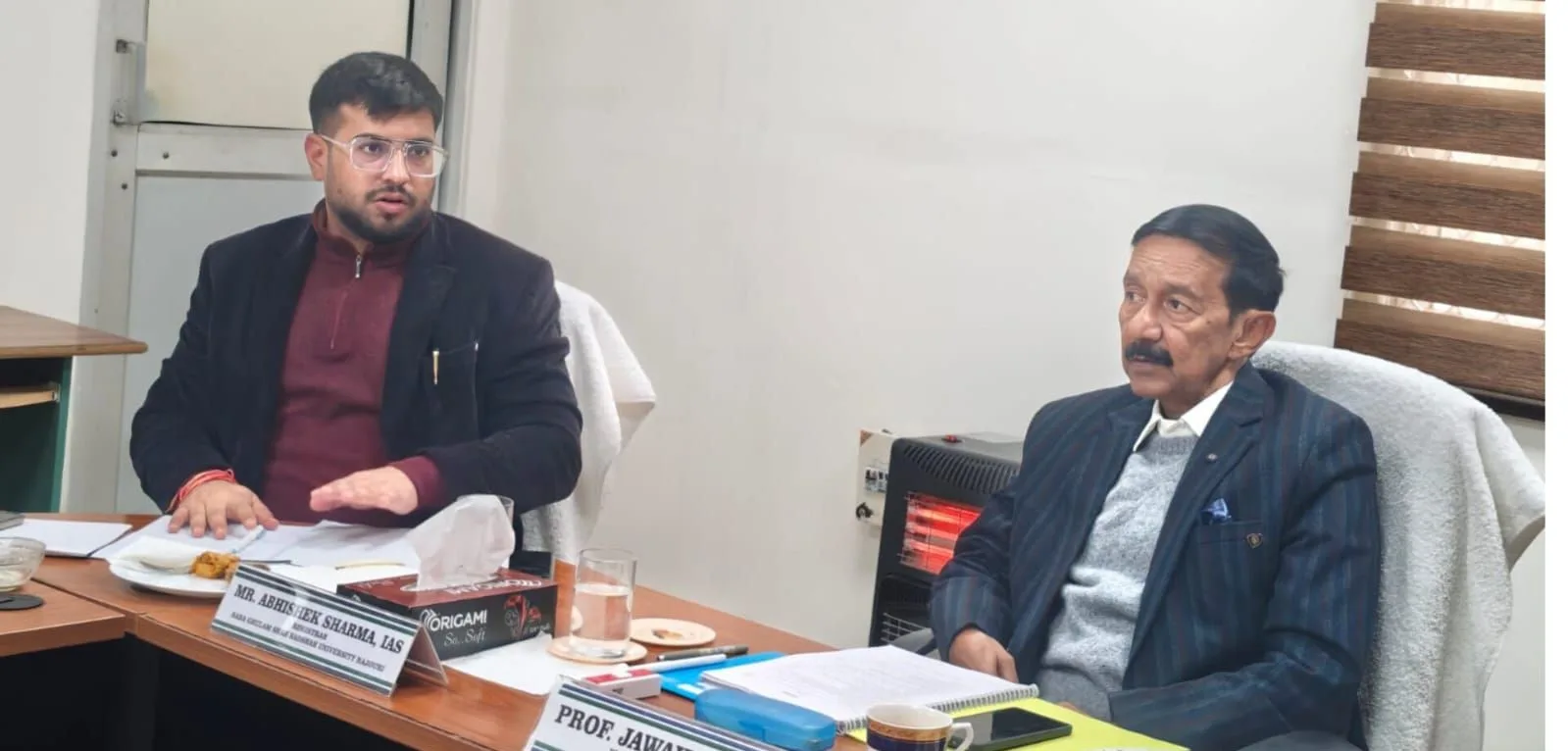
The 6th meeting of the Library Committee of Baba Ghulam Shah Badshah University (BGSBU), Rajouri, was held today under the chairmanship of the Vice-Chancellor, Prof. Javaid Iqbal.

In his opening address, the Vice-Chancellor said that a strong and future-ready library system is the intellectual backbone of a university. He stated that libraries play a key role in academic excellence, interdisciplinary research, and innovation. Prof. Iqbal highlighted the need to regularly upgrade library infrastructure, digital collections, and access systems to support quality teaching and advanced research. He also stressed that libraries must develop as inclusive knowledge spaces that respond to the changing learning and research needs of students and faculty members.Click Here To Follow Our WhatsApp Channel

All agenda items were discussed in detail under his guidance, with focused and result-oriented discussions.

The Registrar of BGSB University, Abhishek Sharma, appreciated the organised and goal-oriented working of the Library Committee. He emphasised the importance of proper administrative planning, financial discipline, and clear policies in strengthening library services. The Registrar assured full administrative support for the timely implementation of approved initiatives, especially in infrastructure development, expansion of digital resources, and user-friendly reforms.

Dr Malik Mubasher Hassan, In-charge Central Library and Member Secretary, presented the agenda items in a structured manner for detailed discussion. Dr Ramesh Kumar Pandita, Senior Assistant Librarian, gave a comprehensive presentation on the functioning, resources, and services of the University Library, highlighting achievements and future requirements.

Committee members shared constructive and practical suggestions to ensure effective implementation of the proposed plans. Expert members Aligarh Muslim University Professor Himanshu Shekhar Acharya and Jamia Millia Islamia Professor H. A. Nazmi shared valuable inputs based on best practices followed by leading national institutions.

Other members who actively participated in the discussions included Prof. Titi Xavier, Dean, School of Nursing and Biomedical Sciences; Dr Ali Asghar Shah, Associate Dean, School of Biosciences and Biotechnology; Dr Sham Kamal Anjum, Associate Dean, School of Humanities and Languages; Dr Vishal Puri, Principal, School of Engineering and Technology; Dr Qamar Rayees Khan, Head, Department of Computer Sciences; Dr Pervez Alam, Head, Department of Mechanical Engineering; Dr Mariya Aslam, Head, Department of English; and Mr Shafiq Ahmed Malik, Chief Pay and Accounts Officer.

Al-Tilmeez: A Pioneering Arabic Literary Journal from Jammu and Kashmir

Professor Mufti Abdul Ghani Azhari: Scholar, Sufi, Historian, and Social Reformer of Kashmir

Mirwaiz Mohammad Ahmad son of Mufasir-e-Quran Moulana Mohammad Yousuf Shah Dies in Islamabad

Aga Ruhullah Mehdi Urges Jamia Students to Strive for Excellence, Empathy, and Cultural Preservation

Aga-Ruhullah-Mehdi

Member of Parliament from Srinagar, Aga Ruhullah Mehdi, on Saturday interacted with students of Jamia Millia Islamia (JMI) at the Auditorium, Faculty of Engineering and Technology, as the keynote speaker at a Darbar interaction.Click Here To Follow Our WhatsApp Channel

In a statement issued, the discussion focused on youth and social issues in Jammu and Kashmir, with students engaging in an open dialogue and raising questions on education, employment, substance abuse, and broader social concerns affecting young people from the region.

The discussion brought together senior academics and administrators, including JMI Chief Proctor Mohammad Asad Malik; Associate Proctor Dr Maqsood Ahmad Malik; Professor, Department of Arabic, Abdul Majid Qazi, who also served as the teacher-in-charge of the event; Assistant Professor, Department of Political Science, Dr Shashikant Rai; and Post-Doctoral Fellow at Jawaharlal NehruUniversity, Dr Haroon Rashid.

Addressing the students, the honourable MP urged them not to accept mediocrity or complacency in their personal and intellectual lives. “Do not settle for humiliation, the ordinary, or the norm. Our purpose is excellence. You are created to innovate,” he said, encouraging students to reflect on the Quranic dialogue between Allah and the angels, which, he noted, speaks to the essence of human creation. “If you return to that dialogue, you will understand that, as human beings, we are expected to excel.”

He added that humanity was created to bridge gaps, challenge distortions, and strive for the highest moral and intellectual standards, describing this pursuit as central to both achievement and worship.

Quoting philosopher-poet Allama Iqbal, he told students that material success alone does not define one’s true worth. “Palaces and grandeur are not your reality. Your reality lies beyond these things.Rise above them, or you will remain trapped in petty ambitions,” he said.

Emphasising the role of education, the MP cautioned students against becoming passive recipients of institutional knowledge. “Books and institutions should equip you with skills and tools. Do not become their extensions. If you stop questioning and adding to existing knowledge, innovation dies,” he said, urging students to treat established conclusions as supplementary rather than final.

Addressing the gathering, Chief Proctor Mohammad Asad Malik spoke about the growing concern of substance abuse among youth, including on university campuses. Calling it a collective responsibility, he said, “It is not just the administration’s duty. Students must remain alert, flag what they see around them, and take their education seriously, because this is the time that shapes your future.”

Responding to a student’s question on why substance users are often treated as criminals, Mehdi criticised what he described as a constant counter-insurgency mindset in Jammu and Kashmir, even in civilian and social contexts. He said such an approach leads to excessive securitisation of everyday issues and fails to recognise the human realities behind them.

He stressed that individuals struggling with substance use should not be viewed through a criminal lens but as people dealing with serious health and social challenges. “Law enforcement agencies in Jammu and Kashmir need to move away from punitive reflexes and instead adopt a more empathetic, rehabilitative approach that prioritises care, support, and long-term recovery,” he said.

He also spoke about the cultural responsibilities of Kashmiri youth, warning of sustained pressures on identity.

“There is an onslaught on our identity. This places a double responsibility on us, to preserve who we are and to protect our Kashmiri language,” he said. (KNS)

Al-Salam Institute Graduation in Leicester Celebrates Faith, Sacrifice and Sacred Knowledge

Al-Salam Institute

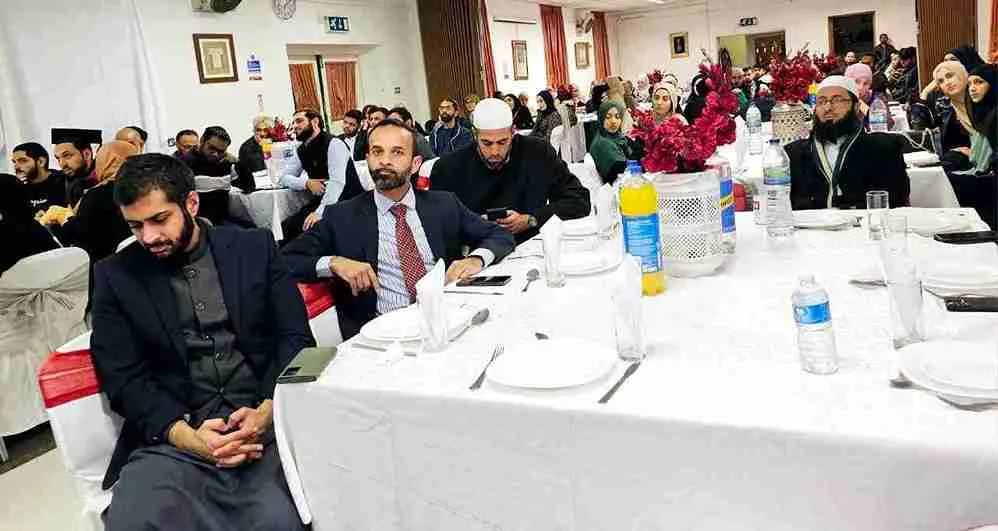
On the evening of 13 December 2025, the city of Leicester bore witness to a deeply moving and memorable occasion: the graduation ceremony of Al-Salam Institute for its male and female students who had successfully completed the rigorous ‘Alimiyyah programme. Conducted in an atmosphere marked by dignity, warmth, and spiritual reflection, the event brought together graduates, their families, teachers, friends, and guests attending spiritual retreats. It was far more than a formal academic gathering; it was a celebration of faith, sacrifice, perseverance, and a lifelong commitment to sacred knowledge..Click Here To Follow Our WhatsApp Channel

As the winter evening settled over the city, the hall gradually filled with anticipation and quiet joy. A palpable sense of reverence accompanied the entrance of the graduates, whose faces reflected both relief and deep gratitude after years of disciplined study, personal struggle, and spiritual growth. For many families present, this moment marked the culmination of countless sacrifices: long nights of study, early mornings, financial strain, and patient endurance. Parents watched with visible pride as their sons and daughters reached a milestone that carried not only academic significance, but profound spiritual meaning.

The teachers observed the scene with a unique blend of happiness and humility. They recognised that their role had extended far beyond instruction; they had been mentors, guides, and companions on a demanding journey. Standing before them were not merely graduates, but individuals shaped to serve their religion, their communities, and humanity at large with knowledge, character, and sincerity.

The programme featured speeches from teachers and students alike, each contributing to the richness of the occasion. The teachers shared heartfelt reflections, expressing genuine pride in the perseverance and resilience demonstrated by the students throughout their years of study. They also acknowledged the families, whose unwavering support and trust had made this journey possible. Several graduates then took to the podium, offering sincere expressions of gratitude to their teachers and parents, and candidly recalling the personal challenges they had faced along the way. Their voices, often laden with emotion, served as a powerful reminder that the ‘Alimiyyah journey is as transformative spiritually as it is intellectually.

In my own address, I reflected upon a reality that is often difficult to confront: that the pursuit of Islamic studies does not usually promise a bright or lucrative career in the modern, materialistic world. Choosing this path represents a profound sacrifice, not only for the students themselves, but also for their families, who support them despite social expectations and economic pressures. Yet this sacrifice is made purely for the sake of God, and it is precisely this sincerity that grants it immense and enduring value.

I then narrated the Qur’anic story of the mother of Maryam (peace be upon her), who vowed to her Lord that she would dedicate her child to the service of religion. Allah accepted her vow, and from that devotion emerged one of the most honoured women in history. This timeless account served as a reminder that sincere intention, dedication, and sacrifice are never lost with Allah, even when their fruits are not immediately visible in worldly terms.

To conclude, I recited a Persian poetic verse and explained its meaning to the audience:
درآں دیار کہ گوہر خریدن آئین نیست
دکاں کشودہ ام وقیمت گہر گويم
“In a land where people do not buy diamonds, I opened a shop and sold diamonds.”

I explained that Al-Salam Institute embodies this very message. In a material world where sacred knowledge is often undervalued and overlooked, the institute has continued, with quiet determination, to nurture and graduate students of religious learning. While society may not always recognise or appreciate their worth, Allah appreciates them, and His appreciation is eternal and beyond measure.
Following the formal proceedings, a communal dinner was served, allowing everyone to relax and share in the joy of the evening. The atmosphere was filled with warmth and gratitude as laughter, heartfelt conversations, and moments of quiet pride unfolded throughout the hall. Graduates celebrated with their families, teachers exchanged affectionate words with their students, and guests expressed their honour at having witnessed such a meaningful occasion.

The graduation ceremony of Al-Salam Institute was not merely an academic milestone; it was a powerful affirmation of the enduring value of faith, knowledge, and sacrifice. It was an evening that left hearts full, spirits uplifted, and a renewed sense of purpose in all who attended, an enduring reminder that even in a world that may not recognise diamonds, their true value remains unchanged.

FFC Asks Parents to File Official Complaints Against Private Schools Over High Fees

Students of Kashmir

Amid rising complaints from parents regarding private schools allegedly charging exorbitant annual fees, the Fee Fixation Committee (FFC) on Sunday asked aggrieved parents to formally approach the committee through the prescribed channel for redressal.Click Here To Follow Our WhatsApp Channel

Chairman of the Fee Fixation Committee, Justice (Rtd) Sunail Hali told the news agency Kashmir News Trust that action would be taken against schools found violating the directives issued by the committee. He said the FFC has already provided its official email address, where parents can submit detailed complaints along with relevant documents.

Justice Hali said that once complaints are received, the committee will examine the matter and initiate action if the grievances are found to be genuine. He reiterated that private schools are bound by the norms and orders issued by the Fee Fixation Committee and cannot impose arbitrary or unjustified charges on parents.

The FFC chairman assured parents that their complaints would be dealt with strictly in accordance with the law and that violations would not be tolerated. He urged parents to avoid informal channels and instead use the official mechanism to ensure timely and effective action.

The issue of high annual charges by private schools has emerged as a major concern for parents across the Valley, with many alleging that schools are bypassing established guidelines and placing an undue financial burden on families. [KNT]