Question: Assalamoalaykum Shaikh, May Allah bless you and preserve you. I have a quick question regarding the hadith in Muslim as to why prophet asked his tent to be removed and did not do I’tikaf that year. Barakallah feekum, Imran Akram, Virginia, USA
Answer: Wa ʿalaykum al-salām wa raḥmatullāhi wa barakātuh. This ḥadīth narrated by ʿĀʾishah (raḍiya Allāhu ʿanhā) and recorded in Ṣaḥīḥ Muslim offers a profound insight into the inner reality of iʿtikāf and the Prophetic concern for safeguarding the sincerity and objectives of worship. It is not merely a historical report, but a carefully preserved lesson in spiritual discipline and ethical prioritisation.
ʿĀʾishah relates that when the Prophet ﷺ intended to perform iʿtikāf during the last ten nights of Ramaḍān, his tent was erected in the mosque after he had prayed Fajr. Thereafter, Zaynab (raḍiya Allāhu ʿanhā) ordered her tent to be set up, and other wives of the Prophet ﷺ followed suit. When the Prophet ﷺ emerged after Fajr and saw several tents erected in the mosque, he remarked: “Āl-birra turidna?” “Is it righteousness that you are seeking?” He then ordered his own tent to be taken down, abandoned iʿtikāf for that Ramaḍān, and later observed it in the first ten days of Shawwāl.
The key to understanding this incident lies in recognising that the Prophet ﷺ did not object to the legality of women performing iʿtikāf, nor did he question the integrity or sincerity of his wives. On the contrary, the wives of the Prophet ﷺ did perform iʿtikāf with his permission, and this is well established. Their devotion and uprightness are beyond doubt. Rather, his concern was with the direction and purity of intention, and with the preservation of the essential spirit of iʿtikāf as an act of complete withdrawal from worldly and social engagements in order to turn wholly to Allah.
Iʿtikāf is not merely residing in a mosque, nor is it a collective or social activity. Its essence is inward and outward seclusion, where the slave disengages from all distractions, even lawful ones, to focus entirely on remembrance, prayer, reflection, and supplication. When multiple tents appeared, the situation outwardly changed. What began as solitary devotion now risked resembling mutual presence, quiet competition, or the transformation of iʿtikāf into a visible arrangement rather than a hidden act of devotion. Even if such motives were unintended, the Prophet ﷺ perceived the danger that the act could gradually drift away from its intended purpose.
His statement, “Is it righteousness that you are seeking?”, was therefore not a rebuke of intention but a gentle and penetrating reminder. It redirected attention from the outward form of worship to its inward reality. The Prophet ﷺ was teaching that righteousness does not lie in multiplying religious forms if their meanings are diluted, nor in engaging in acts of devotion that risk becoming performative or habitual rather than sincere.
The decision of the Prophet ﷺ to abandon iʿtikāf altogether that Ramaḍān is particularly striking. Iʿtikāf in the last ten nights is a highly emphasised Sunnah which he consistently observed. Yet, when its spirit was threatened, he chose to leave it rather than allow even a trace of compromise in its meaning. This establishes a foundational principle in worship: protecting sincerity and purpose takes precedence over persistence in outward performance.
At the same time, his later performance of iʿtikāf in the first ten days of Shawwāl shows that this was not abandonment due to negligence or displeasure with the act itself. Rather, it was a deliberate educational choice. By making it up later, he demonstrated both the value of consistency in worship and the permissibility of observing iʿtikāf outside Ramaḍān, while also reinforcing the lesson that worship must be aligned with its objectives at all times.
This ḥadīth thus teaches the Ummah that acts of worship are not evaluated solely by their legality or frequency, but by their alignment with the purposes for which they were legislated. When circumstances arise that undermine those purposes, restraint may itself become an act of devotion. The Prophet ﷺ, through this action, trained the hearts of believers to prioritise depth over display, sincerity over symbolism, and meaning over mere form.
Question: Assalamualaykum Warahmatullahi Wa Barakatuh Shaykh, I hope you are well Shaykh and in the best of health. I have benefited enormously from your thinking and knowledge over many years and continue to do so and hope you can answer my question. Click Here To Follow Our WhatsApp Channel
When considering renting a flat to live in, the landlord (housing association) requires a service charge aside from the rent, as is the norm in many apartment blocks in the UK, which contributes to the management, cleaning and maintenance of the communal areas of the building. Part of the charge also goes to a reserve fund which is an interest-bearing account, and the landlord saves it incase of major repairs. All leaseholders (residents) must contribute to this fund and cannot opt-out of the interest. The landlord says that the money cannot be returned back to the leaseholder, neither the capital nor the interest, and the landlord is in full control of the money. Although the money is “held in trust” by the landlord, in practice the money does not belong to the leaseholder. Is it allowed to pay this service charge considering the above and that it is necessary, in addition to the fact that there are limited housing options?
Another part of the service charge goes to building insurance, which is necessary to give also, again can this be given considering the limitations for housing options? May Allah reward you and increase you in blessings. Ahmad Suleman
Answer: Wa ʿalaykum al-salām wa raḥmatullāhi wa barakātuh, There is no disagreement among the scholars that ribā is categorically prohibited, whether one consumes it directly or participates in it willingly and by choice. At the same time, Islamic law is precise in distinguishing between a person who intends, controls, or benefits from ribā, and one who is indirectly and unavoidably affected by it without consent or choice.
In the situation you describe, the service charge is not a voluntary payment, nor is it an investment or a loan from the tenant or resident to the landlord. Rather, it is a compulsory condition attached to the right to reside in the property. Once paid, the money is no longer owned, controlled, or reclaimable by the resident, neither in its capital nor in any interest it may accrue. The decision to place part of that money into an interest-bearing reserve account is taken solely by the landlord or housing association, and residents are neither consulted nor able to opt out. Importantly, the resident does not intend to earn interest, does not receive it, and does not benefit from it in a personal sense.
On this basis the moral and legal responsibility for the interest-bearing arrangement lies with the party that knowingly establishes and manages it, not with the one who is compelled to pay a non-separable fee in order to secure a basic need. The payment in question is made in exchange for accommodation and the upkeep of communal facilities, which are themselves permissible, and the impermissible element is incidental and imposed rather than sought.
Furthermore, housing is a genuine and pressing need, particularly in the UK where service charges of this nature are widespread and often unavoidable in blocks of flats. Islamic jurisprudence recognises that widespread need (ḥājah ʿāmmah) may be treated akin to necessity, especially where avoiding the matter would lead to hardship, instability, or serious difficulty, and where lawful alternatives are either unavailable or extremely limited. In such circumstances, the Sharīʿah grants concession, while the original ruling regarding ribā remains unchanged in principle. One should still dislike the impermissible element in one’s heart and avoid it where a real and reasonable alternative exists, but there is no sin in proceeding under compulsion.
A similar analysis applies to the portion of the service charge allocated to building insurance. Commercial insurance, as commonly practised, involves elements of uncertainty and contractual imbalance and is therefore regarded as impermissible by the majority of scholars. However, where insurance is mandatory, inseparable from the tenancy, and required either by law or by the structure of the lease, and where the individual is not entering into the contract by choice nor able to select a Sharīʿah-compliant alternative such as takāful, then participation is permitted by necessity. In this case too, the resident is not deemed to be willfully engaging in an impermissible contract, but rather complying with unavoidable conditions attached to securing shelter.
It is important to hold firmly to two complementary principles. The first is that ribā and impermissible contracts must never be normalised or treated lightly, and a Muslim should always seek to avoid them where reasonably possible. The second is that Allah, in His mercy, does not burden a soul beyond its capacity, nor does He require a person to abandon essential needs where avoidance is genuinely beyond their control.
Your concern and caution are themselves signs of taqwā, and you are not blameworthy for entering into such arrangements under the constraints you have described. You may proceed without sin, while continuing to ask Allah for lawful provision and for avenues that are clearer and purer should He make them accessible to you.
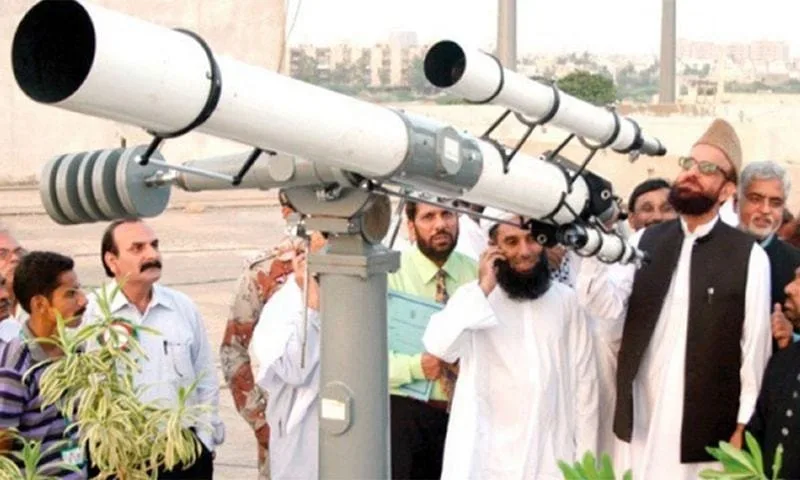
The determination of the beginning and end of Ramadan represents one of the most prominent expressions of collective religious life in Islam. These moments are intended to unite Muslims in shared worship, discipline, and spiritual renewal. Yet in many contemporary contexts, particularly within Muslim minority societies, the issue of moonsighting has become a persistent source of discord. Instead of reinforcing communal bonds, differing approaches to determining the lunar calendar have fragmented families, divided mosques, and generated confusion in public institutions. This recurring phenomenon raises a fundamental question: is the disagreement over moonsighting a genuine juristic impasse, or does it reflect a deeper failure to understand the ethical and communal priorities of Islamic law?
The Nature of Moonsighting: A Functional Tool, Not a Sacred Ritual
A careful examination of the sources and objectives of the Sharīʿah indicates that moonsighting is not an act of worship in itself, but a means to establish the correct timing of worship. The obligation imposed upon Muslims is to fast during the month of Ramadan and to mark its conclusion with Eid; the sighting of the crescent moon is merely one method historically used to determine when that obligation begins and ends. The Qur’an explicitly frames the crescent moons as instruments of temporal organisation, stating that they are “time markers for people and for Hajj” (Qur’an 2:189). This formulation makes clear that the moon’s religious relevance lies in its functional role rather than in any intrinsic ritual value.
The Legal Principle: Certainty Over Conjecture, Means Over Form
Understanding moonsighting as a means rather than an end has significant legal and ethical implications. In Islamic jurisprudence, means are evaluated according to their effectiveness in achieving certainty and facilitating obedience, not according to symbolic attachment. The Sharīʿah consistently prioritises yaqīn (certainty) over conjecture, and the method used to attain that certainty may vary depending on context, knowledge, and available tools. The prophetic instruction to fast upon sighting the moon was not a sacralisation of visual observation, but a practical directive suited to a community that lacked alternative means of precise calculation. The underlying objective was reliable knowledge, not adherence to a specific sensory process.
Historical Flexibility Within the Juristic Tradition
Within the juristic tradition, scholars have long recognised this distinction. While some held that visual sighting should remain the primary method for determining the lunar month, others accepted astronomical calculation, particularly when it offered greater accuracy or resolved ambiguity. A widely accepted moderate position acknowledges the value of calculation as a means of verifying or invalidating sighting claims, thereby preventing error and confusion. This approach does not negate the Prophetic model, but rather preserves its intent by ensuring that religious obligations are fulfilled with certainty rather than doubt. To reject reliable knowledge simply because it was not available in earlier periods is to confuse historical circumstance with legal principle.
The Higher Ethical Priority: Communal Unity in Worship
However, the most critical dimension of the moonsighting debate lies not in epistemology, but in ethics. Islamic law places extraordinary emphasis on unity in collective acts of worship. Fasting Ramadan, celebrating Eid, and performing Hajj are not private devotions that each individual undertakes independently; they are communal obligations that derive much of their meaning from shared observance. In such matters, the Sharīʿah consistently subordinates individual preference to collective cohesion. This principle is analogous to congregational prayer, in which worshippers follow the imam even when their personal juristic views differ, in order to preserve the integrity of the congregation.
The Consequences of Division: Harm to the Community
The harm caused by persistent disunity over moonsighting is both measurable and profound. Families often find themselves fasting or celebrating Eid on different days, undermining the sense of shared spiritual experience. Mosques within the same neighbourhood may observe Ramadan and Eid separately, sending conflicting signals to their congregations and to the wider society. Children face confusion and embarrassment in schools when religious observances lack consistency, while communities fracture into rival camps marked by mutual suspicion and recrimination. These outcomes contradict the very purposes of Ramadan, which is meant to cultivate taqwā, solidarity, patience, and compassion.
An Administrative, Not a Theological, Challenge
Such consequences suggest that the issue is not fundamentally religious, but administrative and organisational. Determining the Islamic calendar is comparable to establishing prayer times: both involve identifying the correct moment for worship, and both rely on technical means to do so. The sanctity lies in the act of worship itself, not in the mechanism used to calculate its timing. Just as Muslims routinely rely on scientific calculations and timetables for prayer without controversy, there is no inherent reason why the lunar calendar should be treated differently. Expertise in astronomy or administration, regardless of religious affiliation, can legitimately serve this function, as the task is technical rather than devotional.
The Structural Failure and the Path Forward
The persistence of annual disputes therefore reflects a deeper structural failure within the Muslim community: the absence of agreed-upon systems for collective decision-making and the reluctance to accept outcomes that require personal compromise. Addressing this challenge requires a shift in focus from debating methods to building structures. Unified national or regional bodies tasked with determining the Islamic calendar, inclusive of diverse schools of thought and community representatives, offer a practical solution. The precedent of Hajj demonstrates that the Ummah already accepts a unified calendar for its most significant collective ritual, prioritising cohesion over procedural exactitude.
Conclusion: Reform Begins with a Commitment to Unity
In conclusion, the ongoing controversy over moonsighting exposes a broader challenge facing the contemporary Muslim community: the difficulty of prioritising collective responsibility over individual certainty. The solution does not lie in accumulating more arguments or refining legal positions, but in cultivating humility, discipline, and a genuine commitment to unity. The Sharīʿah does not require perfection in method; it requires sincerity in worship and cohesion in communal life. Until Muslims are prepared to step back from personal insistence for the sake of the Ummah, the cycle of division will persist. True reform in this matter begins not with the moon, but with the willingness to stand together beneath it.
Question Assalamualaikum sheikh, I have a query, kindly advice A friend who is settled abroad, has bought a piece of land in Pakistan ,with her savings of years,for her three kid’s future education and needs or maybe used for performing Hajj for the family once children are of the age. Although husband is currently working but this is all from her own savings as husband is not much interested in this investment.He doesn’t mind using mortgage etc. So to say it’s an asset put aside for the time when it’s needed most for the kids. .Click Here To Follow Our WhatsApp Channel The question is, now when the land is bought, what is the hukm about paying zakat on the land. As you know the price of the plot goes up /down every year, so would Zakat be applicable every year,until plot is not sold, or is it applicable once it is sold on the selling amount? If Zakat is applicable every year, on the plot,she does not work herself so how would she be paying zakat yearly? JazakaAllah khairun kaseera Wassalam, Irum Shafique
Answer Wa ʿalaykum as-salām wa raḥmatullāhi wa barakātuh, Your question reflects a sincere desire to ensure that one’s wealth is dealt with in a manner pleasing to Allah, and such concern itself is highly commendable. The ruling regarding zakāh on land becomes clear once Islamic law’s distinction between ownership for use and ownership for trade is properly understood.
In Islamic jurisprudence, zakāh is not obligatory on land, property, or real estate merely because a person owns it. Ownership alone does not make an asset zakātable. Rather, zakāh becomes obligatory on land only when it is purchased with a clear and definite intention of trade, that is, when a person buys land as part of a business, intending to sell it for profit in the same manner that merchants buy and sell goods. In such a case, the land is categorised as ʿurūḍ al-tijārah (trade assets), and zakāh is payable on its current market value every lunar year at the rate of 2.5%, provided the value reaches the niṣāb.
The situation you have described, however, is entirely different. The land was purchased using personal savings accumulated over many years, and its purpose is to serve as a form of long-term security for the children’s future, whether for education, essential needs, or possibly for performing Ḥajj when circumstances allow. There was no intention of entering into a business of buying and selling land, nor was the purchase made with a view to regular resale and profit-making. Such land is therefore considered a personal asset held for future use, even if that use is delayed for many years.
According to the majority of classical scholars, no zakāh is due on land held for personal or family needs, regardless of how long it is retained and regardless of fluctuations in its market value. An increase or decrease in the price of the plot does not affect the ruling, as zakāh is not connected to potential value, but to the nature and intention of ownership.
It is also important to clarify that merely waiting to see whether the land may be sold in the future does not make it a trade asset. Many people hold property as a safeguard against future hardship, and this does not constitute commercial trading in the Sharʿī sense. As long as there is no firm, ongoing intention to sell the land as part of a business activity, zakāh does not apply to it.
If, at some point in the future, the land is sold, zakāh is still not calculated for the previous years. Rather, once the sale takes place, the proceeds become cash. That cash will only become subject to zakāh after one full lunar year has passed from the time it comes into her possession, provided it reaches the niṣāb and remains above it throughout the year.
With regard to the concern about paying zakāh while not being employed, this worry does not arise in this case, as there is no zakāh obligation on the land itself. Zakāh is only due on assets upon which Sharīʿah has made it obligatory, and Allah does not burden a soul with that which He has not required.
Question Assalamu alaikum Dear Shaykh Akram My dear elderly neighbour passed away yesterday and I’ve been invited to the church funeral. Please can you advise as to whether I can attend? Jazakumullah khair
Answer: Assalamu alaikum wa rahmatullahi wa barakatuh, May Allah reward you for your sensitivity, good manners, and concern to act in a way that pleases Him while maintaining good relations with those around you. Your question reflects a sincere desire to balance faithfulness to Islam with kindness towards others, which is itself a praiseworthy intention. Click Here To Follow Our WhatsApp Channel
Islam places great importance on maintaining good relations with neighbours and the wider community, regardless of differences in religion. The Prophet ﷺ repeatedly emphasised the rights of neighbours, to the extent that he said: “Jibril continued to advise me regarding the neighbour until I thought he would make him an heir.” This teaching applies to Muslim and non-Muslim neighbours alike and includes showing respect, kindness, and compassion, especially at times of loss and grief.
With regard to attending the funeral of a non-Muslim, the majority of classical and contemporary scholars permit a Muslim to attend for the purpose of offering condolences, maintaining neighbourly relations, and showing respect for human dignity. This is supported by the well-known incident in which the Prophet ﷺ stood when a Jewish funeral procession passed by him. When asked why he did so, he replied: “Was it not a human soul?” This shows that Islam recognises the dignity of human life without endorsing the religious beliefs of others.
However, Islam also draws clear boundaries to protect one’s faith. While attendance for social and humanitarian reasons is permitted, participation in religious rituals that contradict Islamic belief is not allowed. This includes joining in prayers, hymns, or statements that affirm beliefs contrary to tawḥīd. During such moments, you should remain silent and refrain from any form of participation. Your presence should be understood as an expression of sympathy and good character, not religious agreement.
It is also important to distinguish between condolence and religious endorsement. Islam encourages excellent conduct with others, while firmly prohibiting compromise in matters of belief. Allah states clearly in the Qur’an: “Allah does not forbid you from being kind and just to those who do not fight you because of religion” (Qur’an 60:8). This verse provides a strong foundation for maintaining peaceful and respectful relations within a plural society such as ours.
If you feel uncomfortable remaining for the entirety of the church service, there is no harm in attending briefly, offering condolences to the family, and then leaving politely. This approach is often sufficient to convey care and respect, while also safeguarding your religious principles. Alternatively, expressing condolences before or after the service, or in writing, is also acceptable if that feels more appropriate.
Living as Muslims in a diverse society requires wisdom, balance, and clarity. By observing these guidelines, you can maintain strong community relations, reflect the beautiful character taught by Islam, and remain fully obedient to Allah. Such conduct often becomes a means of dawah through example, demonstrating that Islamic faith encourages compassion, dignity, and moral integrity.
May Allah grant you wisdom in your actions, accept your good intentions, and reward you for striving to uphold both faith and good character.
The distinction between a disciple and a companion is not merely terminological, but reflects two fundamentally different conceptions of knowledge, authority, and moral agency. Throughout intellectual and religious history, discipleship has commonly denoted a hierarchical relationship in which the student’s primary obligation is the faithful reproduction of the master’s teachings. By contrast, the Islamic notion of ṣuḥbah (companionship), most fully embodied in the relationship between the Prophet Muhammad ﷺ and his companions (aṣḥāb), represents a markedly different pedagogical and ethical paradigm. This model does not aim simply at the transmission of information or the replication of ritual practice, but at the formation of individuals capable of understanding, applying, and extending knowledge across the full range of human life. Click Here To Follow Our WhatsApp Channel
Within the conventional model of discipleship, the disciple functions within narrowly defined limits established by the master. Action is permitted only with explicit authorisation, and the exercise of independent judgement in matters of doctrine, terminology, or application is largely prohibited. The disciple’s task is fundamentally imitative rather than interpretive. Even minor adjustments in expression or practice are regarded as illegitimate unless the master has formally conferred authority upon the disciple, often by appointing him as a successor or recognising him as an independent teacher. Until such recognition is granted, the disciple remains intellectually dependent, entrusted with preservation rather than development.
This restrictive understanding of authority is reflected in the limited scope of discipleship. Instruction tends to be confined to personal discipline, ritual observance, and symbolic practices such as dress, prayer, and associated devotional acts. These teachings are frequently detached from the ordinary affairs of life. Matters such as commerce, governance, warfare, marriage, and social organisation are not treated as intrinsic components of moral or spiritual formation. They become objects of concern only insofar as they affect the psychological or spiritual condition of the disciple. Consequently, discipleship often produces individuals skilled in ritual conformity yet ill-equipped to address the ethical and practical complexities of social life.
Companionship, by contrast, presupposes a fundamentally different relationship between teacher and learner. Companions are not treated as passive recipients of instruction but as active participants in an intellectual and moral enterprise. The teacher regards them as fellows, and his role is not simply to transmit conclusions but to cultivate in them the capacity to learn, to reason, and to teach others. The emphasis shifts from the preservation of fixed formulations to the acquisition of skills, including ethical discernment, contextual judgement, and principled reasoning. These skills are imparted gradually and internalised, enabling companions to act independently while remaining faithful to the aims and spirit of the teaching.
In this pedagogical framework, authority is not monopolised but deliberately shared. Companions are trained to apply what they have learned to new and varied circumstances without compromising its foundational principles. Their legitimacy does not depend upon constant recourse to the master’s explicit permissions, but upon demonstrated competence, sound judgement, and moral integrity. Companionship thus produces not perpetual students but individuals who are themselves capable of mastery, able to extend the teaching beyond the immediate presence and lifetime of the teacher.
The educational practice of the Prophet Muhammad ﷺ exemplifies this model of companionship in its most comprehensive form. His teaching encompassed all dimensions of human life, integrating devotion to God with responsibility in social, economic, legal, and political spheres. He instructed his companions in worship and personal conduct, but also in commerce, family relations, conflict, governance, and the organisation of community life. None of these domains was treated as morally neutral or religiously peripheral. At the same time, he did not attempt to regulate every contingency through exhaustive prescriptions. Rather, he cultivated in his companions an understanding of principles and purposes that enabled them to exercise sound judgement in circumstances he could not directly address.
It is this approach that explains the companions’ capacity, after the Prophet’s death, to confront unprecedented challenges with confidence and coherence. They governed expanding societies, adjudicated complex legal cases, and engaged with diverse cultures while remaining anchored in the Prophetic ethos. Their authority was not derived from mechanical imitation, but from a deep internalisation of the Prophet’s method of teaching and learning.
A defining feature of this companionship was its inclusivity. Both men and women were regarded as companions and were educated accordingly. While the practical content of instruction varied considering differing social responsibilities and lived realities, the foundational principles governing their relationship with God and their ethical formation were identical. Women were not confined to private or ritual instruction; they participated actively in learning, teaching, transmitting knowledge, and issuing legal judgements. This demonstrates that companionship was defined not by gender or social role, but by intellectual engagement, moral responsibility, and participation in the Prophetic project.
The contrast between discipleship and companionship thus reveals two divergent educational and moral visions. Discipleship prioritises control, preservation, and limitation, producing followers whose primary virtue is conformity. Companionship emphasises trust, mastery, and comprehensive engagement with life, producing individuals capable of translating enduring principles into changing realities. The Prophetic model of companionship remains distinctive in its integration of knowledge with moral agency and in its refusal to separate spirituality from the practical demands of human existence. It is this model that enabled the companions to carry forward the Prophetic legacy not as static imitators of the past, but as living embodiments of wisdom, judgement, and ethical leadership.
A Letter to Mohammad Ahmad Khan Son of the respected Qur’anic teacher, Mrs Sehrish Tashfin
By: Dr Mohammad Akram Nadwi Oxford 5/1/2026
Dear Mohammad, It gives me great pleasure to know that you are working hard in your studies, striving to practise your religion sincerely, and showing obedience and respect to your parents. These are beautiful qualities, and they are signs of a good character. May Allah grant you success in this world and in the Hereafter, and make you a source of comfort and pride for your family.
I would like to share with you an important lesson about Islam which many people, even some religious ones, sometimes forget. This lesson is about the difference between values and forms.
Islam gives great importance to values. One of these values is humility. Every Muslim should try to be humble and should avoid arrogance, pride, and looking down on others. Arrogance is disliked by Allah, while humility is loved by Him.
Forms, on the other hand, are outward actions or appearances. These forms are important, but they are meant to protect the values, not replace them. For example, certain types of clothing can sometimes make a person feel proud or superior. If a form leads to arrogance, then it should be avoided. But if it does not lead to arrogance, then it may be allowed.
In Arab culture at the time of the Prophet ﷺ, dragging one’s clothes below the ankles was a clear sign of pride and showing off. That is why the Prophet ﷺ warned strongly against it. However, the Prophet ﷺ himself made it clear that the real reason for the prohibition was arrogance, not the cloth itself.
This is beautifully shown in the well-known hadith of Abu Bakr (may Allah be pleased with him). When Abu Bakr said that one side of his garment sometimes fell below his ankles, the Prophet ﷺ replied that he was not doing it out of arrogance, and therefore he was not included in the warning. This shows us that intention and attitude matter greatly in Islam.
Because of this, the majority of great scholars of Islam, including Imam al-Shafi‘i, Imam Ahmad, Imam Abu Hanifah, Imam Ishaq, and Imam al-Bukhari, agreed that wearing clothes below the ankles is not sinful if it is not done with pride or arrogance. Some scholars considered it slightly disliked, while others saw no problem at all, as long as arrogance is not involved.
It is also important to understand that cultures and climates are different. In countries like England, the weather is often very cold, especially in winter. People naturally need to cover their ankles to keep warm. In such circumstances, wearing trousers that reach or cover the ankles is completely reasonable and allowed, as long as the intention is not arrogance and the trousers are not dragged on the ground.
So, my dear Mohammad, you should remember this balanced and beautiful teaching of Islam. You are allowed to wear trousers that reach your ankles, especially in a cold country, as long as: • You do not feel proud or superior because of your clothing • You do not look down on others • You do not drag your clothes on the ground
What truly matters is your heart, your character, your humility, and your obedience to Allah. I pray that Allah grants you wisdom, good understanding of His religion, and a gentle and humble character. May He keep you firm on the straight path and make you a benefit to others.
Question: Respected Dr Mohammad Akram Nadwi, peace and blessings be upon you. I hope you are well.
Recently, a widely discussed intellectual debate on social media has revived an ancient yet significant philosophical question known as the Problem of Evil. Regardless of whether such debates are ultimately beneficial or harmful, a positive outcome has been the growing demand for serious and reasoned responses to the questions raised by sceptics and atheists.
A common objection they present is this: why are atrocities such as the killing of innocent children, sexual violence against women, and widespread injustice so prevalent in the world? If God exists, and if He is omnipotent, just, and merciful, why does He not prevent these evils? And if He does not prevent them, does this not count as evidence against His existence? My question is how such objections can be addressed in a rational, balanced, and intellectually satisfying manner—one that can genuinely reassure a fair-minded inquirer and help them understand that the problem of evil does not negate God’s existence, but instead points towards deeper wisdom and a broader metaphysical perspective.
I would be grateful if you could clarify this issue in light of your scholarly and intellectual experience. With prayers and thanks, Yāsir Ghufrān
Answer: Peace and blessings be upon you. Dear Yāsir Ghufrān, may God reward you abundantly for your thoughtful and earnest enquiry.Click Here To Follow Our WhatsApp Channel
The Problem of Evil occupies a central place in the philosophy of religion and has persistently engaged the human intellect across historical periods and civilisations. At times, however, this issue transcends the realm of abstract theorisation and manifests instead as a visceral moral protest. In our present age, catastrophic realities such as those unfolding in Gaza, where, over a prolonged period, innocent children, women, and defenceless civilians have endured killing, destruction, and relentless suffering, have lent this problem an especially acute urgency. In such circumstances, many experience profound intellectual and emotional disquiet: if God truly exists, and if He is omnipotent, perfectly just, and infinitely merciful, why does He not intervene immediately to prevent such horrors? And if He does not intervene, does this not undermine either His existence or His attributes of perfection?
Although this objection appears emotionally compelling and rhetorically powerful, careful philosophical analysis reveals that it rests upon a set of assumptions that themselves require critical examination. The most fundamental of these assumptions is that human moral intuition constitutes a final, absolute, and universally valid standard by which divine action must be assessed. In other words, whatever appears to human beings, here and now, as injustice or cruelty is assumed to be injustice in the sight of God as well. It is precisely at this juncture that a deep conceptual error emerges, one that arises from a failure to recognise the essential ontological and epistemic distinction between the human and the divine.
The modern imagination, particularly in cultural contexts where the boundaries between divinity and humanity have become blurred, often conceives of God as a moral agent analogous to a human being, differing only in scale or power. God is thus implicitly imagined as thinking, feeling, and judging in essentially human terms, albeit with superior capacity. As a consequence, human comfort, emotional reassurance, immediate psychological needs, and culturally conditioned moral sensibilities are elevated into criteria for evaluating divine justice. When an event violates these sensibilities, it is hastily concluded that God has either failed morally or does not exist at all.
It is essential to clarify that moral anguish in response to oppression, sorrow for the suffering of innocents, and restlessness in the face of injustice are not only natural but ethically commendable. A human being who remains unmoved by cruelty would represent a profound moral failure. From this perspective, distress at the atrocities committed in Gaza is evidence of a living moral conscience, one that rightly impels resistance to injustice and solidarity with the oppressed. The difficulty, however, lies not in this moral sensitivity itself, but in the philosophical inference drawn from it: namely, that God must necessarily intervene in exactly the manner, at precisely the time, and according to the same criteria demanded by human moral intuition.
Human reason, conscience, and ethical judgement are undoubtedly valuable, yet they remain intrinsically limited. Human beings evaluate events on the basis of partial information, immediate consequences, and emotional proximity. Their notions of justice are shaped by psychological dispositions, cultural norms, and historical circumstances. Divine knowledge, by contrast, is absolute, comprehensive, and unrestricted by the constraints of time and space. God is not bound by past or future; all moments are present to Him as a single, unified reality. To project human limitations onto God is therefore a fundamental philosophical error, what is known in philosophy as a category mistake. Classical theistic thought, and Islamic theology in particular, has consistently maintained that God is not merely a greater or more powerful human-like being, but a reality of an entirely different ontological order.
This distinction directly challenges the assumption that divine justice necessarily entails immediate intervention. Such an assumption implicitly presumes that human beings possess exhaustive knowledge of the moral architecture of the universe: when evil ought to be permitted, when intervention would be genuinely just, and what long-term consequences follow from either course of action. In reality, human beings possess no such comprehensive knowledge, nor do they even agree among themselves regarding what justice requires in particular situations.
The case of Gaza illustrates this epistemic limitation with striking clarity. While large segments of the global population regard the events there as manifest injustice, oppression, and even genocide, other groups—particularly those aligned with Zionist ideology and its supporters, justify the very same actions on political, moral, or even religious grounds. If human moral intuition were truly universal, objective, and beyond dispute, such deep and irreconcilable disagreement would not exist. This divergence itself demonstrates that human moral judgement cannot serve as the ultimate and definitive measure of divine justice.
Religious traditions repeatedly highlight this imbalance in knowledge and remind human beings of the limits of their understanding. The Qur’ānic account of the mother of Mary (peace be upon her) offers a particularly eloquent illustration. She vowed to dedicate her unborn child to sacred service, assuming, within the constraints of her social and practical understanding, that such a role could only be fulfilled by a male. When she gave birth to a daughter, her disappointment was entirely natural. Yet the divine response made clear that God knew better. History later revealed that it was precisely this girl who played a decisive and indispensable role in the divine plan. Similarly, the account of Zachariah (peace be upon him) underscores the contrast between human reasoning, bound by natural causes, and divine decree, which transcends them. These narratives do not negate human reason; rather, they define its proper limits.
A further dimension of the problem of evil, frequently neglected in contemporary discussions, is that of human freedom and moral responsibility. The expectation that God should directly prevent every act of injustice effectively absolves human beings of their ethical obligations. The moral structure of the world is grounded in the fact that human beings have been granted freedom, and with freedom necessarily comes accountability. The persistence of injustice, therefore, does not indicate divine absence or indifference, but rather human failure to act upon the moral capacities entrusted to them.
From this perspective, evil is not a defect in the divine order, but the result of human misuse of freedom. It constitutes a trial, not only for the oppressed, but also for the oppressor, the silent bystander, institutions, and entire societies. The more fundamental question is not why God tolerates injustice, but why human beings do so, and, at times, why they actively legitimise or defend it. The tragedy of Gaza, in this sense, exposes humanity itself: its moral inconsistency, selective sensitivity, and deep institutional contradictions.
The demand for immediate divine justice also overlooks a core theological principle: this world is not the final arena of judgement. According to Islamic theology, as well as other theistic traditions, complete and definitive justice will be realised in the Hereafter. Delay in justice does not amount to its negation. Once the world is understood as a place of moral testing, the persistence of injustice no longer logically entails a denial of divine justice.
Faith in the unseen (īmān bil-ghayb) is not blind credulity, but a conscious and reflective acknowledgement of the limits of human knowledge. Trust in God’s justice and mercy does not weaken moral responsibility; rather, it deepens and intensifies it. Human beings remain fully accountable for their actions, while the complete manifestation of divine justice unfolds in accordance with a wisdom that transcends the finite human intellect.
In conclusion, the Problem of Evil does not constitute a genuine argument against the existence of God. Instead, it exposes a conceptual confusion: the attempt to confine divine reality within the parameters of human moral intuition. Evil exists not because God lacks justice, but because human beings misuse their freedom, misunderstand the nature of divine wisdom, and demand definitive answers beyond their epistemic reach. Properly understood, the existence of evil is not a refutation of God, but a mirror reflecting human moral responsibility, intellectual humility, and existential trial. Perfect justice does indeed exist, but not according to human standards, rather according to divine criteria and divine timing. And God knows best.
The legal ruling concerning the beard in Islam has long been a subject of juristic discussion and recognised scholarly disagreement. This divergence arises from differing interpretations of the Prophetic instructions concerning the beard and the extent to which such instructions convey binding legal force. While it is universally acknowledged that the Prophet ﷺ maintained a beard and encouraged its preservation, Muslim jurists have differed as to whether this encouragement constitutes a legal obligation or a recommended practice within the broader framework of personal grooming and customary conduct.Click Here To Follow Our WhatsApp Channel
Islamic sources consistently affirm that the Prophet ﷺ did not shave his beard. Authentic narrations describe his careful attention to its appearance, as he would trim from its sides and upper portions in a manner that enhanced its neatness and ensured harmony with his facial features and overall demeanour. He also maintained its cleanliness by washing, combing, and running his fingers through it. The Companions, may Allah be pleased with them, followed the Prophet ﷺ in these practices, emulating both his outward conduct and his personal choices. This continuity of practice underscores the beard’s recognised place within the Prophetic way of life, while also demonstrating that its maintenance was accompanied by care, moderation, and attention to appearance.
The principal textual evidences informing the juristic discourse on this matter are found in well-established Prophetic traditions. Among the most frequently cited is the narration reported by al-Bukhārī and Muslim from Ibn ʿUmar, in which the Prophet ﷺ stated: “Act contrary to the polytheists: trim the moustaches closely and let the beards grow.” Another narration recorded by Muslim from ʿĀʾishah includes the beard among the practices of the fiṭrah, alongside other acts related to cleanliness and personal hygiene, such as trimming the nails, using the tooth-stick, and cleansing the body. These narrations clearly demonstrate the Prophet’s encouragement of maintaining the beard; however, they do not, in themselves, decisively establish its precise legal classification in terms of obligation or recommendation.
On the basis of these texts, classical jurists articulated two principal legal positions. The Ḥanafī and Mālikī schools, together with a view adopted by later Ḥanbalī scholars, held that the Prophetic command indicates obligation and therefore ruled that shaving the beard is unlawful. This position rests upon the established principle of Islamic legal theory that a command fundamentally denotes obligation unless a contextual indicator diverts it from this meaning. Moreover, the command is explicitly linked to opposing the polytheists, and imitation of non-Muslims in distinctive practices is generally regarded as impermissible. On this basis, authoritative jurists from these schools explicitly stated that shaving the beard is prohibited.
In contrast, the Shāfiʿī school, in its relied-upon position, along with a considerable number of scholars across the legal schools, maintained that letting the beard grow is a recommended Sunnah rather than a binding obligation. According to this view, shaving the beard is disliked but does not rise to the level of prohibition. Scholars who held this position argued that the beard belongs primarily to the realm of customary practices and personal appearance rather than acts of ritual worship. Consequently, the Prophetic command is understood as guidance and moral instruction aimed at promoting dignified appearance and conformity with sound social norms, rather than as a legally binding injunction.
This interpretation is supported by well-established juristic principles concerning commands related to etiquette, hygiene, and refinement of conduct. Scholars such as Ibn Ḥajar al-ʿAsqalānī explained that when commands pertain to manners and commendable behaviour, they are often interpreted as recommendation rather than obligation, particularly when contextual indicators are present. The rationale of opposing the polytheists, while meaningful, does not by itself necessitate legal obligation, as opposition to non-Muslims is binding only in matters of belief and distinctive religious identity, not in all outward customs and social practices.
Further support for this view is found in the inclusion of the beard among the practices of the fiṭrah. These practices are widely understood by scholars to be recommended acts that promote cleanliness, beauty, and physical well-being. Since such matters are already encouraged by natural human disposition, the Sharīʿah did not impose them as strict legal obligations. Jurists have also observed that legal prohibition and obligation are generally reserved for matters involving clear moral harm or public interest, whereas issues of personal grooming typically remain within the sphere of recommendation unless accompanied by explicit and unequivocal evidence.
Closely related to this discussion is the question of the size or length of the beard. The overwhelming majority of scholars did not stipulate a legally defined minimum length for what constitutes a beard. Rather, the beard is understood according to customary recognition (ʿurf), meaning that whatever is commonly regarded by people as a beard is considered as such in legal terms. Islamic law does not prescribe a specific measurement or fixed standard in this regard. This understanding is consistent with the broader treatment of customary matters in jurisprudence, wherein definitions are left to social convention rather than rigid legal quantification. The Prophet’s own practice of trimming and grooming further supports the view that the Sharīʿah did not intend to impose a particular length, but rather to encourage a dignified and recognisable appearance.
Modern scholars have reinforced this understanding by situating the issue of the beard within the context of social custom and cultural norms. Prominent contemporary jurists have argued that matters of dress and personal appearance, including the beard, fall within the domain of social convention and should reflect what is considered appropriate and dignified within a given society, so long as no fundamental religious principle is compromised. This approach has been widely adopted by many contemporary scholars, particularly among the scholars of al-Azhar, both in their legal reasoning and lived practice.
In conclusion, the ruling on the beard represents a well-established area of juristic disagreement within Islamic law. While some scholars consider letting the beard grow to be obligatory and regard shaving it as prohibited, others view it as a recommended Sunnah and deem shaving merely disliked. Likewise, no definitive legal standard exists regarding its length, as the matter is governed by customary recognition rather than textual specification. As such, this issue belongs to the category of subsidiary legal matters in which valid scholarly disagreement exists. In accordance with the principles of Islamic jurisprudence, there is no basis for condemnation or censure in such matters, as reproach is reserved only for issues upon which there is clear and uncontested scholarly consensus.
If the distance between Mani Kalan and Jamdahan were measured, it would not seem very great. But in the early days of our consciousness, this distance felt like it stretched for miles. It was a time when the roads were unpaved, questions were immature, and knowledge was an unfamiliar thing. In winter, dew was abundant and our feet would be soaked with moisture and mud; in the rainy season, the sludge would seize hold of us. Science was not taught at Zia-ul-Uloom, so it was hardly surprising that our knowledge was close to zero.Click Here To Follow Our WhatsApp Channel
Every morning we would set out for Mani Kalan and return in the evening. On rainy days, one question would torment us: Where does the water in the clouds come from? We had no answer. By chance, we befriended a boy from another village, though his maternal relatives lived in Jamdahan. He too began travelling with us daily. One day, when the question of the clouds’ water arose again, he told us that his grandfather had gone to the city of Jaunpur, where he had seen with his own eyes that the clouds descend lower and lower and drink water from the Gomti River, and then pour that same water down in all directions. He added that his grandfather had even broken off a piece of one of those clouds and taken it home, where it was still preserved.
Having found an answer to our question, we were immensely happy, as if a knot in our minds had been untied. Yet a small ache remained in the heart: why had my grandfather not gone to Jaunpur to witness this scene? And why had no piece of cloud come to our house?
When I began studying at Maulana Azad Educational Centre, the first book on logic and philosophy came into my hands. The teacher explained that the universe is the name of a continuous chain of events and created things, and that this chain does not come to an end anywhere. Infinite regress is an ancient philosophical problem. Muslim theologians, however, attempted to resolve it through the discussion of the possible and the Necessary Existent. According to them, the Necessary Existent is the source of all possible beings, and the Necessary Existent itself has no source.
I objected that the problem remained exactly where it was. Philosophers believe in an infinite chain of causes and effects, and theologians, by introducing the term “Necessary,” have merely declared the same chain to be infinite. The chain persists; only the terminology has changed. The teacher became upset and said that this was a pointless question, and since he did not engage in pointless debates, today’s lesson was over.
The problem of infinite regress remained unresolved, but during the discussion I told my classmates that clouds drink water from the Gomti River and then produce rain. After that day’s lesson, a new question arose in my mind: Where does the Gomti River itself come from? One classmate replied that his brother studied at Nadwa, and according to him the Gomti flows in front of Nadwa. This meant that the Gomti comes from Lucknow. I asked: Where does it come from in Lucknow? Someone said: from somewhere beyond Lucknow. And thus we were once again trapped in the jaws of infinite regress.
One classmate declared that infinite regress was false. Outside Lucknow, he said, lived a sadhu who spat water from his mouth, and from there the Gomti River emerged. We asked how he knew this. He replied: “Through reason. When the solution to the infinite chain of events and creations is the Necessary Existent, my reason immediately decided that the solution to the Gomti’s chain must also be that same sadhu.” We were satisfied with this answer, and the problem of regress was resolved—for the moment.
I was admitted to Nadwatul Ulama, and thus my intellectual life entered a new phase. Here, I devoted myself wholeheartedly to acquiring literary, empirical, and certain knowledge, and gradually became naturally averse to conjecture, speculation, and fruitless debates. Nadwa taught me that knowledge is not that which merely occupies the mind, but that which disciplines the intellect, gives direction to thought, and brings a person closer to reality.
The greatest distinction of Nadwa is that its founders closed all the doors to intellectual indulgence in the name of knowledge, and directed students’ attention toward disciplines that are both beneficial and effective. Knowledge here was not treated as mere amusement or intellectual acrobatics, but as a means for building life, refining thought, and cultivating certainty. As soon as one enters Nadwa’s atmosphere, one feels that there is freedom to ask questions—but also responsibility to carry those questions to their proper end.
This is why Nadwa led me out of the noise of conjecture into the silence of certainty, and taught me that the perfection of reason lies not in the abundance of questions, but in knowing where to stop. Here I learned that philosophy, when it exceeds its limits, scatters the mind, and that knowledge, if deprived of the balance between revelation, experience, and literature, remains mere supposition. Nadwa named this balance “knowledge” and declared it the true capital of life.
When I came to Oxford, I befriended an American Christian young man, whom I shall refer to here as David (not his real name). Our conversations were sometimes academic, sometimes light-hearted, and sometimes revolved simply around human wonder. One day, I narrated to David the entire story of the clouds and the Gomti River—the sadhu, infinite regress, and the temporary comfort of reason. He said in astonishment, “It’s surprising that you were satisfied with the narrative that the source of the Gomti River is a sadhu’s mouth.”
I replied, “At the time, we were novice students of philosophy. The problem of infinite regress had made us restless. That answer gave us temporary relief, so we did not reflect further on the existence of the sadhu. Besides, we were children—how deeply could we really think?” David smiled and said, “But now you are grown up.” I replied, “Yes—and now I also know where the water of the Gomti actually comes from.” He listened intently. I then presented to him a narration recorded by Imam al-Dhahabi in Siyar A‘lam al-Nubala’, volume 11, page 539. Qasim al-Mutarriz relates that he visited ‘Abbad ibn Ya‘qub al-Rawajini in Kufa. He was blind and used to examine students. He asked me: “Tell me, who dug the sea?” I replied: “Allah.” He said: “That is correct—but tell me, who dug it?” I said: “Shaykh, you tell me.” He replied: “‘Ali dug it.” Then he asked: “Tell me, who caused the water to flow in it?” I replied: “Allah.” He said: “That too is correct—but tell me, who caused the water to flow?” I said: “Shaykh, you tell me.” He replied: “Husayn caused it to flow.” After I had heard his hadiths, I returned to him again. He repeated the same question: “Who dug the sea?” I replied: “Mu‘awiyah dug the sea, and ‘Amr ibn al-‘As caused the water to flow in it.” As soon as I said this, I jumped up and ran away, while he shouted behind me: “Catch this sinner, this enemy of God!”
David immediately said, “That’s an obvious contradiction—sometimes Husayn, sometimes ‘Amr ibn al-‘As?” I replied, “This is not a contradiction; this is the real story of philosophy and theology. Just as one group says the universe rests on an infinite chain of causes and events, while another says the chain ends at the Necessary Existent—when in reality the chain continues, only a new name is assigned to it. The disagreement is not over reality, but over expression.” “Here too,” I continued, “the reality is one, but the names differ. In the Shi‘a expression, ‘Ali made the river and Husayn set it flowing; in the Sunni expression, Mu‘awiyah made it and ‘Amr ibn al-‘As set it flowing.”
Hearing this, David burst out laughing. I asked what amused him. He said, “It reminded me of Imam al-Ghazali’s remark—that some philosophical statements are such that if someone muttered them in his sleep, people would doubt his sanity.” I said, “You’ve put philosophy and theology in the same row!” David replied seriously, “That is exactly what Imam Fakhr al-Din al-Razi said: I tested the paths of theology and philosophy, but they neither cured the disease of the heart nor quenched the thirst of the soul. The path closest to me was the path of the Qur’an.”
David then asked me, with great seriousness: “When the Qur’an itself introduces God, why don’t you tell me how God introduces Himself in His Book—what style He uses and what arguments He presents?” I realized that this was not a casual question, but a profound intellectual demand. So I replied, “You have made a most valid, reasonable, and thought-provoking request. Its answer cannot be given in a brief conversation. In our next meeting, we will reflect carefully and in detail on Qur’anic monotheism, to see how the Qur’an addresses reason to make God known, and how it leads human beings out of conjecture to the threshold of certainty.”
And at that very moment, I realized with complete clarity that the real issue had never been the clouds, nor the Gomti River, nor the puzzle of infinite regress. The real issue was that we had been satisfied with names instead of reality, and had remained entangled in terminology instead of meaning. We had mistaken causes for reality, and made expressions stand in for existence—whereas the path of knowledge lies beyond names, and the destination of certainty transcends interpretations.