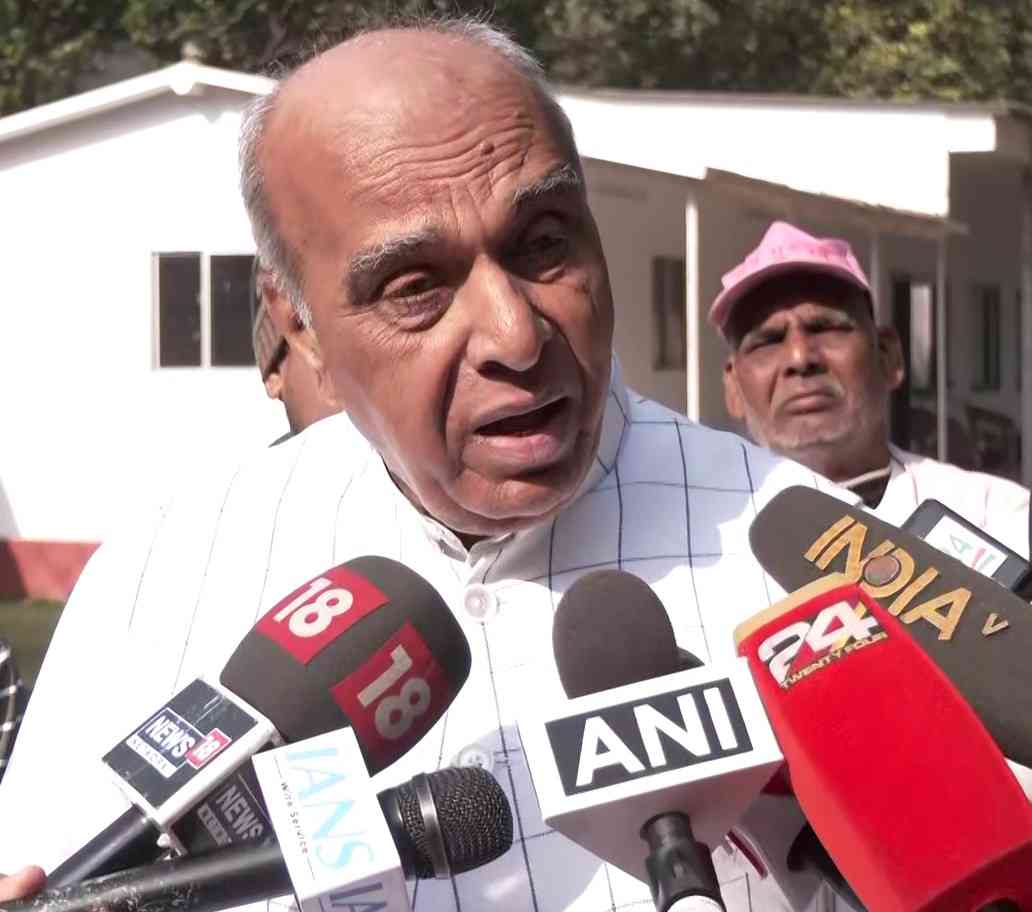
Amid criticism over the JPC report on the Waqf (Amendment) Bill, the Chairman of the Joint Parliamentary Committee, Jagdambika Pal said on Monday that the opposition is trying to push a certain agenda and has submitted a dissent note on 281 pages out of a total of 428 pages report.
Speaking to the media, Pal emphasized that they have prepared the final report after considering all the witnesses.
“Just like they (Opposition) tried to mislead the JPC by saying that if this bill is passed, all Waqf properties will be taken away, similarly, they are trying to push a certain agenda across the country and are attempting appeasement. In the continuous JPC meetings, we called everyone as witnesses, whether it was the Waqf Board, the Minority Commission, government officials, stakeholders, or Islamic scholars – we listened to all of them. We have prepared a 428-page report, which we have submitted to the Speaker,” he said.
“In this 428-page report, we had requested clause-by-clause amendments, whether it was Owaisi Sahib, Naseer Hussain, or anyone else, and everyone had given their input. We then held a voting based on those amendments and accepted them based on the majority,” he added.
The JPC Chairman also highlighted that in all the meetings, those who are opposing today were also present and they participated in the voting.
“The opposition has submitted a dissent note on 281 pages out of the 428-page report. When we present the report in the House, the dissent notes of all these members will be included as well. Now, what more could be done in a parliamentary democracy?” Jagdambika Pal said.
On being asked when the report will be presented in the House, the JPC Chairman said, “When the Speaker proposes the agenda and the Business Advisory Committee agrees, we will table it.”
The JPC report on the Waqf (Amendment) Bill 2024 will not be tabled in the House on Monday, according to the list of businesses. The report was presented to Lok Sabha Speaker Om Birla on January 30, 2025.
The JPC on the Waqf (Amendment) Bill adopted the draft report and the amended revised bill on Wednesday, January 29. However, the opposition leaders submitted their dissent notes on the report.
The JPC had earlier cleared the Waqf Bill 1995 with 25 amendments across 14 clauses and sections.
The Waqf Act of 1995, enacted to regulate Waqf properties, has long been criticised for issues such as mismanagement, corruption, and encroachments.
The Waqf (Amendment) Bill, 2024, aims to address these challenges by introducing reforms such as digitisation, enhanced audits, improved transparency, and legal mechanisms to reclaim illegally occupied properties. (ANI)
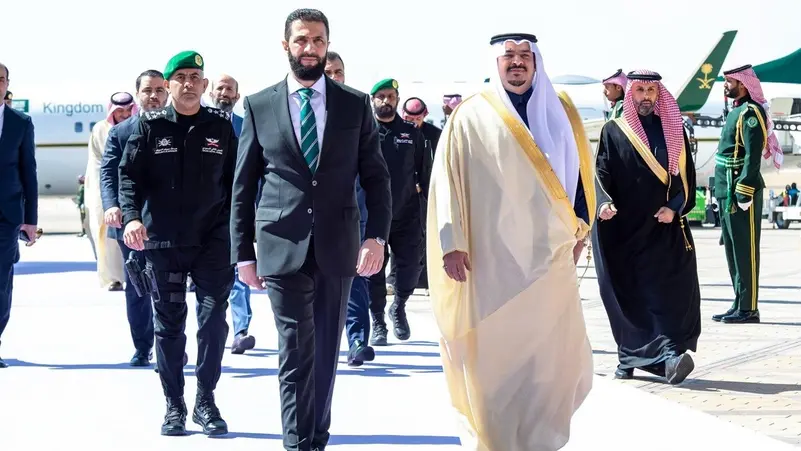
Syria’s newly appointed transitional President, Ahmed al-Sharaa, arrived in Saudi Arabia on Sunday, marking his first official visit abroad since assuming office. His visit is expected to strengthen diplomatic ties and discuss Syria’s future amid significant political changes.
Strengthening Bilateral Relations
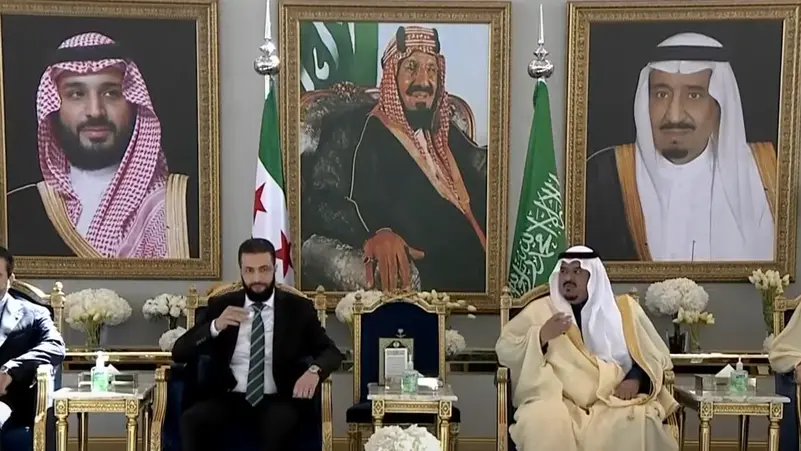
Al-Sharaa, accompanied by Syrian Foreign Minister Asaad al-Shaibani, was welcomed in Saudi Arabia, where he is scheduled to hold high-level talks with Saudi Crown Prince Mohammed bin Salman. This visit follows the recent congratulations extended by Saudi Arabia’s King Salman and Crown Prince Mohammed bin Salman after al-Sharaa’s appointment as the country’s transitional leader.
Background of Al-Sharaa’s Appointment
Al-Sharaa took over the Syrian presidency following the ousting of long-time ruler Bashar al-Assad in December. His appointment was part of a broader political transition aimed at stabilizing Syria after years of conflict. As interim president, al-Sharaa has been tasked with forming a transitional government and preparing the country for future governance reforms.
Saudi Support for Syria’s New Leadership
Saudi Arabia has shown keen interest in supporting Syria’s new leadership. Last month, Saudi Foreign Minister Prince Faisal bin Farhan visited Damascus and met with al-Sharaa, emphasizing Riyadh’s willingness to help Syria navigate international diplomatic challenges. Prince Faisal also stressed the importance of lifting and freezing international sanctions that have impacted Syria’s economy for years.
The Saudi government has been a key player in humanitarian aid to Syria, providing support for reconstruction efforts and helping the country recover from the devastating effects of war.
Economic Prospects and Investment Opportunities
In a December interview with Al Arabiya, al-Sharaa expressed optimism about Syria’s economic future, stating that Saudi Arabia would play a crucial role in its rebuilding efforts. He pointed to the significant investment opportunities for neighboring countries and international investors as Syria moves toward economic recovery.
Interestingly, al-Sharaa revealed a personal connection to Saudi Arabia, mentioning that he was born there while his father worked in the Kingdom. He spent his early years in Saudi Arabia before returning to Syria, strengthening his ties with the country on a personal level.
Future Diplomatic Engagements
This visit signals Syria’s intent to re-engage with regional powers and re-establish its position in the Arab world. As al-Sharaa meets with Saudi leaders, discussions are expected to cover economic cooperation, diplomatic relations, and strategies for stabilizing Syria’s political landscape.
Observers believe this visit could mark the beginning of a new era for Syria, with Saudi Arabia playing a vital role in shaping its future. The world will be watching closely as al-Sharaa navigates his leadership and works toward rebuilding Syria with the support of regional allies.
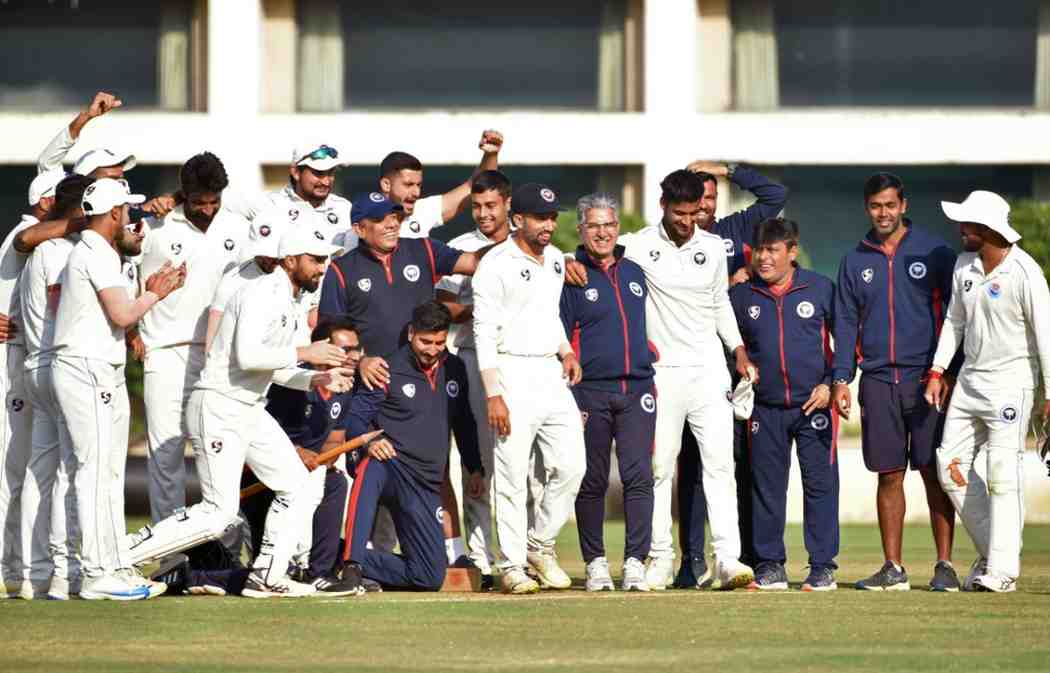
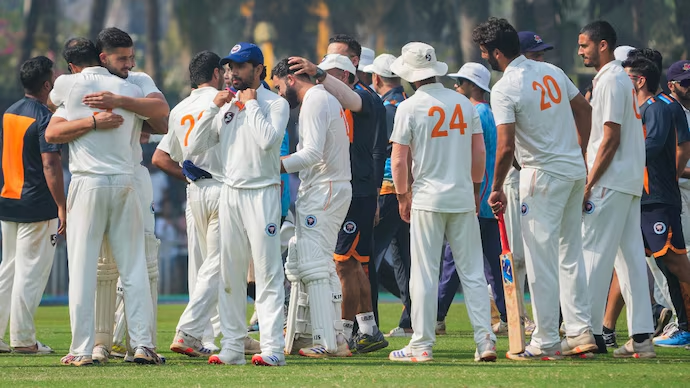
Jammu and Kashmir triumphed over Baroda by 182 runs in their Ranji Trophy Elite Group A encounter, sealing their place in the quarter-finals on Sunday.
After winning the toss and opting to bat, Jammu and Kashmir posted a solid first-innings total of 246.The team J&K followed it up with a second-innings score of 284, setting Baroda a daunting target of 365 runs to win.
Baroda were dismissed for 166 in their first innings and struggled again in their second innings, managing only 182/7 at lunch on Day 4.
They required 184 more runs to win, despite some resistance, they were unable to chase the target. Jammu and Kashmir’s dominant performance with both bat and ball helped them secure the comprehensive win, ensuring their advancement to the quarter-finals of the competition—(KNO)
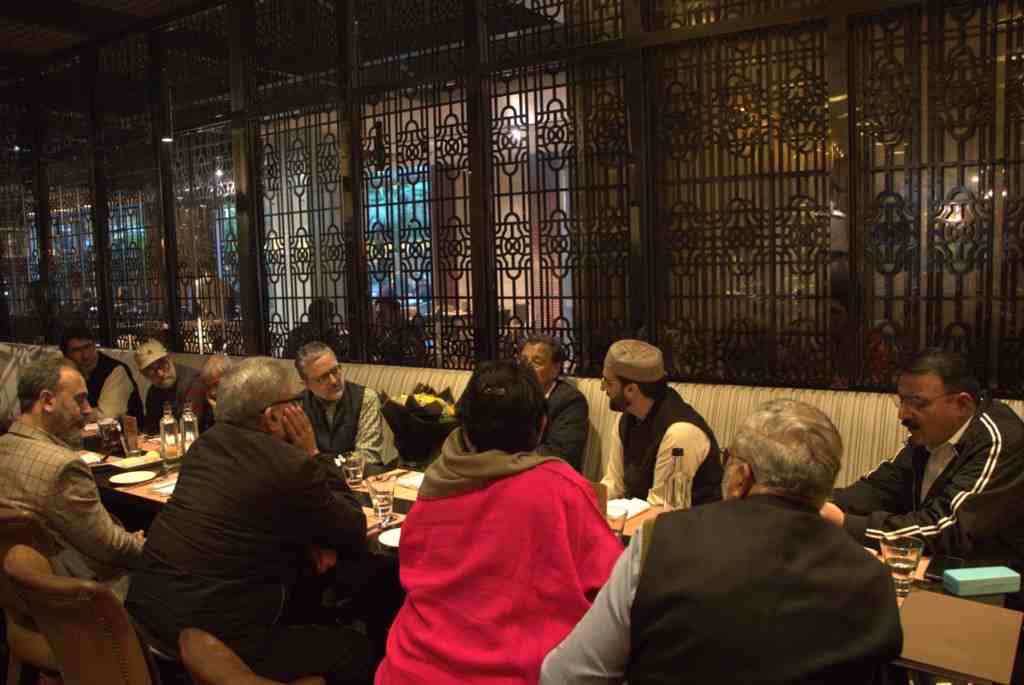
In a significant move toward healing the longstanding rifts in Kashmir, Mirwaiz Umar Farooq, the influential religious leader of the Kashmir Valley, has proposed the formation of an Inter-Community Committee aimed at fostering greater understanding and reconciliation between Kashmiri Muslims and Kashmiri Pandits. This initiative, which seeks to bridge the gaps between the two communities, was announced following a critical meeting between Mirwaiz and a delegation of Kashmiri Pandits from the J&K Peace Forum on January 31, 2025, at the JW Marriott Hotel in New Delhi.
The Proposal: A Step Toward Unity
Mirwaiz Umar Farooq’s proposal is a part of his broader vision to restore peace and harmony in Kashmir, a region that has witnessed decades of conflict and division. The proposed Inter-Community Committee is envisioned as a platform where Kashmiri Muslims and Pandits can engage in meaningful dialogue, address historical grievances, and work toward creating a more inclusive and peaceful future.
In the meeting, Mirwaiz emphasized the importance of communal harmony, stressing that Kashmir’s identity is incomplete without the presence of both communities. He stated, “Kashmir is incomplete without Kashmiri Pandits,” acknowledging the profound loss and pain experienced by the Pandit community during the exodus of 1989-90, when thousands of Kashmiri Pandits were forced to leave the region due to rising tensions and violence.
Addressing the Shared Suffering
One of the key themes of the meeting was the shared suffering of both Kashmiri Muslims and Pandits. Mirwaiz acknowledged the tragic displacement of the Kashmiri Pandit community and the challenges they faced in the aftermath of their exodus. He emphasized that the suffering of Kashmiri Pandits must be addressed earnestly, a point he has raised consistently in his discourses.
During the one-and-a-half-hour discussion, Mirwaiz also expressed his belief that the younger generation needs to be educated about the composite culture of Kashmir, which has historically been a harmonious blend of different communities, including Muslims, Hindus, Sikhs, and Buddhists. He underscored the importance of preserving this cultural fabric, which he believes is essential for maintaining peace and mutual respect among the diverse communities of the region.
Mirwaiz’s call for cultural preservation is significant, especially given the challenges the region has faced in recent decades. The Kashmir Valley has been severely affected by political instability, militancy, and violence, leading to a deepening divide between various communities. Mirwaiz’s initiative to educate the younger generation about Kashmir’s inclusive heritage could play a crucial role in fostering a sense of unity and shared history.
The Kashmiri Pandit Perspective
The Kashmiri Pandit delegation, led by members of the J&K Peace Forum, shared their ongoing struggles and the hardships they have endured since their displacement. In an emotional account, they spoke of the painful memories of being “hounded out for none of their reasons” and the severe difficulties they have faced in rebuilding their lives in exile. Many members of the delegation recounted selling their possessions to provide education for their children and struggling to maintain their cultural identity in foreign lands.
Despite these hardships, the Kashmiri Pandit delegation emphasized their unwavering support for their Muslim brothers and sisters. They remarked, “We have always extended support to our Muslim brothers and sisters in times of distress, and vice versa.” This sentiment of mutual solidarity and shared history has been a recurring theme in the discussions between Kashmiri Muslims and Pandits over the years, but it has often been overshadowed by political tensions and the trauma of the exodus.
The delegation also highlighted the moral authority of Mirwaiz Umar Farooq in leading this initiative. As the spiritual leader of Kashmir, Mirwaiz is seen not just as a religious figure but as a representative of all communities, including minorities. His position as a unifying force in the region gives him the credibility and moral standing to lead the proposed Inter-Community Committee.
The Role of Religious Leaders in Healing Divides
The involvement of religious leaders in the peace process is crucial for the success of any initiative aimed at reconciliation in Kashmir. Mirwaiz Umar Farooq’s leadership and his position as a symbol of religious tolerance and unity are central to the success of the proposed Inter-Community Committee. His ability to bridge the gap between the two communities, rooted in shared religious and cultural values, could be key to breaking the cycle of mistrust and division that has plagued Kashmir for decades.
Religious leaders in Kashmir, including Mirwaiz, have historically played an influential role in shaping the region’s social and political landscape. In recent years, however, the role of religion in politics has become more contentious, with religious divisions often exacerbating the conflict. However, Mirwaiz’s call for unity based on the shared values of compassion, peace, and respect for diversity offers a hopeful path forward.
A Hopeful Future for Kashmir?
The proposal to create an Inter-Community Committee is a positive step toward reconciliation in Kashmir, a region that has long been marked by sectarian violence and political turmoil. While the road to peace and unity will undoubtedly be challenging, initiatives like this offer a glimmer of hope for a more harmonious future. By focusing on shared suffering, mutual support, and the preservation of Kashmir’s rich cultural heritage, Mirwaiz’s proposal could pave the way for deeper understanding and collaboration between Kashmiri Muslims and Pandits.
The success of this initiative will depend on the willingness of both communities to engage in open and honest dialogue, as well as the continued leadership of figures like Mirwaiz Umar Farooq, who remain committed to healing the wounds of the past. If the proposed Inter-Community Committee is able to achieve its goals, it could serve as a model for conflict resolution in other regions facing similar challenges.
For now, the people of Kashmir, both Muslim and Pandit, await the next steps in this hopeful journey toward communal harmony and a brighter future for all.
J&K Ranji Trophy team staged a protest against Baroda on Saturday accusing the hosts of tampering with the pitch in their ongoing match.
The protest occurred on Day 3 of the crucial Elite Group A game between the two teams at the Reliance Stadium in Vadodara. The incident caused a delay in the start of play, which was scheduled for 9:30 am but began at 10:55 am instead.
Jammu and Kashmir’s players and management raised concerns after noticing a drastic change in the pitch conditions between Day 2 and Day 3. They claimed that the pitch had been balanced during the second day of play, but by the start of Day 3, it had become damp and unpredictable. This made batting significantly harder and led to their protest.
The allegations were made by J&K’s coach, Ajay Sharma, who noticed a difference in the color of the pitch. He believed that this change was unusual and suggested it could have been altered overnight. As a result, J&K filed an official complaint with the relevant authorities regarding the state of the pitch.
The protest by the visitors delayed the match, with play starting later than usual.
On the other hand, Baroda denied the accusations, calling them “baseless.” A representative from the Baroda Cricket Association explained that the pitch had moisture due to the winter conditions, which caused the surface to be damp.
The representative added that the outfield was also wet, and both the umpires and players were aware of the conditions. According to Baroda, these natural conditions were to blame for the changes in the pitch, not any deliberate action to alter it.
The Baroda official also said that such delays were common in winter and that it was not unusual for matches to be affected by moisture. The Baroda Cricket Association expressed their intention to approach the Board of Control for Cricket in India (BCCI) regarding the allegations made by J&K.
The match was important for both teams. For J&K, a win would ensure they topped their group, while Baroda needed a victory to advance to the quarter-finals.
Despite the controversy surrounding the pitch, Jammu and Kashmir managed to set Baroda a target of 365 runs—(KNO)
Congress leader and Lok Sabha Leader of Opposition,Rahul Gandhi Criticizes Union Budget 2025, alleging that the target of the budget was only to benefit 20-25 people and give money in the hands of the billionaires.
He also brushed off the benefits of income tax exemption up to Rs 12 lakh, the biggest announcement of the budget.
“The budget was presented today, the target of the budget was to benefit 25 people. They will give you a little, they will waive a little tax but if you see the target of the budget, is to provide India’s money to 20-25 billionaires. In India, 50 per cent are backward class, 15 per cent are Dalits, 8 per cent are tribals, 15 per cent are minorities and suppose, 5 per cent are from poor, general-class people,” he said at a public meeting in Delhi’s Sadar Bazar.
The Lok Sabha LoP also highlighted the “inadequate representation” of underprivileged sections of society in various institutions across the country.
“Look at the owners of private hospitals, colleges and universities, big companies, take out the list of big judges and show me who are from the backward class, who are Dalits, who are tribals, minorities, how many are from the poor general class, they are the elected people, they are their friends,” he said.
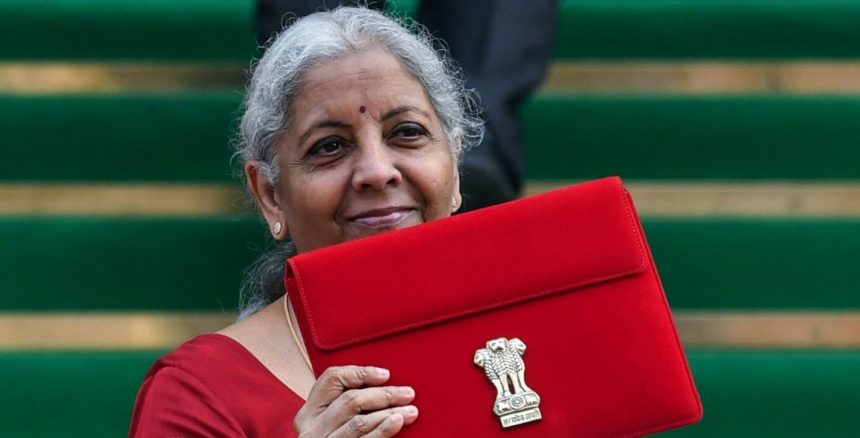
Union Finance Minister Nirmala Sitharaman presented the Union Budget 2025 in the Lok Sabha outlining a roadmap for India’s continued economic expansion, emphasizing agriculture, micro, small, and medium enterprises (MSMEs), investment, and exports.
Nirmala Sitharaman, during her Union Budget 2025 speech, announced that no income tax will be payable on income up to Rs 12 lakh, providing significant relief to taxpayers, especially the middle class.
“To taxpayers up to Rs 12 lakh of normal income (other than special rate income such as capital gains) tax rebate is being provided in addition to the benefit due to slab rate reduction in such a manner that there is no tax payable by them,” said Sitharaman.
The announcement from the Finance Minister of this big relief to the middle class was met by a loud thumping of the desks by the treasury benches led by PM Narendra Modi. (ANI)
The Government of India has allocated Rs 9325 crore for J&K Police, which is under the administrative control of the Union Home Ministry, in the Union Budget for 2025-26.
As per the Ministry of Home Affairs’ (MHA) demands for grants for 2025-26, Rs 9325.73 crore have been allocated to the J&K Police in the Union Budget. Of this amount, Rs 8897.72 crore has been earmarked for the revenue expenditure and Rs 428.01 crore for the capital expenditure.
These budgetary provisions have been made to meet the administrative expenditures of the Jammu and Kashmir Police, which is responsible for maintaining and enforcing law and order and managing traffic in J&K.
Since 2024-25, the J&K Police’s budget has been part of the Union Budget. While the Union government has described the takeover of the J&K Police budget as an act of financial benevolence, opposition parties have argued that it indicates J&K will continue to remain under the Union government’s control for a longer period.
In 2019, the Union Government took over the power of legislating on J&K Police through the J&K Reorganisation Act. “Subject to the provisions of this Act, the Legislative Assembly may make laws for the whole or any part of the Union territory of Jammu and Kashmir with respect to any of the matters enumerated in the State List except the subjects mentioned at entries 1 and 2, namely ‘Public Order’ and ‘Police’ respectively, or the Concurrent List in the Seventh Schedule to the Constitution of India in so far as any such matter is applicable in relation to the Union territories,” section 28 of the law bifurcating J&K into two UTs states—(KNO)
The Union Government on Saturday proposed allocation of Rs 41000.07 crore to Jammu & Kashmir Union Territory for next financial year, 2025-26.
As part of fund transfers for Union Territories, the Union Finance Ministry today proposed an allocation of Rs 41000. 07 crore to Jammu & Kashmir Union Territory in the Union Budget for 2025-26.
The budgetary figures show that there has been no increase in central assistance to J&K for the next fiscal in the Union Budget.
Of Rs 41000.07 crore allotted to J&K, Rs 40619.30 crore has been kept as central assistance for J&K to bridge its resource gap.
According to budget documents, Rs 279 crore have been proposed to be allocated as grants towards contribution to the Union Territory Disaster Response Fund and Rs 101.77 crore to meet resource gap funding for infrastructure projects.
As per these documents, the financial assistance for Jammu & Kashmir for ongoing fiscal has been revised to Rs 41000.07 crore from Rs 42277.74 crore—(KNO)
The Princess of Wales, Kate Middleton, delighted royal fans with a rare and touching moment during her first official “away day” since 2023. As she visited South Wales, Kate made an unscheduled stop to greet an adorable three-year-old girl who had been eagerly calling out to her. The spontaneous gesture, which broke royal protocol, left the young fan, Lily-Rose Logan, overjoyed and created a truly unforgettable moment.
Kate, Duchess of Cambridge smiles as she interacts with children Wednesday Jan. 10, 2018 during a visit to the Reach Academy Feltham, in London, a school working in partnership with Place2Be and other organisations to support children, families and the school community. (Eddie Mulholland/Pool Photo via AP)
A Special Return to Royal Duties
Kate, 43, is slowly returning to public engagements following her cancer treatment last year. As part of her gradual comeback, she visited two key locations in South Wales: Tŷ Hafan children’s hospice and Corgi Hosiery, a sock manufacturer with a royal warrant. At the hospice, Kate spent time with children, engaging in arts and crafts activities, including a handprint painting—something King Charles had also done in his role as the hospice’s former patron.
During her visit to Corgi Hosiery, Kate met workers and learned about the craftsmanship behind the company’s high-quality socks and jumpers. As the royal convoy was leaving the premises, Kate noticed a small but enthusiastic fan among the waiting crowd.
The Sweet Exchange That Stole Hearts
Three-year-old Lily-Rose Logan had been excitedly calling out, “Hello, princess!” in the hopes of catching Kate’s attention. Moved by the child’s enthusiasm, Kate made a surprising decision—she broke protocol by stepping out of the moving royal convoy and running towards the delighted crowd.
Lily-Rose was in awe as the princess approached and even asked, “Are you really a princess?” to which Kate warmly replied, “Yes, I am! I wanted to come and say hello to you.” The moment was filled with pure joy as Lily-Rose proudly showed Kate her toy banana and even offered it as a gift. Amused, the princess gently returned it, but when the little girl threw it on the floor, Kate playfully picked it up again, sharing laughter with onlookers.
The princess continued the friendly chat, telling Lily-Rose about the factory and how it makes socks and jumpers. She also thanked the little girl for her enthusiasm, saying, “I heard you saying hello all the way from back there, so I thought I should come and say hello to you.”
A Rare Break in Royal Tradition
Royal protocol typically dictates that once a convoy leaves an event, it does not stop. However, Kate’s spontaneous and heartfelt action showed her deep connection with the public, reinforcing why she is one of the most beloved members of the royal family.
The moment was met with cheers and gasps from the crowd, as Kate shook hands and exchanged warm greetings with other fans before rejoining her convoy. Many onlookers captured the touching interaction on their phones, with social media buzzing over the princess’s kindness and relatability.
Following in the Footsteps of Royal Icons
Kate’s visit also marked a significant milestone, as she was officially announced as the new patron of Tŷ Hafan children’s hospice, taking over from King Charles. This new role aligns her with the late Princess Diana, who was known for her compassionate work with children’s charities.
Much like Diana, Kate has consistently shown warmth and dedication to her royal duties, particularly when it comes to children. Her willingness to break tradition for a heartfelt moment further cements her reputation as a modern, approachable royal.
Conclusion
Kate Middleton’s unscripted encounter with Lily-Rose Logan was a powerful reminder of the magic of royalty and human connection. Her decision to break protocol to engage with a young fan showcases the warmth and relatability that make her a cherished figure worldwide. This touching moment, now widely shared on social media, will be remembered as one of the most endearing highlights of her return to royal duties.
With her gradual comeback, it’s clear that Kate is not just fulfilling royal responsibilities—she’s making meaningful connections that resonate with people of all ages.
Opener Saim Ayub failed to win the race against time after he couldn’t feature in Pakistan’s 15-member squad for the upcoming ICC Champions Trophy 2025 as announced by the Pakistan Cricket Board (PCB).
The Men in Green won the last Champions Trophy event held in 2017. This time, Pakistan are hosting this 2025 edition, along with the UAE.
Mohammad Rizwan will lead the team, having done so since Babar Azam stepped down from the role after the ICC Men’s Cricket World Cup in 2023. This is the first 50-over ICC tournament since then.
Rising star hitter Saim Ayub is a notable absentee, having sustained an ankle injury in Pakistan’s New Year’s Test in Cape Town, South Africa.
“We understand how much he was looking forward to the ICC Champions Trophy 2025 and recognise how devastating it must be for him to miss a global event, especially when he is in such exceptional batting form. However, as a valuable asset to our team, we are committed to prioritising his long-term health over making any rushed decisions,” Asad Shafiq, a member of the National Selection Committee explained as quoted by the ICC official website.
Top-order batter Abdullah Shafique has also missed the cut, paving the way for Babar to secure one of the top-order roles.
Veteran Fakhar Zaman has been brought in the mix, having played a monumental role in the 2017 Champions Trophy final. He scored his maiden ODI ton (114 off 106 deliveries) at The Oval, London, as Pakistan beat India by 180 runs to claim the silverware.
Also recalled to the squad are Faheem Ashraf, Khushdil Shah, and Saud Shakeel.
“Fakhar’s opening partner could be either Babar Azam or Saud Shakeel, depending on various factors such as conditions, opposition and match strategy. Both players are highly capable at the top of the order, with Babar being particularly seasoned in the role, regularly opening in T20Is and also excelling in the Cape Town Test by scoring two half-centuries in Saim Ayub’s absence,” Shafiq said.
The same squad will feature in the tri-series against South Africa and New Zealand in the leadup to the Champions Trophy.
They’ll play in the tournament opener against New Zealand, in Karachi, before hype reaches fever-pitch for their hotly anticipated showdown with India in Dubai.
Aaqib Javed will continue his role as Interim Coach, stepping in after Gary Kirsten’s departure last October.
They’ll play in the tournament opener against New Zealand, in Karachi, before hype reaches feverpitch for their hotly anticipated showdown with India in Dubai.
Pakistan’s Group Stage Fixtures:
19 February – Pakistan vs New Zealand, Karachi
23 February – Pakistan vs India, Dubai
27 February – Pakistan vs Bangladesh, Rawalpindi
Pakistan squad: Mohammad Rizwan (c), Babar Azam, Fakhar Zaman, Kamran Ghulam, Saud Shakeel, Tayyab Tahir, Faheem Ashraf, Khushdil Shah, Salman Ali Agha, Usman Khan, Abrar Ahmed, Haris Rauf, Mohammad Hasnain, Naseem Shah, Shaheen Shah Afridi. (ANI)