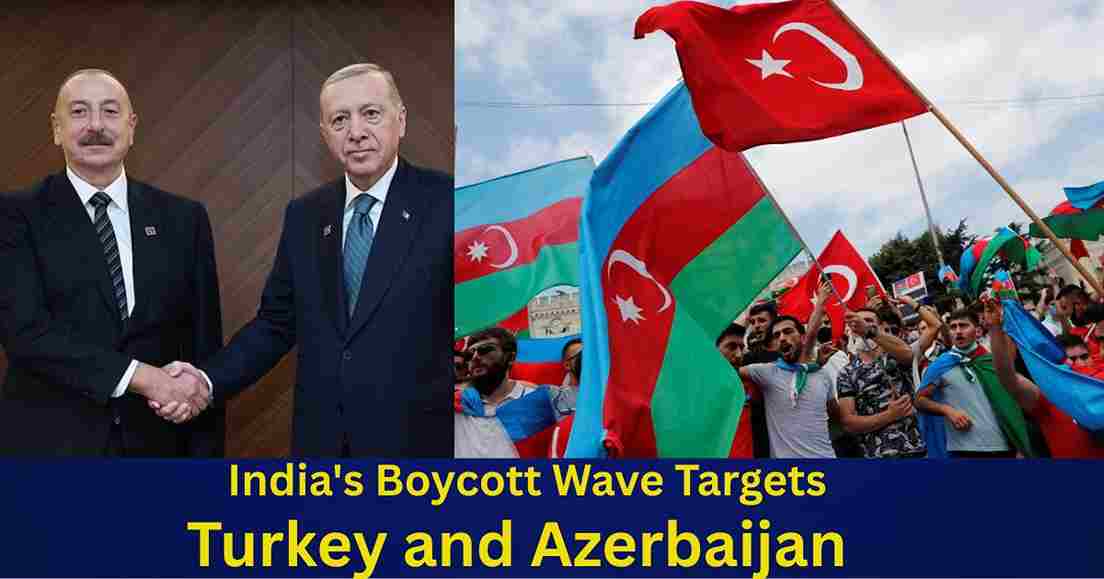
In the wake of escalating tensions between India and Pakistan following Operation Sindoor on May 7, 2025, a significant boycott movement has emerged in India targeting Turkey and Azerbaijan. This civilian-led campaign, fueled by patriotic fervor and amplified through social media, responds to both nations’ explicit support for Pakistan after India’s military strikes on terror sites in Pakistan and Pakistan-occupied Kashmir (PoK). The boycott, reminiscent of India’s 2024 Maldives campaign, leverages economic and cultural influence to pressure nations perceived as aligning with Pakistan’s “terror state” agenda, particularly after the Pahalgam terror attack on April 22, 2025. This article explores the origins, scale, and potential impacts of this boycott, highlighting its implications for India’s geopolitical strategy and the economies of Turkey and Azerbaijan.
Background: The Catalyst for the Boycott
The boycott movement was triggered by India’s Operation Sindoor, a pre-dawn airstrike targeting nine key terror installations across Pakistan and PoK, including Jaish-e-Mohammed’s base in Bahawalpur and Lashkar-e-Taiba’s nerve center in Muridke. Conducted in retaliation for the Pahalgam attack, which killed 25 Indian tourists and one local guide, the operation marked India’s deepest strikes inside Pakistan in decades. While most nations condemned the terror attack, Turkey and Azerbaijan issued statements supporting Pakistan, criticizing India’s actions as “unprovoked aggression” and expressing solidarity with Islamabad.
Turkey’s involvement escalated tensions further when the Indian Army revealed that 300–400 Turkish-made Songar drones were used by Pakistan in retaliatory strikes targeting Indian military bases and civilian infrastructure. Azerbaijan, closely aligned with Turkey, also condemned India’s strikes, expressing condolences for Pakistani civilian losses. These actions were perceived in India as direct support for Pakistan’s terror-sponsored agenda, sparking widespread outrage.
The Boycott Movement: Scale and Momentum
Social Media and Public Sentiment
The boycott campaign gained traction through social media, particularly on X, where hashtags like #BoycottTurkey, #BoycottAzerbaijan, and #NoTravelToTurkey trended with over 12,000 posts by May 8, 2025. Influential figures, including industrialist Harsh Goenka, actress Rupali Ganguly, and Shiv Sena MP Priyanka Chaturvedi, amplified the call to action. Goenka highlighted the economic contributions of Indian tourists, stating, “Indians gave Rs 4,000+cr to Turkey & Azerbaijan last year through tourism. Created jobs. Boosted their economy, hotels, weddings, flights. Today, both stand with Pakistan after Pahalgam attack. Plenty of beautiful places in India & the world. Please skip these 2 places.”
Posts on X emphasized national dignity, with users like Anant Ladha urging, “Azerbaijan (Baku) and Turkey should now see India’s power. We should ban these locations from our holidays.” Another user, Alok Jain, noted, “No more Baku visits please. In 2024, Azerbaijan witnessed a surge in Indian tourists. Show them the power of Indian tourists now!” The sentiment was clear: Indian money should not fund nations supporting Pakistan.
Travel Industry Response
The travel sector swiftly aligned with public sentiment. Major companies like EaseMyTrip, Cox & Kings, Ixigo, Travomint, and Pickyourtrail suspended bookings to Turkey and Azerbaijan, citing national security and traveler safety. EaseMyTrip’s founder, Nishant Pitti, issued an advisory: “Following the Pahalgam attack and escalating tensions between India & Pakistan, travellers are urged to stay aware. As Turkey & Azerbaijan have shown support for Pakistan, we strongly recommend visiting only if absolutely necessary.” Cox & Kings paused all new travel offerings to Azerbaijan, Turkey, and Uzbekistan, stating, “When national interest is at stake, we stand with India.”
By May 14, 2025, industry executives reported a 50–60% drop in bookings to both countries, with cancellations surging by 250% in just six days. EaseMyTrip noted 22% cancellations for Turkey and over 30% for Azerbaijan, while the Indian Association of Tour Operators reported 15–20% cancellations for outbound travel. Travel platforms like Atlys and Skyscanner, which had previously promoted Azerbaijan as a budget-friendly European destination, saw a sharp decline in inquiries.
Business and Trade Actions
Beyond tourism, Indian businesses joined the boycott. In Pune, apple traders at the APMC market stopped sourcing Turkish apples, with trader Suyog Zende stating, “Retail customers are also saying that they do not want Turkish apples.” Goa Villas announced it would no longer offer accommodation to Turkish citizens, citing Turkey’s “non-cooperative stance.” Some businesses, like Go Homestays, ended partnerships with Turkish accommodation providers. Former UP police chief Prakash Singh called for terminating route-sharing agreements between Indian and Turkish airlines.
The boycott also extended to cultural and entertainment sectors. Music composer Vishal Mishra canceled upcoming shows in Turkey and Azerbaijan, stating, “Travel transcends logistics—it’s about empathy.” These actions reflect a broader shift in consumer behavior, where geopolitical alignment influences economic decisions.
Economic Impact on Turkey and Azerbaijan
Tourism Revenue at Risk
In 2024, Turkey welcomed 3.3 lakh Indian tourists, a 20.7% increase from 2023, contributing approximately Rs 3,000 crore to its economy. Azerbaijan saw 2.43 lakh Indian visitors, a 108% surge, generating significant revenue through tourism, hospitality, and related sectors. Indian tourists, known for high per-capita spending (averaging $972 in Turkey), have been a key market for both nations due to easy visas, direct flights, and vibrant cultural offerings like Istanbul’s Ottoman architecture and Baku’s budget-friendly European appeal.
The boycott threatens substantial losses. A projected 50% drop in Indian tourist arrivals could cost Turkey and Azerbaijan billions, impacting jobs, hotels, and airlines. Azerbaijan, where Indians accounted for 13% of 2024 tourist arrivals, faces a particularly severe hit, as Baku’s tourism boom relied heavily on Indian visitors. Turkey, already grappling with economic challenges, risks further strain, with Indian investments of $227 million (2000–2024) also under scrutiny.
Comparisons to the Maldives Boycott
The current boycott draws parallels to India’s 2024 Maldives campaign, triggered by derogatory remarks against Prime Minister Narendra Modi. That boycott led to a sustained decline in Indian tourist arrivals, forcing the Maldivian government to backtrack. Industry experts predict a larger impact this time, given the scale of Indian tourism to Turkey and Azerbaijan and the emotional weight of the Pahalgam attack. WanderOn’s CEO Gaur told Moneycontrol, “I see a much larger impact as compared to the Maldives. Baku or Azerbaijan is on travellers’ minds because of Indian tourists.”
Geopolitical Context and Strategic Implications
Turkey and Azerbaijan’s Pro-Pakistan Stance
Turkey’s support for Pakistan is rooted in President Recep Tayyip Erdogan’s ambition to position himself as a leader of the Muslim world, often raising the Kashmir issue at global forums like the UN. Turkey’s supply of Songar and Bayraktar TB2 drones to Pakistan, used against India, marks a shift from ideological to military aggression. Azerbaijan, described by some as a “satellite state” of Turkey, aligns with Ankara due to close diplomatic, economic, and defense ties, further cemented by Pakistan’s support during Azerbaijan’s 2020 war against Armenia.
Out of over 50 Muslim-majority nations, only Turkey and Azerbaijan openly backed Pakistan post-Operation Sindoor, isolating Islamabad diplomatically. This has strengthened India’s narrative of Pakistan as a terror-sponsoring state, with civilians using economic boycotts to reinforce this stance.
Pivot to Armenia and Greece
The boycott has redirected Indian travel interest to “India-friendly” nations like Armenia and Greece. Armenia, a strategic partner with growing defense ties to India, is emerging as a tourism hotspot due to its cultural heritage and geopolitical alignment. Greece, an EU member with strong bilateral ties, is also gaining traction as an alternative to Turkey’s Mediterranean appeal. This shift could deepen economic and diplomatic ties, with Armenia expecting a tourism-driven boost to its hospitality and service sectors.
India’s Broader Strategy
The boycott reflects India’s no-tolerance policy on terrorism and its ability to mobilize civilian-led economic pressure as a geopolitical tool. By targeting tourism—a sector where India wields significant influence—citizens are enforcing a “strategic cultural blockade” against nations supporting Pakistan. This aligns with India’s broader efforts to isolate Pakistan diplomatically, as seen in the global condemnation of the Pahalgam attack. The movement also underscores the growing intersection of politics and consumer behavior, where travel choices reflect national interests.
Responses from Turkey and Azerbaijan
Turkey’s tourism board issued a statement inviting Indian travelers, emphasizing enhanced air connectivity and specialized experiences for Indian preferences. However, this was met with sharp rejection on X, with users stating, “Terror, trade, and tourism will not go together.” A viral letter, allegedly from Turkey’s Department of Tourism, acknowledged the boycott but failed to quell Indian anger. Azerbaijan has been less vocal, but its tourism board’s earlier projection of an 11% growth in Indian visitors through 2035 now appears optimistic.
Turkey’s President Erdogan doubled down, vowing to support the “brotherly people of Pakistan” while claiming efforts to de-escalate tensions. This stance, coupled with Turkey’s economic vulnerabilities, suggests the boycott could exacerbate existing challenges. Azerbaijan, heavily reliant on tourism for economic diversification, faces a similar risk.
Potential Long-Term Impacts
The boycott could reshape India’s tourism and trade relations with Turkey and Azerbaijan. Sustained cancellations and reduced air connectivity—potentially mirroring the Maldives’ post-boycott flight reductions—may force both nations to reassess their pro-Pakistan stance. Airlines like IndiGo and Turkish Airlines, operating 28 weekly flights to Istanbul, and Azerbaijan Airlines, with seven weekly flights to Delhi and Mumbai, may face commercial pressure to cut capacity.
For India, the pivot to Armenia and Greece could foster new economic partnerships, particularly in tourism, trade, and defense. However, the boycott risks escalating diplomatic tensions, especially with Turkey, a NATO member with significant regional influence. India’s ability to sustain this pressure will depend on the movement’s longevity and global perceptions of its anti-terrorism stance.
Conclusion
India’s boycott of Turkey and Azerbaijan is a powerful expression of civilian-led nationalism, driven by outrage over their support for Pakistan post-Operation Sindoor. By targeting tourism—a sector where India contributed Rs 4,000 crore to both nations in 2024—the movement underscores the economic leverage of Indian consumers. With travel companies, businesses, and influencers rallying behind the cause, the boycott threatens significant losses for Turkey and Azerbaijan while redirecting Indian interest to allies like Armenia and Greece. As a strategic tool, this campaign reinforces India’s no-tolerance policy on terrorism, signaling that economic and cultural ties are contingent on geopolitical alignment. Whether Turkey and Azerbaijan recalibrate their stance remains to be seen, but the boycott has already redefined the intersection of travel, politics, and national security in India’s fight against terrorism.
You Might Also Like :
Trump’s $600 Billion Saudi Investment Deal: Full Breakdown
Flight Operations Resume at Srinagar Airport After Suspension Due to Security Concerns
Three Terrorists Killed in Encounter with Security Forces in South Kashmir’s Shopian