
Pahalgam, often dubbed the “Mini Switzerland of India,” is a picturesque hill station nestled in the Anantnag district of Jammu and Kashmir. Renowned for its lush meadows, serene rivers, and snow-capped Himalayan peaks, it has long been a magnet for tourists seeking respite in its natural beauty. In July 2025, Union Tourism Minister Gajendra Singh Shekhawat announced that all 18,000 hotel rooms in Pahalgam were fully occupied, a testament to the region’s booming tourism sector. This milestone reflected years of recovery and growth following periods of unrest, bolstered by government initiatives and a perceived decline in security concerns. However, the devastating terror attack on April 22, 2025, in Baisaran Valley has cast a dark shadow over this progress, leaving hoteliers grappling with mass cancellations and an uncertain future.
A Tourism Boom in July 2025
Before the terror attack, Pahalgam was riding a wave of tourism success. According to the Jammu and Kashmir Department of Tourism, the region welcomed approximately 35 lakh tourists in 2024, a significant rise from 27 lakh in 2023 and 26 lakh in 2022. The first three months of 2025 alone saw 5 lakh visitors, signaling a robust start to the year. By July, Pahalgam’s 18,000 hotel rooms—spanning luxury resorts, mid-range hotels, and budget guesthouses—were fully booked, as confirmed by Tourism Minister Shekhawat. This unprecedented occupancy rate underscored the town’s appeal as a premier destination for domestic and international travelers, drawn to attractions like Betaab Valley, Aru Valley, and the Lidder River.
Local businesses thrived during this peak season. Hoteliers like Javed Ahmad, who runs a 20-room hotel near Chandanwari, reported being overwhelmed with bookings. Taxi drivers, shikara operators on Dal Lake, and ponywalas in Pahalgam saw steady incomes, with many earning significantly during the summer months. The tourism sector, contributing 7–8% to Jammu and Kashmir’s Gross State Domestic Product (GSDP), was poised to meet the state government’s ambitious target of increasing its share to 15% within a few years. The optimism was palpable, with stakeholders like the Jammu and Kashmir Hotels and Restaurants Association celebrating the region’s resurgence as a safe and vibrant destination.

The April 22 Terror Attack: A Devastating Blow
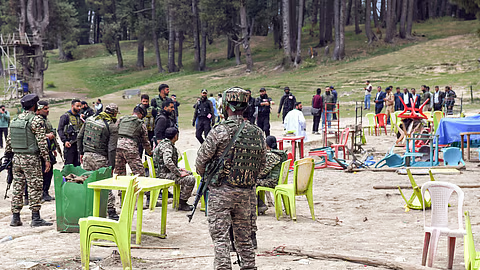
The trajectory of Pahalgam’s tourism boom took a tragic turn on April 22, 2025, when armed militants attacked tourists in Baisaran Valley, a scenic meadow just 4 km from Pahalgam’s main town. The attack, carried out by the Resistance Front (TRF), a proxy for the Pakistan-based Lashkar-e-Taiba, resulted in the deaths of 26 civilians, including 25 tourists and one local pony operator. The militants, armed with M4 carbines and AK-47s, targeted Hindu tourists specifically, though a Christian tourist and a local Muslim were also killed. The attack, described as the deadliest on civilians in India since the 2008 Mumbai attacks, triggered widespread fear and condemnation.
The immediate aftermath saw a mass exodus of tourists from Pahalgam and other parts of Kashmir. Thousands rushed to Srinagar’s airport, with special flights arranged to Delhi and Mumbai to accommodate the fleeing visitors. Travel agencies reported cancellations of up to 90% of bookings, with at least 13 lakh advance bookings for August alone wiped out across the Kashmir Valley. The Pahalgam Hotels and Owners Association noted that hotel occupancy rates plummeted to a mere 10%, with many properties reporting zero guests. Popular tourist spots like Betaab Valley, Bobby Hut, and various public parks were shut down by the administration, further deterring visitors.
Impact on Local Economy and Livelihoods
Pahalgam, with a population of approximately 9,264, is almost entirely dependent on tourism, lacking significant agricultural or industrial activity. The terror attack dealt a severe blow to the local economy, leaving hoteliers, cab drivers, ponywalas, and other tourism-dependent workers jobless. Abdul Wahid Malik, a hotelier with two properties totaling 70 rooms, reported that his hotels, fully booked until June, stood empty for a month after the attack. Similarly, around 3,500 registered and unregistered ponywalas, who rely on ferrying tourists to scenic spots, were left without work.

The Jammu and Kashmir Hotels and Restaurants Association, representing 240 hotels and restaurants, estimated losses exceeding ₹1,000 crore ($120 million) in just two weeks following the attack. Small business owners like Mohammed Mohsin, who had invested heavily in renovating his family’s hotel, faced financial ruin after borrowing money and selling assets to capitalize on the tourism boom. The closure of 48 out of 87 government-authorized tourist resorts across Kashmir as a security precaution further compounded the economic fallout.
Government and Industry Response
In response to the crisis, the Union Tourism Ministry urged stakeholders to waive cancellation fees, with companies like Cox & Kings and MakeMyTrip offering full refunds and flexible rescheduling. Airlines such as IndiGo, SpiceJet, and Air India requested government waivers on user development and aviation security fees at Srinagar airport to lower ticket prices and encourage travel. The Jammu and Kashmir government, led by Chief Minister Omar Abdullah, took steps to revive tourism, including reopening key attractions like Betaab Valley and various parks in a phased manner.
By June 2025, signs of recovery emerged. Local reports indicated a gradual return of tourists, with hotel occupancy rising to 15–20% from zero. A group of tourists from Madhya Pradesh described Pahalgam as “picturesque and wonderful,” noting adequate security arrangements. The upcoming Amarnath Yatra, scheduled from July 3 to August 9, 2025, offered hope, with hoteliers offering up to 65% discounts on tariffs to attract pilgrims and tourists. Chief Minister Abdullah’s symbolic cabinet meeting in Pahalgam and active promotion of the region underscored the government’s commitment to restoring confidence.
Challenges and the Road Ahead
Despite these efforts, the path to recovery remains fraught with challenges. The attack exposed intelligence lapses, with officials admitting that security was absent at Baisaran Valley on the day of the incident. The closure of public parks and heightened security advisories continue to deter tourists, with some, like NFT artist Jyotsna Dwivedi, expressing reluctance to return due to safety concerns. The attack also strained India-Pakistan relations, with India suspending the Indus Waters Treaty and launching retaliatory strikes, further complicating the regional security landscape.
Hoteliers and local stakeholders remain cautiously optimistic. Javed Burza, president of the Pahalgam Hotels and Owners Association, emphasized the need to reopen public parks to revive tourism. Cab drivers and ponywalas, idle for months, expressed hope that the Amarnath Yatra and government incentives would bring visitors back. However, industry leaders warn that sustained recovery will require robust security measures, targeted relief for hoteliers (such as loan interest waivers), and aggressive promotion to rebuild trust.

Conclusion
Pahalgam’s journey from fully booked hotels in July to a near-deserted town after the April 22 terror attack encapsulates the fragility of Kashmir’s tourism-driven economy. The attack not only claimed 26 lives but also shattered the livelihoods of thousands who depend on visitors for survival. While recent efforts show glimmers of hope, with tourists trickling back and government initiatives gaining traction, the road to restoring Pahalgam’s status as a bustling tourist haven is long. For now, hoteliers, ponywalas, and other stakeholders wait anxiously, hoping that the region’s natural beauty and resilience will once again draw crowds to its serene valleys.
Click Here To Follow Our WhatsApp Channel
You Might Also Like:
J&K Police Attach Property of Active Terrorist in Anantnag Under UAPA Crackdown
Khelo India Water Sports Festival 2025 at Dal Lake: Boost for J&K Athletes and Tourism
Ganderbal Shock: 22-Year-Old Girl Arrested for Killing Her 14-Year-Old Sister After Altercation