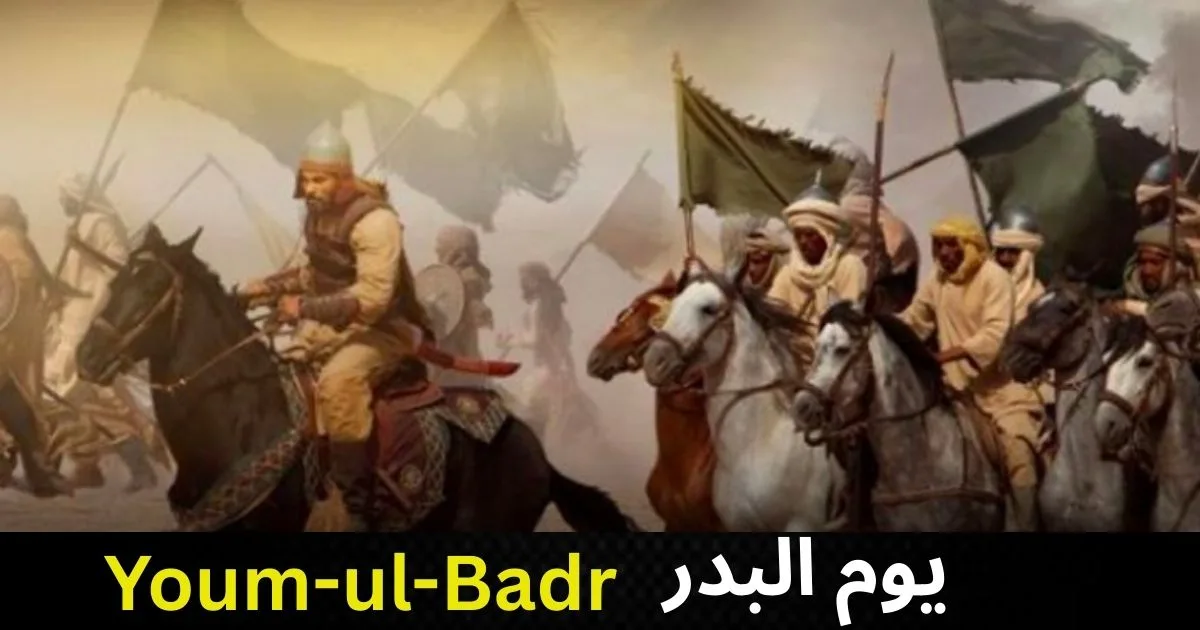
Youm-ul-Badr, often referred to as Yaum-ul-Furqan or the “Day of Criterion,” marks one of the most pivotal moments in Islamic history. Observed annually on the 17th of Ramadan, this day commemorates the Battle of Badr, fought in 624 CE (2 AH) between a small band of early Muslims led by Prophet Muhammad (peace be upon him – PBUH) and a much larger Meccan force from the Quraysh tribe. The victory at Badr was not merely a military triumph but a divine affirmation of faith, distinguishing truth from falsehood and bolstering the nascent Muslim community in Medina. Referred to in the Quran as the “Day of Decision,” Youm-ul-Badr symbolizes resilience, divine intervention, and the ultimate success of righteousness over oppression. This article delves into the historical backdrop, the unfolding of the battle, its profound significance, and how it continues to inspire Muslims worldwide today. Click Here To Follow Our WhatsApp Channel
Historical Context
The roots of Youm-ul-Badr trace back to the early 7th century in the Arabian Peninsula, a land of tribal rivalries, polytheistic idolatry, and stark social inequalities. Mecca, the bustling trade hub controlled by the Quraysh tribe, was home to the Kaaba – a sacred sanctuary that drew pilgrims from afar. It was here, in 610 CE, that Prophet Muhammad (PBUH) received his first revelation from Allah through the Angel Gabriel, calling him to proclaim the oneness of God (Tawhid) and combat the moral decay of society.
The Prophet’s message quickly polarized Meccan society. While a dedicated group of followers – the Sahaba (companions) – embraced Islam, the Quraysh elite, fearing loss of their religious and economic dominance, unleashed waves of persecution. Converts like Bilal ibn Rabah were tortured, and others boycotted or exiled. In 622 CE, facing imminent annihilation, the Prophet and his followers undertook the Hijrah (migration) to Yathrib (later renamed Medina), an oasis city with a mix of Jewish tribes and Arab clans seeking a mediator.
In Medina, the Prophet established the first Islamic state, forging the Constitution of Medina – a groundbreaking pact uniting Muslims, Jews, and pagans under mutual protection. However, the Quraysh did not relent. They seized Muslim properties in Mecca and plotted invasions. To sustain the community and reclaim losses, the Prophet authorized raids on Quraysh trade caravans, a common Arabian practice. These tensions simmered until early 624 CE, setting the stage for Badr.
Prelude to the Battle
By Ramadan 2 AH (March 624 CE), intelligence reached Medina of a massive Quraysh caravan returning from Syria, laden with merchandise worth 50,000 dinars and guarded by 40 men under Abu Sufyan ibn Harb. The Prophet saw this as an opportunity to strike economically, potentially forcing the Quraysh to negotiate. He mobilized 313 fighters – 82 Muhajirun (Meccan emigrants) and 231 Ansar (Medinan helpers, comprising 61 from the Aws tribe and 170 from Khazraj) – with meager resources: two horses, 70 camels (shared among riders), and provisions for a short journey. The force included 60 emigrants and the rest locals, many fasting despite the rigors of the desert march.
Alerted by scouts, Abu Sufyan rerouted the caravan safely via the coastal path and dispatched the urgent messenger Damdam bin Amr al-Ghifari to Mecca, who dramatically warned of the Muslim threat by tearing his shirt and crying alarms. This spurred the Quraysh to assemble a retaliatory army of nearly 1,000 men (estimates vary from 600 to 1,300), equipped with 100 horses and 170 camels, led by the arrogant Amr ibn Hisham (known as Abu Jahl, “Father of Ignorance”). Prominent nobles like Utbah ibn Rabi’ah and Umayyah ibn Khalaf joined, viewing the expedition as a chance to crush Islam decisively.
The Muslim army departed Medina on 10 Ramadan (12 March), taking a northern route to intercept at Badr, a fertile oasis 80 miles southwest with wells vital for travelers. En route, rain on 15 Ramadan softened the sandy soil, aiding the Muslims’ footing while bogging down the heavier Quraysh advance. Upon reaching Badr, the Prophet consulted his companions. Abu Bakr and Umar ibn al-Khattab urged resolve, while al-Miqdad ibn Amr and Sa’d ibn Mu’adh pledged unwavering support: “O Messenger of Allah, proceed as Allah has commanded you. We will not say as the Children of Israel said to Moses, ‘Go you and your Lord and fight, we will stay here.'” The Muslims seized control of the wells, poisoning or filling others to deny water to the enemy.
The Battle Unfolds
Dawn broke on 17 Ramadan (13 March 624 CE) with the two armies facing each other across the valley of Badr. The Muslims, outnumbered three-to-one, formed ranks with the Prophet directing from a shaded howdah (litter) on a camel, flanked by his standard-bearer Mus’ab ibn Umayr. The air was thick with tension as the Quraysh, confident in their superiority, advanced under colorful banners.
The clash began traditionally with single combats (mubahala). Three Quraysh champions – Utbah ibn Rabi’ah, Shaybah ibn Rabi’ah, and al-Walid ibn Utbah – stepped forward, demanding Muslim counterparts. Hamza ibn Abdul-Muttalib (the Prophet’s uncle), Ali ibn Abi Talib (his cousin), and Ubaydah ibn al-Harith responded. In fierce duels, Hamza slew al-Aswad bin Abdul-Asad (a Quraysh scout who had earlier attacked the Muslim camp), while Ali and Hamza dispatched Shaybah and al-Walid; Ubaydah was wounded but survived.
With honors thus initiated, the Prophet threw a handful of dust toward the enemy, invoking, “Defaced be those faces!” as arrows flew. The Quraysh charged, but the Muslims held firm, their lines unbreakable. Eyewitness accounts describe a supernatural pall of dust and confusion enveloping the disbelievers. The Prophet prayed fervently: “O Allah, accomplish for me what You have promised… If this band of Muslims perishes today, there will be no one left to worship You.” Tradition holds that angels, numbering 1,000 or 3,000, descended to aid the faithful, striking terror into Quraysh hearts.
By midday, the battle turned decisively. Key Muslim warriors like Ali (who slew 22 foes), Hamza, and the young Abdullah ibn Rawahah broke enemy formations. Panic spread among the Quraysh as leaders fell: Abu Jahl was mortally wounded by Mu’adh ibn Amr and finished by Abdullah ibn Mas’ud; Umayyah ibn Khalaf was killed by Bilal’s father. The rout was complete by afternoon, with the survivors fleeing toward Mecca.
Aftermath and Immediate Impact
The casualty toll underscored the miracle of Badr: 14 Muslims were martyred (six Muhajirun and eight Ansar), a profound loss for the small community, yet their sacrifice cemented their legacy. In contrast, 70 Quraysh were slain – including 13 nobles like Abu Jahl, Utbah, and Umayyah – and another 70 captured. The prisoners received exemplary treatment; the Prophet allowed ransoms (often 1,000 dirhams or release for teaching ten Muslims to read and write), and even shared meals with them, leading conversions like that of al-Abbas ibn Abdul-Muttalib (the Prophet’s uncle). Spoils of war were divided equitably, with one-fifth allocated to the Prophet for communal needs.
News of the victory electrified Medina, where women like Umm Salamah sang praises. Tribes across Arabia, previously hesitant, now courted alliances with the Muslims, recognizing their rising power. The Quraysh, humiliated, saw their prestige shattered; Abu Sufyan assumed leadership, vowing revenge that would culminate in Uhud. Badr’s veterans, known as the “Badriyyun,” earned eternal honor, their names etched in Islamic annals.
Quranic References and Spiritual Significance
The Quran immortalizes Badr as “Yawm al-Furqan” (Day of Criterion) in Surah Al-Anfal (8:41), signifying the clear demarcation between belief and disbelief, guidance and misguidance. Verses in Surah Al-Anfal detail the prelude: Allah reassures the Prophet against fear (8:5-6) and describes angelic aid (8:9-12: “I will cast terror into the hearts of those who disbelieved”). Surah Aal-E-Imran (3:123-125) emphasizes divine favor: “Allah had helped you at Badr when you were weak… Nay, but you loved that the arrow should be given by you.”
Theologically, Badr exemplifies tawakkul (reliance on God). Despite odds, victory came through unity, strategy, and faith – not numbers. It teaches that truth prevails, as echoed in hadith: “The Battle of Badr was fought on a Friday, and it was the day when Allah honored Islam and the Muslims.” Lessons include consultation (shura), as the Prophet sought counsel; mercy in victory; and gratitude, prompting increased prayers and charity.
Lessons from Youm-ul-Badr
Beyond history, Youm-ul-Badr offers timeless wisdom. First, divine support manifests in apparent weakness: outnumbered and outarmed, Muslims triumphed through piety. Second, unity among diverse groups – Muhajirun and Ansar – models communal harmony. Third, ethical warfare: no mutilation, humane treatment of foes. Fourth, strategic foresight: controlling resources like wells decided the outcome. Finally, it warns against arrogance, as Abu Jahl’s hubris led to downfall.
Scholars like Ibn Kathir in his tafsir highlight 12 lessons, including perseverance in fasting during battle and the power of dua (supplication).
Modern-Day Observance
Today, Youm-ul-Badr is commemorated globally during Ramadan, blending solemn reflection with communal gatherings. Mosques host special Jumu’ah prayers, lectures (dars), and nasheeds recounting the battle. In Pakistan and India, schools like Usman Public School organize events emphasizing “faith, sacrifice, and triumph,” with students reciting Quranic verses and sharing stories of the Sahaba.
In the West, communities like those in the US hold annual commemorations, such as the March 7, 2026, event in Medina, featuring talks on Badr’s relevance to contemporary struggles. Yemen’s Ansar Allah movement links it to political marches, affirming solidarity amid conflicts. In the UK, grand masjids like Jamiul Futuh host unified gatherings with Indian Grand Muftis, fostering interfaith dialogue. Social media amplifies these, with posts urging reflection: “On this day, Muslims around the world ponder the remarkable Battle of Badr.”
Fasting, ittar (perfume), and increased sadaqah (charity) are common, echoing the companions’ devotion.
Conclusion
Youm-ul-Badr stands as a beacon of hope, reminding humanity that no tyranny endures against steadfast faith. From the dusty sands of 624 CE to modern lecture halls, its echo resounds: “And Allah had certainly given you victory at Badr while you were few” (Quran 3:123). As Muslims gather each 17th Ramadan, they renew vows of unity and justice, ensuring the Day of Criterion illuminates paths forward. In an era of division, Badr’s legacy urges: Stand firm, trust in the Divine, and let truth prevail.

Writer : Altaf Nadwi
You Might Also Like:
At 13, This Kashmiri Boy Built 31 Apps and AI Tools
Delhi Court Convicts Kashmiri Separatist Asiya Andrabi in UAPA Case
Why Is Omar Abdullah Silent as a Kashmiri Shawl Seller Is Brutally Attacked in Uttarakhand?