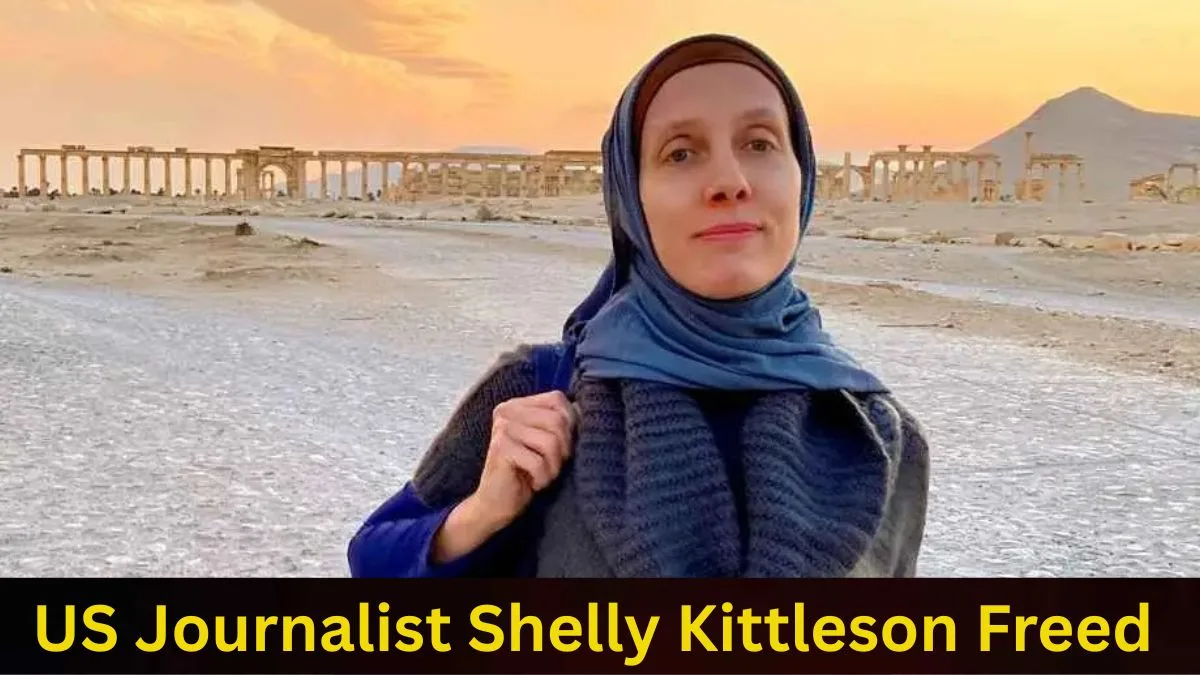
American freelance journalist Shelly Kittleson, 49, has been freed after being held for nearly a week by the Iran-linked Iraqi militia Kataib Hezbollah.
She was kidnapped in broad daylight in central Baghdad on March 31, 2026, and released on April 7, 2026, with the condition that she must leave Iraq immediately.
US Secretary of State Marco Rubio confirmed her release early on April 8. Iraqi officials also said she was freed in Baghdad, although there were earlier reports suggesting she may have been moved to another location south of the capital. Click Here To Follow Our WhatsApp Channel
How the Kidnapping Happened
Kittleson, an experienced journalist who has reported from Iraq and Syria for years, was abducted near a hotel in central Baghdad.
CCTV footage showed her being forced into a vehicle on a busy street. Iraqi security forces quickly launched an operation to track the kidnappers. One suspect vehicle crashed during a chase, leading to at least one arrest, but Kittleson was moved to another car and taken away.
US and Iraqi officials blamed Kataib Hezbollah, a powerful militia group with close ties to Iran. The group has previously been linked to similar incidents, including the kidnapping of researcher Elizabeth Tsurkov in 2023.
Despite warnings from US authorities about rising risks from militias, Kittleson chose to stay in Iraq to continue her reporting work.
Negotiations and Release
Soon after the kidnapping, the militia signalled it was open to negotiations. Reports suggest that her release was part of a prisoner swap, with Iraqi authorities freeing several detained militia members.
A statement from a militia official, Abu Mujahid al-Assaf, said Kittleson was released as a gesture linked to Iraq’s leadership. However, the group warned that such actions would not happen again.
The militia made it clear that Kittleson must leave Iraq immediately after her release.
Reactions and Concerns
The United States welcomed the development, with Secretary of State Marco Rubio thanking Iraqi authorities for their support. Reports also suggest that US agencies, including the FBI, were involved in efforts to secure her release.
Press freedom organisations have raised concerns about the dangers journalists face in conflict zones, especially in countries like Iraq where armed groups remain active.
Wider Context
This incident comes at a time of rising tensions in the region, with Iran-linked groups in Iraq increasingly active due to the ongoing conflict involving the US, Israel, and Iran.
Kittleson’s case highlights the serious risks journalists face while reporting from such areas. It also shows how complex negotiations between governments and armed groups are often needed to secure safe releases.
Kittleson’s current location has not been officially confirmed, but she is expected to leave Iraq soon. More updates are likely in the coming days as officials provide further details.
You Might Also Like:
US Rescues Downed Pilot from Iran in High-Risk Operation, Trump Declares “We Got Him”
Dr.Fatemeh Ardeshir-Larijani Ousted from Emory, Visa Revoked After Protests Over Iran Links