In the rugged terrain of Ladakh, a seismic shift is underway in the political arena as the region gears up for the upcoming Lok Sabha elections. With anticipation mounting, a new dynamic is reshaping the traditional battleground between the Bharatiya Janata Party (BJP) and the Indian National Congress, heralding the emergence of a formidable third front.
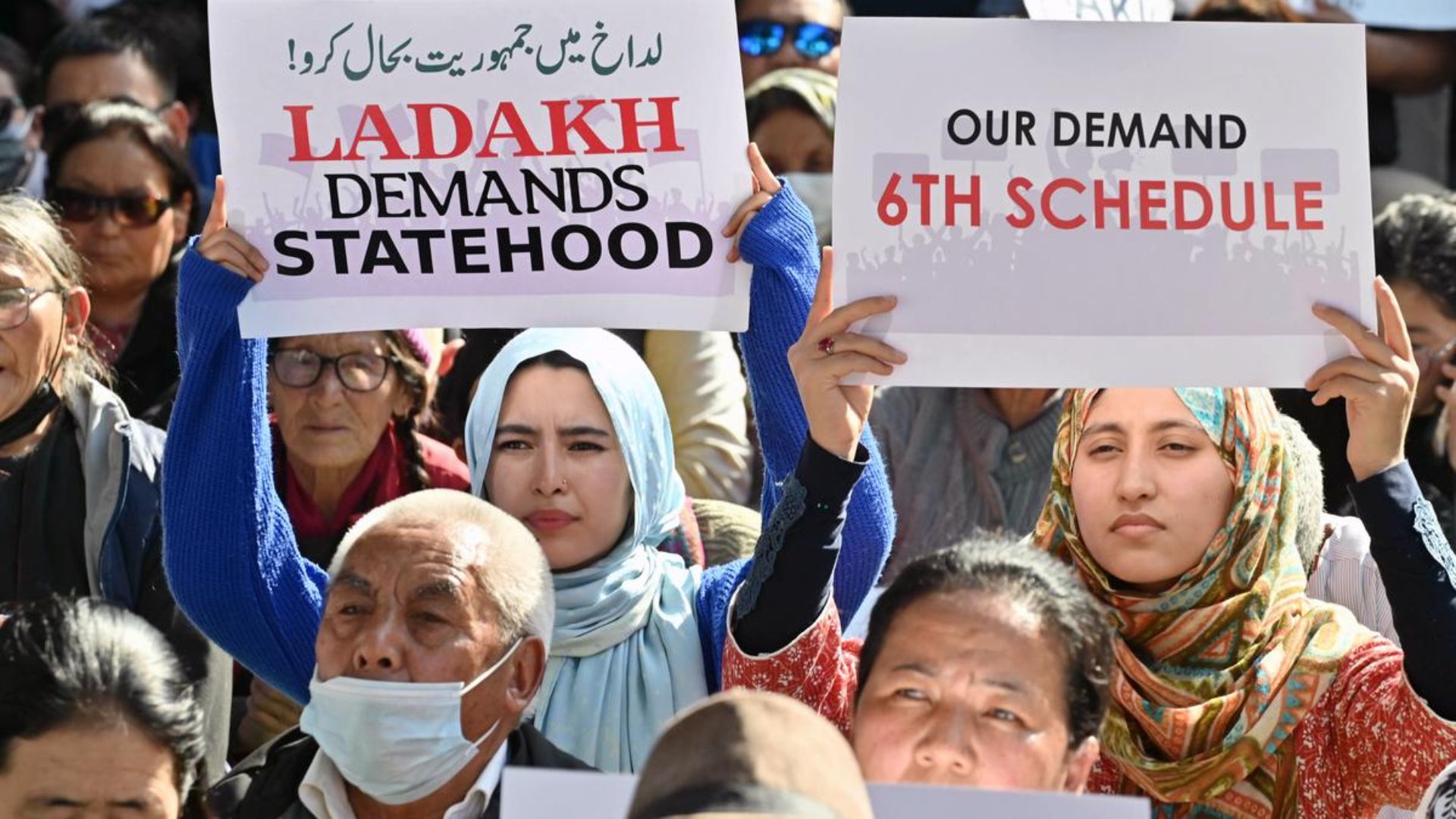
As the candidates for the strategically significant Ladakh parliamentary seat await announcement, all eyes are on the brewing contest between the established political players and the rising coalition of the third front. Spearheaded by the Leh Apex Body (LAB) and the Kargil Democratic Alliance (KDA), this alliance advocates for Ladakh’s statehood and inclusion in the Sixth Schedule, marking a departure from the familiar BJP-Congress rivalry.
According to reports from the Kashmir News Observer (KNO), the LAB and KDA have joined forces to contest the elections jointly, presenting a unified front in pursuit of their shared objectives. This collaboration underscores the growing discontent with traditional political frameworks and a demand for representation that aligns more closely with the aspirations of Ladakhi residents.
However, internal discord within the BJP adds a layer of complexity to the electoral landscape. As the party grapples with internal rifts, its leadership is working to address these challenges while striving to maintain its dominance in the region. The stakes are undeniably high for the BJP, which aims to secure a hat-trick victory and solidify its position amidst evolving political dynamics.
The upcoming election holds profound significance, serving as a litmus test for the BJP’s policies, particularly its decision to revoke Article 370 and designate Ladakh as a Union Territory. Historically, the Congress has enjoyed electoral success in Ladakh, emerging victorious six times since 1967. However, the BJP has experienced a surge in popularity since 2014, dominating the electoral landscape and clinching victory twice.
Nevertheless, recent electoral trends indicate a shifting tide. The National Conference (NC), which secured wins in 1998 and 1999, has now ceded the seat to the Congress as part of a strategic agreement between the two parties. This realignment reflects a concerted effort to consolidate opposition forces and challenge the BJP’s hegemony in the region.
At the forefront of this political upheaval are advocates for Ladakh’s statehood, led by influential figures such as Sonam Wangchuk. Together with the LAB and KDA, they are contemplating fielding a joint candidate to amplify their representation in Parliament. Names like Sajjad Kargili and Dr. Akhoon, Chief Executive Councillor of the Kargil Hill Council, have been floated as potential contenders, though no final decision has been reached.
With a total of 184,268 eligible voters, including a significant proportion of women, young, and disabled voters, the forthcoming elections promise to be a pivotal moment in Ladakh’s political trajectory. As the region navigates this period of transition and transformation, the emergence of a third front underscores the evolving aspirations and demands of its diverse populace. The outcome of the elections will not only shape the composition of Parliament but also pave the way for a new chapter in Ladakh’s political narrative.