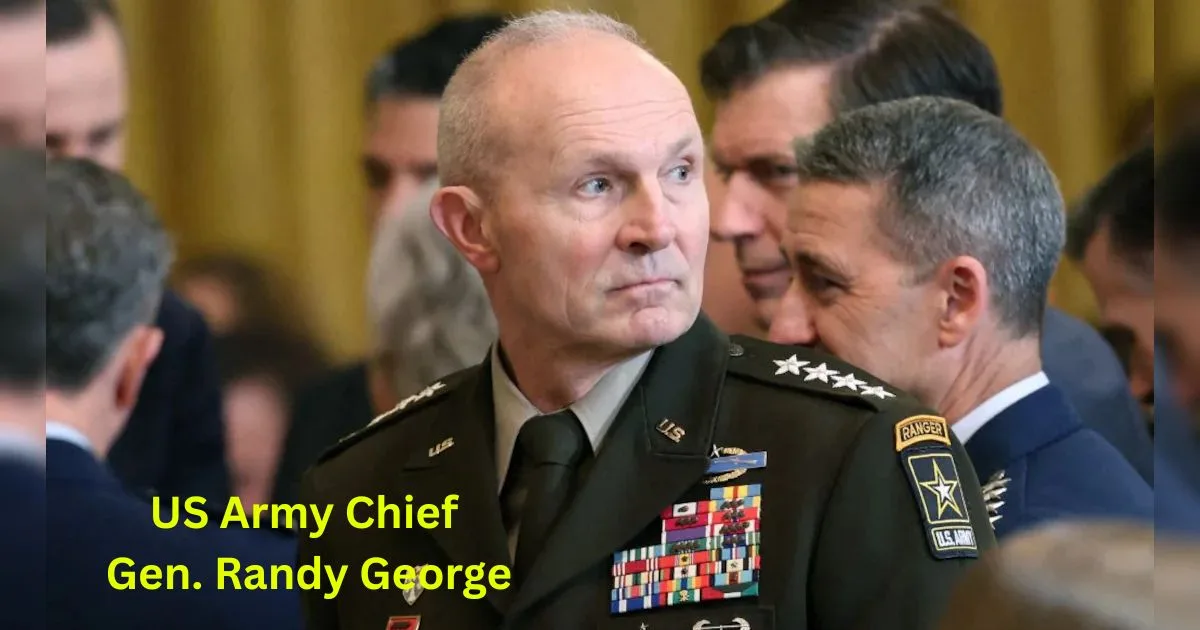
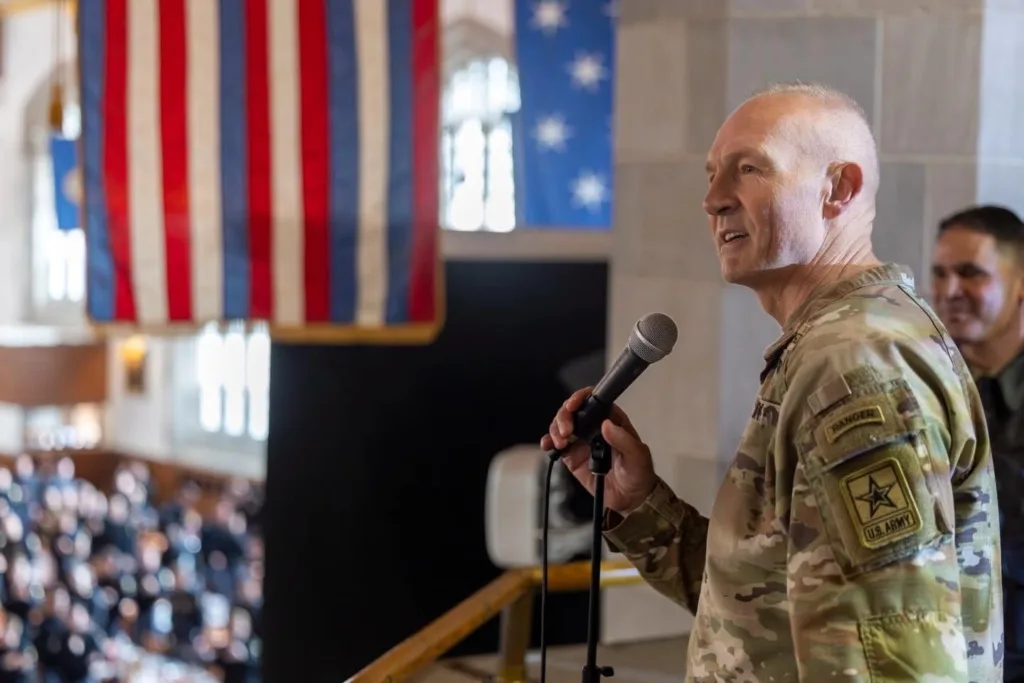
US Defense Secretary Pete Hegseth has ordered Army Chief General Randy A. George to step down immediately, ending his role earlier than expected during the ongoing US-Iran war.
The Pentagon confirmed that General George, who became the Army’s 41st Chief of Staff in 2023, has now retired with more than a year still left in his term. The sudden move has raised serious questions, especially as the United States is actively engaged in military operations against Iran. Click Here To Follow Our WhatsApp Channel
Pentagon Confirms Sudden Exit
Pentagon spokesperson Sean Parnell said the department appreciates General George’s long service but gave no clear reason for his early removal. Officials simply described it as a “leadership change.”
Lieutenant General Christopher C. LaNeve has taken over as acting Army Chief. He is seen as a trusted figure who closely aligns with the current administration’s military plans.
On the same day, two other senior officers were also removed, signalling a wider shake-up within the Army’s leadership.
Main Reasons Behind the Decision
Although no official explanation was given, several defence sources have pointed to key reasons behind this major decision:
1. Need for Strong Political Alignment
Hegseth reportedly wanted a leader who would fully support President Donald Trump’s military vision. This includes building a stronger combat-focused Army, cutting bureaucracy, and preparing for large-scale conflicts.
General George, who was appointed during the previous administration, was seen as not fully aligned with these goals.
2. Dispute Over Officer Promotions
One major issue was a disagreement over Army promotions. Hegseth blocked the promotion of four officers, while General George supported them based on merit.
This led to serious tension, with concerns about political interference in military decisions.
3. Ongoing Pentagon Power Struggles
General George’s removal is part of a broader trend. Several senior military leaders have been removed or replaced in recent months.
His past links with former Defence Secretary Lloyd Austin may have also played a role in how he was viewed by the current leadership.
Timing Raises Concerns During Iran War
The decision comes at a critical moment. The US is currently involved in intense military operations against Iran, including airstrikes, naval actions near the Strait of Hormuz, and troop deployments.
Replacing the Army’s top officer during an active conflict is highly unusual. Experts warn this could affect military planning, coordination, and morale.
However, supporters argue that wartime leadership must fully follow civilian direction, especially if major strategic changes are planned.
Who Was General Randy A. George?
General George has served in the US Army for over 40 years. He began his career in 1982 and later graduated from West Point.
He has extensive combat experience, including:
- Gulf War (Desert Storm)
- Multiple deployments in Iraq
- Service in Afghanistan
He also held key leadership roles, including Vice Chief of Staff of the Army.
During his time as Army Chief, he focused on modern warfare, improving recruitment, and adapting to new battlefield technologies.
New Acting Chief Takes Charge
Lieutenant General Christopher LaNeve is now leading the Army as acting Chief. He is a combat veteran and former commander of the 82nd Airborne Division.
Officials believe he will push forward reforms quickly and ensure strong alignment with the administration’s military strategy.
A permanent replacement will need approval from the US Senate.
Reactions and Concerns
Supporters Say
- Leadership change was necessary
- Army needs stronger direction
- Reforms must happen quickly during wartime
Critics Warn
- Military could become politicised
- Morale may be affected
- Sudden changes during war can be risky
Some lawmakers have already asked for detailed briefings on how this decision could impact operations against Iran.
Bigger Picture: US-Iran Conflict
The US-Iran conflict has escalated rapidly in recent weeks. Thousands of targets have reportedly been struck, and both sides have exchanged missile and drone attacks.
The situation remains tense, especially around key areas like the Strait of Hormuz. Any decision affecting military leadership at this stage carries serious weight.
Final Thoughts
The removal of General Randy George is not just a leadership change — it reflects deeper tensions within the Pentagon and a shift in military direction.
With the US still engaged in a major conflict, the coming weeks will be crucial in understanding how this decision impacts both the war and the future of the Army.
You Might Also Like:
Trump Weighs High-Risk US Commando Raid on Iran’s Nuclear Sites Amid Escalating War
Massive ‘No Kings’ Protests Sweep Across USA as Millions Rally Against Trump Policies and Iran War
Iran Claims Strike on US Air Base in Saudi Arabia, Says AWACS Plane Destroyed in Missile and Drone Attack