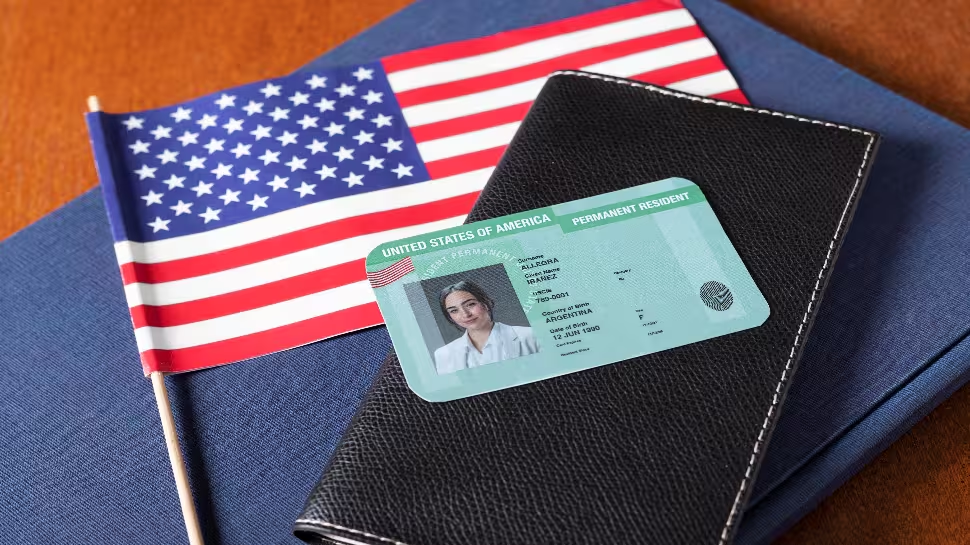
The US Diversity Visa (DV) Lottery, also known as the Green Card Lottery, is a programme run by the US Department of State. Every year, it randomly selects up to 55,000 people from around the world to receive immigrant visas and become permanent residents of the United States. Click Here To Follow Our WhatsApp Channel
This programme was created under the Immigration Act of 1990 to increase diversity among immigrants in the US. It mainly helps people from countries that have sent fewer immigrants to America in recent years.
Applying for the DV Lottery is completely free, but being selected does not guarantee a visa. Winners must still meet education or work experience requirements and go through the full visa process, which includes fees, background checks, and interviews.
For the DV-2026 programme (visas issued between October 2025 and September 2026), registration opened on 2 October 2024 and closed on 7 November 2024. Results were released on 3 May 2025, and as of 17 October 2025, selected applicants from eligible countries are now completing their visa procedures.
Why Indians Cannot Apply for the DV-2026 Lottery
Indian citizens are not eligible for the DV-2026 lottery because India has sent too many immigrants to the US in recent years.
Eligibility Rule
To qualify, a person must be born in a country that sent fewer than 50,000 immigrants to the United States in the past five years (2019–2023). Countries that exceed this limit are automatically excluded from the lottery so that underrepresented nations can benefit.
India’s Situation
India has sent over 60,000 immigrants each year to the US during this period, mostly through employment-based visas like H-1B and family-sponsored categories. Because of this high number, India is not eligible and is expected to stay excluded until at least the DV-2029 lottery (which will open in late 2028).
This rule is part of US immigration law (Section 203(c) of the Immigration and Nationality Act). It is not a punishment or a new policy—it’s a fixed rule to keep the diversity system fair for countries with fewer immigrants.
Other Countries Not Eligible for DV-2026
Here’s the full list of ineligible countries for the 2026 lottery:
| Country | Reason for Ineligibility |
|---|---|
| Bangladesh | High immigration to the US |
| Brazil | High immigration |
| Canada | High immigration |
| China (including Hong Kong) | High immigration |
| Colombia | High immigration |
| Cuba | High immigration |
| Dominican Republic | High immigration |
| El Salvador | High immigration |
| Haiti | High immigration |
| Honduras | High immigration |
| India | High immigration (over 60,000/year) |
| Jamaica | High immigration |
| Mexico | High immigration |
| Nigeria | High immigration |
| Pakistan | High immigration |
| Philippines | High immigration |
| South Korea | High immigration |
| Venezuela | High immigration |
| Vietnam | High immigration |
Note: If your spouse was born in an eligible country, or if neither of your parents was born or living in your country of birth, you might still qualify using their country’s eligibility. Northern Ireland is treated separately from the UK (eligible), and Macau follows China’s status.
Options for Indians Who Still Want a US Green Card
Although Indians cannot join the DV Lottery, there are other legal ways to apply for US permanent residency. However, these paths often involve long waiting times due to per-country visa limits.
1. Employment-Based (EB) Visas
These are the most common for skilled workers, such as H-1B professionals. Categories like EB-2 and EB-3 often have waiting times of 10 years or more for Indian applicants.
2. Family-Sponsored Visas
US citizens can sponsor close relatives for green cards. Immediate family members face little to no delay, but others may wait many years.
3. EB-5 Investor Visa
This option requires investing between $800,000 and $1.05 million in a US business that creates jobs for Americans.
4. Asylum or Refugee Status
Available to those who can prove they are facing persecution in their home country.
5. Student or Work Visas (F-1, J-1)
Although temporary, these visas can sometimes lead to permanent residency later through employment or marriage.
Important Advice
Always apply through the official US government website — dvprogram.state.gov. Do not pay anyone to enter the lottery. Many scam websites falsely claim to guarantee selection or charge for registration.
India’s ineligibility is simply due to its strong immigration numbers to the US, not because of any new restrictions or political reasons.
You Might Also Like:
Watch Dr. Tariq Rasool’s Message to Kashmir’s Apple Orchard Owners: Diseases, Causes
A Reflection on Surat-al-Ankabut : Faith, Effort, and the Delusion of Self-Sufficiency
13000 PhDs and Engineers Fight for One Constable Job in Madhya Pradesh — A Shocking Reality Check!