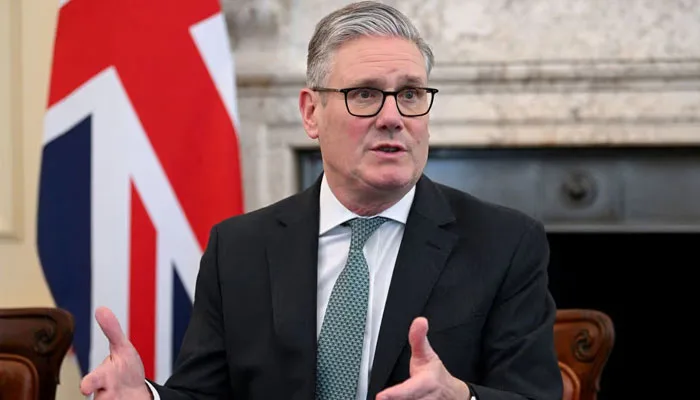
London— UK Prime Minister Keir Starmer has made it clear that Britain will not take part in direct military action against Iran, stressing that the country will not be drawn into an escalating regional conflict.
Speaking in Wolverhampton during the Labour Party’s local election campaign launch, Starmer firmly stated that the situation does not warrant UK involvement in offensive operations. Click Here To Follow Our WhatsApp Channel
Starmer’s Firm Position
Starmer repeated his stance strongly, saying:
- “This is not our war, and we are not going to be dragged into it.”
- He emphasised that the UK would continue to focus on defensive measures to protect British citizens, allies, and national interests.
- He also highlighted the importance of reopening the Strait of Hormuz, a key global shipping route disrupted by the conflict.
The Prime Minister ruled out sending British troops for any ground invasion of Iran, adding that any action taken by the UK must have a clear legal basis and serve national interests.
UK’s Role in the Conflict
Since the start of the Israel-US military campaign against Iran, the UK has maintained a cautious and limited role:
- Britain did not join initial strikes carried out by Israel and the United States
- UK forces have been deployed in a defensive capacity, including RAF jets stationed in Gulf regions
- British bases, such as RAF Fairford and Diego Garcia, have been made available for limited US use, mainly for defensive operations
- The government insists its actions are aimed at protecting shipping routes and regional stability
Starmer has pointed to past conflicts, including the Iraq war, as a reason for taking a cautious and measured approach.
Criticism and Debate
Despite the government’s stance, critics argue that allowing US forces to operate from UK bases could make Britain indirectly involved. Some political voices and commentators have questioned whether the line between defensive support and active participation is truly clear.
However, Starmer has rejected these claims, maintaining that the UK’s role remains strictly defensive.
Wider Impact and Concerns
The conflict has already had global consequences:
- Disruptions in oil shipments through the Strait of Hormuz have increased energy prices
- Economic concerns are growing within the UK and across Europe
- Starmer has called for closer cooperation with European partners to manage long-term impacts
Public opinion in Britain appears to support the Prime Minister’s cautious approach, with many wary of entering another prolonged conflict.
Outlook
As tensions between Israel, the United States, and Iran continue to rise, the UK government is trying to balance its alliance commitments with domestic priorities.
While Starmer has firmly ruled out offensive military action, the situation remains unpredictable. Any further escalation in the region could challenge Britain’s current “defensive-only” policy.
For now, the message from Downing Street is clear: the UK will protect its interests but will not enter a full-scale war with Iran.
You Might Also Like:
Trump Weighs High-Risk US Commando Raid on Iran’s Nuclear Sites Amid Escalating War
Massive ‘No Kings’ Protests Sweep Across USA as Millions Rally Against Trump Policies and Iran War
Iran Claims Strike on US Air Base in Saudi Arabia, Says AWACS Plane Destroyed in Missile and Drone Attack